Voluntary Departure vs Deportation in Florida: Key
Explore the differences between voluntary departure and deportation in Florida. Learn about the legal processes, implications, and how to make informed decisions. Get expert guidance from Florida Immigration Lawyers.

- Voluntary departure avoids a deportation record.
- Deportation involves forced removal and penalties.
- Both options have specific legal requirements and implications.
Voluntary Departure vs Deportation in Florida: Key Differences
Facing immigration proceedings can be daunting, especially when considering options like voluntary departure and deportation. Understanding these terms is crucial for immigrants in Florida, particularly in Orlando, where many face these legal challenges. This article will explore the differences between voluntary departure and deportation, the legal processes involved, and the implications for your future in the U.S.
Whether you are navigating this process yourself or supporting a loved one, knowing the facts can help make informed decisions. Call Florida Immigration Lawyers at 1-844-YO-PELEO for a free case review to discuss your specific situation.
What is Voluntary Departure?
Voluntary departure is an option for certain individuals in removal proceedings to leave the U.S. voluntarily within a set timeframe. As of 2026, this option is generally available to those who do not have serious criminal records and can afford their own travel expenses. By choosing voluntary departure, individuals can avoid a formal deportation order on their record, which can be beneficial for future immigration applications.
Unlike deportation, voluntary departure requires the individual to depart the U.S. at their own expense, but it often results in a shorter re-entry ban, typically ranging from 0 to 10 years, depending on individual circumstances and prior immigration history. Consulting with an immigration attorney can help determine eligibility and assist in the application process.
Eligibility for voluntary departure is not universal; it is typically granted at the discretion of an immigration judge. Key criteria often include demonstrating good moral character, having no aggravated felony convictions, showing the financial ability to pay for your own travel, and not being deemed a flight risk or a security threat. Individuals who have previously sought asylum or have certain immigration violations may face additional hurdles. It’s a privilege, not a right, and judges weigh various factors before granting it.
The benefits of voluntary departure are substantial. Beyond avoiding the stigma and severe consequences of a formal deportation order, it can significantly ease the path for potential future re-entry into the U.S. A voluntary departure often results in a shorter bar to re-entry, or sometimes no bar at all, depending on the circumstances. This allows individuals to maintain a cleaner immigration record, which can be crucial for future visa applications, waivers, or even family-based petitions. It offers a degree of control and dignity in an otherwise challenging situation.
A practical example involves an individual like Maria, who overstayed her visa but has no criminal record and strong ties to her home country. With the guidance of Florida Immigration Lawyers, Maria successfully requested voluntary departure, allowing her 90 days to arrange her affairs and leave the U.S. without a formal deportation on her record. This strategic move preserves her option to apply for a future visa without the severe prejudice of a deportation. The strict deadlines and detailed planning involved underscore why expert legal assistance is indispensable.
How Does Deportation Differ?
Deportation, or removal, is a process by which the U.S. government formally expels an individual from the country. This often involves a court order following proceedings in immigration court. Deportation can result in significant legal consequences, including a long-term ban from re-entering the U.S., typically 10 years or more, and a permanent mark on the individual's immigration record.
Unlike voluntary departure, deportation is not a choice but an enforcement action by U.S. Immigration and Customs Enforcement (ICE). The process involves several stages, including detention, hearings, and final removal. It is crucial to have legal representation during these proceedings to explore any available defenses or relief options.
The grounds for deportation are broad and can include criminal convictions (even minor ones depending on immigration law definitions), immigration violations such as unlawful entry, visa overstays, or misrepresentation/fraud in immigration applications. The process typically begins when an individual receives a Notice to Appear (NTA) from the Department of Homeland Security, formally charging them with being removable from the U.S. This NTA initiates proceedings before an immigration judge, marking the start of a complex and often lengthy legal battle.
The consequences of a deportation order are severe and far-reaching. Beyond the mandatory 10-year or permanent ban from re-entering the U.S., deportation often leads to family separation, loss of employment, and significant psychological and financial burdens. It creates a permanent black mark on an individual's immigration record, making it exceedingly difficult to obtain any future visas or immigration benefits, even for temporary visits. The stigma associated with deportation can impact an individual's life for decades, affecting their ability to travel, work, and reunite with loved ones.
Given the high stakes, a robust legal defense is paramount when facing deportation. An experienced attorney can explore various forms of relief, such as asylum, withholding of removal, cancellation of removal, or waivers of inadmissibility. For instance, a client named Roberto, facing deportation due to a past criminal conviction, might have a strong defense if he qualifies for cancellation of removal based on his long-term residency and U.S. citizen children. Florida Immigration Lawyers are adept at navigating these complex defenses, working tirelessly to protect clients' rights and explore every possible avenue to avoid forced removal.
Florida-Specific Considerations for Both Options
In Florida, particularly in Central Florida and Orlando, immigrants facing removal proceedings have specific considerations. The Orlando Immigration Court handles many such cases, and understanding local processes is essential. The state's large immigrant population means that these proceedings are common, and knowing your options can make a significant difference.
As of 2026, Florida has seen increased scrutiny on immigration policies, influenced by political campaigns and local regulations, such as the recent Gainesville protests against local immigration reporting rules. These factors can affect how voluntary departure or deportation cases are handled. Consulting with a knowledgeable attorney familiar with Florida's immigration landscape is advisable.
Florida's immigration courts, including major hubs in Orlando, Miami, and Pompano Beach, manage a high volume of cases, often leading to lengthy dockets and complex procedural nuances. The state's diverse immigrant communities, from agricultural workers to tech professionals, present a wide array of case types, each requiring a tailored legal approach. Understanding the specific policies of the local ICE field offices and the preferences of individual immigration judges in Florida is crucial for effective representation.
Furthermore, Florida’s unique political and social climate often influences immigration enforcement and policy implementation. State-level legislation, like those impacting undocumented individuals or local law enforcement's cooperation with federal immigration authorities, can significantly affect how voluntary departure options are presented or how deportation cases are prosecuted. These local factors add layers of complexity that require an attorney with deep, localized knowledge.
This is where Florida Immigration Lawyers stand out. Our team is intimately familiar with the specific judges, court procedures, and enforcement priorities within Florida's immigration landscape. This local insight is invaluable, whether it's strategizing the most effective way to request voluntary departure or mounting a robust defense against deportation. We leverage our understanding of the regional environment to provide clients with the most informed and effective legal representation possible, ensuring their rights are protected throughout the process.
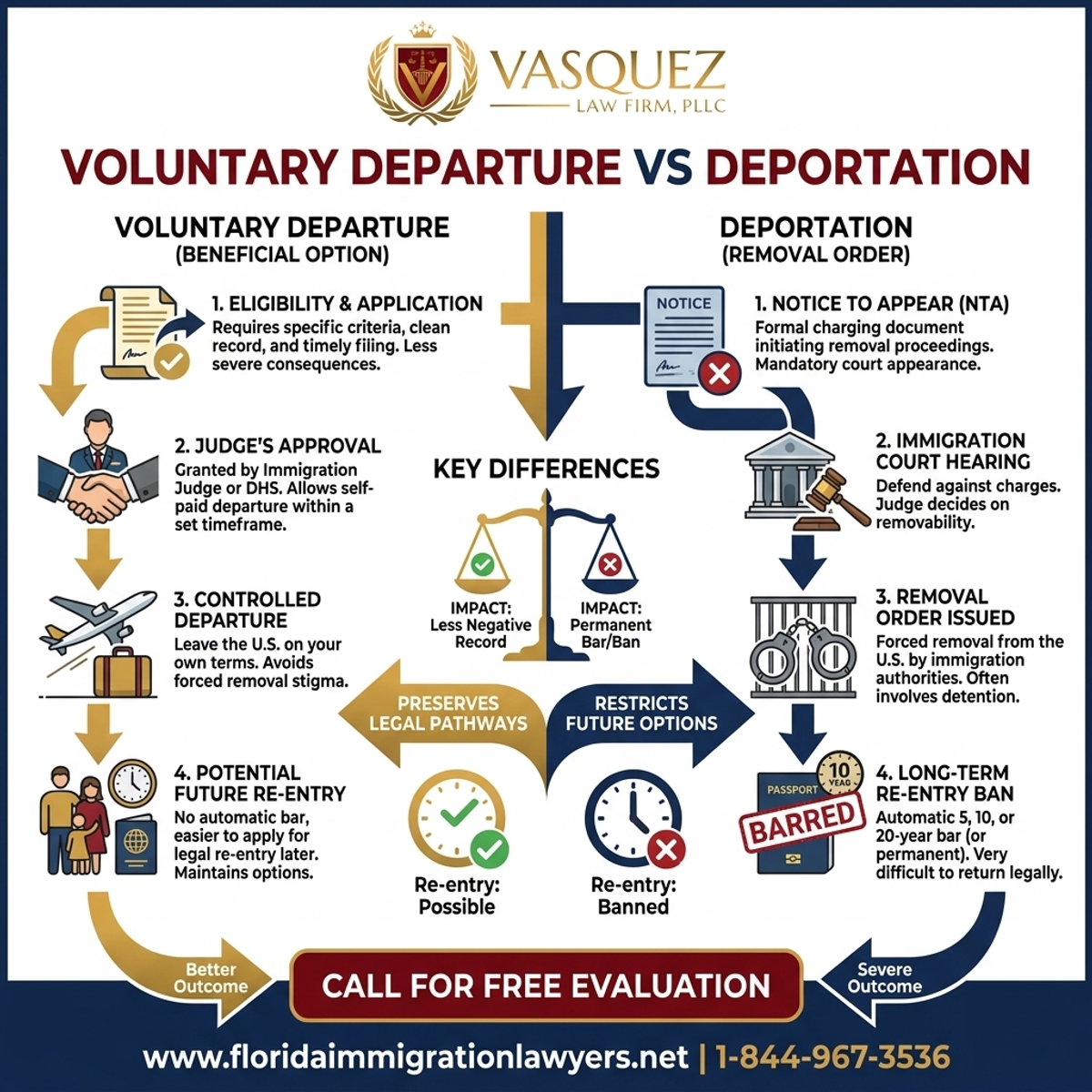
Step-by-Step Process — Voluntary Departure vs Deportation in Florida: Key Differences
Step-by-Step Guide to Voluntary Departure
Navigating the voluntary departure process requires precision and adherence to strict legal protocols. While it offers significant advantages over deportation, any misstep can revoke the privilege. Here's a detailed guide to ensure compliance:
- Consult with an immigration attorney to assess eligibility.
- File a request for voluntary departure before the immigration judge.
- If granted, comply with the conditions set by the court, including departure within the specified timeframe.
- Arrange travel logistics and prepare necessary documentation for departure.
- Exit the U.S. and maintain records of compliance for future reference.
Each step requires careful attention to legal details and deadlines. Failure to comply can result in conversion to a deportation order, with all associated penalties. Successfully completing voluntary departure not only avoids a deportation order but can also pave the way for potential future re-entry. However, the stakes are high, and failure to meet any condition, such as the departure deadline, will automatically convert the order to a formal deportation, incurring severe penalties. This is why professional legal guidance from Florida Immigration Lawyers is not just advisable, but often critical.
Document Checklist for Voluntary Departure
A thorough and accurate documentation package is paramount for a successful voluntary departure request. Presenting all required evidence clearly and promptly demonstrates good faith and helps the immigration judge make an informed decision. Ensure you have the following ready:
- Valid passport and travel documents
- Proof of identity and immigration status
- Documentation of financial ability to leave the U.S.
- Any court orders or notices related to removal proceedings
- Legal representation agreement, if applicable
Having all necessary documents organized can expedite the process and ensure compliance with voluntary departure terms. Beyond these core documents, your attorney may advise on additional evidence to strengthen your case, such as proof of ties to your home country or evidence of good moral character. Organizing these documents meticulously and ensuring their accuracy will streamline the process and prevent unnecessary delays or complications.
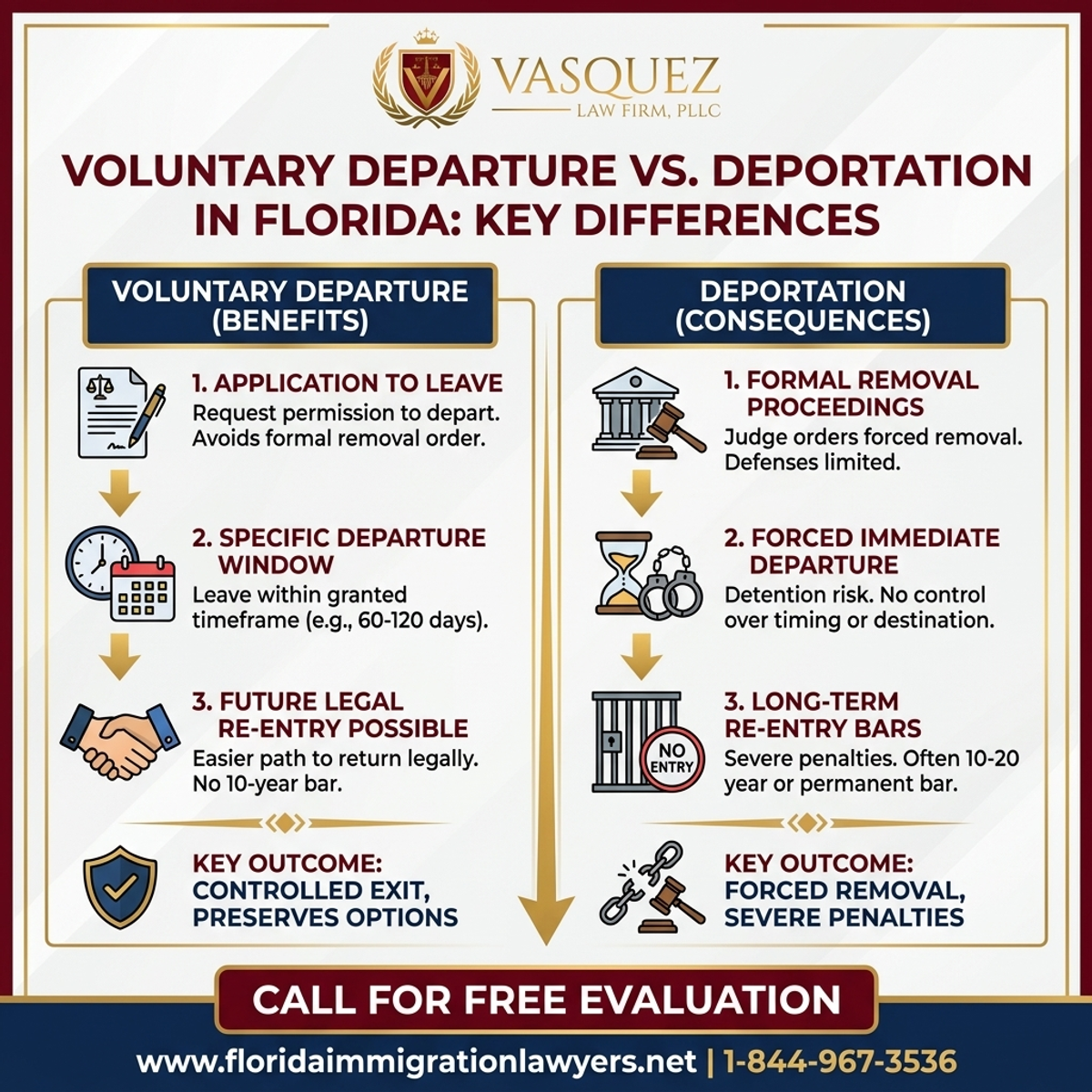
Key Statistics — Voluntary Departure vs Deportation in Florida: Key Differences
Frequently Asked Questions (FAQs)
Common Mistakes to Avoid
The path through immigration proceedings is fraught with potential pitfalls. Even seemingly minor errors can have catastrophic consequences, leading to the denial of voluntary departure or the issuance of a deportation order. Being aware of common mistakes is the first step toward avoiding them.
- Failing to consult with an immigration attorney.
- Not understanding the differences between voluntary departure and deportation.
- Missing deadlines for filing or departure.
- Assuming voluntary departure is always the best option without legal advice.
- Ignoring court orders or failing to attend hearings.
- Providing incomplete or inaccurate documentation.
- Failing to arrange travel logistics in advance.
- Not considering the long-term immigration consequences of each option.
- Listening to non-expert advice or misinformation.
- Not maintaining records of compliance with voluntary departure.
To safeguard your future and ensure the best possible outcome, it is imperative to approach these proceedings with diligence and professional support. Florida Immigration Lawyers can help you navigate these complexities, ensuring you avoid common errors that could jeopardize your immigration status.
When to Call a Lawyer
Legal representation is crucial when facing removal proceedings. If you are uncertain about your options or eligibility for voluntary departure, or if you have received a deportation notice, contacting a lawyer immediately is essential. An experienced immigration attorney can provide guidance, represent you in court, and help explore all available options for relief or appeal.
Florida Immigration Lawyers are experienced in handling such cases and can offer a free case review to discuss your situation. Contact us today for assistance.
There are several critical triggers that should prompt you to call an immigration lawyer without delay. These include receiving a Notice to Appear (NTA) in immigration court, being arrested or detained by ICE, having a visa or green card application denied in a way that places you in removal proceedings, or if you have overstayed your visa and are now seeking options. In all these scenarios, time is often of the essence, and swift legal action can significantly impact the outcome of your case.
An immigration lawyer does far more than just fill out forms. They can evaluate your eligibility for various forms of relief beyond voluntary departure, prepare and file complex legal documents, represent you skillfully in immigration court, negotiate with government attorneys, and even appeal adverse decisions to higher courts. Your attorney acts as your dedicated advocate, ensuring your rights are protected, and that you receive a fair hearing throughout the intricate legal process.
Don't wait until it's too late to seek professional help. The earlier you consult with an attorney, the more options may be available to you. A free case review with Florida Immigration Lawyers at 1-844-YO-PELEO can be the first critical step toward understanding your legal standing, assessing your options, and charting a clear path forward. Our team is ready to provide the knowledgeable support you need during these challenging times.
About Florida Immigration Lawyers
Florida Immigration Lawyers is dedicated to providing expert legal services to immigrants across Florida, with a focus on Central Florida and Orlando. Our team of experienced attorneys offers comprehensive services, including family immigration, deportation defense, and business immigration solutions. We are available 24/7, offering free case reviews. Explore our immigration practice areas to learn more about how we can assist you.
Call us at 1-844-YO-PELEO for compassionate and knowledgeable support.
Sources and References
- U.S. Citizenship and Immigration Services (USCIS)
- Executive Office for Immigration Review (EOIR)
- 8 U.S.C. Chapter 12 - Immigration and Nationality Act
Related services: asylum and refugee protection, immigration waivers, humanitarian protection programs, DACA renewal and applications.
This article provides general legal information and is not intended as legal advice. Every case is unique, and outcomes depend on specific facts and circumstances. Contact an attorney for advice about your particular situation.
Final Thoughts
Understanding the difference between voluntary departure and deportation is crucial for making informed decisions about your immigration future. Call Florida Immigration Lawyers at 1-844-YO-PELEO for professional guidance. Se Habla Espanol - Estamos aqui para ayudarle.
If you need legal assistance, learn more about deportation defense consultation, or call us at 1-844-967-3536 for a free case review.
The profound, long-lasting impact of either voluntary departure or deportation on an individual's life, family, and future aspirations cannot be overstated. These are not merely legal terms but life-altering decisions that demand careful consideration and expert guidance. The choice, or lack thereof, between these two paths will shape your ability to reunite with family, pursue educational or career opportunities, and even travel internationally for years to come.
While voluntary departure offers a less severe path, it is not a simple choice and requires careful legal strategy to ensure eligibility and compliance. Deportation, on the other hand, demands an immediate and vigorous defense, as the consequences are far more dire. The inherent complexity of U.S. immigration law, coupled with ever-changing policies, makes navigating these waters alone incredibly risky. Expert counsel is not just advisable; it is indispensable for protecting your rights and securing your future.
Your future in the U.S. hangs in the balance, and having a dedicated legal team by your side can make all the difference. Florida Immigration Lawyers are committed to providing compassionate, expert legal support to help you navigate these challenging times. Reach out to Florida Immigration Lawyers today to ensure you have the best possible advocacy for your immigration case.
Do Not Navigate This Process Alone
Our experienced immigration attorneys are ready to fight for you. Get a free, confidential case review today.
Se Habla Español
Or leave your details and we’ll call you:
Free Evaluation in 24 Hours
Or talk to us right now

AI voice assistant — available 24/7
FreeFrequently Asked Questions

William J. Vásquez
Founding Attorney · Vasquez Law Firm
U.S. Air Force veteran and immigration attorney with years of hands-on U.S. immigration experience. J.D., NCCU School of Law. AILA member. Admitted to the 4th, 5th, and 11th Circuit Courts.
Available 24/7 - Free Evaluations
Reviewed for legal accuracy by William J. Vásquez
Licensed in North Carolina; U.S. immigration is federal practice.
Related Legal Services
Our Florida immigration attorneys can help you with immigration lawyer cost in Florida, experienced immigration attorneys and asylum protection. Call today at 1-844-YO-PELEO for a free case review.
Related Links
Related Topics
Free Legal Case Review
Discuss your case with our experienced attorneys. We're available 24/7.
Se Habla Español - Estamos aquí para ayudarle.
Related Articles
Dual Citizenship Lawyer in Florida: What You Need to Know
For Florida residents, the concept of dual citizenship, or holding two passports, offers a compelling blend of opportunities and challenges. While the U.S. generally permits dual nationality, the path to achieving this status requires a meticulous understanding of both U.S. immigration laws and the citizenship policies of your country of origin. This guide explores the definition of dual citizenship, the detailed step-by-step process for U.S. naturalization, and the significant benefits and potential pitfalls involved. We cover essential documentation, typical timelines, and cost considerations for 2026, providing crucial insights for anyone in Orlando, Miami, or across Florida considering this important legal step. Learn about common mistakes to avoid and understand when to seek professional legal counsel to navigate this complex process successfully. Florida Immigration Lawyers is here to provide expert, bilingual support for your dual citizenship journey.
Immigration Lawyer Orlando Free Consultation in Florida
For individuals and families in Orlando, Florida, navigating the complexities of U.S. immigration law requires expert guidance. An immigration lawyer in Orlando offers crucial support for everything from visa applications and green card processes to naturalization and deportation defense. This comprehensive guide details what a free consultation covers, providing a step-by-step overview of immigration pathways, essential document checklists, and expected timelines in 2026. We also highlight common mistakes to avoid, discuss the critical role of legal counsel in deportation and asylum cases, and explain why choosing a local Orlando immigration attorney is beneficial. Florida Immigration Lawyers is dedicated to serving the diverse community of Orlando with compassionate, effective legal solutions, ensuring you receive personalized advice and robust representation for a successful immigration journey.
EAD Advance Parole Combo Card in Florida 2026
For individuals with a pending Form I-485, Application to Register Permanent Residence or Adjust Status, the EAD Advance Parole Combo Card is an essential document. This single card combines the authorization to work legally in the U.S. (Employment Authorization Document - EAD) with permission to travel internationally and re-enter without abandoning your green card application (Advance Parole). This guide from Florida Immigration Lawyers provides a comprehensive overview for applicants in Florida in 2026, covering eligibility, the step-by-step application process, required documents, expected processing times, and associated costs. We also highlight common mistakes to avoid and when to seek legal counsel to ensure a smooth and successful immigration journey. Understanding this vital card is key to maintaining stability while awaiting your permanent residency approval.
F-1 to H-4 Change of Status Processing in Florida
Explore the F-1 to H-4 change of status process in Florida, including I-539 processing times, steps involved, and common pitfalls. Call Florida Immigration Lawyers for a free case review.