Visa Bulletin October 2025: Florida Immigration Updates...
The Visa Bulletin October 2025 marks the start of the new fiscal year, bringing crucial updates for immigrant visa availability in Florida. This guide from Florida Immigration Lawyers provides expert analysis on final action dates and filing charts, essential for those pursuing family-sponsored and employment-based green cards. We explain how to interpret the bulletin, navigate the application process, and avoid common mistakes. For immigrants in Coral Springs, Miami, Orlando, and across Florida, understanding these updates is vital for your immigration journey. Contact us for a free consultation to discuss your specific case and ensure a smooth path forward.

The Visa Bulletin October 2025, marking the start of the new fiscal year, typically brings important updates for immigrant visa availability. It dictates when applicants, especially those in family-sponsored and employment-based categories, can file for adjustment of status or have their immigrant visas issued. Understanding these dates is crucial for your immigration journey in Florida.
- October 2025 begins the new fiscal year for immigrant visas.
- The bulletin provides "Final Action Dates" and "Dates for Filing Applications."
- These dates determine eligibility for filing or visa issuance.
- Family-sponsored and employment-based categories are most affected.
- Consulting a Florida immigration lawyer is vital for accurate interpretation.
Are you an immigrant in Florida keenly watching for your opportunity to advance in the U.S. immigration process? The release of the Visa Bulletin October 2025 is a pivotal moment for thousands of individuals and families across our state, from Coral Springs to Miami, Orlando, and beyond. This bulletin, issued monthly by the U.S. Department of State, provides crucial information about the availability of immigrant visas, directly impacting your eligibility to file for adjustment of status or receive an immigrant visa abroad. Understanding its nuances is essential for anyone navigating the complex U.S. immigration system.
For many, the start of the new fiscal year in October often brings hope for significant movement in visa categories. This comprehensive guide from Florida Immigration Lawyers will break down what the Visa Bulletin October 2025 means for you, how to interpret its charts, and the steps you should take. We will cover everything from understanding the dates to navigating the application process and avoiding common pitfalls. Don't let this critical information overwhelm you; we are here to help clarify your path forward.
If you have questions about your specific situation or need guidance interpreting the latest visa bulletin october 2025, do not hesitate to seek professional legal advice. Call Florida Immigration Lawyers at 1-844-967-3536 for a free consultation and let our experienced team assist you.
Understanding the Visa Bulletin October 2025: Your Gateway to Green Card Eligibility
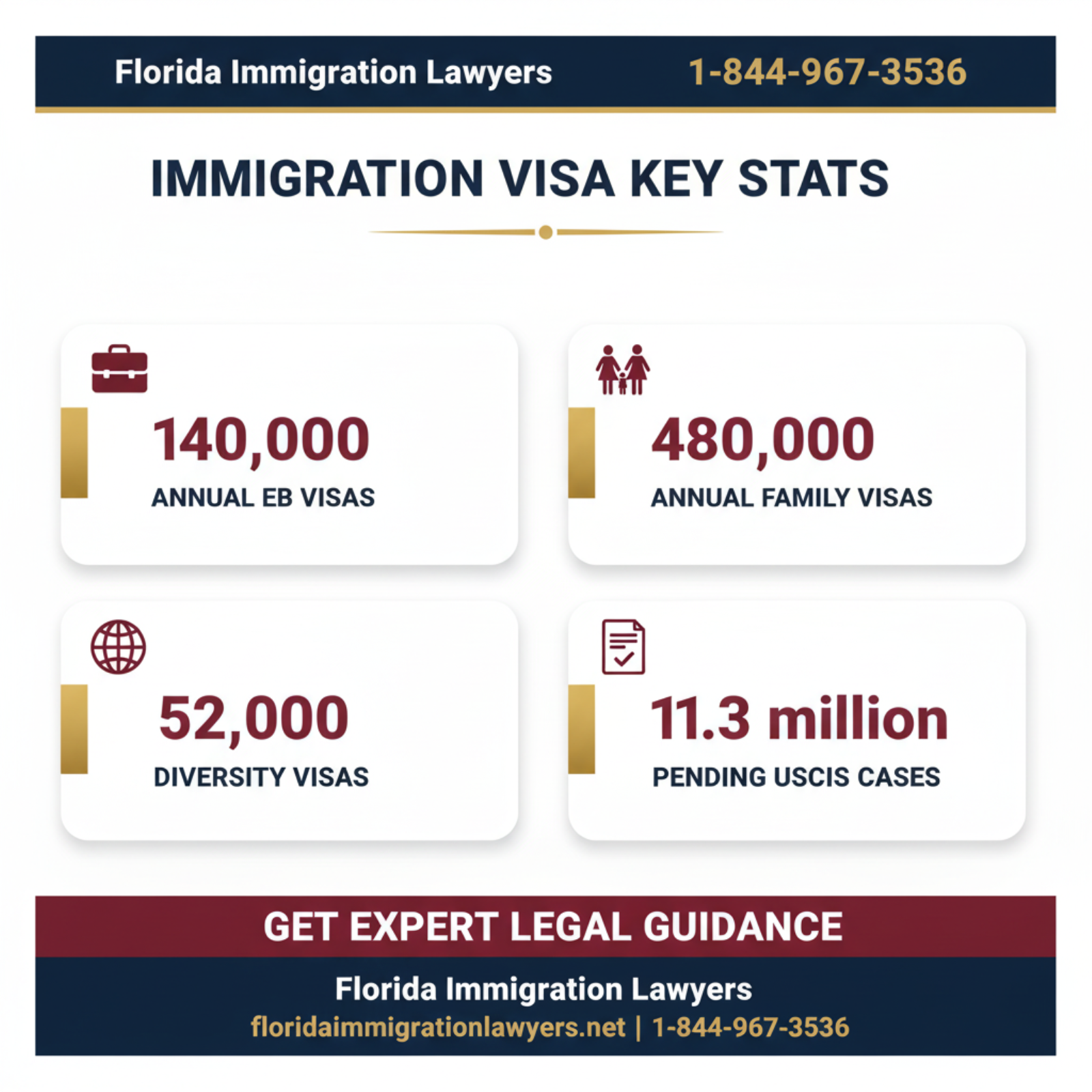
The Visa Bulletin October 2025 is more than just a list of dates; it's a critical tool governing the flow of immigrant visas into the United States. Published monthly by the U.S. Department of State, it reflects the demand for immigrant visas versus the annual supply set by Congress. For immigrants in Florida, understanding this document is paramount, as it directly impacts when you can move forward with your green card application.
Each October marks the beginning of a new fiscal year for immigration, often leading to significant shifts in visa categories. New annual visa numbers become available, which can result in advancements in cut-off dates for various preference categories. However, these movements are not guaranteed and depend heavily on global demand. Our Florida immigration lawyer team closely monitors these trends to provide timely advice.
The bulletin features two primary charts: "Final Action Dates" and "Dates for Filing Applications." The Final Action Dates chart indicates when an immigrant visa can actually be issued or when USCIS can approve an adjustment of status application. The Dates for Filing Applications chart allows certain applicants to submit their adjustment of status applications earlier. USCIS determines monthly which chart applicants should use for filing. Always check the USCIS website for their specific instructions for the visa bulletin october 2025.
The Visa Bulletin categorizes immigrants into family-sponsored and employment-based preferences. Family-sponsored categories include F1, F2A, F2B, F3, and F4. Employment-based categories range from EB-1 to EB-5. Each category has specific annual limits and a backlog, leading to varying wait times depending on your country of birth. For those living in Florida, especially in areas like Coral Springs, Miami, or Orlando, the impact of these dates can be profound due to high demand across many visa categories.
Keeping track of the visa bulletin october 2025 and subsequent bulletins like the Visa Bulletin November 2025 and Visa Bulletin December 2025 is essential for strategic planning. While some may look at the Visa Bulletin October 2024 for trends, each year brings new dynamics. Our firm, Florida Immigration Lawyers, provides tailored advice to help you navigate these complex requirements and understand your eligibility for immigration benefits.
Navigating Your Immigration Journey: A Step-by-Step Guide with the Visa Bulletin
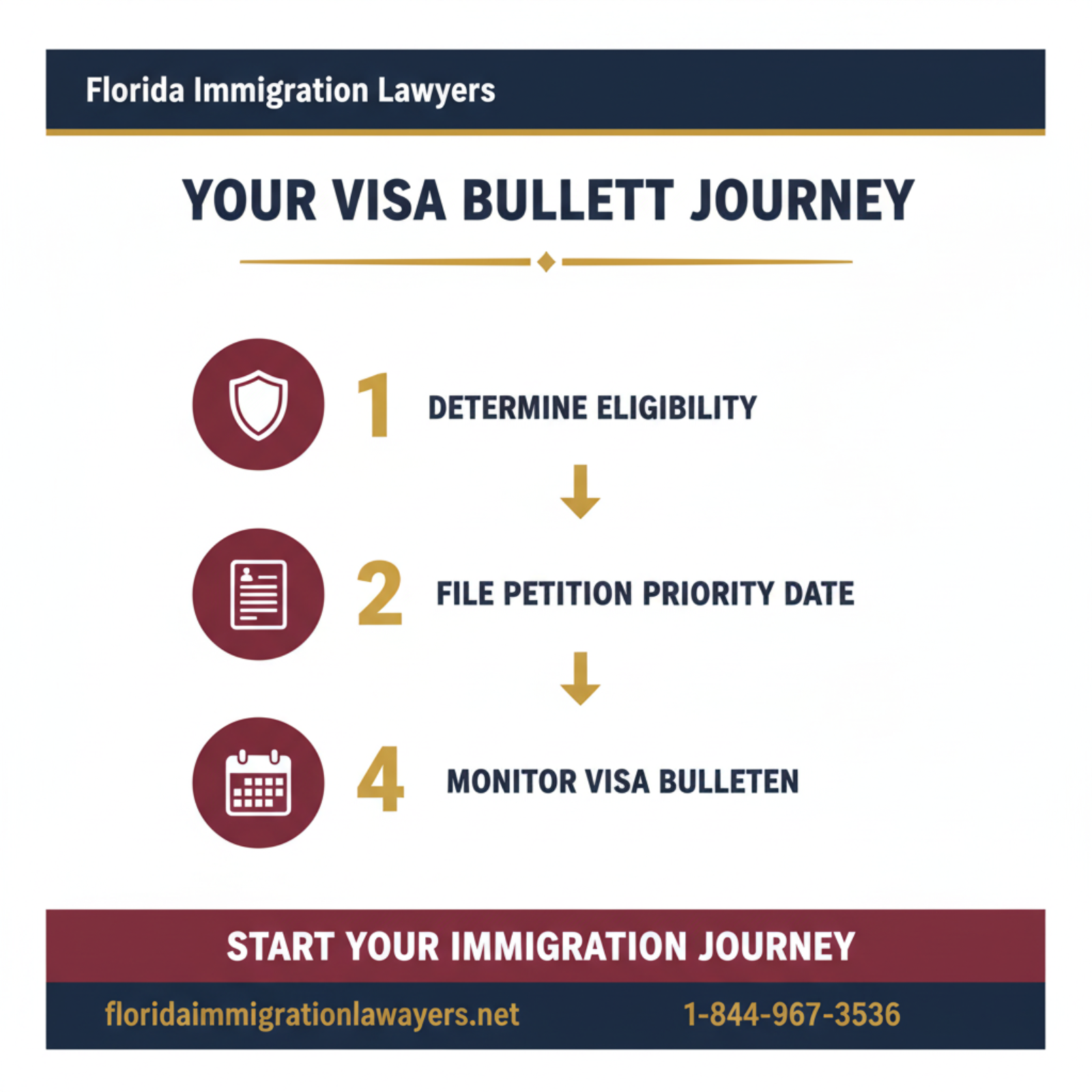
Understanding the Visa Bulletin October 2025 is just one part of a larger immigration process. Here's a general step-by-step guide on how the bulletin fits into your path to a green card, particularly for those pursuing family-sponsored or employment-based visas.
- Establish a Priority Date: Your journey begins when a relative or employer files a petition on your behalf. This is usually Form I-130 (family-sponsored visas) or Form I-140 (employment-based visas). The date USCIS receives this petition becomes your priority date, determining your place in the visa queue.
- Monitor the Visa Bulletin: Once your petition is approved, you must regularly check the Visa Bulletin. For the Visa Bulletin October 2025, look for your specific preference category and country of chargeability. You need to see if your priority date is "current" according to either the "Final Action Dates" or "Dates for Filing Applications" chart, based on USCIS's monthly guidance. This is a critical step for all immigrants in Florida.
- Prepare for Filing (Dates for Filing Chart): If your priority date is current under the "Dates for Filing Applications" chart, and USCIS permits its use for adjustment of status, you may be able to prepare and submit your Form I-485, Application to Register Permanent Residence or Adjust Status. This window of opportunity allows you to get your application into the system earlier.
-
File for Adjustment of Status or Begin Consular Processing (Final Action Dates Chart): When your priority date becomes current under the "Final Action Dates" chart, you can either:
- Adjust Status in the U.S.: If you are already in the United States and eligible, you can file Form I-485 with USCIS. This process often involves biometrics, an interview at a USCIS field office (such as Miami or Orlando), and potentially obtaining work authorization (EAD) and advance parole.
- Consular Processing Abroad: If you are outside the U.S. or ineligible for adjustment of status, your case will be processed through a U.S. embassy or consulate. This involves submitting documents to the National Visa Center (NVC) and attending an interview. The travel.state.gov website provides detailed guidance on consular processing.
- Attend Interview and Receive Decision: For adjustment of status, you will typically attend an interview at a local USCIS office in Florida. For consular processing, the interview takes place at a U.S. embassy or consulate. If approved, you will eventually receive your green card.
- Post-Approval Steps: Once you receive your green card, you become a Lawful Permanent Resident. Remember that certain conditions may apply for conditional green cards. After a certain period, you may become eligible to apply for U.S. citizenship. Our Florida immigration lawyer team can guide you through this entire process.
Essential Documents for Your Green Card Application: A Comprehensive Checklist
Preparing your green card application requires meticulous attention to detail and a comprehensive set of documents. Missing or incorrect documents can significantly delay your case. While the exact list varies by case type, here's a general checklist of documents you will typically need, especially when your priority date becomes current under the Visa Bulletin October 2025.
- Form I-485, Application to Register Permanent Residence or Adjust Status (if adjusting status in the U.S.).
- Form I-130 (or I-140) approval notice (Form I-797, Notice of Action).
- Two passport-style photographs meeting USCIS specifications.
- Copy of your birth certificate (with certified translation if not in English).
- Copy of your passport biographical page and visa pages.
- Form I-94, Arrival/Departure Record (if applicable, showing lawful entry).
- Proof of continuous lawful presence since your last entry (e.g., I-797 approval notices).
- Form I-864, Affidavit of Support (for family-sponsored visas) and supporting financial documents.
- Form I-693, Report of Medical Examination and Vaccination Record (completed by a USCIS-approved civil surgeon in Florida).
- Certified police and court records for any arrests or convictions.
- Marriage certificate (if applying as a spouse).
- Divorce decrees or death certificates for any previous marriages.
- For employment-based cases: employment verification letter, pay stubs, educational degrees, and professional licenses.
- Copies of all previous immigration applications and decisions.
Gathering these documents can be daunting. Our legal team at Florida Immigration Lawyers can help you compile a complete and accurate application package, ensuring you meet all USCIS requirements. This reduces the risk of Requests for Evidence (RFEs) and unnecessary delays for your application in Florida, addressing common concerns about USCIS processing times.
Visa Bulletin October 2025: Timeline and Processing Expectations in Florida
The processing timeline for your green card application, influenced by the Visa Bulletin October 2025, can vary significantly. Factors include your specific visa category, country of chargeability, the volume of applications, and the efficiency of the particular USCIS field office or consulate handling your case.
For those in Florida, particularly individuals filing at the Miami, Orlando, or Tampa field offices, processing times can fluctuate. While the Visa Bulletin October 2025 provides the eligibility window, it does not dictate how quickly your application will be adjudicated once filed. USCIS publishes average processing times on its website, which are estimates and not guarantees. Generally, processing in 2025 has seen some improvements, but backlogs persist in high-demand areas.
The start of the new fiscal year in October often brings hope for faster movement due to the reset of annual visa quotas. However, high demand, especially in populous states like Florida, can still lead to backlogs. Some categories may have waiting periods that span many years. This is why the Visa Bulletin is not moving quickly for everyone.
After filing your Form I-485 for adjustment of status Florida, you can generally expect a receipt notice within weeks. Biometrics appointments typically follow within 1-2 months. If you apply for work authorization and advance parole concurrently, these documents may be issued within several months. The final interview and decision can take anywhere from several months to a few years, depending on the office and case complexity.
Consular processing timelines are also influenced by the National Visa Center (NVC) and the specific U.S. embassy or consulate. You will be scheduled for an interview, which can take several months to over a year after your priority date becomes current. It's important to monitor not only the Visa Bulletin October 2025 but also subsequent bulletins like Visa Bulletin November 2025 and Visa Bulletin December 2025 for any changes. While Visa Bulletin November 2025 predictions often circulate, official movements are only confirmed upon release. Consulting with an experienced Florida immigration lawyer can help you manage expectations and prepare for potential delays.
Cost Factors and Fee Breakdown for Your Immigration Application
Navigating the immigration process, especially when your priority date becomes current with the Visa Bulletin October 2025, involves various costs. These fees are subject to change, so it's crucial to consult the official USCIS website or a Florida immigration lawyer for the most current information. We cannot provide specific fee amounts here due to their dynamic nature, but we can outline the typical cost categories.
The primary costs associated with most green card applications include:
- USCIS Filing Fees: These are fees paid directly to U.S. Citizenship and Immigration Services for various forms, such as Form I-485, I-130, or I-140. For adjustment of status, this often covers the application, biometrics, work authorization, and advance parole when filed concurrently.
- Medical Examination Fees: You are required to undergo a medical examination by a USCIS-approved civil surgeon. The cost for this exam is paid directly to the civil surgeon's office and varies by provider and location within Florida.
- Translation Fees: If any of your supporting documents are not in English, they must be accompanied by a certified English translation. There will be costs associated with obtaining these translations.
- Attorney Fees: Retaining an experienced Florida immigration lawyer like those at Florida Immigration Lawyers is an investment in the success of your application. Our fees cover legal advice, document preparation, and representation. While an upfront cost, legal representation can prevent costly mistakes and delays. We offer a free consultation to discuss your case and our fee structure.
- Travel Expenses: For consular processing, you will incur travel costs to attend your interview abroad. Even for adjustment of status, you might have travel expenses for biometrics appointments or interviews at a USCIS field office in Florida.
It is essential to budget carefully for these expenses. Be wary of any individuals or organizations that promise specific outcomes or unusually low fees without proper credentials. Always ensure you are working with a licensed attorney for legal advice. Our team at Florida Immigration Lawyers believes in transparent fee structures and will discuss all anticipated costs during your initial consultation.
Do not navigate this complex and often overwhelming process alone. The stakes are too high to risk errors or missed deadlines, especially with critical updates like the Visa Bulletin October 2025. Contact Florida Immigration Lawyers today for dedicated legal support and peace of mind. Our team is ready to assist you.
Common Mistakes to Avoid When Interpreting the Visa Bulletin and Filing Your Application
The immigration process is fraught with potential pitfalls. Even with the clarity provided by the Visa Bulletin October 2025, many applicants make common mistakes that can lead to delays, denials, or even more severe immigration consequences. Avoiding these errors is crucial for a successful outcome.
- Misinterpreting Priority Dates: A common error is misunderstanding when your priority date is truly current. Always check both the "Final Action Dates" and "Dates for Filing Applications" charts and refer to the specific guidance from USCIS on which chart to use each month.
- Using the Wrong Filing Chart: USCIS often specifies which chart should be used for adjustment of status applications. Failing to adhere to this monthly instruction can result in your application being rejected. Always check the USCIS website for their latest guidance on the visa bulletin october 2025 or subsequent bulletins.
- Submitting Incomplete Documentation: An incomplete application is a recipe for delays. Missing birth certificates, translations, financial documents, or medical exam results will trigger a Request for Evidence (RFE), significantly prolonging your case.
- Failing to Disclose All Information: Attempting to hide arrests, past immigration violations, or other relevant information can lead to severe consequences, including accusations of misrepresentation and permanent bars from the U.S. Always be truthful and disclose all pertinent details to your attorney.
- Missing Deadlines: The immigration process is time-sensitive. Missing deadlines for RFEs, interview requests, or responding to other USCIS notices can lead to your application being denied or abandoned.
- Not Updating Your Address: If you move while your application is pending, you must notify USCIS of your new address promptly using Form AR-11. Failure to do so can result in missed notices or even a denial of your case.
- Incorrectly Calculating Age for CSPA: The Child Status Protection Act (CSPA) can "freeze" a child's age, preventing them from "aging out." Calculating CSPA age is complex and often requires legal expertise. An incorrect calculation can lead to a child losing their eligibility.
- Traveling Without Advance Parole: If you have a pending adjustment of status application, leaving the U.S. without an approved advance parole document (Form I-131) can result in the abandonment of your application. Always consult your attorney before international travel.
- Not Seeking Legal Counsel: Attempting to navigate the intricate immigration system, especially with complex documents like the Visa Bulletin October 2025, without the guidance of an experienced Florida immigration lawyer is a significant risk. An attorney can help you avoid costly mistakes and ensure compliance with all laws.
When to Call a Florida Immigration Lawyer: Your Partner in the Process
While the information in the Visa Bulletin October 2025 provides a roadmap, the actual journey can be fraught with unexpected turns. Knowing when to seek professional legal assistance from a Florida immigration lawyer is paramount for a smooth and successful process. Florida Immigration Lawyers are here to provide expert guidance tailored to your unique situation.
You should consider contacting our firm if any of the following scenarios apply to you:
- Complex Visa Bulletin Interpretation: If you are unsure how to interpret the Visa Bulletin October 2025 for your specific category or country, or if your priority date is close to becoming current. Understanding the nuances of "Final Action Dates" versus "Dates for Filing Applications" can be tricky.
- Previous Immigration Issues: If you have had past visa denials, deportations, criminal convictions, or overstayed a previous visa. These issues often require waivers or specialized legal strategies. Our deportation defense attorneys are also ready to assist.
- Requests for Evidence (RFEs) or Notices of Intent to Deny (NOIDs): Receiving an RFE or NOID from USCIS indicates a problem with your application. Responding correctly and comprehensively is critical to avoid denial.
- Changes in Personal Circumstances: If you get married, divorced, have a child, or change jobs while your application is pending, these changes can impact your eligibility and require proper notification to USCIS.
- Seeking U.S. Citizenship: After obtaining your green card, our firm can also guide you through the citizenship application process.
Our team at Florida Immigration Lawyers serves clients across Florida, including Coral Springs, Miami, Orlando, and Tampa. We understand the local context and the specific challenges faced by immigrants in our state. Don't leave your future to chance; let our experienced attorneys provide the clarity and advocacy you need. We are available to discuss your case and explore your options, whether it's related to asylum, family-sponsored visas, or business immigration.
About Florida Immigration Lawyers
Florida Immigration Lawyers is a leading immigration law firm dedicated to serving individuals, families, and businesses across the entire state of Florida. With years of combined experience, our compassionate and highly skilled attorneys are committed to providing exceptional legal representation and guidance through every step of the complex U.S. immigration system. We understand the profound impact that immigration matters have on your life and future, and we approach each case with the personalized attention and dedication it deserves.
Our comprehensive services cover a wide range of immigration needs, including family immigration, business immigration, asylum, deportation defense, citizenship, and more. Whether you are seeking a visa, facing removal proceedings, or aspiring for U.S. citizenship, our firm is equipped to advocate for your best interests. We pride ourselves on our proactive approach, meticulous preparation, and unwavering commitment to our clients.
Why choose Florida Immigration Lawyers? We offer free consultations to assess your case, transparent communication, and 24/7 availability to address your urgent concerns. Our team is bilingual, with Se Habla Español services readily available, ensuring that language is never a barrier to quality legal assistance. From our office in Coral Springs, we proudly serve clients throughout Florida, providing strategic solutions and peace of mind. Your immigration journey is our priority.
Contact Florida Immigration Lawyers today at 1-844-967-3536 or visit our website at https://www.floridaimmigrationlawyers.net to learn more about how we can assist you.
Sources and References
- U.S. Citizenship and Immigration Services (USCIS)
- U.S. Department of State - Visa Bulletin
- 8 U.S.C. § 1151 - Worldwide level of immigrant visas
- 8 U.S.C. § 1153 - Allocation of immigrant visas
- Immigration and Nationality Act (INA) Section 203(a) - Family-sponsored immigrants
- Immigration and Nationality Act (INA) Section 203(b) - Employment-based immigrants
- 8 CFR Part 245 - Adjustment of Status to that of Person Admitted for Permanent Residence
This article provides general legal information and is not intended as legal advice. Every case is unique, and outcomes depend on specific facts and circumstances. Contact an attorney for advice about your particular situation.
Your immigration journey in Florida is a significant undertaking, and the Visa Bulletin October 2025 is just one piece of the puzzle. Ensure you have expert legal guidance to navigate every step confidently. For a free consultation and personalized advice on your specific immigration needs, call Florida Immigration Lawyers today at 1-844-967-3536. Se Habla Español - Estamos aquí para ayudarle.
Do Not Navigate This Process Alone
Our experienced immigration attorneys are ready to fight for you. Get a free, confidential consultation today.
Se Habla Español
Frequently Asked Questions
Florida Immigration Lawyers
Immigration Attorney | Founder, Vasquez Law Firm
U.S. Air Force veteran and immigration attorney with thousands of cases resolved. J.D., NCCU School of Law. AILA member. Admitted to the 4th, 5th, and 11th Circuit Courts.
Available 24/7 - Free Evaluations
Related Legal Services
Our Florida immigration attorneys can help you with free immigration consultation, experienced immigration attorneys and business immigration. Call today at 1-844-967-3536 for a free consultation.
Related Links
Related Topics
Free Legal Consultation
Discuss your case with our experienced attorneys. We're available 24/7.
Se Habla Español - Estamos aquí para ayudarle.
Related Articles
BIA Remand: Immigration Appeal Guidance in Florida
A BIA remand can be a pivotal moment in your immigration case, offering a second chance but also presenting significant legal complexities. For Florida residents, understanding the process, from why a case is remanded to navigating new hearings in courts like Miami or Orlando, is crucial. This guide explains the step-by-step process, essential documents, timelines, and cost factors associated with a BIA remand. Learn to avoid common mistakes and recognize when expert legal counsel is indispensable to protect your rights and pursue a favorable outcome. Florida Immigration Lawyers offers comprehensive support for these challenging cases.
Consular Processing for Florida Applicants | VLF Florida
Discover the essential steps for consular processing as a Florida applicant. Learn about the necessary documents, potential pitfalls, and when to consult a lawyer. Call Florida Immigration Lawyers for personalized assistance!
Immediate Relative Petition in Florida: A Guide | VLF Florida
Explore how to file an immediate relative petition in Florida, focusing on Form I-130. Learn about eligibility, timelines, and common mistakes. Call us at 1-844-967-3536 for a free consultation.
Understanding the I-864 Affidavit of Support in Florida
Learn about the I-864 Affidavit of Support and how it affects sponsorship in Florida. Understand the requirements and common pitfalls. Contact Florida Immigration Lawyers for expert guidance.
