BIA Remand: Immigration Appeal Guidance in Florida
A BIA remand can be a pivotal moment in your immigration case, offering a second chance but also presenting significant legal complexities. For Florida residents, understanding the process, from why a case is remanded to navigating new hearings in courts like Miami or Orlando, is crucial. This guide explains the step-by-step process, essential documents, timelines, and cost factors associated with a BIA remand. Learn to avoid common mistakes and recognize when expert legal counsel is indispensable to protect your rights and pursue a favorable outcome. Florida Immigration Lawyers offers comprehensive support for these challenging cases.

A BIA remand occurs when the Board of Immigration Appeals (BIA) sends an immigration case back to the Immigration Judge (IJ) for further proceedings. This typically happens if the BIA finds a legal error, new evidence needs to be considered, or additional factual findings are required. For individuals in Florida, a remand means the case is not over, and new hearings will be scheduled at immigration courts like those in Miami or Orlando. Navigating this stage requires careful attention to detail and understanding complex legal arguments, making experienced legal representation crucial to protect your rights and pursue a favorable outcome.
- A BIA remand returns your case to an Immigration Judge for new proceedings.
- It often signifies a legal error or the need for new evidence consideration.
- Timelines vary, but the process demands immediate and strategic action.
- Legal counsel is essential to effectively prepare for and present your case on remand.
- A remand is an opportunity to strengthen your case and achieve a positive resolution.
Facing an immigration appeal can be one of the most stressful experiences in a person's life, especially when the Board of Immigration Appeals (BIA) decides to send your case back to the Immigration Judge (IJ) for further review. This process, known as a BIA remand, is a critical juncture in your immigration journey. It signifies that your case is not entirely resolved and presents both challenges and opportunities. For individuals and families in Florida, understanding what a remand means and how to navigate the subsequent proceedings in local immigration courts, such as those in Miami or Orlando, is paramount.
This comprehensive guide from Florida Immigration Lawyers will demystify the BIA remand process. We will explore why remands occur, what steps you can expect, and how strategic legal representation can significantly impact your case's outcome. Do not face the complexities of a BIA remand alone; every detail matters. Call Florida Immigration Lawyers at 1-844-967-3536 for a free consultation to discuss your specific situation and understand your options.
What is a BIA Remand and Why Does it Happen?
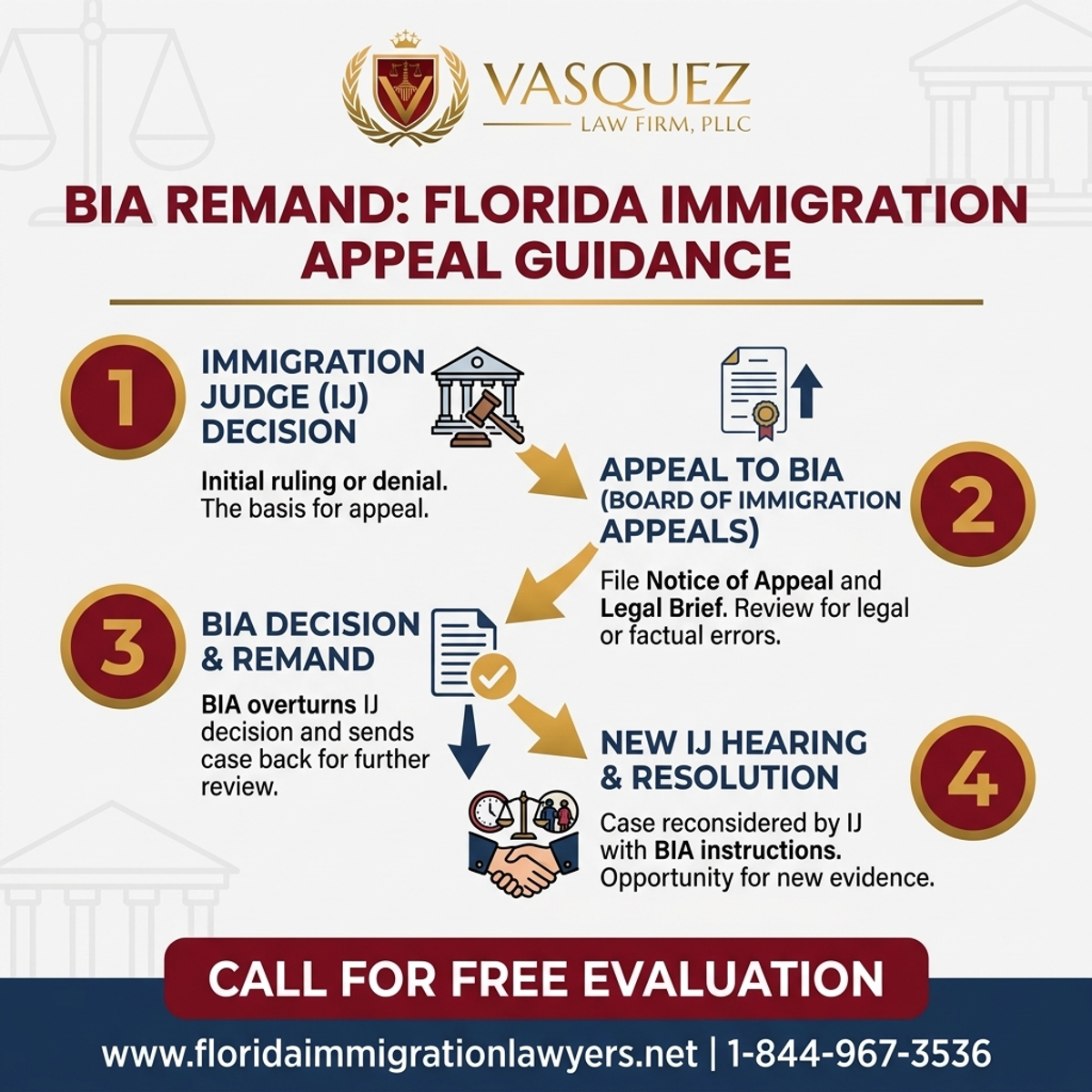
The Board of Immigration Appeals (BIA) is the highest administrative body for interpreting and applying immigration laws. When an Immigration Judge (IJ) issues a decision, either granting or denying relief, either party (the immigrant or the government) can appeal that decision to the BIA. After reviewing the appeal, the BIA has several options: it can affirm the IJ's decision, reverse it, or, in many cases, issue a BIA remand. A remand means the BIA sends the case back to the original Immigration Judge for additional action.
A remand typically occurs for specific reasons outlined in the BIA's decision. Common grounds for a remand include a finding that the Immigration Judge made a legal error, such as misinterpreting a statute or regulation, or failed to consider all relevant evidence. Sometimes, new evidence becomes available that was not presented at the initial hearing, or the BIA may determine that further factual findings are necessary to properly adjudicate the case. The BIA may also remand a case if there have been significant changes in immigration law or policy that affect the outcome. For Florida residents, understanding the specific reasons for your remand is the first crucial step in preparing for the next phase of your case in courts like the Miami Immigration Court or the Orlando Immigration Court. These proceedings are governed by the Executive Office for Immigration Review (EOIR) regulations, particularly 8 CFR Part 1003.
Step-by-Step: Navigating Your BIA Remand Case in Florida
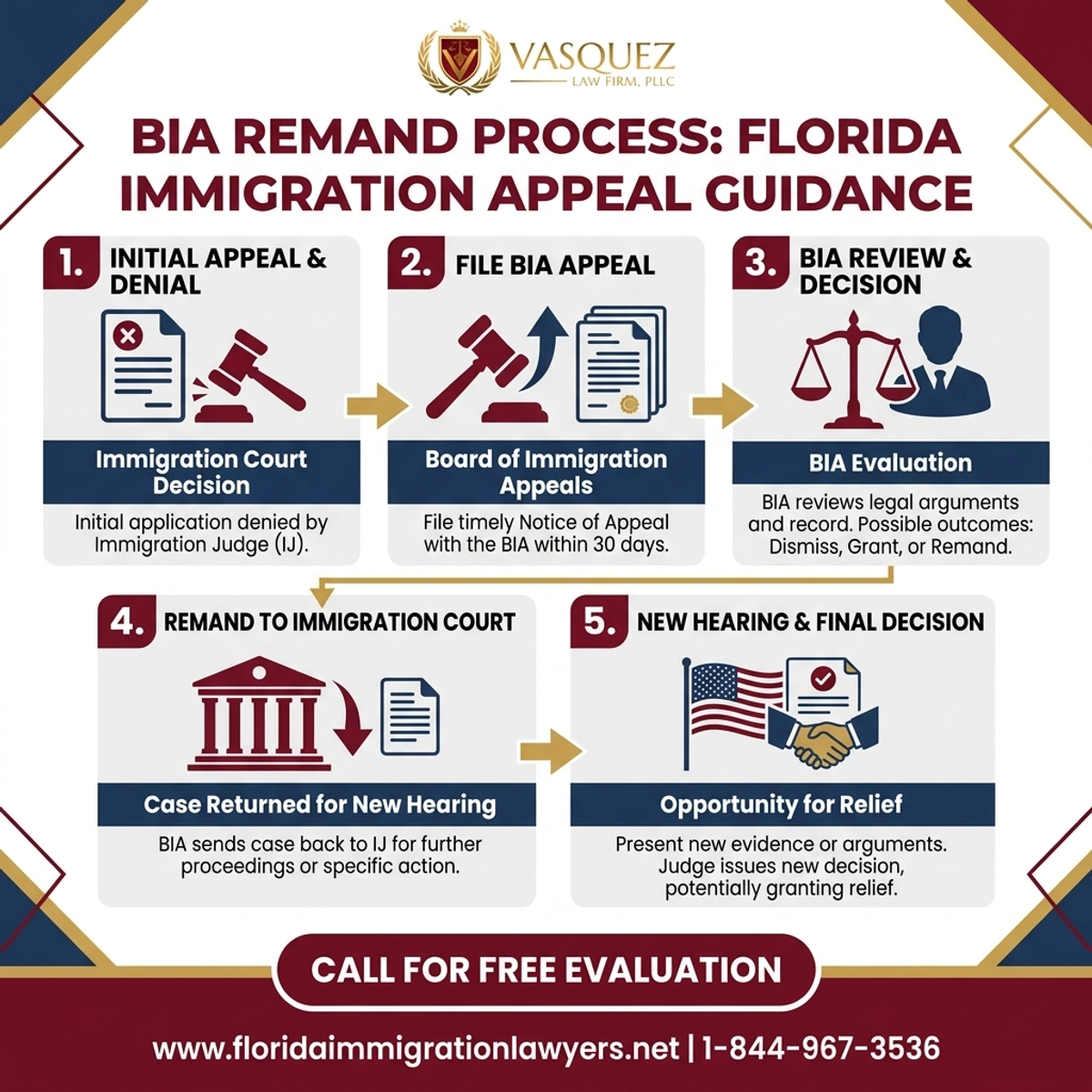
Once the BIA issues a remand, your case returns to the jurisdiction of the Immigration Judge. This means your case will be reactivated on the IJ's docket at the relevant Florida immigration court. The process following a BIA remand involves several critical steps, each requiring careful attention and preparation. Understanding this sequence is vital for anyone facing a renewed hearing in Florida, whether in Miami, Orlando, or another jurisdiction.
- Notice of Remand and Docketing: After the BIA issues its decision, the case file is transmitted back to the immigration court. The court will then issue a new Notice of Hearing, informing you and your attorney of the upcoming court date. It is essential to ensure your contact information with the court is up-to-date.
- Reviewing the BIA Decision: Your legal team will thoroughly analyze the BIA's remand order. This decision will detail the specific instructions for the Immigration Judge, such as issues to be re-evaluated, evidence to consider, or legal standards to apply. This review shapes the strategy for the new hearings.
- New Hearings Before the Immigration Judge: The Immigration Judge will hold new hearings as instructed by the BIA. These hearings might involve presenting additional evidence, calling new witnesses, or re-arguing legal points based on the BIA's directives. The scope of these hearings is limited by the BIA's remand order.
- Presenting New Evidence or Arguments: If the remand was due to a need for new evidence, you will have the opportunity to present it. This could include updated country conditions reports for asylum cases, new medical records, or changes in family circumstances. All evidence must be properly submitted and authenticated.
- Immigration Judge's New Decision: After considering all arguments and evidence, the Immigration Judge will issue a new decision. This decision must comply with the BIA's instructions. This could be a grant of relief, a denial, or even another appealable decision. Effective deportation defense during this stage is crucial.
- Potential for Further Appeal: If either party is dissatisfied with the Immigration Judge's new decision, they may have the option to file another appeal with the BIA, or in certain circumstances, directly with a federal circuit court. This highlights the prolonged and intricate nature of immigration litigation.
This complex process underscores the necessity of experienced legal representation. A skilled immigration attorney can help you navigate each step, prepare compelling arguments, and ensure compliance with all procedural requirements. This focused support is essential to protect your rights and pursue a favorable outcome in your Florida immigration case. We encourage you to contact us for support with your immigration matters.
Essential Documents and Evidence for a Remand Hearing
A BIA remand often necessitates the presentation of new or supplemental documents and evidence to the Immigration Judge. The specific types of documents required will depend heavily on the BIA's instructions and the original grounds for your immigration case. However, meticulous organization and strategic presentation of evidence are universally critical for success in Florida immigration courts.
When preparing for a remand hearing, consider gathering the following types of documents:
- BIA Remand Decision: This is the most crucial document, as it outlines the specific directives for the Immigration Judge and defines the scope of the new proceedings.
- Prior Filings and Exhibits: A complete copy of your original application, all previously submitted evidence, and transcripts from earlier hearings are essential for reference.
- New Factual Evidence: If the remand was for considering new facts, gather any evidence that has emerged since your last hearing. This could include updated medical records, new employment letters, recent tax documents, or proof of changed family circumstances.
- Updated Country Conditions Reports: For asylum or withholding of removal cases, new reports from reputable sources (e.g., State Department, UN, human rights organizations) about conditions in your home country may be vital.
- Witness Statements and Affidavits: Sworn statements from individuals who can attest to your character, circumstances, or the facts of your case can be powerful.
- Expert Witness Reports: In complex cases, reports from psychological experts, country conditions experts, or forensic document examiners may be necessary.
- Legal Briefs and Memoranda: Your attorney will prepare legal arguments addressing the BIA's instructions and applying relevant law to your updated facts.
- Proof of Identity and Nationality: Always have readily available documents proving your identity and nationality, even if previously submitted.
Step-by-Step Process — BIA Remand: Immigration Appeal Guidance in Florida
For individuals in Florida, ensuring that all documents are properly translated into English by a certified translator, if necessary, and submitted in accordance with local court rules is paramount. Failure to adhere to these procedural requirements can severely jeopardize your case. An experienced attorney from Florida Immigration Lawyers can help you identify, gather, organize, and present all necessary documentation effectively for your remand hearing.
Understanding Timelines and Processing Expectations for BIA Remands
The timeline for a BIA remand case can be unpredictable and often varies significantly depending on several factors. After the BIA issues its remand order, the case file must be physically returned to the relevant immigration court in Florida, such as the Miami Immigration Court or the Orlando Immigration Court. This administrative transfer alone can take weeks or even months. Once the court receives the file, it will then be docketed, and a new hearing date will be scheduled.
Factors that influence the processing time include:
- Court Caseload: Immigration courts, particularly in high-volume areas like Florida, often have extensive backlogs. The busy docket of the Immigration Judge assigned to your case will directly impact when your new hearings are scheduled.
- Complexity of the Remand: Simple remands (e.g., to consider a single document) may proceed faster than complex ones requiring extensive new evidence, multiple witnesses, or detailed legal analysis.
- Availability of Parties: Scheduling must account for the availability of the immigrant, their attorney, and the Department of Homeland Security (DHS) counsel.
- BIA's Specific Instructions: Some remands require the IJ to conduct entirely new proceedings, while others might involve a brief hearing to address a narrow issue.
- Motions and Continuances: Either party may file motions that extend the timeline, such as motions for continuance to gather more evidence or secure expert testimony.
While there is no fixed timeline, individuals in Florida should prepare for the remand process to take several months, if not longer, from the date of the BIA's decision to the issuance of a new decision by the Immigration Judge. Patience and persistent follow-up are essential. Your attorney will monitor your case diligently and keep you informed of any developments. For those facing asylum claims, these delays can be particularly taxing, making consistent legal support invaluable.
Cost Factors and Legal Fees in BIA Remand Cases
Navigating a BIA remand involves various potential costs, and it is crucial for individuals in Florida to understand these financial implications. While there are typically no new government filing fees directly associated with the remand itself, the primary cost factor will be legal representation. Immigration law is complex, and the expertise required for a remand hearing is substantial, often involving intricate legal research, evidence gathering, and courtroom advocacy.
Legal fees for BIA remand cases can vary widely based on the complexity of the case, the amount of work required, and the attorney's experience. Attorneys may charge an hourly rate, a flat fee for specific stages of the remand process, or a combination of both. During your initial consultation with Florida Immigration Lawyers, our team will provide a transparent explanation of our fee structure, ensuring you understand the costs involved upfront. Investing in experienced legal counsel is often a wise decision, as it can prevent costly mistakes and significantly increase your chances of a favorable outcome. A poorly handled remand can lead to further appeals or even a final order of removal, incurring far greater financial and personal costs in the long run. We believe in accessible legal services and offer flexible payment options to help ease the burden. We encourage you to contact our firm for detailed information.
Key Statistics — BIA Remand: Immigration Appeal Guidance in Florida
The Path Forward: Further Appeals and Federal Circuit Court Review
A BIA remand does not always mark the end of your immigration journey. After the Immigration Judge issues a new decision following the remand, either you or the Department of Homeland Security (DHS) may still have the option to appeal this new decision back to the BIA. This potential for a second BIA appeal underscores the intricate and often protracted nature of immigration litigation. Each subsequent appeal requires a thorough review of the IJ's new findings and a compelling legal argument demonstrating any errors.
Beyond the BIA, in certain circumstances, a final order from the BIA (after a remand and subsequent appeal) can be challenged in the federal circuit courts of appeals. For cases originating in Florida, this would typically involve an appeal to the U.S. Court of Appeals for the Eleventh Circuit. Appealing to a federal circuit court is an extremely complex and specialized area of law, requiring extensive knowledge of administrative law, federal court procedure, and constitutional law. These appeals are not a re-evaluation of the facts but rather a review of whether the BIA or IJ made a legal error or abused their discretion. Strict deadlines apply to federal court appeals, typically 30 days from the date of the BIA's final order, making immediate action and expert legal counsel absolutely critical. Our firm is equipped to handle these advanced stages of litigation, providing comprehensive support for every step of your immigration case. For general information on immigration processes, you can visit USCIS online.
Do not navigate this complex process alone. Contact Florida Immigration Lawyers today to secure experienced legal representation for your BIA remand and any subsequent appeals.
Common Mistakes to Avoid During a BIA Remand
Navigating a BIA remand is fraught with potential pitfalls that can jeopardize your case. Avoiding these common mistakes is crucial for a successful outcome in Florida's immigration courts:
- Missing Deadlines: Immigration proceedings operate under strict deadlines for filing documents, motions, and appeals. Missing even one deadline can lead to adverse decisions, including a final order of removal.
- Failing to Understand the BIA's Instructions: The BIA's remand order contains specific directives. Misinterpreting these instructions can lead to presenting irrelevant evidence or arguments, wasting valuable court time and opportunity.
- Not Presenting All Required New Evidence: If the remand was for new evidence, failing to gather and properly submit all necessary documentation can result in the Immigration Judge refusing to consider it or denying your case.
- Representing Yourself: The legal complexities of a BIA remand are immense. Attempting to represent yourself without an attorney significantly increases the risk of procedural errors, missed legal arguments, and an unfavorable outcome.
- Assuming the Case is Over: A remand is not a final victory or defeat; it is a continuation. Becoming complacent or giving up hope prematurely can lead to missed opportunities to strengthen your case.
- Failing to Update Contact Information: Moving or changing phone numbers without updating the court and your attorney can lead to missed hearing notices, resulting in orders of removal in absentia.
- Providing Inconsistent Information: Any new testimony or evidence must be consistent with previous statements, unless there's a clear, credible reason for the change. Inconsistencies can damage your credibility.
- Underestimating the Government's Position: DHS counsel will actively participate in remand hearings. Underestimating their arguments or failing to prepare a robust counter-response can be detrimental.
- Not Seeking Florida-Specific Legal Advice: Immigration law has national standards, but local court procedures and nuances in Florida immigration courts can vary. General advice may not be sufficient.
- Ignoring the Potential for Further Appeals: Even after a remand, the journey may not be over. Failing to plan for potential subsequent appeals to the BIA or federal courts can leave you unprepared.
When to Call a Lawyer for Your BIA Remand Case
The moment you receive a BIA remand decision, it is imperative to consult with an experienced immigration attorney. While a remand offers a second chance, it also introduces a new layer of complexity to your case. Florida Immigration Lawyers specializes in navigating these intricate post-appeal proceedings and can provide the critical guidance you need. You should call a lawyer if:
- You have received a BIA remand decision and are unsure of the next steps.
- The BIA's decision involves complex legal questions or requires new evidence presentation.
- You are facing deportation proceedings in a Florida immigration court and the remand directly impacts your eligibility for relief.
- You believe the Immigration Judge made errors in the initial proceedings that the BIA has now instructed to be reconsidered.
- You need assistance gathering and presenting new evidence effectively, especially if it involves expert testimony or country conditions reports.
- There have been changes in your personal circumstances or in immigration law that could affect your case on remand.
- You require assistance with family immigration or business immigration matters that are part of the remanded case.
Our attorneys at Florida Immigration Lawyers possess a deep understanding of BIA procedures, federal circuit court appeals, and the specific nuances of Florida immigration courts. We can help you strategically prepare, present your case compellingly, and protect your rights at every stage. Do not risk your future by attempting to navigate this challenging process alone.
About Florida Immigration Lawyers
Florida Immigration Lawyers is a leading immigration law firm dedicated to serving individuals and families across the entire state of Florida. With offices strategically located to assist clients from Miami to Jacksonville, we are committed to providing compassionate, effective, and results-driven legal representation. Our team of highly skilled attorneys understands the profound impact immigration matters have on our clients' lives and works tirelessly to achieve the best possible outcomes.
We specialize in a comprehensive range of immigration services, including deportation defense, asylum claims, family-based petitions, business immigration, naturalization, and complex appeals, including BIA remand cases. Our firm prides itself on its client-centered approach, ensuring clear communication, personalized strategies, and unwavering support. We are available 24/7 to address your urgent needs and offer free consultations to help you understand your legal options without obligation. When you choose Florida Immigration Lawyers, you choose a partner dedicated to your success, equipped with the knowledge and experience to navigate even the most challenging immigration landscapes. Visit our website at https://www.floridaimmigrationlawyers.net to learn more.
Sources and References
- U.S. Citizenship and Immigration Services (USCIS)
- Executive Office for Immigration Review (EOIR)
- 8 U.S.C. Chapter 12 - Immigration and Nationality Act (INA)
- 8 CFR Part 1003 - Executive Office for Immigration Review
Related services: immigration waivers, humanitarian protection programs, DACA renewal and applications, temporary protected status (TPS).
This article provides general legal information and is not intended as legal advice. Every case is unique, and outcomes depend on specific facts and circumstances. Contact an attorney for advice about your particular situation.
If you are facing a BIA remand or any immigration challenge in Florida, do not delay. Contact Florida Immigration Lawyers today for a free consultation at 1-844-967-3536. Se Habla Espanol - Estamos aqui para ayudarle.
Do Not Navigate This Process Alone
Our experienced immigration attorneys are ready to fight for you. Get a free, confidential consultation today.
Se Habla Español
Frequently Asked Questions
Florida Immigration Lawyers
Immigration Attorney | Founder, Vasquez Law Firm
U.S. Air Force veteran and immigration attorney with thousands of cases resolved. J.D., NCCU School of Law. AILA member. Admitted to the 4th, 5th, and 11th Circuit Courts.
Available 24/7 - Free Evaluations
Related Legal Services
Our Florida immigration attorneys can help you with business immigration, asylum protection and deportation defense. Call today at 1-844-967-3536 for a free consultation.
Related Links
Related Topics
Free Legal Consultation
Discuss your case with our experienced attorneys. We're available 24/7.
Se Habla Español - Estamos aquí para ayudarle.
Related Articles
Consular Processing for Florida Applicants | VLF Florida
Discover the essential steps for consular processing as a Florida applicant. Learn about the necessary documents, potential pitfalls, and when to consult a lawyer. Call Florida Immigration Lawyers for personalized assistance!
Immediate Relative Petition in Florida: A Guide | VLF Florida
Explore how to file an immediate relative petition in Florida, focusing on Form I-130. Learn about eligibility, timelines, and common mistakes. Call us at 1-844-967-3536 for a free consultation.
Understanding the I-864 Affidavit of Support in Florida
Learn about the I-864 Affidavit of Support and how it affects sponsorship in Florida. Understand the requirements and common pitfalls. Contact Florida Immigration Lawyers for expert guidance.
Refugee Resettlement in Florida: Key Steps | VLF Florida
Discover the essential steps for refugee resettlement in Florida, focusing on areas like Hollywood. Learn about the process, common mistakes, and when to seek legal advice. Call Florida Immigration Lawyers at 1-844-967-3536 for a free consultation.