Consular Processing for Florida Applicants | VLF Florida
Discover the essential steps for consular processing as a Florida applicant. Learn about the necessary documents, potential pitfalls, and when to consult a lawyer. Call Florida Immigration Lawyers for personalized assistance!

For individuals in Florida seeking to bring family members to the United States or to immigrate themselves through employment-based visas, consular processing is often the pathway to achieving their American dream. This intricate process involves working with U.S. Citizenship and Immigration Services (USCIS) and the Department of State, culminating in an interview at a U.S. embassy or consulate abroad. Given its complexity and the potential for delays or denials, understanding each step and having expert legal guidance is paramount. At VLF Florida, we specialize in immigration law, helping Florida applicants navigate the consular processing journey with confidence and clarity.
What is Consular Processing?
Consular processing is the procedure through which an individual applies for an immigrant visa at a U.S. embassy or consulate in their home country (or country of last residence) to enter the United States as a lawful permanent resident. It is distinct from "adjustment of status," which is for individuals already present in the U.S. and applying for a green card without leaving the country. Consular processing is typically required when the applicant is living outside the U.S. or is ineligible to adjust their status domestically. This pathway is a critical component of U.S. immigration policy, facilitating the entry of hundreds of thousands of immigrants each year who have been sponsored by U.S. citizens or lawful permanent residents, or by U.S. employers.
Eligibility for Consular Processing
Eligibility for consular processing hinges on several factors, primarily the existence of an approved immigrant visa petition. This petition is usually filed by a U.S. citizen or lawful permanent resident relative (Form I-130, Petition for Alien Relative) or a U.S. employer (Form I-140, Immigrant Petition for Alien Worker). Once the petition is approved by USCIS, and a visa number becomes available (if applicable, based on the visa bulletin), the case is then forwarded to the National Visa Center (NVC) for further processing. Key eligibility criteria include:
- Approved Petition: A valid I-130 or I-140 petition must be approved by USCIS.
- Visa Availability: For many categories, particularly family-sponsored and employment-based visas, there is an annual limit, meaning applicants must wait for a visa number to become available based on their priority date.
- Admissibility: Applicants must be admissible to the U.S. under immigration law, meaning they do not fall under any grounds of inadmissibility such as certain health issues, criminal convictions, or previous immigration violations.
- Location: The applicant must be outside the United States or ineligible for adjustment of status.
Understanding your specific eligibility is the first crucial step, and an experienced immigration attorney can help assess your situation and confirm the appropriate path forward.
The Consular Processing Journey: A Step-by-Step Guide
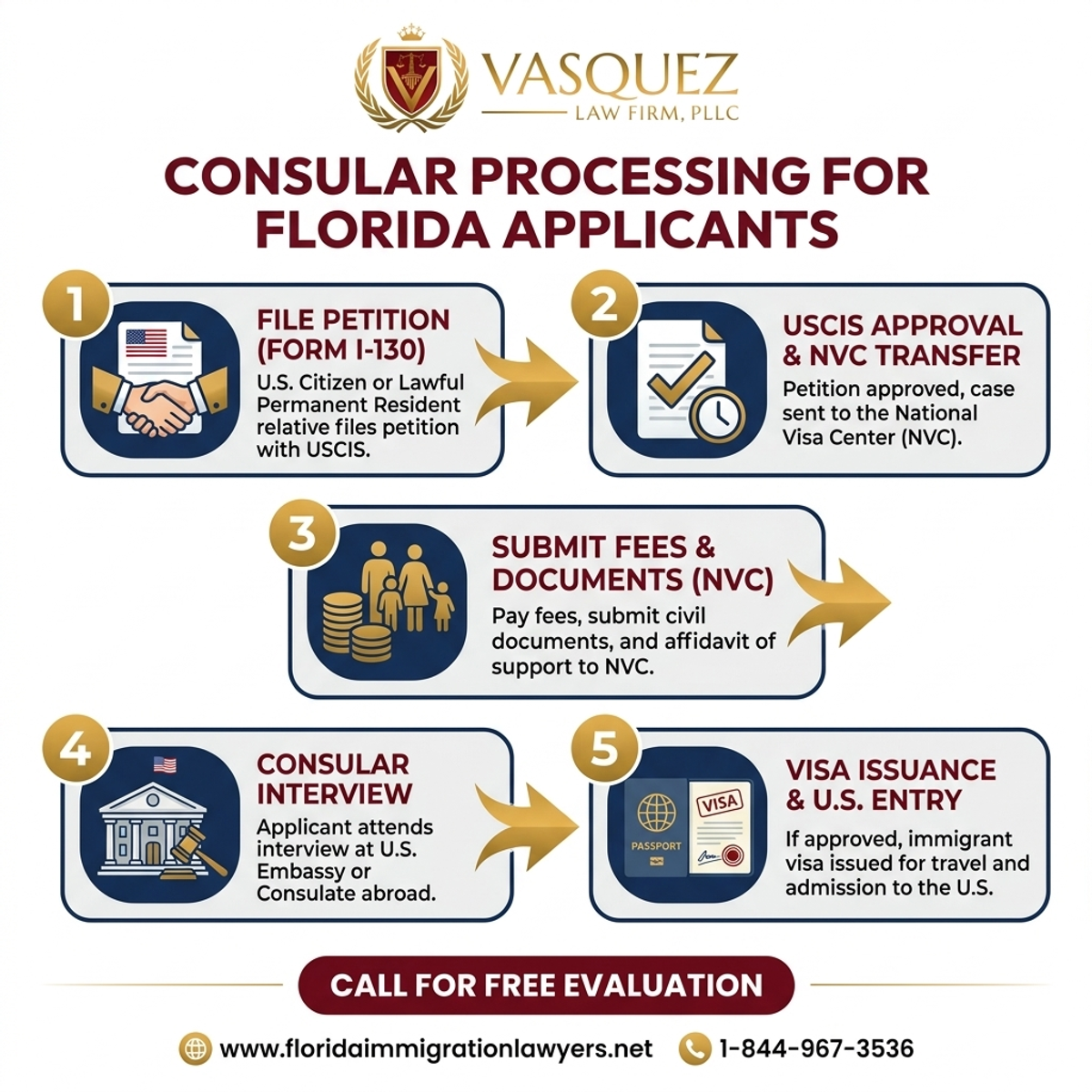
The consular processing journey is a multi-stage process that demands meticulous attention to detail and timely submission of documents. Here’s a breakdown of the typical steps involved:
Step 1: Petition Filing and Approval
The process begins when a U.S. citizen or lawful permanent resident files an I-130 petition for a qualifying relative, or a U.S. employer files an I-140 petition for an eligible employee. This petition is submitted to USCIS. Once USCIS reviews the petition and determines that the relationship or employment offer is legitimate and meets all legal requirements, they approve the petition. This approval is the foundation upon which the rest of the consular processing rests. The time it takes for USCIS to approve these petitions can vary significantly depending on the type of petition and current processing times.
Step 2: National Visa Center (NVC) Processing
Upon USCIS approval, the case is transferred to the National Visa Center (NVC), a division of the Department of State. The NVC acts as a liaison between USCIS and the U.S. embassy or consulate abroad. During this phase, the NVC will assign a case number and an invoice ID number. The applicant and petitioner will then be required to:
- Pay Fees: Immigrant Visa Application Processing Fee and Affidavit of Support Fee.
- Submit Affidavit of Support (Form I-864): The petitioner must demonstrate they can financially support the immigrant, ensuring they will not become a public charge. This involves submitting financial documents like tax returns, W-2s, and employment verification.
- Complete Online Immigrant Visa Application (DS-260): The applicant must accurately complete this detailed form, providing biographical information, family history, previous addresses, and immigration history. Any inaccuracies or omissions can lead to delays or denials.
- Collect and Submit Civil Documents: This includes birth certificates, marriage certificates, police certificates from all countries lived in, court and prison records (if applicable), military records, and passport copies. All documents must be translated into English if not originally in English and certified.
The NVC reviews all submitted documents for completeness and compliance. This stage is often where many applicants encounter delays due to missing or incorrect documentation. Thorough preparation here is key.
Step-by-Step Process — Consular Processing for Florida Applicants | VLF Florida
Step 3: Medical Examination
After the NVC confirms all documents are complete, the applicant will receive instructions to undergo a medical examination by an authorized panel physician in their country of residence. This exam is crucial to ensure the applicant meets the health-related admissibility requirements for U.S. immigration. The physician will review medical history, conduct a physical examination, perform specific tests (e.g., for tuberculosis, syphilis), and administer required vaccinations. The results are sent directly to the embassy or consulate in a sealed envelope, which must not be opened by the applicant.
Step 4: The Immigrant Visa Interview
Once the NVC has processed all documents and a visa number is available, they will schedule the immigrant visa interview at the designated U.S. embassy or consulate. The applicant will receive an appointment letter detailing the date, time, and required documents to bring. The interview is a critical step where a consular officer will review the application, verify the submitted documents, and ask questions to determine the applicant's eligibility and admissibility to the United States. Common questions revolve around the relationship with the petitioner, future plans in the U.S., and immigration history. Honesty, consistency, and preparedness are vital during this interview.
Step 5: Visa Issuance and Travel to the U.S.
If the interview is successful and the consular officer approves the visa, the applicant's passport will be stamped with an immigrant visa. The applicant will also receive a sealed "visa packet" (do not open this!) to present to Customs and Border Protection (CBP) upon entry to the U.S. The immigrant visa is typically valid for up to six months. Upon entry into the U.S., the applicant becomes a lawful permanent resident, and their physical Green Card will be mailed to their U.S. address within a few weeks or months.
Navigating Common Challenges and Potential Pitfalls in Consular Processing
While the steps of consular processing may seem straightforward on paper, the reality often involves navigating a maze of potential challenges and pitfalls. Being aware of these can help applicants prepare more effectively and mitigate risks. This is where the expertise of a Florida immigration lawyer becomes invaluable.
Administrative Processing (221(g))
One of the most common challenges is being placed into "administrative processing" under Section 221(g) of the Immigration and Nationality Act. This occurs when a consular officer determines that additional information or review is needed before a final decision can be made on a visa application. It can involve security checks, requests for additional documents, or further investigation into the applicant's background. Administrative processing can last anywhere from a few weeks to several months, causing significant anxiety and delays. There is often little an applicant can do directly to expedite this process, highlighting the need for patience and sometimes, legal intervention to inquire about the status.
Grounds of Inadmissibility
A significant hurdle for many applicants is encountering grounds of inadmissibility. U.S. immigration law outlines various reasons why an individual might be denied entry, even if they have an approved petition. These can include:
- Health-Related Grounds: Certain communicable diseases, failure to provide proof of required vaccinations, or certain physical or mental disorders.
- Criminal Grounds: Convictions for certain crimes (crimes involving moral turpitude, drug offenses), or even admissions of committing such crimes. This area can be particularly complex, and understanding the nuances is crucial. If you have a criminal record, even a minor one, it's essential to consult with an attorney experienced in deportation defense and inadmissibility waivers.
- Security and Related Grounds: Terrorism-related activities, espionage, or membership in certain organizations.
- Public Charge Grounds: If the applicant is deemed likely to become primarily dependent on the government for subsistence. The Affidavit of Support (I-864) is designed to mitigate this, but insufficient income or assets from the petitioner can still lead to issues.
- Immigration Violations: Previous overstays, unlawful presence, misrepresentation to gain immigration benefits, or prior removals/deportations. For those who have faced or fear asylum issues or deportation, these past events can significantly complicate consular processing.
If an applicant is found inadmissible, they may be eligible for a waiver. Waivers are complex applications that require compelling evidence and a strong legal argument, often demonstrating extreme hardship to a qualifying U.S. citizen or lawful permanent resident relative. Navigating waivers without legal counsel is extremely challenging.
Missing or Incorrect Documentation
Even seemingly minor errors in documentation can lead to significant delays. Forgetting a birth certificate, submitting an uncertified translation, or providing an outdated police certificate can result in the NVC or consular officer requesting additional information, pushing back the interview date, or even leading to a denial. Double-checking every document and ensuring all requirements are met is paramount.
Interview Stress and Misunderstandings
The interview itself can be a source of stress. Language barriers, cultural differences, or simply nervousness can lead to misunderstandings or inconsistent answers that may raise red flags for the consular officer. Proper interview preparation, including understanding potential questions and practicing responses, can significantly reduce this risk.
The Indispensable Role of an Experienced Florida Immigration Attorney
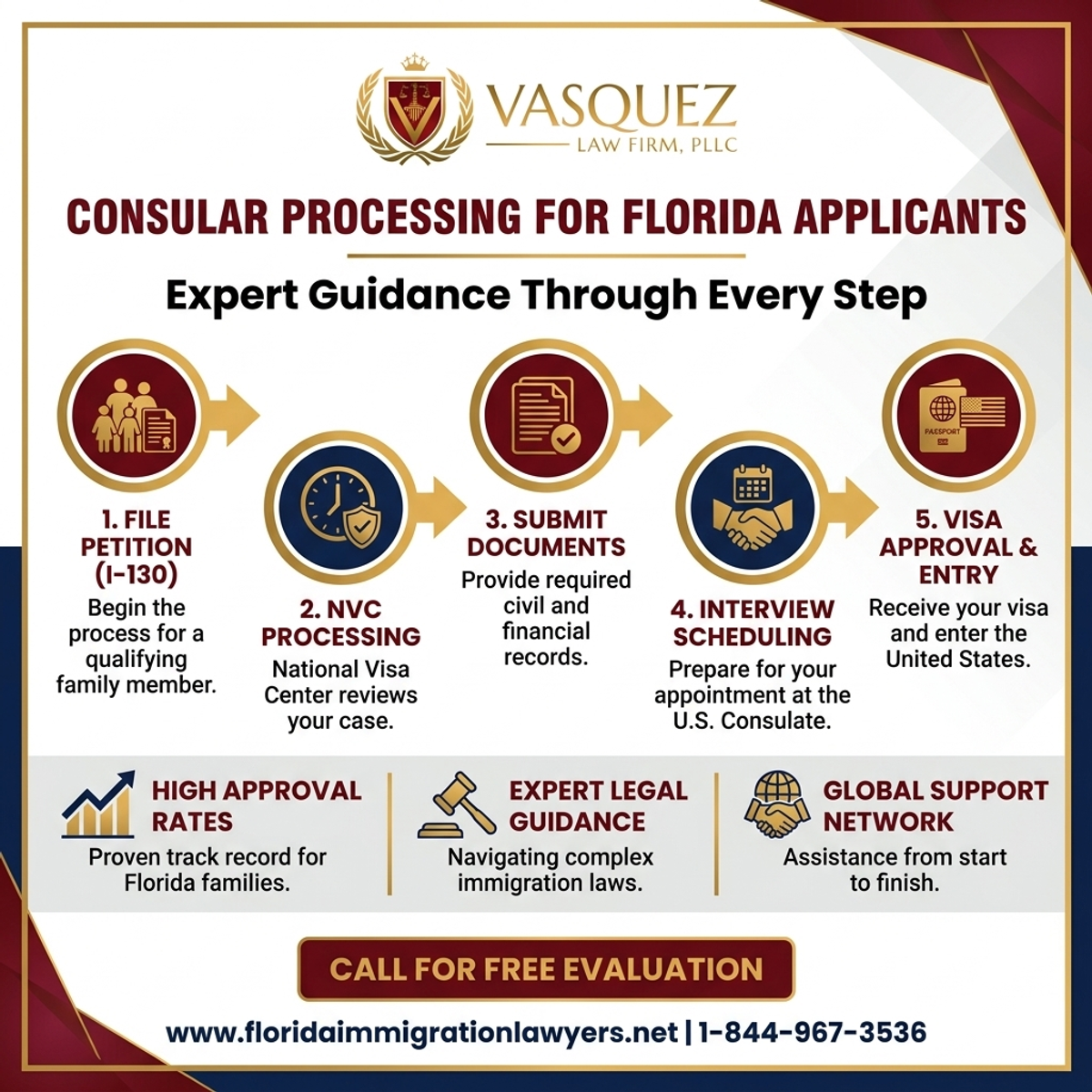
Given the intricate nature of consular processing and the potential for complex challenges, retaining an experienced immigration lawyer is not just beneficial—it's often critical for a successful outcome. At VLF Florida, our dedicated team of attorneys provides comprehensive support at every stage of the process.
Expert Guidance from Start to Finish
Our attorneys provide personalized guidance, starting with an initial assessment of your eligibility and advising on the most appropriate visa category. We help you understand the specific requirements for your case, ensuring you embark on the journey with a clear roadmap.
Meticulous Document Preparation and Review
One of the most common reasons for delays or denials is incomplete or incorrect documentation. Our team meticulously reviews all petitions, forms (like the DS-260 and I-864), and supporting civil documents. We ensure everything is accurately completed, properly translated, and submitted in the correct format, minimizing the risk of RFEs (Requests for Evidence) from USCIS or NVC.
Strategic Interview Preparation
The immigrant visa interview is often the most nerve-wracking part of the process. We prepare our clients thoroughly, conducting mock interviews, discussing potential questions, and advising on how to present themselves confidently and truthfully. This preparation helps alleviate anxiety and ensures clients are well-equipped to articulate their case effectively to the consular officer.
Key Statistics — Consular Processing for Florida Applicants | VLF Florida
Addressing Complex Issues and Inadmissibility
Should your case involve complexities such as previous immigration violations, criminal history, or other potential grounds of inadmissibility, our attorneys are adept at developing strategies to overcome these hurdles. We can assess eligibility for waivers, prepare compelling waiver applications, and advocate on your behalf to present the strongest possible case for admissibility. Our experience in navigating these intricate legal areas can make a decisive difference.
Advocacy and Communication
We act as your advocate, communicating with USCIS, the NVC, and the U.S. embassy or consulate on your behalf. This includes responding to inquiries, tracking case status, and addressing any issues that arise during administrative processing. Having a legal representative can often streamline communication and ensure your case progresses as efficiently as possible.
Post-Denial Strategies
In the unfortunate event of a denial, our work doesn't stop. We analyze the reasons for denial, advise on potential avenues for appeal or reapplication, and develop strategies to address the issues that led to the unfavorable decision. Our goal is to exhaust every possible legal option to help you achieve your immigration objectives.
Sources and References
- U.S. Citizenship and Immigration Services (USCIS)
- Executive Office for Immigration Review (EOIR)
- U.S. Department of State - Bureau of Consular Affairs
- Immigration and Nationality Act (INA), 8 U.S.C. Chapter 12
Do Not Navigate This Process Alone
Our experienced immigration attorneys are ready to fight for you. Get a free, confidential consultation today.
Se Habla Español
Frequently Asked Questions
Florida Immigration Lawyers
Immigration Attorney | Founder, Vasquez Law Firm
U.S. Air Force veteran and immigration attorney with thousands of cases resolved. J.D., NCCU School of Law. AILA member. Admitted to the 4th, 5th, and 11th Circuit Courts.
Available 24/7 - Free Evaluations
Related Legal Services
Our Florida immigration attorneys can help you with business immigration, asylum protection and deportation defense. Call today at 1-844-967-3536 for a free consultation.
Related Links
Related Topics
Free Legal Consultation
Discuss your case with our experienced attorneys. We're available 24/7.
Se Habla Español - Estamos aquí para ayudarle.
Related Articles
Immediate Relative Petition in Florida: A Guide | VLF Florida
Explore how to file an immediate relative petition in Florida, focusing on Form I-130. Learn about eligibility, timelines, and common mistakes. Call us at 1-844-967-3536 for a free consultation.
Understanding the I-864 Affidavit of Support in Florida
Learn about the I-864 Affidavit of Support and how it affects sponsorship in Florida. Understand the requirements and common pitfalls. Contact Florida Immigration Lawyers for expert guidance.
Refugee Resettlement in Florida: Key Steps | VLF Florida
Discover the essential steps for refugee resettlement in Florida, focusing on areas like Hollywood. Learn about the process, common mistakes, and when to seek legal advice. Call Florida Immigration Lawyers at 1-844-967-3536 for a free consultation.
Immediate Relative Petition in Florida: What to Know
Learn how to file an immediate relative petition in Florida with ease. Our guide covers eligibility, steps, and common mistakes. Contact Florida Immigration Lawyers for expert advice.
