VAWA Immigration Relief for Abused Spouses in Florida
Discover how the Violence Against Women Act (VAWA) provides crucial immigration relief for abused spouses in Florida. Learn about eligibility, the application process, and how Florida Immigration Lawyers can assist you.
- Eligibility for self-petitioning under VAWA
- Protection for both women and men
- Relief options available in Florida
Introduction
Imagine living in fear, not only because of domestic abuse but also due to the threat of deportation. This is the harsh reality for many immigrant spouses in Florida. The Violence Against Women Act (VAWA) provides a lifeline, allowing victims to seek immigration relief independently. In this article, we will explore the specifics of how VAWA can help abused spouses in Florida, what the process entails, and how Florida Immigration Lawyers can assist you. Call us at 1-844-YO-PELEO for a free case review.
For immigrant victims of domestic violence, the legal landscape can seem daunting and isolating. The fear of losing legal status often traps individuals in abusive relationships, making it incredibly difficult to seek help. VAWA was specifically designed to address this vulnerability, offering a pathway to safety and stability without relying on the abuser's cooperation or knowledge.
Understanding your rights and the protections available under VAWA is the first step towards reclaiming your life. Florida Immigration Lawyers are committed to empowering survivors by providing expert legal guidance and compassionate support throughout this critical journey. We believe no one should have to choose between their safety and their legal status.
What is VAWA and How Does It Help Abused Spouses?
VAWA, enacted as part of the Immigration and Nationality Act, allows abused spouses, children, and parents of U.S. citizens or lawful permanent residents to self-petition for a visa. This means they can apply for legal status without their abuser's knowledge or consent, providing a pathway to safety and legal independence.
As of 2026, VAWA remains a critical tool for those facing domestic violence. It empowers victims by giving them the legal means to escape abusive relationships while maintaining their immigration status. This protection extends to both women and men, recognizing that abuse knows no gender.
The term "abuse" under VAWA is broad, encompassing not only physical violence but also extreme cruelty, which can include psychological, emotional, sexual, and financial abuse. This comprehensive definition ensures that many forms of suffering are recognized and can form the basis for a VAWA petition. For example, an abuser who controls all finances, isolates their spouse from family, or constantly threatens deportation can be found to have committed extreme cruelty.
A key benefit of VAWA is the ability to self-petition. This removes the abuser's power over the victim's immigration future, a common tactic used to maintain control. Once a VAWA petition is filed, the abuser cannot withdraw it, offering a crucial layer of protection. Florida Immigration Lawyers can help you understand if your experiences fall under VAWA's definition of abuse and guide you through the confidential self-petitioning process.
How to Apply for VAWA Immigration Relief in Florida?
To apply for VAWA, you must file Form I-360, Petition for Amerasian, Widow(er), or Special Immigrant. You need to provide evidence of your relationship to the abuser, proof of their U.S. citizenship or residency, and documentation of the abuse. The application process is confidential and designed to protect your privacy.
- Gather Documentation: Collect evidence of the abuse and your relationship, such as police reports, medical records, and affidavits. It's crucial to gather as much evidence as possible, even if it seems minor. This can include photos of injuries, text messages, emails, journal entries, therapist notes, and statements from friends, family, or clergy who witnessed the abuse or its effects. A detailed personal statement from the victim is also vital.
- File Form I-360: Submit your petition along with all necessary documentation to the USCIS. Upon initial review, USCIS may issue a "prima facie" determination, which provides temporary immigration benefits, such as deferred action and eligibility for employment authorization, while your petition is being fully adjudicated. This provides immediate relief and security.
- Await Decision: USCIS will review your application. Processing times can vary, but typically take several months. During this period, it's important to be prepared for potential Requests for Evidence (RFEs) from USCIS, which require timely and thorough responses. Florida Immigration Lawyers can assist in preparing and submitting a comprehensive RFE response to strengthen your case.
- Next Steps: If approved, you may apply for work authorization and eventually apply for adjustment of status. An approved I-360 VAWA petition makes you eligible to apply for a green card (lawful permanent residency) without needing the abuser's sponsorship, granting you long-term stability and independence in the United States.
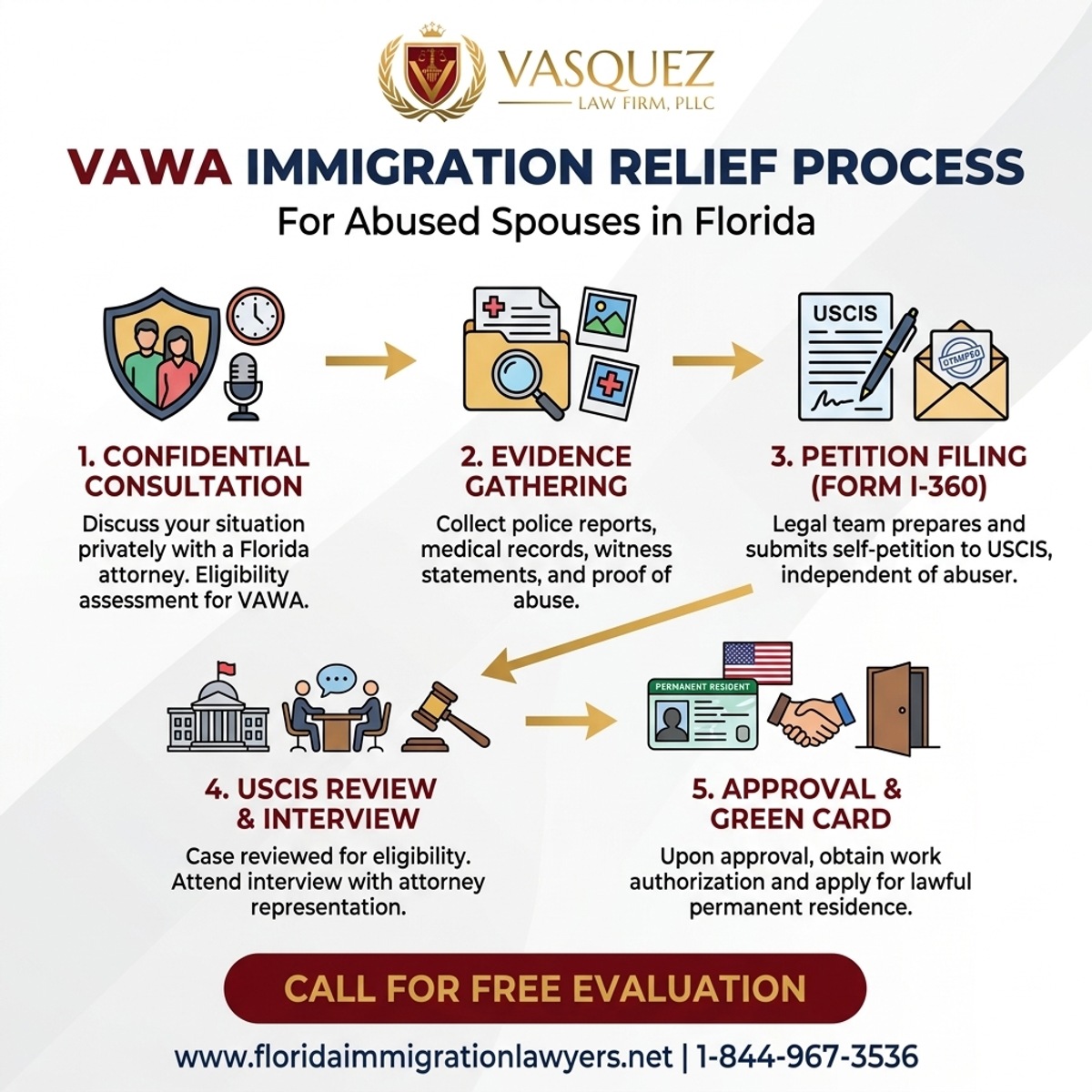
Step-by-Step Process — VAWA Immigration Relief for Abused Spouses in Florida
What Documents Are Required for a VAWA Petition?
The VAWA petition requires substantial documentation to establish eligibility and evidence of abuse. Applicants should prepare the following:
- Proof of relationship to the abuser (marriage certificate, birth certificates). If a marriage certificate is unavailable, other evidence like joint bank accounts, leases, or affidavits from people who knew your relationship can be used. It's crucial to demonstrate that you entered the marriage in good faith, not solely for immigration purposes, despite the abuse.
- Proof of the abuser's U.S. citizenship or residency (copy of passport, green card, birth certificate). If the abuser refuses to provide these documents, an attorney can help identify alternative ways to establish their status, such as public records or affidavits from others who know their status.
- Evidence of abuse (police reports, restraining orders, medical records). This category is broad and can include photos of injuries, detailed personal statements, therapist or counselor letters, affidavits from witnesses (friends, family, religious leaders, shelter workers), text messages, emails, or call logs that demonstrate controlling or abusive behavior. Even if you don't have official reports, a strong personal statement and witness accounts can be powerful.
- Statements from the victim and witnesses. Your personal statement is often the most critical piece of evidence, detailing the abuse, your fear, and how it impacted your life. Witness statements should corroborate your account, describing what they observed or were told about the abuse.
Gathering these documents can be emotionally challenging, but it is a vital step. Florida Immigration Lawyers understand the sensitivity involved and can help you compile a robust application package, ensuring all necessary evidence is properly presented to USCIS. Our team is here to provide a supportive and confidential environment during this process.
Timeline and Processing Expectations for VAWA Applications
Understanding the timeline for VAWA applications can help manage expectations. As of 2026, the typical process involves several stages:
| Stage | Typical Timeframe | Notes |
|---|---|---|
| Initial Review | 2-3 months | USCIS reviews the application for completeness and may issue a prima facie determination, granting temporary benefits. |
| Decision on I-360 | 6-12 months | Processing times can vary based on case complexity, USCIS caseloads, and whether a Request for Evidence (RFE) is issued. |
| Work Authorization | 1-2 months post-approval | Eligible once I-360 is approved, or sometimes earlier with a prima facie determination. Filing Form I-765 is required. |
| Adjustment of Status | 6-18 months | Varies by individual circumstances, including interview scheduling and background checks. This leads to permanent residency. |
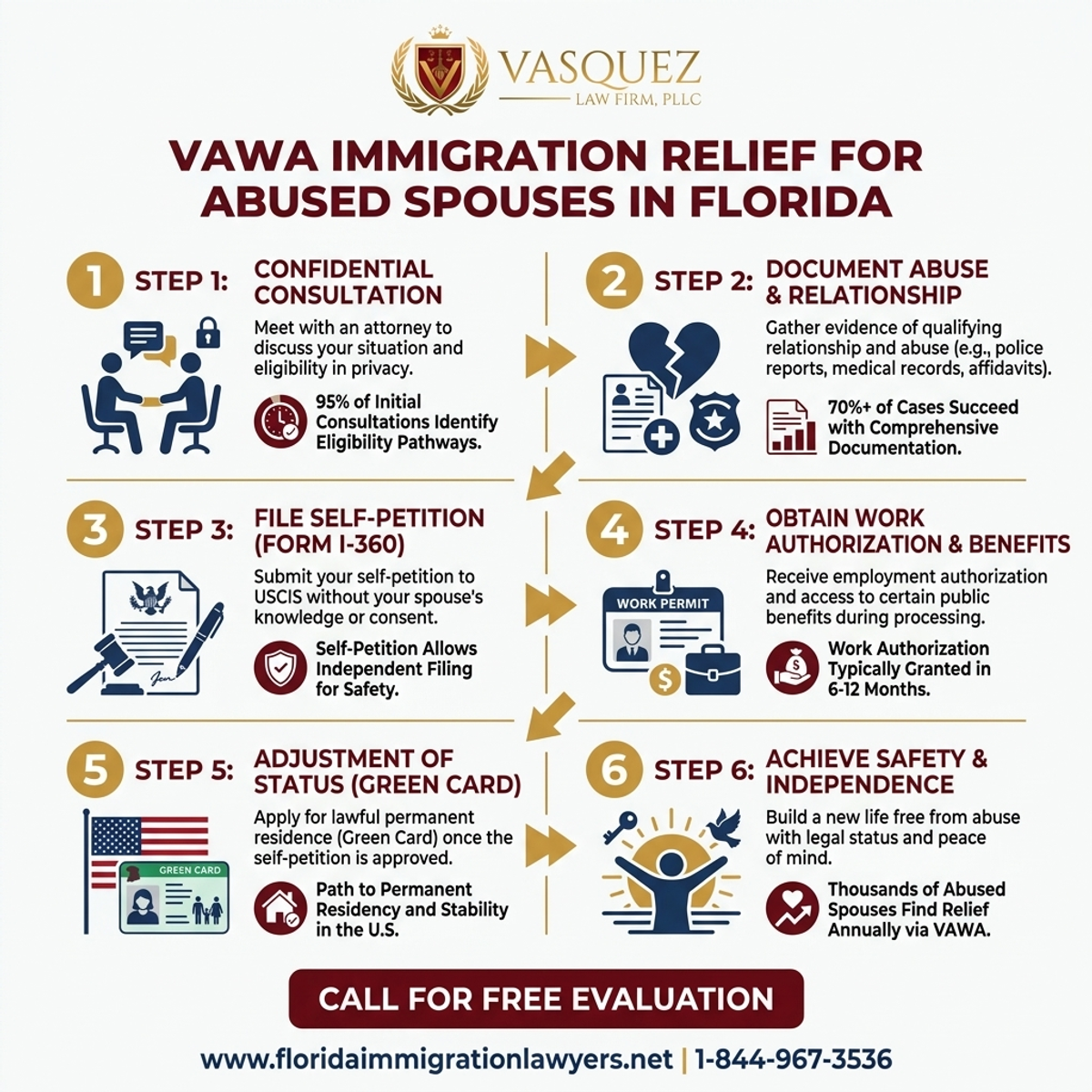
Key Statistics — VAWA Immigration Relief for Abused Spouses in Florida
While the provided table offers general timeframes, it's important to remember that each case is unique. Factors such as the thoroughness of your initial application, the need for additional evidence, and current USCIS backlogs can influence your specific timeline. For instance, a well-prepared petition with strong evidence can often lead to a quicker initial review.
During the waiting period, recipients of a prima facie approval often receive deferred action, which protects them from deportation and makes them eligible for work authorization. This critical protection allows survivors to gain financial independence and stability while their full petition is being processed. Florida Immigration Lawyers can help you navigate these stages, ensuring you understand what to expect and what actions to take at each point.
Cost Factors and Fee Breakdown for VAWA Petitions
While filing fees for VAWA petitions can vary, understanding the common costs can prepare applicants for the financial aspects of the process:
| Item | Typical Fee | Notes |
|---|---|---|
| Filing Form I-360 | Varies | Check current USCIS fee schedule |
| Biometric Services | Additional fee | For fingerprinting and background checks |
| Attorney Fees | Varies | Depends on case complexity and legal representation |
It's crucial to note a significant benefit for VAWA petitioners: there are typically no government filing fees for Form I-360 itself, nor for the subsequent Form I-485 (Adjustment of Status) or Form I-765 (Employment Authorization) when filed concurrently with or based on an approved VAWA I-360. This is a deliberate provision to ensure financial barriers do not prevent victims from seeking safety and relief.
While government fees are often waived, other costs may include obtaining necessary documents (e.g., birth certificates, medical records), translation services if documents are not in English, and potentially travel expenses for interviews. The most significant variable cost is often attorney fees, which reflect the complexity of your case, the attorney's experience, and the scope of services provided. Investing in legal counsel, such as Florida Immigration Lawyers, can significantly improve your chances of a successful outcome, despite the upfront cost.
Do not navigate this process alone. Contact Florida Immigration Lawyers today.
Common Mistakes to Avoid in VAWA Petitions
- Insufficient Evidence: Failing to provide enough documentation can result in delays or denials. Always aim for comprehensive evidence, including a detailed personal statement and corroborating witness affidavits.
- Missing Deadlines: Not adhering to filing timelines can jeopardize your case. An immigration lawyer can help you track and meet all critical deadlines.
- Inaccurate Information: Providing incorrect details can lead to application rejection. Ensure all forms are filled out truthfully and accurately.
- Lack of Professional Guidance: Not consulting an attorney can result in missed opportunities for relief. VAWA cases are complex, and legal expertise is invaluable.
- Overlooking Eligibility: Assuming eligibility without verifying can waste time and resources. A lawyer can assess your specific situation against VAWA criteria.
- Ignoring Updates: Not staying informed about immigration law changes can affect your case. Your attorney will keep you abreast of any relevant policy shifts.
- Submitting Incomplete Applications: Incomplete forms can cause delays. Double-check all required fields and attachments before submission.
- Not Following Up: Failing to check application status can lead to missed communications. Your legal team can monitor your case's progress and respond to USCIS inquiries.
When to Call a Lawyer
If you are an abuse victim considering VAWA relief, consulting an immigration lawyer is crucial. They can help assess your eligibility, prepare your application, and navigate complex legal processes. Warning signs such as receiving conflicting information or feeling overwhelmed indicate the need for professional legal assistance. Florida Immigration Lawyers are here to guide you through every step of your VAWA petition.
You should contact an attorney immediately if you are facing threats from your abuser regarding your immigration status, if you have any prior immigration violations, or if your case involves complex evidence of abuse. A lawyer can help you understand the nuances of the law, ensure your application is as strong as possible, and protect your rights throughout the process.
Even if you are unsure about your eligibility or the strength of your evidence, a confidential consultation with Florida Immigration Lawyers can provide clarity and peace of mind. Our team offers free case reviews to help you understand your options and develop a strategy tailored to your unique circumstances. Don't hesitate to reach out to 1-844-YO-PELEO.
About Florida Immigration Lawyers
Florida Immigration Lawyers is dedicated to assisting clients across Central Florida. Our team specializes in all areas of immigration law, including VAWA petitions. We offer 24/7 availability, free case reviews, and bilingual services. Choose us for compassionate and knowledgeable legal support. Call 1-844-YO-PELEO or schedule a free consultation today.
Our commitment goes beyond legal representation; we strive to be a source of support and empowerment for every client. We understand the sensitive nature of VAWA cases and approach each one with the utmost discretion and empathy, ensuring your story is heard and your rights are protected. Our extensive experience in immigration law allows us to anticipate challenges and build strong cases for our clients.
When you choose Florida Immigration Lawyers, you gain a dedicated advocate who will tirelessly work to secure your future. We are proud to serve the diverse communities of Florida, offering accessible and effective legal solutions to those who need it most. Let us help you achieve safety, independence, and legal status in the U.S.
Sources and References
- U.S. Citizenship and Immigration Services (USCIS)
- Executive Office for Immigration Review (EOIR)
- 8 U.S.C. Chapter 12 - Immigration and Nationality Act
- State Department
Related services: immigration practice areas, family immigration services, citizenship and naturalization, deportation defense.
This article provides general legal information and is not intended as legal advice. Every case is unique, and outcomes depend on specific facts and circumstances. Contact an attorney for advice about your particular situation.
Final CTA: Don't wait to secure your future. Contact Florida Immigration Lawyers at 1-844-YO-PELEO for expert assistance with your VAWA petition. Se Habla Español - Estamos aquí para ayudarle.
If you need legal assistance, learn more about speak with an immigration lawyer, or call us at 1-844-967-3536 for a free case review.
Do Not Navigate This Process Alone
Our experienced immigration attorneys are ready to fight for you. Get a free, confidential case review today.
Se Habla Español
Or leave your details and we’ll call you:
Free Evaluation in 24 Hours
Or talk to us right now

AI voice assistant — available 24/7
FreeFrequently Asked Questions

William J. Vásquez
Founding Attorney · Vasquez Law Firm
U.S. Air Force veteran and immigration attorney with years of hands-on U.S. immigration experience. J.D., NCCU School of Law. AILA member. Admitted to the 4th, 5th, and 11th Circuit Courts.
Available 24/7 - Free Evaluations
Reviewed for legal accuracy by William J. Vásquez
Licensed in North Carolina; U.S. immigration is federal practice.
Related Legal Services
Our Florida immigration attorneys can help you with family immigration services, immigration lawyer cost in Florida and experienced immigration attorneys. Call today at 1-844-YO-PELEO for a free case review.
Related Links
Related Topics
Free Legal Case Review
Discuss your case with our experienced attorneys. We're available 24/7.
Se Habla Español - Estamos aquí para ayudarle.
Related Articles
Immigration Lawyer Orlando Free Consultation in Florida
For individuals and families in Orlando, Florida, navigating the complexities of U.S. immigration law requires expert guidance. An immigration lawyer in Orlando offers crucial support for everything from visa applications and green card processes to naturalization and deportation defense. This comprehensive guide details what a free consultation covers, providing a step-by-step overview of immigration pathways, essential document checklists, and expected timelines in 2026. We also highlight common mistakes to avoid, discuss the critical role of legal counsel in deportation and asylum cases, and explain why choosing a local Orlando immigration attorney is beneficial. Florida Immigration Lawyers is dedicated to serving the diverse community of Orlando with compassionate, effective legal solutions, ensuring you receive personalized advice and robust representation for a successful immigration journey.
EAD Advance Parole Combo Card in Florida 2026
For individuals with a pending Form I-485, Application to Register Permanent Residence or Adjust Status, the EAD Advance Parole Combo Card is an essential document. This single card combines the authorization to work legally in the U.S. (Employment Authorization Document - EAD) with permission to travel internationally and re-enter without abandoning your green card application (Advance Parole). This guide from Florida Immigration Lawyers provides a comprehensive overview for applicants in Florida in 2026, covering eligibility, the step-by-step application process, required documents, expected processing times, and associated costs. We also highlight common mistakes to avoid and when to seek legal counsel to ensure a smooth and successful immigration journey. Understanding this vital card is key to maintaining stability while awaiting your permanent residency approval.
H-4 EAD Work Authorization for Spouses in Florida 2026
For H-1B families in Florida, the H-4 EAD (Employment Authorization Document) is a critical pathway allowing eligible spouses to work legally in the U.S. This comprehensive guide, updated for 2026, explains who qualifies, the step-by-step application process, current processing times, and associated costs. We delve into the impact of H-4 EAD on financial stability and career opportunities for H-1B families in vibrant Florida communities like Orlando. Learn about essential documents, common mistakes to avoid, and when seeking legal counsel from Florida Immigration Lawyers can ensure a smooth and successful application. Our firm provides expert guidance for initial applications and renewals, helping H-4 spouses navigate complex immigration regulations with confidence. Understand your rights and secure your work authorization.
Vasquez Law Firm: U Visa Certification for Florida Crime
For crime victims in Florida, understanding U visa certification is crucial for obtaining legal protection and status. This comprehensive guide, updated for 2026, explains the U visa process, from securing the vital I-918 Supplement B from Florida law enforcement agencies to filing your petition with USCIS. Learn about eligibility criteria, the specific documents required, and what to expect regarding processing timelines, including the Bona Fide Determination (BFD) and the annual visa cap. We also cover potential costs, fee waivers, and common pitfalls to avoid. If you are a crime victim in Orlando or anywhere in Florida, knowing your rights and the steps to take is essential. Discover how expert legal assistance can navigate the challenges, ensuring your application is complete and compelling. Florida Immigration Lawyers are dedicated to providing compassionate, knowledgeable support for your U visa journey.