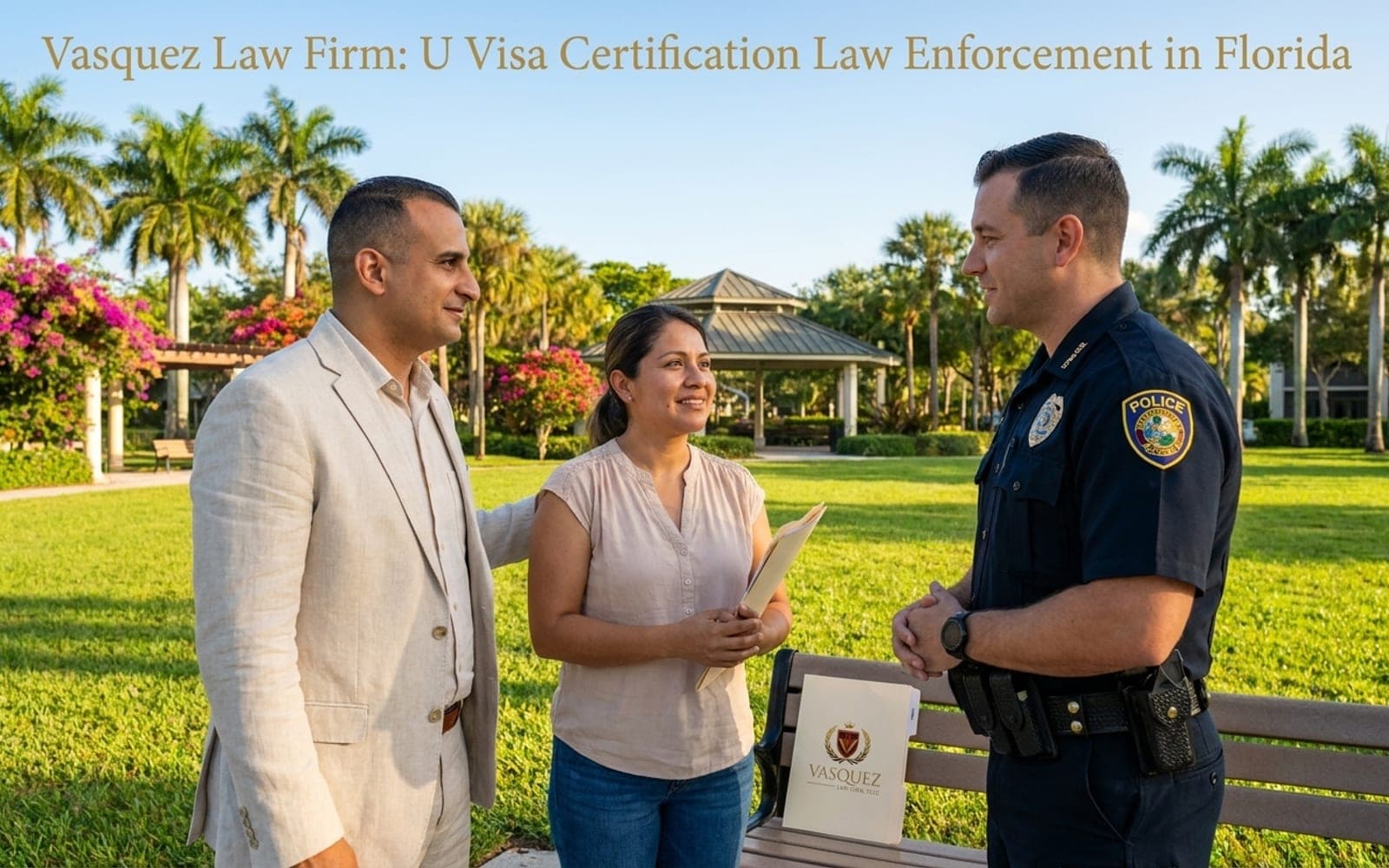
A VAWA attorney helps survivors decide between a VAWA self-petition and a U visa. VAWA lets certain abused family members of U.S. citizens or permanent residents file on their own, while a U visa is for victims of certain crimes. The guide explains how a lawyer chooses between them, what evidence to begin collecting, related options such as T visas and asylum, and confidentiality. Safety comes first, so call 911 or a hotline if you are in danger.
- Abusers sometimes use immigration status as a tool of control.
- VAWA and the U visa have different focuses.
- A lawyer decides between them based on your facts.
- Safety comes before paperwork, so call 911 or a hotline if in danger.
Introduction
VAWA and the U visa are two separate immigration protections for people who have been abused or victimized. If you are afraid to ask for help because of your immigration status, an immigration lawyer can explain which path may fit your situation, how confidentiality protections generally work and what evidence to start collecting. To speak with our firm, call 1-844-YO-PELEO or contact us.
This page is written for survivors in Florida and for the relatives and advocates who support them. It covers what a VAWA self-petition is, what a U visa is, how a lawyer decides between them, what to gather and how to choose a lawyer for these sensitive cases.
This article is general information, not legal advice. If you are in immediate danger, call 911 or a local domestic violence hotline first. A lawyer can address the immigration questions, but safety comes before paperwork.
Why People Look for Help With VAWA and U Visa Cases
Abusers sometimes use immigration status as a tool of control, saying things like, if you call the police, you will be deported. Federal law created protections so that a person does not have to depend on the abuser to fix their status. An immigration lawyer for domestic violence situations can explain these protections, discuss safety planning questions to raise with advocates and prepare the immigration filing itself.
Many people wait because they believe that asking for help will put them at risk. A confidential first conversation with a lawyer does not require you to file anything, and it can help you understand the choices you have before you decide.
What VAWA Self-Petitioning Is
The Violence Against Women Act allows certain abused family members to file their own petition (Form I-360) without the abuser's knowledge or cooperation. Despite the name, it is available regardless of gender. Generally, it can apply to an abused spouse of a U.S. citizen or lawful permanent resident, an abused child, and an abused parent of a U.S. citizen son or daughter. Requirements include a qualifying relationship, evidence of battery or extreme cruelty, residence with the abuser at some point and good moral character. The details vary with the relationship, so a lawyer reviews the facts.
When people ask what an immigration attorney for a VAWA self-petition actually handles, the answer is a mix of legal analysis and careful evidence building. That includes your own statement, records of the relationship such as a marriage certificate or shared lease, and proof of abuse such as police reports, medical records, photographs, messages, protective orders and letters from counselors or advocates. Not every case has all of these, and a lawyer can talk through what else may help.
What a U Visa Is
The U visa (Form I-918) is meant for victims of certain qualifying crimes who suffered substantial physical or mental abuse and who are, were or are likely to be helpful to law enforcement in investigating or prosecuting the crime. Domestic violence is one qualifying category among others, such as sexual assault and felonious assault. A law enforcement agency, prosecutor or judge generally signs a certification form (Form I-918, Supplement B) confirming helpfulness. Whether to sign is up to the certifying agency.
The number of U visas available each year is limited by law, so there can be a long wait after a petition is filed. A lawyer can explain what the wait may mean for protections in the meantime. If you are looking for help with a U visa, you can start by asking what crime occurred, who investigated it and whether any report exists. Some people seek a consultation after a police report is already filed; it is also fine to ask before you report if you have questions.
VAWA or U Visa: How a Lawyer Decides
The two options are not interchangeable. VAWA depends on the relationship to a U.S. citizen or permanent resident abuser. A U visa depends on the type of crime and your helpfulness to law enforcement, and it does not require a family tie to the person who harmed you. Some people could pursue either, some only one, and some may have a better option entirely, such as a family petition, asylum or a T visa for trafficking survivors. Part of what a lawyer should do is compare these paths and explain the tradeoffs.
In practice a lawyer walks through a short sequence of questions:
- Who harmed you, and what is that person's immigration status and relationship to you?
- Was a crime committed, was it reported, and which agency handled it?
- What evidence do you already have, and what could be requested?
- Do you have any arrests, prior removal orders or past immigration problems that need a waiver or special care?
- Which family members might be affected or included, and what are their circumstances?
- What are the risks and benefits of each option, and which is the safest next step now?
Our humanitarian protection page gives an overview, and our family immigration page covers related petitions.
Document Checklist for VAWA and U Visa Cases
- Passport, any visa, I-94 record and past immigration paperwork.
- Proof of identity for you and any family members who may be included.
- Marriage, birth or other records proving your relationship to the abuser.
- Police reports, case numbers, protective orders and court records.
- Medical records, photographs, messages or social media posts showing harm or threats.
- Letters from counselors, advocates, clergy, neighbors or relatives who witnessed events.
- Proof of the abuser's citizenship or permanent residence, if you have it.
- Your own written notes about dates and events, kept somewhere safe.
Do not worry if you cannot gather everything. A lawyer can explain what other evidence may be possible, and some documents can be requested from agencies later.
Timeline and Processing Expectations
VAWA and U visa cases do not follow a fixed schedule. A VAWA petition depends on USCIS workload and on how complete the evidence is, while a U visa petition may face a long wait because of the annual limit set by law. USCIS publishes current processing information, and we do not quote numbers here because they change.
The preparation stage is the part you can influence. Gathering records, finding witnesses and writing a clear statement take time, and a careful first filing reduces the risk of requests for more evidence. Safety planning should continue throughout, especially if the abuser still has access to your home, phone or mail.
| Stage | What happens | Who acts |
|---|
| Confidential consultation | Options are compared and a safety plan is discussed | Survivor and lawyer |
| Evidence gathering | Records, statements and, for a U visa, a certification request | Survivor, advocates and certifying agency |
| Filing | Form I-360 (VAWA) or Form I-918 (U visa) is filed with USCIS | Survivor, with lawyer |
| Review | USCIS reviews and may issue a request for evidence | USCIS |
| Decision and next steps | Approval, denial or continued waiting, then planning for work permits and green card options | USCIS, then survivor and lawyer |
How to Choose a Lawyer for These Cases
You may see people search for the strongest-sounding lawyer, but rankings and self-descriptions are not a reliable guide. Look instead for practical things:
- Does the lawyer handle immigration law regularly, and are VAWA or U visa matters among the cases they work on?
- Will you be able to speak in your own language, in a setting where you feel safe?
- Does the lawyer explain confidentiality, including the limits of what is protected?
- Do they avoid promising an approval or a timeline?
- Will they work with your counselor, advocate or the prosecutor's office when appropriate?
A lawyer for a U visa application and a lawyer for a VAWA case often need the same careful, trauma-aware approach, though the filings are different. Many people find it easier to talk through painful facts one step at a time, and a good lawyer will let you do that.
Related Options: T Visas, Asylum and Family Petitions
Some survivors are better served by a different protection. A T visa is designed for people who were subjected to severe forms of trafficking and who meet its other requirements, and it has its own evidence rules. Asylum may fit someone who fears persecution in their home country for a protected reason, with a general one-year filing deadline and limited exceptions. A spouse of a U.S. citizen who is not being abused may simply have a standard family petition available, and a lawyer can explain why it might be safer or slower than a self-petition.
Past events can also affect eligibility for any of these paths. Arrests, prior removal orders, false claims to citizenship or earlier immigration filings need to be reviewed before anything is submitted. Some problems can be addressed with a waiver, and some change which option is realistic. That is one reason an early, confidential review matters: it lets you choose a path with the full picture in front of you, and it avoids filing for something that does not fit your safety or your future. Ask the lawyer to explain what each choice would mean for work authorization, for travel and for any children or relatives who depend on you.
Confidentiality and Safety
Federal law restricts how the government can use information from abusers and limits certain disclosures about VAWA, U visa and T visa applicants. Those protections have limits, and a lawyer should explain them in plain language before you decide what to file. Keep important documents in a safe place outside your home if you can, such as with a trusted friend or advocate, and ask a lawyer how to handle an abuser who controls your documents.
Think also about how the firm will contact you. Shared phones, email accounts, cloud photo storage and mail can all reveal that you have sought help. Tell your lawyer which methods are safe and which are not, and ask what will be sent by mail or text so that nothing arrives unexpectedly. It also helps to set up a safe code word or a time window for calls, and to confirm in advance whether the firm may leave a voicemail.
Cost Factors and Fee Breakdown
The table covers the kinds of costs that may arise. Amounts are not shown because fee schedules and rules about waivers change.
| Item | Amount | Notes |
|---|
| Form I-360 for a VAWA self-petition | Check USCIS for the current fee | Confirm the current form instructions before filing |
| Form I-918 for a U visa | Check USCIS for the current fee | Fee rules and any waiver options are on the current form page |
| Form I-765 work permit application | Check USCIS for the current fee | Depends on eligibility and the stage of the case |
| Waiver request, if needed | Check USCIS for the current fee | Only when inadmissibility is an issue |
| Attorney fees | Varies by case | Depend on the type of case, family members included and the written scope of work |
Government filing fees change, and they differ by form and sometimes by the applicant's circumstances. Always check the agency's current fee schedule before you send any payment, because a filing submitted with the wrong fee can be rejected and the delay can matter. These matters can involve fee waivers or reduced requirements in some situations, so ask your lawyer to check the current rules.
Attorney fees are separate from government fees and depend on how complex the matter is. Ask for the scope of work in a written agreement, including whether responses to requests for evidence, interview preparation and later filings are included. Be cautious about any lawyer who guarantees an outcome, because the agency or consulate makes the final decision.
Common Mistakes to Avoid
- Delaying a conversation with a lawyer because of fear that any contact will lead to deportation.
- Telling the abuser about a planned filing.
- Using a notario or consultant who is not a lawyer.
- Assuming VAWA is only for women or only for married people.
- Believing that a U visa requires a conviction of the offender; the focus is on the crime and your helpfulness.
- Giving different accounts of events in different documents.
- Leaving out a past arrest or immigration problem.
When to Call a Lawyer
Call a lawyer when you are ready to ask about options, before you submit anything to an agency, and as soon as you receive a notice or a request for evidence. If you are unsure whether you qualify for VAWA, a U visa, a T visa or something else, a consultation can sort that out. If you are not safe calling from home, tell the firm and ask about other ways to meet.
About Vasquez Law Firm
Vasquez Law Firm practices immigration law only. Our only office is at 1111 E Amelia Street in Orlando, and we serve clients across Florida by phone and secure video, with in-person meetings in Orlando. William J. Vásquez is the founding attorney, and consultations are available in English and Spanish. Consultations are available in English and Spanish (se habla español), and if a video call at home is not safe we can discuss other ways to meet. To talk about your case, call 1-844-YO-PELEO or contact us.
Sources and References
Related services: humanitarian protection services, immigration lawyers in Florida
Other ways people search for this
People look for this help under different names. Related searches include vawa immigration attorney near me; best u visa attorney near me; best u visa lawyer near me; best vawa immigration lawyer near me; immigration lawyer for u visa near me; u visa immigration attorney near me; vawa case attorney near me; vawa case lawyer near me; vawa immigration lawyers near me; vawa case attorney; vawa green card lawyer; best t visa lawyer; vawa self petition lawyer; attorney for vawa; best attorney for u visa; best immigration attorney for u visa; best immigration lawyer for u visa; best immigration lawyer for vawa; best lawyer for vawa immigration; best t visa attorney; best u visa lawyer; best vawa attorney; best vawa lawyers; immigration attorney for vawa; immigration attorney u visa; immigration attorney vawa; lawyer for vawa case; top u visa lawyers; top vawa lawyers.
This article is general information, not legal advice. Every case is different; speak with an immigration lawyer about your situation.