USCIS Oath Ceremony Schedule 2026 in Florida: Your Guide
For those awaiting U.S. citizenship, understanding the USCIS oath ceremony schedule for 2026 in Florida is paramount. This comprehensive guide from Florida Immigration Lawyers delves into the naturalization process, explaining how oath ceremonies are scheduled, where USCIS field offices are located in Florida (Orlando, Miami, Tampa, Jacksonville), and what to expect at this final, symbolic step. We cover everything from filing your N-400 application and attending your biometrics appointment and interview, to preparing for the Oath of Allegiance. Learn about typical timelines, associated costs, and crucial documents to bring. We also highlight common mistakes to avoid and provide clear guidance on when to seek professional legal assistance to navigate potential complexities or delays, ensuring a smooth transition to becoming a U.S. citizen.
The USCIS oath ceremony schedule for 2026 in Florida is the final, pivotal step in becoming a U.S. citizen after your naturalization interview. While specific dates vary by USCIS field office and individual case, applicants typically receive a notification via mail (Form N-445, Notice of Naturalization Oath Ceremony) within a few weeks to a few months after their interview. Ceremonies are held at various locations, including USCIS field offices in Orlando, Miami, Tampa, and Jacksonville, as well as federal courthouses. It is crucial to attend your scheduled ceremony, bring required documents, and be prepared to take the Oath of Allegiance. Delays can occur, making legal guidance invaluable.
- Oath ceremony scheduling varies by USCIS field office and individual case.
- Applicants receive Form N-445 with their specific ceremony date and location.
- Ceremonies occur at USCIS field offices or designated federal courthouses in Florida.
- Bring your Permanent Resident Card and other specified documents to the ceremony.
- Legal assistance can help navigate potential delays or issues with scheduling.
Achieving U.S. citizenship is a momentous milestone, marking the culmination of a long and often complex immigration journey. For many, the final step is the naturalization oath ceremony, a deeply symbolic event where you officially pledge allegiance to the United States. If you've been approved for naturalization and are eagerly anticipating your USCIS oath ceremony schedule in 2026, understanding the process, timelines, and what to expect is crucial. This guide from Florida Immigration Lawyers is designed to demystify the final stages of naturalization, focusing on what applicants in Florida need to know.
From the moment you file your N-400 application to the day you receive your Certificate of Naturalization, each step is critical. We understand the anticipation and sometimes the anxiety that can accompany this final phase. This article will provide comprehensive insights into the oath ceremony scheduling, the locations of USCIS field offices in Florida, and essential preparation tips. We'll also address common questions and potential pitfalls to ensure a smooth transition to citizenship. If you have questions or need personalized assistance, do not hesitate to call Florida Immigration Lawyers at 1-844-YO-PELEO for a free case review.
What is the USCIS Oath Ceremony Schedule for 2026 in Florida?
The USCIS oath ceremony schedule for 2026 in Florida, as in other states, is not a fixed, publicly available calendar but rather a dynamic process dependent on individual case processing and local field office capacity. After successfully passing your naturalization interview, USCIS will mail you Form N-445, Notice of Naturalization Oath Ceremony, which contains the specific date, time, and location of your ceremony. This notice is typically sent within a few weeks to a few months following your interview, though processing times can vary.
The oath ceremony is the final administrative step where you formally take the Oath of Allegiance and receive your Certificate of Naturalization, officially making you a U.S. citizen. As of 2026, USCIS aims to process naturalization applications efficiently, but the exact wait time for an oath ceremony notice can fluctuate based on the volume of applications and operational considerations at your local field office, such as those in Orlando, Miami, or Tampa. Some applicants may even be able to take the oath on the same day as their interview, especially if it's a smaller, private ceremony, while others might wait for a large group ceremony at a federal courthouse. It is imperative to keep your address updated with USCIS to ensure you receive your Form N-445 promptly. Missing this crucial notice can lead to significant delays in your journey to citizenship.
Understanding the Naturalization Process: From N-400 to Oath
The journey to becoming a U.S. citizen is a multi-step process, each requiring careful attention to detail and adherence to legal requirements. The naturalization process typically begins with determining your eligibility, which includes meeting residency, physical presence, good moral character, and English/civics knowledge requirements. Once eligibility is confirmed, the next major step is filing Form N-400, Application for Naturalization, with U.S. Citizenship and Immigration Services (USCIS).
After filing, applicants typically receive an appointment notice for biometrics collection at a local Application Support Center (ASC), such as those in Orlando, Fort Myers, or West Palm Beach. This involves fingerprinting and photographing for background checks. The next critical stage is the naturalization interview, conducted by a USCIS officer at a field office. During this interview, the officer will review your application, test your English proficiency (reading, writing, and speaking), and assess your knowledge of U.S. history and government. If the interview is successful and all requirements are met, USCIS will approve your application. The final step, as outlined in 8 U.S.C. Chapter 12, Subchapter III, Part II, Section 337, is the Oath of Allegiance Ceremony, where you formally commit to the responsibilities of citizenship. Understanding each phase is vital for a smooth process, and any misstep can lead to delays or even denial. For complex cases or to ensure your application is robust, consider exploring our citizenship services.
Key Stages in the Naturalization Journey
- Eligibility Determination: Confirm you meet all legal requirements for naturalization, including age, residency, good moral character, and ability to speak English and understand U.S. civics.
- Form N-400 Filing: Complete and submit your Application for Naturalization, along with all supporting documentation and the correct filing fee, to USCIS.
- Biometrics Appointment: Attend a scheduled appointment at a USCIS Application Support Center for fingerprinting and photographs, used for background and security checks.
- Naturalization Interview: Meet with a USCIS officer at a field office (e.g., Orlando, Miami) to review your application, take English and civics tests, and answer questions about your eligibility.
- Decision and Oath Ceremony Notice: If approved, you will receive Form N-445, Notice of Naturalization Oath Ceremony, detailing the date, time, and location of your final step.
- Oath of Allegiance Ceremony: Attend the ceremony, take the oath, and receive your Certificate of Naturalization, officially becoming a U.S. citizen.
Where are USCIS Field Offices in Florida for Oath Ceremonies?
USCIS field offices in Florida are critical points of contact for naturalization applicants, serving various functions including interviews and oath ceremonies. While many ceremonies are held at federal courthouses, some smaller or same-day ceremonies can take place directly at USCIS field offices. Knowing your local office is essential for understanding where your interview and potentially your ceremony might be held. The main USCIS field offices serving naturalization applicants in Florida are located in Orlando, Miami, Tampa, and Jacksonville.
Each of these offices serves a specific geographic jurisdiction, meaning your interview and subsequent oath ceremony scheduling will be handled by the office closest to your place of residence. For instance, residents of Central Florida, including Orlando and surrounding areas, will typically interact with the Orlando Field Office. Those in South Florida will go through the Miami Field Office, while applicants in the Tampa Bay area are served by the Tampa Field Office. North Florida residents often fall under the Jacksonville Field Office's purview. It's important to remember that the actual oath ceremony location can vary. Large group ceremonies are often held at federal courthouses to accommodate many new citizens, while smaller, individual ceremonies might occur at the field office itself. Always refer to your Form N-445 for the precise location. For more information on USCIS locations and services, you can visit the official USCIS website.
Document Checklist for the Oath Ceremony
To ensure a smooth oath ceremony, bring the following documents with you:
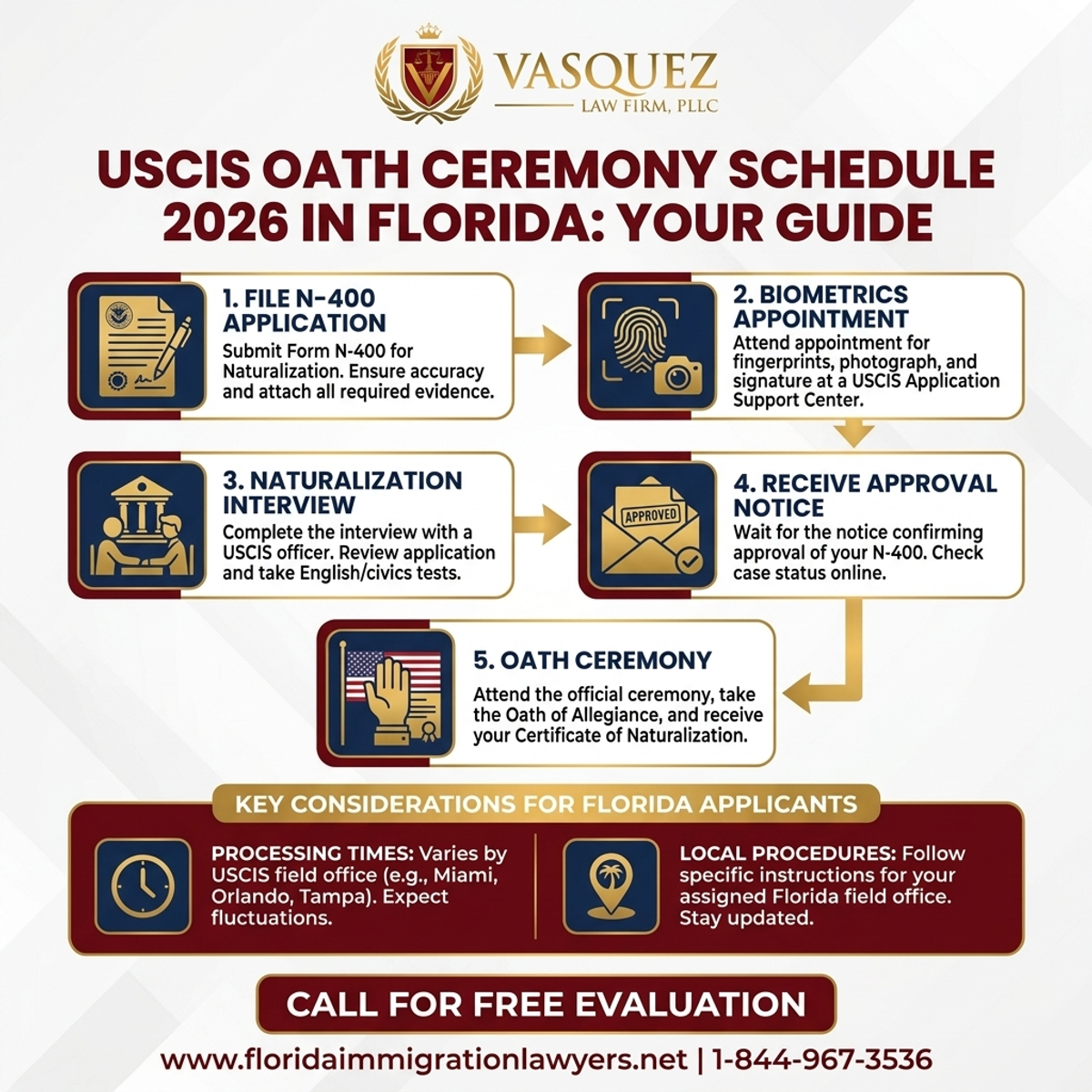
Step-by-Step Process — USCIS Oath Ceremony Schedule 2026 in Florida: Your Guide
- Form N-445, Notice of Naturalization Oath Ceremony.
- Your Permanent Resident Card (Green Card). This will be collected by USCIS.
- Any re-entry permit or refugee travel document issued to you.
- Any other immigration documents USCIS specifically requested on your N-445.
- If you've changed your name, bring the original or certified copy of the court order or marriage certificate for the name change.
- Two passport-style photos if instructed on your N-445 (rare for naturalization, but possible for other applications).
Navigating USCIS Appointments and Scheduling in Florida
Managing your USCIS appointments and understanding the scheduling process is a critical part of the naturalization journey. After filing your N-400, you will receive notices for your biometrics appointment, naturalization interview, and eventually, your oath ceremony. Each notice will provide specific instructions, dates, and locations. It is paramount to attend all scheduled appointments. Missing an appointment without proper rescheduling can lead to significant delays or even denial of your application, requiring you to refile.
If you need to reschedule an appointment due to an emergency or unavoidable conflict, you must follow USCIS procedures carefully. This typically involves sending a written request with a clear explanation and supporting documentation. However, rescheduling can prolong your process. USCIS provides an online case status checker where you can monitor the progress of your application. For specific questions or to request an InfoPass appointment (now often handled via the USCIS Contact Center), you can call the National Customer Service Center. Be prepared for potential wait times and ensure you have your A-number readily available. The efficiency of your interaction with USCIS can be greatly improved by having all your documentation in order and understanding the various ways to communicate with the agency. Navigating these processes can be complex, and seeking professional immigration assistance can help ensure you meet all requirements.
Timeline and Processing Expectations for Naturalization (As of 2026)
While individual processing times vary, here's a general timeline for the naturalization process in Florida:
| Stage | Typical Timeframe (As of 2026) | Notes |
|---|---|---|
| N-400 Application Filing | Varies (typically 8-14 months) | Check USCIS processing times for your specific field office (e.g., Orlando, Miami). |
| Biometrics Appointment | 3-5 weeks post-filing | Appointment at a local Application Support Center (ASC). |
| Naturalization Interview | 2-6 months post-biometrics | Conducted at your local USCIS field office. |
| Decision on N-400 | Immediately after interview or within a few weeks | Officer will inform you of the decision or mail a notice. |
| Oath Ceremony Scheduling | 2-8 weeks post-interview approval | Receive Form N-445 with ceremony details. |
| Oath Ceremony | Varies (can be same day as interview or months later) | Final step to receive your Certificate of Naturalization. |
What are the Costs Associated with the Naturalization Process?
The costs associated with the naturalization process are an important consideration for any applicant. The primary expense is the filing fee for Form N-400, Application for Naturalization, which covers the processing of your application and biometric services. As of 2026, USCIS fees are subject to change, so it is crucial to always check the most current fee schedule on the official USCIS website before filing. This fee is non-refundable, regardless of the outcome of your application. While the N-400 fee is the most significant direct cost, applicants should also budget for other potential expenses.
These additional costs can include fees for obtaining necessary supporting documents, such as birth certificates, marriage licenses, or court records, especially if they need to be translated or certified. Many applicants also choose to retain legal counsel, like Florida Immigration Lawyers, to assist with preparing and filing their application, preparing for the interview, and navigating any complex issues that may arise. Legal fees vary widely depending on the complexity of the case and the services provided. Additionally, you may incur travel expenses for attending biometrics appointments, interviews at a USCIS field office in Florida, and the final oath ceremony. For those facing financial hardship, USCIS offers fee waivers for the N-400 application under specific eligibility criteria, which can significantly reduce the financial burden. Understanding these potential costs upfront helps in proper financial planning for your naturalization journey.
Cost Factors and Fee Breakdown (As of 2026)
Here's a breakdown of typical costs associated with the naturalization process:
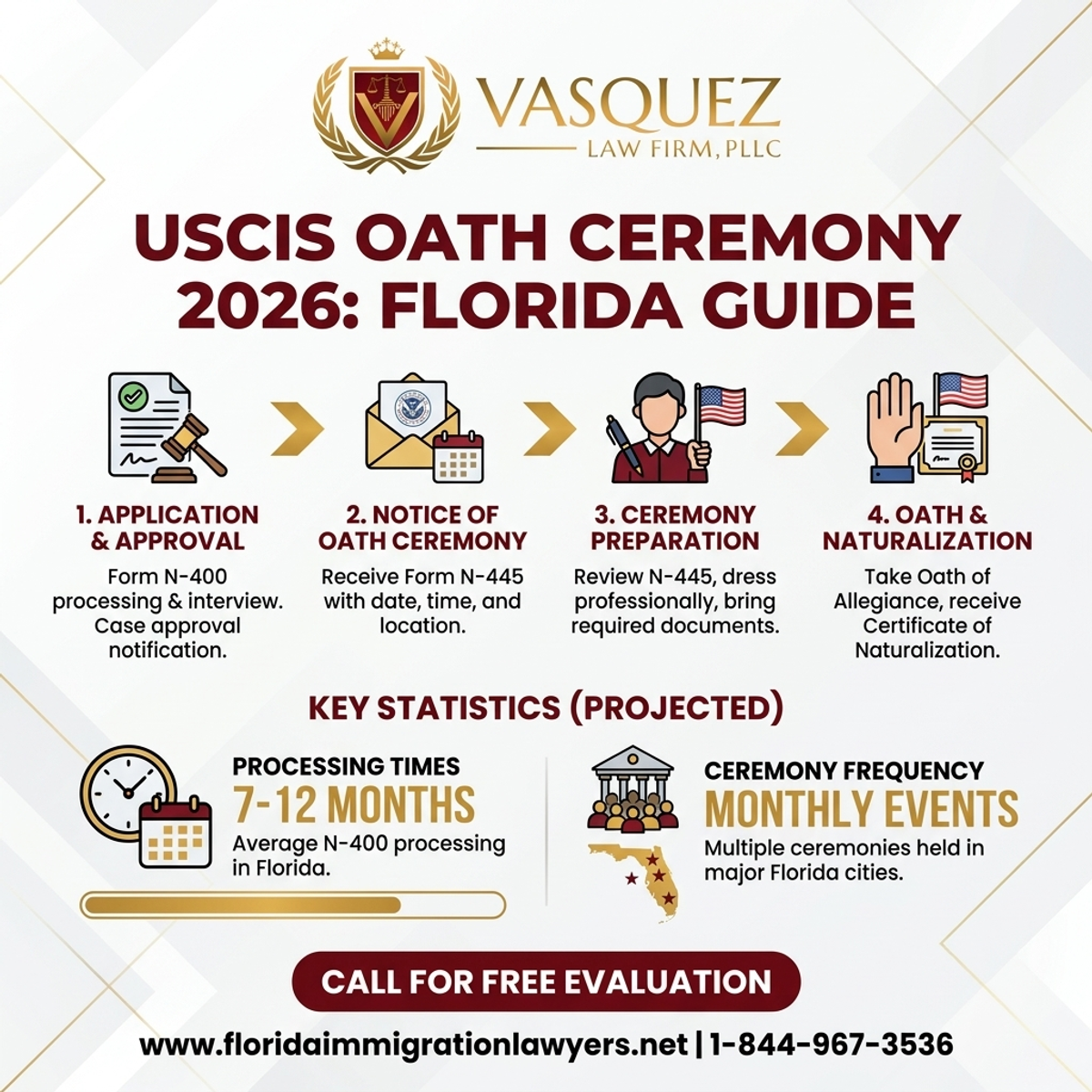
Key Statistics — USCIS Oath Ceremony Schedule 2026 in Florida: Your Guide
| Item | Typical Fee (As of 2026) | Notes |
|---|---|---|
| N-400 Application Fee | Check USCIS.gov for current fee | Includes biometric services fee. Subject to change. Fee waivers available for eligible applicants. |
| Legal Assistance Fees | Varies widely ($1,500 - $5,000+) | Depends on complexity of case and services provided by immigration attorney. |
| Document Translation/Certification | Varies ($20 - $100+ per document) | If foreign language documents need certified English translations. |
| Travel Expenses | Varies | For trips to ASC, USCIS field office (Orlando, Miami, etc.), and oath ceremony. |
| Passport Photos | Typically $15 - $20 | If required for any part of the process or for a U.S. passport application post-naturalization. |
Do not navigate this process alone. The path to U.S. citizenship, especially when dealing with the intricacies of scheduling and requirements, can be overwhelming. Contact Florida Immigration Lawyers today for expert guidance and support every step of the way.
Common Mistakes to Avoid During the Naturalization Process
- Failing to Update Your Address with USCIS: If your address changes, you must notify USCIS promptly. Failure to do so can result in missed notices, including your oath ceremony schedule, leading to significant delays or even case abandonment.
- Providing Inconsistent or Inaccurate Information: Any discrepancies between your N-400 application and previous immigration filings, or false statements, can lead to denial and accusations of misrepresentation. Always be truthful and consistent.
- Missing Appointments Without Rescheduling: Failing to attend biometrics, interview, or oath ceremony appointments without proper notification and valid reason can lead to your application being denied. Always follow USCIS rescheduling procedures.
- Underestimating the English and Civics Tests: Many applicants assume they will pass easily. Inadequate preparation for the English proficiency and U.S. civics tests is a common reason for delays or even a second interview.
- Not Disclosing All Criminal History: Even minor offenses, arrests, or traffic citations must be disclosed on your N-400 application. Failure to disclose can be considered misrepresentation and affect your good moral character determination.
- Traveling Outside the U.S. for Extended Periods: Extended trips abroad during the naturalization process can impact your continuous residency and physical presence requirements, potentially jeopardizing your eligibility.
- Ignoring Changes in Personal Circumstances: Marriage, divorce, birth of a child, or new arrests after filing your N-400 must be reported to USCIS and disclosed at your interview.
- Not Bringing Required Documents to Appointments: Arriving at your interview or oath ceremony without all requested documents, including your Permanent Resident Card, can cause delays or require rescheduling.
- Falling Victim to Notario Fraud: Be wary of individuals who are not licensed attorneys offering legal advice. Only qualified immigration attorneys or accredited representatives can provide legal services.
- Misunderstanding the Public Charge Rule: As highlighted in recent news, changes to the public charge rule (though currently reverted to 1999 guidance as of 2026, subject to future changes) can impact eligibility for green cards, which is a prerequisite for naturalization. While less direct for naturalization itself, understanding its implications for prior status adjustments is crucial.
- Delaying Legal Consultation for Complex Cases: If you have any criminal history, prior immigration violations, or other complex issues, waiting to consult an attorney can worsen the situation. Early legal advice is key.
When to Call a Florida Immigration Lawyer
While the naturalization process might seem straightforward for some, many applicants encounter complex situations that necessitate the expertise of an experienced immigration lawyer. Knowing when to seek legal counsel can be the difference between a smooth journey to citizenship and significant delays or even denial. If you find yourself facing any of the following scenarios, it's a strong indicator that you should contact Florida Immigration Lawyers:
- You have a criminal record, even for minor offenses or arrests, that could impact your good moral character determination.
- Your N-400 application has been denied, and you need to understand your options for appeal or refiling.
- You've had significant periods of travel outside the U.S. that might affect your continuous residency or physical presence requirements.
- You've received a Request for Evidence (RFE) or a Notice of Intent to Deny (NOID) from USCIS.
- You have concerns about the public charge rule's potential impact on your eligibility, especially if you have previously received public benefits.
- You have a complex marital history (e.g., multiple divorces, annulments) or changes in family status since receiving your green card.
- You are struggling with the English language or civics test and need guidance on waivers or accommodations.
- Your case has been pending for an unusually long time, exceeding published processing times, and you suspect an issue.
- You need to reschedule an interview or oath ceremony and require assistance navigating USCIS procedures.
- You simply want peace of mind that your application is correctly prepared and presented to maximize your chances of approval.
Florida Immigration Lawyers offers comprehensive services for naturalization, from initial application preparation to representation at interviews and assistance with oath ceremony issues. Our attorneys are well-versed in immigration law and can provide tailored advice for your unique situation.
About Florida Immigration Lawyers
Florida Immigration Lawyers is a leading immigration law firm dedicated to serving individuals and families across the entire state of Florida. With an unwavering commitment to our clients, we provide expert legal guidance and compassionate representation for a wide range of immigration matters, including naturalization, family-based petitions, asylum, deportation defense, and business immigration. Our experienced attorneys understand the complexities of U.S. immigration law and are passionate about helping our clients achieve their American dreams.
Located in Central Florida, our firm offers personalized attention, strategic advice, and aggressive advocacy to navigate the intricate legal landscape. We pride ourselves on being accessible, responsive, and effective. We offer free case reviews and are available 24/7 to address your urgent immigration needs. When your future in the U.S. is on the line, choose a firm that fights tirelessly for your rights and provides the clear, honest counsel you deserve. Visit our attorneys page to learn more about our team, or explore our comprehensive immigration practice areas.
Call us today at 1-844-YO-PELEO to schedule your free consultation and take the first step towards a brighter future.
Sources and References
- U.S. Citizenship and Immigration Services (USCIS)
- Executive Office for Immigration Review (EOIR)
- U.S. Department of State
- 8 U.S.C. Chapter 12 - Immigration and Nationality Act (INA), particularly Section 316 (Conditions for naturalization) and Section 337 (Oath of Allegiance).
- 8 CFR Part 337 - Oath of Allegiance.
Related services: asylum and refugee protection, immigration waivers, humanitarian protection programs, DACA renewal and applications.
This article provides general legal information and is not intended as legal advice. Every case is unique, and outcomes depend on specific facts and circumstances. Contact an attorney for advice about your particular situation.
The journey to U.S. citizenship is a significant one, and the oath ceremony is its crowning moment. While understanding the USCIS oath ceremony schedule for 2026 and the overall process is vital, having experienced legal representation can make all the difference. Florida Immigration Lawyers is here to guide you through every step, ensuring your application is strong and your path to citizenship is as smooth as possible. Don't leave your future to chance.
Contact Florida Immigration Lawyers today at 1-844-YO-PELEO for a free case review. Se Habla Espanol - Estamos aqui para ayudarle.
If you need legal assistance, learn more about speak with a deportation defense lawyer, or call us at 1-844-967-3536 for a free case review.
Do Not Navigate This Process Alone
Our experienced immigration attorneys are ready to fight for you. Get a free, confidential case review today.
Se Habla Español
Or leave your details and we’ll call you:
Free Evaluation in 24 Hours
Or talk to us right now

AI voice assistant — available 24/7
FreeFrequently Asked Questions

William J. Vásquez
Founding Attorney · Vasquez Law Firm
U.S. Air Force veteran and immigration attorney with years of hands-on U.S. immigration experience. J.D., NCCU School of Law. AILA member. Admitted to the 4th, 5th, and 11th Circuit Courts.
Available 24/7 - Free Evaluations
Reviewed for legal accuracy by William J. Vásquez
Licensed in North Carolina; U.S. immigration is federal practice.
Related Legal Services
Our Florida immigration attorneys can help you with immigration practice areas, free immigration consultation and business immigration. Call today at 1-844-YO-PELEO for a free case review.
Related Links
Related Topics
Free Legal Case Review
Discuss your case with our experienced attorneys. We're available 24/7.
Se Habla Español - Estamos aquí para ayudarle.
Related Articles
Immigration Lawyer Orlando Free Consultation in Florida
For individuals and families in Orlando, Florida, navigating the complexities of U.S. immigration law requires expert guidance. An immigration lawyer in Orlando offers crucial support for everything from visa applications and green card processes to naturalization and deportation defense. This comprehensive guide details what a free consultation covers, providing a step-by-step overview of immigration pathways, essential document checklists, and expected timelines in 2026. We also highlight common mistakes to avoid, discuss the critical role of legal counsel in deportation and asylum cases, and explain why choosing a local Orlando immigration attorney is beneficial. Florida Immigration Lawyers is dedicated to serving the diverse community of Orlando with compassionate, effective legal solutions, ensuring you receive personalized advice and robust representation for a successful immigration journey.
EAD Advance Parole Combo Card in Florida 2026
For individuals with a pending Form I-485, Application to Register Permanent Residence or Adjust Status, the EAD Advance Parole Combo Card is an essential document. This single card combines the authorization to work legally in the U.S. (Employment Authorization Document - EAD) with permission to travel internationally and re-enter without abandoning your green card application (Advance Parole). This guide from Florida Immigration Lawyers provides a comprehensive overview for applicants in Florida in 2026, covering eligibility, the step-by-step application process, required documents, expected processing times, and associated costs. We also highlight common mistakes to avoid and when to seek legal counsel to ensure a smooth and successful immigration journey. Understanding this vital card is key to maintaining stability while awaiting your permanent residency approval.
Employment Immigration Attorney in Florida: What You Need
Explore the complexities of employment immigration in Florida, including visa categories, required documents, and common pitfalls. Learn how an immigration attorney can assist you in navigating the legal landscape.
VAWA Immigration Relief for Abused Spouses in Florida
Discover how the Violence Against Women Act (VAWA) provides crucial immigration relief for abused spouses in Florida. Learn about eligibility, the application process, and how Florida Immigration Lawyers can assist you.