Employment Immigration Attorney in Florida: What You Need
Explore the complexities of employment immigration in Florida, including visa categories, required documents, and common pitfalls. Learn how an immigration attorney can assist you in navigating the legal landscape.
- Florida offers diverse employment visa options.
- Proper documentation is crucial.
- Legal timelines must be followed closely.
Introduction
Imagine receiving a job offer from a leading company in Orlando, but your excitement turns into anxiety as you realize the complexities of employment immigration. Navigating the immigration system can be daunting, but with the right guidance, it can be a smooth journey. This article explores the role of an employment immigration attorney in Florida, the steps involved, and common pitfalls to avoid. Call Florida Immigration Lawyers at 1-844-YO-PELEO for a free case review.
Florida, with its booming economy, diverse industries, and vibrant cultural landscape, is a magnet for global talent. From the tech hubs in Orlando to the thriving healthcare sector in Miami and the agricultural industry across the state, opportunities abound for skilled professionals. However, transforming a promising job offer into a legal right to work requires navigating a labyrinth of federal regulations. This is precisely where an experienced employment immigration attorney, like those at Florida Immigration Lawyers, becomes an indispensable partner, ensuring your journey to working in the Sunshine State is as smooth and successful as possible.
What Does an Employment Immigration Attorney Do?
An employment immigration attorney assists clients in securing work visas and employment-based green cards. They provide legal advice, help prepare applications, and represent clients in immigration court if necessary. Their expertise is crucial in understanding complex immigration laws and ensuring compliance with all legal requirements.
Attorneys are familiar with the various employment-based visa categories such as H-1B for specialty occupations, L-1 for intracompany transferees, and EB-1 for priority workers. They help identify the most suitable visa category for your situation.
Beyond simply identifying visa categories, these legal professionals delve into the nuances of each case, assessing qualifications, job duties, and employer sponsorship capabilities. They meticulously prepare and review all documentation, ensuring accuracy and completeness – a critical step given that even minor errors can lead to significant delays or outright denials. Furthermore, an attorney serves as a strategic advisor, helping both employers and employees understand their obligations and rights throughout the immigration process, from initial application to potential green card sponsorship.
Their expertise extends to responding to Requests for Evidence (RFEs) from USCIS, appealing adverse decisions, and representing clients in complex situations, such as audits or investigations. For businesses, an attorney ensures compliance with ever-changing immigration laws, mitigating risks associated with hiring foreign workers. For individuals, they provide peace of mind, knowing that an expert is advocating on their behalf. Whether you're seeking an H-1B visa for a specialty occupation in tech, an L-1 visa for an intracompany transfer to a corporate office in Miami, or exploring an EB-1 visa as an extraordinary ability individual, a seasoned attorney can tailor a strategy to your unique circumstances.
How to Apply for a Work Visa in Florida?
Applying for a work visa in Florida involves several steps. First, determine the appropriate visa category based on your job offer and qualifications. Next, gather necessary documentation such as employment letters, proof of qualifications, and any applicable certifications.
Once you have your documents ready, you or your employer will file a petition with the U.S. Citizenship and Immigration Services (USCIS). After the petition is approved, you may apply for a visa at a U.S. embassy or consulate. As of 2026, processing times can vary, so it's important to plan accordingly.
Determining the most appropriate visa category is often the first and most critical step. This involves a thorough evaluation of your educational background, professional experience, the specific job offer, and the sponsoring employer's characteristics. For instance, a software engineer might qualify for an H-1B, while a multinational executive could be eligible for an L-1A, and a distinguished researcher might pursue an O-1A or an EB-1. An attorney from Florida Immigration Lawyers can help you navigate these options, ensuring you choose the path with the highest chance of success and aligns with your long-term career goals in Florida.
The meticulous gathering of necessary documentation cannot be overstated. This includes not only your valid passport and job offer letter but also detailed academic transcripts, professional licenses, letters of recommendation, and any evidence of specialized skills or achievements. For certain visas, like the H-1B, a Labor Condition Application (LCA) must be certified by the Department of Labor before the employer can file Form I-129, Petition for a Nonimmigrant Worker, with USCIS. This petition, filed by your employer, is the cornerstone of your work visa application. Accurate and comprehensive submission at this stage is paramount to avoid delays or RFEs.
After USCIS approves the employer's petition, the process moves to consular processing if you are outside the U.S., or adjustment of status if you are already in the U.S. and eligible. Consular processing involves applying for a visa stamp at a U.S. embassy or consulate in your home country. This stage includes a visa interview, where you must clearly articulate your intentions and qualifications. Preparing for this interview with the guidance of an attorney can significantly increase your chances of approval. Remember, processing times can fluctuate due to global events or policy changes, so starting early and having a contingency plan is always wise. Florida Immigration Lawyers can provide up-to-date information on current processing trends.
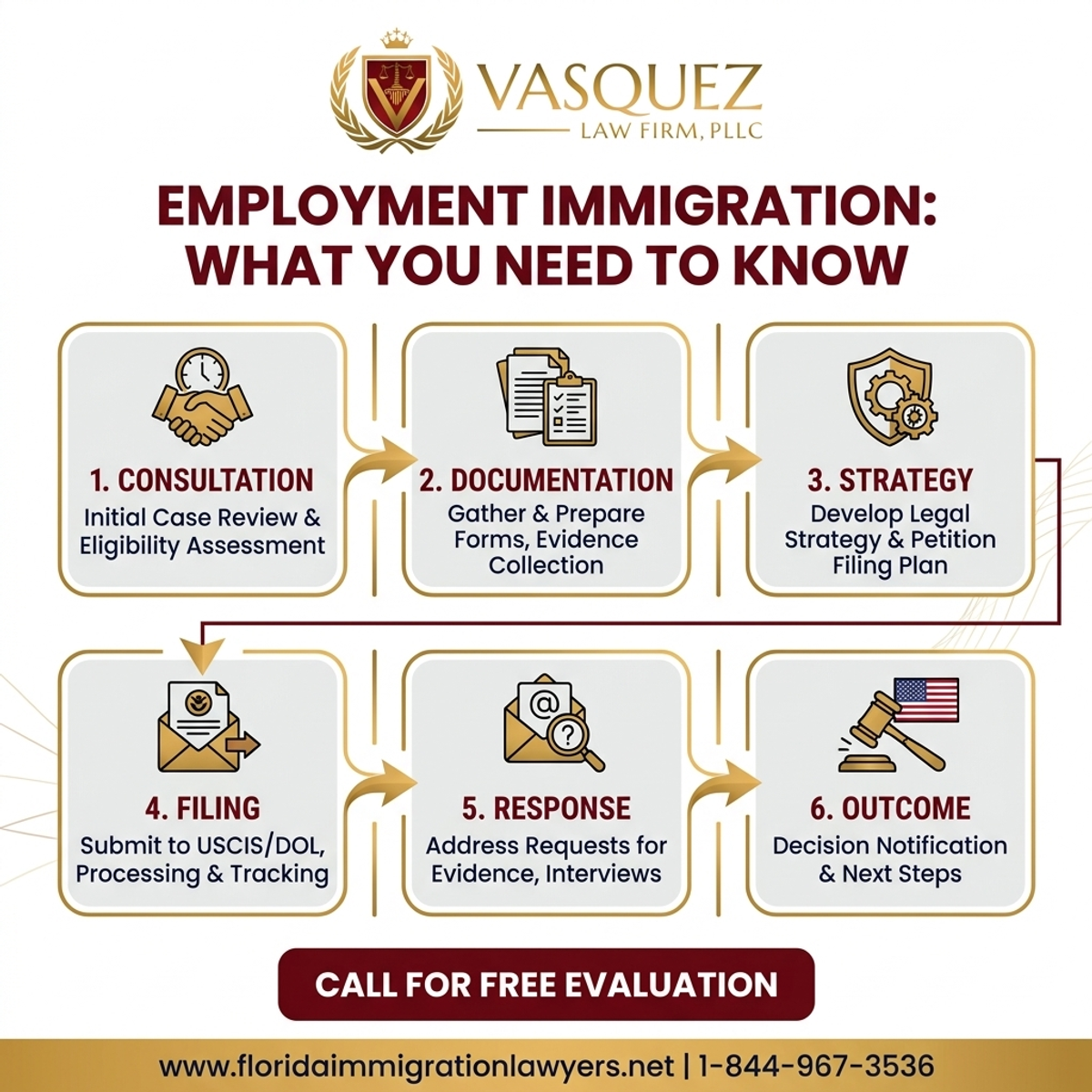
Step-by-Step Process — Employment Immigration Attorney in Florida: What You Need to Know
Required Documents for Employment-Based Immigration
- Valid passport
- Job offer letter
- Proof of qualifications (degrees, certificates)
- Labor certification (if applicable)
- Completed visa application form
What is the Timeline for Employment-Based Immigration?
The timeline for employment-based immigration can vary significantly depending on the visa category and individual circumstances. Here's a general overview:
| Stage | Typical Timeframe | Notes |
|---|---|---|
| Petition Approval | 2-6 months | Varies by USCIS workload |
| Visa Application | 1-3 months | Dependent on embassy/consulate processing |
| Interview Scheduling | 1-2 months | May require additional documentation |
The 'typical timeframe' presented in the table is merely a guideline, as the actual duration can be influenced by a myriad of factors. These include the specific visa category (some are subject to annual caps, like the H-1B, which requires a lottery), the applicant's country of origin (due to visa bulletin backlogs for green cards), the current workload of USCIS service centers, and the efficiency of the U.S. embassy or consulate processing your visa. Premium processing options are available for some petitions, which can significantly expedite USCIS review for an additional fee, but this doesn't guarantee faster consular processing.
Understanding these variables is crucial for managing expectations and planning your move to Florida. For instance, if your petition receives a Request for Evidence (RFE), it will add several weeks or even months to the process. Similarly, security checks or administrative processing at the consulate can extend the visa application stage. An experienced attorney can help you anticipate potential delays, advise on strategies to mitigate them, and keep you informed throughout each stage. Staying organized and promptly responding to any requests from immigration authorities is key to a smoother journey.
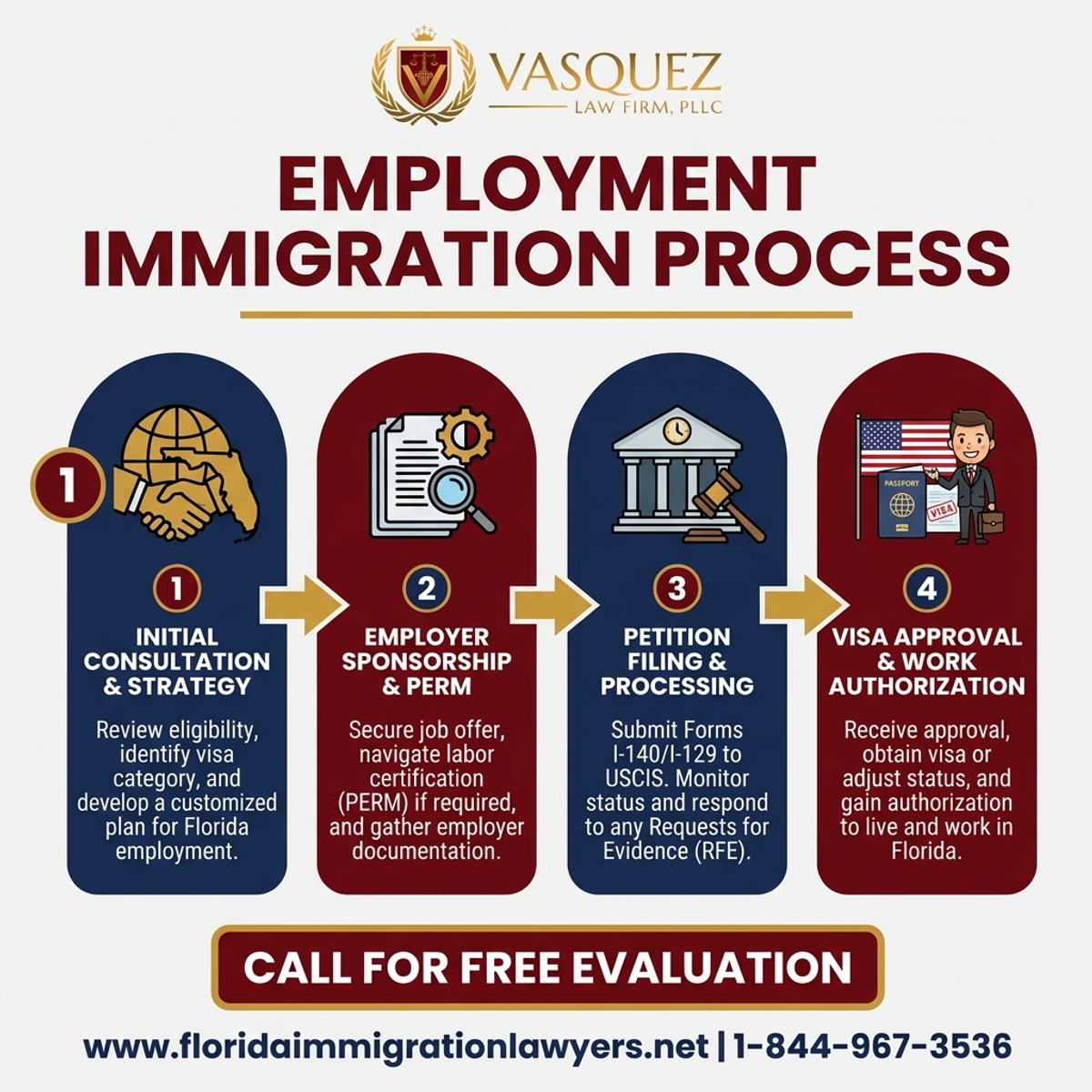
Key Statistics — Employment Immigration Attorney in Florida: What You Need to Know
Costs Associated with Employment Immigration
Understanding the costs involved is crucial for planning your immigration journey. While legal fees can vary, here is a general outline:
| Item | Typical Fee | Notes |
|---|---|---|
| USCIS Filing Fee | Variable | Depends on visa category |
| Attorney Fees | $2,000-$5,000 | Varies by case complexity |
| Additional Expenses | Varies | Medical exams, translations, etc. |
Do not navigate this process alone. Contact Florida Immigration Lawyers today.
The financial aspect of employment immigration can be substantial, and it's important to have a clear understanding of all potential expenses. USCIS filing fees vary widely by visa type and can be subject to change. For example, an H-1B petition involves several fees including the base filing fee, an ACWIA fee, a Fraud Prevention and Detection Fee, and potentially a Public Law 114-113 fee for certain employers. Green card applications (I-485) also have significant filing fees. While some fees are legally mandated for the employer, others may be borne by the employee, depending on company policy and legal guidelines.
Attorney fees reflect the complexity of the case, the attorney's experience, and the scope of services provided. A straightforward work visa application might fall on the lower end, while a complex green card petition with multiple dependents or prior immigration issues will command higher fees. Beyond the primary filing and legal fees, applicants should budget for additional expenses such as medical examination fees, document translation costs, travel expenses for embassy interviews, and potentially fees for educational credential evaluations. Florida Immigration Lawyers offers transparent fee structures and provides a free case review to discuss potential costs specific to your situation, helping you plan effectively.
Common Mistakes to Avoid
- Incorrectly filling out forms can lead to delays or denials.
- Missing deadlines can result in application rejection.
- Providing insufficient documentation can harm your case.
- Not understanding visa requirements can lead to ineligibility.
- Failing to maintain visa status can result in deportation.
- Ignoring updates to immigration laws may affect your application.
- Attempting to file without legal assistance can increase risks.
- Not preparing for the visa interview can lead to denial.
- Omitting previous immigration violations can have severe consequences.
- Misunderstanding the labor certification process can delay your application.
Even minor omissions or inaccuracies on immigration forms can trigger Requests for Evidence (RFEs) or outright denials. USCIS is highly particular, and a single misplaced digit or unchecked box can derail an application. Always double-check every field, ensure consistency with supporting documents, and consider having an expert review your submission. An attorney from Florida Immigration Lawyers can meticulously prepare and review your forms, significantly reducing the risk of administrative errors.
Immigration processes are governed by strict deadlines, from initial filing windows to RFE response dates. Missing any deadline can lead to the rejection of your application, requiring you to start the entire process over, which is costly and time-consuming. Keeping a detailed calendar and working closely with your legal team to ensure timely submissions is essential for a smooth process.
Your application is only as strong as the evidence supporting it. Failing to provide comprehensive documentation, such as sufficient proof of qualifications, employment history, or financial stability, will inevitably lead to delays or denials. Always provide more robust evidence than strictly required, ensuring every claim in your application is well-substantiated with clear and verifiable documents.
Each visa category has specific eligibility criteria regarding education, experience, job duties, and employer qualifications. Misunderstanding these requirements can lead to applying for the wrong visa, resulting in an immediate denial. Before embarking on the application process, thoroughly research or consult with an attorney to confirm your eligibility for the desired visa type.
Once you obtain a visa, it's crucial to adhere to its terms and conditions. This includes maintaining employment, avoiding unauthorized work, and departing the U.S. before your authorized stay expires or extending your status properly. Violating your visa status can lead to severe consequences, including deportation and future bars from re-entering the U.S.
Immigration laws and policies are subject to frequent changes, often with little notice. What was true last year might not be true today. Relying on outdated information can jeopardize your application. Regularly consulting reliable sources like USCIS or, better yet, an immigration attorney who stays abreast of all legislative and policy shifts, is vital for success.
While it might seem like a cost-saving measure, navigating the intricate U.S. immigration system without professional legal guidance significantly increases the risk of errors, delays, and denials. The complexities of immigration law warrant the expertise of an attorney who can provide strategic advice, ensure compliance, and represent your best interests. For a free case review, call Florida Immigration Lawyers at 1-844-YO-PELEO.
The visa interview is a critical step, especially for consular processing. Appearing unprepared, providing inconsistent answers, or failing to articulate your intentions clearly can lead to a visa denial. Practice answering common questions, organize your documents, and maintain a calm and confident demeanor. An attorney can offer mock interview sessions and guide you on what to expect.
Attempting to conceal past immigration violations, criminal history, or misrepresentations can have severe and lasting negative consequences, often leading to permanent bars from the U.S. Transparency is always the best policy. Disclose all relevant information to your attorney, who can then advise on the best course of action and explore potential waivers or remedies.
For many employment-based green card categories, a Labor Condition Application (LCA) or PERM Labor Certification is required. This complex process involves demonstrating to the Department of Labor that there are no qualified U.S. workers available for the position. Errors in advertising, recruitment, or prevailing wage determination can invalidate the entire process, causing significant delays. Expert legal guidance is essential here.
When to Call a Lawyer
It's critical to consult an immigration attorney when facing complex cases, such as previous visa denials or deportation issues. If your employer is unfamiliar with the immigration process, an attorney can provide necessary guidance. For those in Orlando or Central Florida, local knowledge is invaluable.
Complex cases can include situations where you have a previous visa denial, a history of overstaying a visa, a criminal record, or if your employer has never sponsored foreign workers before. In such scenarios, an attorney can assess the specific challenges, identify potential legal remedies or waivers, and develop a robust strategy to overcome obstacles. They can also educate your employer on their responsibilities and liabilities, ensuring a compliant and successful sponsorship process.
Furthermore, if you are considering a move to Florida, an attorney with local knowledge of the state's economic landscape and specific industry needs can provide invaluable insights. They can advise on common visa types sought by employers in Orlando, Miami, Tampa, or other regions. Don't wait until a problem arises; proactive engagement with an immigration attorney from Florida Immigration Lawyers can prevent issues before they occur, saving you time, stress, and potential financial losses. Schedule a free consultation today to discuss your unique situation.
Frequently Asked Questions About Employment Immigration in Florida
Here are some common questions regarding employment immigration:
About Florida Immigration Lawyers
Florida Immigration Lawyers is a leading firm offering comprehensive services in employment immigration. Our experienced attorneys provide personalized guidance to ensure successful immigration outcomes. We are available 24/7 and offer free case reviews. Serving all of Florida, we specialize in various practice areas, including immigration law and business immigration. Schedule a free consultation with us today.
Sources and References
- U.S. Citizenship and Immigration Services (USCIS)
- Executive Office for Immigration Review (EOIR)
- 8 U.S.C. Chapter 12 - Immigration and Nationality Act
Related services: immigration practice areas, family immigration services, citizenship and naturalization, deportation defense.
This article provides general legal information and is not intended as legal advice. Every case is unique, and outcomes depend on specific facts and circumstances. Contact an attorney for advice about your particular situation.
Se Habla Espanol - Estamos aqui para ayudarle.
Do Not Navigate This Process Alone
Our experienced immigration attorneys are ready to fight for you. Get a free, confidential case review today.
Se Habla Español
Or leave your details and we’ll call you:
Free Evaluation in 24 Hours
Or talk to us right now

AI voice assistant — available 24/7
FreeFrequently Asked Questions

William J. Vásquez
Founding Attorney · Vasquez Law Firm
U.S. Air Force veteran and immigration attorney with years of hands-on U.S. immigration experience. J.D., NCCU School of Law. AILA member. Admitted to the 4th, 5th, and 11th Circuit Courts.
Available 24/7 - Free Evaluations
Reviewed for legal accuracy by William J. Vásquez
Licensed in North Carolina; U.S. immigration is federal practice.
Related Legal Services
Our Florida immigration attorneys can help you with family immigration services, immigration lawyer cost in Florida and experienced immigration attorneys. Call today at 1-844-YO-PELEO for a free case review.
Related Links
Related Topics
Free Legal Case Review
Discuss your case with our experienced attorneys. We're available 24/7.
Se Habla Español - Estamos aquí para ayudarle.
Related Articles
Immigration Lawyer Orlando Free Consultation in Florida
For individuals and families in Orlando, Florida, navigating the complexities of U.S. immigration law requires expert guidance. An immigration lawyer in Orlando offers crucial support for everything from visa applications and green card processes to naturalization and deportation defense. This comprehensive guide details what a free consultation covers, providing a step-by-step overview of immigration pathways, essential document checklists, and expected timelines in 2026. We also highlight common mistakes to avoid, discuss the critical role of legal counsel in deportation and asylum cases, and explain why choosing a local Orlando immigration attorney is beneficial. Florida Immigration Lawyers is dedicated to serving the diverse community of Orlando with compassionate, effective legal solutions, ensuring you receive personalized advice and robust representation for a successful immigration journey.
EAD Advance Parole Combo Card in Florida 2026
For individuals with a pending Form I-485, Application to Register Permanent Residence or Adjust Status, the EAD Advance Parole Combo Card is an essential document. This single card combines the authorization to work legally in the U.S. (Employment Authorization Document - EAD) with permission to travel internationally and re-enter without abandoning your green card application (Advance Parole). This guide from Florida Immigration Lawyers provides a comprehensive overview for applicants in Florida in 2026, covering eligibility, the step-by-step application process, required documents, expected processing times, and associated costs. We also highlight common mistakes to avoid and when to seek legal counsel to ensure a smooth and successful immigration journey. Understanding this vital card is key to maintaining stability while awaiting your permanent residency approval.
VAWA Immigration Relief for Abused Spouses in Florida
Discover how the Violence Against Women Act (VAWA) provides crucial immigration relief for abused spouses in Florida. Learn about eligibility, the application process, and how Florida Immigration Lawyers can assist you.
H-4 EAD Work Authorization for Spouses in Florida 2026
For H-1B families in Florida, the H-4 EAD (Employment Authorization Document) is a critical pathway allowing eligible spouses to work legally in the U.S. This comprehensive guide, updated for 2026, explains who qualifies, the step-by-step application process, current processing times, and associated costs. We delve into the impact of H-4 EAD on financial stability and career opportunities for H-1B families in vibrant Florida communities like Orlando. Learn about essential documents, common mistakes to avoid, and when seeking legal counsel from Florida Immigration Lawyers can ensure a smooth and successful application. Our firm provides expert guidance for initial applications and renewals, helping H-4 spouses navigate complex immigration regulations with confidence. Understand your rights and secure your work authorization.