USCIS Oath Ceremony Florida 2026: Schedule & Key Dates
For immigrants in Florida, understanding the USCIS oath ceremony schedule for 2026 is crucial for the final step of naturalization. This comprehensive guide from Florida Immigration Lawyers explores how these schedules are determined, the factors influencing processing times, and what to expect throughout the naturalization journey. We delve into eligibility requirements, a step-by-step application guide, and a detailed look at the documents needed for your oath ceremony. With varying wait times across Florida's USCIS field offices, staying informed is key. We also highlight common mistakes to avoid and explain when seeking legal counsel can be invaluable to ensure a smooth and successful transition to U.S. citizenship. Gain insights into timelines, costs, and the support available from our expert team.
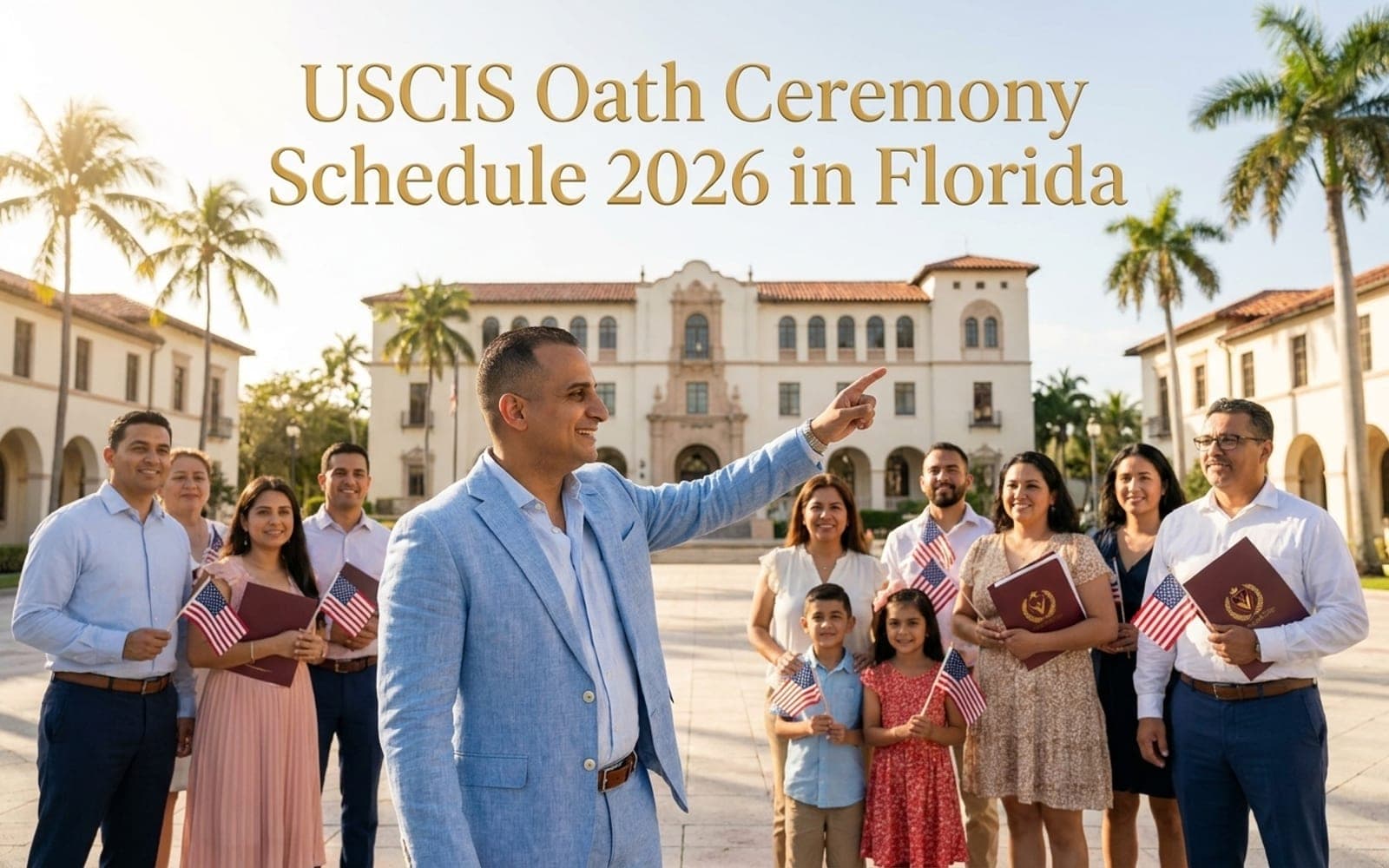
The USCIS oath ceremony schedule in Florida for 2026 is highly individualized, varying based on the specific USCIS field office (e.g., Orlando, Hialeah, Miami) and the applicant's case complexity. Generally, after a successful naturalization interview, applicants receive their Notice of Naturalization Oath Ceremony (Form N-445) within a few weeks to several months. As of 2026, USCIS continues to manage backlogs, which can influence scheduling. It is crucial to stay updated on your case status online and respond promptly to any USCIS requests. Factors like security checks, the volume of applications, and operational capacity at local offices directly impact how quickly your ceremony is scheduled.
- **Varied Scheduling:** Oath ceremony dates depend on your local Florida USCIS office and case specifics.
- **Notice Timing:** Expect Form N-445 (Oath Ceremony Notice) weeks to months after interview.
- **Backlog Impact:** National and local backlogs can extend wait times for ceremony scheduling.
- **Case Status:** Regularly check your USCIS online account for updates.
- **Key Factors:** Security checks, application volume, and office capacity are major influences.
Becoming a U.S. citizen is a monumental achievement, the culmination of a long and often complex immigration journey. For many, the final step-the Oath of Allegiance ceremony-is eagerly anticipated. If you are an immigrant in Florida, navigating the naturalization process, understanding the **USCIS oath ceremony schedule 2026** is likely a top priority. While the exact timing can feel unpredictable, gaining insight into how these schedules are determined and what factors influence them can help you prepare.
This comprehensive guide from Florida Immigration Lawyers will demystify the USCIS naturalization process in Florida, focusing on processing times, eligibility, and what to expect as you approach your oath ceremony in 2026. We'll cover everything from the initial application to the final moments of becoming a citizen, providing crucial information for residents across the Sunshine State, including Orlando and surrounding Central Florida areas. We understand the anticipation and the questions you may have, and we are here to provide clear, actionable insights.
Do not navigate this complex journey alone. For personalized guidance on the **USCIS oath ceremony schedule 2026** or any aspect of your naturalization process, call Florida Immigration Lawyers at 1-844-YO-PELEO for a free case review today. Our dedicated team is ready to assist you.
What are the Typical USCIS Oath Ceremony Schedules in Florida for 2026?
As of 2026, the typical USCIS oath ceremony schedules in Florida are not fixed to specific dates or predictable patterns; instead, they are determined on a rolling basis by individual USCIS field offices in response to completed naturalization cases and available capacity. Applicants generally receive their Form N-445, Notice of Naturalization Oath Ceremony, within a few weeks to a few months after their naturalization interview, provided their case is approved without further issues.
The scheduling of your oath ceremony in Florida depends heavily on several factors, including the specific USCIS field office processing your N-400 Application for Naturalization (e.g., Orlando, Hialeah, or Miami) and the current volume of approved cases awaiting ceremonies. While some applicants in Florida might receive their notice quickly, others may experience delays due to national backlogs, staffing levels, or the need for additional administrative processing. USCIS aims to schedule ceremonies as efficiently as possible, but the exact wait time can vary significantly from one applicant to another.
Many oath ceremonies in Florida are still conducted in-person, often at federal courthouses or within USCIS facilities. However, in certain circumstances, USCIS has experimented with virtual or hybrid options, especially for less complex cases or to manage high volumes. The N-445 notice will clearly state whether your ceremony is in-person or virtual, along with the date, time, and location. It is imperative to review this document carefully and follow all instructions to ensure a smooth transition to citizenship. Be prepared for potential changes in scheduling, as USCIS may reschedule ceremonies if unforeseen circumstances arise.
How Do Overall USCIS Processing Times in Florida Impact Naturalization?
Overall USCIS processing times in Florida directly impact the naturalization process by influencing how long it takes for each stage of the N-400 application to be completed, ultimately affecting when an applicant receives their oath ceremony notice. Longer processing times for initial application review, biometrics appointments, and interviews will inevitably push back the final step of naturalization.
The journey to naturalization involves several distinct stages, each with its own processing timeline. For residents in Florida, these stages are handled by various USCIS offices, including the Application Support Centers (ASCs) for biometrics and field offices like Orlando, Hialeah, and Miami for interviews. If there are significant backlogs at any of these offices, the entire naturalization timeline extends. For example, if the Orlando Field Office is experiencing a high volume of N-400 interviews, it could take longer to get your interview scheduled, which in turn delays the final decision and subsequent oath ceremony scheduling. This interconnectedness means that no single stage exists in isolation.
As of 2026, USCIS has made efforts to improve efficiency, but challenges persist. Factors such as budget allocations, staffing levels, and the sheer volume of applications nationally and within Florida contribute to these fluctuating processing times. Applicants for naturalization (Form N-400) should regularly check the official USCIS website for estimated processing times for their specific field office. Understanding these broader trends can help manage expectations regarding the entire naturalization process, including the final oath ceremony. Delays in one area, such as security checks, can have a ripple effect throughout the entire process, including the final ceremony scheduling.
Step-by-Step Guide to the Naturalization Process Leading to the Oath Ceremony
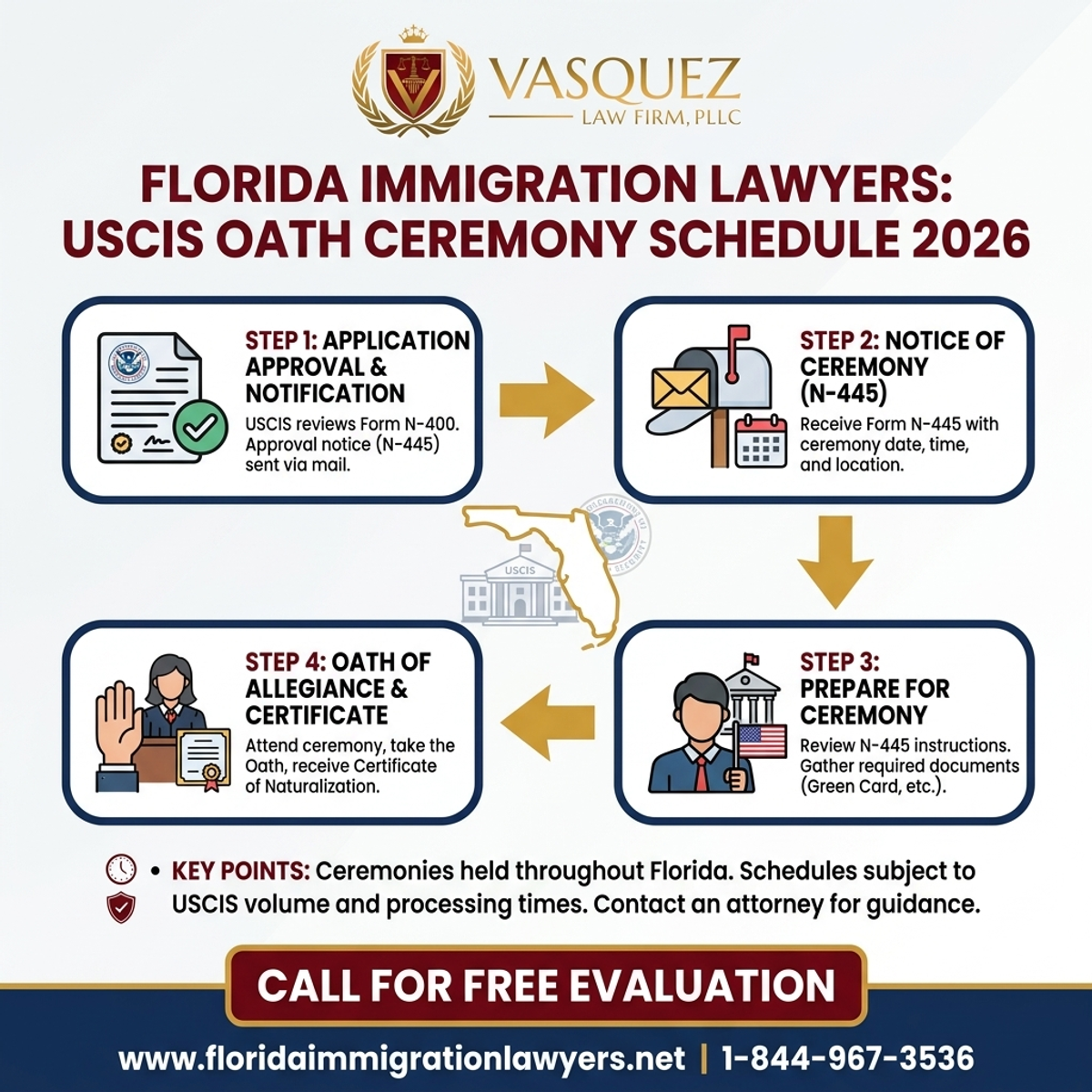
The naturalization process is a multi-step journey that culminates in the Oath of Allegiance ceremony. Understanding each stage is key to a successful application and timely citizenship. Here is a step-by-step guide for applicants in Florida:
-
Determine Eligibility: Before applying, ensure you meet all naturalization requirements. This typically includes age (18+), continuous residence in the U.S. as a lawful permanent resident (usually 5 years, or 3 years if married to a U.S. citizen), physical presence, good moral character, ability to read, write, and speak basic English, and knowledge of U.S. history and government. For specific details on eligibility, refer to USCIS requirements.
-
Prepare and File Form N-400: Complete the Application for Naturalization, Form N-400, accurately and thoroughly. Gather all necessary supporting documents, such as copies of your Green Card, marriage certificate (if applicable), tax returns, and travel records. It is crucial to be truthful and provide all requested information. Incomplete applications can lead to significant delays.
-
Attend Biometrics Appointment: After filing, USCIS will send you a notice for a biometrics appointment at a local Application Support Center (ASC) in Florida. This appointment is for collecting your fingerprints, photograph, and signature, which are used for background checks. Missing this appointment without rescheduling can lead to delays or even denial of your application.
-
Complete the Naturalization Interview: You will receive a notice to attend an interview with a USCIS officer at a field office like Orlando, Hialeah, or Miami. During the interview, the officer will review your N-400 application, test your English proficiency, and assess your knowledge of U.S. civics. Be prepared to answer questions about your application, personal history, and eligibility. This is a critical step in the process, and preparation is essential.
Step-by-Step Process — USCIS Oath Ceremony Schedule 2026 in Florida
-
Receive a Decision: Following the interview, the USCIS officer will issue a decision. This could be an immediate approval, a request for additional evidence (N-14), or a continuance if more time is needed to review your case. If approved, you will typically receive Form N-445, Notice of Naturalization Oath Ceremony.
-
Attend the Oath of Allegiance Ceremony: This is the final step where you take the Oath of Allegiance to the United States. You will surrender your Permanent Resident Card (Green Card) and receive your Certificate of Naturalization. This document serves as proof of your U.S. citizenship. It is a formal and solemn ceremony, marking your official transition to citizenship. For more information on this final stage, visit our page on citizenship.
Key Factors Affecting USCIS Processing and Wait Times in Florida
Several critical factors influence USCIS processing and wait times for all immigration applications, including naturalization, within Florida. Understanding these elements can help applicants better anticipate their journey through the system.
One primary factor is the **volume of applications** received by USCIS. When there is a surge in new filings, whether due to legislative changes, economic shifts, or other reasons, processing times can naturally extend across all service centers and field offices. Florida, with its diverse and growing immigrant population, often sees a high volume of applications, particularly at the Orlando, Hialeah, and Miami field offices. This consistent demand places significant pressure on existing resources, leading to longer queues for interviews and subsequent oath ceremonies.
Another significant influence is **agency staffing and resources**. USCIS's ability to process cases efficiently is directly tied to its budget and the number of officers available to review applications, conduct interviews, and manage administrative tasks. Fluctuations in funding or staffing levels can lead to backlogs. Furthermore, **policy changes** can dramatically impact processing times. For instance, increased scrutiny on specific case types or enhanced background check requirements, sometimes influenced by broader immigration enforcement priorities (like those seen with expanded deportations or airport arrests mentioned in recent news), can add layers of review that extend timelines. Such changes require officers to adapt to new guidelines, potentially slowing down the adjudication process.
Finally, **case complexity** itself plays a crucial role. Applications with incomplete documentation, criminal history, residency issues, or other complications will naturally require more time for review and adjudication. USCIS officers must ensure that all legal requirements are met, as outlined in the Immigration and Nationality Act (INA), such as INA Section 337 regarding the Oath of Allegiance. This thoroughness, while necessary for the integrity of the immigration system, can contribute to longer processing times for complex cases. Applicants should strive for accuracy and completeness from the outset to avoid unnecessary delays.
Do not navigate this process alone. Contact Florida Immigration Lawyers today to ensure your application is strong and to understand how current processing times may affect your case. Our experienced team can provide the support you need.
What Documents Do I Need for My USCIS Oath Ceremony?
For your USCIS Oath Ceremony in Florida, you will need to bring specific documents as instructed in your Form N-445, Notice of Naturalization Oath Ceremony. The most crucial items are your Permanent Resident Card (Green Card), any re-entry permits or refugee travel documents, and the N-445 notice itself. It is essential to arrive with all required documents to avoid delays or being turned away from the ceremony.
Preparing for your Oath of Allegiance ceremony involves gathering a few key documents to ensure a smooth and successful event. The Form N-445, which is your official invitation to the ceremony, will include a checklist of items you must bring. While the list can vary slightly, here are the commonly required documents:
- Form N-445, Notice of Naturalization Oath Ceremony: This is your official invitation and includes important instructions. You will need to complete the questionnaire on the back of this form before arriving.
- Your Permanent Resident Card (Green Card), Form I-551: You must surrender your Green Card at the ceremony. This signifies your transition from a permanent resident to a U.S. citizen.
- Re-entry Permit (Form I-327) or Refugee Travel Document (Form I-571): If you possess either of these documents, you must also surrender them at the ceremony.
- Any other USCIS-issued documents: Review your N-445 carefully for any additional documents USCIS specifically asks you to bring. This could include advance parole documents or employment authorization documents.
- Photo Identification: A valid state-issued ID (like a Florida driver's license) or passport for identification purposes.
It is important to remember that you should not bring any weapons or prohibited items to the ceremony location. Arrive on time, dressed appropriately, and be prepared to follow all instructions from USCIS officials. The N-445 notice also typically asks you to report any changes to your eligibility or any criminal arrests or citations since your interview. Failing to disclose such information could jeopardize your naturalization. Ensure you have made copies of all important documents for your personal records before surrendering the originals.
Timeline and Processing Expectations for Naturalization in Florida (2026)
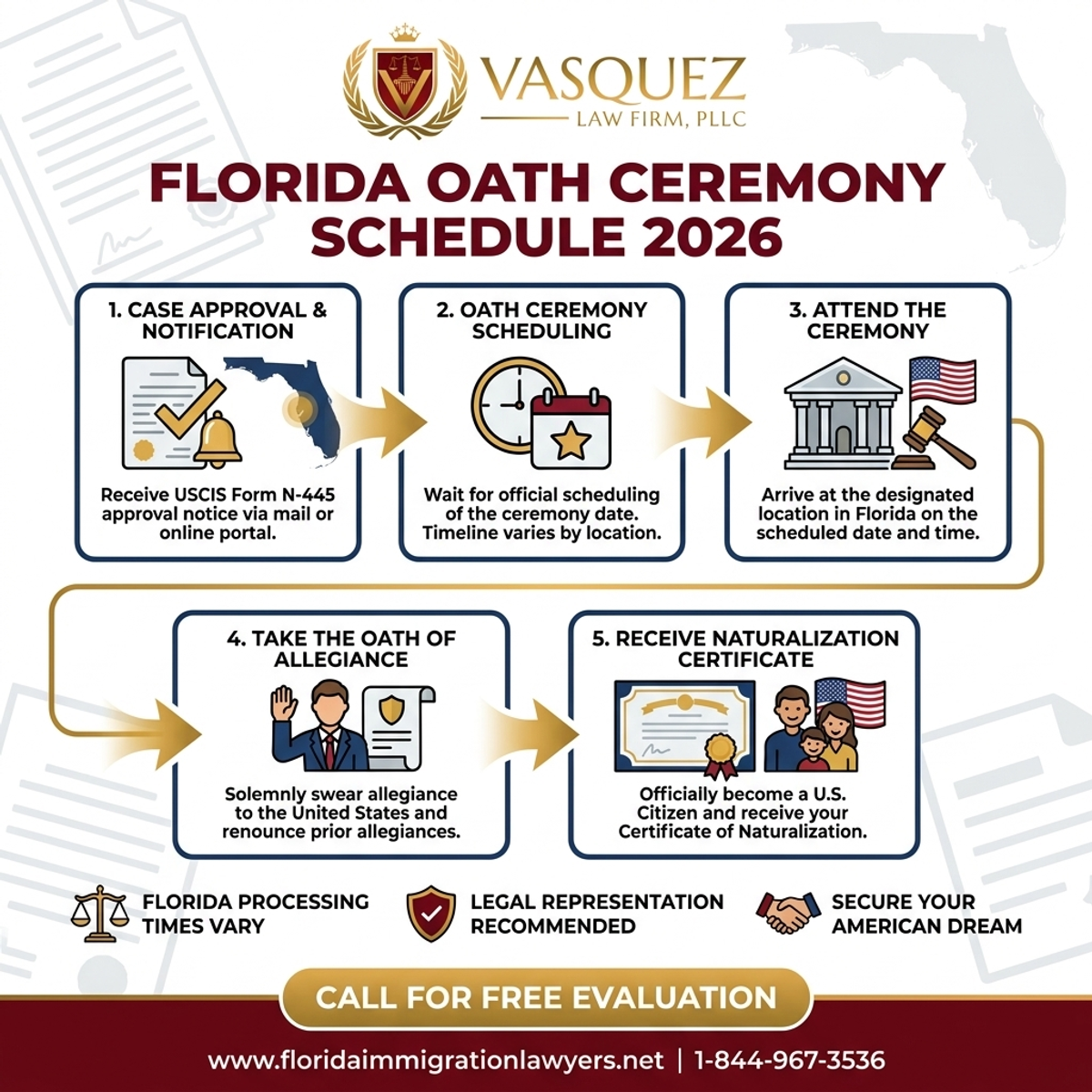
As of 2026, the naturalization process in Florida, from filing N-400 to the oath ceremony, typically ranges from 12 to 24 months, though it can vary significantly by individual case and field office. This timeline is subject to change based on USCIS workload and policy adjustments.
Here is a general breakdown of the stages and typical timeframes for naturalization applicants in Florida:
Key Statistics — USCIS Oath Ceremony Schedule 2026 in Florida
| Stage | Typical Timeframe (As of 2026) | Notes |
| File Form N-400 | Immediate | Application submitted to USCIS. |
| Receipt Notice (I-797C) | 1-3 weeks | Confirmation of application receipt. |
| Biometrics Appointment | 3-6 weeks after receipt | Fingerprints and photo taken at an ASC (e.g., Orlando ASC). |
| Interview Scheduling Notice | 6-12 months after biometrics | Notice for naturalization interview at a Florida field office. |
| Naturalization Interview | 1-3 months after notice | Meeting with a USCIS officer to review application and test English/Civics. |
| Decision/Approval | Immediate to 2 months after interview | Officer makes a decision; may be approved on the spot or deferred. |
| Oath Ceremony Notice (N-445) | 2-8 weeks after approval | Notice for the final Oath of Allegiance ceremony. |
| Oath Ceremony | 1-3 months after notice | Final step where citizenship is granted and Certificate of Naturalization issued. |
Cost Factors and Fee Breakdown for Naturalization
The cost of naturalization primarily involves the USCIS filing fee for Form N-400, which can change. As of 2026, there is also a biometrics fee included. Be aware of potential additional costs like legal fees for attorney assistance or document translation fees.
Understanding the financial aspects of naturalization is important for planning your journey to U.S. citizenship. The primary cost is the filing fee for Form N-400, which USCIS adjusts periodically. It's crucial to check the most current fees directly on the USCIS website before filing. Additionally, some applicants may qualify for a fee waiver or reduced fee, depending on their income and public benefit receipt. Always consult the official USCIS website for the most up-to-date information on fees and fee waiver eligibility.
| Item | Typical Fee (As of 2026 - Subject to Change) | Notes |
| Form N-400, Application for Naturalization | Varies (Check USCIS website) | Mandatory filing fee for the application. |
| Biometrics Services Fee | Included in N-400 fee | Covers fingerprinting and background checks. |
| Attorney Fees | Varies widely | For legal representation, highly recommended for complex cases. |
| Document Translation Fees | Varies by service | If non-English documents need certified translation. |
| Travel Expenses | Varies | For attending biometrics, interview, and oath ceremony in Florida. |
| Medical Exam Fees | Not typically required for N-400 | Only for certain specific situations, not standard naturalization. |
Common Mistakes to Avoid in the Naturalization Process
Navigating the naturalization process can be complex, and even minor errors can lead to significant delays or even denial. Being aware of common pitfalls is crucial for a smooth journey to U.S. citizenship.
-
Filing an Incomplete or Incorrect Form N-400: Submitting an application with missing information, unanswered questions, or incorrect details is a leading cause of delays. USCIS will likely send a Request for Evidence (RFE) or even reject the application, forcing you to refile and restart the clock.
-
Failing to Disclose All Criminal History: Even minor offenses, arrests, or citations, regardless of whether they led to a conviction or were expunged, must be disclosed. Failure to do so can be considered a misrepresentation of facts and can lead to denial based on lack of good moral character, as defined by 8 CFR Part 316.
-
Not Meeting Continuous Residence or Physical Presence Requirements: Naturalization requires specific periods of continuous residence and physical presence in the U.S. Long trips outside the country can break continuous residence or reduce physical presence below the required threshold, making you ineligible.
-
Missing Biometrics Appointments or Interviews: Failing to attend scheduled appointments without proper rescheduling can lead to your application being considered abandoned and subsequently denied. Always respond promptly to USCIS notices.
-
Poor English Language Skills or Insufficient Civics Knowledge: Applicants must demonstrate an ability to read, write, and speak basic English and pass a civics test. Inadequate preparation for these components can result in a failed interview and a need to be retested or even denial.
-
Not Updating USCIS of Address Changes: If you move, you must notify USCIS of your new address within 10 days. Failure to do so can result in missing important notices, including interview or oath ceremony schedules, leading to significant delays or issues with your case.
-
Providing Inconsistent Information: Discrepancies between your N-400 application and previous immigration filings (e.g., Green Card application) can raise red flags for USCIS officers, leading to requests for additional evidence or a more scrutinizing interview.
-
Travel After Interview But Before Oath Ceremony: While generally permitted, travel outside the U.S. after your interview but before your oath ceremony must be done with caution. Long trips can impact your continuous residence or physical presence, and you must return to the U.S. in time for your ceremony. Report any travel plans on your N-445.
-
Not Bringing Required Documents to the Oath Ceremony: Forgetting your Green Card, N-445 notice, or other requested documents can prevent you from participating in the ceremony and delay your citizenship.
-
Failing to Seek Legal Counsel for Complex Cases: If you have a criminal record, long absences from the U.S., or other complex issues, attempting to navigate naturalization without an experienced immigration attorney can lead to costly mistakes and potential denial.
When to Call a Lawyer for Your Naturalization Process in Florida
While many naturalization cases are straightforward, certain situations warrant the expertise of an experienced immigration lawyer. Knowing when to seek legal counsel can prevent costly mistakes and significantly improve your chances of a successful outcome, especially with fluctuating **USCIS processing times Florida 2026**.
You should consider contacting Florida Immigration Lawyers if you:
- Have any criminal history, even minor arrests or citations.
- Have previously been denied naturalization or had an immigration application denied.
- Have extended periods of absence from the U.S. that might affect your continuous residence or physical presence requirements.
- Are unsure about your eligibility for naturalization, particularly regarding good moral character or other complex legal definitions.
- Have received a Request for Evidence (RFE) or a Notice of Intent to Deny (NOID) from USCIS.
- Are applying under special provisions, such as military service or marriage to a U.S. citizen, which have specific requirements.
- Feel overwhelmed by the paperwork, legal terminology, or the interview process.
- Need assistance preparing for your naturalization interview, especially if you have complex answers to provide.
Our attorneys at Florida Immigration Lawyers are adept at handling all aspects of the naturalization process, from initial application review to interview preparation and addressing complex legal issues. We serve clients across all of Florida, including Central Florida and Orlando, and are committed to protecting your rights and advocating for your best interests. For a strong defense against potential issues, explore our attorneys and contact us for support.
About Florida Immigration Lawyers
Florida Immigration Lawyers is an immigration law firm dedicated to serving individuals and families across the entire state of Florida. With an unwavering commitment to our clients, we provide legal representation and compassionate guidance through every stage of the immigration process. Our team of highly skilled attorneys understands the complexities of U.S. immigration law and is passionate about helping clients achieve their dreams of living, working, and becoming citizens in the United States.
We offer a comprehensive range of immigration services, including family-based immigration, employment visas, deportation defense, asylum, and naturalization. Our firm is proud to offer bilingual services, ensuring that language is never a barrier to receiving top-tier legal assistance. We provide free case reviews and are available 24/7 to address your urgent immigration needs. Whether you are in Orlando or anywhere else in Florida, our dedicated team is here to fight for your rights and provide personalized solutions. Learn more about our immigration practice areas.
Sources and References
- U.S. Citizenship and Immigration Services (USCIS)
- Executive Office for Immigration Review (EOIR)
- U.S. Department of State
- 8 U.S.C. Chapter 12 - Immigration and Nationality Act (INA)
- INA Section 337 - Oath of Allegiance
- 8 CFR Part 316 - General Requirements for Naturalization
- 8 CFR Part 337 - Oath of Allegiance
- USCIS Policy Manual
Related services: family immigration services, asylum protection.
This article provides general legal information and is not intended as legal advice. Every case is unique, and outcomes depend on specific facts and circumstances. Contact an attorney for advice about your particular situation.
Your journey to U.S. citizenship is a significant one, and understanding the **USCIS oath ceremony schedule 2026** is a vital part of that process. Do not leave your future to chance. For dedicated legal support and a free case review, call Florida Immigration Lawyers at 1-844-YO-PELEO today. Se Habla Espanol - Estamos aqui para ayudarle.
Do Not Navigate This Process Alone
Our experienced immigration attorneys are ready to fight for you. Get a free, confidential case review today.
Se Habla Español
Or leave your details and we’ll call you:
Free Evaluation in 24 Hours
Or talk to us right now
AI voice assistant — available 24/7
FreeFrequently Asked Questions

William J. Vásquez
Founding Attorney · Vasquez Law Firm
U.S. Air Force veteran and immigration attorney with years of hands-on U.S. immigration experience. J.D., NCCU School of Law. AILA member. Admitted to the 4th, 5th, and 11th Circuit Courts.
Available 24/7 - Free Evaluations
Reviewed for legal accuracy by William J. Vásquez
Licensed in North Carolina; U.S. immigration is federal practice.
Related Legal Services
Our Florida immigration attorneys can help you with experienced immigration attorneys, asylum protection and citizenship and naturalization. Call today at 1-844-YO-PELEO for a free case review.
Related Links
Related Topics
Free Legal Case Review
Discuss your case with our experienced attorneys. We're available 24/7.
Se Habla Español - Estamos aquí para ayudarle.
Related Articles
Certificate of Eligibility for Expungement in Florida 2026
For non-U.S. citizens in Florida, understanding how a state expungement impacts immigration status is critical. A certificate of eligibility for expungement in Florida allows a criminal record to be sealed or expunged under state law. However, federal immigration agencies often disregard such state-level relief, still considering the original criminal offense as a conviction for immigration purposes. This can have severe implications for visa applications, green card eligibility, naturalization, and even lead to deportation. This guide clarifies the Florida expungement process, its limited effect on federal immigration law, and key steps to protect your status in 2026. Learn about common mistakes, required documents, timelines, and when to seek expert legal counsel from Florida Immigration Lawyers to navigate these complex issues effectively.
Immigration Lawyer Orlando Free Consultation in Florida
For individuals and families in Orlando, Florida, navigating the complexities of U.S. immigration law requires expert guidance. An immigration lawyer in Orlando offers crucial support for everything from visa applications and green card processes to naturalization and deportation defense. This comprehensive guide details what a free consultation covers, providing a step-by-step overview of immigration pathways, essential document checklists, and expected timelines in 2026. We also highlight common mistakes to avoid, discuss the critical role of legal counsel in deportation and asylum cases, and explain why choosing a local Orlando immigration attorney is beneficial. Florida Immigration Lawyers is dedicated to serving the diverse community of Orlando with compassionate, effective legal solutions, ensuring you receive personalized advice and robust representation for a successful immigration journey.
Work Permit EAD Application Process in Florida 2026
Applying for a work permit, or Employment Authorization Document (EAD), in Florida is a crucial step for many non-citizens seeking to work legally in the U.S. This comprehensive guide from Florida Immigration Lawyers details the 2026 application process, including eligibility criteria, necessary documentation for Form I-765, typical processing times, and associated costs. We highlight the importance of accurate submission and offer insights into common pitfalls to avoid. Our firm, based in Orlando, Florida, provides expert legal assistance for asylum seekers, adjustment of status applicants, and other eligible individuals. Learn how to prepare for your EAD application and understand when professional legal counsel can make a significant difference in achieving a successful outcome. Secure your right to work with knowledgeable support.
Change of Status B-2 to F-1 in Florida: Key Steps
Changing your status from a B-2 tourist visa to an F-1 student visa in Florida involves several crucial steps. This guide provides a comprehensive overview, including the 2026 I-539 processing times, document requirements, and common pitfalls to avoid. Learn how to navigate the process effectively with help from Florida Immigration Lawyers.