Immigration Document Preparation Florida: 2026 Guide
Navigating immigration document preparation in Florida requires meticulous attention to detail, from identifying the correct forms to gathering extensive supporting evidence. This comprehensive 2026 guide from Florida Immigration Lawyers outlines the crucial steps for successful applications, including family-based petitions, adjustment of status, and naturalization. We cover everything from understanding form requirements and typical processing timelines to cost factors and common mistakes that can lead to delays or denials. With Florida's diverse immigrant population and specific USCIS field office operations, precise document preparation is paramount. Learn why legal assistance is invaluable in ensuring accuracy, mitigating risks, and streamlining your path to achieving your immigration goals in Florida.
Immigration document preparation in Florida involves meticulously gathering, completing, and filing various forms and supporting evidence with U.S. Citizenship and Immigration Services (USCIS) or other relevant agencies. This process is critical for family-based petitions, employment visas, adjustment of status, naturalization, and other immigration benefits. Accuracy, completeness, and adherence to specific guidelines are paramount to avoid delays, rejections, or even adverse consequences. Seeking professional legal guidance from a Florida immigration lawyer can significantly streamline this complex journey, ensuring all requirements are met and potential pitfalls are avoided.
- Complexity: Immigration forms are intricate and require precise information.
- Accuracy is Key: Errors or omissions can lead to significant delays or denials.
- Supporting Evidence: Proper documentation is crucial for proving eligibility.
- Florida Specifics: Local USCIS field offices (like Orlando) have unique processing nuances.
- Legal Assistance: An attorney can help navigate requirements and avoid common mistakes.
Embarking on an immigration journey in Florida can be both exciting and overwhelming. The path to achieving your immigration goals-whether it's uniting with family, pursuing career opportunities, or becoming a U.S. citizen-is often paved with complex legal documents and stringent requirements. Understanding how to properly prepare and submit your immigration documents is not just a bureaucratic step; it's a foundational element for the success of your application.
This comprehensive guide from Florida Immigration Lawyers aims to demystify the process of immigration document preparation Florida, offering clear, actionable insights for 2026. We will walk you through the essential steps, highlight common pitfalls, and explain why legal assistance is invaluable. From identifying the correct forms to compiling compelling evidence, we are here to help you navigate every stage. Don't leave your future to chance; ensure your application is prepared with precision and care. For personalized guidance and a free case review, call Florida Immigration Lawyers at 1-844-YO-PELEO today.
What is Immigration Document Preparation in Florida and Why is it Crucial?
Immigration document preparation in Florida refers to the detailed process of gathering, organizing, completing, and submitting all necessary forms and supporting evidence to U.S. immigration authorities, primarily USCIS. This includes everything from initial petitions and visa applications to requests for adjustment of status, work permits, and naturalization. It is crucial because the U.S. immigration system relies heavily on documented proof to establish eligibility for various benefits.
The meticulous assembly of these documents is the cornerstone of any successful immigration application. Errors, omissions, or inconsistencies can lead to significant delays, requests for evidence (RFEs), interviews, or even outright denials. For individuals and families in Florida, this process is particularly vital given the state's diverse population and the volume of immigration cases handled by local USCIS field offices, such as the one in Orlando. A properly prepared application demonstrates your eligibility clearly and efficiently, aligning with the requirements outlined in the Immigration and Nationality Act (INA), such as INA Section 204 for family-sponsored immigrants. Without careful preparation, even the most deserving cases can face unnecessary hurdles, underscoring the importance of precision in every detail.
How Do I Prepare My Immigration Documents in Florida? A Step-by-Step Guide
To prepare your immigration documents in Florida, you must first identify the correct forms for your specific case, gather all required supporting evidence, complete all sections accurately, and then meticulously organize and submit your application to the appropriate U.S. government agency, typically USCIS.
Navigating the various forms and requirements can be daunting, but a systematic approach can help. As of 2026, the process generally follows these key steps:
-
Understand Your Case and Identify Correct Forms: The first step is to clearly define your immigration goal. Are you applying for a family-based visa (e.g., Form I-130), adjusting your status to a lawful permanent resident (Form I-485), applying for naturalization (Form N-400), or seeking a work permit (Form I-765)? Each objective requires specific forms and supporting documentation. Research these forms thoroughly on the official USCIS website to ensure you have the most current versions and instructions. Understanding your specific visa category, such as those under INA Section 212, is also crucial for determining eligibility and required waivers.
-
Gather All Required Supporting Documents: This is often the most time-consuming part. You will need documents such as birth certificates, marriage certificates, passports, financial records (e.g., tax returns, W-2s, Form I-864 Affidavit of Support), medical examination results, police clearances, and photographs. Ensure all foreign-language documents are accompanied by certified English translations. For family-based petitions, proving a genuine relationship is paramount, requiring extensive evidence like photos, joint accounts, and communication records. A Florida immigration lawyer can provide a tailored checklist.
-
Complete All Forms Accurately and Honestly: Fill out every section of the forms completely and truthfully. Incomplete answers or discrepancies can trigger Requests for Evidence (RFEs) or even lead to accusations of misrepresentation. Use black ink, print clearly, and sign where required. If a question does not apply, write "N/A" (Not Applicable) unless otherwise instructed. Reviewing the instructions for each form, which often reference specific parts of 8 CFR (Code of Federal Regulations), is vital for compliance.
-
Organize and Assemble Your Application Packet: USCIS and other agencies have specific guidelines for how documents should be organized. This often includes cover letters, tabs for different sections, and placing specific forms on top. Proper organization makes it easier for immigration officers to review your case, reducing the likelihood of processing delays. For example, some forms require specific photographic specifications, detailed in the USCIS Policy Manual.
-
Thoroughly Review and Proofread: Before submission, meticulously review your entire application packet. Check for any typographical errors, missing signatures, or overlooked questions. It is often helpful to have another person review it as well, or better yet, a qualified immigration attorney. This final check can catch critical mistakes that could jeopardize your case.
-
File with the Correct Agency and Address: Ensure you send your application to the correct USCIS lockbox facility or service center. The filing address varies depending on the form and your current state of residence (e.g., Florida). Always use a trackable mailing service. For certain visa types, you may be filing with a U.S. Embassy or Consulate abroad, under the purview of the U.S. Department of State.
-
Prepare for Biometrics and Interviews: After filing, you may receive appointments for biometric services (fingerprints, photos) and interviews at a local USCIS field office, such as the one in Orlando. Prepare thoroughly for any interview by reviewing your application and understanding the questions you may be asked. An attorney can help you prepare for these critical steps.
What Documents Are Required for Common Florida Immigration Applications?
While specific document requirements vary significantly based on the type of immigration application, common necessities include identity verification, proof of relationship, financial stability evidence, biographic information, and any relevant legal or medical records.
Here is a general checklist of documents you may need for various immigration applications in Florida, as of 2026. This list is not exhaustive, and individual cases may require additional specific items:
- Proof of Identity and Nationality:
- Valid passport (current and expired)
- Birth certificates (for applicant and any family members included)
- National identity cards
- Previous U.S. visas or entry stamps
- Proof of Relationship (for family-based petitions):
- Marriage certificates
- Divorce decrees (if applicable)
- Birth certificates of children
- Photos, joint bank accounts, property deeds, utility bills, correspondence, and affidavits from friends/family attesting to the relationship's legitimacy
- Financial Documents:
- Affidavit of Support (Form I-864) from the petitioner/sponsor
- Tax transcripts (IRS Form 1040) for the past three years
- W-2s, pay stubs, employment verification letters
- Bank statements, asset documentation
- Biographic Information and Background:
- Passport-style photographs (specific dimensions required)
- Medical examination results from a USCIS-approved civil surgeon
- Police clearance certificates from countries of residence
- Certified copies of court records for any arrests or convictions (even if expunged)
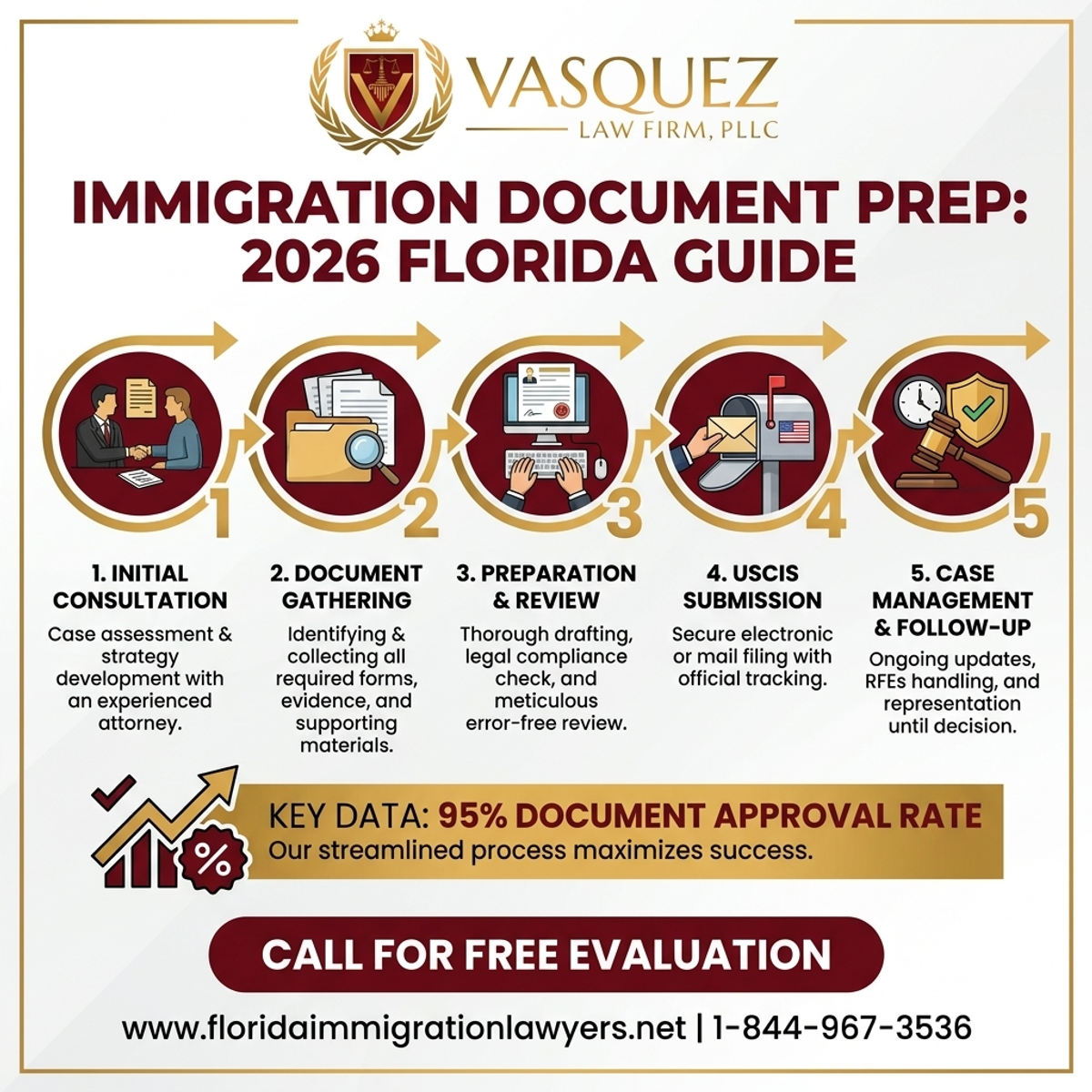
Step-by-Step Process — Immigration Document Preparation Florida: 2026 Guide
- Immigration Status Documents:
- Copies of current and previous I-94 arrival/departure records
- Employment Authorization Documents (EADs)
- Green Cards (if applicable, for renewal or naturalization)
- Notices of Action (I-797) from USCIS
- Translated Documents:
- Any document not in English must be accompanied by a complete and accurate English translation, certified by the translator.
Preparing this extensive list of documents can be daunting. An experienced Florida family immigration lawyer can help you compile a precise list tailored to your unique case, ensuring nothing is overlooked.
What Are the Timelines and Processing Expectations for Immigration Cases in Florida in 2026?
As of 2026, immigration processing times in Florida vary significantly based on the specific application type, the USCIS service center or field office handling the case (such as the Orlando Field Office), current caseloads, and policy changes. General expectations can range from several months to several years.
Understanding the typical timelines can help manage expectations, though it's important to remember these are estimates and can fluctuate. USCIS regularly updates its processing times online, but here’s a general overview for common applications impacting Florida residents:
| Stage | Typical Timeframe (As of 2026) | Notes |
|---|---|---|
| Form I-130 (Petition for Alien Relative) | 10-24 months | Varies significantly by relationship category (immediate relative vs. preference categories) and service center. |
| Form I-485 (Adjustment of Status) | 12-36 months | Highly dependent on the local USCIS field office (e.g., Orlando) and underlying visa availability. Includes interview scheduling. |
| Form N-400 (Application for Naturalization) | 8-18 months | Includes biometric appointment, interview, and oath ceremony scheduling. Can be faster for some offices. |
| Form I-765 (Application for Employment Authorization) | 5-12 months | Often filed concurrently with I-485; processing can be expedited in certain circumstances. |
| Form I-131 (Application for Travel Document) | 5-12 months | For Advance Parole or Refugee Travel Document. Also often concurrent with I-485. |
Factors that can influence these timelines include the completeness of your application, whether you receive a Request for Evidence (RFE), the need for an interview, and any background check delays. For those seeking U.S. citizenship, understanding these processing variances is key. Keeping track of your case status online through the USCIS website is recommended, but a Florida immigration lawyer can provide more specific insights based on current trends and local office performance.
What Are the Costs Associated with Immigration Document Preparation and Filing in Florida?
The costs associated with immigration document preparation and filing in Florida typically encompass government filing fees, biometric fees, medical examination fees, and potential attorney fees, all of which vary based on the specific application and case complexity.
It is important to budget for these expenses, as they are a necessary part of the immigration process. As of 2026, while specific fee amounts are subject to change by USCIS (as per 8 CFR 103.7), here's a breakdown of typical cost categories:
| Item | Typical Fee Range (As of 2026) | Notes |
|---|---|---|
| USCIS Filing Fees (e.g., I-130, I-485, N-400) | $535 - $1,225+ per form | These fees are set by USCIS and vary significantly by application type. Always check the USCIS website for the most current fees. |
| Biometrics Services Fee | ~$85 | Required for most applications involving fingerprints and photographs. Often included in the main filing fee for some forms like I-485 and N-400. |
| Medical Examination Fee | $200 - $500 | Paid directly to a USCIS-approved civil surgeon. Varies by provider and required vaccinations. |
| Attorney Fees | Varies widely ($1,500 - $10,000+) | Depends on the complexity of the case, the attorney's experience, and the services provided (e.g., full representation, document review). |
| Translation Services | $20 - $50+ per page | For certified translations of foreign-language documents. Can be per word or per document. |
| Miscellaneous Expenses | Variable | Includes postage, photocopying, travel for interviews, and obtaining vital records. |
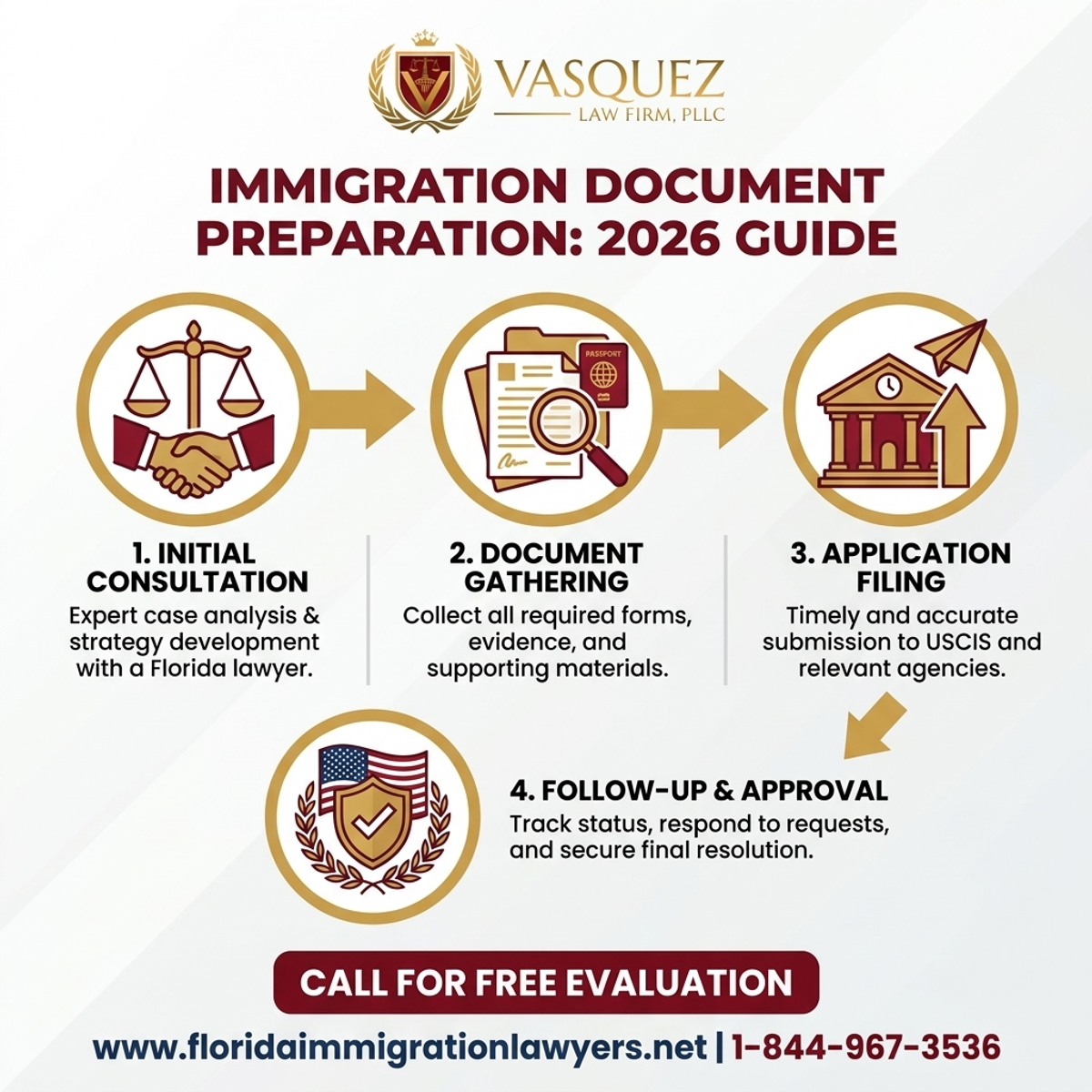
Key Statistics — Immigration Document Preparation Florida: 2026 Guide
It's crucial to verify all government fees directly on the USCIS website before submitting your application, as these can change without much notice. While legal fees represent an investment, the value of guidance in avoiding costly mistakes and ensuring a smooth process can be immeasurable. Florida Immigration Lawyers offers transparent fee structures and free initial consultations to discuss your specific financial considerations.
Navigating Complex Immigration Situations in Florida
Beyond standard document preparation, many immigrants in Florida face complex situations that require specialized legal knowledge. These can include previous visa overstays, criminal history, prior denials, or the need for waivers of inadmissibility. Such cases demand a deeper understanding of immigration law, including various sections of the U.S. Code, such as 8 U.S.C. Chapter 12.
For individuals facing deportation defense, or those with asylum claims, the process involves navigating the Executive Office for Immigration Review (EOIR), which oversees immigration courts. Document preparation in these scenarios is even more critical, often involving detailed legal briefs, extensive exhibits, and expert witness statements. A single misstep can have profound and lasting consequences. Florida Immigration Lawyers are adept at handling these intricate cases, providing robust representation and meticulous document preparation tailored to the unique challenges of complex immigration matters in Florida.
Do not navigate this process alone. Contact Florida Immigration Lawyers today to ensure your documents are prepared correctly and your case is handled with the experience it deserves.
Common Mistakes to Avoid in Immigration Document Preparation
Immigration document preparation is a process where even minor errors can lead to significant setbacks. Avoiding these common mistakes can save you time, money, and stress:
- Incomplete or Inaccurate Forms: Failing to answer every question or providing incorrect information is a leading cause of RFEs and denials. Always double-check every entry.
- Missing Supporting Documents: Submitting an application without all required evidence will result in an RFE, significantly delaying your case. Use the official USCIS checklist for each form.
- Failure to Provide Certified Translations: Any document not in English must have a full, certified English translation. Uncertified translations are not accepted and will cause delays.
- Not Meeting Deadlines: Missing filing deadlines for applications, RFEs, or appeals can lead to case denial or even loss of immigration benefits. Always be aware of your deadlines.
- Incorrect Filing Fees: Submitting the wrong fee amount or an outdated payment method will cause your application to be rejected. Verify fees on the USCIS website immediately before filing.
- Not Disclosing Criminal History: Attempting to conceal past arrests or convictions, even minor ones or those that were expunged, is a serious offense that can lead to a finding of inadmissibility or misrepresentation. Always be truthful.
- Lying on Applications: Any form of misrepresentation or fraud can result in a permanent bar from the U.S. immigration system. Honesty is always the best policy.
- Failing to Update Address: Immigrants are legally required to inform USCIS of any address change within 10 days of moving. Failure to do so can result in missed notices and critical communications.
- Not Preparing for Interviews: Underestimating the importance of an interview can be detrimental. Review your application thoroughly and be ready to answer questions about your case.
- Ignoring Requests for Evidence (RFEs) or Notices of Intent to Deny (NOIDs): These are critical communications from USCIS. Failing to respond adequately and on time will almost certainly lead to a denial.
- Using Outdated Forms: USCIS frequently updates its forms. Using an old version will result in your application being rejected. Always download forms directly from the USCIS website.
- Not Seeking Legal Advice for Complex Cases: Attempting to handle a complex case, such as one involving waivers, previous deportations, or asylum claims, without legal counsel significantly increases the risk of denial.
When to Call a Florida Immigration Lawyer for Document Preparation
While some straightforward immigration applications might be manageable for individuals, many situations warrant the expertise of a Florida immigration lawyer. You should consider calling an attorney if your case involves any complexities, such as a criminal record, previous immigration violations, or if you've received a Request for Evidence (RFE) or a Notice to Appear (NTA) in immigration court.
Specific scenarios where legal counsel is invaluable include:
- Complex Family-Based Petitions: Cases involving step-relationships, adoptions, or previous marriages.
- Criminal History: Even minor offenses can have significant immigration consequences, potentially requiring waivers of inadmissibility.
- Previous Denials or Deportation Orders: Reopening old cases or appealing denials is highly complex.
- Asylum or Refugee Claims: These cases are inherently sensitive and require detailed legal arguments and extensive documentation.
- Business or Employment Visas: Often involve intricate regulations and compliance requirements.
- Adjustment of Status with Complications: If you entered the U.S. without inspection, overstayed a visa, or have other issues with your entry.
- Receiving an RFE or NOID: A lawyer can help craft a comprehensive and persuasive response.
- Facing an Interview: An attorney can prepare you for potential questions and attend the interview with you.
Florida Immigration Lawyers provide comprehensive immigration services, from initial consultation to final resolution. Our attorneys understand the nuances of immigration law and can help you navigate the system with confidence.
About Florida Immigration Lawyers
Florida Immigration Lawyers is an immigration law firm dedicated to serving individuals and families across the entire state of Florida. Located in Central Florida, our experienced attorneys provide compassionate and effective legal representation for a wide range of immigration matters. We understand the profound impact immigration issues have on your life, and we are committed to guiding you through every step of the legal process.
Our services include family-based immigration, employment visas, deportation defense, asylum claims, naturalization, and more. We pride ourselves on our client-focused approach, offering personalized strategies tailored to your unique situation. We are available 24/7 and offer free case reviews to help you understand your options without obligation. Choose Florida Immigration Lawyers for dedicated advocacy and extensive experience. Schedule a free consultation today or call us at 1-844-YO-PELEO.
Sources and References
- U.S. Citizenship and Immigration Services (USCIS)
- Executive Office for Immigration Review (EOIR)
- U.S. Department of State
- 8 U.S.C. Chapter 12 - Immigration and Nationality Act (INA)
- 8 CFR (Code of Federal Regulations)
- USCIS Policy Manual
Related services: asylum and refugee protection, immigration waivers, humanitarian protection programs, DACA renewal and applications.
This article provides general legal information and is not intended as legal advice. Every case is unique, and outcomes depend on specific facts and circumstances. Contact an attorney for advice about your particular situation.
Your immigration journey deserves the highest level of care and expertise. Do not face the complexities of immigration document preparation alone. Contact Florida Immigration Lawyers today for a free case review and let us help you achieve your immigration goals. Call us now at 1-844-YO-PELEO. Se Habla Español - Estamos aquí para ayudarle.
Do Not Navigate This Process Alone
Our experienced immigration attorneys are ready to fight for you. Get a free, confidential case review today.
Se Habla Español
Or leave your details and we’ll call you:
Free Evaluation in 24 Hours
Or talk to us right now

AI voice assistant — available 24/7
FreeFrequently Asked Questions

William J. Vásquez
Founding Attorney · Vasquez Law Firm
U.S. Air Force veteran and immigration attorney with years of hands-on U.S. immigration experience. J.D., NCCU School of Law. AILA member. Admitted to the 4th, 5th, and 11th Circuit Courts.
Available 24/7 - Free Evaluations
Reviewed for legal accuracy by William J. Vásquez
Licensed in North Carolina; U.S. immigration is federal practice.
Related Legal Services
Our Florida immigration attorneys can help you with immigration lawyer cost in Florida, experienced immigration attorneys and asylum protection. Call today at 1-844-YO-PELEO for a free case review.
Related Links
Related Topics
Free Legal Case Review
Discuss your case with our experienced attorneys. We're available 24/7.
Se Habla Español - Estamos aquí para ayudarle.
Related Articles
Certificate of Eligibility for Expungement in Florida 2026
For non-U.S. citizens in Florida, understanding how a state expungement impacts immigration status is critical. A certificate of eligibility for expungement in Florida allows a criminal record to be sealed or expunged under state law. However, federal immigration agencies often disregard such state-level relief, still considering the original criminal offense as a conviction for immigration purposes. This can have severe implications for visa applications, green card eligibility, naturalization, and even lead to deportation. This guide clarifies the Florida expungement process, its limited effect on federal immigration law, and key steps to protect your status in 2026. Learn about common mistakes, required documents, timelines, and when to seek expert legal counsel from Florida Immigration Lawyers to navigate these complex issues effectively.
Immigration Lawyer Orlando Free Consultation in Florida
For individuals and families in Orlando, Florida, navigating the complexities of U.S. immigration law requires expert guidance. An immigration lawyer in Orlando offers crucial support for everything from visa applications and green card processes to naturalization and deportation defense. This comprehensive guide details what a free consultation covers, providing a step-by-step overview of immigration pathways, essential document checklists, and expected timelines in 2026. We also highlight common mistakes to avoid, discuss the critical role of legal counsel in deportation and asylum cases, and explain why choosing a local Orlando immigration attorney is beneficial. Florida Immigration Lawyers is dedicated to serving the diverse community of Orlando with compassionate, effective legal solutions, ensuring you receive personalized advice and robust representation for a successful immigration journey.
Work Permit EAD Application Process in Florida 2026
Applying for a work permit, or Employment Authorization Document (EAD), in Florida is a crucial step for many non-citizens seeking to work legally in the U.S. This comprehensive guide from Florida Immigration Lawyers details the 2026 application process, including eligibility criteria, necessary documentation for Form I-765, typical processing times, and associated costs. We highlight the importance of accurate submission and offer insights into common pitfalls to avoid. Our firm, based in Orlando, Florida, provides expert legal assistance for asylum seekers, adjustment of status applicants, and other eligible individuals. Learn how to prepare for your EAD application and understand when professional legal counsel can make a significant difference in achieving a successful outcome. Secure your right to work with knowledgeable support.
Change of Status B-2 to F-1 in Florida: Key Steps
Changing your status from a B-2 tourist visa to an F-1 student visa in Florida involves several crucial steps. This guide provides a comprehensive overview, including the 2026 I-539 processing times, document requirements, and common pitfalls to avoid. Learn how to navigate the process effectively with help from Florida Immigration Lawyers.