Unlawful Presence Waiver in Florida: What You Need to Know
Learn about the I-601A unlawful presence waiver in Florida, including eligibility, application steps, and common mistakes to avoid. Contact Florida Immigration Lawyers for expert guidance.

The I-601A provisional waiver allows certain immigrants in the U.S. to apply for a waiver of unlawful presence before leaving the country for consular processing. This process is crucial for those who have accrued unlawful presence and want to avoid long-term bars from re-entering the United States.
- Available for immediate relatives of U.S. citizens.
- Aims to reduce family separation time.
- Must show extreme hardship to a U.S. citizen or lawful permanent resident relative.
Introduction
Living in Coral Springs, Florida, and facing immigration challenges can be daunting, especially with recent increases in ICE activities and expedited immigration court proceedings. The I-601A provisional waiver offers hope to those facing barriers due to unlawful presence. This article will guide you through understanding the waiver process, eligibility requirements, and how it can benefit you and your family. Call Florida Immigration Lawyers at 1-844-967-3536 for a free consultation and personalized assistance.
Understanding Unlawful Presence
Unlawful presence occurs when someone remains in the U.S. without legal authorization. This can result from overstaying a visa or entering the country without inspection. In Florida, many immigrants face this issue, especially in areas like Coral Springs, with its diverse immigrant population.
The consequences of unlawful presence are severe, often leading to three or ten-year bars from re-entering the U.S. The I-601A waiver is designed to help mitigate these penalties by allowing eligible individuals to apply for a waiver of these bars while still in the U.S.
Eligibility for the I-601A Waiver
To qualify for the I-601A waiver, you must be an immediate relative of a U.S. citizen or lawful permanent resident. This includes spouses, parents, and unmarried children under 21 years of age. Additionally, you must demonstrate that your U.S. citizen or LPR relative would face extreme hardship if you were not allowed to return to the U.S.
Applicants must also be physically present in the U.S. at the time of application and have an approved immigrant visa petition. It is essential to consult with an immigration attorney to assess your eligibility and build a strong case.
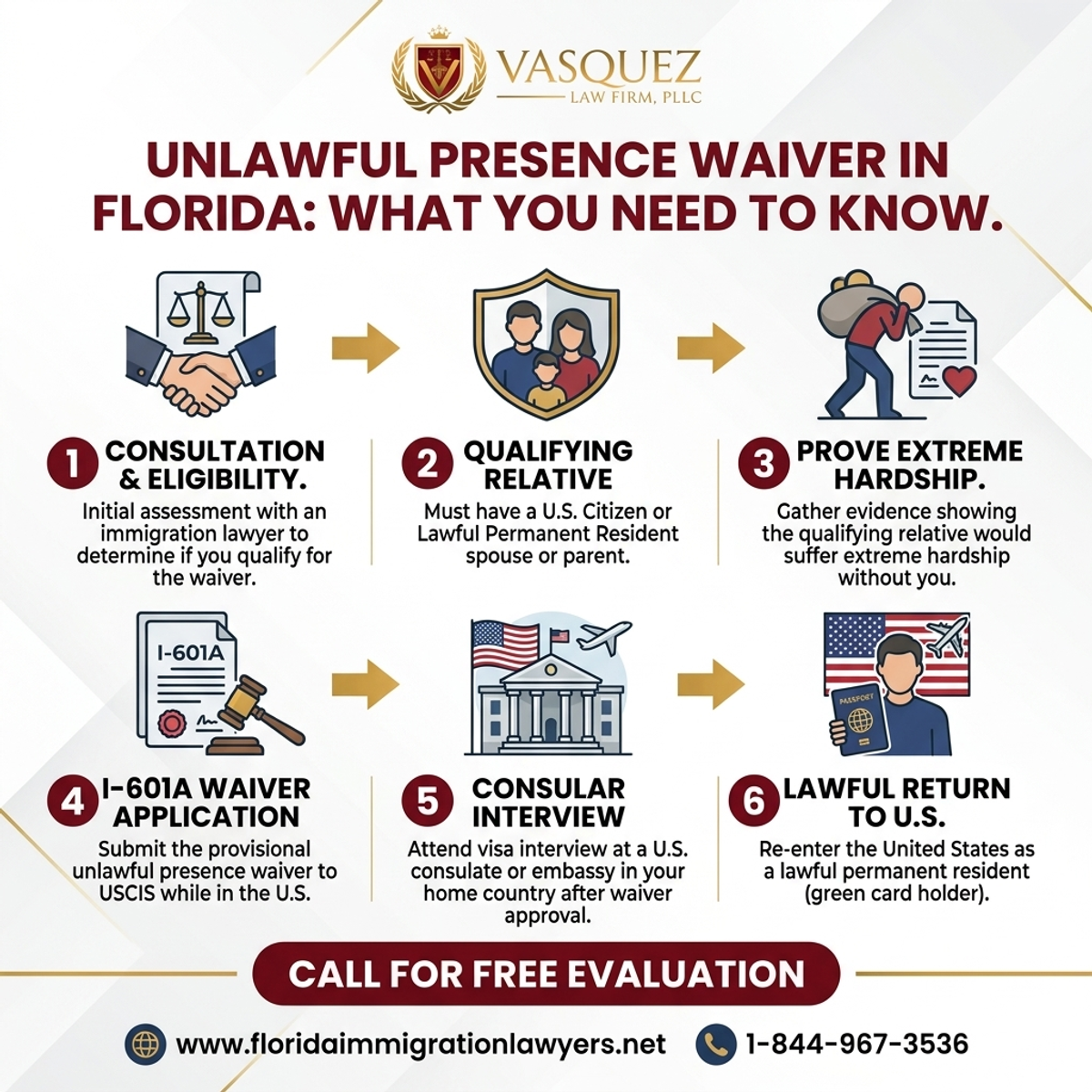
Step-by-Step Process — Unlawful Presence Waiver in Florida: What You Need to Know
Step-by-Step Guide to Applying for an I-601A Waiver
- Consultation: Begin by consulting with an experienced immigration attorney to evaluate your case and guide you through the process.
- Form I-601A: Complete and submit Form I-601A, Application for Provisional Unlawful Presence Waiver, along with the required supporting documents.
- Evidentiary Support: Gather evidence to demonstrate the extreme hardship your relative would face, such as medical records, financial statements, and affidavits.
- Biometrics Appointment: Attend a biometrics appointment for fingerprinting and background checks.
- Decision: USCIS will review your application and issue a decision. If approved, you can proceed with consular processing abroad.
Document Checklist for the I-601A Waiver
- Completed Form I-601A
- Proof of relationship to a U.S. citizen or LPR
- Evidence of extreme hardship
- Biometrics appointment notice
- Copy of the immigrant visa petition approval notice
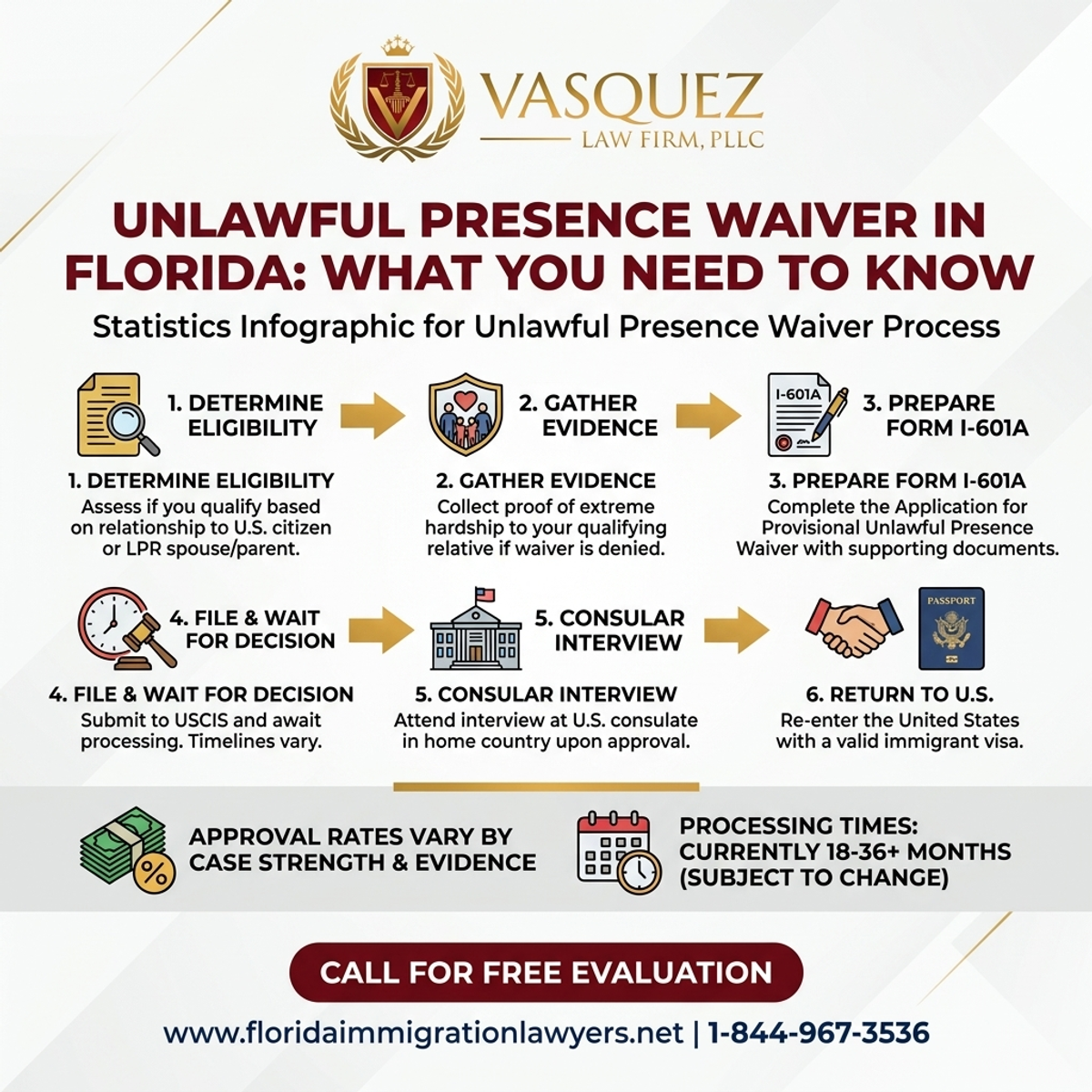
Key Statistics — Unlawful Presence Waiver in Florida: What You Need to Know
Timeline and Processing Expectations
The processing time for an I-601A waiver can vary, typically taking several months. It is crucial to apply well in advance of any planned travel or consular appointments. Due to the complexity of the waiver process and the need for compelling documentation, working with an immigration attorney can help expedite the process and avoid unnecessary delays.
Cost Factors and Fee Breakdown
While specific fees for the I-601A waiver can change, applicants should expect to pay filing fees to USCIS, along with potential costs for obtaining necessary documentation and legal assistance. It's advisable to budget for these expenses to ensure a smooth application process.
Do not navigate this process alone. Contact Florida Immigration Lawyers today.
Common Mistakes to Avoid
- Incomplete Applications: Failing to include all required documents can result in application denial.
- Insufficient Hardship Evidence: Without strong evidence, your waiver may be denied.
- Missing Deadlines: Late submissions can delay the process significantly.
- Ignoring Legal Advice: Not consulting a lawyer can lead to avoidable errors.
- Incorrect Form Usage: Using outdated or incorrect forms can cause rejection.
- Failure to Update Address: Not notifying USCIS of an address change can result in missed notices.
- Overlooking Biometrics Appointment: Missing this appointment can halt your application.
- Inadequate Preparation for Consular Interview: Unpreparedness can lead to visa denial.
When to Call a Lawyer
Navigating the immigration process alone can be overwhelming. If you find yourself facing complex issues such as proving extreme hardship, understanding eligibility, or preparing for consular interviews, it is vital to contact an immigration attorney. Florida Immigration Lawyers specialize in helping immigrants in Coral Springs and throughout Florida. Our expertise can make all the difference in your case.
About Florida Immigration Lawyers
Florida Immigration Lawyers is a dedicated firm offering comprehensive immigration services across Florida. We are committed to guiding our clients through every step of the immigration process, from family immigration to deportation defense. Our skilled attorneys are available 24/7 to provide personalized assistance. Call us at 1-844-967-3536 or visit our website for a free consultation. Se Habla Español.
Sources and References
- U.S. Citizenship and Immigration Services (USCIS)
- Executive Office for Immigration Review (EOIR)
- 8 U.S.C. Chapter 12 - Immigration and Nationality Act
- Code of Federal Regulations (CFR) Title 8
Related services: immigration practice areas, family immigration services, citizenship and naturalization.
This article provides general legal information and is not intended as legal advice. Every case is unique, and outcomes depend on specific facts and circumstances. Contact an attorney for advice about your particular situation.
For personalized assistance and to explore your options, call Florida Immigration Lawyers at 1-844-967-3536. Se Habla Español - Estamos aquí para ayudarle.
If you need legal assistance, learn more about immigration case consultation, or call us at 1-844-967-3536 for a free consultation.
Do Not Navigate This Process Alone
Our experienced immigration attorneys are ready to fight for you. Get a free, confidential consultation today.
Se Habla Español
Frequently Asked Questions
Florida Immigration Lawyers
Immigration Attorney | Founder, Vasquez Law Firm
U.S. Air Force veteran and immigration attorney with thousands of cases resolved. J.D., NCCU School of Law. AILA member. Admitted to the 4th, 5th, and 11th Circuit Courts.
Available 24/7 - Free Evaluations
Related Legal Services
Our Florida immigration attorneys can help you with business immigration, asylum protection and deportation defense. Call today at 1-844-967-3536 for a free consultation.
Related Links
Related Topics
Free Legal Consultation
Discuss your case with our experienced attorneys. We're available 24/7.
Se Habla Español - Estamos aquí para ayudarle.
Related Articles
H-2A Visa for Agricultural Workers in Florida | VLF Florida
Explore the H-2A visa program essential for Florida's agriculture. Learn application steps, common mistakes, and when to seek legal help.
Immigration Lawyer in Fort Lauderdale Florida | VLF Florida
Navigating immigration law in Fort Lauderdale can be complex. Learn how to find the right immigration lawyer, understand the process, and ensure your case is handled effectively. Contact Florida Immigration Lawyers for expert guidance.
Immigration Bond Hearing in Florida: Key Insights | VLF Florida
Learn about the immigration bond hearing process in Florida. Understand eligibility, costs, and common mistakes. Call Florida Immigration Lawyers at 1-844-967-3536 for guidance.
O-1 Visa for Extraordinary Ability in Florida | VLF Florida
Discover the opportunities provided by the O-1 visa for individuals with extraordinary abilities in Florida. Explore the application process, required documentation, and how Florida Immigration Lawyers can assist you. Contact us today for a free consultation!