VAWA Self-Petition for Abused Spouses in Florida | VLF Flori
VAWA self-petition helps abused spouses in Florida gain legal status independently. Learn about eligibility, process, and support available in Pembroke Pines.

Introduction
If you are an abused spouse in Florida, especially in the Pembroke Pines area, understanding your rights under the Violence Against Women Act (VAWA) can be a beacon of hope. VAWA self-petition allows victims to seek legal status independently, providing a path to safety and security without the abuser's cooperation. This guide will explore the VAWA self-petition process, eligibility criteria, and how Florida Immigration Lawyers can assist you. Call us at 1-844-967-3536 for a free consultation and let us help you navigate this challenging process.
Domestic violence is a pervasive issue that affects countless individuals, and immigrant victims often face unique challenges due to their immigration status, language barriers, and fear of deportation. VAWA offers a critical pathway for these individuals to break free from abusive relationships and secure their legal future in the United States, providing protection that transcends the abuser's influence.
Taking the first step towards a VAWA self-petition is an act of immense courage. Our team at Florida Immigration Lawyers understands the sensitivity and urgency of these cases. We are dedicated to providing compassionate, confidential, and expert legal guidance to help you navigate this complex process, ensuring your safety and advocating for your right to live free from violence.
Understanding VAWA Self-Petition
VAWA self-petitioning, through Form I-360, is a critical tool for abused spouses seeking independence from their abuser. This form allows you to petition for immigrant status without the involvement of your abuser. The Violence Against Women Act, enacted in 1994, provides this pathway to protect individuals from domestic violence and abuse.
In Florida, the need for such protection is significant, with many cases arising in areas like Pembroke Pines. By filing a VAWA self-petition, you are taking a proactive step towards securing your future and safety. It's important to understand the eligibility criteria, which include proving a qualifying relationship and evidence of abuse. The process is confidential, ensuring your safety and privacy.
A qualifying relationship under VAWA typically means you are or were married to a U.S. citizen (USC) or Lawful Permanent Resident (LPR) abuser, or you are the child or parent of a USC/LPR abuser. For spouses, proving a "bona fide" marriage, entered into in good faith and not solely for immigration purposes, is crucial. Abuse under VAWA extends beyond physical violence to include psychological, emotional, financial, and sexual abuse. For instance, an abuser controlling all finances, isolating you from family, or constantly threatening deportation can constitute abuse for a VAWA petition.
The unique aspect of VAWA is that it empowers victims by removing the abuser's control over their immigration process. Unlike traditional family-based petitions where the abuser must file on your behalf, VAWA allows you to self-petition. This confidentiality ensures that the abuser is not notified of your petition, protecting you from further retaliation and allowing you to pursue legal status in safety.
Step-by-Step Guide to Filing I-360
Embarking on a VAWA self-petition requires meticulous preparation and a clear understanding of each step to build a strong and compelling case. The process can be emotionally challenging, as it often involves revisiting traumatic experiences. Having a supportive legal team, like Florida Immigration Lawyers, can make a significant difference in navigating these complexities.
Each stage of the VAWA petition is crucial, and errors or omissions can lead to significant delays or even denial. Our attorneys in Pembroke Pines and across Florida are here to guide you, ensuring that every document is correctly prepared and every piece of evidence effectively supports your claim for protection and legal status.
- Gather Evidence: Collect documents that prove your relationship and the abuse, such as police reports, medical records, and affidavits from those who know your situation. This can also include photographs of injuries, text messages, emails, journal entries, financial records showing control, or therapist notes. A practical tip is to maintain a hidden, secure folder (digital or physical) where you can safely store these documents over time.
- Complete Form I-360: Fill out the form accurately, providing all necessary information about your relationship and abuse. It's vital that the information provided on this form is consistent with your personal statement and supporting evidence. Working with an attorney ensures accuracy and completeness, preventing common errors that could lead to delays.
- Submit the Petition: Send your completed form and evidence to the Vermont Service Center, which processes VAWA petitions. This center specializes in handling these sensitive cases, maintaining strict confidentiality.
- Receive Prima Facie Determination: If initial evidence is sufficient, USCIS will issue this determination, allowing you access to certain benefits. This is a crucial step, as it often makes you eligible for an Employment Authorization Document (EAD) and, in some cases, certain public benefits, providing a vital safety net while your petition is pending.
- Await USCIS Decision: The decision can take months, so patience is key. You may need to provide additional information or attend an interview. USCIS may issue a Request for Evidence (RFE) if they need more information, or schedule an interview to clarify details. Preparing for an interview with your lawyer can help you feel more confident and ensure your story is consistently presented.
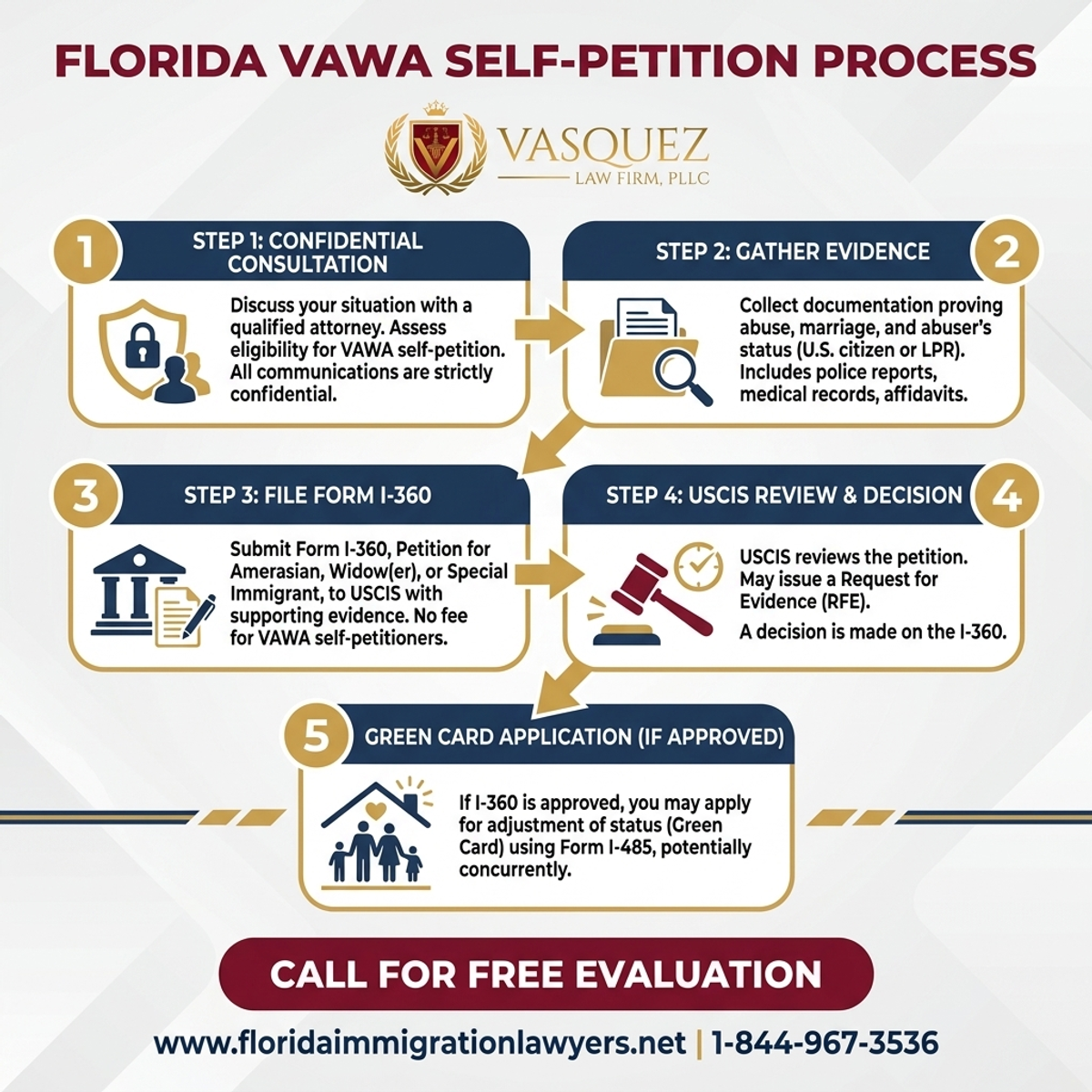
Step-by-Step Process — VAWA Self-Petition for Abused Spouses in Florida
Document Checklist for VAWA Petition
Compiling a comprehensive and compelling set of documents is paramount for a successful VAWA self-petition. While the checklist below provides a strong foundation, remember that the quality, relevance, and corroborative nature of your evidence are more important than sheer quantity. Every piece should contribute to telling your story of abuse and your qualifying relationship.
- Marriage certificate or proof of qualifying relationship
- Evidence of abuse (police reports, medical records)
- Affidavits from friends, family, or professionals
- Your personal statement detailing the abuse
- Proof of your identity and residency
Your personal statement is often the most powerful piece of evidence. It's your opportunity to detail the timeline, nature, and impact of the abuse in your own words. While emotionally challenging, working with your attorney to craft a clear, detailed, and consistent statement can significantly strengthen your case by providing context for all other submitted evidence. Remember, even seemingly minor details, when corroborated, can paint a clearer picture for USCIS.
Timeline and Processing Expectations
The VAWA self-petition process can be lengthy, often taking between 12 to 24 months. Initial processing involves review of your I-360 form, followed by potential interviews or requests for additional evidence. During this time, maintaining legal residence is crucial, and you may be eligible for certain benefits if Prima Facie Determination is granted.
In Florida, processing times can vary slightly based on workload at the Vermont Service Center. Staying informed and maintaining communication with your lawyer can help manage expectations.
A key benefit of receiving a Prima Facie Determination is the potential eligibility for an Employment Authorization Document (EAD) and, in some cases, certain public benefits. This provides a critical safety net, allowing you to gain financial independence and access necessary support services while your VAWA petition is pending. For example, a client in Pembroke Pines, with the help of Florida Immigration Lawyers, was able to secure an EAD within months of receiving their Prima Facie Determination, significantly improving their quality of life and safety.
During the waiting period, USCIS may issue a Request for Evidence (RFE) if they require additional documentation or clarification. Responding promptly and thoroughly to an RFE is crucial, and your legal team at Florida Immigration Lawyers will assist you in preparing a comprehensive response. While the wait can be stressful, maintaining open communication with your attorney ensures you are always aware of your case's status and any necessary actions.
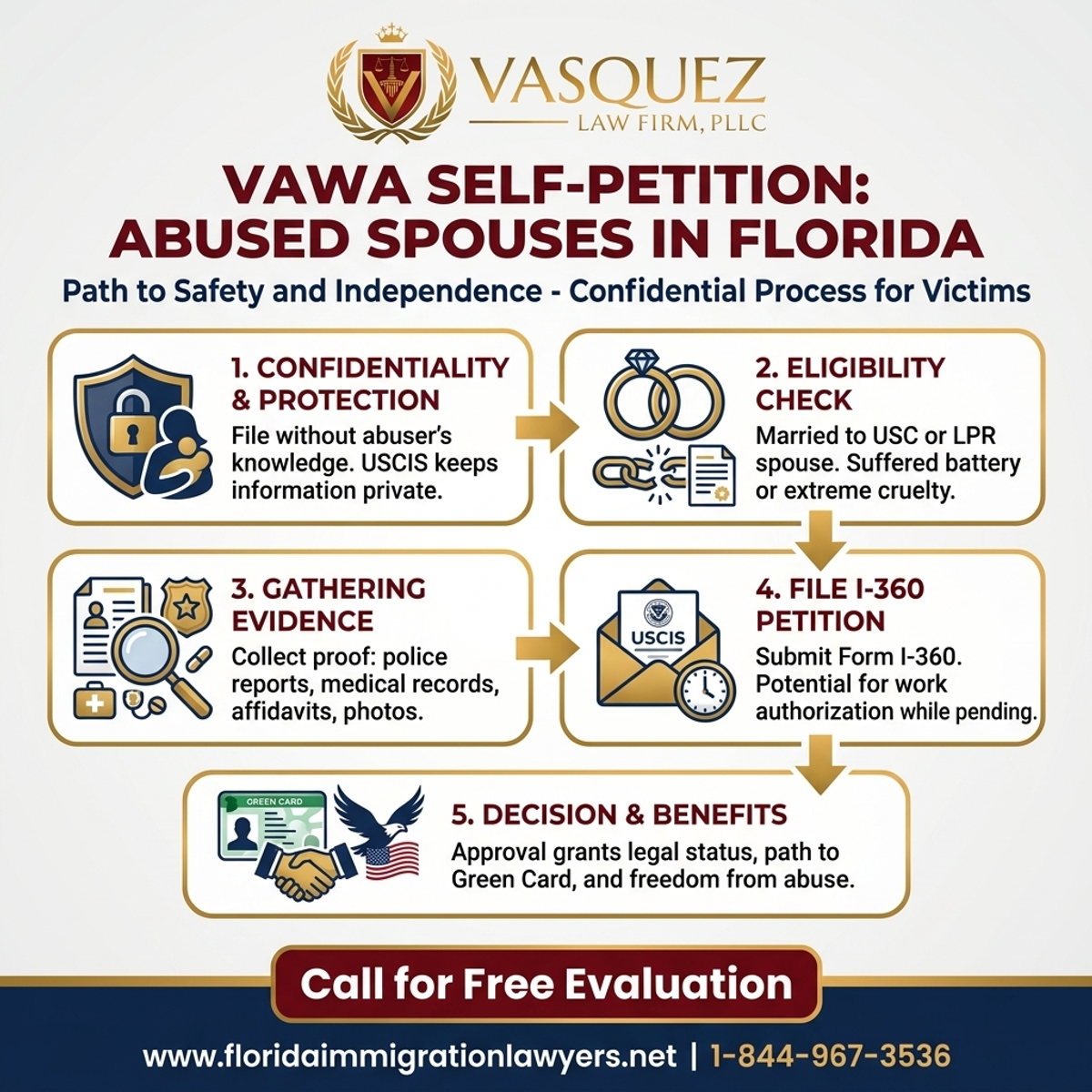
Key Statistics — VAWA Self-Petition for Abused Spouses in Florida
Cost Factors and Fee Breakdown
Filing a VAWA self-petition involves several costs, including legal fees, application fees, and costs for gathering evidence. While there is no fee for the I-360 form itself, other associated costs can add up. Legal representation can vary, but investing in professional help is often invaluable to navigate the complexities of immigration law.
Consulting with Florida Immigration Lawyers can provide clarity on potential costs and available resources to support your application.
It's important to clarify that while the I-360 VAWA petition itself does not have a filing fee, subsequent applications such as the I-765 for an Employment Authorization Document (EAD) or the I-485 for Adjustment of Status (Green Card) typically do. However, VAWA self-petitioners are often eligible for fee waivers for these associated applications, significantly reducing the overall financial burden. Your attorney can help you determine your eligibility for these waivers.
The value of experienced legal counsel cannot be overstated in VAWA cases. While there are legal fees involved, an attorney provides expertise in gathering evidence, drafting compelling personal statements, responding to RFEs, and representing you if an interview is required. This investment often increases the likelihood of a successful outcome, saving you time, stress, and potential future costs associated with a denied petition. Florida Immigration Lawyers offers transparent discussions about fees during your free consultation.
Common Mistakes to Avoid
Navigating the VAWA self-petition process can be overwhelming, and even small errors can have significant consequences for vulnerable individuals seeking protection. Being aware of common pitfalls can help you avoid delays or outright denial, safeguarding your path to legal status and safety.
- Incomplete Documentation: Failing to submit comprehensive evidence can delay your petition or lead to denial.
- Incorrect Form Completion: Errors on the I-360 form can result in processing delays.
- Ignoring Deadlines: Missing submission deadlines can jeopardize your case.
- Lack of Legal Advice: Navigating the process without a lawyer can lead to critical mistakes.
- Failing to Prove Abuse: Insufficient evidence of abuse can result in denial of your petition.
- Not Maintaining Legal Status: Allowing your visa or status to lapse can complicate your VAWA case.
- Ignoring Prima Facie Requirements: Not providing enough evidence for a Prima Facie Determination can hinder access to benefits.
- Overlooking Updates: Failing to inform USCIS of changes in address or status can affect your application.
One critical mistake is underestimating the importance of a detailed and consistent personal statement. This narrative is your voice, tying together all evidence to paint a clear picture of the abuse. Additionally, failing to maintain continuous communication with your lawyer and USCIS regarding any changes in your contact information or circumstances can lead to missed notices and critical delays. Always keep Florida Immigration Lawyers informed to ensure your case progresses smoothly.
When to Call a Lawyer
If you're considering a VAWA self-petition, consulting with an experienced immigration lawyer is crucial. Legal professionals can help assess your eligibility, gather evidence, and ensure your application is correctly filed. Signs you need legal help include receiving a notice from USCIS requiring additional evidence or if your application is denied.
Florida Immigration Lawyers offers expert guidance in Pembroke Pines and beyond. We understand the complexities of immigration law and are dedicated to supporting you through every step of the process.
You should immediately consider contacting an attorney if you fear your abuser, have a complex immigration history, or find it difficult to gather evidence safely. For example, if your abuser has confiscated your documents or isolated you, an attorney can help strategize ways to gather necessary proof while prioritizing your safety. Even if you're unsure about your eligibility, a free consultation can provide clarity and peace of mind.
A lawyer's role extends far beyond just filling out forms; they serve as your advocate, confidant, and protector throughout the emotionally taxing legal process. They can help you articulate your story effectively, prepare you for potential interviews, and shield you from further trauma by handling all communication with USCIS. Our team at Florida Immigration Lawyers is committed to being that unwavering support for you.
About Florida Immigration Lawyers
Florida Immigration Lawyers is committed to providing compassionate and knowledgeable legal assistance throughout Florida. Our team specializes in various immigration services, including VAWA self-petitions, asylum, deportation defense, and more. Contact us at 1-844-967-3536 or visit our website at floridaimmigrationlawyers.net for a free consultation. We are available 24/7 to serve your needs with bilingual support.
Frequently Asked Questions (FAQs)
Sources and References
- U.S. Citizenship and Immigration Services (USCIS)
- Executive Office for Immigration Review (EOIR)
- 8 U.S.C. Chapter 12 - Immigration and Nationality Act
- Code of Federal Regulations, Title 8
Related services: family petition process, family-based green cards, fiancé visa (K-1).
This article provides general legal information and is not intended as legal advice. Every case is unique, and outcomes depend on specific facts and circumstances. Contact an attorney for advice about your particular situation.
For personalized assistance, call Florida Immigration Lawyers at 1-844-967-3536. Se Habla Espanol - Estamos aqui para ayudarle.
If you need legal assistance, learn more about experienced family immigration attorneys, or call us at 1-844-967-3536 for a free consultation.
Do Not Navigate This Process Alone
Our experienced immigration attorneys are ready to fight for you. Get a free, confidential consultation today.
Se Habla Español
Frequently Asked Questions
Florida Immigration Lawyers
Immigration Attorney | Founder, Vasquez Law Firm
U.S. Air Force veteran and immigration attorney with thousands of cases resolved. J.D., NCCU School of Law. AILA member. Admitted to the 4th, 5th, and 11th Circuit Courts.
Available 24/7 - Free Evaluations
Related Legal Services
Our Florida immigration attorneys can help you with family immigration services, immigration practice areas and free immigration consultation. Call today at 1-844-967-3536 for a free consultation.
Related Links
Related Topics
Free Legal Consultation
Discuss your case with our experienced attorneys. We're available 24/7.
Se Habla Español - Estamos aquí para ayudarle.
Related Articles
O-1 Visa for Extraordinary Ability in Florida | VLF Florida
Discover the opportunities provided by the O-1 visa for individuals with extraordinary abilities in Florida. Explore the application process, required documentation, and how Florida Immigration Lawyers can assist you. Contact us today for a free consultation!
Family Petition Immigration Lawyer in Miami | VLF Florida
Explore how a family petition immigration lawyer in Miami can help you reunite with your loved ones. Understand the I-130 process, necessary documentation, and common pitfalls. Contact Florida Immigration Lawyers for expert assistance.
Premium Processing I-140 Florida Timelines Explained
Explore the benefits and processes of I-140 premium processing in Florida. Discover timelines, costs, and common pitfalls to avoid in this comprehensive guide. Contact Florida Immigration Lawyers for expert assistance.
Find an Immigration Attorney in Orlando, Florida | VLF Florida
Navigating immigration procedures in Orlando, Florida, can be complex. Learn how an immigration attorney can help you with visas, green cards, and more. Call Florida Immigration Lawyers at 1-844-967-3536 for a free consultation.