Deportation Defense Lawyer Orlando: Fight Removal Proceeding
Facing deportation in Orlando or anywhere in Florida is a frightening prospect. This comprehensive guide explains removal proceedings, common grounds for deportation, and the vital role of a deportation defense lawyer. Learn about the step-by-step process, critical documents, various relief options like asylum or cancellation of removal, and common mistakes to avoid. Florida Immigration Lawyers offers expert legal assistance to protect your rights and fight for your ability to remain in the U.S. Contact us for a free consultation and personalized guidance.

Quick Answer: Deportation Defense in Florida
Facing deportation, also known as removal proceedings, can be one of the most stressful experiences for non-citizens in Florida. A deportation defense lawyer in Orlando, or anywhere in Florida, is crucial for navigating the complex immigration court system. These legal professionals represent individuals before immigration judges, helping them understand the charges against them and identify potential forms of relief to remain in the United States. Early legal intervention is vital to protect your rights and explore all available defense strategies, from asylum claims to waivers of inadmissibility.
- Deportation defense protects non-citizens from forced removal from the U.S.
- Legal representation is essential for navigating complex removal proceedings.
- Common defenses include asylum, cancellation of removal, and various waivers.
- Immigration courts in Florida, like Orlando, handle these cases.
- Contacting a lawyer immediately upon receiving a Notice to Appear (NTA) is highly recommended.
Deportation Defense Lawyer Orlando: Fight Removal Proceedings
The sudden fear of deportation can turn your world upside down. Receiving a Notice to Appear (NTA) in immigration court, or learning that you are in removal proceedings, is a daunting experience that no one should face alone. For individuals and families across Florida, including Orlando, Tallahassee, and surrounding communities, the threat of being forced to leave the United States is a harsh reality. Understanding your rights and the legal pathways available for deportation defense is the first step toward protecting your future.
Whether you are facing charges related to visa overstays, alleged criminal offenses, or other immigration violations, the stakes are incredibly high. The U.S. immigration system is notoriously complex, with laws and regulations that can be difficult to interpret without expert guidance. This comprehensive guide will explain the intricacies of deportation defense, outline common strategies, and highlight why securing a knowledgeable deportation defense lawyer in Orlando or elsewhere in Florida is absolutely critical to your case.
Do not let fear paralyze you. Take immediate action to safeguard your place in the U.S. Call Florida Immigration Lawyers at 1-844-967-3536 for a free consultation. Our experienced team is ready to provide the compassionate and effective legal representation you deserve.
Understanding Deportation Defense in Florida
Deportation defense refers to the legal strategies and actions taken to prevent a non-citizen from being removed (deported) from the United States. This process typically occurs in immigration court, where a judge determines whether an individual is removable under U.S. immigration law. The Immigration and Nationality Act (INA) outlines the various grounds for removal, which can range from minor immigration violations to serious criminal convictions. For instance, INA § 240 details the procedures for removal proceedings.
In Florida, individuals facing these proceedings may appear before an immigration judge at courts located in cities like Orlando or Miami. The specific court jurisdiction often depends on where the individual resides or was detained. A skilled deportation defense lawyer understands the nuances of these local courts and the policies of the Executive Office for Immigration Review (EOIR), which oversees the immigration court system. They can explain the charges against you, identify potential forms of relief, and build a robust defense tailored to your unique circumstances.
Navigating the legal landscape of removal proceedings requires a deep understanding of federal immigration statutes, regulations found in 8 CFR, and appellate precedents. Without professional legal assistance, individuals often miss critical deadlines, fail to present necessary evidence, or are unaware of available defenses that could allow them to remain in the U.S. A lawyer acts as your advocate, ensuring your rights are protected throughout what can be a lengthy and emotionally taxing process.
Common Grounds for Removal and Your Rights in Proceedings
Individuals can face removal proceedings for a variety of reasons, many of which are outlined in the Immigration and Nationality Act, specifically INA § 212 and INA § 237. Common grounds for removal include overstaying a visa, violating the terms of a visa, entering the U.S. without inspection, or committing certain criminal offenses. Even minor criminal infractions can sometimes trigger deportation proceedings, particularly if they are deemed crimes involving moral turpitude or aggravated felonies under immigration law, regardless of how they are classified in state courts.
Other grounds for removal can involve immigration fraud, such as misrepresenting facts on a visa application, or issues related to national security. Recent shifts in immigration enforcement policies, sometimes influenced by broader political contexts like those seen in news regarding asylum seekers, can lead to increased scrutiny and more individuals being placed into removal proceedings. It is crucial to remember that as a non-citizen in removal proceedings, you have certain fundamental rights. These include the right to legal representation (though not at government expense), the right to present evidence, cross-examine government witnesses, and the right to appeal an immigration judge's decision.
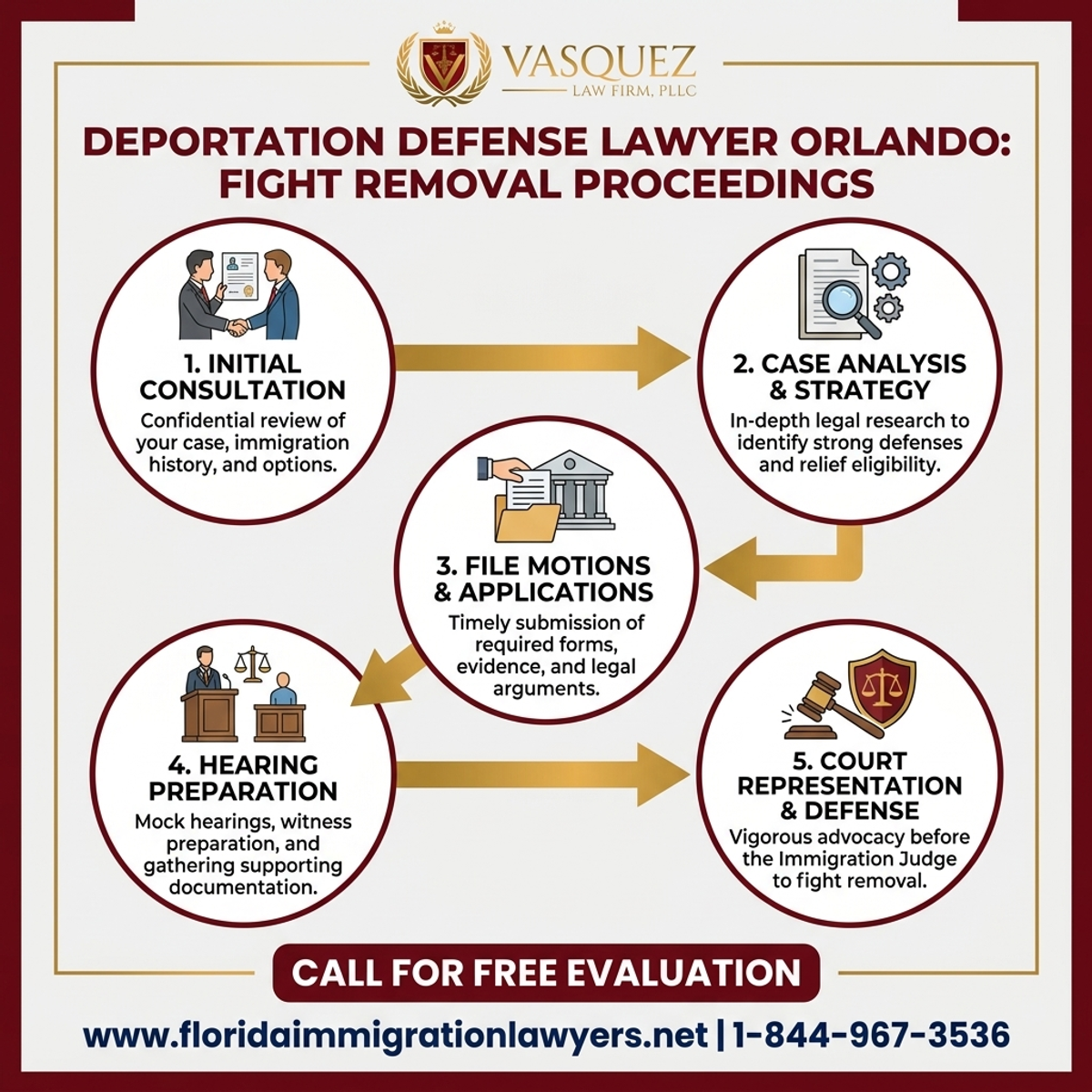
Step-by-Step Process — Deportation Defense Lawyer Orlando: Fight Removal Proceedings
Upon receiving a Notice to Appear (NTA), which formally initiates removal proceedings, it is imperative to contact a qualified attorney. An attorney can review the NTA, challenge the charges if appropriate, and advise you on the best course of action. They will also help you prepare for Master Calendar Hearings and Individual Hearings, ensuring all procedural requirements are met and your defense is effectively presented. Understanding these rights and the specific grounds alleged against you is fundamental to mounting a successful defense.
Step-by-Step Guide to Fighting Deportation in Florida
Successfully navigating removal proceedings requires a clear understanding of each stage and proactive legal action. Here is a general step-by-step guide to the deportation defense process in Florida:
-
Receipt of Notice to Appear (NTA): This official document from the Department of Homeland Security (DHS) formally charges you with being removable from the U.S. It specifies the legal grounds for your deportation and instructs you to appear before an immigration judge. This is your immediate signal to seek legal counsel, as the NTA also details the date and location of your first hearing.
-
Master Calendar Hearing (MCH): This is the initial court appearance, often a brief procedural hearing. The immigration judge will confirm your identity, ensure you received the NTA, and ask you to admit or deny the charges and allegations. Your attorney will enter an appearance, formally plead to the charges, and may request additional time to seek relief or prepare your defense. This is also where bond requests are often made if you are detained by ICE.
-
Seeking Relief from Removal: After the MCH, your attorney will help you identify and apply for any forms of relief for which you may be eligible. This could include asylum, cancellation of removal, adjustment of status, waivers of inadmissibility, or voluntary departure. Each form of relief has specific eligibility requirements and application processes, often involving filing complex forms with USCIS or the immigration court.
-
Individual Hearing (Merits Hearing): This is the trial phase where your attorney presents your defense and evidence, and you may testify. The DHS attorney will also present their case. The immigration judge will hear arguments from both sides and make a decision on your eligibility for the requested relief. This hearing can be lengthy and requires extensive preparation, including gathering documents and preparing witnesses.
-
Decision and Potential Appeal: After the Individual Hearing, the judge issues a decision. If the judge denies your relief, your attorney can advise you on the option to appeal the decision to the Board of Immigration Appeals (BIA). The BIA reviews the judge's decision for legal errors. If the BIA also denies your appeal, further appeals may be possible to a U.S. Circuit Court of Appeals.
Key Documents, Evidence, and Relief Options for Your Defense
A strong deportation defense relies heavily on comprehensive documentation and compelling evidence. Gathering these materials promptly is crucial for any successful strategy. Your attorney will guide you through this process, ensuring that all relevant information is presented to the immigration court. Key documents typically include:
- Personal Identification: Passports, birth certificates, national identity cards, and any previous U.S. visas or entry stamps.
- Immigration History: Copies of all previous immigration applications (e.g., I-130, I-485, I-589), I-94 arrival/departure records, and any correspondence with USCIS or other immigration agencies.
- Proof of Residency: Utility bills, lease agreements, property deeds, bank statements, and school records demonstrating your continuous presence in the U.S., especially crucial for cancellation of removal claims.
- Financial Stability: Tax returns, employment letters, pay stubs, and evidence of financial support for dependents.
- Family Relationships: Marriage certificates, birth certificates of U.S. citizen or LPR relatives, and affidavits from family members attesting to your good moral character and the hardship they would face if you were deported. This is particularly important for family-based immigration relief.
- Criminal Records: Certified court dispositions, police reports, and sentencing documents for any arrests or convictions, even if expunged. Full disclosure is essential for your attorney to assess potential waivers.
- Medical and Psychological Records: If seeking asylum or other humanitarian relief based on persecution or severe hardship, documentation from doctors, therapists, or social workers can be vital.
Beyond documentation, various forms of relief from removal exist. These include:
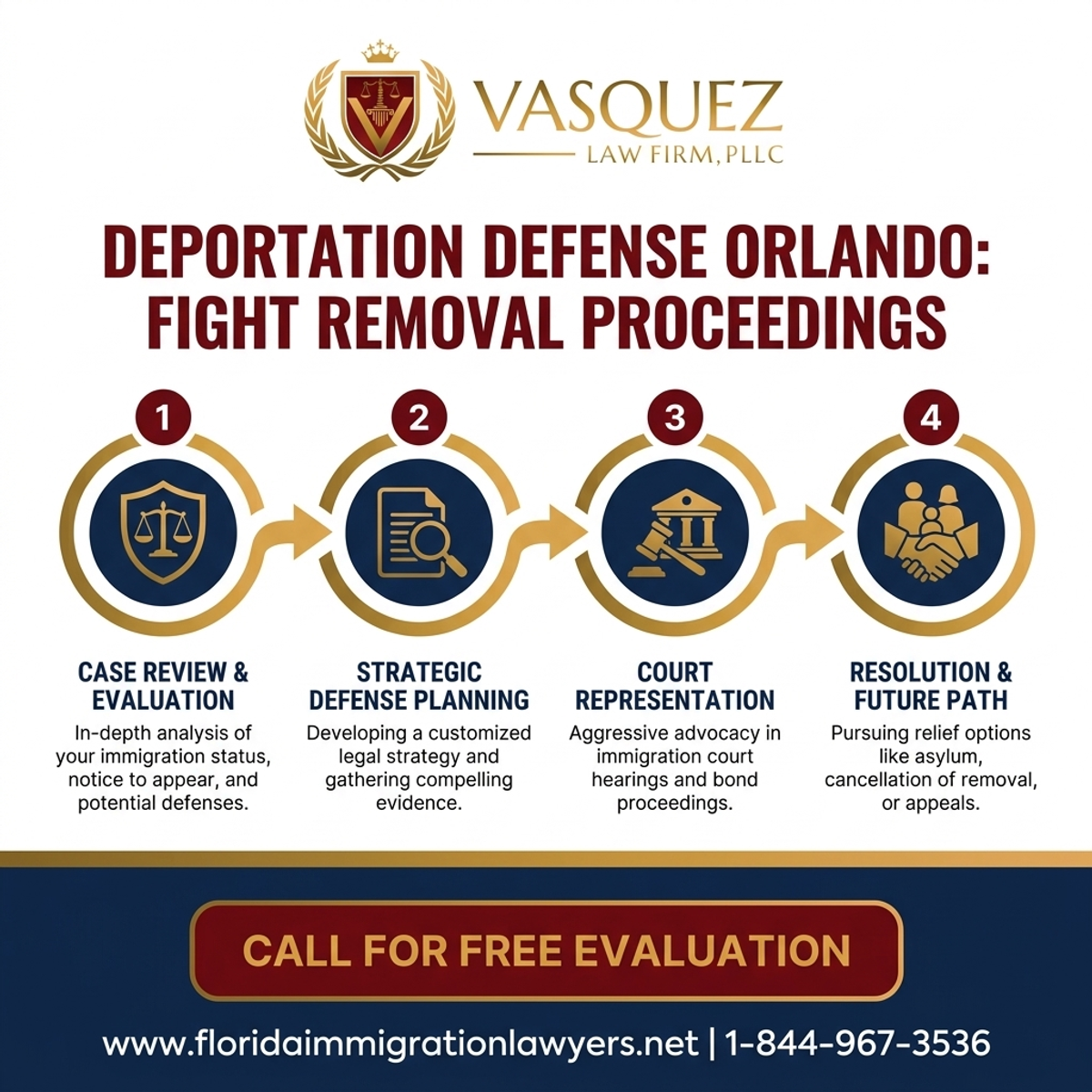
Key Statistics — Deportation Defense Lawyer Orlando: Fight Removal Proceedings
- Asylum/Withholding of Removal/Convention Against Torture (CAT): For those fearing persecution or torture in their home country. Learn more on our asylum practice area page.
- Cancellation of Removal: Available to certain long-term residents (LPRs or non-LPRs) who meet specific criteria regarding continuous physical presence, good moral character, and demonstrate exceptional and extremely unusual hardship to qualifying U.S. citizen or LPR relatives.
- Adjustment of Status: If you are eligible to become a lawful permanent resident through a family petition or employment sponsorship, and meet other criteria, you may be able to adjust your status while in removal proceedings.
- Waivers of Inadmissibility: For individuals found inadmissible due to certain grounds (e.g., criminal history, unlawful presence), there are specific waivers (e.g., I-601, I-212) that can forgive these issues.
- Voluntary Departure: Allows you to leave the U.S. voluntarily at your own expense, often avoiding a formal deportation order and its severe consequences, such as a bar to future admission.
Navigating Immigration Court Timelines and Costs of Deportation Defense
The timeline for deportation defense cases in Florida, particularly in the Orlando Immigration Court, can vary significantly. Factors such as court backlogs, the complexity of your case, the number of witnesses, and the availability of judges all play a role. A Master Calendar Hearing might be scheduled within a few weeks to several months after you receive your NTA. However, an Individual Hearing, which is the actual trial where your defense is presented, could be scheduled many months or even years down the line due to heavy court dockets.
For individuals in detention, such as those held at the Krome Service Processing Center or Glades County Detention Center, cases may proceed on an expedited schedule. Bond hearings, if applicable, are typically scheduled relatively quickly after detention. Understanding these potential timelines is crucial for managing expectations and preparing adequately for each stage of your case. Your attorney can provide a more realistic projection based on current court conditions and the specifics of your situation in Florida.
The costs associated with deportation defense also vary widely. Legal fees depend on the complexity of the case, the specific relief sought, the amount of time required by the attorney, and whether the case involves appeals. Some attorneys charge hourly rates, while others may offer flat fees for specific stages of the process. In addition to attorney fees, you will also incur government filing fees for any applications for relief (e.g., asylum, cancellation of removal, waivers). It is important to discuss all potential costs with your attorney during your initial consultation so you have a clear understanding of the financial commitment involved. Investing in experienced legal counsel is an investment in your future in the United States.
Do not navigate this complex and stressful process alone. The consequences of an unfavorable outcome in removal proceedings are severe and can permanently impact your ability to live and work in the U.S. Contact Florida Immigration Lawyers today for a confidential and free consultation. We are here to help you understand your options and fight for your rights.
Common Mistakes to Avoid in Deportation Proceedings
Making even a small error in deportation proceedings can have severe and lasting consequences. Avoid these common pitfalls to protect your case:
- Ignoring the Notice to Appear (NTA): Failing to appear for your scheduled court hearing will almost certainly result in an immediate deportation order issued in your absence (an in absentia order), making it extremely difficult to reopen your case.
- Lying to Immigration Officials: Any misrepresentation or false statement to immigration officers or in court can lead to charges of immigration fraud, permanent bars to relief, and even criminal penalties. Always be truthful.
- Leaving the U.S. Without Permission: If you are in removal proceedings, leaving the country without proper authorization from the immigration court or DHS can be considered an admission of removability and may trigger a permanent bar to re-entry.
- Not Disclosing Full Criminal History: Attempting to hide past arrests or convictions from your attorney or the court is a critical mistake. Your attorney needs all information, good or bad, to prepare an effective defense and explore potential waivers.
- Representing Yourself: While you have the right to self-representation, the complexities of immigration law, court procedures, and evidence rules make it nearly impossible for a non-lawyer to effectively defend themselves.
- Missing Filing Deadlines: Immigration courts and USCIS have strict deadlines for filing applications and supporting documents. Missing these deadlines can lead to denial of relief or even an order of removal without your case being heard.
- Failing to Update Your Address: If your address changes while your case is pending, you must notify the immigration court and USCIS within five days. Failure to do so means you might not receive important notices, potentially leading to an in absentia deportation order.
- Not Gathering Sufficient Evidence: A strong defense requires extensive documentation and evidence. Failing to collect all necessary supporting documents, affidavits, or expert testimony weakens your case considerably.
When to Call a Deportation Defense Lawyer
The moment you suspect you might be facing removal proceedings, or certainly upon receiving a Notice to Appear (NTA), is the time to contact a deportation defense lawyer. Early intervention is paramount. An attorney can immediately assess your situation, explain the charges against you, and begin strategizing your defense. This includes advising you on what to say (and what not to say) to immigration officials, preparing for bond hearings if you are detained, and identifying all potential forms of relief available.
You should also call a lawyer if you have been arrested by U.S. Immigration and Customs Enforcement (ICE), if you have a criminal record that could impact your immigration status, or if you are seeking asylum due to fear of persecution in your home country. Even if you believe your case is straightforward, the legal complexities of immigration law, including the intricacies of 8 U.S.C. Chapter 12 and its associated regulations, demand professional expertise. Florida Immigration Lawyers offers comprehensive legal services for individuals facing deportation, providing experienced representation in immigration courts across Florida, including Orlando and Miami, and before federal agencies.
About Florida Immigration Lawyers
Florida Immigration Lawyers is a leading immigration law firm dedicated to serving individuals and families across the entire state of Florida. With a deep understanding of U.S. immigration laws and a commitment to our clients, we provide compassionate and effective legal representation for a wide range of immigration matters, including complex deportation defense cases. Our skilled attorneys fight tirelessly to protect your rights and help you achieve your immigration goals.
We understand the unique challenges faced by immigrants in Florida and offer personalized legal strategies tailored to each client's specific needs. From removal proceedings and asylum claims to family petitions and citizenship applications, our firm is equipped to handle even the most difficult cases. Choose Florida Immigration Lawyers for experienced advocacy, dedicated service, and a legal team that truly cares about your future. Call us today at 1-844-967-3536 or visit https://www.floridaimmigrationlawyers.net. We are available 24/7 for free consultations, serving all of Florida.
Sources and References
- U.S. Citizenship and Immigration Services (USCIS)
- Executive Office for Immigration Review (EOIR)
- 8 U.S.C. Chapter 12 - Immigration and Nationality Act
- INA § 240 - Removal Proceedings
- INA § 212 - General Classes of Aliens Ineligible for Visas and Inadmissible to the United States
- INA § 237 - General Classes of Deportable Aliens
- 8 CFR - Code of Federal Regulations, Title 8 (Aliens and Nationality)
Related services: asylum and refugee protection, immigration waivers, humanitarian protection programs.
This article provides general legal information and is not intended as legal advice. Every case is unique, and outcomes depend on specific facts and circumstances. Contact an attorney for advice about your particular situation.
Do not face removal proceedings alone. Your future in the United States depends on experienced legal representation. Contact Florida Immigration Lawyers today for a free, confidential consultation. Call us at 1-844-967-3536. Se Habla Español - Estamos aquí para ayudarle.
If you need legal assistance, learn more about experienced deportation defense attorneys, or call us at 1-844-967-3536 for a free consultation.
Do Not Navigate This Process Alone
Our experienced immigration attorneys are ready to fight for you. Get a free, confidential consultation today.
Se Habla Español
Frequently Asked Questions
Florida Immigration Lawyers
Immigration Attorney | Founder, Vasquez Law Firm
U.S. Air Force veteran and immigration attorney with thousands of cases resolved. J.D., NCCU School of Law. AILA member. Admitted to the 4th, 5th, and 11th Circuit Courts.
Available 24/7 - Free Evaluations
Related Legal Services
Our Florida immigration attorneys can help you with experienced immigration attorneys, business immigration and asylum protection. Call today at 1-844-967-3536 for a free consultation.
Related Links
Related Topics
Free Legal Consultation
Discuss your case with our experienced attorneys. We're available 24/7.
Se Habla Español - Estamos aquí para ayudarle.
Related Articles
Find an Immigration Attorney in Orlando, Florida | VLF Florida
Navigating immigration procedures in Orlando, Florida, can be complex. Learn how an immigration attorney can help you with visas, green cards, and more. Call Florida Immigration Lawyers at 1-844-967-3536 for a free consultation.
H-2A Visa for Florida Agricultural Workers | VLF Florida
Explore how the H-2A visa program supports Florida's agricultural sector by allowing growers to hire temporary foreign workers. Understand the application process, eligibility requirements, and common pitfalls. Florida Immigration Lawyers are here to assist you.
Refugee Resettlement in Florida: A Guide | VLF Florida
Discover the essential steps for refugee resettlement in Florida with our comprehensive guide. Learn about eligibility, documentation, and local resources to aid your transition. Call Florida Immigration Lawyers at 1-844-967-3536 for expert assistance.
Understanding Immigration Lawyer Costs in Florida 2026
Discover the costs associated with hiring an immigration lawyer in Florida in 2026. Learn about the factors that influence pricing and how to choose the right attorney for your needs. Call for a free consultation today.