Immigration Bond Hearing in Florida: Key Insights | VLF Flor
Learn about the immigration bond hearing process in Florida. Understand eligibility, costs, and common mistakes. Call Florida Immigration Lawyers at 1-844-967-3536 for guidance.

Immigration Bond Hearing in Florida: Key Insights
Facing immigration detention can be a frightening and disorienting experience, not just for the individual detained but also for their family. In Florida, understanding the intricacies of an immigration bond hearing is crucial for securing release. An immigration bond hearing is a critical step in the legal process, offering a pathway for non-citizens to be released from custody while their immigration case proceeds. At VLF Florida, we understand the profound impact detention has on individuals and families, and we are dedicated to guiding you through this complex process.
What is an Immigration Bond Hearing?
An immigration bond hearing is a formal proceeding before an Immigration Judge (IJ) where a detained non-citizen requests release from U.S. Immigration and Customs Enforcement (ICE) custody. The primary purpose of this hearing is for the judge to determine if the individual poses a flight risk or a danger to the community. If the judge finds that the individual is neither, they may set a bond amount, allowing for temporary release. This hearing is distinct from criminal court proceedings and focuses solely on the individual's eligibility for release pending the resolution of their immigration case. The judge considers various factors, including ties to the community, criminal history, and immigration history, to make an informed decision. Navigating these hearings effectively often requires deep knowledge of immigration law.
Who is Eligible for an Immigration Bond?
Not all detained non-citizens are eligible for an immigration bond. Eligibility largely depends on the individual's immigration history, criminal record, and the specific grounds for their detention. Generally, individuals who are subject to mandatory detention under immigration law are not eligible for a bond hearing. This often includes those with certain criminal convictions, individuals deemed a national security risk, or those who have recently re-entered the U.S. after a prior deportation. However, many individuals are eligible for a bond hearing, including asylum seekers, individuals with pending visa applications, or those facing deportation for less severe infractions. The burden of proof typically lies with the non-citizen to demonstrate that they are not a flight risk or a danger to the community. Understanding your eligibility is the first critical step, and an experienced attorney can help assess your specific situation and strategize the best approach for your bond hearing.
Factors Considered in a Bond Hearing
During an immigration bond hearing, the Immigration Judge evaluates several key factors to determine whether to grant a bond and, if so, the appropriate amount. The two primary considerations are whether the individual is a "flight risk" and whether they pose a "danger to the community."
- Flight Risk: This refers to the likelihood that an individual will fail to appear for future immigration court hearings if released. Factors considered include:
- Ties to the U.S.: Family in the U.S., length of residency, property ownership, employment history.
- Immigration history: Prior failures to appear, history of overstaying visas, previous deportations.
- Community ties: Involvement in community organizations, church, volunteer work.
- Financial resources: Ability to support oneself and family, indicating stability.
- Criminal history: While not directly related to flight risk, a history of evading law enforcement might be considered.
- Danger to the Community: This assesses whether the individual poses a threat to the safety and well-being of others if released. Factors include:
- Criminal record: Nature and severity of past offenses, particularly violent crimes or crimes involving moral turpitude.
- Gang affiliation: Any evidence of involvement with criminal organizations.
- Behavior in detention: Any disciplinary issues while in ICE custody.
- Mental health: In some cases, if there are concerns about an individual's mental state posing a risk.
Step-by-Step Process — Immigration Bond Hearing in Florida: Key Insights | VLF Florida
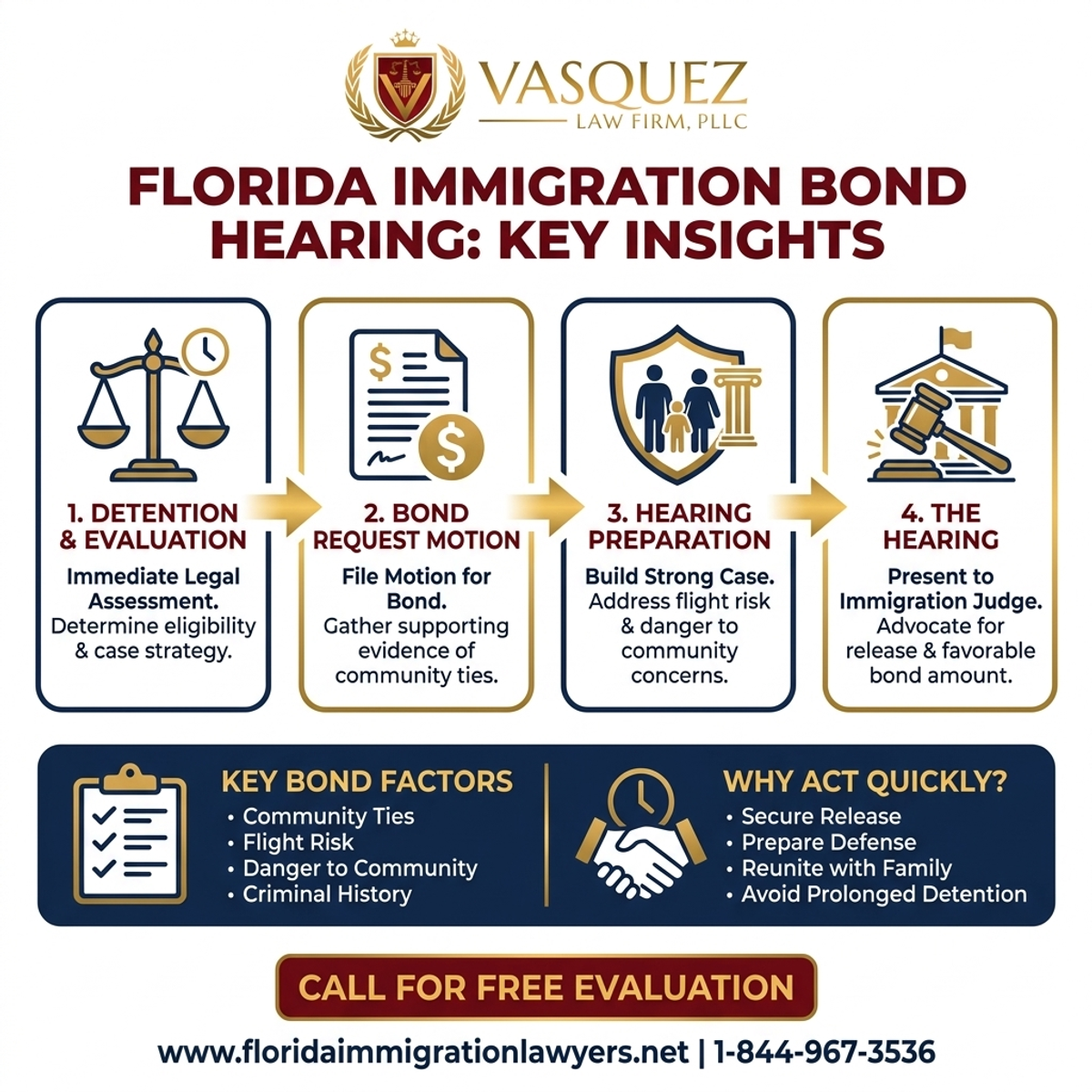
The judge will weigh all presented evidence and arguments. Presenting compelling evidence of strong community ties, a stable background, and a lack of criminal history is vital for a favorable outcome. An attorney will meticulously gather and present this evidence to paint a clear picture of their client's character and reliability.
The Role of an Immigration Attorney
The presence and expertise of an experienced immigration attorney are paramount in an immigration bond hearing. While individuals have the right to represent themselves, the complexities of immigration law, the strict procedural rules, and the high stakes involved make legal representation almost indispensable. An attorney will:
- Assess Eligibility: Determine if you are eligible for a bond hearing and identify any potential mandatory detention issues.
- Gather Evidence: Collect crucial documents, such as proof of residency, employment, family ties, tax records, letters of support, and any evidence mitigating criminal history.
- Prepare Arguments: Craft persuasive legal arguments demonstrating that you are neither a flight risk nor a danger to the community.
- Represent in Court: Advocate on your behalf before the Immigration Judge, cross-examine witnesses (if any), and object to improper evidence or procedures.
- Negotiate with ICE: In some cases, attorneys can negotiate directly with ICE to secure a lower bond amount or even release without a formal hearing.
- Explain the Process: Ensure you understand every step of the hearing, what to expect, and your rights.
Having a skilled legal advocate can significantly increase the chances of a favorable bond decision, potentially leading to a lower bond amount or even release on recognizance (without bond). For those facing deportation defense, a bond hearing is often the first critical step towards fighting their case from outside detention.
What Happens After a Bond is Set?
If the Immigration Judge grants a bond, they will specify the bond amount and any conditions for release. The process typically involves:
- Paying the Bond: The bond must be paid in full to ICE. This can be done by the detained individual, a family member, or a friend. The payment must be made at an ICE ERO field office that processes bonds. It's crucial to understand that this money is held by ICE and is typically returned once the immigration case is fully resolved and all court appearances have been made.
- Conditions of Release: In addition to the financial bond, the judge may impose specific conditions, such as regular check-ins with ICE, electronic monitoring, or restrictions on travel. Failure to comply with these conditions can result in re-detention.
- Release from Custody: Once the bond is paid and all paperwork is processed, the individual will be released from the detention facility. This process can sometimes take several hours or even a day or two, depending on the facility's procedures.
- Future Court Dates: Release on bond does not mean the immigration case is over. The individual will still have future court dates to attend regarding their underlying immigration proceedings. It is imperative to appear at all scheduled hearings to avoid bond forfeiture and re-detention.
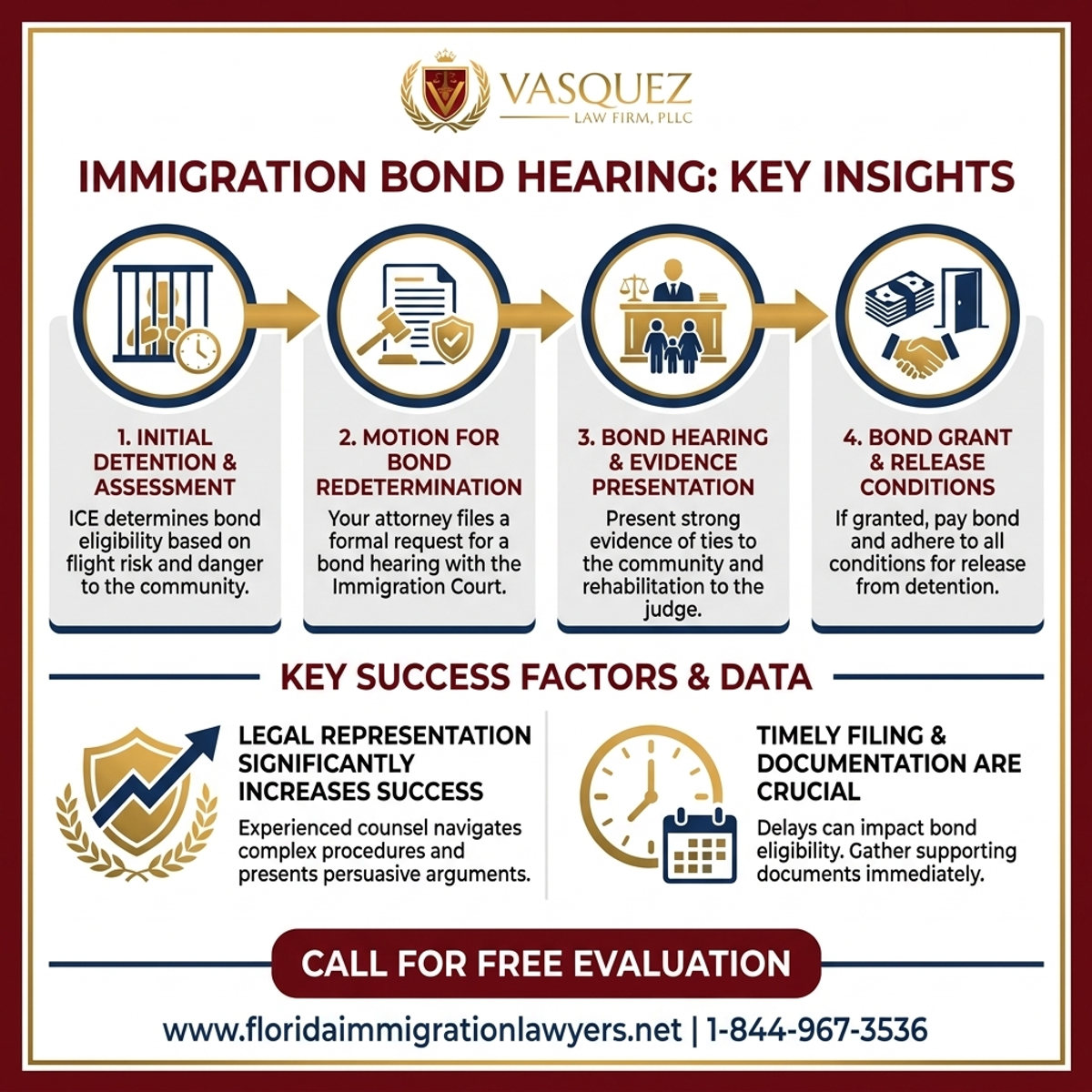
Key Statistics — Immigration Bond Hearing in Florida: Key Insights | VLF Florida
Understanding these post-bond procedures is vital to maintaining your freedom and continuing to fight your immigration case effectively. Your attorney will provide clear instructions and support during this phase.
Appealing a Bond Decision
If an Immigration Judge denies bond or sets an unreasonably high bond amount, the decision is not necessarily final. You have the right to appeal the decision to the Board of Immigration Appeals (BIA). The appeal process involves:
- Filing a Notice of Appeal: A Form EOIR-26, Notice of Appeal to the Board of Immigration Appeals from a Decision of an Immigration Judge, must be filed within 30 days of the Immigration Judge's decision.
- Filing a Brief: A written brief outlining the legal arguments for why the Immigration Judge's decision was incorrect must be submitted to the BIA. This brief should cite relevant case law and present facts supporting a lower bond or release.
- BIA Review: The BIA will review the record of proceedings, the Immigration Judge's decision, and your appeal brief. They may affirm, reverse, or remand the Immigration Judge's decision.
Appealing a bond decision is a complex legal process that requires a thorough understanding of appellate procedures and immigration law. An experienced attorney is essential for preparing a strong appeal and maximizing the chances of a successful outcome. This is especially true for complex cases, such as those involving asylum claims, where specific legal precedents might apply to bond eligibility.
Types of Immigration Bonds and Their Implications
While the term "immigration bond" is often used generally, there are a few distinct types, each with its own purpose and implications. Understanding these differences can be crucial for individuals and their families.
- Delivery Bond: This is the most common type of bond. It is set by an Immigration Judge or ICE and allows for the release of a detained individual on the condition that they will appear for all future immigration court hearings and ICE appointments. The bond amount is intended to ensure compliance. If the individual attends all required proceedings, the bond amount is returned to the obligor (the person who paid it) at the conclusion of the case. Failure to appear results in forfeiture of the bond.
- Voluntary Departure Bond: In some cases, an Immigration Judge may grant an individual voluntary departure, allowing them to leave the U.S. at their own expense within a specified timeframe, typically 30 to 120 days. A voluntary departure bond may be required to ensure that the individual actually departs the country as ordered. If the individual departs within the timeframe, the bond is returned. If they fail to depart, the bond is forfeited, and an order of deportation is issued. This option is often preferable to a formal deportation order, which carries more severe consequences for future re-entry.
- Order of Supervision (OSUP): While not a bond in the financial sense, an Order of Supervision is another mechanism for release from detention. It is typically issued to individuals who have received a final order of removal but cannot be immediately deported (e.g., due to lack of travel documents or their home country refusing to accept them). Under an OSUP, individuals are released but must report regularly to ICE, comply with certain conditions (like electronic monitoring), and may be subject to re-detention if they violate these conditions. It's a form of supervised release rather than a financial guarantee.
Each type of bond or release mechanism carries specific legal obligations and consequences. It is vital to comply with all terms to avoid re-detention or forfeiture of funds. Your legal team at VLF Florida can explain which type of bond applies to your situation and guide you through the associated requirements.
Navigating the Complexities: Why Legal Expertise is Crucial
The U.S. immigration system is notoriously complex, with constantly evolving laws, regulations, and judicial precedents. For individuals and families navigating an immigration bond hearing in Florida, this complexity can be overwhelming. The stakes are incredibly high – freedom from detention, the ability to work, and the chance to fight one's case from outside the confines of a detention center. Without experienced legal counsel, individuals often find themselves at a significant disadvantage.
An immigration attorney brings not only legal knowledge but also strategic insight and practical experience. They understand the nuances of what an Immigration Judge looks for, how to effectively present evidence, and how to counter arguments made by ICE attorneys. They can identify potential legal avenues that a layperson might miss, such as specific waivers or forms of relief that could impact bond eligibility or the overall immigration case. Furthermore, an attorney acts as a vital buffer between the detained individual and the immigration authorities, ensuring that rights are protected and that communication is clear and accurate.
Beyond the bond hearing itself, securing release allows an individual to better prepare for their main immigration case. It enables them to gather documents, consult with witnesses, and actively participate in their defense – tasks that are immensely difficult, if not impossible, from detention. Whether you are seeking a bond for yourself or a loved one, investing in professional legal representation from a firm like VLF Florida is an investment in a more favorable outcome and a smoother, less stressful journey through the immigration process. Don't face the immigration system alone. Contact us today for a consultation to discuss your options and strategize your defense.
Frequently Asked Questions (FAQs) About Immigration Bond Hearings in Florida
Here are answers to some common questions regarding immigration bond hearings:
- Q: How long does it take to get an immigration bond hearing?
A: The timeframe can vary significantly depending on the detention facility, the Immigration Court's caseload, and whether an attorney files an expedited request. It can range from a few days to several weeks. - Q: What is the average bond amount in Florida?
A: There is no "average" bond amount, as it is determined on a case-by-case basis. Bonds can range from $1,500 to $25,000 or more, depending on the specific factors of the case. - Q: Can ICE set a bond without a judge?
A: Yes, ICE has the authority toSources and References
- U.S. Citizenship and Immigration Services (USCIS)
- Executive Office for Immigration Review (EOIR)
- U.S. Department of State - Bureau of Consular Affairs
- Immigration and Nationality Act (INA), 8 U.S.C. Chapter 12
Do Not Navigate This Process Alone
Our experienced immigration attorneys are ready to fight for you. Get a free, confidential consultation today.
Se Habla Español
Frequently Asked Questions
Florida Immigration Lawyers
Immigration Attorney | Founder, Vasquez Law Firm
U.S. Air Force veteran and immigration attorney with thousands of cases resolved. J.D., NCCU School of Law. AILA member. Admitted to the 4th, 5th, and 11th Circuit Courts.
Available 24/7 - Free Evaluations
Related Legal Services
Our Florida immigration attorneys can help you with immigration practice areas, free immigration consultation and experienced immigration attorneys. Call today at 1-844-967-3536 for a free consultation.
Related Links
Related Topics
Free Legal Consultation
Discuss your case with our experienced attorneys. We're available 24/7.
Se Habla Español - Estamos aquí para ayudarle.
Related Articles
O-1 Visa for Extraordinary Ability in Florida | VLF Florida
Discover the opportunities provided by the O-1 visa for individuals with extraordinary abilities in Florida. Explore the application process, required documentation, and how Florida Immigration Lawyers can assist you. Contact us today for a free consultation!
VAWA Self-Petition for Abused Spouses in Florida | VLF Florida
VAWA self-petition helps abused spouses in Florida gain legal status independently. Learn about eligibility, process, and support available in Pembroke Pines.
Family Petition Immigration Lawyer in Miami | VLF Florida
Explore how a family petition immigration lawyer in Miami can help you reunite with your loved ones. Understand the I-130 process, necessary documentation, and common pitfalls. Contact Florida Immigration Lawyers for expert assistance.
Premium Processing I-140 Florida Timelines Explained
Explore the benefits and processes of I-140 premium processing in Florida. Discover timelines, costs, and common pitfalls to avoid in this comprehensive guide. Contact Florida Immigration Lawyers for expert assistance.