TPS Honduras: Latest News & Green Card Pathways 2026
By William J. Vásquez, immigration attorney
For Honduran nationals with Temporary Protected Status (TPS) in Florida, understanding the latest news for 2026 and the pathways to a Green Card is crucial. While TPS offers temporary protection, it does not directly lead to permanent residency. This comprehensive guide from Florida Immigration Lawyers explores the eligibility requirements for adjusting status, emphasizing the critical role of lawful entry and an underlying immigrant visa petition. We detail the step-by-step application process, essential documents, typical timelines, and associated costs. Special attention is given to Florida-specific considerations, including local USCIS offices and unique challenges. Learn about common mistakes to avoid and when it's imperative to seek legal counsel to secure your future in the United States.
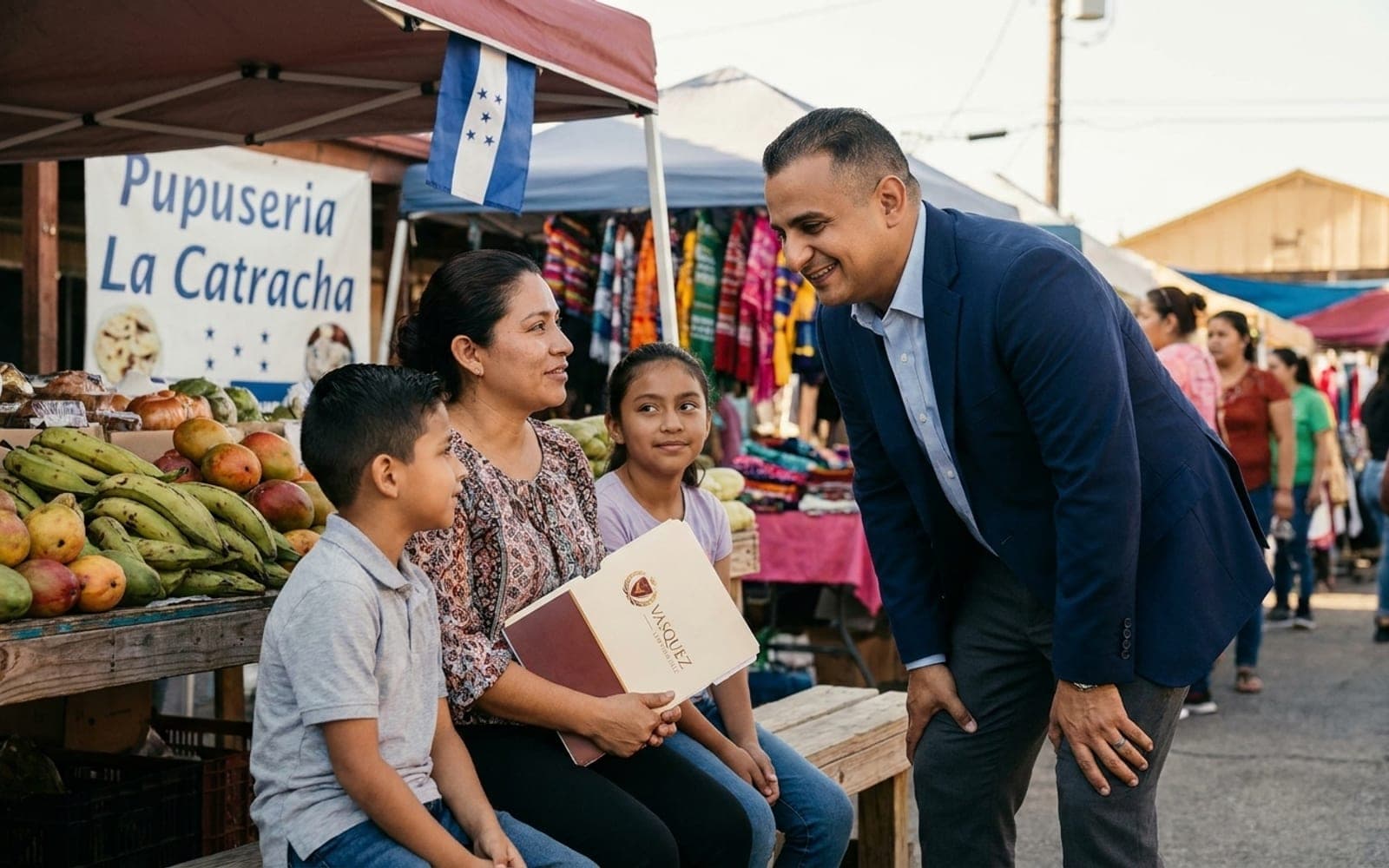
For many individuals from Honduras residing in the United States, Temporary Protected Status (TPS) has offered a vital lifeline, providing temporary relief from deportation and the ability to work legally. As we move through 2026, questions naturally arise about the latest developments concerning TPS Honduras and, more importantly, the potential pathways to securing a more permanent future through a Green Card. This article, brought to you by Florida Immigration Lawyers, aims to provide comprehensive insights into the current landscape for Honduran TPS beneficiaries, focusing on how these individuals might transition from temporary protection to permanent residency, particularly for those living in Florida.
Navigating the intricacies of U.S. immigration law can be overwhelming, especially when policy changes and legal interpretations evolve. For TPS holders, understanding the specific requirements for adjusting status to a Green Card is paramount. We will delve into the eligibility criteria, the application process, necessary documentation, and key considerations for those in Florida seeking to solidify their immigration status. Our goal is to empower you with accurate, up-to-date information, helping you make informed decisions about your future.
Do you have questions about your TPS status or your eligibility for a Green Card? The journey to permanent residency can be complex, but you don't have to face it alone. Call Florida Immigration Lawyers at 1-844-YO-PELEO for a free case review and let our experienced team guide you through every step.
What are the Latest Updates for TPS Honduras in 2026?
As of 2026, Temporary Protected Status (TPS) for Honduras remains designated, meaning eligible Honduran nationals continue to benefit from protection against deportation and are authorized to work in the United States. While there have been no major new legislative changes specifically impacting Honduras TPS in 2026, the program's future, like all TPS designations, remains subject to periodic review by the Department of Homeland Security (DHS). Beneficiaries should always stay vigilant for official announcements from USCIS regarding re-registration periods or any potential redesignations or extensions. The current landscape emphasizes the importance of understanding existing pathways to permanent residency, as TPS itself does not directly lead to a Green Card.
The continuous extension of TPS for Honduras has provided stability for tens of thousands of individuals and families across Florida and the nation. These extensions, while temporary, allow beneficiaries to plan for their lives and contribute significantly to their communities. It's important to remember that TPS is a temporary benefit, and while extensions are common, they are not guaranteed indefinitely. Therefore, exploring alternative, more permanent immigration solutions, such as adjustment of status to a Green Card, is a proactive and strategic step for many Honduran TPS holders. Staying informed through official government sources and reputable legal counsel is the best approach to managing your immigration status effectively in 2026 and beyond.
The political and legal discussions surrounding TPS nationally continue, reflecting the diverse perspectives on immigration policy. While these broader debates unfold, the practical reality for Honduran TPS holders in Florida is to focus on maintaining their current status and diligently exploring any available avenues for a Green Card. This includes understanding potential changes in immigration policy or judicial decisions that could impact TPS beneficiaries. Florida Immigration Lawyers closely monitors these developments to provide the most current and accurate advice to our clients in Central Florida and throughout the state.
Can TPS Holders from Honduras Adjust Status to a Green Card in Florida?
Yes, many TPS holders from Honduras living in Florida can adjust their status to a Green Card, but TPS itself does not directly lead to permanent residency. Adjustment of status requires an independent basis for eligibility, such as a qualifying family relationship or an employment-based petition. The critical factor for most TPS holders is whether they made a lawful entry into the United States. Recent legal developments, particularly the Supreme Court's decision in Sanchez v. Mayorkas, clarified that TPS does not automatically confer 'lawful admission' for adjustment of status purposes under INA 245(a). However, if a TPS holder from Honduras was lawfully admitted or inspected upon entry, they may be eligible to adjust status if they also have an approved immigrant petition.
For those who did not have a lawful entry, an alternative pathway might involve applying for a provisional unlawful presence waiver (I-601A) and then consular processing abroad, though this route carries its own risks and complexities. It is essential to determine your specific entry history and any other factors that could affect your eligibility. For example, if you are a Honduran TPS holder married to a U.S. citizen in Orlando, your spouse can file an I-130 Petition for Alien Relative on your behalf. Once approved, if you entered lawfully, you could then file Form I-485, Application to Register Permanent Residence or Adjust Status, with USCIS.
The process demands a thorough review of your immigration history, including your entry into the U.S., any previous applications, and any potential bars to admissibility. Even minor discrepancies or past immigration violations could complicate the process significantly. This is particularly true for individuals who may have entered without inspection. Consulting with an experienced immigration attorney in Florida is crucial to accurately assess your eligibility and identify the most viable pathway to a Green Card, ensuring compliance with all legal requirements under 8 U.S.C. § 1255.
The Step-by-Step Process for TPS to Green Card Adjustment of Status
Transitioning from Temporary Protected Status (TPS) to a Green Card through adjustment of status is a multi-step process that requires careful attention to detail and adherence to specific legal requirements. While the exact steps can vary based on individual circumstances, the general pathway typically involves the following:
-
Establish an Underlying Basis for a Green Card: The first and most critical step is to have an approved immigrant visa petition. For most TPS holders, this means a U.S. citizen or lawful permanent resident spouse, parent, or adult child filing an I-130 Petition for Alien Relative on their behalf. Alternatively, an employer might file an I-140 Petition for Immigrant Worker, or in some rare cases, a self-petitioning option might be available. This petition must be approved before you can apply for adjustment of status.
What to Expect: Filing the I-130 or I-140 is a foundational step. USCIS will review the petition to determine the validity of the relationship or employment. This can take several months, depending on the visa category and USCIS caseload. Ensure all supporting documents proving the relationship or job offer are robust and complete.
-
Confirm Lawful Entry: As discussed, lawful entry into the U.S. is generally required for adjustment of status under INA 245(a). This means you must have been inspected and admitted or paroled by an immigration officer. If you entered without inspection, you might need to explore other options, such as consular processing with a waiver, which is significantly more complex.
What to Expect: Your attorney will review your entire entry history, including any I-94 records, parole documents, or other evidence of lawful entry. Do not assume your entry was lawful; seek expert legal analysis.
-
File Form I-485, Application to Register Permanent Residence or Adjust Status: Once your underlying immigrant petition is approved and you meet the lawful entry requirement, you can file your I-485 application with USCIS. This form is the core application for the Green Card itself.
What to Expect: You will file this form along with numerous supporting documents, including medical examination results (Form I-693), financial affidavits (Form I-864), and criminal background checks. You may also concurrently file for a work permit (I-765) and travel authorization (I-131). USCIS will send a receipt notice and a biometrics appointment notice.
-
Attend Biometrics Appointment: USCIS will schedule an appointment for you at an Application Support Center (ASC) in Florida (e.g., Orlando, Jacksonville, Miami) to collect your fingerprints, photograph, and signature. These biometrics are used for background and security checks.
Step-by-Step Process — TPS Honduras: Latest News & Green Card Pathways 2026
What to Expect: This is usually a quick appointment. Bring your appointment notice and a valid photo ID. Failure to attend can lead to delays or even denial.
-
Attend the Interview (if required): In many family-based adjustment of status cases, USCIS will schedule an interview at a local field office (e.g., USCIS Orlando Field Office, USCIS Miami Field Office). Both the applicant and the petitioner typically attend.
What to Expect: An immigration officer will review your application, ask questions about your eligibility, your relationship (for family-based petitions), and your immigration history. Be prepared to provide original documents and answer truthfully. An attorney from Florida Immigration Lawyers can accompany you to this interview.
-
Decision and Green Card Issuance: If your application is approved after the interview (or without an interview in some cases), USCIS will mail you a notice of approval and, shortly thereafter, your permanent resident card (Green Card).
What to Expect: The Green Card is typically valid for 10 years. If your marriage to a U.S. citizen is less than two years old at the time of approval, you will receive a conditional Green Card valid for two years, requiring a separate petition (I-751) to remove conditions later.
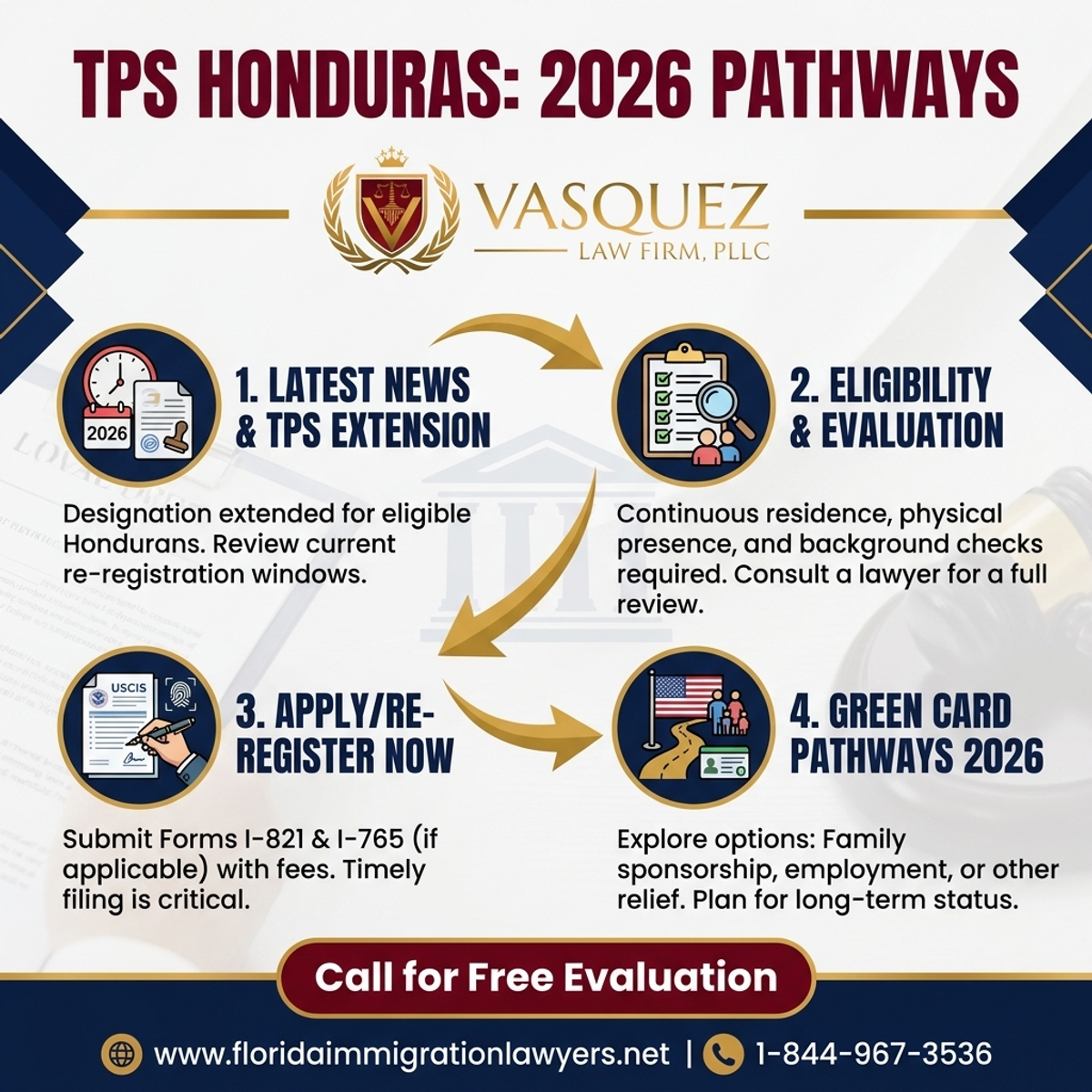
Essential Documents for Your TPS to Green Card Application
A successful adjustment of status application from TPS to a Green Card relies heavily on submitting a complete and accurate package of supporting documents. Missing or incorrect documentation is a common reason for delays or denials. While specific requirements vary, the following is a general checklist of essential documents you will need to gather:
- Proof of Approved Immigrant Petition: Form I-797, Approval Notice for Form I-130, I-140, or other relevant petition.
- Form I-485, Application to Register Permanent Residence or Adjust Status: Completed and signed.
- Copy of Birth Certificate: For the applicant.
- Copy of Passport Biographic Page: Or other government-issued photo identification.
- Proof of Lawful Entry: Copy of your I-94 Arrival/Departure Record, parole document, or other entry stamps/visas.
- Proof of TPS Status: Copy of your Form I-797 Approval Notice for TPS, EAD issued under TPS, and any re-registration notices.
- Two Passport-Style Photos: Taken within 30 days of filing.
- Form I-693, Report of Medical Examination and Vaccination Record: Completed by a USCIS-approved civil surgeon in a sealed envelope.
- Form I-864, Affidavit of Support: From the petitioner (e.g., U.S. citizen spouse) and any joint sponsors, along with supporting financial documents (tax returns, pay stubs, employment verification).
- Marriage Certificate (if applicable): For marriage-based petitions.
- Evidence of Bona Fide Marriage (if applicable): Joint bank accounts, leases, utility bills, photos, affidavits from friends/family.
- Police Clearances: From all countries where you have lived for six months or more since age 16 (if required by USCIS).
- Certified Copies of Court and Arrest Records: If you have any criminal history, even if charges were dismissed.
- Form I-765, Application for Employment Authorization: (Optional, but highly recommended for work permit while I-485 is pending).
- Form I-131, Application for Travel Document: (Optional, for advance parole to travel outside the U.S. while I-485 is pending).
It is crucial to submit copies of all documents unless originals are specifically requested. Ensure all foreign language documents are accompanied by a certified English translation. An error in documentation can significantly delay your application or even lead to a Request for Evidence (RFE) or denial. Florida Immigration Lawyers can assist you in preparing a comprehensive and compliant application package, ensuring no critical document is overlooked.
Do not navigate this process alone. Contact Florida Immigration Lawyers today to ensure your application is complete and accurate from the start.
Understanding Timelines and Costs for TPS to Green Card in Florida
The journey from TPS to a Green Card involves both time and financial investment. Understanding the typical timelines and associated costs is essential for planning your immigration strategy in Florida. These figures are estimates as of 2026 and can vary based on USCIS caseloads, individual case complexity, and legal fees.
Typical Timelines for Adjustment of Status (2026)
The processing times for adjustment of status applications can fluctuate significantly. Several factors influence how long your case will take, including the specific USCIS service center or field office handling your application (e.g., the USCIS Orlando Field Office or Miami Field Office), the complexity of your case, and whether you receive Requests for Evidence (RFEs).
| Stage | Typical Timeframe (Approx. as of 2026) | Notes |
|---|---|---|
| I-130 Petition Approval | 10-24 months | Varies greatly by relationship category and USCIS service center. |
| I-485 Processing (after I-130 approval) | 12-36 months | Includes biometrics, background checks, and interview. Varies by field office. |
| I-765 (EAD) Processing | 5-12 months | Often filed concurrently with I-485; provides work authorization. |
| I-131 (Advance Parole) Processing | 5-12 months | Often filed concurrently with I-485; allows travel outside the U.S. |
| Total Process (from I-130 filing to Green Card) | 2-5 years | This is a general estimate; individual cases may be faster or slower. |
Cost Factors and Fee Breakdown (2026)
The total cost for adjusting status from TPS to a Green Card includes government filing fees and legal fees. Government fees are set by USCIS and are subject to change. Legal fees depend on the complexity of your case and the services provided by your attorney. As of 2026, USCIS fees are:
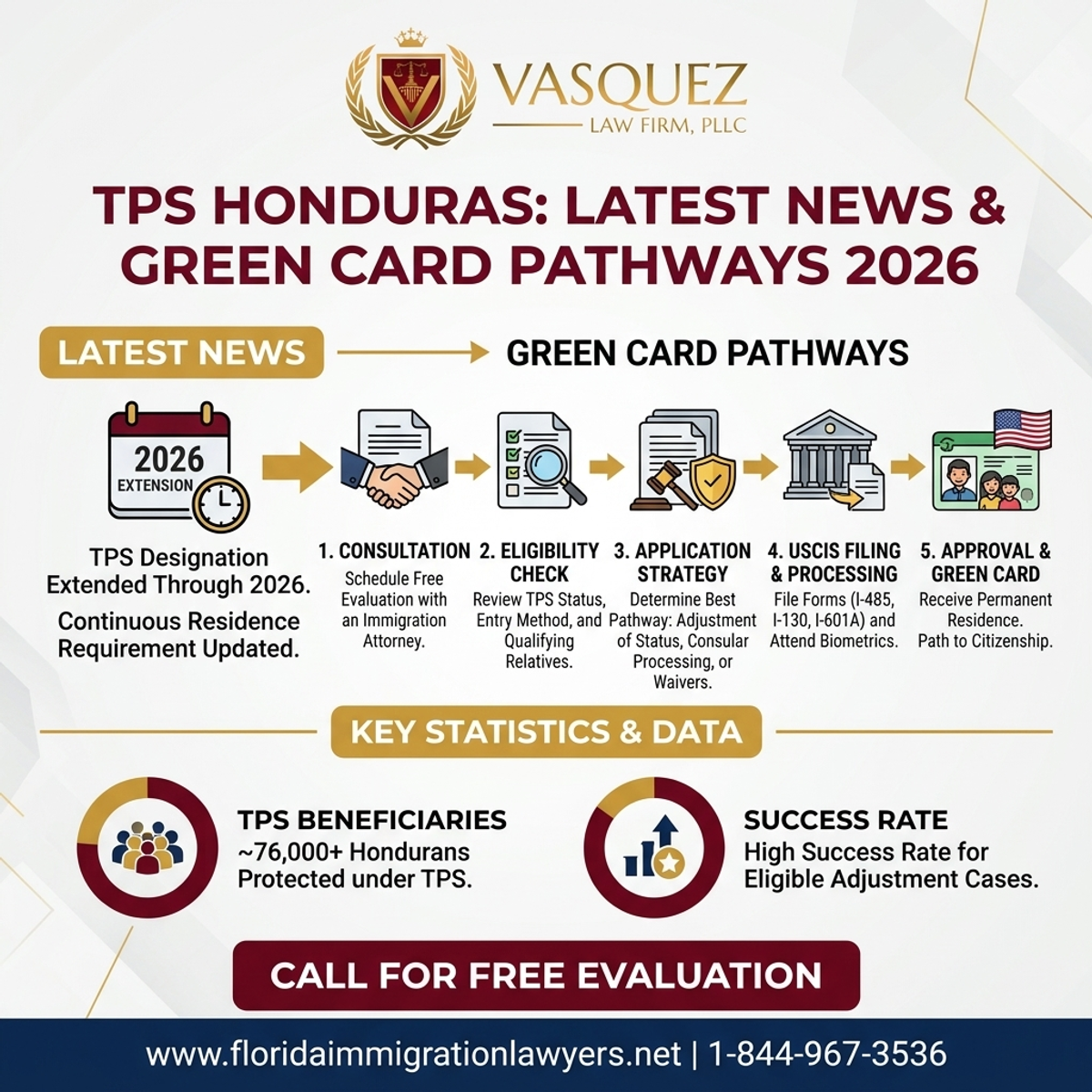
Key Statistics — TPS Honduras: Latest News & Green Card Pathways 2026
| Item | Typical Fee (Approx. as of 2026) | Notes |
|---|---|---|
| Form I-130 (Petition for Alien Relative) | $535 - $560 | Paid by the petitioner (U.S. citizen or LPR). |
| Form I-485 (Adjustment of Status) | $1,140 - $1,225 | Includes biometrics fee. Applicant pays this. |
| Form I-765 (Employment Authorization) | Included with I-485 | No separate fee if filed concurrently with I-485. |
| Form I-131 (Travel Document/Advance Parole) | Included with I-485 | No separate fee if filed concurrently with I-485. |
| Form I-693 (Medical Examination) | $200 - $700 | Paid to the civil surgeon; varies by provider and required vaccinations. |
| Legal Fees | Varies significantly | Depends on case complexity, attorney's experience, and services rendered. Florida Immigration Lawyers offers transparent pricing. |
| Total Estimated Costs (Excluding Legal Fees) | $1,875 - $2,500+ | This is a general estimate for government and medical fees only. |
It's crucial to budget for these expenses and understand that legal fees provide invaluable assistance in navigating the complex immigration system, potentially saving you time, stress, and costly mistakes. Florida Immigration Lawyers offers free case reviews to discuss your specific situation and provide clear information on potential costs.
Florida-Specific Considerations for TPS to Green Card Applicants
For TPS holders from Honduras residing in Florida, understanding the local context is crucial for a smooth Green Card application process. Florida is home to a significant immigrant population, and its immigration infrastructure includes several USCIS field offices and Executive Office for Immigration Review (EOIR) immigration courts that handle cases from Central Florida, South Florida, and other regions.
If you live in Central Florida, such as Orlando, your adjustment of status interview will likely be scheduled at the USCIS Orlando Field Office. For those in South Florida, the USCIS Miami Field Office serves a large area. These offices have their own processing times and operational nuances, which an experienced local attorney will be familiar with. Furthermore, Florida has a diverse population, including a substantial Honduran community, which can offer valuable support networks during your immigration journey.
While the legal framework for adjustment of status is federal, the local implementation and practicalities are managed by these regional offices. For instance, finding a USCIS-approved civil surgeon for your medical examination (Form I-693) is a local task. Florida Immigration Lawyers has established networks and knowledge of reliable local resources, making it easier for our clients to complete these necessary steps without unnecessary delays. We also monitor trends in local USCIS offices to provide the most accurate advice on what to expect during your interview or processing.
Additionally, for any issues involving immigration court or deportation defense, Florida hosts several immigration courts, including those in Orlando and Miami, under the Executive Office for Immigration Review (EOIR). While adjustment of status is generally an administrative process with USCIS, having a clear understanding of your immigration history, especially if you have had any prior contact with immigration enforcement, is vital. Our firm is well-versed in Florida's immigration landscape and can provide tailored guidance to individuals throughout the state, ensuring your application accounts for all local specifics.
Common Mistakes to Avoid When Adjusting Status from TPS to Green Card
-
Assuming TPS Automatically Leads to a Green Card: TPS is a temporary status and does not directly provide a path to permanent residency. You must qualify for a Green Card through another basis, such as a family-sponsored petition.
Consequence: Misunderstanding this can lead to missed deadlines, improper filings, and ultimately, denial of a Green Card application.
-
Failing to Prove Lawful Entry: For most adjustment of status applications, lawful inspection and admission or parole into the U.S. is a strict requirement. TPS itself does not confer lawful admission.
Consequence: If you cannot prove lawful entry, your I-485 application will likely be denied, potentially leading to removal proceedings.
-
Submitting an Incomplete Application: Missing forms, unsigned documents, or insufficient supporting evidence are common pitfalls.
Consequence: USCIS will issue a Request for Evidence (RFE) or, worse, deny your application, causing significant delays and additional costs.
-
Not Disclosing All Immigration History: Failing to disclose prior arrests, immigration violations, or previous applications, even if minor or resolved.
Consequence: Any misrepresentation or omission can lead to findings of inadmissibility, fraud, and a permanent bar from receiving immigration benefits.
-
Traveling Internationally Without Advance Parole: Leaving the U.S. while your I-485 is pending without an approved Advance Parole document (Form I-131).
Consequence: This can be considered abandonment of your adjustment of status application and may prevent your re-entry to the U.S.
-
Ignoring TPS Re-registration Deadlines: Letting your TPS status lapse while your Green Card application is pending.
Consequence: Losing your TPS protection could expose you to deportation if your I-485 is denied or significantly delayed, and it might complicate your ability to maintain work authorization.
-
Failing to Maintain a Bona Fide Marriage: For marriage-based Green Card applications, the marriage must be real and ongoing, not solely for immigration purposes.
Consequence: USCIS scrutinizes marriage-based petitions heavily. If they suspect fraud, your application will be denied, and you could face severe penalties.
-
Using an Unauthorized Preparer: Relying on notarios or other individuals who are not licensed attorneys for legal advice or application preparation.
Consequence: Unauthorized practice of law often leads to critical errors, fraud, and irreparable damage to your immigration case, as well as financial loss.
-
Not Updating USCIS of Address Changes: Failing to inform USCIS of any change in your mailing address within 10 days of moving.
Consequence: You could miss important notices, RFEs, or interview appointments, leading to delays or denial of your application.
-
Submitting Outdated Forms or Incorrect Fees: USCIS regularly updates its forms and fee schedules.
Consequence: Your application may be rejected and returned, causing significant delays.
When to Call a Florida Immigration Lawyer
The process of adjusting status from TPS to a Green Card is one of the most complex areas of immigration law, fraught with potential pitfalls. While this article provides general information, your specific situation will have unique facts and challenges. It is highly advisable to consult with an experienced Florida immigration lawyer at several critical junctures, or ideally, from the very beginning of your journey.
You should call Florida Immigration Lawyers immediately if:
- You are a TPS holder from Honduras unsure about your eligibility for adjustment of status, particularly concerning lawful entry.
- You have any criminal history, no matter how minor, or previous immigration violations.
- You have received a Request for Evidence (RFE) or a Notice of Intent to Deny (NOID) from USCIS.
- Your underlying immigrant petition (I-130, I-140) is complex, such as a marriage with significant age differences, cultural barriers, or a history of prior marriages.
- You need to travel outside the U.S. while your Green Card application is pending.
- You are confused about which forms to file, how to gather required documents, or the deadlines involved.
- You simply want peace of mind knowing your application is prepared correctly and professionally.
Our attorneys at Florida Immigration Lawyers specialize in helping individuals throughout Florida navigate these intricate processes. We can assess your eligibility, identify potential issues, prepare all necessary documentation, and represent you before USCIS, including accompanying you to interviews. Don't leave your future to chance.
About Florida Immigration Lawyers
Florida Immigration Lawyers is a leading immigration law firm dedicated to serving individuals and families across the entire state of Florida. With a deep understanding of U.S. immigration laws and a compassionate approach, our team provides expert legal guidance on a wide range of immigration matters, including TPS, Green Cards, asylum, deportation defense, family-based immigration, and citizenship. We understand the challenges and anxieties that come with navigating the immigration system, and we are committed to providing personalized, effective, and ethical representation.
Our firm prides itself on being accessible and responsive, offering free case reviews and being available 24/7 to address your urgent concerns. We believe in empowering our clients with knowledge and support, ensuring they are well-informed at every stage of their case. Whether you are seeking to adjust your status from TPS to a Green Card in Orlando or any other part of Florida, our experienced attorneys are here to advocate for your rights and help you achieve your immigration goals. Call us today at 1-844-YO-PELEO to discuss your options.
Sources and References
- U.S. Citizenship and Immigration Services (USCIS)
- Executive Office for Immigration Review (EOIR)
- U.S. Department of State
- 8 U.S.C. § 1255 - Adjustment of Status of Nonimmigrant to That of Person Admitted for Permanent Residence
- 8 U.S.C. § 1254a - Temporary Protected Status
- 8 CFR Part 244 - Temporary Protected Status
- Sanchez v. Mayorkas, 593 U.S. ___ (2021)
Related services: immigration practice areas, citizenship and naturalization, asylum protection.
This article provides general legal information and is not intended as legal advice. Every case is unique, and outcomes depend on specific facts and circumstances. Contact an attorney for advice about your particular situation.
Your journey to a Green Card from TPS status in Florida is a significant step towards a secure future. Do not attempt to navigate the complex U.S. immigration system without expert guidance. Contact Florida Immigration Lawyers today at 1-844-YO-PELEO for a free, confidential case review. Se Habla Espanol - Estamos aqui para ayudarle.
If you need legal assistance, learn more about get immigration legal help today, or call us at 1-844-967-3536 for a free case review.
Do Not Navigate This Process Alone
Our experienced immigration attorneys are ready to fight for you. Get a free, confidential case review today.
Se Habla Español
Or leave your details and we’ll call you:
We will call you back within 24 hours
Free evaluation · Private and confidential · Se habla español
Helping Florida immigrant families since 2011
Or talk to us right now

AI voice assistant — available 24/7
FreeFrequently Asked Questions

William J. Vásquez
Founding Attorney · Vasquez Law Firm
U.S. Air Force veteran and immigration attorney with years of hands-on U.S. immigration experience. J.D., NCCU School of Law. AILA member. Admitted to the 4th, 5th, and 11th Circuit Courts.
Available 24/7 - Free Evaluations
Reviewed for legal accuracy by William J. Vásquez
Licensed in North Carolina; U.S. immigration is federal practice.
Related Legal Services
Our Florida immigration attorneys can help you with family immigration services, immigration lawyer cost in Florida and experienced immigration attorneys. Call today at 1-844-YO-PELEO for a free case review.
Related Links
Related Topics
Free Legal Case Review
Discuss your case with our experienced attorneys. We're available 24/7.
Se Habla Español - Estamos aquí para ayudarle.
Related Articles
EAD Advance Parole Combo Card in Florida 2026
For individuals with a pending Form I-485, Application to Register Permanent Residence or Adjust Status, the EAD Advance Parole Combo Card is an essential document. This single card combines the authorization to work legally in the U.S. (Employment Authorization Document - EAD) with permission to travel internationally and re-enter without abandoning your green card application (Advance Parole). This guide from Florida Immigration Lawyers provides a comprehensive overview for applicants in Florida in 2026, covering eligibility, the step-by-step application process, required documents, expected processing times, and associated costs. We also highlight common mistakes to avoid and when to seek legal counsel to ensure a smooth and successful immigration journey. Understanding this vital card is key to maintaining stability while awaiting your permanent residency approval.
What to Expect at Your First Immigration Consultation in Orlando
What happens at a first immigration consultation in Orlando, which documents to bring, and how to prepare for questions about visas, green cards, citizenship and court cases.
Certificate of Eligibility for Expungement in Florida: 2026
Discover how obtaining a certificate of eligibility for expungement in Florida can impact your immigration status. Learn the step-by-step process, understand the timeline, and avoid common mistakes. Contact Florida Immigration Lawyers for assistance.
H-2A Visa for Agricultural Workers in Florida 2026
Explore the H-2A visa process for agricultural workers in Florida. Learn about eligibility, application steps, and common mistakes to avoid. Florida Immigration Lawyers provide expert guidance to navigate these complexities.