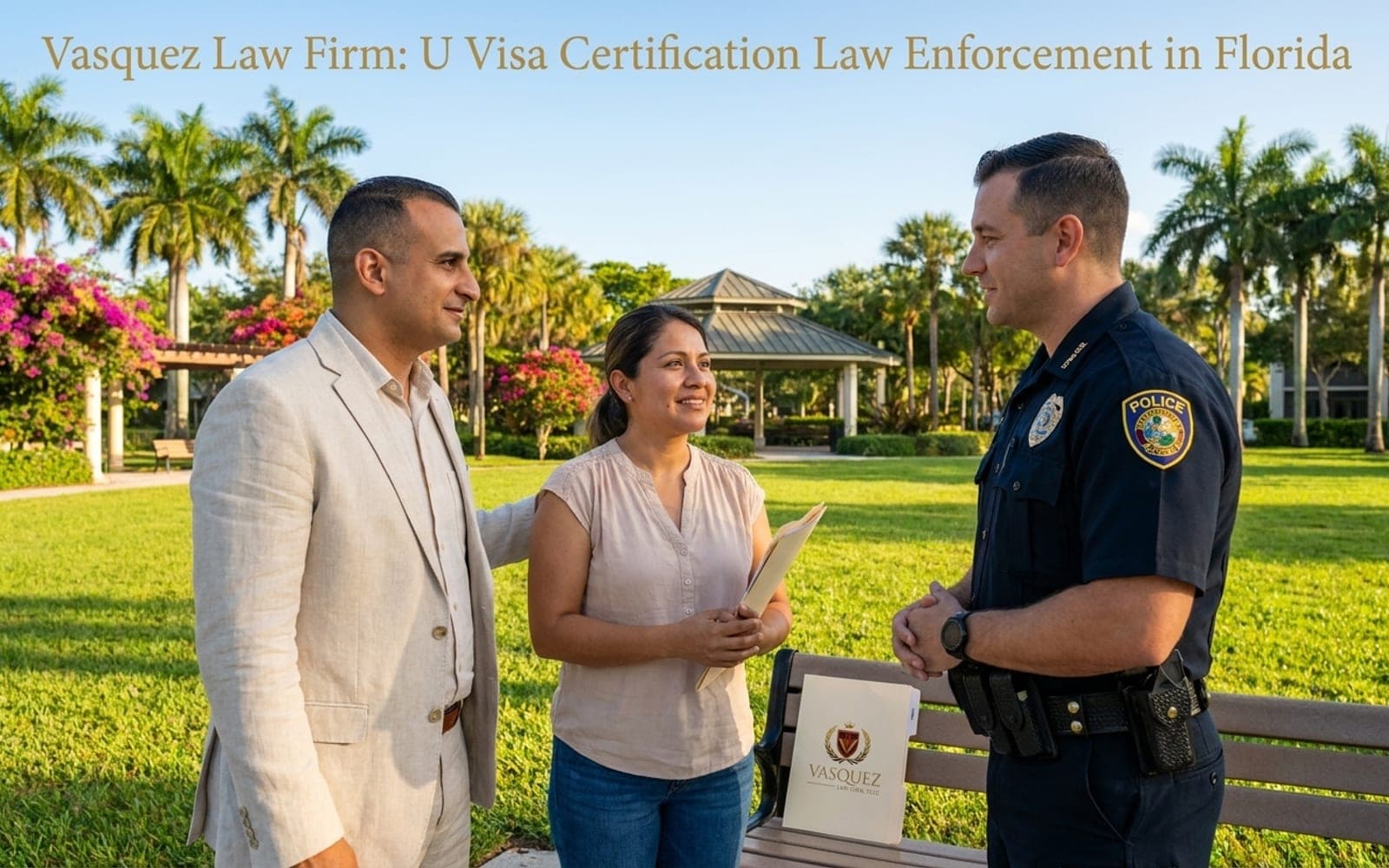
T visas, U visas and VAWA self-petitions protect different survivors. The T visa is for trafficking survivors, the U visa is for victims of certain crimes, and VAWA lets abused family members of citizens or residents file on their own. The guide explains what each requires, how confidentiality and safety are handled and how to choose a lawyer. Our Orlando firm works confidentially with survivors across Florida. If you are in immediate danger, call 911.
- T, U and VAWA protections fit three different situations.
- Confidentiality and safety are part of how the cases are handled.
- We do not handle criminal or family court cases.
- Call 911 first if you are in immediate danger.
Introduction
A T visa law firm helps survivors of human trafficking ask for immigration protection, and the same legal team usually handles U visas for crime victims and VAWA self-petitions for survivors of abuse by a family member. These three forms of humanitarian relief were created so that people can come forward without depending on the person who harmed them. This page explains how each one works in general terms, what evidence matters, how confidentiality and safety are handled, and how to look for a lawyer in Florida. To talk with someone confidentially, call 1-844-YO-PELEO or contact us. If you are in immediate danger, call 911.
Vasquez Law Firm works confidentially with survivors throughout Florida from our Orlando office, by phone, video and in person. We practice immigration law only. We do not handle criminal cases or family court cases, but we can coordinate with the lawyers, advocates and counselors who do.
This guide is general information, not legal advice. Eligibility rules, forms and procedures change, and every survivor's story is different, so a lawyer must review the facts before anything is filed.
Three Protections, Three Different Situations
The table compares the three protections at a glance. A survivor may qualify for more than one, and a lawyer can compare them.
| T visa | U visa | VAWA self-petition |
|---|
| Who it protects | Victims of sex or labor trafficking | Victims of certain qualifying crimes | Abused spouses, children and parents of U.S. citizens or permanent residents |
| Main form | I-914 | I-918 with Supplement B | I-360 |
| Law enforcement role | Comply with reasonable requests, with exceptions | Signed certification of helpfulness required | Not required |
| Path to a green card | Possible after meeting requirements | Possible after meeting requirements | Through adjustment of status when eligible |
The T Visa for Trafficking Survivors
Trafficking includes being forced, defrauded or coerced into work or commercial sex, and any commercial sex involving a minor. Lawyers commonly see labor trafficking in agriculture, construction, domestic work, restaurants and hospitality, as well as sex trafficking. In general, the applicant must:
- Be or have been a victim of a severe form of trafficking.
- Be in the United States, or at a port of entry, on account of the trafficking.
- Comply with reasonable requests from law enforcement in the investigation or prosecution, unless under 18 or unable to cooperate because of physical or psychological trauma.
- Show that they would suffer extreme hardship involving unusual and severe harm if removed.
A law enforcement declaration can help but is not required. The applicant's own detailed statement, along with other evidence, is the core of the case. Certain family members may be included.
The U Visa for Crime Victims
The U visa protects victims of qualifying crimes, such as domestic violence, sexual assault, felonious assault, kidnapping, extortion, witness tampering, and others listed in the law, who suffered substantial physical or mental abuse and have been, are, or are likely to be helpful to law enforcement.
The key document is Form I-918 Supplement B, signed by a certifying agency such as a police department, prosecutor's office, judge, or certain other agencies. A lawyer often spends much of the early work obtaining this signature, because agencies have their own request procedures and are not required to sign. The lawyer then gathers police reports, medical records, protective orders and a personal statement describing the harm.
Because Congress set an annual limit on U visas, there is a long wait for a final visa. USCIS has used a waiting list and other review processes that can provide work authorization and protection while applicants wait; those procedures can change, so a lawyer should explain the current process at the time of filing. Past immigration violations or certain criminal history do not automatically bar a U visa, but they usually require a waiver on Form I-192.
VAWA Self-Petitions for Abuse Survivors
The Violence Against Women Act lets certain survivors of battery or extreme cruelty file their own petition, without the abuser's knowledge or cooperation. Despite the name, VAWA protects people of any gender. A lawyer reviews whether the person was the spouse, child or parent of an abusive U.S. citizen or permanent resident, lived with the abuser, and has good moral character. Former spouses may still qualify in some situations if they file within a set time after the divorce.
The case is built through the survivor's declaration and supporting evidence such as photos, messages, medical records, police reports, statements from friends or counselors, and proof of the relationship. Police reports are helpful but not required.
Family members can sometimes be protected as well. In general terms, a T or U visa applicant may be able to include certain relatives, such as a spouse and children, and in some cases parents or siblings depending on the applicant's age and the category. A VAWA self-petitioner's children may be included in the petition. Each family member has to meet eligibility rules and provide documents, so tell the lawyer about your family at the start and explain where each person lives.
These protections are not the only options. Some survivors are better served by asylum, by a family petition or by another form of relief, and some qualify for several at once. A lawyer who looks at the whole history can explain how the options fit together and in what order to pursue them.
How the Process Works in Florida
The steps are federal and are the same anywhere in Florida. A typical humanitarian case moves along these lines, although each form has its own requirements.
- Confidential consultation. The survivor and the lawyer talk about safety, history and which protection may fit.
- Plan for safety. The lawyer sets a secure mailing address and safe ways to communicate.
- Gather evidence. Documents, records and the survivor's own statement are collected and organized.
- Seek certification or declaration, where it applies. For a U visa, the lawyer requests the signed Supplement B from a certifying agency.
- File the petition. The correct form is filed with USCIS, with any needed waivers.
- Follow the case. The lawyer tracks notices, requests for evidence and any interview, and keeps the survivor informed.
Some survivors are in removal proceedings when they seek help. In that case the lawyer coordinates the humanitarian filing with the court case, which is why people in that situation should call as early as possible. See our humanitarian protection page for more on the options.
Confidentiality and Safety
Federal law protects the confidentiality of T, U and VAWA applications. Immigration officials generally may not use information provided only by the abuser or trafficker to make decisions against the survivor, and may not disclose information about these applications except in limited situations. A careful lawyer also plans for safety: a secure mailing address, safe ways to communicate, and coordination with victim advocates or shelters.
Think about your own digital safety too. If someone else has access to your phone, email or cloud accounts, ask the lawyer how to communicate privately, and choose times when you can speak without being overheard. If you are not sure whether your device is safe, use one you trust, such as a phone at a library, a friend's phone or a phone provided by an advocate.
Survivors sometimes worry that telling their story to a lawyer will lead to trouble with the authorities. A consultation with a lawyer is confidential, and the lawyer can explain, before you decide to file anything, what a filing would reveal and to whom. You stay in control of the decision about whether and when to go forward.
Document Checklist for a Humanitarian Case
- Identity documents, such as a passport, national ID or birth certificate.
- Police reports or case numbers, if you have them.
- Protective orders, court records or documents from related cases.
- Medical records, photographs or counseling records that show the harm.
- Messages, letters, emails or other records from the abuser or trafficker.
- Statements from people who know what happened, such as friends, relatives, counselors or clergy.
- Any immigration paperwork, including notices from USCIS, ICE or an immigration court.
If you cannot get some documents, tell the lawyer; there are often other ways to prove the facts. Do not take risks to obtain papers, and never go back to a dangerous place or person to look for them.
Timeline and Processing Expectations
Humanitarian cases do not follow one schedule. A VAWA petition, a T visa and a U visa are each reviewed on their own track, and USCIS publishes current processing information on its website. Those times change, so check the current figures rather than relying on someone else's experience. U visa cases in particular involve a long wait because of the annual limit set by Congress.
While the case is pending, the lawyer can explain what protections or work authorization may be available, which depend on the category and the current USCIS procedures. The table below shows the usual stages.
| Stage | What happens | Who acts |
|---|
| Consultation and safety plan | Facts and options are reviewed confidentially | Survivor and lawyer |
| Evidence and certification | Documents, statement and any agency certification are obtained | Survivor, lawyer and certifying agency |
| Filing | The petition and any waiver are submitted to USCIS | Lawyer, with the survivor's signature |
| Review | USCIS reviews the case, may request evidence and schedules biometrics | USCIS and the survivor |
| Decision and next steps | Approval, denial or a waiting-list process; a green card later where available | USCIS, then the survivor |
Responding to a Request for Evidence or Denial
A request for evidence is common in humanitarian cases because the evidence is often personal and incomplete. The notice will list what USCIS wants to see and the deadline. A good response answers each point and adds a short written explanation where documents are missing. If a case is denied, the notice explains the reason, and the survivor may have the option to file a motion, an appeal or a new application, depending on the form.
Do not ignore a notice because it is difficult to read. Talk to the lawyer soon after it arrives, and keep a copy of everything you send.
How to Choose a Lawyer for a Humanitarian Case
Many survivors and advocates search online for the highest-ranked lawyer in this area. Florida Bar rules restrict how lawyers may describe their own qualifications, so rather than relying on labels, ask:
- How regularly do you handle T, U and VAWA cases?
- How will you protect my safety and the confidentiality of my information?
- Will you work with my advocate, counselor or shelter?
- Can I speak with you in Spanish, or with an interpreter in my language?
- Do I have other options, such as asylum or a family petition, that we should compare?
A good law firm will also explain the limits of the process, including the wait times and the role of law enforcement, rather than promising quick results. Be cautious about any lawyer who guarantees an outcome.
Cost Factors and Fee Breakdown
The costs of a humanitarian case depend on the category, and some filings have special rules about fees. The table lists the usual items.
| Item | Amount | Notes |
|---|
| T visa application, Form I-914 | Check USCIS for the current fee | Check the form page for any fee rules |
| U visa petition, Form I-918 | Check USCIS for the current fee | A waiver request on Form I-192 may be needed |
| VAWA self-petition, Form I-360 | Check USCIS for the current fee | Confirm the current fee rules for self-petitioners |
| Medical, counseling or translation records | Varies by case | Depend on the provider and documents |
| Attorney fees | Varies by case | Set in a written agreement |
Fee rules for humanitarian filings differ by form and change over time, so check the current USCIS fee schedule and instructions, and ask your lawyer which rules apply to your case.
Legal fees depend on the type of case and the amount of work involved. Ask for the scope of work and billing terms in writing before you agree to anything.
Common Mistakes to Avoid
- Waiting to ask for help because of fear that reporting a crime will lead to deportation.
- Paying someone who is not a licensed attorney to prepare a humanitarian application.
- Giving different accounts of the facts to the police, the court and USCIS.
- Ignoring a notice or a deadline because it arrived at an unsafe address.
- Assuming that a missing police report means there is no case.
- Overlooking other options, such as asylum or a family petition, that may fit better.
- Believing anyone who promises approval for a fee.
When to Call a Lawyer
Call as soon as you feel safe enough to do so. Early advice helps with safety planning, preserving evidence and choosing the right protection. Call right away if you have a Notice to Appear, an order from an immigration judge or a notice from USCIS, or if you were just contacted by law enforcement. A confidential consultation can tell you which options may fit and what to do next.
About Vasquez Law Firm
Vasquez Law Firm practices immigration law only. Our only office is at 1111 E Amelia Street in Orlando. Survivors anywhere in Florida can meet with us by phone or secure video, at times that are safe for them, or in person in Orlando. William J. Vásquez is the founding attorney. Consultations are available in English and Spanish. Call 1-844-YO-PELEO or contact us confidentially to schedule a consultation.
Sources and References
Related services: humanitarian protection, immigration lawyers in Florida
Other ways people search for this
People look for this help under different names. Related searches include the best immigration lawyer in florida; u visa law firm; u-visas lawyer; immigration attorney for u visa victims; t visa lawyers; vawa attorney for abuse survivors; vawa attorneys; best u visa attorney; best u visa lawyers; best vawa lawyer; immigration attorney for u visa; u visa specialist lawyer.
This article is general information, not legal advice. Every case is different; speak with an immigration lawyer about your situation.