Refugee Resettlement in Florida: A Guide | VLF Florida
Explore the refugee resettlement process in Florida, focusing on key steps for those seeking safety and stability. Understand how to navigate this complex journey with guidance from Florida Immigration Lawyers. Contact us for a free consultation.

- Applying for refugee status through the UNHCR.
- Understanding U.S. immigration policies and procedures.
- Seeking help from Florida-based immigration lawyers.
Introduction
Imagine arriving in a new country with dreams of safety and stability. For many refugees, this journey begins with resettlement in places like Fort Lauderdale, Florida. This guide explores the refugee resettlement process in Florida, focusing on key steps and important considerations. Whether you're seeking asylum or helping others navigate this path, understanding the process is essential. Call Florida Immigration Lawyers at 1-844-967-3536 for a free consultation.
Florida, with its diverse communities and established support networks, has historically been a significant destination for refugees seeking a new beginning. The state's welcoming environment and robust infrastructure of non-profit organizations and government agencies play a crucial role in helping individuals and families transition into American life. From initial arrival to long-term integration, the journey is multifaceted, requiring resilience and access to accurate information.
Navigating the intricacies of U.S. immigration law can be daunting, especially for those who have endured trauma and displacement. This comprehensive guide aims to demystify the process, offering clarity on eligibility, necessary documentation, and the various stages of resettlement. Our goal is to empower refugees and their advocates with the knowledge needed to successfully achieve safety and build a future in Florida.
Understanding Refugee Status and Resettlement
Refugee resettlement is a humanitarian effort to provide safe haven to individuals fleeing persecution. In Florida, the process involves coordination between international organizations like the UNHCR and U.S. government agencies. Refugee status is typically granted to those who cannot return to their home country due to fear of persecution based on race, religion, nationality, membership in a particular social group, or political opinion.
Once granted refugee status by the UNHCR, individuals may be eligible for resettlement in the U.S. This involves a vetting process conducted by the U.S. Department of Homeland Security, ensuring applicants meet eligibility criteria under U.S. immigration law.
The distinction between a refugee and an asylee is important: refugees apply for protection from outside the U.S., often while still in a third country, and are granted status before arriving. Asylees, on the other hand, apply for protection from within the U.S. or at a port of entry. Both statuses are based on the same definition of persecution, but the application location and process differ significantly. The U.S. Refugee Admissions Program (USRAP) is the federal program responsible for processing refugees for resettlement in the United States, working closely with the UNHCR and various non-governmental organizations.
The vetting process is extensive and multi-layered, designed to ensure national security and public safety while upholding humanitarian commitments. It includes multiple interviews, background checks conducted by various U.S. intelligence and law enforcement agencies, medical examinations, and security screenings. This rigorous scrutiny can contribute to the lengthy processing times, but it is a critical component of the U.S. government's commitment to a secure and orderly resettlement program.
For those considering this path, understanding these foundational elements is paramount. Seeking guidance from experienced professionals, such as Florida Immigration Lawyers, can help clarify these complex definitions and ensure that potential applicants meet the stringent requirements for refugee status. Our team is well-versed in the nuances of these distinctions and can provide tailored advice.
Step-by-Step Guide to Refugee Resettlement
- Initial Application: Begin by registering with the UNHCR, which assesses your eligibility for refugee status.
- Vetting Process: If the UNHCR grants refugee status, the U.S. conducts background checks and interviews to confirm eligibility.
- Resettlement Approval: Once approved, you'll receive assistance in preparing for relocation to Florida.
- Arrival in Florida: Local resettlement agencies assist with housing, employment, and cultural orientation.
- Adjustment of Status: After one year, refugees can apply for a Green Card, eventually leading to citizenship.
Let's delve deeper into each of these crucial steps. The initial application with the UNHCR typically involves detailed interviews where applicants must articulate their fear of persecution and provide evidence to support their claim. This evidence can include personal testimonies, documents, or reports from human rights organizations. A thorough and consistent narrative is vital at this stage, as it forms the basis of the refugee claim.
The U.S. vetting process, following UNHCR approval, is comprehensive. It involves biographic and biometric checks, medical screenings to ensure public health, and multiple security interviews conducted by Department of Homeland Security officers. This stage is designed to verify the applicant's identity, assess their credibility, and ensure they do not pose a security risk to the United States. Applicants often undergo cultural orientation sessions abroad to prepare them for life in the U.S.
Upon resettlement approval, the International Organization for Migration (IOM) typically arranges travel to the U.S. and provides a travel loan. Once in Florida, local resettlement agencies, funded by the U.S. Department of State, become the primary point of contact. These agencies offer a wide array of services, including airport reception, temporary housing, assistance with school enrollment for children, English language classes, and job search support. They are crucial for helping refugees integrate into their new communities and achieve self-sufficiency.
The final step, Adjustment of Status, is a significant milestone. One year after being admitted to the U.S. as a refugee, individuals are eligible to apply for lawful permanent resident status (a Green Card) using Form I-485. This application requires another round of background checks and a medical examination. After five years of holding a Green Card, refugees can then apply for U.S. citizenship, completing their journey towards full integration and civic participation. Throughout this complex process, having the support of legal counsel, like Florida Immigration Lawyers, can be invaluable, especially during the adjustment of status phase.
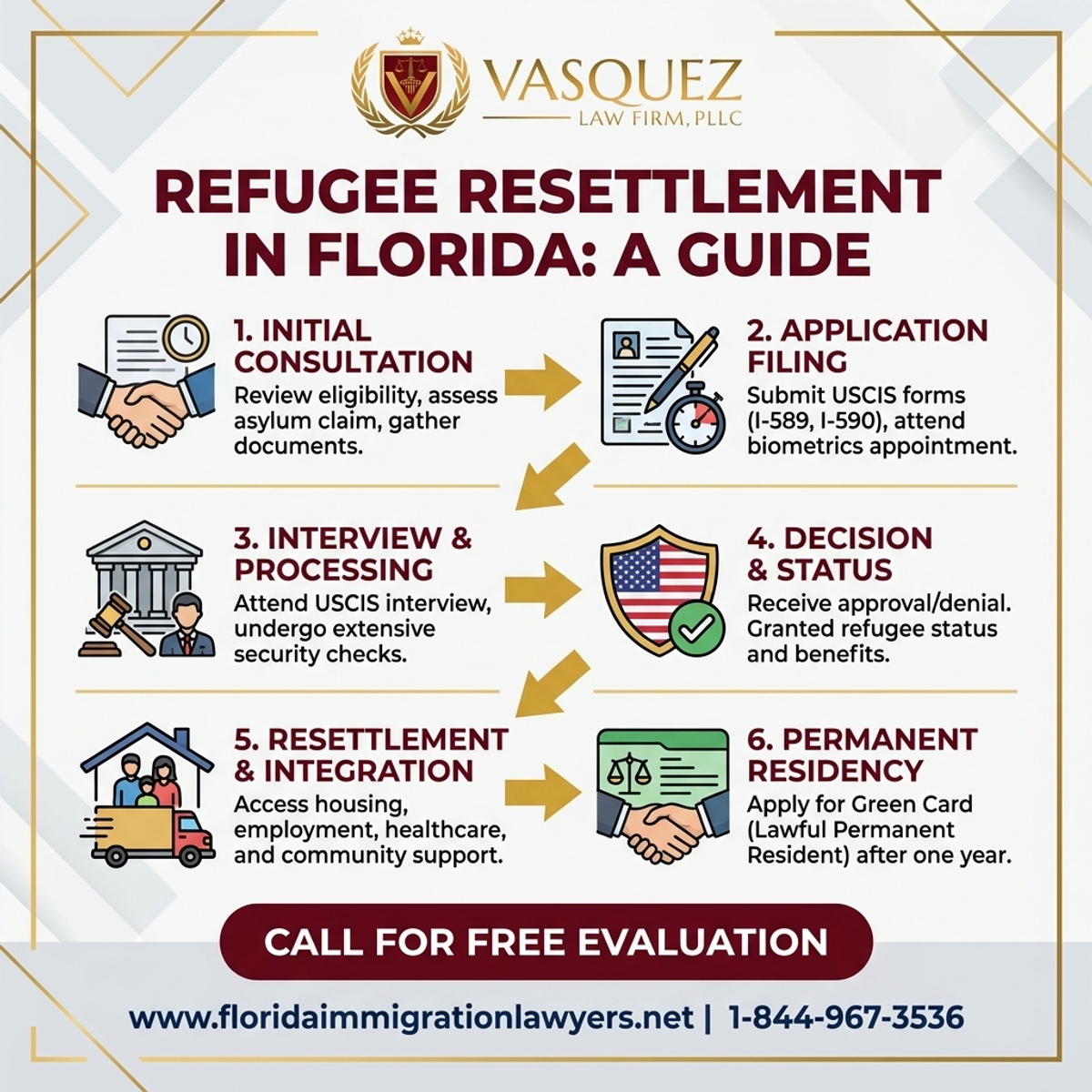
Step-by-Step Process — Refugee Resettlement in Florida: A Guide
Document Checklist for Refugees
- UNHCR registration certificate
- Identification documents (passport, birth certificate)
- Medical records
- Proof of employment or education
- Any legal documents pertaining to previous asylum claims
Thorough documentation is the backbone of a successful refugee resettlement application. Each item on this checklist serves a critical purpose in verifying identity, establishing eligibility, and facilitating integration into U.S. society. For instance, the UNHCR registration certificate is your primary proof of refugee status, recognized internationally and by U.S. authorities as the foundation of your claim.
Identification documents, such as passports or birth certificates, are essential for establishing your identity and nationality. Even if these documents are expired or difficult to obtain from your home country, it's crucial to provide whatever you have and explain any missing documents. Medical records are vital for health screenings, ensuring you meet U.S. health requirements and allowing for continuity of care upon arrival. Providing proof of employment or education, if available, can help resettlement agencies understand your skills and assist in job placement and educational opportunities in Florida.
Any legal documents related to previous asylum claims, persecution experiences, or family matters are also incredibly important. These can corroborate your narrative of fear of persecution and strengthen your overall case. It is highly recommended to keep all original documents safe and carry copies, ideally translated into English by certified translators. Florida Immigration Lawyers can advise on specific documentation requirements and help ensure your portfolio is complete and accurate, minimizing delays in your application.
Timeline and Processing Expectations
The refugee resettlement process can vary in length, often taking several months to years. Factors influencing the timeline include the complexity of your case, administrative backlogs, and current U.S. immigration policies. It's important to stay informed about recent policy changes, such as those highlighted in recent news reports concerning USCIS adjudication policies.
The waiting period can be one of the most challenging aspects of the refugee journey. Many factors contribute to the variability of processing times, including the country of origin, the volume of applications, security concerns related to specific regions, and the availability of interviewing officers. For example, refugees from certain conflict zones might face more extensive security checks, adding months or even years to their processing time compared to others.
Political climates and changes in U.S. administration can also significantly impact processing speeds and the number of refugees admitted. It is not uncommon for individuals to wait five years or more from their initial UNHCR registration to their arrival in the U.S. During this time, applicants often live in precarious situations in host countries, facing uncertainty and limited opportunities. Managing expectations and maintaining communication with the UNHCR or your legal representative, such as Florida Immigration Lawyers, is crucial during this extended period.
While the waiting period can be emotionally taxing, it's important for applicants to remain patient and responsive to any requests for additional information or interviews. Any delays or missed communications can further prolong the process. Seeking support from community groups or mental health resources, if available in your current location, can also be beneficial for coping with the stress of the unknown.
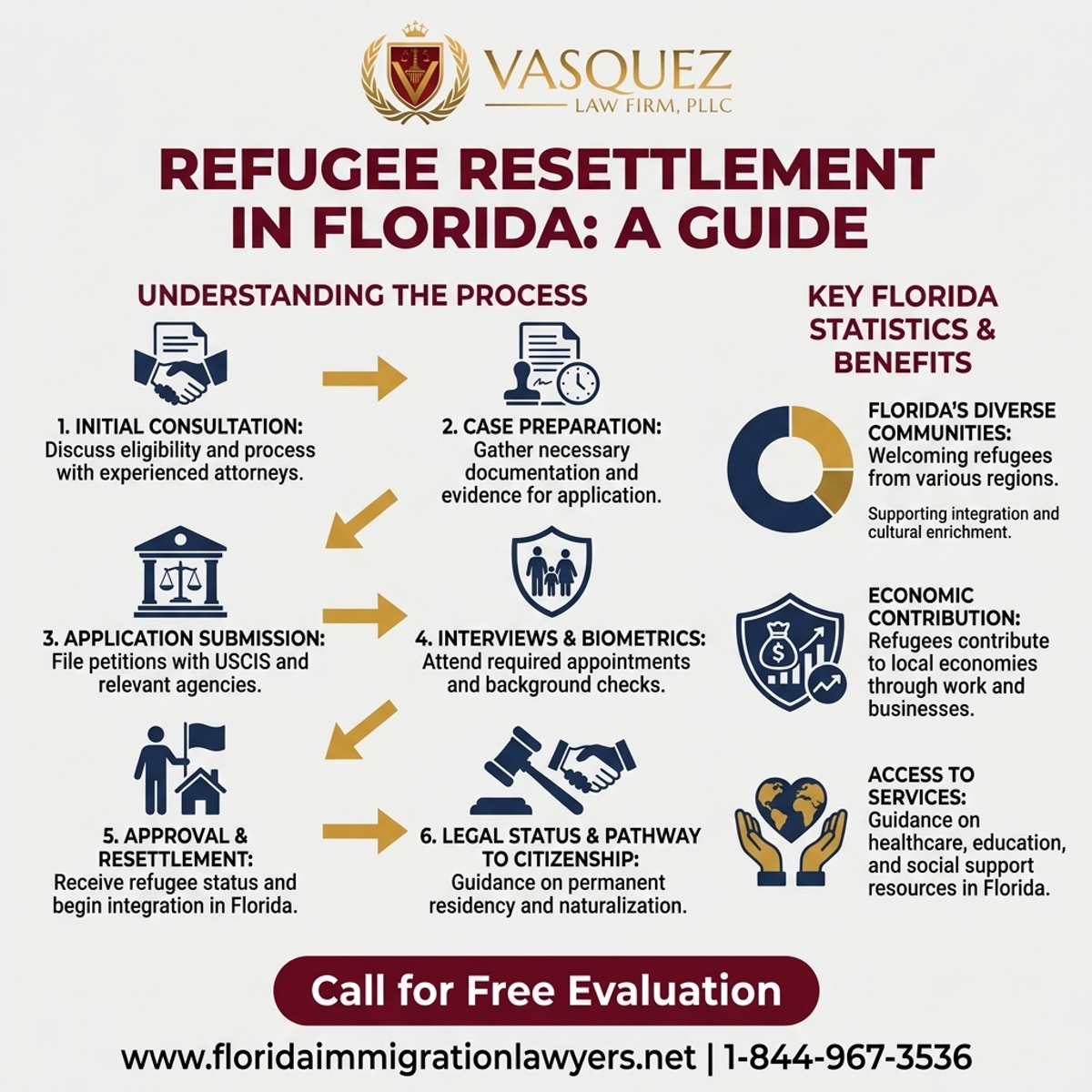
Key Statistics — Refugee Resettlement in Florida: A Guide
Cost Factors and Fee Breakdown
While there are no fees for applying for refugee status, there are costs associated with the resettlement process. These may include travel expenses, legal fees for processes like adjusting status, and living expenses upon arrival in Florida. Many refugees receive assistance from resettlement agencies to cover initial costs.
The U.S. government, through the International Organization for Migration (IOM), provides a travel loan to cover the cost of airfare from the country of asylum to the United States. Refugees are generally expected to repay this loan over time, typically starting six months after arrival. While this is a loan, it ensures that financial barriers do not prevent eligible individuals from reaching safety. Additionally, initial medical examinations conducted overseas as part of the vetting process are usually covered by the U.S. government or UNHCR.
Upon arrival in Florida, immediate costs such as rent, utilities, food, and basic necessities are often covered by initial grants and services provided by local resettlement agencies. These agencies receive federal funding through programs like the Reception and Placement (R&P) program, which provides a one-time grant per refugee to cover initial resettlement needs. Beyond this initial period, refugees may be eligible for various public assistance programs, including Temporary Assistance for Needy Families (TANF), Medicaid, and food stamps, to help them achieve self-sufficiency.
It's important to budget for future immigration-related fees, particularly for the application for adjustment of status (Green Card) and later, naturalization. While fee waivers may be available for those who qualify based on income, these applications typically involve government filing fees. Consulting with Florida Immigration Lawyers can help you understand these potential costs, explore fee waiver options, and plan financially for your long-term immigration journey, ensuring no unexpected expenses derail your path to stability.
Common Mistakes to Avoid
- Incomplete Applications: Failing to provide complete information can delay or jeopardize your case.
- Missed Deadlines: Not adhering to application timelines can result in denial.
- Lack of Legal Representation: Navigating the process without professional help can lead to errors.
- Ignoring Policy Changes: Failing to stay updated on immigration policy changes can affect your case.
- Insufficient Documentation: Not submitting all required documents can slow down the process.
- Misinformation: Providing false information can result in severe consequences, including denial and deportation.
- Failure to Follow Up: Not keeping track of your application's status can lead to missed opportunities.
Avoiding these common pitfalls is paramount to a successful refugee resettlement journey. Each mistake can have significant, long-lasting repercussions, from minor delays to outright denial of status. For instance, an incomplete application, even with a minor omission, can cause your case to be returned, resetting your place in the processing queue and adding months to your wait time. Always double-check all forms and ensure every question is answered truthfully and completely.
Deadlines are strict in immigration law, and missing them can be fatal to your case. This applies not only to initial applications but also to responses to Requests for Evidence (RFEs) or interview notices. Keeping an organized record of all correspondence and maintaining a calendar of critical dates is a practical tip that can save you immense stress and potential setbacks. If you anticipate difficulty meeting a deadline, immediately consult with Florida Immigration Lawyers.
Furthermore, providing misinformation or fabricating details, even if seemingly minor, is a serious offense in U.S. immigration law. It can lead to permanent bars from receiving immigration benefits and even criminal charges. Honesty and transparency are always the best policy, even when discussing difficult or sensitive aspects of your past. If you are unsure how to present certain information, legal counsel can guide you in providing accurate and effective testimony without jeopardizing your credibility.
When to Call a Lawyer
Seeking legal assistance is crucial if you encounter any complications during your refugee resettlement process. Whether it's understanding complex immigration laws, dealing with denied applications, or navigating policy changes, a lawyer can provide invaluable guidance. Florida Immigration Lawyers offer expertise in handling such cases and are available to assist you at any stage of the process.
There are several specific scenarios where legal intervention becomes not just helpful, but essential. If you receive a Request for Evidence (RFE) from USCIS asking for more information, a lawyer can help you understand what is being asked and compile a comprehensive, persuasive response. If your application is denied, an attorney can explain the reasons for denial, evaluate your options for appeal or reconsideration, and represent you in any subsequent proceedings.
Furthermore, if you have a complex family situation, such as needing to include dependents who are not immediately available or have unique circumstances, a lawyer can help navigate family reunification processes. Any changes in your personal circumstances, such as marriage, divorce, or the birth of a child, can also impact your application and require legal advice. Even if you simply feel overwhelmed by the paperwork or unsure about an interview, having a legal expert by your side can provide peace of mind and significantly improve your chances of success. Don't hesitate to call Florida Immigration Lawyers at 1-844-967-3536 for a free consultation to discuss your specific needs.
About Florida Immigration Lawyers
Florida Immigration Lawyers provide comprehensive legal services for immigrants throughout Florida. Our experienced attorneys specialize in all areas of immigration law, including asylum and deportation defense. We pride ourselves on offering personalized, compassionate service to each client. Contact us at 1-844-967-3536 or visit our website. We're available 24/7, offering free consultations to help you navigate your immigration journey.
Our commitment extends beyond just legal representation; we aim to be a trusted partner in your journey towards a safer, more stable future. We understand the profound challenges and emotional toll that displacement and the immigration process can take on individuals and families. Our team approaches every case with empathy, cultural sensitivity, and a deep understanding of the unique needs of refugee clients.
With years of dedicated experience in complex immigration matters, Florida Immigration Lawyers have a proven track record of helping clients successfully navigate refugee resettlement, asylum claims, family-based petitions, and deportation defense. We stay abreast of the ever-changing landscape of U.S. immigration policies and leverage this knowledge to provide the most current and effective legal strategies. Our goal is to simplify the complex, advocate tirelessly on your behalf, and empower you with clear, actionable advice at every turn.
Sources and References
- U.S. Citizenship and Immigration Services (USCIS)
- Executive Office for Immigration Review (EOIR)
- U.S. Department of State
- 8 U.S.C. Chapter 12 - Immigration and Nationality Act
Related services: asylum application process, withholding of removal.
This article provides general legal information and is not intended as legal advice. Every case is unique, and outcomes depend on specific facts and circumstances. Contact an attorney for advice about your particular situation.
Contact Florida Immigration Lawyers today at 1-844-967-3536 for a free consultation. Se Habla Español - Estamos aquí para ayudarle.
If you need legal assistance, learn more about our asylum and refugee practice, or call us at 1-844-967-3536 for a free consultation.
Do Not Navigate This Process Alone
Our experienced immigration attorneys are ready to fight for you. Get a free, confidential consultation today.
Se Habla Español
Frequently Asked Questions
Florida Immigration Lawyers
Immigration Attorney | Founder, Vasquez Law Firm
U.S. Air Force veteran and immigration attorney with thousands of cases resolved. J.D., NCCU School of Law. AILA member. Admitted to the 4th, 5th, and 11th Circuit Courts.
Available 24/7 - Free Evaluations
Related Legal Services
Our Florida immigration attorneys can help you with experienced immigration attorneys, business immigration and asylum protection. Call today at 1-844-967-3536 for a free consultation.
Related Links
Related Topics
Free Legal Consultation
Discuss your case with our experienced attorneys. We're available 24/7.
Se Habla Español - Estamos aquí para ayudarle.
Related Articles
ICE Check-In Attorney Representation in Florida | VLF Florida
Facing an ICE check-in in Jacksonville? Learn how legal representation can make a difference. Discover key steps and common mistakes to avoid. Call Florida Immigration Lawyers for a free consultation.
H-1B Visa Guide for Florida Employers | VLF Florida
Discover how Florida employers, especially in Hialeah, can effectively sponsor H-1B visas. Learn about eligibility, application procedures, common mistakes, and more with our comprehensive guide. Call Florida Immigration Lawyers for a free consultation.
Immigration Services in Port St Lucie and Treasure Coast
Explore crucial immigration services in Port St Lucie and the Treasure Coast to navigate your path to residency and citizenship in Florida. Learn about the necessary steps and common mistakes to avoid in this comprehensive guide. Call Florida Immigration Lawyers at 1-844-967-3536 for expert assistance.
VAWA Self-Petition in Florida: Abused Spouse Guide 2026
For abused non-citizen spouses in Florida, the VAWA self-petition (Form I-360) offers a confidential path to legal status without the abuser's involvement. This guide from Florida Immigration Lawyers details eligibility, the step-by-step application process, essential documents, and what to expect regarding timelines and costs in 2026. We cover how VAWA provides crucial protections against deportation and outlines the journey from I-360 approval to obtaining a Green Card and eventually U.S. citizenship. Learn about common mistakes to avoid and when to seek legal counsel to navigate this complex yet vital immigration relief.
