ICE Check-In Attorney Representation in Florida
Facing an ICE check-in in Jacksonville? Learn how legal representation can make a difference. Discover key steps and common mistakes to avoid. Call Florida Immigration Lawyers for a free consultation.

ICE Check-In Attorney Representation in Florida | VLF Florida
Navigating the complex world of U.S. immigration law can be daunting, especially when it involves regular check-ins with Immigration and Customs Enforcement (ICE). For individuals under supervision in Florida, understanding your rights and obligations during these ICE check-ins is paramount. An experienced immigration attorney can provide invaluable guidance and representation, ensuring your compliance while protecting your long-term immigration goals.
What Are ICE Check-Ins?
ICE check-ins are mandatory appointments for non-citizens released from detention or those under an order of supervision. These appointments are part of ICE's monitoring process, designed to track individuals as their immigration cases proceed. The frequency and nature of these check-ins can vary widely depending on your specific case, immigration history, and the type of supervision you are under. They can range from monthly in-person visits to less frequent phone calls or reporting via electronic monitoring devices.
During an ICE check-in, an immigration officer will typically review your current status, confirm your address, and inquire about any changes in your circumstances. They may ask for updated documents, such as proof of employment, residency, or travel. While these check-ins might seem routine, they are critical junctures where missteps or misunderstandings can have significant consequences. Having a knowledgeable attorney by your side can make all the difference, helping you prepare for these meetings and ensuring you provide accurate and appropriate information.
Why is Attorney Representation Crucial for ICE Check-Ins?
Many individuals attend ICE check-ins without legal counsel, unaware of the potential risks involved. While you are required to attend, you are not required to do so alone. An attorney serves as a crucial advocate, interpreter, and protector of your rights. Here’s why legal representation is not just beneficial, but often essential:
- Understanding Your Rights: An attorney ensures you understand your rights, including the right to remain silent on certain matters and the right to have counsel present. They can prevent you from inadvertently making statements that could harm your case.
- Preparation is Key: Your lawyer will help you gather all necessary documents, prepare for potential questions, and understand the purpose of each check-in. This proactive approach minimizes surprises and ensures you present yourself effectively.
- Mitigating Risks: ICE officers have broad discretion. Without an attorney, you might unknowingly provide information that could lead to detention, a change in your supervision conditions, or even accelerate deportation proceedings. An attorney can intervene to clarify information and protect you from adverse actions.
- Advocacy and Negotiation: If issues arise, such as a request for new conditions or a notice of intent to detain, your attorney can advocate on your behalf, negotiate with ICE officers, and challenge any unfair or unlawful demands.
- Staying Informed: Immigration law is constantly evolving. Your attorney stays abreast of the latest changes and how they might impact your case, providing you with up-to-date advice.
Understanding the Various Types of ICE Supervision Programs
Individuals released from ICE detention or those awaiting resolution of their immigration cases are often placed under some form of supervision. These programs are designed to ensure compliance with immigration laws and attendance at future court hearings. Understanding the specifics of your supervision program is vital, as each carries its own set of requirements and implications. An experienced attorney can clarify which program applies to you and what it entails.
ISAP (Intensive Supervision Appearance Program)
The Intensive Supervision Appearance Program (ISAP) is one of the most common forms of ICE supervision. Managed by private contractors like BI Incorporated, ISAP combines various monitoring tools to track individuals. This can include:
- Electronic Monitoring: Often involves ankle bracelets (GPS monitoring) that track an individual's location. This is a highly restrictive form of supervision.
- Telephonic Reporting: Regular check-ins via phone calls, sometimes requiring voice verification.
- In-Person Reporting: Mandatory visits to an ISAP office or ICE field office.
- Home Visits: Unannounced visits by ISAP or ICE officers to an individual's residence.
ISAP aims to ensure that individuals appear for their immigration court hearings and comply with any conditions of release. Non-compliance with ISAP rules can lead to re-detention. An attorney can help you understand the specific conditions of your ISAP program, report any issues, and advocate for less restrictive alternatives if appropriate. They can also assist if you are facing issues with equipment or reporting requirements.
Alternatives to Detention (ATD) Programs
Beyond ISAP, ICE utilizes a broader range of Alternatives to Detention (ATD) programs. These programs are designed to manage non-citizens who are not deemed a flight risk or a danger to the community, offering a more humane and cost-effective alternative to physical detention. ATD programs can include:
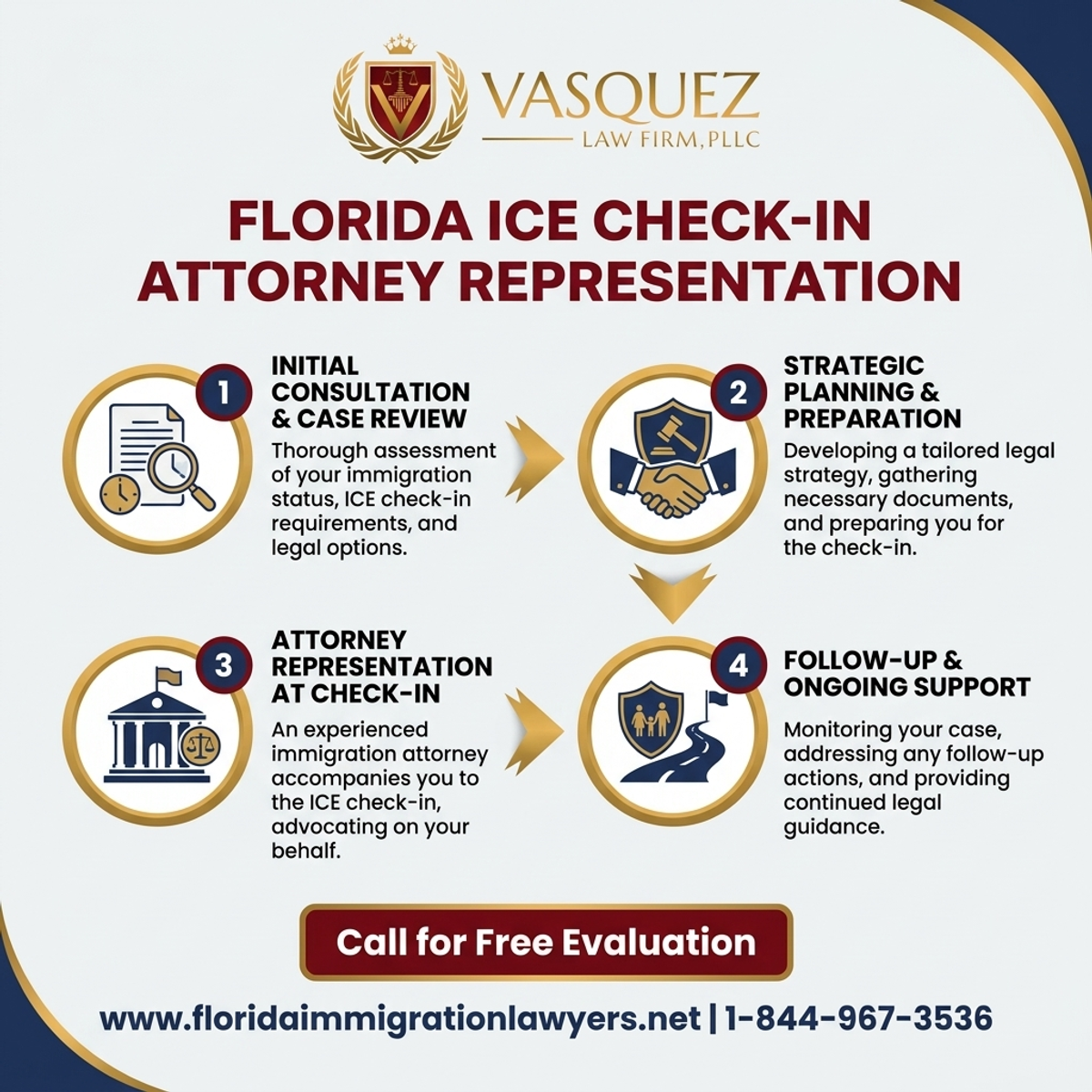
Step-by-Step Process — ICE Check-In Attorney Representation in Florida | VLF Florida
- Recognizance: Release on one's own recognizance, with a promise to appear for all future court dates. This is the least restrictive form of supervision.
- Bond: Release upon payment of a cash bond, which is returned if the individual complies with all conditions.
- Community Support Programs: Collaboration with non-profit organizations that provide case management services, often involving regular check-ins and support for housing, employment, and legal assistance.
- SmartLINK Mobile Application: A smartphone application that uses facial recognition and GPS to verify identity and location, allowing for remote check-ins. This offers a less intrusive electronic monitoring option compared to ankle bracelets.
The type of ATD program assigned depends on various factors, including an individual's immigration history, criminal record (if any), family ties in the U.S., and the strength of their immigration case. An attorney can play a critical role in advocating for your placement in a less restrictive ATD program, especially if you have strong community ties and a low flight risk. They can also help you navigate the requirements of your specific program, ensuring you remain compliant and avoid any actions that could lead to re-detention or more severe supervision.
Understanding these different supervision programs is crucial for anyone interacting with ICE. Each program has specific rules and consequences for non-compliance. An experienced immigration lawyer from VLF Florida can explain your particular situation, help you understand your obligations, and work to modify conditions if they are unduly burdensome or inappropriate for your circumstances. Our legal team is dedicated to protecting your rights throughout your immigration journey, whether you are dealing with ISAP, other ATD programs, or general immigration matters.
What to Expect During an ICE Check-In
Knowing what to expect can alleviate anxiety and help you prepare effectively. While each check-in can vary, here’s a general overview:
- Arrival and Waiting: You will typically arrive at an ICE field office or a designated ISAP office. Be prepared for potential waiting times.
- Document Review: An officer will likely ask for your immigration documents, such as your Notice to Appear (NTA), alien registration number (A-number), and any other relevant identification.
- Interview: The officer may ask questions about your current address, employment, family situation, and any changes in your immigration case. They might also inquire about travel plans or criminal history.
- Reporting Conditions: You may be required to sign documents confirming your understanding of your supervision conditions or acknowledging receipt of new instructions.
- Electronic Monitoring: If you are under electronic monitoring, the officer may check the device or provide instructions for its use and maintenance.
It's important to be truthful but also cautious. Anything you say can be used in your immigration case. This is where an attorney's presence is invaluable. They can advise you on which questions you are legally obligated to answer and which might be better addressed by your legal counsel.
Potential Outcomes and Risks of ICE Check-Ins
While many ICE check-ins are routine, there are several potential outcomes and risks that underscore the importance of legal representation:
- Release with Continued Supervision: The most common outcome is that you will be allowed to leave, with instructions for your next check-in.
- Modification of Supervision Conditions: ICE may change the frequency of your check-ins, alter your electronic monitoring requirements, or impose new conditions.
- Issuance of a New Document: You might receive a new Notice to Appear (NTA) for an immigration court hearing, an order of supervision, or other official documents.
- Detention: In some cases, ICE may decide to detain you. This can happen if they believe you have violated your supervision conditions, are a flight risk, or pose a danger. This is a serious risk that an attorney can help mitigate.
- Referral to Asylum Office: If you express a fear of returning to your home country, you might be referred for an asylum interview.

Key Statistics — ICE Check-In Attorney Representation in Florida | VLF Florida
An attorney can help you understand any new documents, challenge unwarranted changes to your supervision, and, most critically, fight against arbitrary detention. If you are detained, your attorney can immediately work on strategies for your release, such as requesting a bond hearing.
How VLF Florida Can Help
At VLF Florida, our dedicated team of immigration attorneys understands the intricacies of ICE check-ins and the broader implications for your immigration journey. We are committed to providing comprehensive legal support to individuals throughout Florida.
Our services include:
- Pre-Check-In Preparation: We will thoroughly prepare you for your ICE check-in, ensuring you have all necessary documents and understand what to expect.
- Attorney Presence at Check-Ins: We can accompany you to your ICE check-ins, acting as your advocate and protecting your rights throughout the process.
- Advocacy and Negotiation: If issues arise, we will negotiate with ICE officers on your behalf, challenging unfair conditions or potential detention.
- Addressing Supervision Violations: If you are accused of violating your supervision conditions, we will represent you to prevent detention or other adverse outcomes.
- Comprehensive Immigration Strategy: We look beyond just the check-in, integrating your supervision into your overall immigration strategy, whether it involves applying for a green card, fighting deportation, or pursuing asylum.
- Post-Check-In Follow-Up: We ensure all new instructions or documents are properly understood and addressed in your ongoing case.
Your immigration status and freedom are too important to leave to chance. Facing ICE without legal representation can expose you to unnecessary risks and potentially jeopardize your future in the United States. Our firm is dedicated to providing compassionate, effective, and experienced legal counsel.
Contact VLF Florida Today
Don't navigate the complexities of ICE check-ins alone. Protect your rights and secure your future by partnering with experienced immigration attorneys. VLF Florida is here to provide the expert legal representation you need.
For a free consultation to discuss your ICE check-in requirements and immigration case, please contact us today. Our team is ready to answer your questions and provide the peace of mind that comes with professional legal guidance. Call us at (844) 967-3536 or fill out our online contact form to schedule your appointment. We serve clients across Florida, offering dedicated support for all your immigration needs.
Frequently Asked Questions About ICE Check-Ins
1. What is an ICE check-in?
An ICE check-in is a mandatory appointment for non-citizens under immigration supervision, typically after release from detention, to monitor their status and ensure compliance with immigration laws.
2. Do I need an attorney for an ICE check-in?
While not legally required, having an attorney is highly recommended. An attorney can protect your rights, prepare you for the interview, and prevent potential issues that could lead to detention or adverse outcomes.
3. What documents should I bring to an ICE check-in?
Typically, you should bring your Notice to Appear (NTA), alien registration number (A-number), proof of address, and any other documents requested by ICE or your attorney. Your attorney will advise you on specific documents relevant to your case.
4. Can ICE detain me during a check-in?
Yes, ICE has the authority to detain individuals during a check-in if they believe there has been a violation of supervision conditions, if you are deemed a flight risk, or if there are new developments in your case. An attorney can help mitigate this risk.
5. What is ISAP?
ISAP (Intensive Supervision Appearance Program) is a common ICE supervision program that uses various monitoring tools, such as electronic ankle bracelets, telephonic reporting, and in-person check-ins, to track individuals awaiting immigration proceedings.
6. What happens if I miss an ICE check-in?
Missing an ICE check-in can have serious consequences, including the issuance of an arrest warrant, re-detention, and potential acceleration of deportation proceedings. It is crucial to attend all scheduled appointments or have your attorney request a reschedule if absolutely necessary.
7. How often are ICE check-ins?
The frequency of ICE check-ins varies greatly depending on your specific case, the type of supervision you are under, and ICE's assessment of your risk factors. They can range from weekly to annually.
8. Can my attorney speak for me during an ICE check-in?
Your attorney can speak on your behalf, clarify information, and advise you on how to answer questions. They act as your legal representative and advocate, ensuring your rights are protected throughout the interview process.
Sources and References
- U.S. Citizenship and Immigration Services (USCIS)
- Executive Office for Immigration Review (EOIR)
- U.S. Department of State - Bureau of Consular Affairs
- Immigration and Nationality Act (INA), 8 U.S.C. Chapter 12
Do Not Navigate This Process Alone
Our experienced immigration attorneys are ready to fight for you. Get a free, confidential consultation today.
Se Habla Español
Or leave your details and we’ll call you:
Free Evaluation in 24 Hours
Or talk to us right now

AI voice assistant — available 24/7
FreeFrequently Asked Questions

William J. Vásquez
Founding Attorney · Vasquez Law Firm
U.S. Air Force veteran and immigration attorney with years of hands-on U.S. immigration experience. J.D., NCCU School of Law. AILA member. Admitted to the 4th, 5th, and 11th Circuit Courts.
Available 24/7 - Free Evaluations
Reviewed for legal accuracy by William J. Vásquez
Licensed in North Carolina; U.S. immigration is federal practice.
Related Legal Services
Our Florida immigration attorneys can help you with citizenship and naturalization, family immigration services and immigration practice areas. Call today at 1-844-967-3536 for a free consultation.
Related Links
Related Topics
Free Legal Consultation
Discuss your case with our experienced attorneys. We're available 24/7.
Se Habla Español - Estamos aquí para ayudarle.
Related Articles
Military Naturalization Expedited in Florida Bases
Explore military naturalization options for families at Florida bases, including parole in place benefits in Miami. Learn how to expedite your application with expert guidance from Florida Immigration Lawyers.
Immigration Lawyer Orlando Free Consultation 2026
Discover how to find an immigration lawyer in Orlando offering a free consultation. Understand the services available and why choosing Florida Immigration Lawyers can make a difference in your case.
Biometrics Appointment in Florida 2026: What to Expect
A USCIS biometrics appointment is a crucial step for most immigration applications in Florida, involving fingerprinting, photography, and signature collection for identity verification and background checks. This guide covers how to prepare, what to expect at your ASC appointment, typical timelines, and associated costs. We also highlight common mistakes to avoid and when it's essential to consult an experienced immigration lawyer. For residents in Tallahassee, Orlando, Miami, and throughout Florida, understanding this process is vital for a smooth application. Florida Immigration Lawyers offers expert guidance to ensure your biometrics appointment and overall immigration case proceed without complications. Don't risk delays; learn how to navigate this mandatory step effectively.
Stokes Interview: Understanding Marriage Fraud in Florida
A Stokes interview is a critical step in verifying the legitimacy of a marriage in I-130 applications, especially when fraud is suspected. Learn about the process, how to prepare, and what to expect from the interview. For residents in Hollywood, Florida, understanding these aspects is crucial. Call Florida Immigration Lawyers at 1-844-967-3536 for a free consultation.