Understanding Public Charge Rule for Florida Immigrants
Explore how the public charge rule affects Florida immigrants, particularly in Homestead. This guide covers the essentials of navigating this complex immigration rule, offering practical advice and legal support options.

The public charge rule evaluates an immigrant's likelihood of becoming reliant on public benefits, affecting eligibility for visas or green cards. In Florida, particularly Homestead, this rule can impact many immigrants seeking a stable future. Key points include:
- Public charge assesses use of specific public benefits.
- It affects admissibility and adjustment of status.
- Florida-specific resources can offer guidance.
- Legal advice is crucial for navigating these complexities.
In the bustling community of Homestead, Florida, immigrants find themselves navigating complex legal landscapes. The public charge rule plays a significant role in determining eligibility for immigration benefits. This article provides an in-depth look at how this rule affects immigrants in Florida, offering guidance and support. Call Florida Immigration Lawyers at 1-844-967-3536 for a free consultation.
What is the Public Charge Rule?
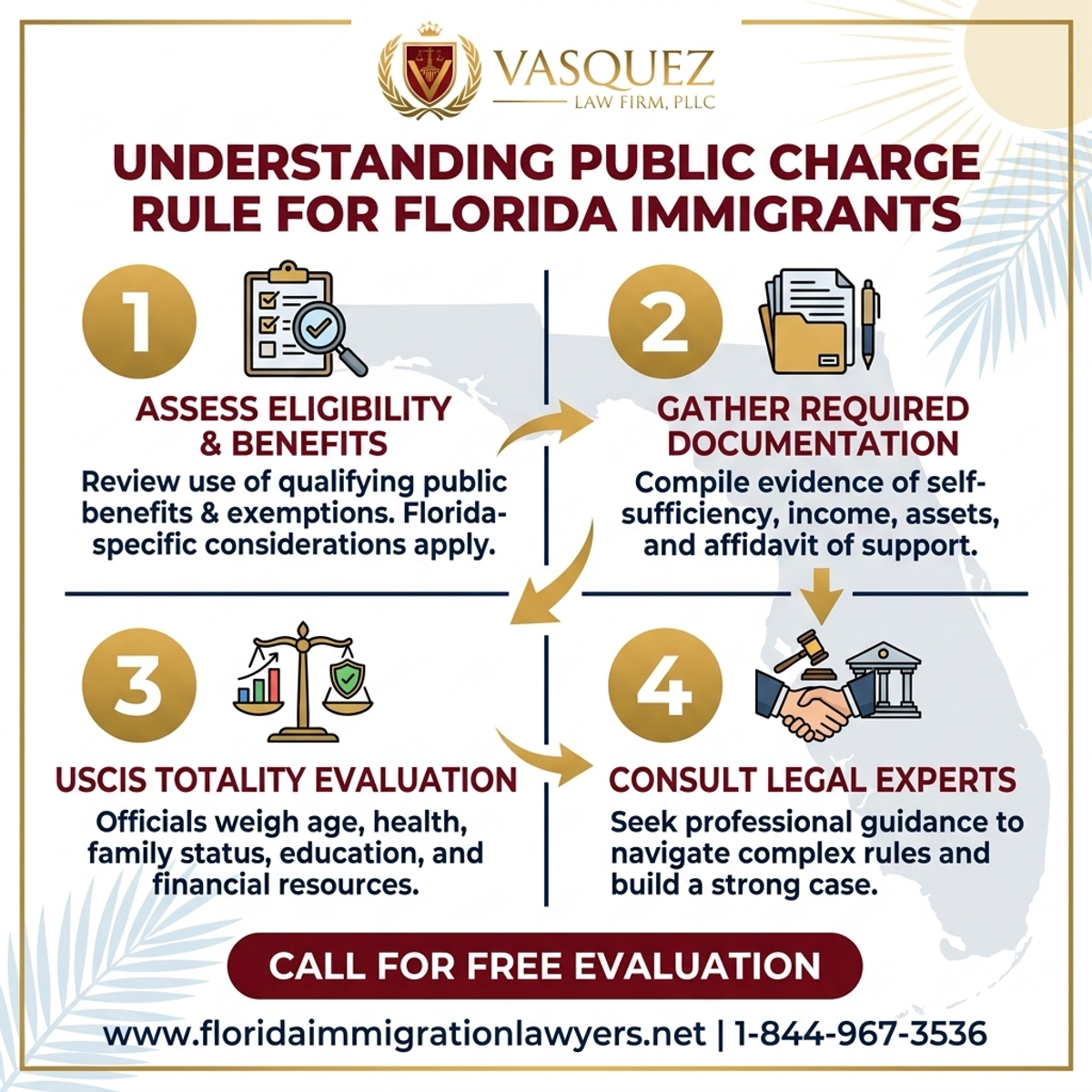
The public charge rule is a provision under U.S. immigration law used to assess whether an individual seeking admission to the United States or adjustment of status is likely to become dependent on government assistance. This rule is primarily aimed at determining admissibility for visas and green cards.
Historically, the definition of public charge has evolved, incorporating various interpretations and criteria. The rule considers factors such as age, health, family status, financial resources, and education.
For immigrants in Homestead, understanding the nuances of this rule is crucial, as it can directly impact their ability to secure legal residency. The rule focuses on the use of specific public benefits like Supplemental Security Income (SSI) and Temporary Assistance for Needy Families (TANF).
The underlying intent of the public charge rule is to ensure that individuals admitted to the U.S. are self-sufficient and do not become a burden on the American taxpayer. This principle dates back to the late 19th century, evolving significantly over time to reflect changing societal views and economic realities. Understanding this historical context helps to grasp why certain benefits are scrutinized while others are not.
It's important to distinguish between using public benefits and being deemed a 'public charge.' Not every benefit disqualifies an applicant. The assessment involves a 'totality of circumstances' test, where immigration officials weigh all positive and negative factors in an applicant's life. This includes their assets, income, education, skills, health, and family support, alongside any past or current use of specified public benefits. A strong overall profile can often mitigate concerns about limited benefit usage.
Florida's Unique Demographics
Florida, with its diverse immigrant population, experiences unique challenges. The state's demographics reveal significant numbers of immigrants in areas like Miami-Dade County, including Homestead. This community's reliance on certain public benefits could affect their immigration status under the public charge rule.
In Homestead, a vibrant agricultural hub, many immigrants work in industries that may offer lower wages or seasonal employment, potentially leading to a greater need for support services. This demographic reality means that a larger segment of the population might have interacted with public assistance programs, making the public charge rule particularly salient for residents seeking to adjust their status or obtain visas.
The diverse backgrounds, languages, and economic situations of Florida's immigrants, particularly in areas like Homestead, necessitate specialized legal guidance. What might be a straightforward case for one individual could be highly complex for another, depending on their specific history with public benefits and their overall financial stability. Florida Immigration Lawyers are well-versed in these local intricacies and can provide tailored advice.
Step-by-Step Guide to Navigating Public Charge
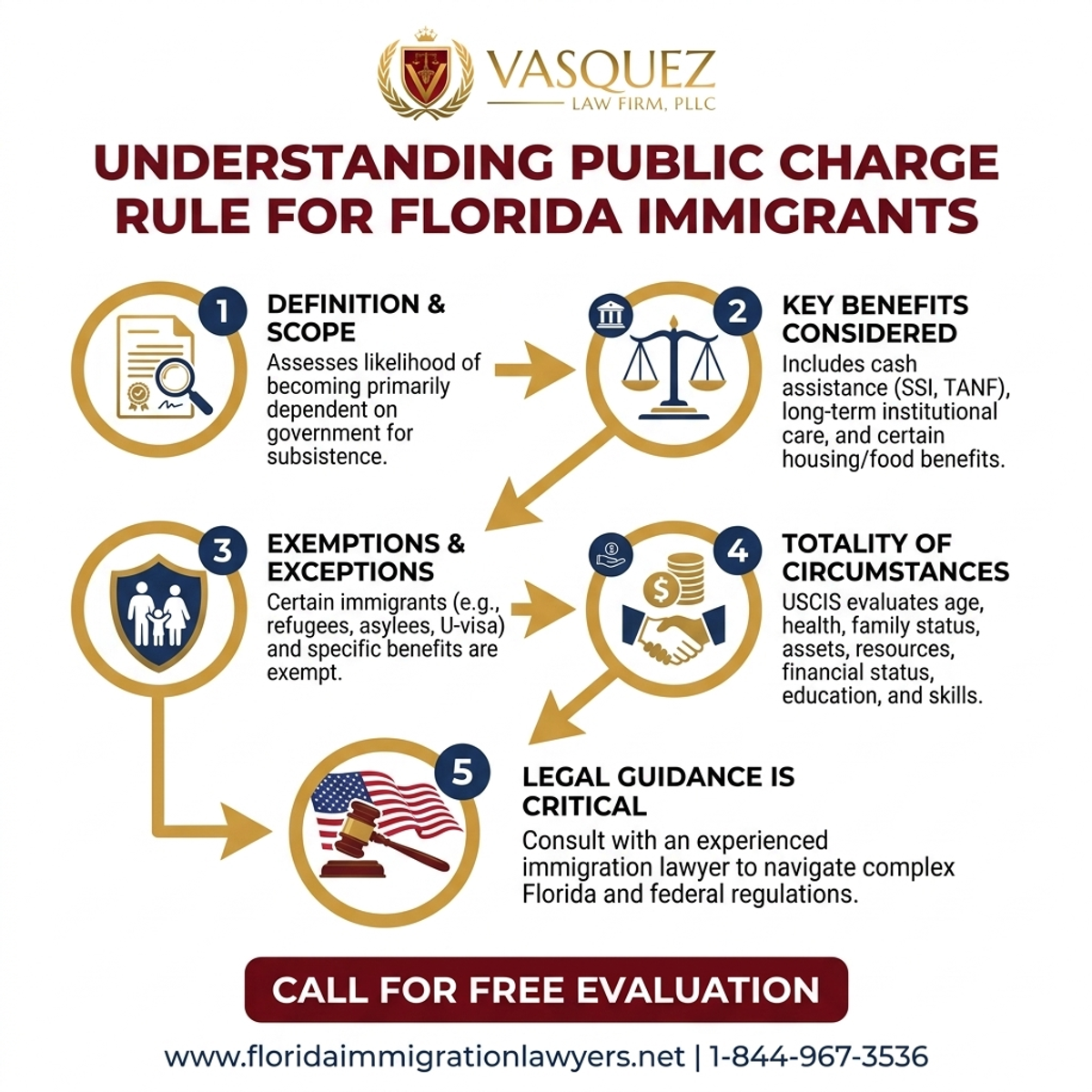
Navigating the public charge rule requires careful planning and a thorough understanding of immigration law. This step-by-step guide aims to simplify the process for immigrants in Florida, ensuring they are well-prepared for their application.
- Assess Eligibility: Review your current use of public benefits and financial status. Consider factors such as age, health, and employment history. It's crucial to be honest and comprehensive in this self-assessment, as any misrepresentation can lead to severe consequences.
- Gather Documentation: Compile necessary documents, including proof of income, assets, and benefits usage. This step is foundational; incomplete or inaccurate documentation is a primary reason for delays or denials.
- Consult Legal Experts: Engage with experienced immigration attorneys to assess your case and provide personalized advice. A lawyer from Florida Immigration Lawyers can help you understand how the 'totality of circumstances' test applies to your unique situation and identify potential red flags.
- File Appropriate Forms: Complete and submit forms required by USCIS, ensuring all information is accurate and comprehensive. Double-check every detail, as even minor errors can cause significant setbacks.
- Prepare for Interviews: Be ready for interviews or additional inquiries by immigration officials, supported by your legal counsel. Your attorney can help you practice responses and understand the types of questions you might face, ensuring you present your case confidently and clearly.
By following these steps diligently and seeking professional help when needed, immigrants can significantly improve their chances of a successful outcome. Remember, proactive preparation is key to navigating the public charge rule effectively.
Document Checklist
Thorough documentation is the backbone of any successful immigration application, especially when dealing with the public charge rule. Providing a clear and comprehensive picture of your financial stability and self-sufficiency is paramount.
- Proof of income and employment (e.g., pay stubs, tax returns, employment verification letters, business licenses for self-employed individuals)
- Health insurance documentation (e.g., policy details, proof of enrollment in private health insurance)
- Educational certificates (e.g., diplomas, degrees, vocational training certificates demonstrating skills)
- Evidence of community ties and support (e.g., letters from community organizations, volunteer records, property ownership, family relationships)
- Records of public benefits received (e.g., dates, types of benefits, and amounts received, if applicable)
Beyond these core documents, consider including letters of support from family or community members who can attest to your character and financial responsibility. Any evidence that demonstrates your potential for self-sufficiency and contribution to the community will strengthen your application. Always organize your documents meticulously to facilitate easy review by immigration officials.
Step-by-Step Process — Understanding Public Charge Rule for Florida Immigrants
Timeline and Processing Expectations
Processing times for public charge assessments can vary. Typically, it takes several months for USCIS to review the documentation and make a determination. Immigrants should be prepared for potential delays and ensure all submissions are timely and complete.
Florida-specific factors, such as the workload of local USCIS offices, can also impact processing times. Homestead residents may find the Miami USCIS office to be a key location for their proceedings.
Several factors can influence the processing timeline, including the complexity of your case, the volume of applications at the processing center, and whether additional evidence (Request for Evidence – RFE) is requested. A strong, well-prepared application from the outset, with all necessary documentation, can help minimize delays.
It is advisable to continuously monitor the status of your application through the USCIS online tools. While waiting, avoid making significant changes to your financial situation or public benefits usage without consulting your attorney. Florida Immigration Lawyers can help you track your case status and advise on any communications received from USCIS, ensuring you respond promptly and appropriately.
Expect potential interview scheduling, which adds another layer to the timeline. Preparing thoroughly for this stage with legal guidance is crucial. Understanding the potential for delays and maintaining open communication with your legal team will help manage expectations throughout this often lengthy process.
Cost Factors and Fee Breakdown
While there are no specific fees for the public charge assessment, costs can arise from legal consultations, document preparation, and potential translations. Immigrants in Florida should budget for these expenses, considering the value of professional advice in successfully navigating the process.
Legal fees vary based on the complexity of the case, but investing in quality legal counsel can significantly enhance the likelihood of a favorable outcome.
Beyond attorney fees, applicants should anticipate costs for medical examinations required for adjustment of status, which can range from a few hundred to over a thousand dollars. There might also be fees for obtaining certified copies of documents, criminal background checks, and travel expenses for interviews or appointments. These seemingly small costs can accumulate, so a comprehensive financial plan is essential.
Consider the long-term value of a successful immigration outcome. While the upfront costs might seem substantial, securing your legal status in the U.S. offers immense benefits, including stability, employment opportunities, and peace of mind. Florida Immigration Lawyers offer transparent fee structures and can help you understand the full financial scope of your immigration journey, ensuring no surprises along the way. Don't let potential costs deter you from seeking the expert help you need.
Key Statistics — Understanding Public Charge Rule for Florida Immigrants
Do not navigate this process alone. Contact Florida Immigration Lawyers today.
Common Mistakes to Avoid
Navigating the public charge rule can be fraught with potential pitfalls. Awareness of common mistakes can help immigrants avoid unnecessary delays, denials, and stress during their application process.
- Underestimating Importance of Documentation: Failing to provide comprehensive documentation can lead to delays or denials. Always assume that more evidence is better, ensuring every claim is backed by solid proof.
- Misunderstanding Eligibility Criteria: Not fully understanding what constitutes a public charge can result in errors. Many applicants incorrectly assume any benefit use disqualifies them, or conversely, underestimate the impact of certain benefits.
- Ignoring Legal Counsel: Proceeding without professional legal advice can jeopardize your application. An experienced attorney can interpret complex regulations and tailor a strategy to your unique circumstances, which is invaluable.
- Overlooking Community Support Evidence: Neglecting to show ties to the community can impact assessments. Evidence of strong community integration and support demonstrates self-sufficiency and a positive contribution to society.
- Inaccurate Form Completion: Errors in form submissions are common and costly. Even minor mistakes can trigger RFEs or denials, prolonging the process and potentially incurring additional fees.
- Delaying Action: Procrastination can result in missed deadlines and lost opportunities. Immigration laws and policies can change, making timely action crucial for a successful application.
- Misreporting Benefits Usage: Failing to accurately report benefits can lead to serious consequences. Transparency is key; it's better to disclose and explain than to omit information that could later be discovered.
Avoiding these common errors requires diligence and often the guidance of an expert. Florida Immigration Lawyers can help you meticulously prepare your application, ensuring accuracy and completeness, thereby significantly increasing your chances of a favorable outcome.
When to Call a Lawyer
Engaging with a lawyer is advisable when navigating the public charge rule, especially in complex situations involving multiple public benefits or unique family circumstances. Warning signs include receiving notices from USCIS or potential inadmissibility findings.
Florida Immigration Lawyers can provide critical support, offering expertise tailored to the needs of immigrants in Homestead and beyond. With a deep understanding of state-specific nuances, our firm is equipped to guide you through each step of the process.
You should consider contacting an attorney immediately if you have a history of receiving multiple public benefits, have been previously denied an immigration benefit, or if your case involves any criminal history. These factors significantly complicate the public charge assessment and require expert legal interpretation and strategy.
Furthermore, if you are unsure about what documents to gather, how to complete complex forms, or how to prepare for an immigration interview, a lawyer's guidance is indispensable. Florida Immigration Lawyers can demystify the process, provide peace of mind, and advocate on your behalf, ensuring your rights are protected throughout the entire journey. Don't wait for a problem to arise; proactive legal consultation can prevent issues before they occur.
About Florida Immigration Lawyers
Florida Immigration Lawyers is dedicated to serving the diverse communities across Florida, including Homestead. Our services encompass a wide range of immigration needs, from public charge issues to naturalization and deportation defense. Call us at 1-844-967-3536 or visit our website for 24/7 assistance. We offer free consultations and are ready to help you navigate your immigration journey. Se habla español.
Our team understands the unique challenges faced by immigrant families in Florida. We pride ourselves on offering compassionate, culturally sensitive, and effective legal representation. With years of experience and a deep commitment to our clients, we strive to make the complex immigration process as smooth and stress-free as possible.
Whether you are just beginning your immigration journey, facing a complex public charge issue, or seeking to reunite with family, Florida Immigration Lawyers is your trusted partner. Our local presence in Homestead and across Florida means we are uniquely positioned to provide relevant, up-to-date advice tailored to the specific needs of our community members. Contact us today to learn how we can assist you.
Sources and References
- U.S. Citizenship and Immigration Services (USCIS)
- Executive Office for Immigration Review (EOIR)
- U.S. Department of State - Bureau of Consular Affairs
- Immigration and Nationality Act (INA), 8 U.S.C. Chapter 12
Do Not Navigate This Process Alone
Our experienced immigration attorneys are ready to fight for you. Get a free, confidential consultation today.
Se Habla Español
Frequently Asked Questions
Florida Immigration Lawyers
Immigration Attorney | Founder, Vasquez Law Firm
U.S. Air Force veteran and immigration attorney with thousands of cases resolved. J.D., NCCU School of Law. AILA member. Admitted to the 4th, 5th, and 11th Circuit Courts.
Available 24/7 - Free Evaluations
Related Legal Services
Our Florida immigration attorneys can help you with asylum protection, deportation defense and citizenship and naturalization. Call today at 1-844-967-3536 for a free consultation.
Related Links
Related Topics
Free Legal Consultation
Discuss your case with our experienced attorneys. We're available 24/7.
Se Habla Español - Estamos aquí para ayudarle.
Related Articles
Free Immigration Consultation in Florida | VLF Florida
Facing immigration issues in Florida? Discover the importance of free consultations with experienced immigration lawyers in Coral Springs. Learn how to prepare for a consultation, avoid common mistakes, and explore when to seek legal help. Call Florida Immigration Lawyers today!
Child Status Protection Act: Florida Guide | VLF Florida
Learn how the Child Status Protection Act (CSPA) can protect your family's immigration status in Florida. This guide covers everything from understanding CSPA to calculating age and avoiding common mistakes. Call Florida Immigration Lawyers for expert help.
Immigration Medical Exam: Florida Doctors Guide | VLF Florida
If you're applying for a green card in Florida, understanding the immigration medical exam is crucial. This guide covers everything from choosing a civil surgeon to what the exam entails. Get a free consultation with Florida Immigration Lawyers.
Solutions for Immigration Backlog in Florida | VLF Florida
Facing immigration backlog in Florida can be daunting. Discover strategies to manage USCIS delays and learn when to seek legal assistance. Call Florida Immigration Lawyers for expert guidance.