Expungement's Impact on Immigration in Florida
Explore the impact of expungement on immigration status in Florida. Learn about eligibility, process steps, and legal considerations. Contact Florida Immigration Lawyers for a free consultation.
- Expunged records may still be visible to immigration authorities.
- Sealed records might influence visa applications.
- Consulting with an immigration attorney is advisable for personalized guidance.
Introduction
Imagine you're living in Naples, Florida, and you've successfully expunged a minor criminal record. You feel a weight lifted, but now you're concerned about how this might affect your immigration status. Navigating the intersection of criminal and immigration law can be complex, especially in Florida. This article explores the implications of expungement and sealed records on immigration, providing guidance and expert advice. For personalized assistance, call Florida Immigration Lawyers at 1-844-YO-PELEO for a free consultation.
Understanding Expungement and Sealed Records
In Florida, expungement and sealing are legal processes that help individuals move past their criminal records. Expungement typically means the record is destroyed, while sealing means the record is hidden from public view but not from all entities. It's essential to understand that for immigration purposes, expunged or sealed records can still be examined by authorities like USCIS and ICE. According to the USCIS, certain criminal convictions can impact eligibility for visas or green cards, regardless of expungement status.
Step-by-Step Guide to Record Expungement
- Determine Eligibility: Not all offenses are eligible for expungement. Consult Florida statutes to assess your case.
- File a Petition: Submit a petition for expungement or sealing to the court. This step often requires legal assistance.
- Await Court Decision: The court will review your petition. It may require a hearing where you present your case.
- Receive Decision: If approved, the record is expunged or sealed. If denied, you may have options to appeal.
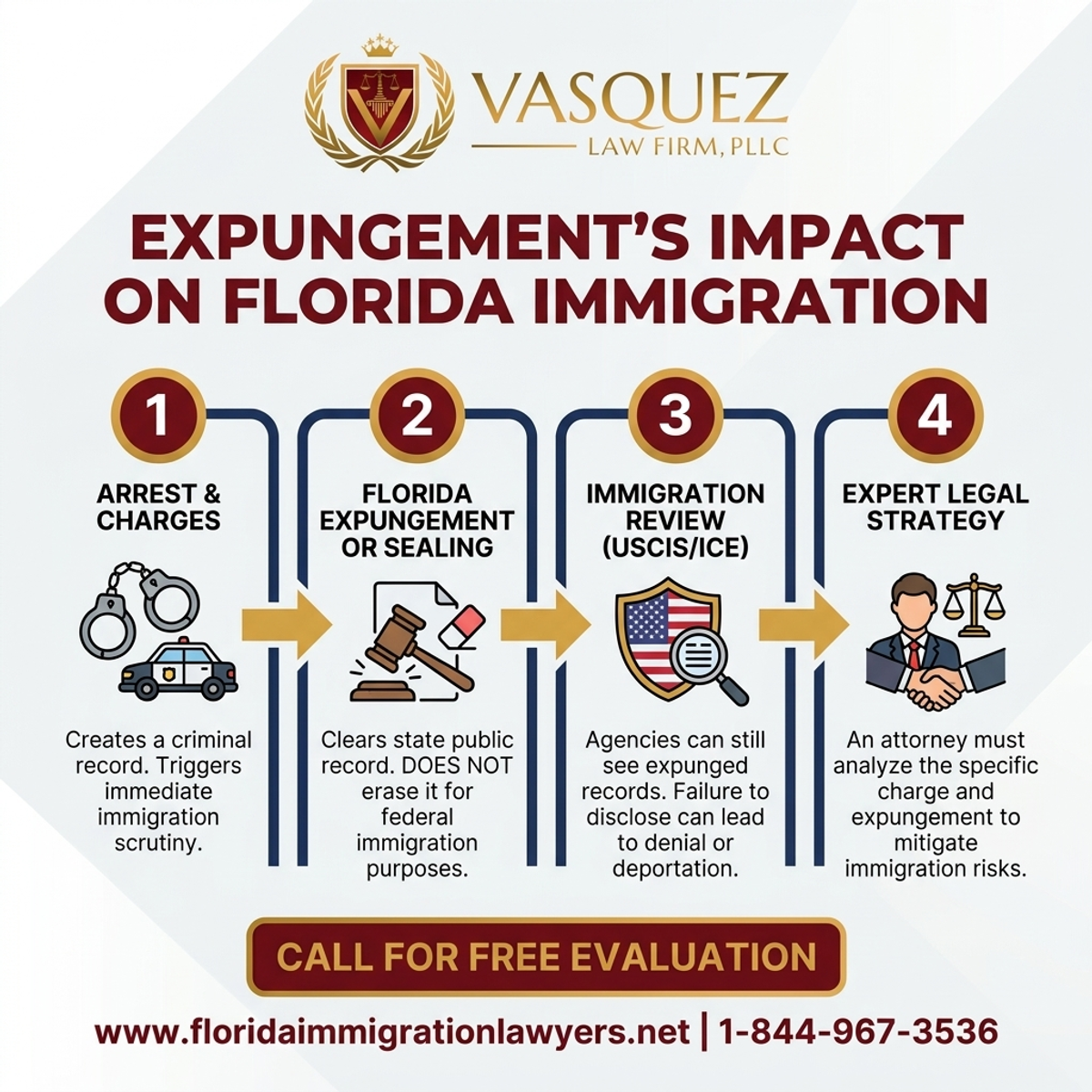
Step-by-Step Process — Expungement's Impact on Immigration in Florida
Document Checklist for Expungement
- Certified copy of the disposition of the criminal case
- Fingerprints and background check results
- Affidavit of eligibility for expungement
- Completed petition for expungement or sealing
- Legal representation documentation, if applicable
Timeline and Processing Expectations
The expungement process in Florida can take several months, typically ranging from 6 to 12 months. Processing times may vary depending on court schedules and the complexity of the case. For immigration purposes, it's important to plan ahead, as expungement does not erase the record from federal view. This timeline is critical for those applying for visas or adjusting their status.
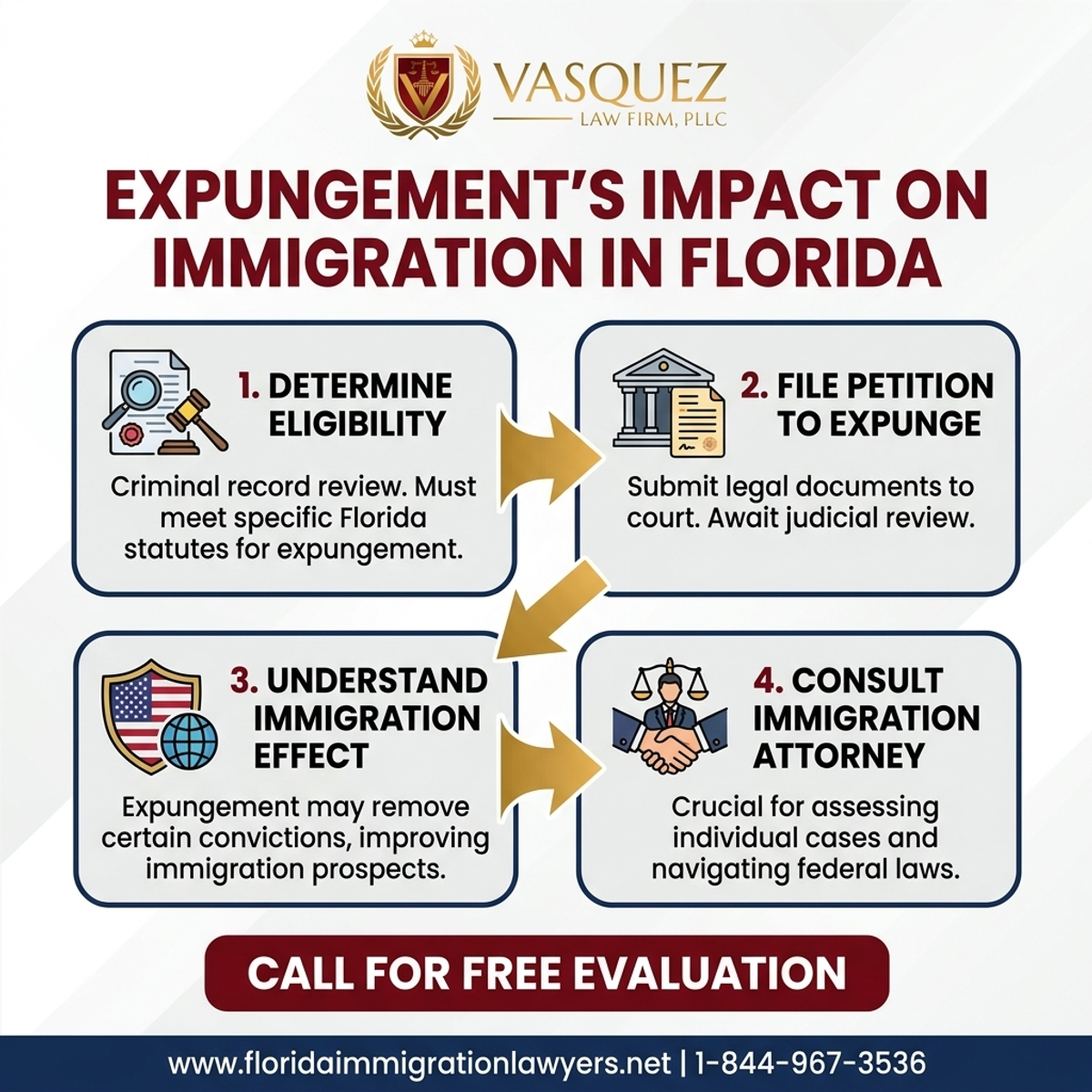
Key Statistics — Expungement's Impact on Immigration in Florida
Cost Factors and Fee Breakdown
While the costs associated with expungement vary, they generally include court filing fees, legal representation fees, and costs for obtaining necessary documentation. It's important to note that legal fees can fluctuate based on the complexity of the case and the attorney's experience. Consulting with a lawyer can provide a clearer understanding of potential costs.
Do not navigate this process alone. Contact Florida Immigration Lawyers today.
Common Mistakes to Avoid
- Assuming Expungement Clears Immigration Records: Expungement does not remove records from immigration databases.
- Ignoring Legal Advice: Failing to consult with an immigration attorney can lead to misunderstandings about legal standing.
- Incomplete Documentation: Missing documents can delay or derail the expungement process.
- Misunderstanding Eligibility: Not all crimes are eligible for expungement, and misunderstanding this can waste time.
- Delaying the Process: Procrastination can complicate visa or status adjustments.
- Failing to Disclose Expunged Records: Omitting expunged records on immigration forms can be considered fraud.
- Neglecting State and Federal Differences: State expungement laws do not override federal immigration laws.
- Relying Solely on Online Information: Personal advice from a qualified attorney is crucial for accurate guidance.
When to Call a Lawyer
If you're facing immigration issues due to a criminal record in Florida, consulting an attorney is crucial. Legal professionals can provide guidance on how expungement affects your immigration status and help you navigate complex laws. Warning signs that you need legal help include receiving notices from USCIS or ICE, or if you're planning to apply for a visa or adjustment of status. At Florida Immigration Lawyers, we offer expert advice tailored to your situation.
About Florida Immigration Lawyers
Florida Immigration Lawyers is dedicated to providing comprehensive legal services for immigrants in Florida. Our experienced attorneys specialize in a range of immigration matters, including family and business immigration, asylum, deportation defense, and citizenship applications. We pride ourselves on offering personalized service and free consultations. Contact us at 1-844-YO-PELEO or visit our website at www.floridaimmigrationlawyers.net. Available 24/7, we are here to help you navigate your immigration journey.
Sources and References
- U.S. Citizenship and Immigration Services (USCIS)
- Executive Office for Immigration Review (EOIR)
- 8 U.S.C. Chapter 12 - Immigration and Nationality Act
Related services: immigration practice areas, family immigration services.
This article provides general legal information and is not intended as legal advice. Every case is unique, and outcomes depend on specific facts and circumstances. Contact an attorney for advice about your particular situation.
For a strong closing CTA, remember: Call Florida Immigration Lawyers at 1-844-YO-PELEO for a free consultation. Se Habla Español - Estamos aquí para ayudarle.
If you need legal assistance, learn more about learn about our immigration practice, or call us at 1-844-YO-PELEO for a free consultation.
Do Not Navigate This Process Alone
Our experienced immigration attorneys are ready to fight for you. Get a free, confidential case review today.
Se Habla Español
Or leave your details and we’ll call you:
Free Evaluation in 24 Hours
Or talk to us right now

AI voice assistant — available 24/7
FreeFrequently Asked Questions

William J. Vásquez
Founding Attorney · Vasquez Law Firm
U.S. Air Force veteran and immigration attorney with years of hands-on U.S. immigration experience. J.D., NCCU School of Law. AILA member. Admitted to the 4th, 5th, and 11th Circuit Courts.
Available 24/7 - Free Evaluations
Reviewed for legal accuracy by William J. Vásquez
Licensed in North Carolina; U.S. immigration is federal practice.
Related Legal Services
Our Florida immigration attorneys can help you with citizenship and naturalization, immigration practice areas and free immigration consultation. Call today at 1-844-YO-PELEO for a free case review.
Related Links
Related Topics
Free Legal Case Review
Discuss your case with our experienced attorneys. We're available 24/7.
Se Habla Español - Estamos aquí para ayudarle.
Related Articles
EAD Advance Parole Combo Card in Florida 2026
For individuals with a pending Form I-485, Application to Register Permanent Residence or Adjust Status, the EAD Advance Parole Combo Card is an essential document. This single card combines the authorization to work legally in the U.S. (Employment Authorization Document - EAD) with permission to travel internationally and re-enter without abandoning your green card application (Advance Parole). This guide from Florida Immigration Lawyers provides a comprehensive overview for applicants in Florida in 2026, covering eligibility, the step-by-step application process, required documents, expected processing times, and associated costs. We also highlight common mistakes to avoid and when to seek legal counsel to ensure a smooth and successful immigration journey. Understanding this vital card is key to maintaining stability while awaiting your permanent residency approval.
Immigration Lawyer Orlando Free Consultation in Florida
For individuals and families in Orlando, Florida, navigating the complexities of U.S. immigration law requires expert guidance. An immigration lawyer in Orlando offers crucial support for everything from visa applications and green card processes to naturalization and deportation defense. This comprehensive guide details what a free consultation covers, providing a step-by-step overview of immigration pathways, essential document checklists, and expected timelines in 2026. We also highlight common mistakes to avoid, discuss the critical role of legal counsel in deportation and asylum cases, and explain why choosing a local Orlando immigration attorney is beneficial. Florida Immigration Lawyers is dedicated to serving the diverse community of Orlando with compassionate, effective legal solutions, ensuring you receive personalized advice and robust representation for a successful immigration journey.
O-1 Visa Extraordinary Ability in Florida: What You Need
Explore the O-1 visa for extraordinary ability in Florida. Learn about eligibility, application process, and common mistakes to avoid. Contact Florida Immigration Lawyers for expert assistance.
Green Card Holders Issued New Warning in Florida
Green card holders face new warnings in Florida. Learn about marriage-based green cards, spouse visas, and avoid common pitfalls. Contact Florida Immigration Lawyers for guidance.