Immigration Medical Exam: Florida Doctors Guide
If you're applying for a green card in Florida, understanding the immigration medical exam is crucial. This guide covers everything from choosing a civil surgeon to what the exam entails. Get a free consultation with Florida Immigration Lawyers.

- Conducted by USCIS-designated civil surgeons
- Form I-693 is required
- Includes physical and mental evaluations
- Vital for adjusting status in the U.S.
- Ensure vaccinations are up to date
Introduction
If you're applying for a green card in Florida, one critical step is the immigration medical exam. This process, performed by a civil surgeon, ensures you meet health standards set by U.S. immigration laws. Understanding this requirement is vital for anyone seeking permanent residency in the United States. This article will guide you through the process, from selecting a qualified civil surgeon to understanding what the exam entails. Call Florida Immigration Lawyers at 1-844-967-3536 for a free consultation.
Beyond merely fulfilling a legal requirement, the immigration medical exam is a foundational element of your journey to becoming a permanent resident. It serves to protect public health while also confirming your eligibility under U.S. immigration statutes. A smooth and successful medical exam can prevent significant delays and complications in your green card application, making it imperative to approach this stage with thorough preparation and accurate information.
Navigating the intricacies of immigration law can be challenging, especially when medical requirements are involved. This guide aims to demystify the process, offering clear, actionable advice to help you prepare for and complete your medical examination effectively. Remember, Florida Immigration Lawyers are always available to provide personalized guidance and support throughout your entire immigration process, ensuring you meet all necessary health and legal benchmarks.
Understanding the Immigration Medical Exam
The immigration medical exam is required for most applicants seeking to adjust their status to permanent residency. It assesses whether applicants have certain health conditions that could pose a public health risk. In Fort Lauderdale and throughout Florida, the exam must be conducted by a USCIS-designated civil surgeon. The exam includes a physical examination, a review of vaccination records, and tests for communicable diseases such as tuberculosis and syphilis.
The primary purpose of the exam is to identify any Class A medical conditions, which would render an applicant inadmissible to the U.S. These include specific communicable diseases of public health significance (like active tuberculosis, syphilis, gonorrhea, and Hansen's disease), certain physical or mental disorders associated with harmful behavior, and drug abuse or addiction. Identifying these conditions allows for appropriate action, which may include treatment or, in some cases, a waiver application, preventing potential public health threats.
Choosing the right civil surgeon is crucial. You can find a list of approved doctors on the USCIS website. It's important to ensure that the civil surgeon is current with all USCIS requirements and has a good understanding of the latest medical guidelines. These designated professionals are specifically trained to conduct the examination according to CDC and USCIS protocols, ensuring your report is valid and accurately reflects your health status for immigration purposes. Their expertise is vital for a compliant and successful examination.
Beyond the core requirements, the medical exam also plays a preventative role. By ensuring applicants are up-to-date on required vaccinations, it helps protect both the individual and the broader U.S. population from preventable diseases. The civil surgeon will review your vaccination history against CDC requirements, administering any missing vaccines or certifying medical contraindications. This comprehensive health screening is a cornerstone of the U.S. immigration system, designed for the safety and well-being of all.
Step-by-Step Guide to the Medical Exam Process
Preparing for your immigration medical exam effectively can significantly streamline your green card application process. Proactive scheduling and meticulous document gathering are key to avoiding unnecessary delays. While the process may seem daunting, breaking it down into manageable steps, as outlined below, will make it much easier. Should you have any questions or require assistance at any point, Florida Immigration Lawyers are here to help guide you through each stage.
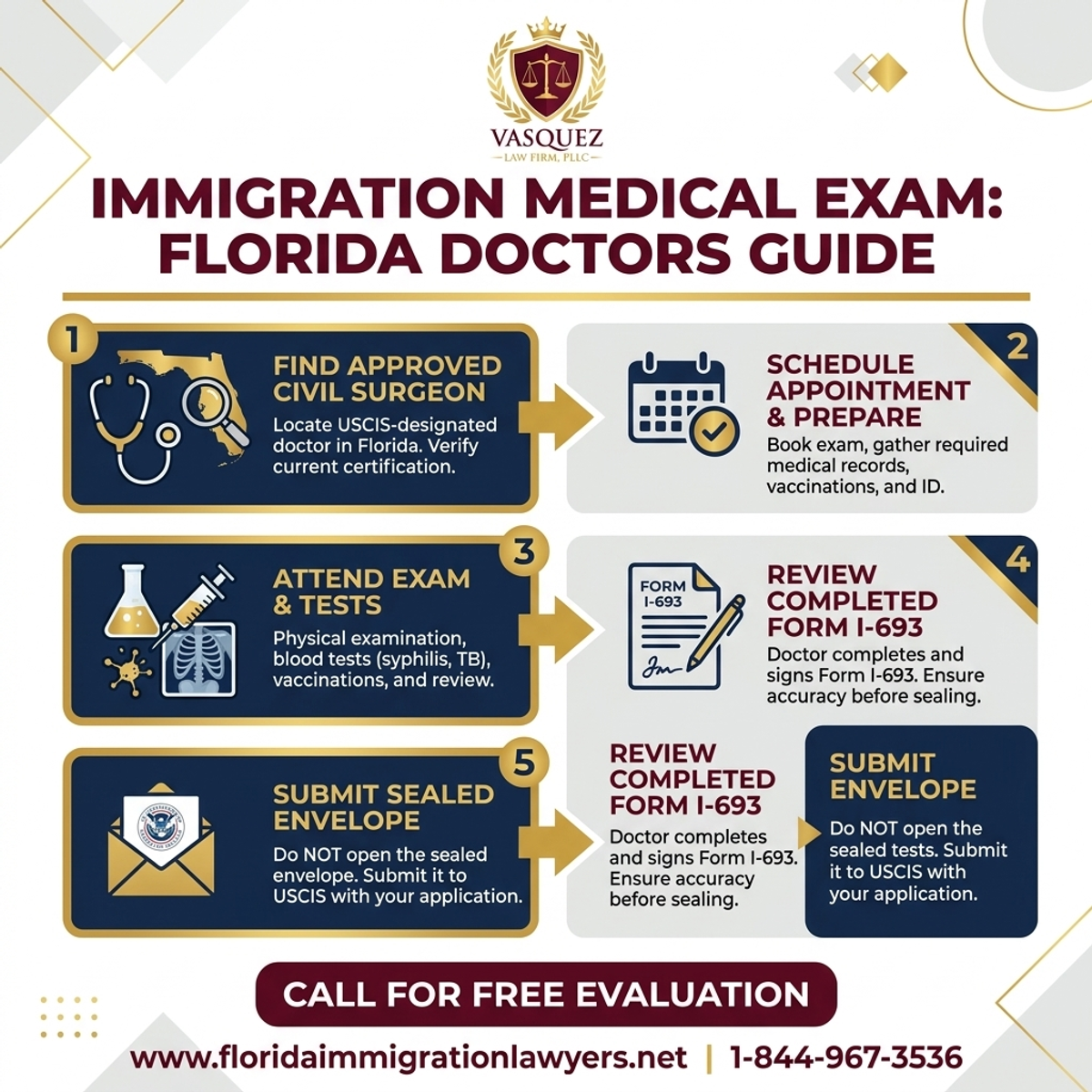
- Schedule the Exam: Contact a USCIS-approved civil surgeon in your area to book an appointment. When scheduling, inquire about their fees, what documents you need to bring, and if there are any specific instructions, such as fasting.
- Prepare Required Documents: Bring your passport, any previous medical records, and vaccination history. A comprehensive record of your health history, including any chronic conditions or past treatments, will assist the civil surgeon in completing Form I-693 accurately and efficiently.
- Undergo Medical Tests: The civil surgeon will conduct various tests as required by immigration law. These typically include a physical examination, mental health evaluation, blood tests for syphilis and gonorrhea (for applicants 15 years and older), and a chest X-ray for tuberculosis screening (for applicants 2 years and older, depending on initial skin test results).
- Complete Form I-693: The doctor will fill out Form I-693, which you must submit to USCIS. It is crucial that the civil surgeon completes this form entirely and accurately, detailing all findings from your examination and vaccination record. Do not fill out any part of this form yourself.
- Submit to USCIS: Include the sealed I-693 form with your green card application. The sealed envelope is paramount; opening it will invalidate the report, requiring you to get a new exam and incur additional costs and delays. Ensure the envelope remains sealed until USCIS opens it.
After completing the examination and receiving your sealed Form I-693, it's essential to understand its validity. The form is generally valid for two years from the civil surgeon's signature date, provided it is submitted to USCIS within 60 days of the signature. Keep a personal copy of all documents you provide and any receipts for your records, but remember, only the sealed original envelope should be submitted to USCIS.
Step-by-Step Process — Immigration Medical Exam: Florida Doctors Guide
Document Checklist for Your Immigration Medical Exam
Having all your necessary documents organized and ready before your appointment is critical for a smooth immigration medical exam. Missing or incomplete documentation can lead to delays, requiring additional visits and potentially extending the overall green card application timeline. Use this checklist to ensure you are fully prepared for your civil surgeon appointment.
- Valid passport or government-issued ID
- Form I-693, Report of Medical Examination and Vaccination Record
- Vaccination records
- Any previous medical records, if applicable
- Payment for the medical exam (costs vary)
For vaccination records, try to gather all available immunization history, including childhood records. If you lack complete records, the civil surgeon can perform blood tests to check for immunity to certain diseases, or administer necessary vaccines on the spot. For previous medical records, bring documentation for any significant health conditions, surgeries, or ongoing treatments, as this provides crucial context for the civil surgeon's evaluation. Remember, Florida Immigration Lawyers can offer advice on specific documentation needs.
Timeline and Processing Expectations
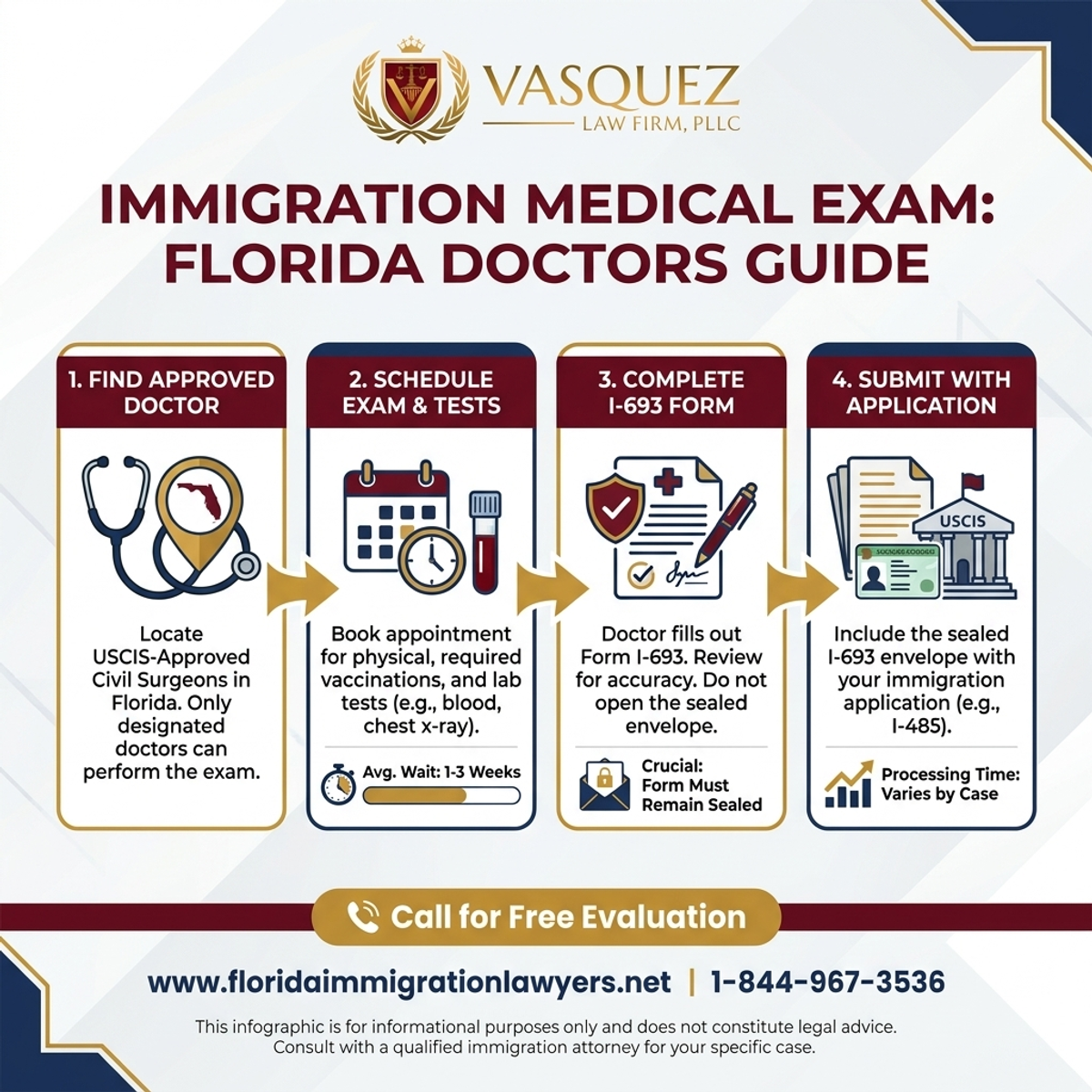
Typically, the immigration medical exam can be scheduled within a few weeks, depending on the availability of civil surgeons in Fort Lauderdale. After the exam, the doctor will provide you with a sealed envelope containing Form I-693, which must be submitted to USCIS as part of your green card application. Processing times for green card applications vary, but having a complete and accurate medical exam can help prevent delays.
It's important to be aware of the validity period of Form I-693. Generally, the form is valid for two years from the civil surgeon's signature date, provided it is submitted to USCIS within 60 days of the signature. If your I-693 expires before USCIS makes a decision on your adjustment of status application, you may be required to undergo another medical examination, incurring additional costs and further delaying your application. This highlights the importance of timely submission.
To minimize potential delays, it is often advisable to submit Form I-693 concurrently with your Form I-485 (Application to Adjust Status). While you can submit it later in response to a Request for Evidence (RFE) from USCIS, concurrent filing can sometimes expedite the process. However, if you anticipate a lengthy processing time for your I-485, submitting the I-693 later might be strategic to ensure its validity throughout the adjudication period. Consulting with Florida Immigration Lawyers can help you determine the best submission strategy for your specific case.
Staying informed about your application status is also crucial. USCIS provides online tools to track your case, and receiving an RFE for your medical exam is a clear indicator of a potential issue or expiration. Addressing any RFEs promptly and accurately, potentially with legal assistance, is vital to keeping your application on track. Proactive planning and awareness of these timelines are key to a successful adjustment of status.
Key Statistics — Immigration Medical Exam: Florida Doctors Guide
Cost Factors and Fee Breakdown
The cost of an immigration medical exam in Florida can vary depending on the doctor and location. Generally, fees range from $200 to $500. This fee typically includes the cost of the physical exam, required tests, and completion of Form I-693. Additional fees may apply for any vaccinations needed to meet USCIS requirements. It's advisable to inquire about all potential costs when scheduling your appointment.
Several factors contribute to the variation in costs. Geographic location within Florida (e.g., Fort Lauderdale vs. a smaller town), the specific civil surgeon's practice, and the scope of tests required based on your age and medical history can all influence the final price. Some clinics may offer a bundled price, while others itemize each service. Always ask for a detailed breakdown of costs upfront to avoid surprises, especially concerning additional lab work or specialist referrals.
It's important to note that most private health insurance plans in the U.S. do not cover the cost of immigration medical exams or required vaccinations, as these are considered elective procedures for immigration purposes rather than standard medical care. Therefore, you should anticipate paying out-of-pocket for these services. Inquire with the civil surgeon's office about accepted payment methods and if they offer any payment plans or discounts for cash payments.
Additional expenses can arise if you need to update several vaccinations or if your initial screening tests (like the TB skin test) require follow-up procedures such as a chest X-ray. These extra services will add to the overall cost. Being transparent with the civil surgeon's office about your existing vaccination records can help you get a more accurate estimate. Do not navigate this process alone. Contact Florida Immigration Lawyers today at 1-844-967-3536 for a free consultation.
Avoiding common pitfalls during your immigration medical exam is just as important as fulfilling the requirements. These mistakes can lead to significant delays, additional expenses, or even jeopardize your green card application. Being aware of these errors and taking proactive steps to prevent them will ensure a smoother and more efficient process for your adjustment of status.
- Not Using a USCIS-Approved Civil Surgeon: Only designated civil surgeons can perform the exam. Using an unapproved doctor will result in your I-693 being rejected, requiring a costly re-examination.
- Missing Vaccination Records: Ensure all vaccinations are documented to avoid delays. Without proper records, you may need additional blood tests or vaccinations, adding time and expense.
- Submitting an Opened I-693 Form: The form must be submitted in a sealed envelope. Opening the envelope invalidates the report, meaning you'll have to repeat the entire exam process.
- Ignoring Medical Conditions: Address all medical concerns before the exam to ensure eligibility. Undisclosed or untreated conditions, especially communicable ones, can lead to inadmissibility.
- Delaying the Exam: Schedule promptly to meet application deadlines. Procrastination can lead to the I-693 expiring before your green card application is processed, requiring a new exam.
- Overlooking Payment Methods: Confirm accepted payment methods with the surgeon's office. Many offices require payment upfront and may not accept all forms of insurance or credit cards.
- Forgetting ID Documentation: Always bring government-issued identification to the appointment. Without proper ID, the civil surgeon cannot verify your identity and perform the exam.
- Not Reviewing the Surgeon’s Credentials: Verify the surgeon's approval status via USCIS. Ensure they are currently designated and have a good reputation for immigration exams.
- Incomplete Medical History: Provide a full medical history to the surgeon. Withholding information can lead to inaccuracies on your I-693, potentially causing issues with USCIS.
When to Call a Lawyer
There are several situations where consulting with an immigration lawyer is beneficial. If you have a complex medical history or have previously been denied a green card due to health issues, legal assistance can be crucial. Additionally, if there are discrepancies or concerns during your medical exam, a lawyer can help navigate these challenges. Florida Immigration Lawyers offer comprehensive services to guide you through every step of the immigration process.
Beyond straightforward medical concerns, legal counsel becomes invaluable in cases involving waivers of inadmissibility. For example, if you are found to have a Class A medical condition that might typically make you ineligible for a green card, an experienced immigration attorney can help you explore options for obtaining a waiver. This often involves demonstrating that the condition is being managed or that it poses no significant public health risk, a complex legal undertaking requiring expert guidance.
Furthermore, if you receive a Request for Evidence (RFE) from USCIS related to your medical examination, or if your Form I-693 expires during the processing of your adjustment of status application, a lawyer can advise on the best course of action. They can help you respond to RFEs effectively, ensuring all requested information is provided accurately and promptly, or strategize on how to handle an expired medical report to minimize further delays. Contact Florida Immigration Lawyers at 1-844-967-3536 for expert assistance.
A lawyer can also be essential if you have a history that might intersect with the medical exam, such as past criminal convictions involving drug use, which could be interpreted as drug abuse or addiction. Such complexities require a nuanced understanding of both medical and immigration law to present your case favorably. Proactive legal consultation can prevent minor issues from escalating into major obstacles to your permanent residency.
About Florida Immigration Lawyers
Florida Immigration Lawyers is a leading law firm specializing in all areas of immigration law. We provide expert legal services across Florida, including Fort Lauderdale. Our team is available 24/7 to offer free consultations and guide you through the immigration process. Whether you need assistance with family immigration, citizenship, or deportation defense, we are here to help. Contact us at 1-844-967-3536 or visit our website for more information.
Our commitment extends to ensuring every aspect of your immigration journey, including the medical exam, is handled with precision and care. We understand the stress and uncertainty that can accompany these processes, and our dedicated team works tirelessly to provide clear communication, strategic advice, and unwavering support. With Florida Immigration Lawyers, you gain a trusted partner committed to achieving your immigration goals.
We pride ourselves on our deep knowledge of U.S. immigration laws and our ability to navigate complex cases, from simple green card applications to intricate waiver petitions. Our goal is to simplify the process for you, offering peace of mind and increasing your chances of a successful outcome. Don't hesitate to reach out to us for a free consultation to discuss your specific immigration medical exam concerns or any other immigration matter.
Sources and References
- U.S. Citizenship and Immigration Services (USCIS)
- Executive Office for Immigration Review (EOIR)
- 8 U.S.C. Chapter 12 - Immigration and Nationality Act
- State Department
Related services: immigration practice areas, family immigration services, citizenship and naturalization.
This article provides general legal information and is not intended as legal advice. Every case is unique, and outcomes depend on specific facts and circumstances. Contact an attorney for advice about your particular situation.
Call us today at 1-844-967-3536 for a free consultation. Se Habla Espanol - Estamos aqui para ayudarle.
If you need legal assistance, learn more about speak with an immigration lawyer, or call us at 1-844-967-3536 for a free consultation.
Do Not Navigate This Process Alone
Our experienced immigration attorneys are ready to fight for you. Get a free, confidential consultation today.
Se Habla Español
Or leave your details and we’ll call you:
Free Evaluation in 24 Hours
Or talk to us right now

AI voice assistant — available 24/7
FreeFrequently Asked Questions

William J. Vásquez
Founding Attorney · Vasquez Law Firm
U.S. Air Force veteran and immigration attorney with years of hands-on U.S. immigration experience. J.D., NCCU School of Law. AILA member. Admitted to the 4th, 5th, and 11th Circuit Courts.
Available 24/7 - Free Evaluations
Reviewed for legal accuracy by William J. Vásquez
Licensed in North Carolina; U.S. immigration is federal practice.
Related Legal Services
Our Florida immigration attorneys can help you with citizenship and naturalization, family immigration services and immigration practice areas. Call today at 1-844-967-3536 for a free consultation.
Related Links
Related Topics
Free Legal Consultation
Discuss your case with our experienced attorneys. We're available 24/7.
Se Habla Español - Estamos aquí para ayudarle.
Related Articles
Immigration Lawyer Orlando Free Consultation 2026
Discover how to find an immigration lawyer in Orlando offering a free consultation. Understand the services available and why choosing Florida Immigration Lawyers can make a difference in your case.
Military Naturalization Expedited in Florida Bases
Explore military naturalization options for families at Florida bases, including parole in place benefits in Miami. Learn how to expedite your application with expert guidance from Florida Immigration Lawyers.
Immigration Lawyer Orlando Free Consultation: Costs in 2026
Understanding the cost of an immigration lawyer in Florida for 2026 is a crucial step for anyone navigating the U.S. immigration system. From family petitions to deportation defense, attorney fees vary widely based on case complexity and legal expertise. This comprehensive guide details typical immigration pricing, factors influencing costs in areas like Hollywood and Orlando, and the importance of a free initial consultation. Learn about common mistakes to avoid, essential documents, and when to seek professional legal help. Florida Immigration Lawyers offers transparent guidance and free consultations to help you understand your options and secure your future without hidden costs. Discover how to budget for attorney fees and government filing fees, ensuring a smooth and informed immigration process.
USC Department of Public Safety: Public Charge Rule for
Learn how the public charge rule affects Florida immigrants in 2026, particularly in Jacksonville. Explore benefits, inadmissibility, and get expert guidance from Florida Immigration Lawyers.