Naturalization Ceremony ICE Concerns in Florida? Your Guide
For individuals in Florida approaching their naturalization ceremony, concerns about ICE presence are understandable but typically rare. This guide from Florida Immigration Lawyers addresses these specific worries, clarifying your rights as an applicant and a future U.S. citizen. We detail the naturalization process step-by-step, explain what to expect at the ceremony, and outline the crucial protections citizenship offers against deportation. Learn about essential documents, timelines, and cost factors, with a focus on Florida-specific considerations. Our expert advice emphasizes why legal counsel is vital to navigate complexities, especially if you have a criminal record or prior immigration issues. We help you avoid common mistakes and confidently secure your U.S. citizenship.

For individuals attending a naturalization ceremony in Florida, concerns about U.S. Immigration and Customs Enforcement (ICE) are understandable. While ICE presence at these ceremonies is rare, it's crucial to understand your rights and the legal protections available. Naturalization grants full U.S. citizenship, significantly altering your legal standing and generally removing the risk of deportation. Consulting with a Florida immigration lawyer can provide clarity and peace of mind.
- ICE presence at naturalization ceremonies is infrequent.
- Naturalization grants full citizenship, protecting against deportation.
- Know your rights, even as an applicant.
- Always seek legal advice for specific concerns.
- Understanding Naturalization and Potential ICE Presence
- Your Rights at a Naturalization Ceremony in Florida
- The Naturalization Process: A Step-by-Step Guide
- Essential Documents for Your Naturalization Interview and Ceremony
- Navigating Naturalization Timelines and Expectations in Florida
- Understanding the Costs of Naturalization
- Florida-Specific Considerations for Naturalization Applicants
- Protecting Your Future: Why Legal Counsel is Crucial
- Common Mistakes to Avoid During Naturalization
- When to Call a Lawyer
- Frequently Asked Questions About Naturalization Ceremony ICE Concerns
- About Florida Immigration Lawyers
- Legal Disclaimer
- Ready to Secure Your Citizenship?
Introduction: Securing Your Future as a U.S. Citizen
The journey to U.S. citizenship is a significant milestone for many immigrants in Florida. It represents the culmination of years of effort and a commitment to building a new life. However, for some, the final step-the naturalization ceremony-can bring unexpected anxieties, particularly regarding potential interaction with U.S. Immigration and Customs Enforcement (ICE).
You may be wondering, "Are there naturalization ceremony ICE concerns in Florida?" This comprehensive guide from Florida Immigration Lawyers aims to address these worries directly. We understand your desire for peace of mind as you approach this momentous occasion. Our goal is to provide clear, actionable information so you can confidently navigate the final stages of your immigration journey.
We will explore the realities of ICE presence at naturalization events, explain your rights, and offer practical advice to ensure a smooth path to citizenship. If you have immediate concerns or need personalized guidance, do not hesitate. Call Florida Immigration Lawyers at 1-844-967-3536 for a free consultation today.
Understanding Naturalization and Potential ICE Presence
Becoming a U.S. citizen through naturalization is a profound legal process. It grants you all the rights and responsibilities of native-born citizens. For many, this includes the peace of mind that comes with knowing you are no longer subject to certain immigration enforcement actions, such as deportation.
Despite this, naturalization ceremony ICE concerns can arise. Rumors or isolated incidents can make applicants in Tallahassee and across Florida apprehensive. It's important to separate fact from speculation to fully understand your situation.
What is Naturalization?
Naturalization is the process by which a lawful permanent resident (Green Card holder) applies to become a U.S. citizen. This process is overseen by U.S. Citizenship and Immigration Services (USCIS). Eligibility typically requires a period of continuous residence, good moral character, knowledge of U.S. history and government, and a willingness to take the Oath of Allegiance. Upon successful naturalization, you become a full U.S. citizen, with the right to vote, hold a U.S. passport, and generally be free from deportation. This is a critical distinction that underscores the importance of this step in your citizenship journey.
The Role of ICE in Immigration Enforcement
ICE is the principal investigative arm of the U.S. Department of Homeland Security (DHS) for immigration enforcement. Their mission includes identifying, arresting, and deporting non-citizens who violate U.S. immigration laws. ICE operations typically focus on individuals who pose a public safety threat, have criminal convictions, or have violated immigration statutes.
While ICE has broad authority, their presence at USCIS naturalization ceremonies is **highly unusual and infrequent**. Such ceremonies are celebratory events, marking the successful completion of a rigorous process. Historically, USCIS and ICE have maintained a clear distinction in their roles, with USCIS facilitating legal immigration and ICE enforcing immigration laws. However, it is essential to remain informed about your rights, especially given the dynamic nature of immigration policies.
Your Rights at a Naturalization Ceremony in Florida
Even as an applicant awaiting your Oath of Allegiance, you possess certain rights. Understanding these rights can alleviate stress and empower you to act appropriately if questions about naturalization ceremony ICE concerns arise. Remember, the ceremony is the final step before you become a full citizen.
If you have a pending naturalization application, you are generally still considered a lawful permanent resident. This status provides significant protections, though not the full scope of a U.S. citizen's rights. It is vital to know the difference and how to assert your rights.
Knowing Your Rights as an Applicant
- Right to Remain Silent: You have the right to refuse to answer questions from law enforcement, including ICE agents, if you are not under arrest. You can state, "I do not wish to answer any questions without my attorney present."
- Right to an Attorney: You have the right to speak with an attorney before answering any questions from ICE. Do not waive this right.
- Do Not Sign Documents Voluntarily: Do not sign anything you do not understand or that waives your rights without consulting an attorney.
- Do Not Consent to Searches: You have the right to refuse a search of your person, belongings, or home without a warrant.
- Record Interactions: If safe to do so, you may record interactions with law enforcement.
These rights are fundamental. In the rare event of an ICE presence at a naturalization ceremony in Tallahassee or elsewhere in Florida, asserting these rights can be crucial. For more information on your rights, refer to reliable sources like the USCIS Policy Manual on naturalization.
The Naturalization Process: A Step-by-Step Guide
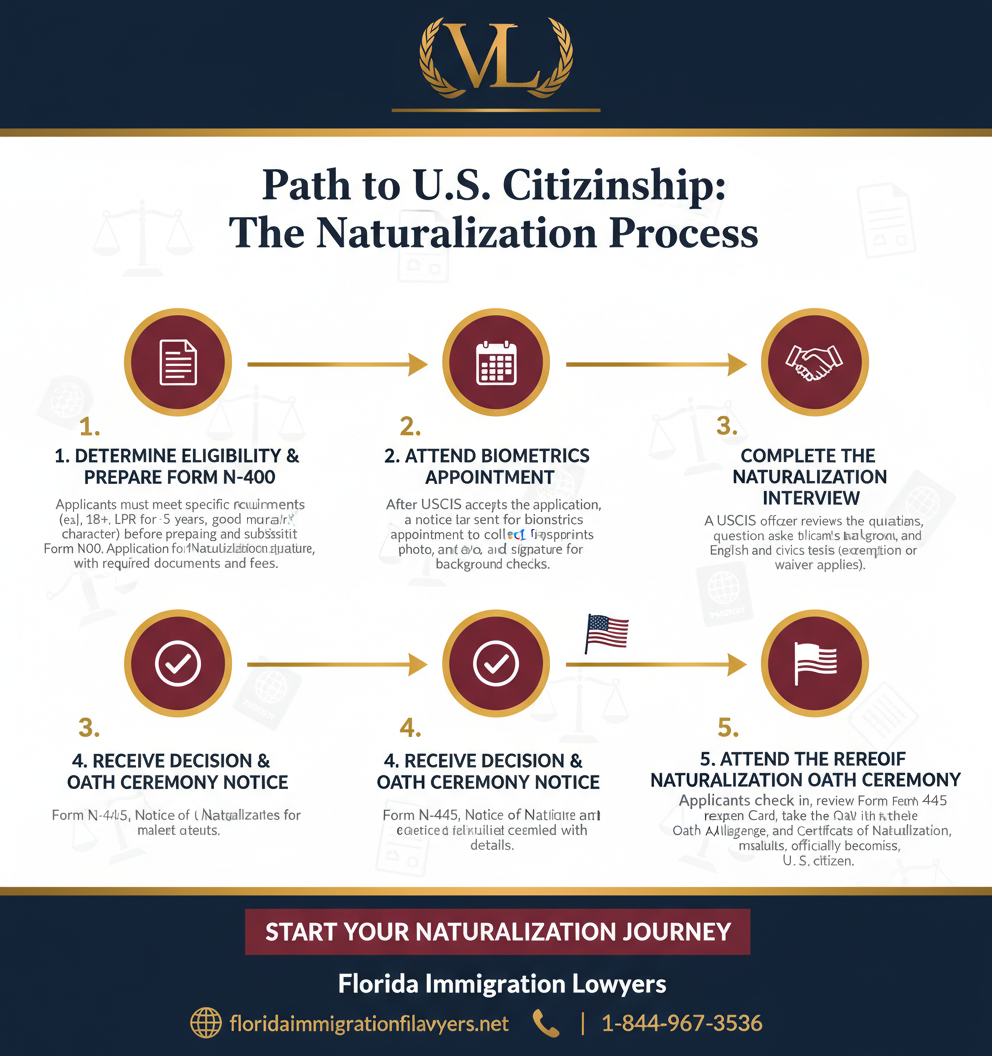
The path to becoming a U.S. citizen involves several key stages, each requiring careful attention to detail. Understanding each step can help alleviate any naturalization ceremony ICE concerns by clarifying what to expect. This process is handled by USCIS, not primarily by ICE.
- Determine Your Eligibility: First, ensure you meet all requirements for naturalization. This typically includes age, continuous residence, physical presence, good moral character, English proficiency, and knowledge of U.S. civics. Most applicants must be at least 18 years old and have been a lawful permanent resident for at least five years, or three years if married to a U.S. citizen.
- Prepare and File Form N-400: Complete Form N-400, Application for Naturalization, accurately and thoroughly. Gather all necessary supporting documents. Any inaccuracies or omissions can cause delays or raise red flags.
- Biometrics Appointment: After filing, you will receive an appointment notice for a biometrics screening. This involves fingerprinting, photographs, and a signature for background checks.
- Naturalization Interview: You will attend an interview with a USCIS officer. During this interview, the officer will review your N-400 application, test your English reading, writing, and speaking abilities, and assess your knowledge of U.S. civics. They will also determine if you meet the good moral character requirement.
- Receive a Decision: Following the interview, USCIS will issue a decision. This could be an approval, a request for more evidence, or a denial. If approved, you will receive a notice for your Oath of Allegiance ceremony.
- Oath of Allegiance Ceremony: This is the final step! You will attend a public ceremony and take the Oath of Allegiance to the United States. Upon taking the oath, you officially become a U.S. citizen. Immediately after, you will receive your Certificate of Naturalization. This document is proof of your citizenship.
Throughout this process, it is important to comply with all USCIS requests and attend all scheduled appointments. Any issues, such as past criminal history or immigration violations, could potentially lead to complications, including referral to ICE. This is why having legal counsel from a firm like Florida Immigration Lawyers is invaluable, especially if you have any deportation defense concerns.
Essential Documents for Your Naturalization Interview and Ceremony
Being well-prepared with all required documents is crucial for a smooth naturalization process, minimizing any potential for delays or complications that might inadvertently trigger naturalization ceremony ICE concerns. USCIS expects applicants to bring specific items to both their interview and the Oath of Allegiance ceremony.
Gathering these documents in advance and organizing them carefully will help demonstrate your readiness and eligibility. It also allows you to focus on the interview questions and the significance of the ceremony itself. Always bring originals and copies as requested.
- ✓ Your interview appointment notice.
- ✓ Your Permanent Resident Card (Green Card).
- ✓ Your passport and any re-entry permits or travel documents.
- ✓ State-issued identification (e.g., Florida driver's license or state ID).
- ✓ All documents you submitted with your N-400 application, including originals.
- ✓ Any evidence of changes to your marital status (e.g., marriage certificate, divorce decree).
- ✓ If applicable, documents related to any arrests, citations, or criminal charges, even if dismissed.
- ✓ Proof of payment for child support or alimony, if applicable.
- ✓ For the ceremony: Your Oath of Allegiance notice and your Green Card (which will be collected).
Failing to bring required documents can lead to delays or even rescheduling. This can prolong the process and potentially increase anxiety. Double-checking your checklist is always a good practice before any USCIS appointment in Florida.
Navigating Naturalization Timelines and Expectations in Florida
The naturalization process timeline can vary significantly. Factors include the specific USCIS field office processing your application, the completeness of your application, and current caseloads. Understanding these timelines can help manage your expectations and reduce stress related to any potential naturalization ceremony ICE concerns due to prolonged waiting periods.
In Florida, applicants in cities like Tallahassee, Miami, Orlando, and Tampa will have their cases processed by their respective USCIS field offices. Processing times are regularly updated on the USCIS website. It is wise to monitor these times and plan accordingly.
Typically, the entire process from filing Form N-400 to attending the Oath of Allegiance ceremony can take anywhere from 6 months to over a year, or even longer in some complex cases. As of early 2026, general processing times for the N-400 application in Florida USCIS field offices (e.g., Miami, Orlando, Tampa) can range from 10 to 18 months. These are estimates, and individual cases may differ. You can check your case status online using the receipt number provided by USCIS.
Do not navigate this process alone. Contact Florida Immigration Lawyers today.
Understanding the Costs of Naturalization
The financial aspect of naturalization is an important consideration for many applicants in Florida. While the dream of citizenship is priceless, there are fees associated with the application process. These costs are set by USCIS and are subject to change. It's crucial to budget for these expenses to avoid any financial hurdles that could delay your application and inadvertently prolong any naturalization ceremony ICE concerns.
The primary cost is the filing fee for Form N-400, Application for Naturalization. Additionally, there is a separate biometrics fee. USCIS may offer fee waivers for eligible applicants who demonstrate an inability to pay. You should check the official USCIS website for the most current fee schedule and fee waiver eligibility requirements.
Beyond government fees, you might also incur costs for professional photographs, obtaining certified copies of documents (like birth certificates or marriage licenses), and translation services if your documents are not in English. Furthermore, many applicants choose to hire an experienced Florida immigration lawyer to assist with their application. While this is an additional expense, legal representation can be invaluable. It ensures your application is accurately prepared, all eligibility requirements are met, and you are thoroughly prepared for the interview. This investment can save you time, reduce stress, and significantly increase your chances of a successful outcome.
Florida-Specific Considerations for Naturalization Applicants
While the naturalization process is federal, certain local factors in Florida can influence your experience. Understanding these can help you better prepare for your journey to citizenship and address any specific naturalization ceremony ICE concerns that might be unique to the state.
Florida is a diverse state with several major USCIS field offices in cities like Miami, Orlando, and Tampa, which serve applicants from surrounding areas, including Tallahassee. Each office may have slightly different processing times or scheduling nuances. Additionally, Florida's large immigrant population means these offices handle a high volume of applications, which can affect wait times.
Our state also has a significant number of immigration courts, such as the ones in Miami and Orlando, which are part of the Executive Office for Immigration Review (EOIR) under the Department of Justice. If an applicant has any prior immigration issues or removal proceedings, these courts play a crucial role. For example, individuals who have been in removal proceedings but adjusted status to a green card holder may have unique considerations during naturalization. Consulting with a Florida immigration lawyer who is familiar with local USCIS practices and immigration court procedures is highly recommended to navigate these complexities effectively.
Protecting Your Future: Why Legal Counsel is Crucial
Navigating the complex world of immigration law, especially when facing naturalization ceremony ICE concerns, is best done with expert guidance. While many individuals successfully naturalize on their own, certain situations make legal representation not just helpful, but essential. An experienced Florida immigration lawyer can provide invaluable support and protection throughout the entire process.
Florida Immigration Lawyers stands ready to assist you. Our attorneys are deeply familiar with USCIS procedures and current immigration enforcement policies. We understand the specific anxieties that can arise in our state. We can help you prepare a strong application, anticipate potential challenges, and represent you effectively.
Having an attorney by your side can:
- Ensure your N-400 application is accurate and complete, reducing delays.
- Prepare you thoroughly for your naturalization interview, including civics and English tests.
- Advise you on specific issues like criminal history, prior immigration violations, or extended absences from the U.S.
- Represent you if any unexpected issues arise during your interview or ceremony.
- Provide clarity on your rights as an applicant and what to do if you encounter ICE.
Your journey to citizenship is too important to leave to chance. Let us help you achieve your dream of becoming a U.S. citizen with confidence. Visit our attorneys page to learn more about our team.
Common Mistakes to Avoid During Naturalization
- Failing to Disclose All Information: Not being completely honest about your criminal history, marital status, or past immigration issues on your N-400 can lead to delays, denials, and even accusations of fraud. USCIS conducts thorough background checks.
- Missing Deadlines or Appointments: Failing to respond to Requests for Evidence (RFEs) or missing your biometrics or interview appointments can result in your application being denied or abandoned. Always respond promptly and attend all scheduled events.
- Lack of English or Civics Preparation: Many applicants underestimate the English and civics tests. Inadequate preparation can lead to failing the interview and needing to reschedule, prolonging your journey.
- Assuming Eligibility: Do not assume you meet all naturalization requirements, especially regarding continuous residence or good moral character. Specific events, even minor ones, can impact your eligibility.
- Traveling Without Caution: Traveling outside the U.S., especially for extended periods, after filing your N-400 can jeopardize your continuous residence requirement or even lead to issues upon re-entry. Consult with an attorney before significant travel.
- Ignoring Changes in Your Life: If your marital status, address, or employment changes after filing your N-400, you must update USCIS. Failure to do so can lead to an inaccurate application and potential problems.
- Not Seeking Legal Advice for Complex Cases: If you have any criminal record, a history of immigration violations, or a complicated travel history, attempting naturalization without an attorney can be a significant risk. These are the situations where naturalization ceremony ICE concerns might be heightened.
When to Call a Lawyer
While the naturalization process aims to be straightforward, certain circumstances warrant immediate legal consultation. If you find yourself in any of the following situations, contacting Florida Immigration Lawyers is highly advisable to address any naturalization ceremony ICE concerns or other complexities:
- You have a criminal record, even for minor offenses.
- You have previously been in removal or deportation proceedings.
- You have spent extended periods outside the U.S. since becoming a permanent resident.
- You have received a Request for Evidence (RFE) from USCIS.
- You are concerned about your ability to pass the English or civics tests.
- You have received a Notice of Intent to Deny (NOID) your application.
- You have any doubts about your eligibility or good moral character.
- You are worried about ICE presence at your interview or ceremony, or have had prior encounters with immigration enforcement.
- You need assistance with a family immigration petition that impacts your naturalization.
- You are seeking to naturalize through business immigration avenues.
Our firm, Florida Immigration Lawyers, offers comprehensive services to guide you through every step. We can help you understand your unique situation and provide the best strategy for a successful naturalization outcome. We serve clients across Florida, including Tallahassee and surrounding communities.
Frequently Asked Questions About Naturalization Ceremony ICE Concerns
Do naturalized citizens have to worry about ICE?
Once you become a naturalized U.S. citizen, you generally gain full protection against deportation. This means ICE cannot deport you, and their jurisdiction over you as an immigrant ceases. However, in extremely rare circumstances, citizenship can be revoked if it was obtained through fraud or misrepresentation. This is a very serious and difficult process for the government to prove. For the vast majority of naturalized citizens, the worries about ICE enforcement are a thing of the past. It is a fundamental benefit of citizenship.
Can ICE deport you if you are a naturalized citizen?
As a naturalized U.S. citizen, you cannot be deported by ICE, except in the most extreme and rare cases where your citizenship is proven to have been obtained fraudulently or illegally. The process to revoke citizenship, known as denaturalization, is complex and requires a federal court order. It is not something ICE can do unilaterally. Once you take the Oath of Allegiance and receive your Certificate of Naturalization, you generally hold the same rights and protections as a native-born citizen, including protection from removal.
What to do if you are an American citizen and questioned by ICE?
If you are a U.S. citizen (whether naturalized or native-born) and questioned by ICE, you have specific rights. First, clearly state that you are a U.S. citizen. You are not required to carry proof of citizenship, but it can be helpful to have your Certificate of Naturalization or U.S. passport. You have the right to remain silent and should state that you do not wish to answer questions without an attorney. Do not sign anything you do not understand. If you are detained, immediately ask to speak with a lawyer. Contact Florida Immigration Lawyers for assistance.
Is it illegal for ICE to ask for proof of citizenship?
ICE agents are permitted to ask individuals about their immigration status, including whether they are U.S. citizens and to provide proof. However, you are generally not legally obligated to answer their questions or provide documents on the spot unless they have a warrant or reasonable suspicion of an immigration violation. If you are a U.S. citizen, you have the right to remain silent. It is advisable to politely state that you are a U.S. citizen and that you do not wish to answer further questions without your attorney present. Carrying proof of citizenship, such as your U.S. passport or Certificate of Naturalization, can sometimes expedite interactions.
How often is ICE present at naturalization ceremonies?
ICE presence at naturalization ceremonies is extremely rare. These events are celebratory and are primarily managed by USCIS. While ICE has broad enforcement authority, their typical operations do not involve targeting individuals at citizenship ceremonies. Any reports of ICE presence are usually isolated incidents or based on misinformation. The focus of these ceremonies is on welcoming new citizens, not on enforcement. However, if there were a specific, credible threat or a person with an outstanding warrant, law enforcement could potentially be present, though this is not typical.
What if I have a criminal record and am worried about my ceremony?
If you have a criminal record, even a minor one, it is critical to consult with an experienced immigration attorney before your naturalization interview or ceremony. Certain criminal offenses can impact your "good moral character" requirement and may make you inadmissible or deportable, even as a lawful permanent resident. While USCIS aims to make a final determination before the ceremony, any unrevealed or new issues could potentially arise. An attorney can assess your record, advise on its impact, and represent you to mitigate any risks, helping to prevent any unforeseen naturalization ceremony ICE concerns.
What happens immediately after taking the Oath of Allegiance?
Immediately after taking the Oath of Allegiance at your naturalization ceremony, you will receive your Certificate of Naturalization. This is your official proof of U.S. citizenship. You should keep this document safe, as it is extremely important. At this point, you will typically surrender your Permanent Resident Card (Green Card) to USCIS. You can then apply for a U.S. passport and register to vote. Your status officially changes from lawful permanent resident to U.S. citizen the moment you take the oath.
Are there any Florida-specific ICE concerns for naturalization?
While the laws governing naturalization and ICE enforcement are federal, local enforcement priorities and the size of Florida's immigrant population can sometimes lead to heightened anxiety. However, there are no specific Florida state laws that increase the likelihood of ICE presence at naturalization ceremonies compared to other states. Concerns are generally universal. Working with a local Florida immigration lawyer can provide reassurance, as they are familiar with the practices of USCIS field offices in Miami, Orlando, and Tampa, and can offer tailored advice based on the local context and any specific developments.
About Florida Immigration Lawyers
Florida Immigration Lawyers is a leading immigration law firm dedicated to serving individuals and families across the entire state of Florida. We understand the profound impact that immigration matters have on your life, and we are committed to providing compassionate, effective, and results-driven legal representation.
Our team of experienced immigration attorneys offers a full range of services, including naturalization and citizenship applications, family-based petitions, employment visas, asylum claims, and deportation defense. We pride ourselves on offering personalized attention and strategic advice tailored to your unique situation.
Why choose Florida Immigration Lawyers?
- Experienced Advocates: Our attorneys possess extensive knowledge of U.S. immigration law.
- Client-Centered Approach: We prioritize your needs and communicate clearly throughout your case.
- Bilingual Services: We offer services in both English and Spanish to ensure effective communication.
- Statewide Reach: Proudly serving all of Florida, from Tallahassee to Miami.
- Free Consultations: We offer free consultations to discuss your case and outline your options.
We are available 24/7 to answer your questions and provide the support you need. Contact us today to schedule your free consultation and take the next step towards securing your immigration future. Phone: 1-844-967-3536. Website: https://www.floridaimmigrationlawyers.net.
Legal Disclaimer
This article is for general informational purposes only and does not constitute legal advice. Immigration laws change frequently. For advice specific to your situation, please consult with a qualified immigration attorney.

Ready to Secure Your Citizenship?
Do not let naturalization ceremony ICE concerns or the complexities of the immigration system deter you from achieving your dream of U.S. citizenship. The path to becoming a U.S. citizen is a rewarding one, and having experienced legal counsel by your side can make all the difference.
Florida Immigration Lawyers is here to provide the expert guidance and support you need. We are dedicated to helping you navigate every step of the naturalization process with confidence and peace of mind. Contact us today for a free, no-obligation consultation to discuss your case. Call us at 1-844-967-3536 and let us help you secure your future as a proud U.S. citizen.
Do Not Navigate This Process Alone
Our experienced immigration attorneys are ready to fight for you. Get a free, confidential consultation today.
Se Habla Español
Frequently Asked Questions
Vasquez Law Firm
Immigration Attorney | Founder, Vasquez Law Firm
U.S. Air Force veteran and immigration attorney with thousands of cases resolved. J.D., NCCU School of Law. AILA member. Admitted to the 4th, 5th, and 11th Circuit Courts.
Available 24/7 - Free Evaluations
Related Legal Services
Our Florida immigration attorneys can help you with free immigration consultation, experienced immigration attorneys and business immigration. Call today at 1-844-967-3536 for a free consultation.
Related Links
Related Topics
Free Legal Consultation
Discuss your case with our experienced attorneys. We're available 24/7.
Se Habla Español - Estamos aquí para ayudarle.
Related Articles
Stokes Interview: Navigating Marriage Fraud in Florida
A Stokes interview is a specialized, separate interview conducted by USCIS when there are suspicions of marriage fraud in a green card application. This rigorous process involves individual questioning of spouses, focusing on inconsistencies in their testimonies to determine the authenticity of their marital bond. For couples in Florida, navigating this high-stakes interview requires meticulous preparation, extensive documentation, and often the strategic guidance of an experienced immigration lawyer. Understanding the process, preparing for detailed questions, and presenting a strong case are crucial for overcoming marriage fraud allegations and securing your immigration future. Florida Immigration Lawyers stands ready to assist you.
Immigration Attorney Gainesville: North Florida Legal Help
For those in Gainesville, Alachua County, and throughout North Florida, navigating U.S. immigration law requires expert guidance. An experienced immigration attorney can simplify complex processes, from family-based petitions and employment visas to critical asylum claims and deportation defense. This comprehensive guide outlines the essential services provided by an immigration attorney, details necessary documentation, clarifies processing timelines, and discusses associated costs. We also highlight common mistakes to avoid and crucial scenarios where legal counsel is indispensable. Florida Immigration Lawyers serves all of Florida, including Gainesville and St. Petersburg, providing dedicated legal support to help you achieve your immigration goals. Contact us for a free consultation to discuss your specific needs.
Military Naturalization Expedited at Florida Bases
Explore expedited military naturalization processes for service members at Florida bases like MacDill. Learn about eligibility, steps, and common mistakes. Contact Florida Immigration Lawyers for a free consultation.
Protect Yourself from Immigration Scams in Florida
Learn how to protect against immigration scams in Florida, focusing on St. Petersburg. This guide covers identifying scams, verifying credentials, and getting legal help. Call Florida Immigration Lawyers at 1-844-967-3536 for assistance.