Immigration Backlog Solutions in Florida
Facing an immigration backlog in Florida can be challenging. Discover solutions tailored for Coral Springs and beyond, and contact Florida Immigration Lawyers for expert assistance.

Immigration Backlog Solutions in Florida | VLF Florida
Navigating the U.S. immigration system can be a complex and often frustrating journey, especially when faced with significant processing delays and backlogs. In Florida, a state with a large and diverse immigrant population, these delays can have profound impacts on individuals, families, and businesses, leading to prolonged uncertainty, separation, and missed opportunities. At VLF Florida, we understand the immense challenges posed by immigration backlogs and are dedicated to helping our clients find effective, timely solutions. This comprehensive guide will delve into the root causes of these persistent delays, explore the various types of immigration cases most affected, and outline the proactive steps and strategic legal avenues available to help you navigate the system more efficiently and confidently.
Understanding the Immigration Backlog in Florida
The term "immigration backlog" refers to the accumulation of pending immigration applications and petitions that exceed the processing capacity of government agencies like U.S. Citizenship and Immigration Services (USCIS) and the Department of State (DOS). While backlogs are a nationwide issue, Florida's high volume of immigration cases often means residents experience some of the longest wait times, impacting everything from family reunification to employment opportunities.
Why Do Immigration Backlogs Occur?
- Increased Demand: A steady rise in the number of applications for visas, green cards, and naturalization often outpaces USCIS's ability to process them.
- Resource Limitations: USCIS, primarily funded by application fees, can face staffing and technological constraints, especially during economic downturns or periods of fluctuating application rates.
- Policy Changes: New immigration policies, increased scrutiny, or shifts in processing priorities can slow down the entire system, sometimes dramatically.
- Security Checks: Enhanced background and security checks, while crucial for national security, add layers of processing time that can extend for months or even years.
- COVID-19 Impact: The global pandemic significantly disrupted USCIS operations, leading to office closures, reduced staffing, and a massive accumulation of unprocessed cases that continue to affect current processing times.
- Visa Bulletin Quotas: For many family-sponsored and employment-based categories, annual visa quotas limit the number of green cards issued each year, creating long waiting lists based on an applicant's "priority date."
These factors combine to create a challenging environment for immigrants in Florida, leading to uncertainty, prolonged separation from family, and delays in employment opportunities and achieving permanent residency.
Types of Immigration Cases Most Affected by Delays
Nearly every type of immigration application can be impacted by backlogs, but some categories are particularly vulnerable, leading to significant stress and uncertainty for applicants:
- Family-Based Petitions (I-130): Spouses, children, and parents of U.S. citizens and lawful permanent residents often face multi-year waits, especially for categories with annual quotas that create a backlog stretching for decades in some cases.
- Employment-Based Petitions (I-140, PERM): Skilled workers, professionals, and investors can experience significant delays in obtaining their green cards, impacting their ability to live and work permanently in the U.S. and hindering economic growth.
- Adjustment of Status (I-485): For those already in the U.S. seeking to adjust their status to permanent resident, delays can mean extended periods on temporary visas or employment authorization documents, creating instability.
- Naturalization (N-400): Even after meeting residency requirements, the process to become a U.S. citizen can be lengthy, delaying civic participation, voting rights, and travel benefits.
- Asylum Applications (I-589): Asylum seekers, particularly those whose cases are not processed quickly, can face immense uncertainty and prolonged stays in a precarious legal status, often unable to work or reunite with family. Learn more about asylum law and how we can help.
- Deportation Defense Cases: While not a "backlog" in the traditional sense, delays in immigration court proceedings can prolong uncertainty for individuals facing removal, extending their legal battles and emotional toll. Explore our deportation defense services.
Strategies and Solutions for Navigating Immigration Backlogs
While you cannot control the entire system, there are proactive steps and legal strategies you can employ to mitigate the impact of backlogs and potentially expedite your case. Partnering with an experienced immigration attorney is often the most effective way to navigate these complexities.
Proactive Measures for Applicants
- Submit Accurate and Complete Applications: The most common cause of delays is incomplete or incorrect paperwork. Ensure all forms are filled out meticulously, all required supporting documents are included, and fees are paid correctly.
- Respond Promptly to RFEs (Requests for Evidence): If USCIS sends an RFE, respond thoroughly and quickly with all requested information. Delays in responding will directly prolong your case.
- Keep Copies of Everything: Maintain a well-organized file of all submitted documents, correspondence, and receipts. This is invaluable if you need to inquire about your case or re-submit information.
- Stay Informed: Regularly check your case status online through the USCIS website. Sign up for email and text alerts. Understand the Visa Bulletin if your category is quota-based.
- Update Your Address: If you move, promptly update your address with USCIS to ensure you receive all correspondence without delay.
Legal Avenues and Advocacy
- USCIS Service Requests: If your case is outside normal processing times, you can submit a service request online or by phone to inquire about its status.
- Contact the USCIS Ombudsman: For cases experiencing significant and unreasonable delays, the Office of the Citizenship and Immigration Services Ombudsman can provide assistance in resolving issues and cutting through bureaucratic red tape.
- Congressional Inquiry: Your U.S. Senator or Representative can submit an inquiry on your behalf. While they cannot influence the outcome, they can help ascertain the status of your case and sometimes prompt action.
- Premium Processing: For certain employment-based petitions and some other forms, premium processing is available for an additional fee, guaranteeing a decision within a specific timeframe (usually 15 calendar days).
- Mandamus Lawsuit: In extreme cases of unreasonable delay where all administrative remedies have been exhausted, a "Writ of Mandamus" lawsuit can be filed in federal court to compel USCIS to make a decision on your case. This is a serious legal step that requires experienced counsel.
- Working with an Experienced Immigration Attorney: An attorney can provide invaluable assistance by:
- Ensuring your application is perfectly prepared and submitted.
- Monitoring your case status and identifying potential issues early.
- Communicating with USCIS on your behalf, often with greater efficacy.
- Advising on the best strategies to address delays, including service requests, ombudsman contact, or even mandamus actions.
- Representing you in interviews or court proceedings, providing expert guidance and advocacy.
For comprehensive legal support, contact our experienced immigration attorneys today.
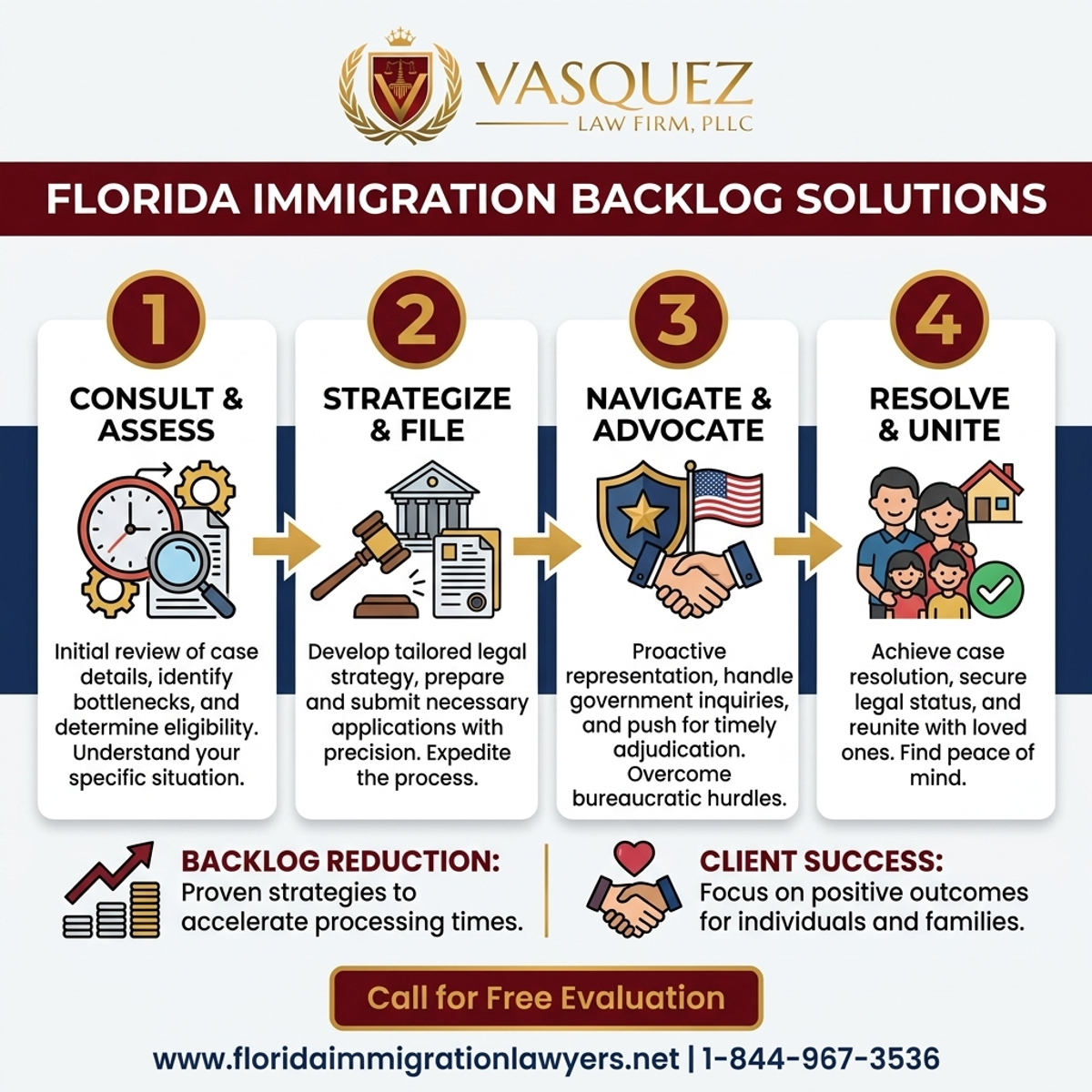
Step-by-Step Process — Immigration Backlog Solutions in Florida | VLF Florida
Monitoring and Follow-up: Staying Ahead of the Curve
Even with a perfectly filed application, the immigration process requires ongoing vigilance. Proactive monitoring and timely follow-up are critical, especially when dealing with backlogs. Your attorney at VLF Florida will help you:
- Track Case Status Regularly: We utilize USCIS online tools and direct communication channels to keep abreast of any updates or changes to your case status, ensuring nothing is missed.
- Interpret USCIS Notifications: Understanding RFEs, Notices of Intent to Deny (NOID), or interview notices can be complex. We provide clear explanations and guide you through the appropriate responses to protect your case.
- Address Errors or Discrepancies: If USCIS makes an error in your case, we can help you file motions to reconsider or reopen, or other appropriate legal challenges to correct the record.
- Prepare for Interviews: Many immigration processes require an interview. We will thoroughly prepare you for what to expect, helping you gather necessary documents and practice responding to potential questions, ensuring you are confident and ready.
- Advocate for Expedited Processing: In certain humanitarian or urgent circumstances, it may be possible to request expedited processing. We can assess if your case qualifies and assist in preparing a compelling request to USCIS.
Our commitment extends beyond initial filing; we are your dedicated partners throughout the entire immigration journey, constantly working to minimize delays and advocate for the swiftest possible resolution.
Specific Challenges and Solutions for Florida Residents
Florida's unique position as a major hub for international migration presents distinct challenges and opportunities when dealing with immigration backlogs. The state is home to several USCIS field offices, asylum offices, and immigration courts, each with its own caseload and processing nuances. Residents in Miami, Orlando, Tampa, and other major metropolitan areas often experience the brunt of high application volumes, which can exacerbate processing times.
One significant challenge is the sheer diversity of cases. Florida sees a high number of family-based petitions, asylum claims, and humanitarian parole requests, alongside a robust demand for employment-based visas in sectors like tourism, agriculture, and technology. This diverse caseload can lead to varying processing priorities and longer waits for certain categories. For instance, the Miami Field Office, being one of the busiest, might have different processing times compared to a smaller office, even for the same type of application. Understanding these localized trends is vital.
Furthermore, Florida's proximity to the Caribbean and Latin America means a significant number of individuals arrive seeking protection or family reunification, often initiating complex legal processes that can be prone to delays. Understanding the specific local USCIS office trends and how they impact your case is crucial. For example, knowing which service center is handling your application (e.g., California, Nebraska, Texas, Vermont) and its current processing times can help set realistic expectations and inform strategy. Additionally, local policy interpretations and resource allocations can sometimes create unique bottlenecks for Florida applicants.
At VLF Florida, we leverage our deep understanding of both national immigration law and the specific operational dynamics of Florida's immigration infrastructure. Our attorneys are familiar with the local USCIS offices and courts, allowing us to provide tailored advice. We can help you navigate the complexities of specific Florida-based challenges, whether it's understanding local interview backlogs, addressing issues with particular field offices, or preparing for interviews in a high-volume environment. Our goal is to provide localized, effective immigration legal services that account for Florida's unique context, ensuring your case receives the attention and strategic planning it deserves. We are committed to helping our clients in Florida overcome these hurdles and achieve their immigration goals.
The Role of VLF Florida in Addressing Backlogs
At VLF Florida, we pride ourselves on being a beacon of hope and guidance for immigrants navigating the complex U.S. system. Our team of dedicated attorneys specializes in a wide range of immigration matters, including those significantly impacted by backlogs. We understand that every case is unique, and we are committed to providing personalized attention and strategic solutions.
We provide personalized legal strategies designed to address the specific challenges of your case. From meticulously preparing and reviewing your application to filing necessary follow-ups and, when appropriate, pursuing advanced legal remedies like mandamus actions, we are with you every step of the way. Our goal is not just to file paperwork, but to actively advocate for your rights and push your case forward, striving for the most favorable and timely outcome possible.
Don't let immigration backlogs derail your dreams or put your future on hold. The path to achieving your immigration goals in Florida, while challenging, is navigable with the right legal support. By partnering with VLF Florida, you gain access to a team of experienced legal professionals who are not only well-versed in immigration law but also deeply committed to your success. We are here to demystify the process, advocate on your behalf, and provide the strategic guidance needed to overcome even the most daunting delays.
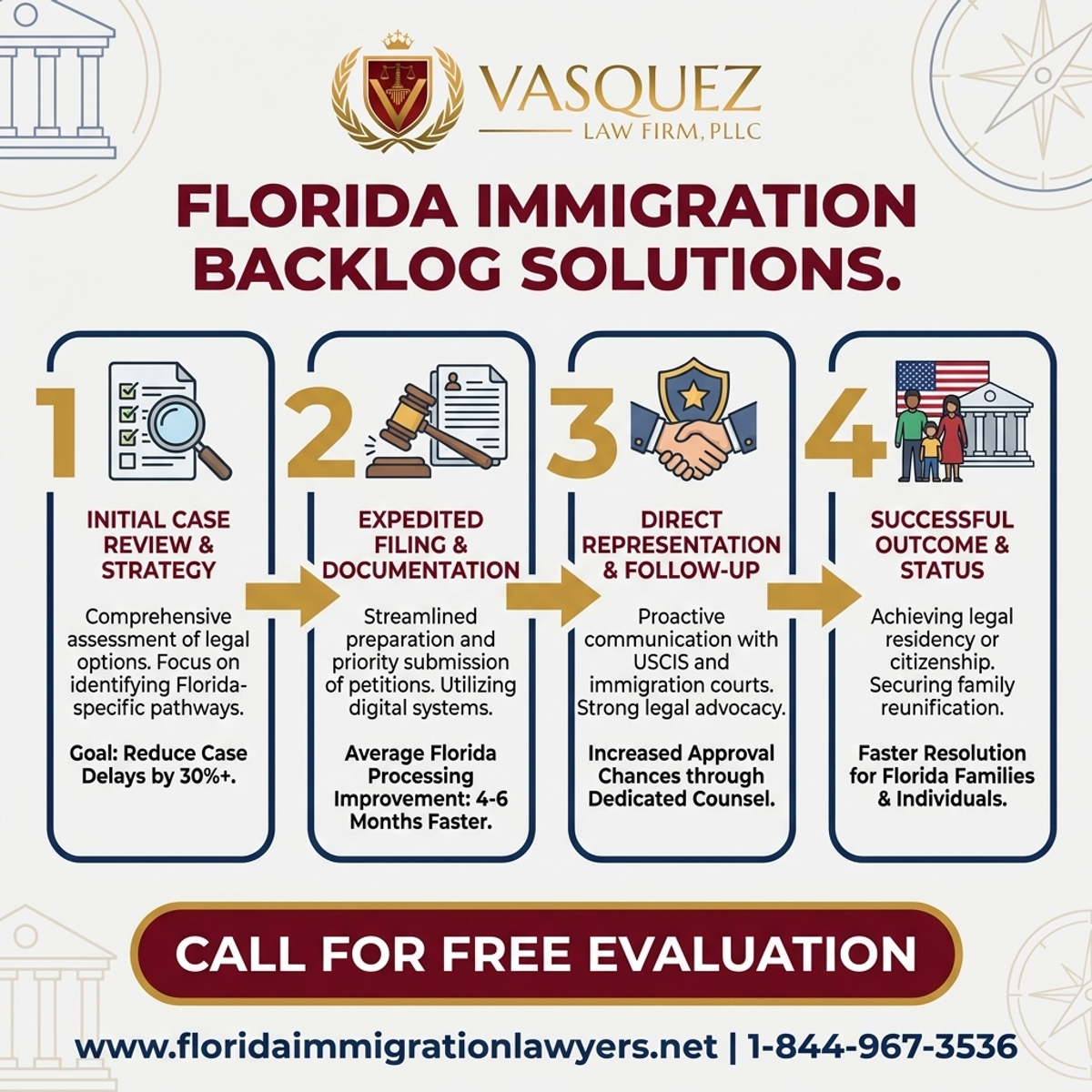
Key Statistics — Immigration Backlog Solutions in Florida | VLF Florida
Take control of your future by partnering with legal experts who understand the system and are committed to your success. Contact VLF Florida today for a free consultation. Let us help you explore your options and develop a robust strategy to overcome processing delays and achieve your immigration goals in Florida. Call us at (844) 967-3536 to speak with a knowledgeable attorney.
Sources and References
- U.S. Citizenship and Immigration Services (USCIS)
- Executive Office for Immigration Review (EOIR)
- U.S. Department of State - Bureau of Consular Affairs
- Immigration and Nationality Act (INA), 8 U.S.C. Chapter 12
Do Not Navigate This Process Alone
Our experienced immigration attorneys are ready to fight for you. Get a free, confidential consultation today.
Se Habla Español
Frequently Asked Questions

William J. Vásquez
Founding Attorney · Vasquez Law Firm
U.S. Air Force veteran and immigration attorney with thousands of cases resolved. J.D., NCCU School of Law. AILA member. Admitted to the 4th, 5th, and 11th Circuit Courts.
Available 24/7 - Free Evaluations
Related Legal Services
Our Florida immigration attorneys can help you with deportation defense, citizenship and naturalization and family immigration services. Call today at 1-844-967-3536 for a free consultation.
Related Links
Related Topics
Free Legal Consultation
Discuss your case with our experienced attorneys. We're available 24/7.
Se Habla Español - Estamos aquí para ayudarle.
Related Articles
Biometrics Appointment in Florida: What to Expect in 2026
Navigating a biometrics appointment in Florida is crucial for your USCIS process. Learn what to expect, how to prepare, and common pitfalls to avoid. Florida Immigration Lawyers are here to help with personalized guidance and support.
Withholding of Removal Explained: Florida Defense in 2026
For those in Florida facing deportation and fearing persecution or torture in their home country, understanding withholding of removal is critical. This form of protection prevents removal to a dangerous country, though it differs significantly from asylum in its eligibility criteria and benefits. It requires proving a "more likely than not" chance of persecution based on protected grounds or torture, a higher standard than asylum's "well-founded fear." While withholding of removal does not lead to a Green Card, it offers mandatory protection if the stringent criteria are met, even for some individuals barred from asylum. The process involves complex legal proceedings before an immigration judge, often in Miami or Orlando immigration courts. A comprehensive application, detailed testimony, and robust supporting evidence, including country conditions reports and affidavits, are essential. Given the high stakes and intricate legal requirements, securing the expertise of a Florida immigration lawyer is paramount to building a strong defense and navigating the path to safety.
US Visa Policy Changes July 2026: What Students in Florida
As of July 2026, international students in Florida seeking a change of status to an F-1 student visa must prepare for potential adjustments to U.S. visa policies. This comprehensive guide from Florida Immigration Lawyers explores the anticipated policy changes, detailing their potential impact on application requirements, processing times, and eligibility criteria. We provide a step-by-step overview of the change of status process, including a document checklist, expected timelines, and cost considerations. Understanding these complexities and avoiding common mistakes is crucial for a successful application. With potential changes approaching, proactive planning and expert legal guidance are more important than ever. Our firm is dedicated to helping students in Tampa and across Florida navigate these challenges, offering tailored advice and robust representation. Learn how to protect your academic future and ensure a smooth transition to F-1 student status.
Dual Citizenship Lawyer: Your 2026 Guide to Naturalization
Achieving U.S. citizenship is a profound milestone, but the path to naturalization, especially with dual citizenship in mind, is fraught with legal intricacies and a critical interview process. This comprehensive guide from Florida Immigration Lawyers demystifies the journey, offering essential citizenship interview tips and highlighting the invaluable role of a dual citizenship lawyer. We cover eligibility, document preparation, timelines, and common pitfalls, all tailored for Florida residents in areas like Pembroke Pines. Discover how expert legal counsel can prepare you for your naturalization interview, address dual nationality concerns, and ensure a smooth, successful application. From initial assessment to interview representation, we provide the support needed to navigate USCIS requirements confidently. Call Florida Immigration Lawyers for a free consultation to start your journey.