"Narrative of Fear" Asylum I-589 in Florida 2026
Applying for asylum in the U.S. requires a compelling "narrative of fear" – a personal statement detailing why you cannot return to your home country due to persecution. This guide provides a comprehensive overview of the I-589 asylum application process in Florida for 2026, including essential steps, required documentation, typical timelines, and associated costs. Learn how to craft a strong narrative, what evidence is crucial, and common mistakes to avoid. With specific insights into Florida's immigration landscape, from West Palm Beach to Miami, this article highlights the importance of legal counsel in navigating the intricate federal regulations and local court procedures. Florida Immigration Lawyers offers guidance to protect your rights and help you secure safety.
A "narrative of fear" in the context of an asylum I-589 application in Florida refers to the detailed personal statement an applicant submits to USCIS or an immigration court, outlining their well-founded fear of persecution in their home country. This narrative is the cornerstone of an asylum claim, meticulously explaining the threats, harm, or persecution faced, and why it is connected to a protected ground such as race, religion, nationality, political opinion, or membership in a particular social group. It must be consistent, credible, and supported by available evidence to demonstrate eligibility for asylum under U.S. law.
- The "narrative of fear" is your detailed personal statement for asylum.
- It must establish a well-founded fear of persecution on protected grounds.
- Consistency and credibility are crucial for a successful I-589 application.
- Supporting evidence, like country conditions reports, strengthens your claim.
- Legal guidance from a Florida immigration lawyer is vital for preparing this complex document.
For individuals seeking safety and refuge in the United States, filing an asylum application is often a critical step towards a new life. The journey begins with Form I-589, Application for Asylum and for Withholding of Removal, a comprehensive document that requires applicants to articulate their deepest fears and experiences. Central to this application is the "narrative of fear" – a deeply personal and legally significant account of why you cannot return to your home country. This narrative, when compelling and well-supported, is the foundation of your asylum claim.
Navigating the complex U.S. immigration system, especially when your life or liberty is at stake, can be overwhelming. In Florida, with its diverse population and busy immigration courts in cities like Miami, Orlando, and West Palm Beach, understanding the nuances of asylum law is paramount. This comprehensive guide will walk you through the intricacies of crafting a powerful "narrative of fear," detailing the I-589 application process, required documentation, timelines, and potential costs in Florida as of 2026. We understand the stakes involved and are here to provide clarity and support. Do not face this challenging process alone. Call Florida Immigration Lawyers at 1-844-YO-PELEO for a free consultation today.
What is a "Narrative of Fear" for Asylum I-589 in Florida?
A "narrative of fear" is the detailed personal statement submitted by an asylum applicant, explaining the specific reasons they fear returning to their home country. This narrative is a foundational component of Form I-589, demonstrating a well-founded fear of persecution based on a protected ground.
The "narrative of fear" is more than just a story; it is a meticulously crafted legal argument presented in your own words. Under U.S. immigration law, specifically the Immigration and Nationality Act (INA) Section 101(a)(42)(A) (8 U.S.C. § 1101(a)(42)(A)), a "refugee" is defined as someone who is unable or unwilling to return to their country of nationality because of persecution or a well-founded fear of persecution on account of race, religion, nationality, membership in a particular social group, or political opinion. Your narrative must clearly articulate how the persecution you experienced or fear is directly linked to one or more of these protected grounds.
For individuals in Florida, whether in West Palm Beach, Miami, or Orlando, developing a strong narrative is crucial. It requires a deep dive into your personal history, detailing specific incidents, dates, locations, and the individuals or groups responsible for the harm. This includes not only physical harm but also threats, psychological abuse, discrimination, or severe restrictions on your freedom. The narrative must convey consistency, credibility, and specific details that paint a clear picture of your situation. General statements are insufficient; concrete examples and emotional impact, where appropriate, can significantly strengthen your case. An experienced immigration attorney can help you structure this narrative to meet legal requirements while preserving your authentic voice and experiences.
How Do I File Form I-589, Application for Asylum and for Withholding of Removal, in Florida?
To file Form I-589, you must complete the application accurately, attach all required supporting documents, and mail it to the appropriate USCIS Lockbox facility. The process generally begins within one year of your last arrival in the U.S., a critical deadline that must be met unless specific exceptions apply.
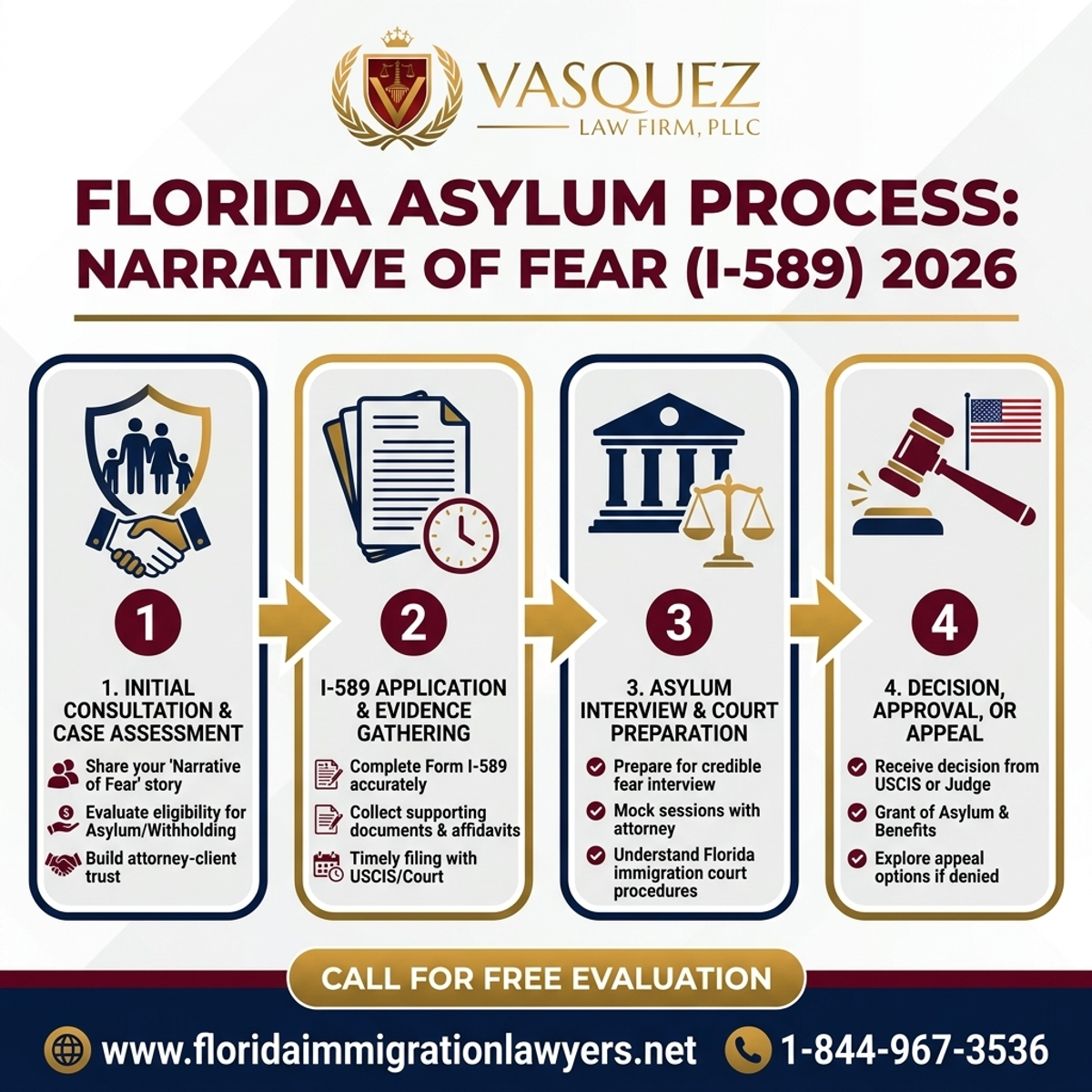
The process of filing Form I-589 is a multi-step journey that demands precision and attention to detail. As of 2026, the core requirements remain consistent, though processing times and specific procedures can evolve. Here is a step-by-step guide for applicants in Florida:
- Gather Comprehensive Evidence: Before even touching the form, collect all possible evidence related to your claim. This includes your personal declaration (your "narrative of fear"), country conditions reports from reputable sources (e.g., U.S. State Department, Amnesty International), affidavits from witnesses, medical records, police reports, photos, articles, or any other documentation that corroborates your story. This evidence is vital for proving the persecution you faced or fear.
- Complete Form I-589 Accurately: Fill out every section of Form I-589 completely and truthfully. Ensure all questions are answered, even if it means writing "N/A." Pay close attention to the sections asking about your personal history, family members, previous entries to the U.S., and your detailed account of fear. Inaccurate or incomplete information can lead to delays or even denial. If you have an attorney, they will also file Form G-28, Notice of Entry of Appearance as Attorney or Accredited Representative.
- Assemble Supporting Documents: Beyond your narrative and corroborating evidence, you must include copies of identity documents (passport, birth certificate), marriage certificates for spouses, and birth certificates for any children you wish to include in your application. Remember, all documents not in English must be accompanied by a certified English translation.
- Submit Your Application: Mail your completed Form I-589 and all supporting documents to the appropriate USCIS Lockbox facility. The specific address depends on your mailing method (U.S. Postal Service or express mail/courier). You can find the most current mailing addresses on the official USCIS website. Ensure you keep copies of everything you submit for your records.
- Attend Your Biometrics Appointment: After USCIS receives your application, you will receive a receipt notice and then an appointment notice for biometrics (fingerprints, photos, and signature) at an Application Support Center (ASC). It is crucial to attend this appointment, usually in a Florida location such as Oakland Park or Tampa, as scheduled.
- Prepare for Your Asylum Interview: Once your biometrics are processed, USCIS will schedule an asylum interview. For Florida residents, this interview typically takes place at the USCIS Asylum Office in Orlando. This is your opportunity to verbally present your "narrative of fear" and answer questions from an asylum officer. Thorough preparation, often with the help of an attorney, is essential.
- Receive a Decision or Referral: Following your interview, USCIS will either issue a decision on your asylum claim or, if you are not granted asylum and are not in legal immigration status, refer your case to an immigration judge for removal proceedings. If referred, your case will proceed to the Executive Office for Immigration Review (EOIR) immigration court in Miami or Orlando.
What Documents Are Required for a Florida Asylum Application?
A successful asylum application requires not only a compelling narrative but also a comprehensive collection of supporting documents. These documents serve to verify your identity, establish your family relationships, and, most importantly, corroborate the claims made in your "narrative of fear."
When preparing your asylum application in Florida, thoroughness in documentation is key. Missing or improperly prepared documents can lead to delays or even a Request for Evidence (RFE), prolonging an already lengthy process. Here is a detailed checklist of documents typically required:
- Form I-589: The completed and signed Application for Asylum and for Withholding of Removal. Ensure all sections are filled out, even if with "N/A."
- Form G-28: If you are represented by an attorney, this form must be included, signed by both you and your legal representative.
- Personal Declaration/Narrative of Fear: Your detailed, written account of the persecution you faced or fear, clearly linking it to one of the five protected grounds (race, religion, nationality, political opinion, or membership in a particular social group). This should be comprehensive and consistent.
- Identity Documents: Copies of your passport, national identity card, birth certificate, or any other official documents proving your identity and nationality.
- Travel Documents: Copies of your visa, I-94 Arrival/Departure Record, or any other documents related to your entry into the U.S.
- Proof of Relationship: If including a spouse or children in your application, provide copies of marriage certificates and birth certificates.
- Evidence of Persecution: This is the most crucial category and should be as extensive as possible:
- Country Conditions Reports: Official reports from human rights organizations (e.g., Amnesty International, Human Rights Watch), the U.S. Department of State, or academic institutions detailing the general situation in your home country relevant to your claim.
- Affidavits: Sworn statements from witnesses who can corroborate your experiences or knowledge of persecution against you or others similarly situated.
- Medical Records: Documentation of injuries, psychological trauma, or other health issues resulting from persecution.
- Police Reports/Legal Documents: Official records of arrests, detentions, court proceedings, or other interactions with authorities in your home country.
- Photos/Videos/Media: Any visual evidence or news articles that support your narrative.
- Correspondence/Threats: Letters, emails, or social media messages containing threats or evidence of persecution.
Step-by-Step Process — "Narrative of Fear" Asylum I-589 in Florida 2026
- Translations: Any document not in English must be accompanied by a complete and accurate English translation, certified by the translator as true and correct.
- Passport-Style Photos: Two identical, unmounted passport-style photos for each applicant and dependent included in the application.
What is the Typical Timeline for an Asylum Case in Florida in 2026?
As of 2026, the timeline for an asylum case in Florida can vary significantly, often extending over several years due to processing backlogs at both USCIS and the Executive Office for Immigration Review (EOIR). While some cases are expedited, many applicants should prepare for a lengthy waiting period.
Understanding the potential timeline for your asylum application is essential for managing expectations and planning your future. The U.S. immigration system, particularly for asylum, is known for its extensive processing times, which can be influenced by factors such as the volume of applications, staffing levels, and policy changes. For applicants in Florida, the specific USCIS Asylum Office in Orlando and the immigration courts in Miami and Orlando handle a high volume of cases, contributing to these timelines. Here is a general overview of what to expect:
| Stage | Typical Timeframe (As of 2026) | Notes |
|---|---|---|
| Filing Form I-589 | Within 1 year of U.S. entry | Strict deadline; exceptions are rare. File as soon as possible. |
| Receipt Notice (I-797C) | 2-4 weeks after filing | Confirms USCIS received your application. |
| Biometrics Appointment | 1-3 months after filing | Mandatory fingerprinting, photos, signature at an ASC in Florida. |
| Asylum Interview Scheduling | 1-5 years (or more) | Highly variable. USCIS generally prioritizes newer applications but backlogs are significant. |
| Asylum Interview | Typically 1-2 hours | Conducted at the USCIS Asylum Office in Orlando for Florida residents. |
| Decision from USCIS | Weeks to several months post-interview | Can be an approval, denial, or referral to immigration court. |
| Immigration Court Proceedings (if referred) | Potentially several years | If your case is referred to the Executive Office for Immigration Review (EOIR), you will have hearings before an Immigration Judge in Miami or Orlando. |
| Appeal (if denied by IJ) | 1-2 years (or more) | Appeals are filed with the Board of Immigration Appeals (BIA). |
Understanding the Costs Involved in an Asylum Application in Florida
Unlike many other immigration benefits, filing Form I-589, Application for Asylum and for Withholding of Removal, generally does not require a filing fee from USCIS. However, this does not mean the entire process is without cost. Applicants in Florida should be aware of various associated expenses.
While the direct filing fee for an asylum application itself is waived, there are several indirect costs that can accumulate throughout the process. These costs are important to consider when planning your asylum journey in Florida, whether you are in West Palm Beach, Tampa, or Jacksonville. Understanding these potential expenses will help you prepare financially and avoid unexpected burdens. Here's a breakdown of typical cost factors:
| Item | Typical Fee (As of 2026) | Notes |
|---|---|---|
| Form I-589 Filing Fee | No Fee | USCIS does not charge a fee for filing an initial asylum application. |
| Biometrics Fee | No Fee | The fee for biometrics (fingerprints, photos) is waived for asylum applicants. |
| Legal Representation | Varies Significantly | This is often the largest cost. Attorney fees depend on case complexity, attorney experience, and location (e.g., West Palm Beach immigration lawyers). Free or low-cost services may be available from non-profits. |
| Document Translation | Varies by document/page | Necessary for any non-English documents. Professional, certified translations are required. Costs depend on length and language. |
| Country Conditions Reports | Potentially Free to Several Hundred Dollars | While many reports are publicly available, expert reports or detailed analyses from private researchers may incur costs. |
| Medical Examinations | Varies by provider | Not required for the I-589 itself, but may be necessary later if you adjust status to permanent resident. Costs vary by doctor. |
| Travel Expenses | Varies | Costs for travel to biometrics appointments, asylum interviews in Orlando, or immigration court hearings in Miami or Orlando. |
| Postage/Copying | Minor costs | For mailing your application and making copies of all submitted documents. |
Key Statistics — "Narrative of Fear" Asylum I-589 in Florida 2026
Navigating Asylum Challenges in West Palm Beach and Florida
Florida, particularly regions like West Palm Beach, Miami, and Orlando, is home to diverse immigrant communities, many of whom seek asylum from persecution. While the fundamental asylum laws are federal, the local context, resources, and specific court dynamics can significantly impact an applicant's journey.
Applicants in Florida face unique challenges, including language barriers, cultural integration difficulties, and navigating a busy immigration court system. The Miami Immigration Court, for instance, is one of the busiest in the nation, contributing to lengthy case backlogs. Additionally, the Krome Service Processing Center in Miami-Dade County, an ICE detention facility, often houses asylum seekers, adding another layer of complexity for those detained while pursuing their claims. Understanding these local dynamics is crucial. For individuals in West Palm Beach, accessing local legal aid, community support groups, and attorneys familiar with the specific procedures of the Orlando Asylum Office and Florida's immigration courts can make a substantial difference.
Florida Immigration Lawyers has extensive experience assisting individuals throughout Florida, including West Palm Beach and surrounding areas, with their asylum claims. We understand the specific challenges and nuances of the local immigration landscape. Our team is dedicated to providing compassionate and effective legal representation, helping you build a strong case and navigate the legal hurdles. Whether you are facing an affirmative asylum process with USCIS or defensive asylum in immigration court, our knowledge of both federal and local procedures ensures you receive comprehensive support. Learn more about our specialized asylum services or our robust deportation defense strategies. We are committed to protecting your rights and helping you achieve safety.
Do not navigate this complex and emotionally taxing process alone. The stakes are incredibly high, and having experienced legal counsel can significantly improve your chances of a successful outcome. Contact Florida Immigration Lawyers today for a free consultation and let us help you understand your options and build your strongest possible case.
Common Mistakes to Avoid in Your Asylum Application
The asylum process is fraught with potential pitfalls that can jeopardize your claim. Avoiding these common mistakes is crucial for a successful outcome.
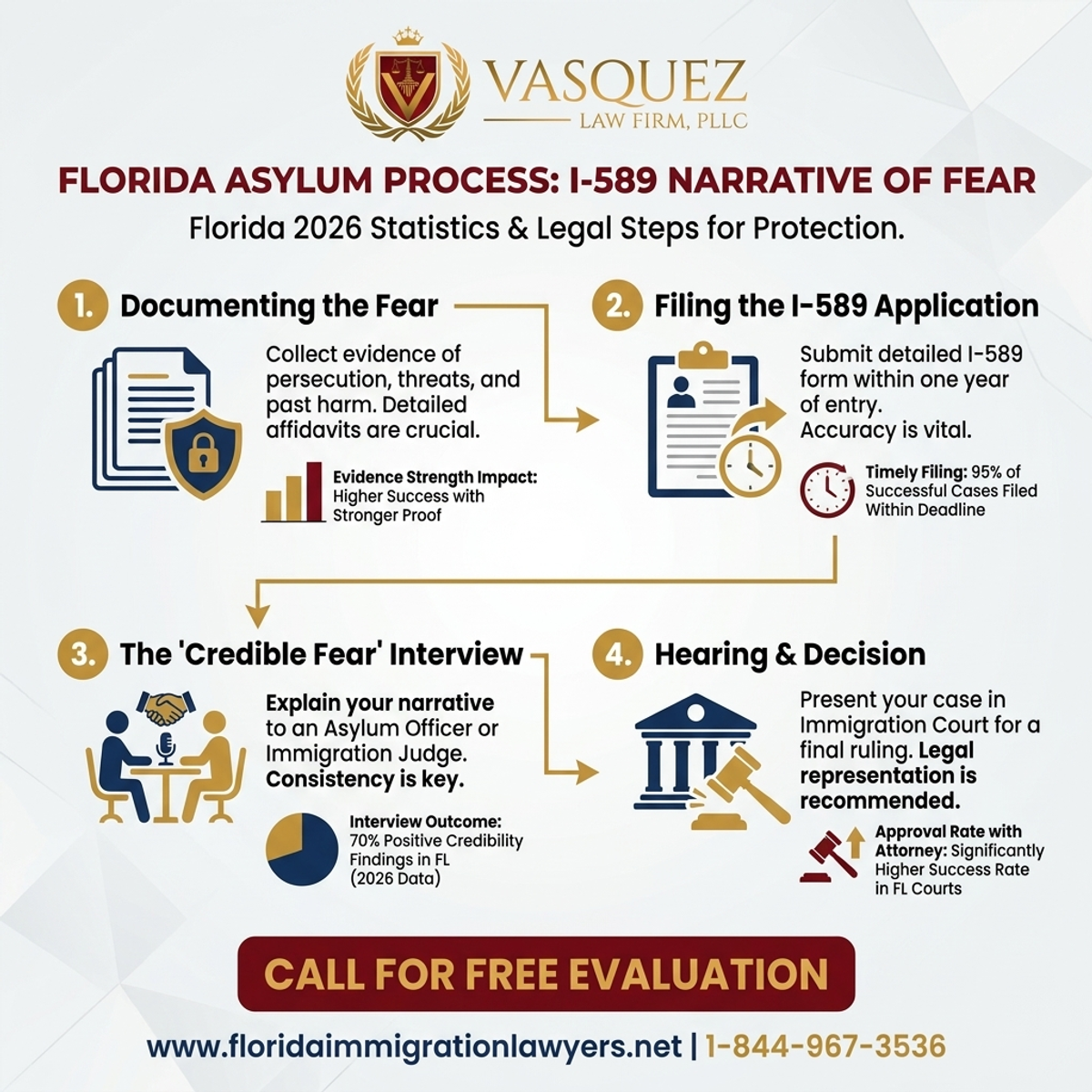
- Missing the One-Year Filing Deadline: Asylum law generally requires you to file Form I-589 within one year of your last arrival in the U.S. Failing to meet this deadline without a valid exception can lead to automatic denial of your claim. Keep meticulous records of your entry dates.
- Inconsistent or Vague "Narrative of Fear": Your personal statement must be consistent, detailed, and credible. Any inconsistencies between your written narrative and your interview testimony, or a lack of specific details about the persecution, can undermine your credibility and lead to denial.
- Lack of Corroborating Evidence: While your testimony is paramount, supporting evidence is critical. Failing to provide country conditions reports, affidavits from witnesses, medical records, or police reports that back up your claims significantly weakens your case.
- Failing to Disclose All Relevant Information: Hiding or omitting information, especially regarding criminal history, prior immigration applications, or previous arrests, can be considered misrepresentation and lead to a denial, or even a finding of fraud.
- Not Updating Your Address with USCIS/EOIR: If you move, you are legally required to notify USCIS and/or the immigration court within 10 days. Missing important notices for biometrics, interviews, or court hearings because of an outdated address can result in your case being denied or ordered removed in absentia.
- Attending the Asylum Interview Unprepared: The interview is a critical stage. Many applicants fail to adequately prepare, review their narrative, or anticipate potential questions. This can lead to nervousness, inconsistencies, and an inability to fully articulate their fear.
- Falling Victim to Notario Fraud or Unqualified Assistance: Unfortunately, individuals claiming to be immigration consultants or "notarios" often provide unauthorized and harmful legal advice. Always seek assistance from a licensed attorney or accredited representative to avoid serious errors.
- Traveling Internationally After Filing: Traveling outside the U.S. after filing for asylum, especially to the country from which you seek protection, can be seen as an abandonment of your claim or an indication that you no longer fear persecution.
- Incorrectly Translating Documents: Submitting documents without proper certified English translations, or with inaccurate translations, can render your evidence unusable or raise doubts about its authenticity.
- Underestimating the Complexity of the Law: Asylum law is intricate and constantly evolving. Attempting to navigate it without legal counsel can lead to critical errors in legal arguments, interpretation of statutes, or understanding of case precedents. Immigration law is not intuitive.
When to Call a Lawyer for Your Asylum Case
While the option to file for asylum without legal representation exists, the complexities of the law and the high stakes involved make legal counsel invaluable. You should strongly consider contacting an attorney from Florida Immigration Lawyers in several key situations.
The asylum process is one of the most challenging areas of immigration law, demanding a deep understanding of statutes, regulations (such as 8 CFR Part 208), and judicial precedents. An experienced immigration lawyer can provide strategic guidance, ensure all deadlines are met, and meticulously prepare your case to maximize your chances of success. It is particularly advisable to seek legal assistance if:
- You are nearing the one-year filing deadline or believe you may have an exception.
- Your "narrative of fear" involves complex legal issues, such as persecution by non-state actors or claims based on a particular social group.
- You have a prior criminal history, even minor offenses, which could impact your eligibility.
- You have previously been denied asylum or have had other immigration applications denied.
- You are in removal proceedings before an immigration judge and need to pursue defensive asylum.
- You have been detained by ICE in a facility like Krome and need urgent assistance.
- You find it difficult to articulate your story due to trauma, language barriers, or cultural differences.
- You have questions about including family members or the potential impact on their immigration status.
- You receive a Request for Evidence (RFE) or Notice of Intent to Deny (NOID) from USCIS.
- You simply want peace of mind knowing your case is handled by professionals.
Our attorneys can help you craft a compelling "narrative of fear," gather robust evidence, and represent you effectively at interviews and in court. Visit our attorneys page to learn more about our dedicated legal team, or simply contact us directly to discuss your specific situation.
About Florida Immigration Lawyers
Florida Immigration Lawyers is an immigration law firm dedicated to serving individuals and families across the entire state of Florida. With offices strategically located to serve diverse communities, we pride ourselves on providing compassionate, effective, and results-driven legal representation in all areas of immigration law. Our team of highly skilled attorneys understands the profound impact immigration matters have on our clients' lives and works tirelessly to protect their rights and achieve their goals.
We focus on a comprehensive range of immigration services, including asylum applications, deportation defense, family-based immigration, business immigration, naturalization, and visa petitions. Our firm is committed to staying abreast of the latest changes in immigration policy and law, ensuring that our clients receive the most current and accurate advice. We offer free consultations, are available 24/7, and provide bilingual services (English and Spanish) to ensure clear communication and understanding. When you choose Florida Immigration Lawyers, you choose a partner who stands with you every step of the way, fighting for your future in the United States.
Sources and References
- U.S. Citizenship and Immigration Services (USCIS)
- Executive Office for Immigration Review (EOIR)
- U.S. Department of State - Bureau of Consular Affairs
- 8 U.S.C. Chapter 12 - Immigration and Nationality Act (INA)
- INA Section 101(a)(42)(A) (8 U.S.C. § 1101(a)(42)(A)) - Definition of Refugee
- INA Section 208 (8 U.S.C. § 1158) - Asylum
- 8 CFR Part 208 - Asylum and Withholding of Removal
Related services: asylum application process, refugee status and resettlement, humanitarian protection programs.
This article provides general legal information and is not intended as legal advice. Every case is unique, and outcomes depend on specific facts and circumstances. Contact an attorney for advice about your particular situation.
If you or a loved one is considering applying for asylum in Florida, or if you have questions about your "narrative of fear" and the I-589 process, do not hesitate to seek legal guidance. The complexities of immigration law require knowledgeable and dedicated representation. Florida Immigration Lawyers is here to help you navigate these challenges with confidence and compassion. We offer free, confidential consultations to discuss your case and explore your best options. Call us today at 1-844-YO-PELEO to speak with an experienced immigration attorney. Se Habla Espanol - Estamos aqui para ayudarle.
Do Not Navigate This Process Alone
Our experienced immigration attorneys are ready to fight for you. Get a free, confidential case review today.
Se Habla Español
Or leave your details and we’ll call you:
Free Evaluation in 24 Hours
Or talk to us right now

AI voice assistant — available 24/7
FreeFrequently Asked Questions

William J. Vásquez
Founding Attorney · Vasquez Law Firm
U.S. Air Force veteran and immigration attorney with years of hands-on U.S. immigration experience. J.D., NCCU School of Law. AILA member. Admitted to the 4th, 5th, and 11th Circuit Courts.
Available 24/7 - Free Evaluations
Reviewed for legal accuracy by William J. Vásquez
Licensed in North Carolina; U.S. immigration is federal practice.
Related Legal Services
Our Florida immigration attorneys can help you with immigration practice areas, free immigration consultation and business immigration. Call today at 1-844-YO-PELEO for a free case review.
Related Links
Related Topics
Free Legal Case Review
Discuss your case with our experienced attorneys. We're available 24/7.
Se Habla Español - Estamos aquí para ayudarle.
Related Articles
Dual Citizenship Lawyer in Florida: What You Need to Know
For Florida residents, the concept of dual citizenship, or holding two passports, offers a compelling blend of opportunities and challenges. While the U.S. generally permits dual nationality, the path to achieving this status requires a meticulous understanding of both U.S. immigration laws and the citizenship policies of your country of origin. This guide explores the definition of dual citizenship, the detailed step-by-step process for U.S. naturalization, and the significant benefits and potential pitfalls involved. We cover essential documentation, typical timelines, and cost considerations for 2026, providing crucial insights for anyone in Orlando, Miami, or across Florida considering this important legal step. Learn about common mistakes to avoid and understand when to seek professional legal counsel to navigate this complex process successfully. Florida Immigration Lawyers is here to provide expert, bilingual support for your dual citizenship journey.
Immigration Lawyer Orlando Free Consultation in Florida
For individuals and families in Orlando, Florida, navigating the complexities of U.S. immigration law requires expert guidance. An immigration lawyer in Orlando offers crucial support for everything from visa applications and green card processes to naturalization and deportation defense. This comprehensive guide details what a free consultation covers, providing a step-by-step overview of immigration pathways, essential document checklists, and expected timelines in 2026. We also highlight common mistakes to avoid, discuss the critical role of legal counsel in deportation and asylum cases, and explain why choosing a local Orlando immigration attorney is beneficial. Florida Immigration Lawyers is dedicated to serving the diverse community of Orlando with compassionate, effective legal solutions, ensuring you receive personalized advice and robust representation for a successful immigration journey.
EAD Advance Parole Combo Card in Florida 2026
For individuals with a pending Form I-485, Application to Register Permanent Residence or Adjust Status, the EAD Advance Parole Combo Card is an essential document. This single card combines the authorization to work legally in the U.S. (Employment Authorization Document - EAD) with permission to travel internationally and re-enter without abandoning your green card application (Advance Parole). This guide from Florida Immigration Lawyers provides a comprehensive overview for applicants in Florida in 2026, covering eligibility, the step-by-step application process, required documents, expected processing times, and associated costs. We also highlight common mistakes to avoid and when to seek legal counsel to ensure a smooth and successful immigration journey. Understanding this vital card is key to maintaining stability while awaiting your permanent residency approval.
H-1B Visa Florida Employers Guide 2026
Discover how Florida employers can navigate the H-1B visa sponsorship process in 2026. This guide covers essential steps, documents, and common pitfalls, providing you with the knowledge to secure international talent. For expert assistance, contact Florida Immigration Lawyers.