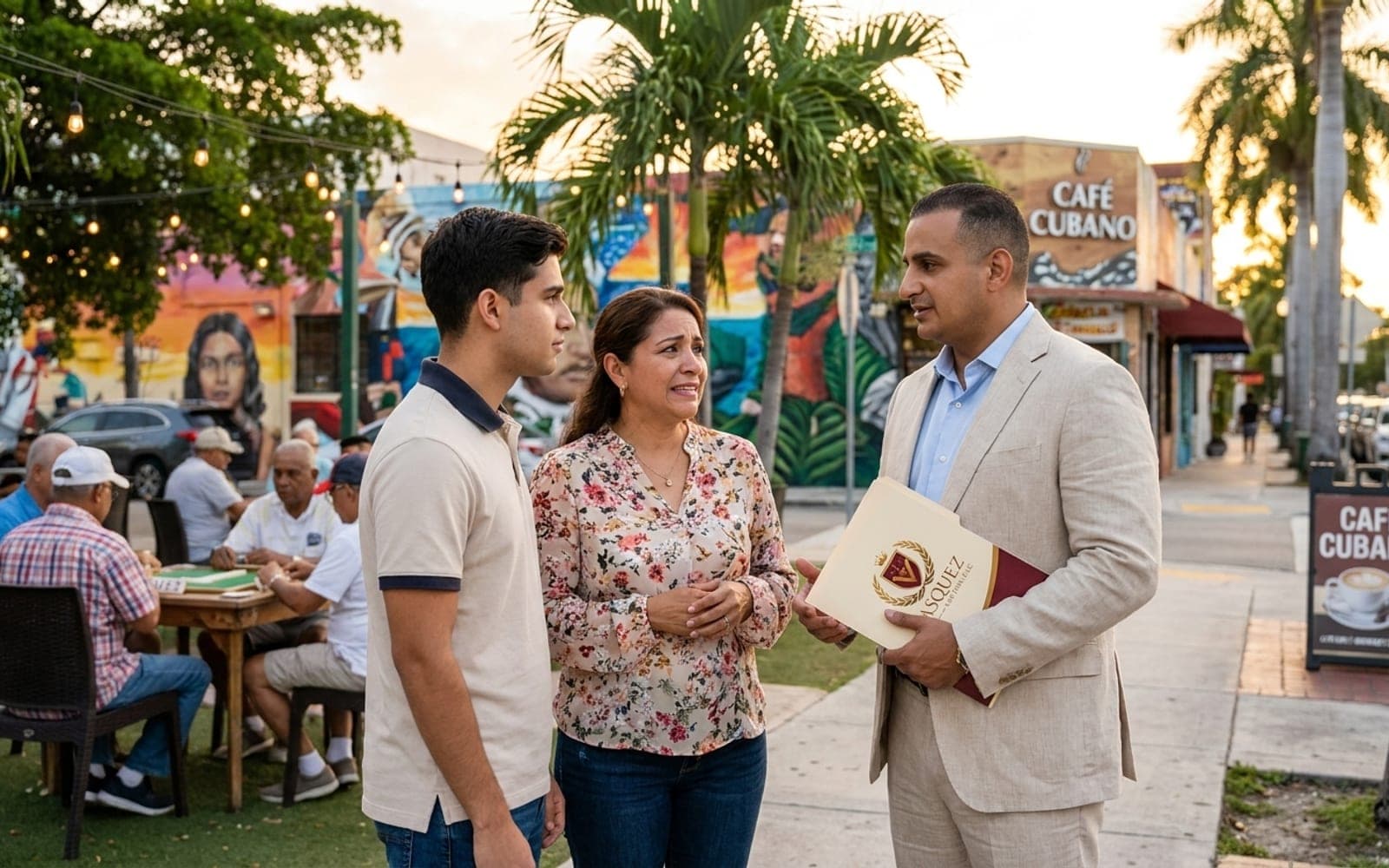
Some immigration problems cannot wait, such as a person fleeing danger, a spouse in an abusive home, a relative in detention or a hearing notice with a date. This guide explains how VAWA self-petitions, asylum, deportation defense and immigration bond generally work for people in Jacksonville and Northeast Florida. If you are in danger, call 911 first. Vasquez Law Firm, an immigration-only firm with one office in Orlando, serves Duval and nearby counties by video, phone and in-person meetings in Orlando.
- If you are in danger, call 911 first.
- The guide covers VAWA, asylum, deportation defense and immigration bond.
- It explains how a removal case moves through immigration court.
- It discusses protecting your safety and privacy while preparing.
- The firm serves Northeast Florida from its only office, in Orlando.
Introduction
Some immigration problems cannot wait: a person fleeing danger, a spouse trapped in an abusive home, a relative detained by immigration authorities, or a hearing notice with a date. This guide is for people in Jacksonville and Northeast Florida who are looking for a VAWA, asylum, deportation defense or immigration bond lawyer, and it explains how each of these matters generally works. If you are in danger, call 911 first. When you are safe, call 1-844-YO-PELEO or contact us.
Vasquez Law Firm helps people in Jacksonville and Northeast Florida with these protection and removal matters. We are an immigration-only firm with one office in Orlando, and we serve Duval, Clay, St. Johns, Nassau and nearby counties by video, phone and in-person meetings in Orlando. William J. Vásquez is the founding attorney, and consultations are available in English and Spanish.
This page is general information, not legal advice. Protection and removal cases are fact-specific and deadlines are strict, so a lawyer should review your documents as soon as possible. We keep sensitive information confidential.
Immigration Help for Jacksonville Residents: VAWA Self-Petitions
The Violence Against Women Act allows certain people who suffered abuse or extreme cruelty from a U.S. citizen or lawful permanent resident spouse or parent, and children abused by such a parent, to ask for immigration status on their own, without the abuser's knowledge or signature. Despite its name, VAWA protects men and women. Someone looking for a VAWA attorney in Jacksonville is usually in a difficult and frightening situation, so the first conversation focuses on safety, privacy and what evidence may exist. A lawyer will generally ask about the relationship, the abuser's immigration status, shared residence and good moral character.
Evidence can include police or medical records, protective orders, photographs, messages, statements from friends, relatives or counselors, and your own detailed declaration. These materials are not all required, and many survivors have little formal documentation. Federal law also protects the confidentiality of VAWA filings. Other forms of protection for crime survivors include the U visa and the T visa for trafficking victims, and a lawyer can compare them. You can read more on our humanitarian protection page.
Asylum Cases in Jacksonville
Asylum protects people who fear persecution in their home country because of race, religion, nationality, political opinion or membership in a particular social group. People often look for an asylum lawyer in Jacksonville after arriving from countries affected by violence or political repression. A lawyer will look first at the one-year filing deadline, which has limited exceptions, and at the evidence of past harm and future risk. The lawyer will also screen for related protections, such as withholding of removal and protection under the Convention Against Torture, which have different standards.
Asylum can be requested affirmatively with USCIS or defensively in immigration court as a response to removal proceedings. Preparation matters: the applicant's own testimony, a clear timeline, identity documents, country condition reports and corroborating statements all influence how a decision-maker views the claim. Our asylum page explains the process in more detail. We cannot predict results, and no lawyer should promise approval.
Deportation Defense for Northeast Florida Residents
Removal proceedings begin when the government serves a Notice to Appear and files it with the immigration court. If you search for a deportation lawyer in Jacksonville, you probably want to know what a lawyer can change. The answer depends on the facts. A lawyer reviews whether the charges are correct, whether the government can prove them, and whether you qualify for relief such as asylum, cancellation of removal, adjustment of status through a family member, a waiver or voluntary departure. Defending the case may also involve challenging how evidence was gathered.
Deadlines are strict. Missing a hearing can result in an order of removal in your absence. Keep every notice, update your address with the court as required, and bring all documents to your first meeting. For more on how these cases work, see our deportation defense page.
How a Removal Case Moves Through Immigration Court
The sequence below is general. Detained and non-detained cases move on different tracks, and each person's case may differ.
- The government serves a Notice to Appear that lists the charges and the allegations.
- The court schedules a first hearing, often called a master calendar hearing, where the person responds to the charges and states what relief they will request.
- The lawyer files a notice of appearance and reviews the evidence and the government's case.
- The person files any applications for relief, such as asylum or cancellation of removal, with supporting evidence.
- The court holds an individual hearing, where the person may testify, witnesses may be heard and the judge considers the evidence.
- The judge issues a decision, either at the hearing or later in writing.
- Either side may consider an appeal, and the deadline to appeal is short and must be checked immediately.
Because each step has its own deadline, keep a calendar of every date and bring the notices to every meeting.
Immigration Bond for Detained Loved Ones
When a person is detained, families want to know whether release is possible. Immigration bond is a payment that allows some detainees to be released while their case continues. Not everyone is eligible: some people are held under mandatory detention laws, and eligibility depends on criminal history and how the person entered the country. For those who are eligible, a decision-maker considers factors such as flight risk and danger to the community, and the bond amount can often be reviewed by an immigration judge. A bond attorney in Jacksonville can gather proof of ties to the community, such as family, work and a stable address, and prepare a request for a bond hearing. A bond does not end the case; the person must continue attending all hearings. Read more on our bond page.
How the Immigration Agencies Handle Northeast Florida Cases
We do not assume where your appointments will be held. USCIS notices tell you which field office or application support center to attend for biometrics or an interview, and the notice from the immigration court identifies the court and the date of your hearing. Detained cases may be heard through video from the detention facility. We read each notice with you, calendar the dates, and plan the trip, including a request to change the location when that is appropriate.
Family members can be affected too. A VAWA self-petitioner's unmarried children under 21 may be included in the case in some situations, and a person in removal proceedings may have relatives whose own options depend on what happens in court. Tell the lawyer about every family member and their status, so that the plan accounts for everyone.
How We Work With Jacksonville Clients
We do not have an office in Jacksonville. You can hold a consultation with us by phone or secure video from home, or from another private place where you feel safe, and you may meet in person at the Orlando office if you prefer. Many people in these situations need to choose a time and a method that will not alert someone in the household, so tell us at the start what is safe: which phone number to call, whether it is safe to leave a message and whether mail can be sent to your address.
After the first conversation, we explain the options in plain language, say what documents would help and describe what the next steps would be. You decide whether to continue. If the case involves a hearing in Jacksonville or another city, we explain beforehand where and how it will take place, and we prepare you for what to expect in the room.
Document Checklist for a Protection or Removal Consultation
- Any notices from USCIS, ICE or the immigration court
- Passport, visa, I-94 or other identity and entry documents
- Your A-number if you have one
- Records of abuse or threats you have kept, such as reports or messages
- Evidence of family ties, work history and address history
- Information about any arrests or court cases
- For a detained person: the location, the booking information and the name of the facility
If you cannot safely keep documents at home, tell us. We can discuss ways to protect them, and a lawyer can explain what is needed and what can be added later.
Timeline and Processing Expectations
Protection and removal cases move at different speeds depending on whether the person is detained, which agency has the case and what evidence is needed. USCIS publishes current processing times, and the immigration courts publish information about hearings, so check those sources instead of relying on what someone else experienced. Detained cases are generally scheduled differently from non-detained cases, and a lawyer can tell you what to expect once the place of detention and the stage are known.
Use any waiting time to gather evidence, keep your address updated and prepare your declaration. The table lists the usual stages.
| Stage | What happens | Who acts |
|---|
| Safety and consultation | Immediate risks are discussed and options are reviewed | Client and lawyer |
| Evidence gathering | Records, statements and declarations are assembled | Client and lawyer |
| Filing | VAWA petition, asylum application or court filing is submitted | Lawyer |
| Agency or court review | Biometrics, interview or hearing is scheduled | USCIS or the court |
| Hearing or interview | Testimony and evidence are presented | Client, lawyer and the decision-maker |
| Decision and next steps | Approval, denial or appeal options are explained | Agency or court, then lawyer and client |
Protecting Your Safety and Privacy While You Prepare
For survivors of abuse, how a case is prepared matters as much as what is filed. Keep copies of evidence in a place the abuser cannot reach, such as with a trusted friend, a victim advocate or an account only you can open. Do not post about your case on social media. Think about which devices and accounts the other person can see, and consider using a safer device for communication with your lawyer.
Local victim service organizations and hotlines can help with safety planning, shelter and counseling, and a lawyer can coordinate with them, with your permission. Their records, such as a letter or a report, can also be valuable evidence. For people who fear removal, avoid carrying documents that could be misused, and ask your lawyer what to do if immigration officers come to your home or workplace.
The lawyer-client relationship is confidential, and the information you share is used only to prepare your case. If you are unsure whether you qualify, ask. A consultation can identify protection options that you might not know exist, including options for people who have already been through court or who have a prior order.
Cost Factors and Fee Breakdown
Costs depend on the case type, and government fees change, so the table lists items to ask about rather than amounts.
| Item | Amount | Notes |
|---|
| USCIS filing fees | Check USCIS for the current fee | Some protection filings have special fee rules; check the current form instructions |
| Immigration court fees | Check the court or agency for current fees | Depend on the application filed in court |
| Immigration bond amount | Varies by case | Set by the agency or the judge based on the case; a bond is not a fee for legal services |
| Translations and records | Varies by case | Paid to translators and agencies |
| Attorney fees | Varies by case | Depend on the scope of work and whether the case is in court |
Ask for a written scope of work. A fee agreement for a court case should explain what is included, such as hearings and applications for relief. Government fees and attorney fees are separate.
Be careful with anyone who asks for large cash payments or promises to get a detained person out. Only a judge or the agency decides bond and release.
Common Mistakes to Avoid
- Missing a hearing or ignoring a Notice to Appear.
- Failing to update your address with the court or USCIS after moving.
- Waiting beyond the one-year asylum deadline without asking whether an exception applies.
- Assuming that a VAWA case requires the abuser's signature or knowledge.
- Paying a person who is not a licensed lawyer or accredited representative to handle a court case.
- Signing documents in detention without understanding what they mean.
- Trusting anyone who promises approval or release.
When to Call a Lawyer
Call as soon as you receive a Notice to Appear, a hearing date, a denial or news that a relative has been detained, and call before you file any protection application if you have a prior order or arrest. If you are in danger, call 911 first; a lawyer can help afterward. To reach us, call 1-844-YO-PELEO or use our contact page.
About Vasquez Law Firm
Vasquez Law Firm practices immigration law only. Our only office is at 1111 E Amelia Street in Orlando. You can meet with us by phone or secure video from Jacksonville, or in person at the Orlando office. William J. Vásquez is the founding attorney. We offer consultations in English and Spanish and keep sensitive information confidential. Call 1-844-YO-PELEO or contact the firm online.
Sources and References
Related services: humanitarian protection, immigration lawyers in Florida
Other ways people search for this
People look for this help under different names. Related searches include family immigration lawyer jacksonville; immigration lawyer jacksonville fl; immigration lawyers jacksonville fl; jacksonville immigration attorneys; jacksonville vawa attorney; jacksonville vawa lawyer; asylum lawyer jacksonville; jacksonville asylum attorney; jacksonville asylum lawyer; deportation lawyer jacksonville; jacksonville immigration bond attorney.
This article is general information, not legal advice. Every case is different; speak with an immigration lawyer about your situation.