Immigration Scams Protection Florida: Don't Be a Victim
Immigration scams are a serious threat to individuals and families seeking legal status in Florida. Fraudsters, often posing as "notarios" or immigration consultants, exploit the complexities of immigration law, leading to severe consequences like financial loss, jeopardized status, and even deportation. This comprehensive guide from Florida Immigration Lawyers provides essential strategies to recognize, avoid, and report these scams. Learn how to verify credentials, identify red flags, and what steps to take if you become a victim. Our firm is dedicated to protecting your rights and ensuring you navigate the immigration process safely and legally. Contact us for a free consultation to safeguard your future.

Protecting yourself from immigration scams in Florida is crucial, as unscrupulous individuals often target vulnerable immigrant communities. These scams, ranging from "notario" fraud to fake online services, promise quick legal status or work permits for exorbitant fees, often leading to severe immigration consequences like deportation or permanent bars. Always verify credentials, seek advice only from licensed attorneys, and never sign blank forms. If you suspect fraud, report it to authorities and immediately consult with a reputable immigration lawyer to assess the damage and explore potential remedies.
- Always consult with a licensed immigration attorney, not a "notario" or consultant.
- Never sign blank documents or pay for services that seem too good to be true.
- Verify all information directly with official sources like USCIS.
- Keep meticulous records of all communications and payments.
- Report suspected fraud to federal and state authorities promptly.
Navigating the complex world of U.S. immigration law can be incredibly daunting. For individuals and families in Florida, the journey often involves significant hopes, dreams, and sometimes, considerable vulnerability. Unfortunately, this vulnerability can be exploited by fraudsters who prey on those seeking legal status, family reunification, or employment opportunities. These immigration scams can lead to devastating financial losses, jeopardize your immigration status, and even result in deportation.
In Florida, a state with a diverse and vibrant immigrant population, understanding the dangers of notario fraud and other deceptive practices is more critical than ever. From Fort Lauderdale to Miami, Tampa, and Orlando, countless individuals fall victim to promises that are too good to be true. This comprehensive guide from Florida Immigration Lawyers aims to equip you with the knowledge and tools necessary to recognize, avoid, and report immigration fraud, ensuring your path to a secure future is protected.
We understand the anxiety and confusion that can arise when dealing with immigration matters. Our firm is dedicated to safeguarding your rights and helping you achieve your immigration goals safely and legally. Do not let fear or misinformation lead you into a scam. For personalized guidance and robust legal representation, call Florida Immigration Lawyers at 1-844-967-3536 for a free consultation today. We are here to help.
Understanding Common Immigration Scams in Florida
Immigration scams manifest in various forms, often adapting to current immigration policies and public anxieties. In Florida, with its significant immigrant communities, fraudsters are particularly active. Recognizing these deceptive practices is the first step toward protection. These scams typically involve individuals or entities falsely claiming to be qualified to provide immigration legal services, charging exorbitant fees for services they cannot legally perform, or submitting fraudulent applications on behalf of unsuspecting victims.
One of the most prevalent forms of fraud is notario fraud. In many Latin American countries, a "notario público" is a highly trained legal professional with powers similar to an attorney. However, in the United States, a "notary public" is only authorized to witness signatures and administer oaths, with no legal authority to provide immigration advice or representation. Unscrupulous individuals exploit this linguistic and cultural difference, misleading immigrants into believing they are receiving legitimate legal assistance when, in reality, they are often damaging their cases or committing fraud. This can lead to serious consequences, including deportation proceedings.
Beyond notario fraud, other common schemes include fake websites and online services that mimic official government sites like USCIS, collecting personal information and fees under false pretenses. There are also scams involving promises of expedited visas or green cards in exchange for large sums of money, or individuals posing as government officials demanding immediate payment to avoid arrest or deportation. These fraudsters often target individuals with limited English proficiency or those unfamiliar with the U.S. legal system, preying on their desperation for a better life. It is vital to remember that legitimate immigration processes never involve demands for payment via gift cards or wire transfers to individuals.
Types of Immigration Fraud Targeting Florida Residents
- Notario Publico Fraud: As detailed, individuals posing as attorneys, offering legal advice they are unqualified to give, often leading to incorrectly filed applications or missed deadlines.
- Document Fraud: Scammers create and sell fake documents, such as birth certificates, marriage licenses, or work permits, claiming they can be used for immigration applications. Using such documents is a serious federal crime.
- Marriage Fraud: Arranging a marriage solely for immigration benefits is illegal and carries severe penalties for both parties. Scammers often facilitate these arrangements for a fee.
- Investment Visa Scams: Fraudsters solicit investments for fake businesses or projects, promising EB-5 visas, but never deliver on the promised investment or visa.
- Employment Visa Scams: False promises of job offers or labor certifications to secure employment-based visas, often requiring upfront payments for non-existent positions.
- Online/Email Phishing Scams: Emails or websites designed to look like official government communications, attempting to extract personal information or money.
- Fake Government Official Scams: Individuals impersonating ICE or USCIS officers, demanding money or personal information under threat of arrest or deportation.
How to Protect Yourself from Immigration Scams
Proactive measures are your strongest defense against immigration fraud. By understanding the proper channels and exercising caution, you can significantly reduce your risk of falling victim to these predatory schemes. Empowering yourself with knowledge is key, especially in a diverse state like Florida, where many different communities might be targeted.
The most important step is to only seek advice from licensed and reputable immigration attorneys or accredited representatives recognized by the Board of Immigration Appeals (BIA). These professionals are bound by ethical rules and have the legal training necessary to provide accurate guidance. You can verify an attorney's license through the Florida Bar Association website. When meeting with any legal professional, always ask for their credentials and ensure they are clearly displayed. A legitimate attorney will never promise a guaranteed outcome, as immigration cases are complex and depend on many factors. They will also provide clear fee structures and written agreements.
Furthermore, be extremely wary of anyone who asks you to sign blank forms or documents. Always read everything carefully before signing, and if you do not understand English, insist on a translation in a language you comprehend. Do not pay for services in cash without a receipt, and never provide original documents to anyone other than official government agencies. Always keep copies of everything you submit. If you are ever unsure about a document or a request, cross-reference it with official government websites or consult with a trusted attorney. Remember, official government agencies like USCIS will never ask for payment via gift cards, wire transfers, or through unofficial channels.
Key Protection Strategies for Immigrants in Florida
- Verify Credentials: Always confirm that the person offering immigration services is a licensed attorney or a BIA-accredited representative. Ask for their bar number or accreditation details.
- Understand the Process: Educate yourself on the general steps of your immigration application. Official information is available on the USCIS website.
- Read Before Signing: Never sign blank or incomplete forms. Ensure you understand every document you sign.
- Demand Receipts: Always get a detailed, written receipt for any money paid. Avoid cash payments without documentation.
- Keep Copies: Make copies of all documents you submit and receive. Never give away original documents.
- Beware of Guarantees: No legitimate attorney can guarantee a specific outcome for an immigration case. Be suspicious of anyone who does.
- Official Communications: Understand that USCIS and other government agencies communicate through official mail or secure online portals, not typically through unsolicited calls or unverified emails demanding immediate action.
- Check Fees: Be aware of official government filing fees, which are publicly available on the USCIS website. Be suspicious of charges significantly higher than published fees.
What to Do if You Suspect or Are a Victim of a Scam
Discovering you've been targeted by or fallen victim to an immigration scam can be a terrifying and disheartening experience. However, it is crucial to act quickly and strategically. Your prompt response can help mitigate potential damage to your immigration case and prevent others from becoming victims. Do not let shame or fear prevent you from seeking help. The sooner you address the situation, the better the chances of finding a resolution.
The immediate priority is to cease all contact with the suspected scammer. Do not provide any more money or personal information. Gather all evidence related to the scam, including contracts, receipts, emails, text messages, phone records, and any documents they prepared or submitted on your behalf. This evidence will be vital for reporting the fraud and for your immigration attorney to understand the full scope of the situation. It is also important to consider if any of your personal information, such as your Social Security number or Alien Registration Number, has been compromised, and take steps to protect your identity.
After collecting evidence, the next critical step is to consult with a legitimate and experienced immigration attorney. An attorney can assess the damage caused by the scam, advise you on how to correct any fraudulent filings, and represent you in dealings with immigration authorities. They can help determine if you need to file an amended application, notify USCIS of the fraud, or prepare for potential deportation defense if your status has been jeopardized. Reporting the scam to the appropriate authorities is also essential, which can include the Federal Trade Commission (FTC), the Florida Attorney General's Office, and the state bar association if the scammer falsely claimed to be an attorney. The Department of Justice's Executive Office for Immigration Review (EOIR) also has resources for reporting unscrupulous practitioners.
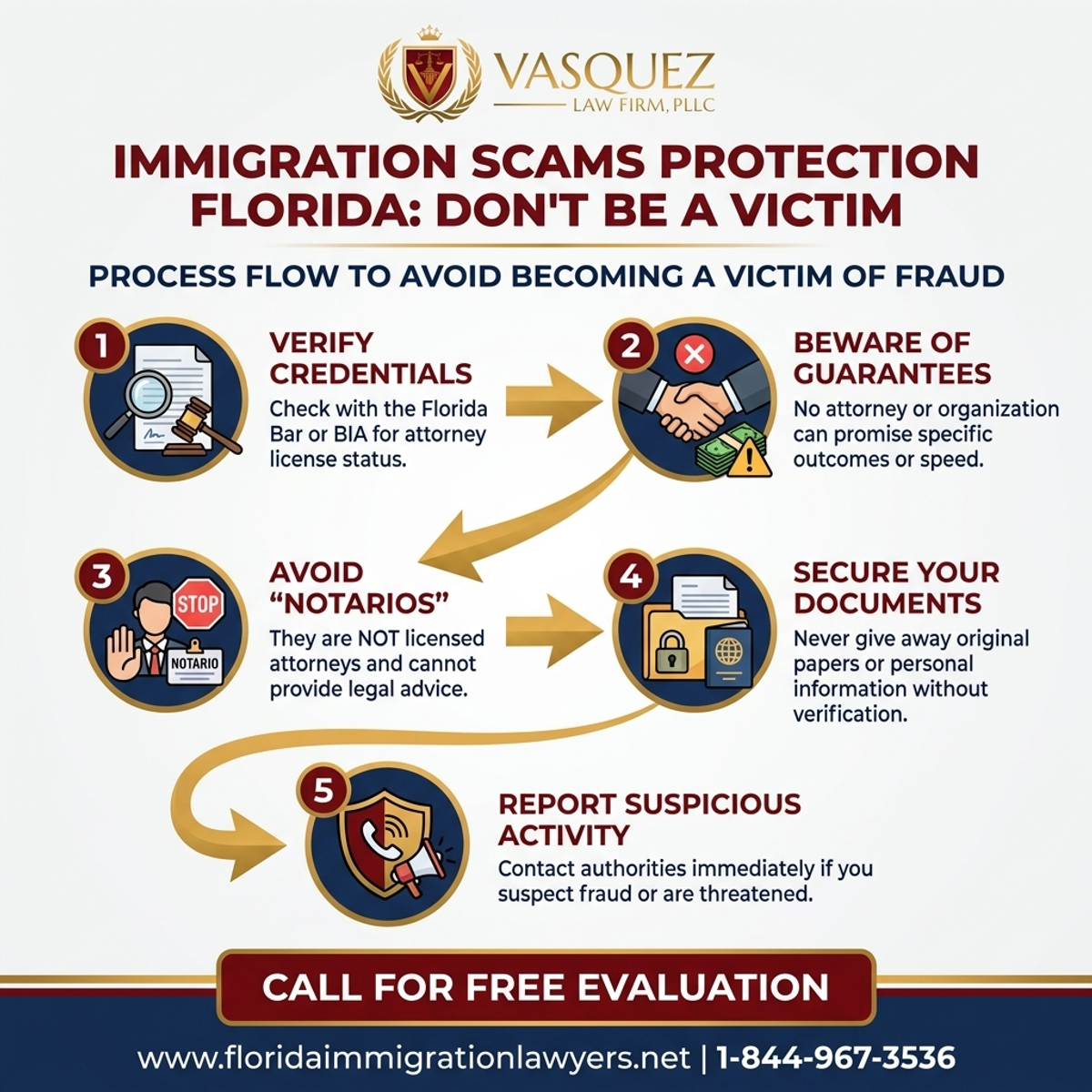
Step-by-Step Process — Immigration Scams Protection Florida: Don't Be a Victim
Timeline and Processing Expectations After a Scam
The timeline for resolving issues after an immigration scam can vary widely depending on the nature and severity of the fraud. Generally, here's what you can expect:
- Immediate Action (Days 1-7): Cease contact, gather evidence, and schedule an urgent consultation with a licensed immigration attorney. The attorney will review your case and advise on immediate steps, such as notifying USCIS of fraudulent filings.
- Investigation & Reporting (Weeks 1-4): Your attorney may help you report the scam to various agencies (FTC, State Bar, etc.). This process involves detailing the fraud and providing all collected evidence.
- Correcting Immigration Record (Months 1-6+): Depending on what was filed (or not filed), your attorney will work to correct your immigration record. This could involve filing new applications, withdrawing fraudulent ones, or responding to Requests for Evidence (RFEs) or Notices of Intent to Deny (NOIDs) from USCIS. If you are in removal proceedings, a defense strategy will be developed.
- Legal Recourse Against Scammer (Varies): Pursuing civil or criminal action against the scammer can be a lengthy process, often running concurrently with your immigration case.
Legal Recourse and Reporting Immigration Fraud in Florida
Taking legal action against those who commit immigration fraud is not only a way to seek justice for yourself but also a crucial step in protecting the broader immigrant community in Florida. The state and federal governments have mechanisms in place to investigate and prosecute these criminals. Understanding these avenues can empower you to contribute to a safer environment for everyone navigating the immigration system. It also ensures that the integrity of the U.S. immigration system is maintained.
You have several options for reporting immigration fraud. At the federal level, you can report to the Federal Trade Commission (FTC) at reportfraud.ftc.gov. The FTC collects complaints about fraudulent business practices, including those related to immigration services. You can also contact U.S. Citizenship and Immigration Services (USCIS) directly by calling their National Customer Service Center or by submitting a tip through their online form if the fraud involves their forms or processes. If the scammer claimed to be an attorney, you should file a complaint with The Florida Bar. For criminal acts, local law enforcement or the Federal Bureau of Investigation (FBI) should be contacted.
Working with an experienced immigration attorney is invaluable during this process. They can help you compile the necessary documentation, draft compelling reports, and guide you through the reporting procedures to ensure your complaint is properly handled. Furthermore, your attorney can advise you on potential civil lawsuits against the scammer to recover lost funds or damages. While recovering money can be challenging, pursuing all available legal avenues is essential for accountability. Remember, laws like the Immigration and Nationality Act (INA) provide specific penalties for immigration fraud, such as INA 274C (8 U.S.C. § 1324c) for document fraud. An attorney will understand how to leverage these provisions.
Cost Factors and Fee Breakdown for Legal Assistance
The cost of legal assistance after an immigration scam can vary significantly based on the complexity of your case and the extent of the damage. Here’s a general overview of potential cost factors:
- Initial Consultation: Many reputable firms, including Florida Immigration Lawyers, offer free initial consultations to assess your situation and outline potential strategies.
- Case Assessment & Document Review: If the case is complex, an attorney may charge a fee to thoroughly review all documents related to the scam and your immigration history.
- Correcting Applications: Fees for preparing and filing new or amended immigration applications will depend on the type of form (e.g., I-130 for family petitions, I-485 for adjustment of status) and the complexity of addressing the fraud.
- Representation in Removal Proceedings: If the scam led to deportation proceedings, legal fees for representation in immigration court can be substantial, often structured as flat fees or hourly rates.
- Reporting & Advocacy: Fees may apply for assistance in drafting and submitting reports to various government agencies and for advocating on your behalf.
- Civil Litigation: If you pursue a civil lawsuit against the scammer, these fees can be separate and may be contingency-based (a percentage of recovered funds) or hourly.
At Florida Immigration Lawyers, we believe in transparent fee structures and will discuss all potential costs upfront, allowing you to make informed decisions without additional financial stress during an already difficult time.
Do not navigate this complex and potentially dangerous process alone. The stakes are too high. Contact Florida Immigration Lawyers today at 1-844-967-3536 for a free consultation. We are here to provide the expert legal guidance you need to protect your future.
Common Mistakes to Avoid Regarding Immigration Scams
Falling victim to an immigration scam is often a result of confusion or desperation. However, certain actions can inadvertently worsen your situation or make you more susceptible. Being aware of these common mistakes can help you better protect yourself and your family.
- Trusting Unlicensed Individuals: Believing a "notario" or immigration consultant can provide legal advice. Only licensed attorneys or BIA-accredited representatives are qualified. This often leads to improperly filed applications or missed deadlines.
- Signing Blank Forms: Never sign a document that is blank or that you do not fully understand. Scammers can fill in false information later, which you will be held accountable for.
- Paying in Cash Without Receipts: Always demand a written, itemized receipt for any payments made. Without proof of payment, it's difficult to track funds or prove financial fraud.
- Providing Original Documents: Giving away original birth certificates, passports, or other vital records. Always provide copies and retain your originals, except to official government agencies.
- Failing to Verify Information: Not cross-referencing information or advice with official USCIS resources or a second legal opinion. Scammers often provide outdated or false information.
- Ignoring Red Flags: Dismissing promises of guaranteed outcomes, demands for unusual payment methods (gift cards, wire transfers), or pressure to act immediately. These are classic scam tactics.
- Delaying Legal Consultation After a Scam: Waiting too long to seek help after realizing you've been scammed. Delays can lead to missed deadlines, loss of evidence, or further damage to your immigration case.
- Misrepresenting Facts on Applications: Allowing a scammer to include false information on your immigration applications. This constitutes immigration fraud on your part and carries severe penalties, including permanent bars from the U.S.
- Sharing Personal Information Over Unsecured Channels: Providing sensitive details like your Alien Number or Social Security Number via unencrypted email or unverified phone calls. This exposes you to identity theft.
- Not Reporting the Scam: Failing to report the fraud to authorities. This not only allows the scammer to continue preying on others but can also hinder your ability to correct any damage to your own immigration record.
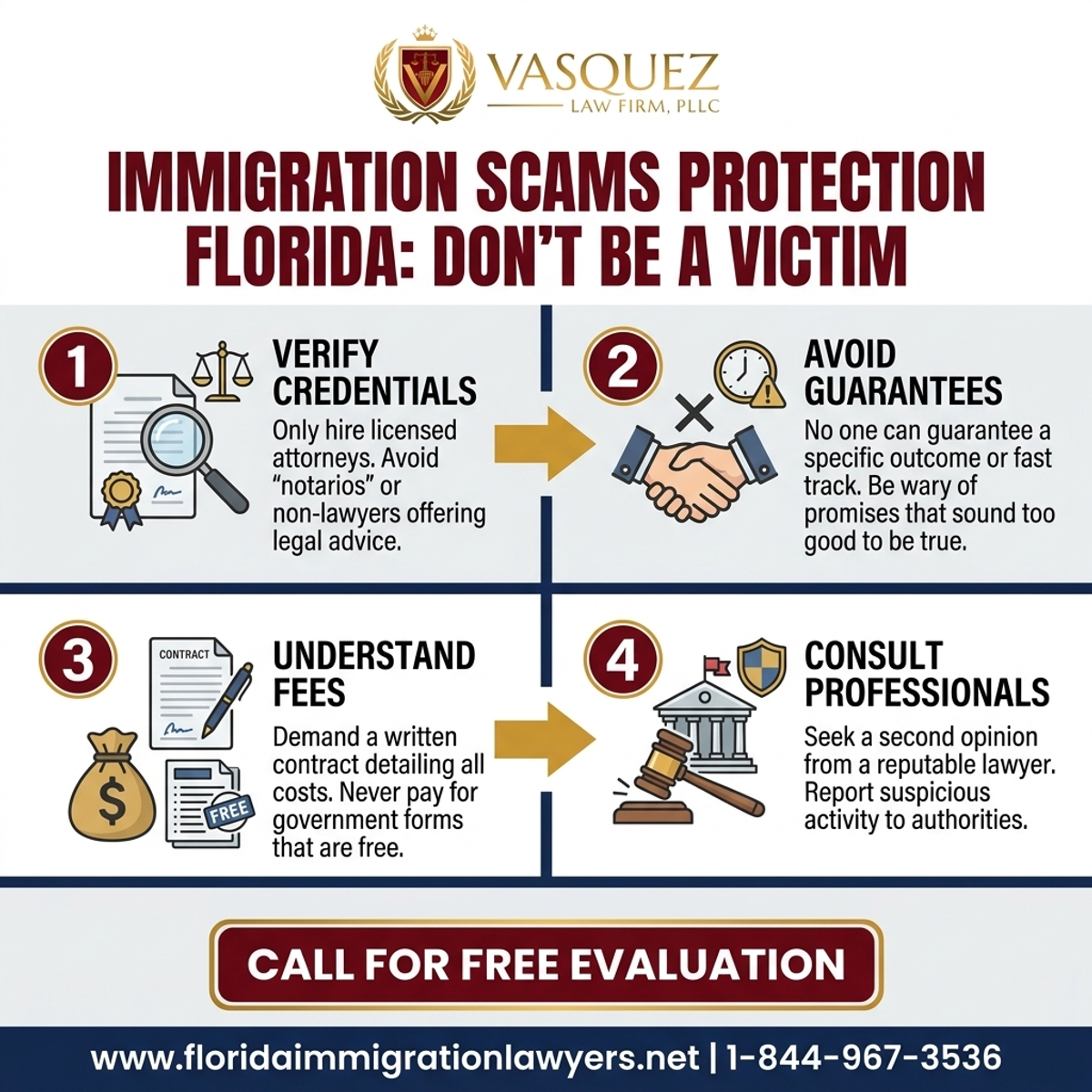
Key Statistics — Immigration Scams Protection Florida: Don't Be a Victim
When to Call a Florida Immigration Lawyer
The complexities of immigration law, combined with the prevalent threat of scams, make professional legal guidance indispensable. Knowing when to consult with a qualified attorney can be the difference between a successful outcome and severe immigration consequences.
You should immediately contact Florida Immigration Lawyers if you:
- Suspect Fraud: If an offer seems too good to be true, or if you encounter a "notario" offering legal services, seek legal advice to verify.
- Have Fallen Victim: If you realize you've been scammed, a lawyer can assess the damage, help correct your immigration record, and advise on reporting the perpetrator. This is critical for cases involving family petitions or citizenship applications.
- Received a Request for Evidence (RFE) or Notice of Intent to Deny (NOID): These often indicate issues with your application that a scammer might have caused. An attorney can help respond effectively.
- Are Facing Deportation Proceedings: If a scam led to the initiation of removal proceedings, immediate legal representation is vital to protect your rights and explore defense strategies.
- Need to Understand Complex Immigration Options: For legitimate applications like business visas, asylum, or adjustment of status, an attorney ensures proper filing and strategy.
- Cannot Understand Official Communications: If you receive documents from USCIS or other agencies that you do not fully comprehend, an attorney can translate and explain them.
Florida Immigration Lawyers has extensive experience protecting immigrants across Florida, including Fort Lauderdale, Miami, Orlando, and Tampa. We understand the specific challenges faced by immigrant communities in this region and are equipped to provide the compassionate, expert legal support you need. Do not hesitate to reach out for a free consultation.
About Florida Immigration Lawyers
Florida Immigration Lawyers is a leading law firm dedicated to providing comprehensive and compassionate immigration legal services across the entire state of Florida. With offices strategically located to serve diverse communities, our experienced attorneys are committed to helping individuals, families, and businesses navigate the intricate landscape of U.S. immigration law. We pride ourselves on our client-focused approach, ensuring every case receives the personalized attention and strategic insight it deserves.
Our firm specializes in a wide range of immigration matters, including family-based petitions, employment visas, deportation defense, asylum claims, naturalization and citizenship, and appeals. We understand the unique challenges and opportunities present in Florida's vibrant immigrant communities, from Fort Lauderdale to Jacksonville. Our mission is to secure positive outcomes for our clients while upholding the highest ethical standards and providing steadfast support throughout their immigration journey.
When you choose Florida Immigration Lawyers, you gain a dedicated legal partner committed to protecting your rights and achieving your immigration goals. We offer free consultations, are available 24/7, and our team is fully bilingual, ensuring effective communication and culturally sensitive representation. Se Habla Español. Contact us today at 1-844-967-3536 or visit floridaimmigrationlawyers.net to learn how we can assist you.
Sources and References
- U.S. Citizenship and Immigration Services (USCIS)
- Executive Office for Immigration Review (EOIR)
- Federal Trade Commission (FTC) - Report Fraud
- 8 U.S.C. Chapter 12 - Immigration and Nationality Act (INA)
- INA 274C - Penalties for Document Fraud (8 U.S.C. § 1324c)
- 8 CFR Part 292 - Representation and Appearances
- The Florida Bar - Find a Lawyer: https://www.floridabar.org/directories/find-a-lawyer/
Related services: immigration practice areas, experienced immigration attorneys.
This article provides general legal information and is not intended as legal advice. Every case is unique, and outcomes depend on specific facts and circumstances. Contact an attorney for advice about your particular situation.
Do not let immigration scams derail your future. Protect yourself and your loved ones by seeking qualified legal counsel. For a free consultation and dedicated support, call Florida Immigration Lawyers at 1-844-967-3536 today. Se Habla Espanol - Estamos aqui para ayudarle.
If you need legal assistance, learn more about how our immigration attorneys can help, or call us at 1-844-967-3536 for a free consultation.
Do Not Navigate This Process Alone
Our experienced immigration attorneys are ready to fight for you. Get a free, confidential consultation today.
Se Habla Español
Frequently Asked Questions
Florida Immigration Lawyers
Immigration Attorney | Founder, Vasquez Law Firm
U.S. Air Force veteran and immigration attorney with thousands of cases resolved. J.D., NCCU School of Law. AILA member. Admitted to the 4th, 5th, and 11th Circuit Courts.
Available 24/7 - Free Evaluations
Related Legal Services
Our Florida immigration attorneys can help you with free immigration consultation, experienced immigration attorneys and business immigration. Call today at 1-844-967-3536 for a free consultation.
Related Links
Related Topics
Free Legal Consultation
Discuss your case with our experienced attorneys. We're available 24/7.
Se Habla Español - Estamos aquí para ayudarle.
Related Articles
Immigration Services Jacksonville Florida: Your Guide
Navigating immigration services in Jacksonville, Florida, requires a thorough understanding of federal laws and local procedures. This comprehensive guide from Florida Immigration Lawyers covers everything from family-based visas and employment green cards to naturalization and deportation defense. We provide a step-by-step overview, essential document checklists, and insights into processing timelines and costs. Learn about common mistakes to avoid and understand when expert legal counsel is indispensable. Our firm is dedicated to assisting individuals and families throughout Florida, including Jacksonville and Orlando, offering personalized strategies and empathetic support. Contact us for a free consultation to discuss your immigration needs and secure your future in the U.S.
Citizenship Test Preparation in Florida: Essential Guide
Prepare for the citizenship test in Florida with our comprehensive guide. Learn about the test format, essential steps, and resources available in Tallahassee. Contact Florida Immigration Lawyers for expert assistance.
Unlawful Presence Waiver in Florida: What You Need to Know
Learn about the I-601A unlawful presence waiver in Florida, including eligibility, application steps, and common mistakes to avoid. Contact Florida Immigration Lawyers for expert guidance.
H-2A Visa for Agricultural Workers in Florida | VLF Florida
Explore the H-2A visa program essential for Florida's agriculture. Learn application steps, common mistakes, and when to seek legal help.
