Immigration Rights in Florida: Know Your Legal Protections
Navigating immigration law in Florida can be complex, especially when facing potential encounters with Immigration and Customs Enforcement (ICE). This comprehensive guide empowers you with essential immigration rights, detailing your legal protections and what to do if you or a loved one are stopped or detained. Learn how to protect yourself, avoid critical mistakes, and understand the crucial role of legal counsel in safeguarding your future in Florida. From Homestead to Miami, knowing your rights is your first line of defense against deportation and legal challenges. Contact Florida Immigration Lawyers for a free consultation.

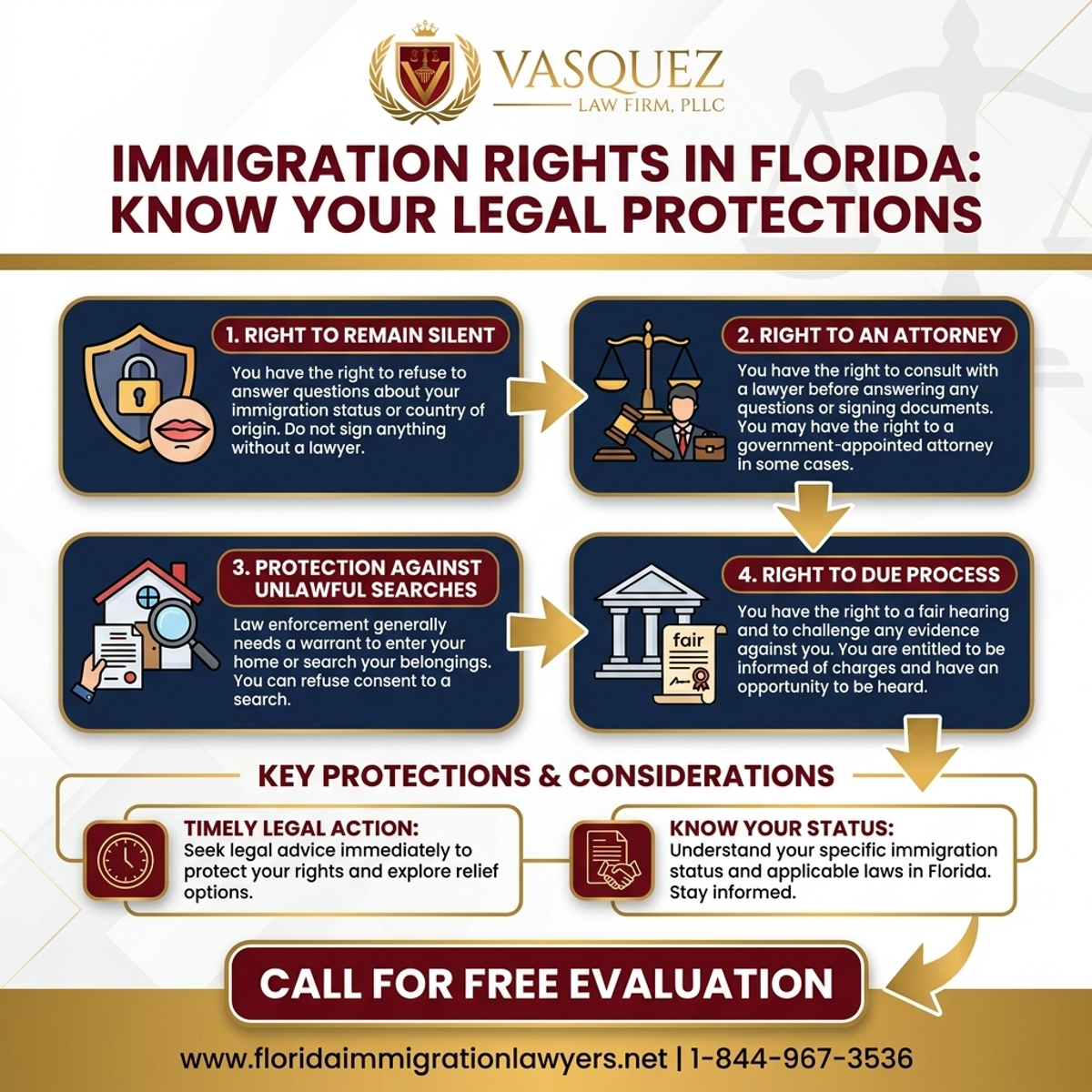
Knowing your immigration rights is crucial for anyone living in Florida, regardless of status. These rights provide essential protections during encounters with Immigration and Customs Enforcement (ICE) or other law enforcement agencies. You have the right to remain silent, the right to refuse to open your door without a valid judicial warrant, and the right to speak with an attorney before answering questions or signing documents. Understanding these fundamental legal protections can significantly impact your future and help prevent deportation.
- You have the right to remain silent.
- Request an attorney immediately if detained.
- Do not open your door to ICE without a judicial warrant.
- Do not sign anything without legal review.
- Carry a "Know Your Rights" card and lawyer's contact information.
Navigating immigration law in Florida can be complex and intimidating, especially when you or a loved one face potential encounters with Immigration and Customs Enforcement (ICE). The uncertainty and fear can be overwhelming, but understanding your immigration rights is your most powerful tool. Whether you reside in Homestead, Miami, Orlando, or anywhere across the Sunshine State, knowing your legal protections is not just advisable, it's absolutely essential for safeguarding your future and that of your family.
This comprehensive guide from Florida Immigration Lawyers aims to empower you with the knowledge needed to assert your rights confidently. We will detail your legal protections, provide a step-by-step approach for ICE encounters, highlight critical documents to prepare, and outline common pitfalls to avoid. Our goal is to ensure you are well-informed and prepared for any situation, providing peace of mind in challenging times. Do not face these serious challenges alone. Call Florida Immigration Lawyers at 1-844-967-3536 for a free consultation today.
Understanding Your Immigration Rights in Florida
In the United States, all individuals, including non-citizens, are afforded certain constitutional rights. These fundamental protections stem from the U.S. Constitution, notably the Fourth, Fifth, and Sixth Amendments. The Fourth Amendment protects against unreasonable searches and seizures, meaning ICE generally needs a warrant to enter your home or conduct certain searches. The Fifth Amendment grants the right to remain silent and protection against self-incrimination, while the Sixth Amendment ensures the right to legal counsel in criminal proceedings, which extends to immigration cases in many contexts.
For immigrants in Florida, understanding these foundational legal rights for immigrants is paramount. Florida has a large and diverse immigrant population, particularly in areas like Miami-Dade County, including Homestead, where immigration enforcement is a significant concern. While your immigration status may affect the types of relief available to you, it does not strip you of all basic human and constitutional protections. Knowing these protections is the first step toward effective self-advocacy and defense.
It's important to differentiate between your rights in a criminal context and those specific to immigration enforcement. While some rights overlap, immigration law operates under a different legal framework, often codified in the Immigration and Nationality Act (INA), found in 8 U.S.C. Chapter 12. Consulting with an attorney is crucial to understand how these laws apply to your unique circumstances. Our team at Florida Immigration Lawyers is dedicated to helping you navigate the complexities of immigration law and protect your fundamental liberties.
Your Rights During an ICE Encounter: A Step-by-Step Guide
Encounters with ICE can be frightening, but knowing how to act can make a significant difference. Here’s a step-by-step guide on how to assert your know your rights during an ICE encounter, whether at home, in public, or in a vehicle. Always remember that your composure and adherence to these steps are vital for your protection. These guidelines are general, and seeking legal advice for specific situations is always recommended.
- Remain Silent: You have the right to remain silent. Do not answer questions about your citizenship, immigration status, or how you entered the U.S. Simply state, "I wish to remain silent." Anything you say can be used against you in immigration proceedings. This is a crucial protection under the Fifth Amendment.
- Ask if You Are Free to Leave: If you are in a public place, ask, "Am I free to leave?" If the officer says yes, you may calmly walk away. If they say no, you are being detained, and your rights as a detainee apply.
- Demand to See a Warrant: If ICE agents are at your home, do not open the door unless they show you a warrant signed by a judge. A valid judicial warrant will specify your name and address. An administrative warrant (Form I-200 or I-205) issued by ICE itself is not sufficient to enter your home without your permission.
- Do Not Open Your Door Without a Judicial Warrant: If agents do not have a judicial warrant, you can keep your door closed. You do not need to let them in. You can slide your "Know Your Rights" card under the door or speak through the door.
- Do Not Lie or Present False Documents: Providing false information or forged documents can lead to severe criminal penalties and complicate your immigration case significantly. Always be truthful if you choose to speak, but remember your right to remain silent.
- Request to Speak with an Attorney: If you are detained, immediately state, "I want to speak with my lawyer." ICE must provide you with a reasonable opportunity to contact legal counsel. Do not answer further questions until you have spoken with an attorney.
- Do Not Sign Anything: Never sign any document presented by ICE or any other law enforcement official without first consulting with an attorney. Signing documents, especially "Voluntary Departure" forms, can waive your rights and lead to immediate deportation.
- Document Everything: If possible and safe, try to remember details of the encounter: agent names, badge numbers, vehicle descriptions, time, date, and location. If you can, have a trusted person witness the encounter or record it (if legal in your specific situation and safe to do so).
Understanding these steps is vital for anyone facing an ICE encounter in Florida. For more information on immigration enforcement, you can visit the official USCIS website.
Essential Documents to Prepare and Carry
Preparing for potential interactions with immigration authorities involves more than just knowing your rights; it also means organizing your essential documents. While you should not carry original sensitive immigration documents with you at all times, having copies and other vital information readily accessible can be incredibly beneficial. This proactive approach can help your attorney quickly assess your situation and mount an effective defense, especially in the event of detention in Florida's facilities like Krome Service Processing Center or Glades County Detention Center.
Key Documents to Keep Safe (Not on Your Person):
- Original Immigration Documents: Keep your original Green Card, Employment Authorization Document (EAD), I-94 arrival/departure record, or any other primary immigration documents in a secure place at home. Carrying originals risks them being lost or confiscated.
- Copies of All Immigration Filings: Maintain copies of every application, petition, and correspondence with USCIS or immigration court. These documents are crucial for your legal team to understand your complete immigration history.
- Proof of Residence and Ties to the U.S.: Utility bills, lease agreements, property deeds, tax returns, and letters from employers or community leaders can demonstrate your strong ties to Florida and the U.S., which may be important in bond hearings or other proceedings.
Documents to Carry (Copies or Information):
- "Know Your Rights" Card: A small card, often provided by immigration lawyers or advocacy groups, that states your rights in English and Spanish. It includes your right to remain silent and to speak with an attorney.
- Lawyer's Contact Information: Always have your attorney's name and phone number readily available. Memorize it if possible, or carry it on your person. This is critical for initiating your legal defense promptly.
- Emergency Contact Information: Have contact details for trusted family members or friends who can be notified in case of detention.
- Proof of Identity (Non-Driving ID): A state ID card or foreign passport (if you have one) can serve as identification without necessarily revealing your immigration status, depending on the context.
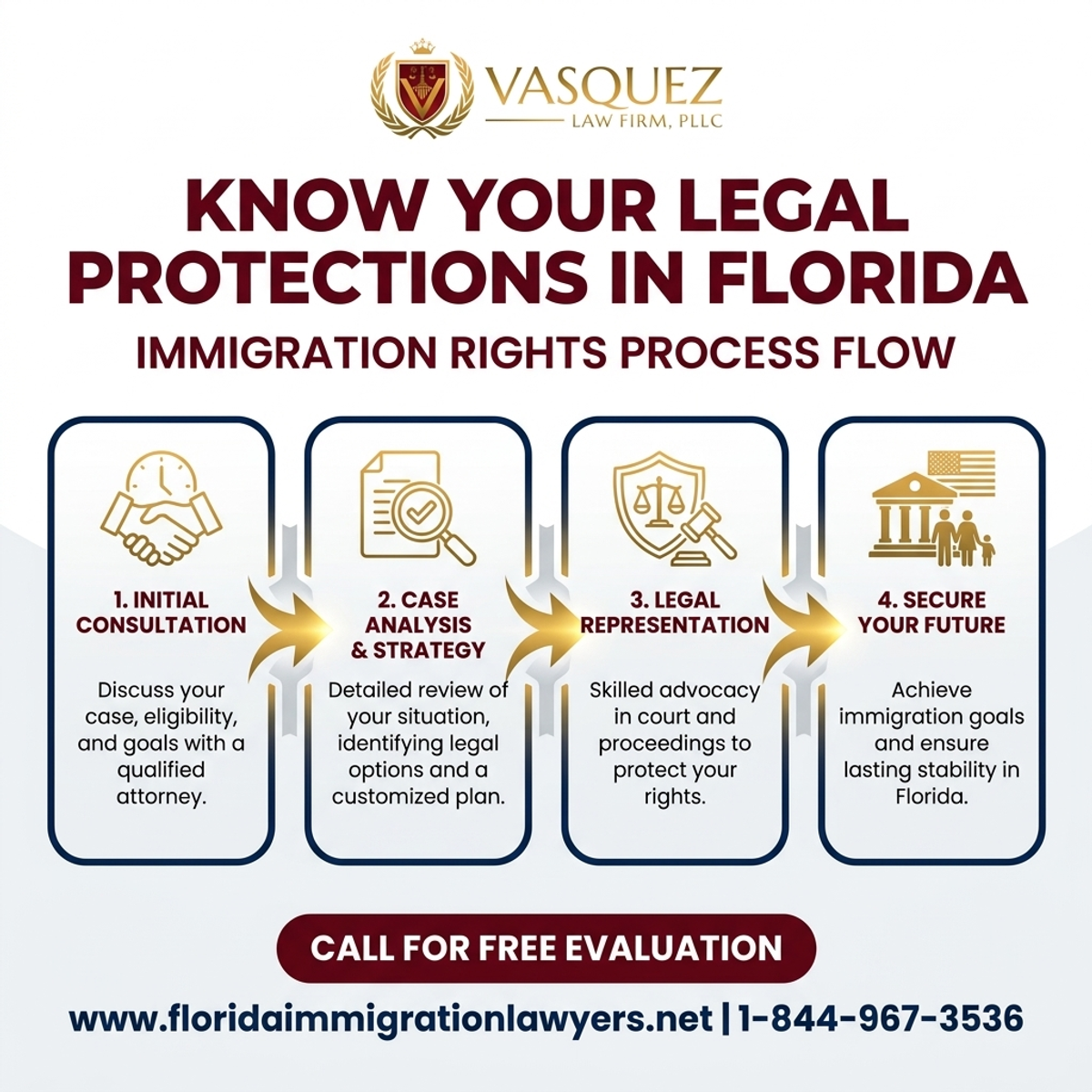
Step-by-Step Process — Immigration Rights in Florida: Know Your Legal Protections
Having these documents organized and knowing where to access them can streamline the process for your legal team, especially if you face deportation defense. Remember, preparation is key to protecting your legal rights.
Navigating Immigration Court and Detention in Florida
If you or a loved one are detained by ICE in Florida, understanding the process that follows is critical. Detention often leads to immigration court proceedings, which are distinct from criminal courts. Florida hosts several immigration courts, including the busy Miami Immigration Court and Orlando Immigration Court, falling under the jurisdiction of the Executive Office for Immigration Review (EOIR). These courts handle a vast number of cases, from bond hearings to asylum claims and deportation defense.
The Detention and Court Process:
- Apprehension and Detention: After an ICE encounter, if agents determine you are removable, you may be detained. Common detention facilities in Florida include Krome Service Processing Center in Miami and Glades County Detention Center in Moore Haven.
- Notice to Appear (NTA): You will typically receive a Form I-862, Notice to Appear, which is the charging document that initiates removal proceedings. This document outlines the reasons the government believes you are deportable and lists your initial hearing date.
- Bond Hearing: For many detained individuals, the first step in immigration court is a bond hearing. An Immigration Judge will determine if you are eligible for bond and, if so, set an amount. Factors considered include ties to the community, criminal history, and flight risk. Having legal representation significantly increases the likelihood of a favorable bond decision. (See 8 CFR Part 236.1 regarding bond determinations).
- Master Calendar Hearings: These are preliminary hearings where you formally enter a plea to the allegations in the NTA and inform the judge of your intentions regarding your case, such as seeking asylum or other forms of relief.
- Individual Hearings (Merits Hearings): If your case proceeds, an individual hearing is where you present your full defense, including testimony, witnesses, and evidence, to the Immigration Judge. This is where the core of your case is argued.
The timeline for these proceedings can vary widely based on the court's caseload, the complexity of your case, and whether you are detained. Detained cases often move faster, but the overall process can still take months or even years. Having an experienced attorney from Florida Immigration Lawyers by your side is essential to navigate these complex stages effectively. For official information about immigration courts and their procedures, visit the Executive Office for Immigration Review (EOIR) website.
The Cost of Defense: Legal Fees and Filing Expenses
Understanding the potential financial aspects of an immigration case is a practical concern for many individuals and families in Florida. The costs associated with defending your immigration rights can include attorney fees, government filing fees, and other related expenses. While it is an investment, the cost of not having experienced legal representation can be far greater, potentially leading to deportation or the loss of crucial immigration benefits.
Attorney Fees:
Legal fees for immigration cases can vary significantly based on the complexity of the case, the attorney's experience, and the specific services required. At Florida Immigration Lawyers, we offer various fee structures to accommodate our clients. These typically include:
- Flat Fees: Many common immigration services, such as family petitions, adjustment of status, or certain visa applications, are handled on a flat-fee basis. This provides predictability regarding the total legal cost.
- Hourly Rates: More complex cases, particularly those involving litigation, multiple court appearances, or extensive research, may be billed at an hourly rate. This is common in deportation defense cases or appeals.
- Payment Plans: We understand that legal expenses can be substantial. Our firm often works with clients to establish manageable payment plans, making quality legal representation accessible.
Government Filing Fees:
Beyond attorney fees, you will also encounter various government fees. These are paid directly to agencies like USCIS (U.S. Citizenship and Immigration Services) or EOIR. Examples include fees for filing petitions, applications for work permits, bond payments, or appeals. It's important to note that these fees are subject to change and are non-refundable. Your attorney can advise you on the current fee schedule relevant to your case, but we do not provide specific amounts here as they fluctuate.
Key Statistics — Immigration Rights in Florida: Know Your Legal Protections
Investing in legal counsel is an investment in your future. An experienced immigration lawyer can identify all possible avenues for relief, prepare a robust defense, and represent your interests vigorously in court or before government agencies. This can be the difference between remaining in the U.S. with your family and facing deportation. We encourage you to discuss your financial concerns during your initial consultation. Contact us today to learn more about our services and fee structures.
Do not navigate this complex and stressful process alone. The stakes are too high. Contact Florida Immigration Lawyers today at 1-844-967-3536 to schedule your free consultation and ensure your rights are protected every step of the way.
Common Mistakes to Avoid
Facing immigration challenges can be overwhelming, and it's easy to make critical errors without proper guidance. Avoiding these common mistakes can significantly improve the outcome of your case and help protect your immigration rights.
- Opening Your Door to ICE Without a Judicial Warrant: This is one of the most frequent errors. Always ask for a warrant signed by a judge. An administrative warrant from ICE (Form I-200 or I-205) is not enough to grant them entry without your consent. Opening your door can lead to immediate apprehension.
- Lying or Presenting False Documents: Providing false information or forged immigration documents to any government official, including ICE, can result in severe criminal charges, fines, and makes you ineligible for many immigration benefits in the future. Honesty is crucial.
- Signing Documents Without Understanding Them: Never sign anything presented by ICE or any other official without a thorough understanding of its contents and implications. You have the right to consult with an attorney first. Signing a "Voluntary Departure" form, for instance, can waive your right to a hearing before an immigration judge.
- Carrying Original Immigration Documents: While it's important to have proof of status, carrying original Green Cards, EADs, or passports can lead to their confiscation or loss during an encounter. Keep originals in a safe place and carry copies or "Know Your Rights" cards instead.
- Not Knowing Your Lawyer's Contact Information: In a stressful situation, it's easy to forget crucial details. Always have your attorney's name and phone number readily accessible, and try to memorize it. This ensures immediate legal assistance if you are detained.
- Failing to Attend Court Hearings: Missing an immigration court hearing, even inadvertently, almost always results in an "in absentia" removal order against you. This makes it extremely difficult to reopen your case and can lead to immediate deportation.
- Assuming You Have No Rights: Many immigrants believe they have no rights simply because of their status. This is false. All individuals in the U.S., regardless of status, have fundamental constitutional rights. Believing otherwise can lead to self-incrimination or waiver of crucial protections.
- Ignoring a Notice to Appear (NTA): An NTA is a formal document initiating removal proceedings. Ignoring it is akin to missing a court date and will result in an in absentia removal order. Always respond to an NTA and seek legal counsel immediately.
- Not Informing Family of Your Whereabouts: If detained, your family may not know where you are, causing immense stress and delaying legal intervention. Have a plan for notifying loved ones and your attorney in case of detention.
- Resisting Arrest Physically: While you have the right to assert your verbal and legal rights, physically resisting arrest can lead to criminal charges and make your immigration situation significantly worse. Remain calm and non-combative.
- Discussing Your Case with Others in Detention: Information shared with fellow detainees, even those who seem trustworthy, can sometimes be used against you. Your conversations may not be private. Only discuss your case with your attorney.
- Trusting Non-Attorney "Notarios": In many Latin American countries, a "notario publico" is a lawyer. In the U.S., a "notary public" is not an attorney and cannot provide legal advice. Seeking help from unauthorized individuals can lead to fraudulent services, incorrect filings, and severe legal consequences. Always consult a licensed immigration attorney.
When to Call a Lawyer
Knowing when to seek legal counsel is as important as knowing your immigration rights. The complexities of immigration law, combined with the high stakes involved, mean that professional legal guidance is almost always beneficial. At Florida Immigration Lawyers, we specialize in helping individuals navigate these challenges across Florida, from Homestead to Jacksonville.
You should immediately contact an experienced immigration attorney if:
- You have any contact with ICE or other law enforcement: Even a simple stop can escalate. An attorney can advise you on your rights and intervene if necessary.
- You receive a Notice to Appear (NTA): This signifies the start of removal proceedings. You need legal representation to defend your case in immigration court.
- A family member has been detained by ICE: We can help locate them, explore bond options, and begin their defense. Our firm has extensive experience with Florida detention centers.
- You are seeking asylum or other forms of relief: These cases are highly complex and require careful preparation and presentation of evidence. Our asylum attorneys are ready to assist.
- You have a criminal history: Even minor offenses can have severe immigration consequences. A lawyer can assess the impact and advise on potential waivers or defenses.
- You have been previously deported or have an existing removal order: These situations are particularly challenging and require specialized legal strategies.
- You are considering any immigration application or petition: From family visas to citizenship applications, proper filing and documentation are crucial to avoid delays or denials.
Our attorneys are well-versed in Florida immigration law and are committed to providing compassionate and effective legal representation. We understand the unique challenges faced by immigrants in our state and are prepared to fight tirelessly for your rights and future.
About Florida Immigration Lawyers
Florida Immigration Lawyers is a leading law firm dedicated to providing comprehensive and compassionate legal services to immigrants across the entire state of Florida. With offices strategically located to serve diverse communities, our team of experienced attorneys is committed to upholding the immigration rights of every client. We understand the profound impact immigration matters have on individuals and families, and we approach each case with the dedication and personalized attention it deserves. Our firm is founded on principles of integrity, advocacy, and a deep commitment to justice for immigrants.
We offer a broad range of immigration services, including family-based petitions, business immigration solutions, deportation defense, asylum claims, visa applications, and naturalization assistance. Our attorneys are highly knowledgeable in the latest immigration policies and procedures, ensuring that our clients receive accurate, up-to-date advice. We pride ourselves on clear communication, ensuring you are informed at every stage of your legal journey.
Choosing Florida Immigration Lawyers means selecting a partner who will stand with you. We offer free consultations, are available 24/7 to address urgent concerns, and proudly offer bilingual services (Se Habla Español) to ensure effective communication with our diverse clientele. Let us put our expertise to work for you. Call us today at 1-844-967-3536 or visit our website at www.floridaimmigrationlawyers.net to schedule your free consultation. We are here to help you navigate the complexities of immigration law with confidence.
Sources and References
- U.S. Citizenship and Immigration Services (USCIS)
- Executive Office for Immigration Review (EOIR)
- 8 U.S.C. Chapter 12 - Immigration and Nationality Act (INA)
- 8 U.S.C. § 1357 - Powers of Immigration Officers and Employees
- 8 CFR Part 236 - Apprehension and Detention of Aliens
- Fourth Amendment to the U.S. Constitution
- Fifth Amendment to the U.S. Constitution
- Sixth Amendment to the U.S. Constitution
Related services: immigration waivers, humanitarian protection programs, DACA renewal and applications, temporary protected status (TPS).
This article provides general legal information and is not intended as legal advice. Every case is unique, and outcomes depend on specific facts and circumstances. Laws are subject to change. Contact an attorney for advice about your particular situation. Florida Immigration Lawyers does not guarantee case outcomes or specific results.
Your future in Florida depends on understanding and asserting your immigration rights. Do not leave your fate to chance. Empower yourself with knowledge and the support of dedicated legal professionals. For comprehensive legal guidance and robust representation, trust Florida Immigration Lawyers. We are here to protect your rights and advocate for your best interests. Call us today for a free consultation at 1-844-967-3536. Se Habla Español - Estamos aqui para ayudarle.
Do Not Navigate This Process Alone
Our experienced immigration attorneys are ready to fight for you. Get a free, confidential consultation today.
Se Habla Español
Or leave your details and we’ll call you:
Free Evaluation in 24 Hours
Or talk to us right now

AI voice assistant — available 24/7
FreeFrequently Asked Questions

William J. Vásquez
Founding Attorney · Vasquez Law Firm
U.S. Air Force veteran and immigration attorney with years of hands-on U.S. immigration experience. J.D., NCCU School of Law. AILA member. Admitted to the 4th, 5th, and 11th Circuit Courts.
Available 24/7 - Free Evaluations
Reviewed for legal accuracy by William J. Vásquez
Licensed in North Carolina; U.S. immigration is federal practice.
Related Legal Services
Our Florida immigration attorneys can help you with asylum protection, deportation defense and citizenship and naturalization. Call today at 1-844-967-3536 for a free consultation.
Related Links
Related Topics
Free Legal Consultation
Discuss your case with our experienced attorneys. We're available 24/7.
Se Habla Español - Estamos aquí para ayudarle.
Related Articles
I-140 Premium Processing Timeline in Florida: What to Know
Navigating the I-140 premium processing timeline in Florida can be challenging. Our guide covers timelines, eligibility, and steps for EB-2 and EB-3 categories. Contact Florida Immigration Lawyers for expert assistance.
Unlawful Presence Waiver Florida: A 2026 Guide
Discover how the unlawful presence waiver can help immigrants in Florida stay with their families while adjusting their status. Learn about the I-601A process and eligibility criteria.
USCIS Oath Ceremony Schedule 2026: What to Expect in Florida
For those in Florida awaiting U.S. citizenship in 2026, understanding the USCIS oath ceremony schedule and naturalization processing times is vital. This guide covers the journey from application to the final oath, detailing estimated timelines, required documents, and common pitfalls. Learn about the factors influencing processing in Florida's field offices, such as Miami, Orlando, and Tampa, and what to expect during your interview and the pivotal oath ceremony. We emphasize the importance of meticulous preparation and highlight when legal assistance from Florida Immigration Lawyers can be invaluable, especially with evolving immigration rules. Prepare for your future as a U.S. citizen with confidence and expert guidance.
Immigration Lawyer Orlando Free Consultation: Your 2026
Navigating immigration court proceedings in Florida requires expert legal guidance. This comprehensive guide details the step-by-step process of removal proceedings, essential documents, and critical timelines as of 2026. Learn about the costs of representation and common mistakes to avoid. For those in Orlando, Tallahassee, or any part of Florida, securing an immigration lawyer Orlando free consultation is your first step towards understanding your rights and building a strong defense against deportation. Florida Immigration Lawyers offers compassionate and effective legal support for all immigration court challenges, ensuring you have a dedicated advocate by your side.