Unlawful Presence Waiver Florida: A 2026 Guide
Discover how the unlawful presence waiver can help immigrants in Florida stay with their families while adjusting their status. Learn about the I-601A process and eligibility criteria.

- Eligibility requires a qualifying relative.
- It mitigates the 3 or 10-year bar due to unlawful presence.
- Applicants must demonstrate extreme hardship to a U.S. citizen or lawful permanent resident spouse or parent.
Introduction
For many immigrants in Florida, the fear of being separated from family due to unlawful presence can be overwhelming. The I-601A provisional waiver offers a potential solution, allowing eligible individuals to remain in the U.S. while adjusting their status. This article explores the nuances of the unlawful presence waiver, focusing on its application in Florida, particularly in Naples and surrounding areas. Call Florida Immigration Lawyers at 1-844-967-3536 for a free consultation.
The pathway to legal residency can often be fraught with anxiety, especially when past immigration issues, such as accruing unlawful presence, create significant barriers. The I-601A waiver was specifically designed to alleviate some of this burden, offering a glimmer of hope for families striving for stability and unity. It acknowledges the profound impact that separation can have on U.S. citizen or lawful permanent resident family members, providing a mechanism to waive certain grounds of inadmissibility before an applicant leaves the country for their visa interview.
Navigating this complex legal landscape requires not only a deep understanding of immigration law but also a compassionate approach to each unique family's circumstances. In Florida, a state with a vibrant and diverse immigrant population, the demand for clear, accurate information about waivers like the I-601A is particularly high. Whether you reside in the bustling urban centers or the close-knit communities of Naples and Southwest Florida, understanding your options is the first step towards securing your future. Florida Immigration Lawyers are here to guide you through every stage of this crucial process.
What is the Unlawful Presence Waiver?
The unlawful presence waiver, specifically the I-601A provisional waiver, allows eligible immigrants to apply for a waiver of inadmissibility due to unlawful presence in the U.S. As of 2026, it is designed to help those who have accrued unlawful presence and are subject to a 3 or 10-year bar. Applicants must have a qualifying relative, such as a U.S. citizen or lawful permanent resident spouse or parent, who would suffer extreme hardship if the applicant were not allowed to remain in the U.S.
Understanding the process is crucial for those residing in Florida, especially in areas like Naples where access to legal resources may vary. The waiver is a pivotal step for many families aiming to stay united.
To truly grasp the significance of the I-601A waiver, it's essential to understand the underlying immigration law. Sections 212(a)(9)(B)(i)(I) and (II) of the Immigration and Nationality Act (INA) impose a 3-year or 10-year bar on individuals who have accrued more than 180 days or one year of unlawful presence, respectively, and then depart the U.S. This means that if you leave the country for your immigrant visa interview without a waiver, you would be unable to return for a significant period. The provisional waiver addresses this by allowing you to seek forgiveness for this specific ground of inadmissibility before you depart, dramatically reducing the time you spend separated from your family abroad.
The 'extreme hardship' requirement is the cornerstone of a successful I-601A application. It’s not enough to simply claim inconvenience or typical difficulties associated with separation. USCIS requires compelling evidence that your qualifying U.S. citizen or lawful permanent resident spouse or parent would suffer hardship that is 'greater than that which would normally be expected' if you were denied admission. This could encompass severe medical conditions requiring your care, significant financial strain, psychological distress, or other profound impacts on their life in the U.S. Each case is meticulously reviewed, making a strong, well-documented argument critical for approval. Our team at Florida Immigration Lawyers specializes in crafting these persuasive hardship arguments for clients across Florida.
Furthermore, it's vital to distinguish the I-601A provisional waiver from other waivers. This specific waiver only addresses unlawful presence. It does not waive other grounds of inadmissibility, such as certain criminal convictions, misrepresentations, or previous deportation orders. If an applicant has additional grounds of inadmissibility, they may need to seek a separate waiver, often requiring them to leave the U.S. and apply through a different process. This complexity underscores why professional legal guidance is indispensable. For those in Naples and throughout Florida, consulting with an experienced attorney from Florida Immigration Lawyers can clarify your eligibility and identify any other potential hurdles.
How to Apply for an I-601A Provisional Waiver
Applying for an I-601A waiver involves several steps. It is important to follow these carefully to improve the chances of approval:
- Determine Eligibility: Ensure you have a qualifying relative and can demonstrate extreme hardship.
- Complete Form I-601A: Accurately fill out the application form, providing all necessary documentation.
- Pay the Application Fee: Submit the required fee along with your application. Note that fees are subject to change, so check the latest requirements on the USCIS website.
- Attend Biometrics Appointment: After submission, you will be scheduled for biometrics to collect fingerprints and photographs.
- Await Decision: The processing time can vary, so patience and regular updates from USCIS are important.
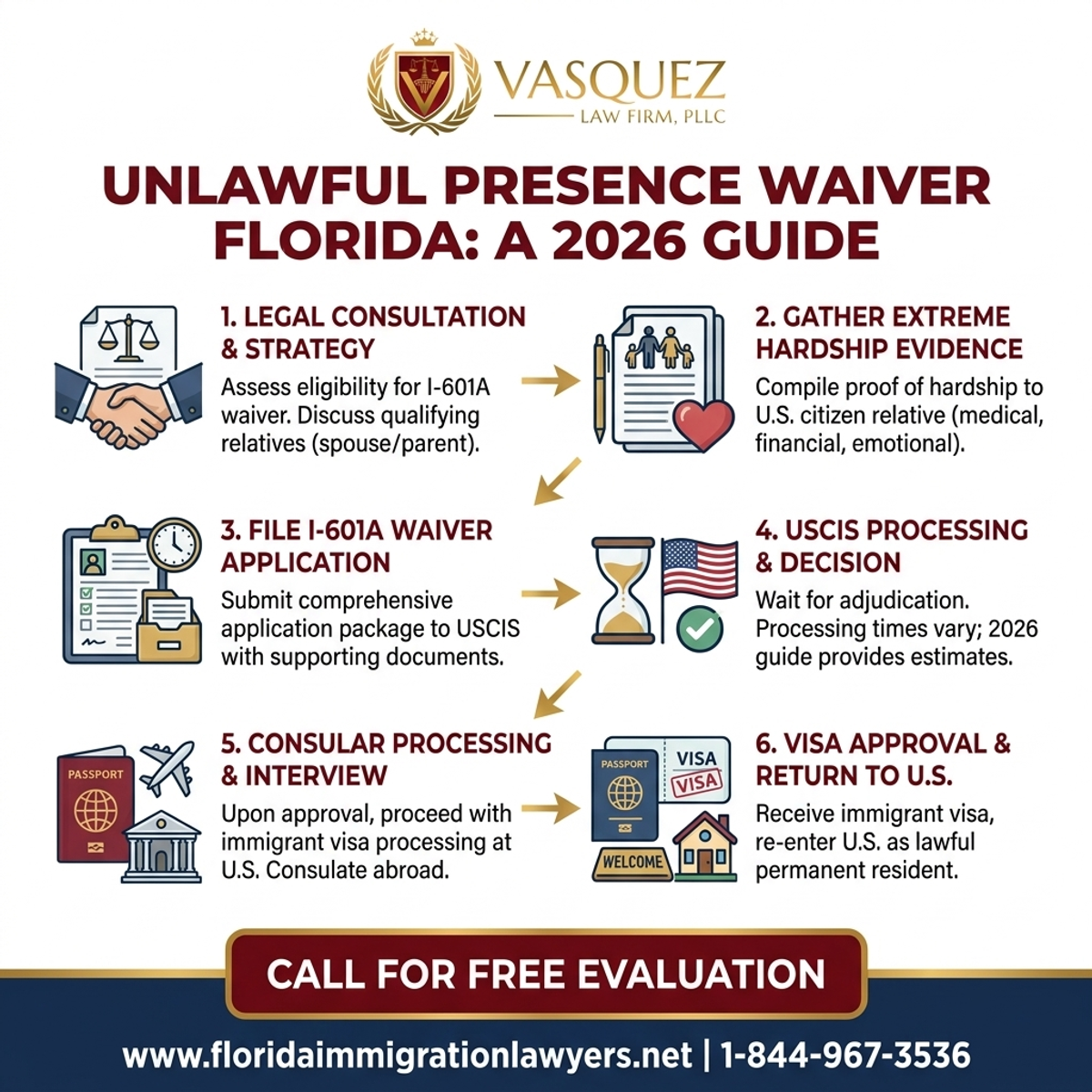
Step-by-Step Process — Unlawful Presence Waiver Florida: A 2026 Guide
Each step is vital to ensure your application is considered favorably.
Before embarking on the formal application process, a thorough self-assessment or, ideally, a consultation with an immigration attorney is paramount. This initial evaluation helps confirm whether you meet the basic eligibility criteria, such as having a qualifying relative and being otherwise eligible for an immigrant visa. Many applicants make the mistake of filing without a clear understanding of all requirements, leading to wasted time and resources. Florida Immigration Lawyers offers free consultations to help you determine your eligibility and outline a clear path forward.
Once eligibility is confirmed, the meticulous preparation of Form I-601A and its supporting documentation begins. This form requires detailed personal information, immigration history, and a comprehensive narrative explaining why your qualifying relative would suffer extreme hardship. Every statement must be consistent and supported by evidence. For families in Florida, particularly those navigating language barriers or complex family histories, the assistance of a legal professional can be invaluable in ensuring accuracy and completeness. Remember, an incomplete or inaccurately filed application is one of the most common reasons for delays or denials.
Document Checklist for the I-601A Waiver
- Proof of relationship with a qualifying relative (e.g., marriage certificate, birth certificate).
- Evidence of extreme hardship to the qualifying relative.
- Completed Form I-601A.
- Receipt of fee payment.
- Any additional supporting documents that strengthen your case.
Ensure all documents are up-to-date and accurately reflect your situation.
The strength of your I-601A waiver application often hinges on the quality and comprehensiveness of your supporting documentation. Think of your documents as telling a compelling story of why your family needs to remain united and why your qualifying relative would face exceptional difficulties without you. Organizing these documents meticulously and ensuring they are all translated into English, if necessary, is a non-negotiable step. In Florida, where diverse communities thrive, ensuring proper translations and notarizations is a common need that Florida Immigration Lawyers can assist with.
When compiling evidence of extreme hardship, consider a broad range of categories. This might include detailed medical records and doctor's letters if your qualifying relative has health issues that require your care or support. Financial hardship can be demonstrated through tax returns, mortgage statements, utility bills, and proof of your contributions to the household income. Psychological evaluations from licensed therapists detailing the emotional toll of your potential absence on your U.S. citizen or LPR family member are particularly powerful. Furthermore, evidence of your community ties, such as letters from community leaders, employers, or religious figures, can underscore your positive contributions and the void your departure would create. The more thoroughly you can illustrate the unique and severe impact of your absence, the stronger your case will be.
Timeline and Processing Expectations
Understanding the timeline for the unlawful presence waiver process is crucial for planning. As of 2026, here’s what you can generally expect:
| Stage | Typical Timeframe | Notes |
|---|---|---|
| Application Submission | 1-2 months | Includes initial processing and acknowledgment by USCIS. |
| Biometrics Appointment | 2-4 weeks post-submission | Appointment scheduling and completion. |
| Application Processing | 5-7 months | Time for USCIS to review and decide on the waiver. |
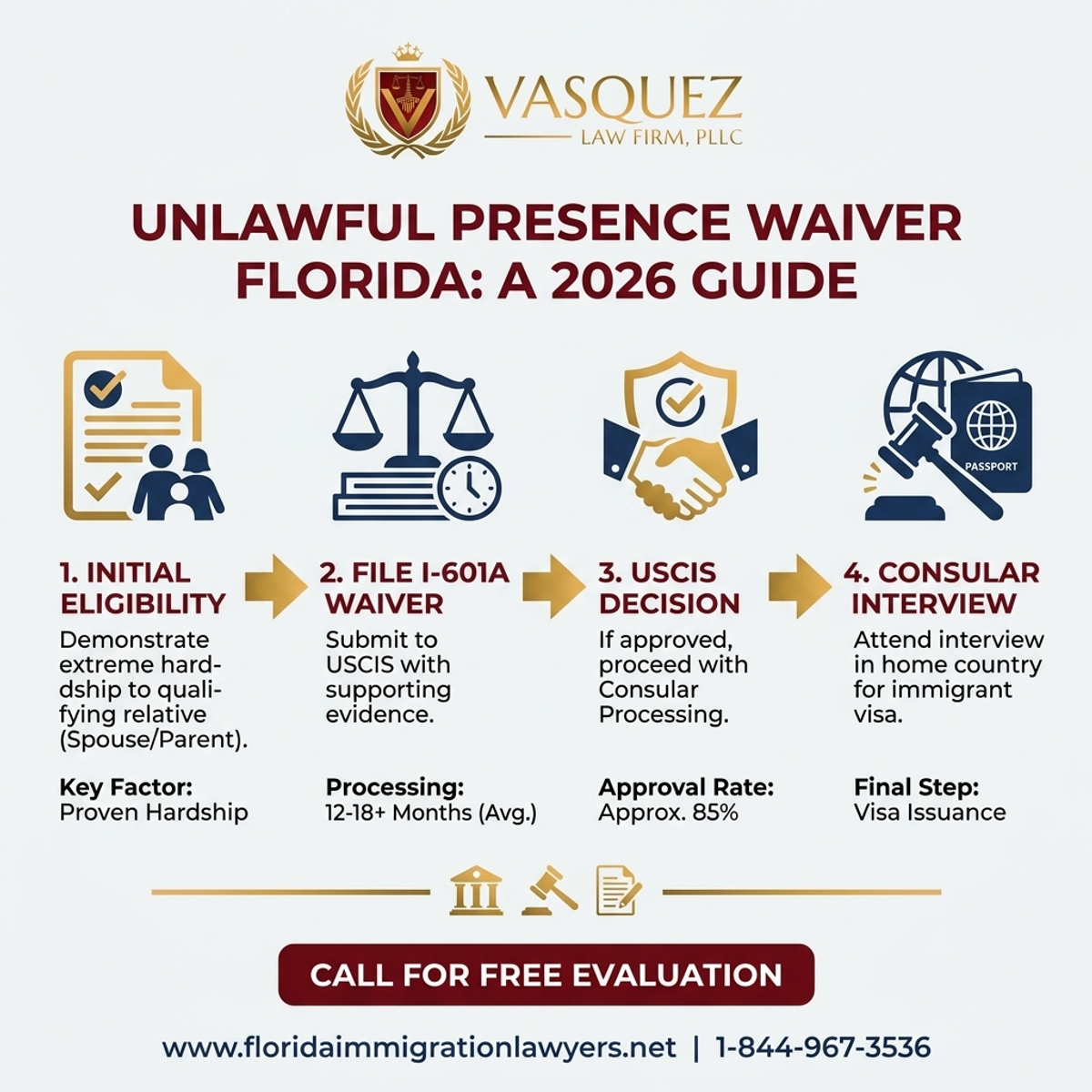
Key Statistics — Unlawful Presence Waiver Florida: A 2026 Guide
These timeframes are estimates and can vary based on individual circumstances and USCIS workload.
Understanding the processing timeline for your I-601A provisional waiver is crucial for managing expectations and planning for your future. While the provided table offers general estimates, it's important to recognize that several factors can influence how long your specific case takes. USCIS workloads fluctuate, and the complexity of your application, including the need for additional evidence or a more intricate hardship argument, can extend processing times. Global events and policy changes can also play a role, making it essential to stay informed.
During the waiting period, maintaining open lines of communication with your legal team and regularly checking your case status online are important steps. USCIS provides an online tool where you can track the progress of your application using your receipt number. However, this tool may not always provide the most detailed updates. If there are significant delays or unexpected requests, Florida Immigration Lawyers can intervene on your behalf, communicating directly with USCIS to inquire about your case status and address any issues. This proactive approach can help mitigate stress and ensure your application remains on track for individuals and families throughout Florida.
Cost Factors and Fee Breakdown
Understanding the costs involved in the I-601A waiver process is important for financial planning:
| Item | Typical Fee | Notes |
|---|---|---|
| Form I-601A Fee | Varies | Check USCIS for current fee amounts. |
| Biometrics Fee | Varies | Additional fee for biometrics services. |
Always verify current fees on the USCIS website to avoid any surprises.
Do not navigate this process alone. Contact Florida Immigration Lawyers today.
Beyond the direct USCIS filing fees, it's prudent for applicants to budget for several other potential costs associated with the I-601A waiver process. These can include legal fees for an experienced immigration attorney, which are highly recommended given the complexity of the waiver. Additional expenses might involve fees for obtaining necessary documents such as birth certificates, marriage licenses, medical records, or police clearances. If any documents are not in English, certified translation costs will also apply. For those in Florida, particularly in areas like Naples, these ancillary costs can add up, making comprehensive financial planning essential.
Furthermore, if your extreme hardship claim relies on expert opinions, such as psychological evaluations from licensed professionals, there will be associated consultation and report fees. Travel expenses for biometrics appointments and, eventually, for your consular interview abroad should also be factored into your budget. While the USCIS fees are generally non-refundable, investing in proper legal representation from Florida Immigration Lawyers can significantly increase your chances of approval, potentially saving you from having to refile and incur fees again due to preventable errors. Our firm believes in transparent fee structures, ensuring you understand all costs upfront.
Common Mistakes to Avoid
- Incomplete Application: Missing information can lead to delays or denials.
- Insufficient Proof of Relationship: Failing to provide adequate documentation of a qualifying relative.
- Lack of Evidence of Hardship: Not clearly demonstrating the extreme hardship to a relative.
- Ignoring Fee Updates: Paying incorrect fees can halt the process.
- Missing Biometrics Appointment: Not attending scheduled biometrics can result in application rejection.
- Incorrect Form Submission: Submitting the
Sources and References
- U.S. Citizenship and Immigration Services (USCIS)
- Executive Office for Immigration Review (EOIR)
- U.S. Department of State - Bureau of Consular Affairs
- Immigration and Nationality Act (INA), 8 U.S.C. Chapter 12
Do Not Navigate This Process Alone
Our experienced immigration attorneys are ready to fight for you. Get a free, confidential consultation today.
Se Habla Español
Or leave your details and we’ll call you:
Free Evaluation in 24 Hours
Or talk to us right now

AI voice assistant — available 24/7
FreeFrequently Asked Questions

William J. Vásquez
Founding Attorney · Vasquez Law Firm
U.S. Air Force veteran and immigration attorney with years of hands-on U.S. immigration experience. J.D., NCCU School of Law. AILA member. Admitted to the 4th, 5th, and 11th Circuit Courts.
Available 24/7 - Free Evaluations
Reviewed for legal accuracy by William J. Vásquez
Licensed in North Carolina; U.S. immigration is federal practice.
Related Legal Services
Our Florida immigration attorneys can help you with asylum protection, deportation defense and citizenship and naturalization. Call today at 1-844-967-3536 for a free consultation.
Related Links
Related Topics
Free Legal Consultation
Discuss your case with our experienced attorneys. We're available 24/7.
Se Habla Español - Estamos aquí para ayudarle.
Related Articles
USCIS Oath Ceremony Schedule 2026: What to Expect in Florida
For those in Florida awaiting U.S. citizenship in 2026, understanding the USCIS oath ceremony schedule and naturalization processing times is vital. This guide covers the journey from application to the final oath, detailing estimated timelines, required documents, and common pitfalls. Learn about the factors influencing processing in Florida's field offices, such as Miami, Orlando, and Tampa, and what to expect during your interview and the pivotal oath ceremony. We emphasize the importance of meticulous preparation and highlight when legal assistance from Florida Immigration Lawyers can be invaluable, especially with evolving immigration rules. Prepare for your future as a U.S. citizen with confidence and expert guidance.
Immigration Lawyer Orlando Free Consultation: Your 2026
Navigating immigration court proceedings in Florida requires expert legal guidance. This comprehensive guide details the step-by-step process of removal proceedings, essential documents, and critical timelines as of 2026. Learn about the costs of representation and common mistakes to avoid. For those in Orlando, Tallahassee, or any part of Florida, securing an immigration lawyer Orlando free consultation is your first step towards understanding your rights and building a strong defense against deportation. Florida Immigration Lawyers offers compassionate and effective legal support for all immigration court challenges, ensuring you have a dedicated advocate by your side.
"Narrative of Fear" Asylum I-589 in Florida 2026
Applying for asylum in the U.S. requires a compelling "narrative of fear" – a personal statement detailing why you cannot return to your home country due to persecution. This guide provides a comprehensive overview of the I-589 asylum application process in Florida for 2026, including essential steps, required documentation, typical timelines, and associated costs. Learn how to craft a strong narrative, what evidence is crucial, and common mistakes to avoid. With specific insights into Florida's immigration landscape, from West Palm Beach to Miami, this article highlights the importance of legal counsel in navigating the intricate federal regulations and local court procedures. Florida Immigration Lawyers offers expert guidance to protect your rights and help you secure safety.
Stem OPT Immigration Lawyer: Florida Graduates 2026 Guide
For Florida graduates with STEM degrees, the 24-month OPT STEM extension offers a critical pathway to extended work authorization. This detailed guide explores eligibility requirements, the step-by-step application process, necessary documentation, and typical processing timelines for 2026. We highlight the importance of an E-Verify employer and address common pitfalls that can lead to application delays or denials. Understanding these complexities is vital for international students aiming to build their careers in Florida's dynamic economy. Florida Immigration Lawyers provides expert assistance, helping you navigate USCIS regulations and ensure a successful application, offering peace of mind and protecting your professional future.