USCIS Oath Ceremony Schedule 2026: What to Expect in Florida
For those in Florida awaiting U.S. citizenship in 2026, understanding the USCIS oath ceremony schedule and naturalization processing times is vital. This guide covers the journey from application to the final oath, detailing estimated timelines, required documents, and common pitfalls. Learn about the factors influencing processing in Florida's field offices, such as Miami, Orlando, and Tampa, and what to expect during your interview and the pivotal oath ceremony. We emphasize the importance of meticulous preparation and highlight when legal assistance from Florida Immigration Lawyers can be invaluable, especially with evolving immigration rules. Prepare for your future as a U.S. citizen with confidence and expert guidance.

The USCIS oath ceremony schedule for 2026 in Florida is the final step in the naturalization process, typically occurring within a few weeks to a few months after your interview. Processing times vary by field office, such as those in Miami, Orlando, and Tampa, and depend on current caseloads and individual case complexities. While a specific universal schedule for 2026 isn't published in advance, applicants receive a Form N-445, Notice of Naturalization Oath Ceremony, detailing their specific date, time, and location. It is crucial to monitor your USCIS online account and mail for this notice and prepare for this significant event.
- Naturalization oath ceremonies are the final step to U.S. citizenship.
- Schedules are specific to each applicant and field office.
- Expect to receive Form N-445 with your ceremony details.
- Processing times can fluctuate; check the USCIS website for current estimates.
- Consulting an attorney can help clarify your specific timeline and requirements.
Becoming a U.S. citizen is a monumental achievement, marking the culmination of a long and often complex immigration journey. For many aspiring citizens in Florida, the final hurdle is the USCIS oath ceremony. As we look ahead to 2026, understanding the USCIS oath ceremony schedule 2026 and the broader naturalization process is crucial for applicants across the state, from Gainesville to Miami. Navigating the intricacies of immigration law, especially with new rules for immigration applications and potential policy shifts, can be daunting. You might wonder about wait times, required documents, or how to prepare for this life-changing event.
This comprehensive guide from Florida Immigration Lawyers aims to demystify the naturalization process, focusing on what you can expect regarding processing times and the oath ceremony in Florida for 2026. We will cover everything from initial application steps to the final moments of becoming a citizen, highlighting factors that influence timelines and common pitfalls to avoid. Our goal is to provide you with clear, actionable information so you can approach your naturalization journey with confidence and peace of mind. Citizenship is a dream for many, and we are here to help make it a reality. Do not face this complex process alone. Call Florida Immigration Lawyers at 1-844-967-3536 for a free consultation today.
Understanding USCIS Processing Times in Florida for 2026
USCIS processing times are notoriously variable and can be a significant source of anxiety for applicants. As of 2026, several factors continue to influence how long it takes for an application, particularly Form N-400, Application for Naturalization, to be processed. These factors include the specific USCIS field office handling your case, the volume of applications received, the complexity of your individual circumstances, and any policy changes. For residents in Florida, applications are typically handled by field offices in Miami, Orlando, Tampa, and Jacksonville, with jurisdiction depending on your residential address. For instance, residents of Gainesville often fall under the jurisdiction of the Orlando or Jacksonville field offices.
Understanding these variables is key to setting realistic expectations for your naturalization journey. While USCIS provides estimated processing times on its website, these are averages and can shift without notice. Recent news, such as USCIS adopting strict rules for immigration applications, can also impact overall processing efficiency and timelines. It is important to remember that each case is unique, and while one applicant might experience a swift process, another might face delays due to requests for evidence (RFEs) or background check complexities. Staying informed and prepared is your best defense against unexpected setbacks. Consulting with an immigration attorney can provide personalized insights into your potential timeline.
What are the Typical USCIS Naturalization Processing Times in Florida for 2026?
As of 2026, typical USCIS naturalization processing times in Florida generally range from 8 to 18 months from the initial filing of Form N-400 to the oath ceremony. These estimates are averages and can fluctuate based on the specific USCIS field office, current caseloads, and the individual circumstances of each application, including the need for additional documentation or interviews.
The naturalization process involves several stages, each with its own timeframe. After filing Form N-400, you will typically receive a receipt notice within a few weeks. The biometric appointment usually follows within 1-3 months. The interview, a critical step, can take place anywhere from 6 to 12 months after filing, depending on the field office. For instance, the Miami Field Office, serving a large population, might have different wait times compared to the Orlando Field Office. Once the interview is successfully completed and approved, the final step, the USCIS oath ceremony schedule 2026, is usually scheduled within 1-3 months. It is important to note that delays can occur at any stage due to background checks, requests for evidence, or administrative backlogs. Applicants in Gainesville will typically have their cases processed through the Orlando or Jacksonville field offices, subject to their specific processing backlogs.
Naturalization Process Timeline in Florida (Estimated for 2026)
| Stage | Typical Timeframe (Estimated for 2026) | Notes |
|---|---|---|
| File Form N-400 | Immediate | Application submission to USCIS. |
| Receipt Notice (Form I-797C) | 1-3 weeks | Confirmation that USCIS received your application. |
| Biometrics Appointment (ASC) | 1-3 months after filing | Fingerprints, photos, and signature collected for background checks. |
| Interview Scheduling | 6-12 months after filing | You will receive a notice (Form N-AOS) for your interview. |
| Naturalization Interview | Varies (1-2 hours) | Review of application, English and civics test. |
| Decision/Oath Ceremony Scheduling | 1-3 months after interview | If approved, you receive Form N-445, Notice of Naturalization Oath Ceremony. |
| Oath Ceremony | 1-2 months after scheduling | Final step to become a U.S. citizen (INA 337, 8 U.S.C. 1448). |
| Certificate of Naturalization | Received at oath ceremony | Your official proof of U.S. citizenship. |
How to Prepare for Your USCIS Oath Ceremony in Florida
The oath ceremony is the culmination of your naturalization journey, a moment of profound significance. Proper preparation ensures a smooth and memorable experience. Once you receive Form N-445, Notice of Naturalization Oath Ceremony, review it carefully for the date, time, and location. Ceremonies are typically held at federal courthouses or USCIS field offices in cities like Orlando, Miami, or Tampa. For those residing in Gainesville, your ceremony will likely be scheduled at one of these larger regional centers. It is vital to confirm any specific instructions provided on the notice, such as required documents or prohibited items.
On the day of the ceremony, dress respectfully, arrive on time, and bring all required documents, including your N-445, Permanent Resident Card (Green Card), and any re-entry permits or travel documents. You will be asked to affirm your allegiance to the United States by taking the Oath of Allegiance. This is a solemn pledge, and understanding its meaning can enhance the experience. After taking the oath, you will receive your Certificate of Naturalization, your official proof of U.S. citizenship. Remember to review this certificate for any errors before leaving the ceremony. This step is critical for future applications like passports. Family members are often welcome to attend, making it a truly special occasion. Be aware of any current restrictions, as policies can change, especially regarding guest attendance. USCIS provides guidelines on its website.
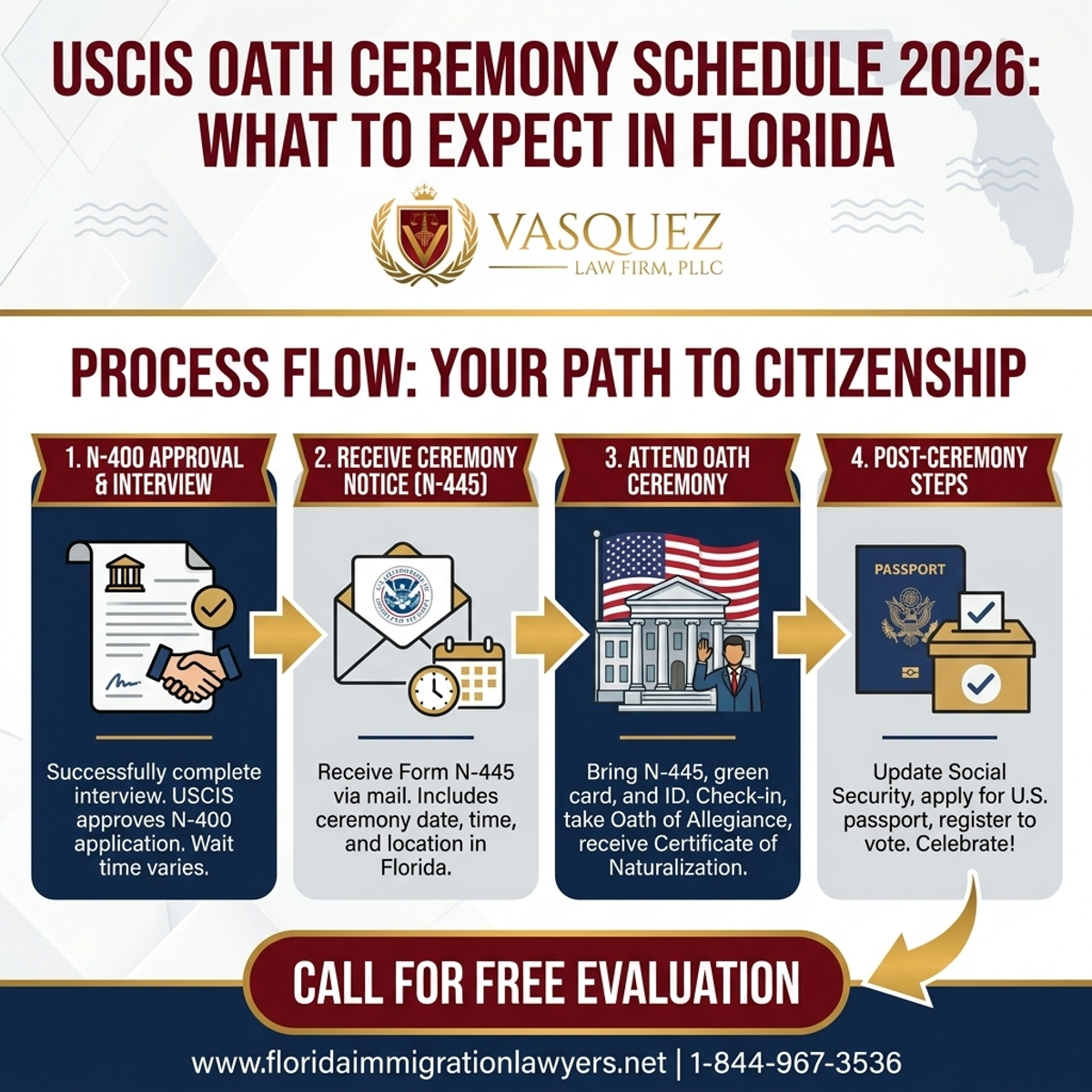
Step-by-Step Process — USCIS Oath Ceremony Schedule 2026: What to Expect in Florida
Essential Documents for Your Naturalization Interview and Oath Ceremony
Having all your documents organized and readily accessible is paramount for both your naturalization interview and the subsequent oath ceremony. A missing or incorrect document can lead to delays, requests for evidence (RFEs), or even a denial. For the interview, you should bring your interview notice, your Permanent Resident Card, passport, and any other travel documents. Also, bring all original documents you submitted with your N-400 application, such as birth certificates, marriage certificates, divorce decrees, and evidence of name changes. If you have any criminal history, bring certified court dispositions for all arrests, even if charges were dismissed or expunged.
For the oath ceremony, the requirements are generally simpler but no less critical. You must bring your Form N-445, Notice of Naturalization Oath Ceremony, and your Permanent Resident Card. It is also advisable to bring any foreign travel documents, such as passports or re-entry permits, as these will be collected. Ensure that you have not traveled outside the U.S. for extended periods after your interview without consulting an attorney, as this could impact your eligibility. Reviewing the N-445 carefully will provide the precise list of documents you need. Failure to present these documents can result in a reschedule, significantly delaying your citizenship. Always make copies of important documents for your records before submitting originals.
What Factors Influence USCIS Processing Times in Florida?
Several critical factors can significantly influence how long your USCIS application, including naturalization, will take to process in Florida. Understanding these can help manage expectations. Firstly, the specific USCIS field office handling your case plays a major role. High-volume offices like Miami and Orlando may have longer backlogs compared to others. Secondly, the completeness and accuracy of your application are paramount. Applications with errors, missing information, or insufficient evidence will inevitably lead to Requests for Evidence (RFEs), substantially prolonging the process. This is particularly relevant given recent reports of USCIS adopting strict rules for immigration applications.
Thirdly, your individual circumstances, such as any criminal history, prior immigration violations, or complex marital situations, can trigger additional background checks and scrutiny, extending timelines. Fourthly, changes in immigration policy or staffing levels at USCIS can affect processing capabilities nationwide. For example, shifts in focus or resource allocation can create new backlogs. Lastly, the volume of applications and the overall workload of the USCIS system are always fluctuating. While USCIS strives for efficiency, unexpected surges in applications or budget constraints can impact processing speed. Staying updated on current events and policy announcements is advisable, and an attorney can help interpret these changes. For those in Gainesville, your case will be routed to a larger regional office, so understanding their specific backlogs is key.
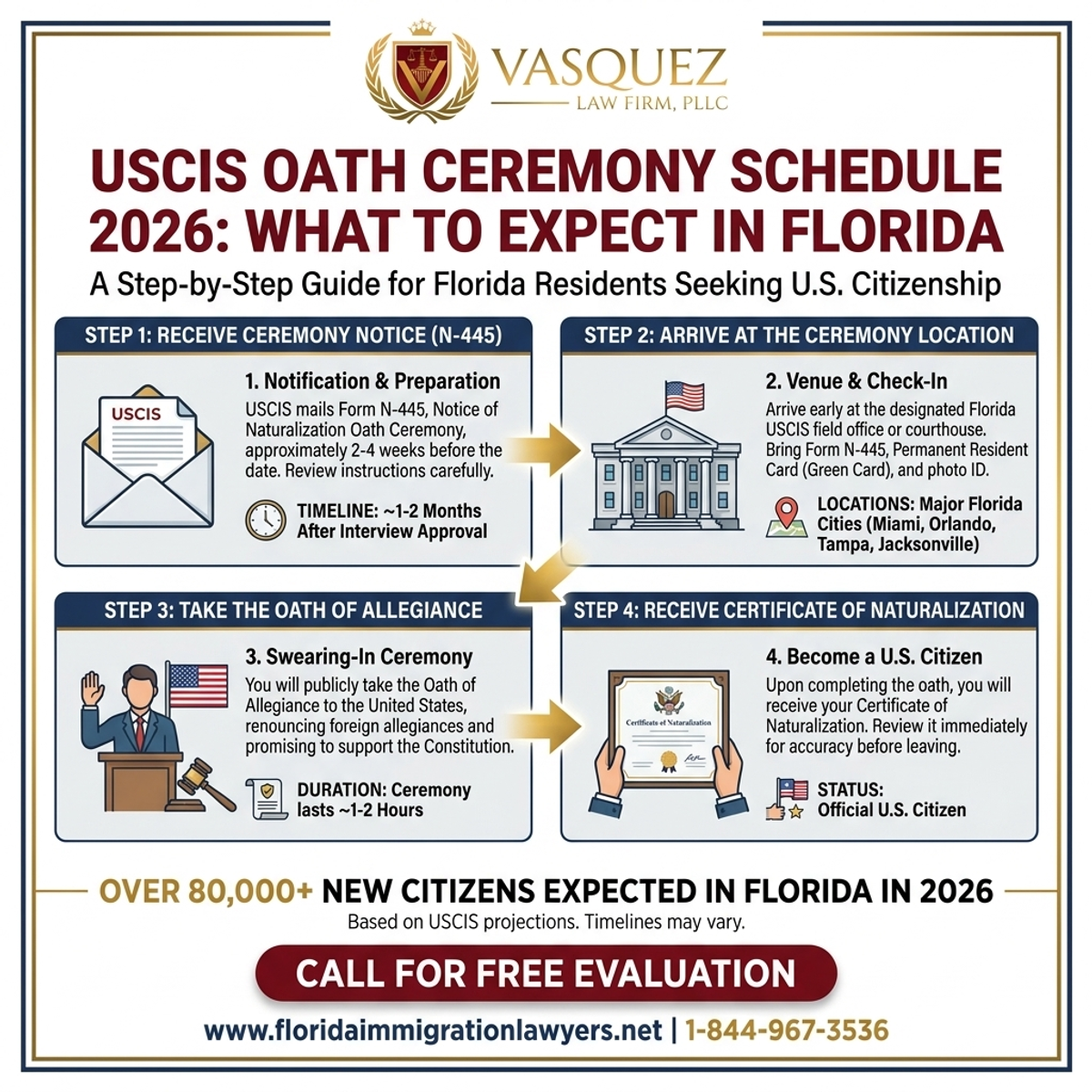
Key Statistics — USCIS Oath Ceremony Schedule 2026: What to Expect in Florida
What are the Fees Associated with USCIS Applications in 2026?
As of 2026, USCIS application fees are subject to change, but generally include a filing fee for the Form N-400, Application for Naturalization, and a separate biometrics services fee. It is crucial to check the official USCIS website for the most current fee schedule before filing, as fees can be updated periodically. Fee waivers may be available for eligible low-income applicants, but strict criteria apply.
Beyond the direct USCIS fees, applicants should also budget for other potential costs. These might include attorney fees if you choose legal representation, which is highly recommended for complex cases. Additionally, you might incur costs for obtaining necessary supporting documents, such as certified translations of foreign documents, birth certificates, marriage certificates, or police records. Travel expenses to biometric appointments and interviews at USCIS field offices in cities like Orlando or Miami, especially for those in Gainesville, should also be considered. While some fees are standard, others are contingent on your specific case needs. Always plan your finances carefully and be prepared for these various expenditures. Remember, legal fees are an investment in ensuring your application is accurate and complete. USCIS fee information is available on their website at www.uscis.gov/forms/our-fees.
Estimated USCIS Naturalization-Related Fees (2026)
| Item | Typical Fee (Check USCIS for current amounts) | Notes |
|---|---|---|
| Form N-400, Application for Naturalization | Variable (e.g., ~$725 in 2024, subject to change) | Includes biometrics fee. Check USCIS website for current fees. |
| Biometrics Services Fee | Included in N-400 fee (if applicable) | Covers fingerprinting and background checks. |
| Attorney Fees | Varies widely based on case complexity and firm | Highly recommended for complex cases or if you seek expert guidance. |
| Document Translation Fees | Varies per document/translator | Required for any non-English supporting documents. Must be certified translations. |
| Postage/Courier Fees | Minor, but adds up | For mailing applications and receiving notices. |
| Travel Expenses | Varies by distance to field office | For attending biometrics, interviews, and oath ceremonies (e.g., from Gainesville to Orlando/Jacksonville). |
Common Mistakes to Avoid in Your Naturalization Journey
Navigating the naturalization process without expert guidance can lead to costly and time-consuming errors. Avoiding these common mistakes is vital for a smooth journey to citizenship.
- Incomplete or Inaccurate Applications: Failing to fill out Form N-400 completely or providing incorrect information is a primary cause of delays and denials. Every question must be answered truthfully and thoroughly. This can trigger RFEs or even accusations of misrepresentation.
- Missing Deadlines: USCIS provides strict deadlines for responding to RFEs or interview notices. Missing these deadlines can lead to your application being considered abandoned or denied. Always keep track of all correspondence.
- Failure to Update Address: If you move, you must notify USCIS within 10 days using Form AR-11. Failure to do so can result in missed notices, including your interview or USCIS oath ceremony schedule 2026 notice, leading to significant delays or even denial.
- Poor Interview Preparation: Underestimating the importance of the naturalization interview, including the English and civics tests, can lead to a failed interview and a rescheduled appointment, prolonging your wait.
- Undisclosed Criminal History: Any past arrests or criminal records, even if charges were dropped or expunged, must be disclosed. Failure to do so can be considered misrepresentation and lead to a denial, and potentially, deportation proceedings.
- Traveling Before Oath Ceremony: Traveling outside the U.S. after your interview but before your oath ceremony can complicate your case, especially if you exceed certain time limits. Always consult with an attorney before making travel plans during this critical period.
- Not Bringing Required Documents: Arriving at your interview or oath ceremony without all requested original documents can cause immediate rescheduling or delays. This includes your Green Card for the oath ceremony.
- Misunderstanding Eligibility Requirements: Not fully understanding the continuous residence or physical presence requirements, or other eligibility criteria, can lead to applying prematurely and facing denial.
- Ignoring Legal Advice: Attempting to navigate complex issues, such as past immigration violations or criminal history, without legal counsel can lead to irreversible negative outcomes.
- Submitting Outdated Forms or Incorrect Fees: USCIS forms and fees change. Using an old form or sending an incorrect fee will result in your application being rejected and returned, causing significant delays.
When to Call a Florida Immigration Lawyer
While some naturalization cases are straightforward, many can benefit significantly from the expertise of a qualified immigration attorney. You should strongly consider contacting Florida Immigration Lawyers if you encounter any of the following scenarios:
- Complex Eligibility Issues: If you have questions about continuous residence, physical presence, or good moral character requirements, particularly due to extended absences from the U.S. or minor infractions.
- Criminal History: Even minor arrests, charges, or convictions can significantly impact your eligibility for naturalization. An attorney can assess your record and advise on potential waivers or strategies.
- Previous Denials or Immigration Violations: If you have had previous immigration applications denied or have a history of immigration violations, legal counsel is essential to address these issues.
- Requests for Evidence (RFEs) or Notices of Intent to Deny (NOIDs): Receiving these from USCIS indicates a problem with your application. An attorney can help you formulate a comprehensive and timely response.
- Language Barriers or Difficulty Understanding the Process: If you struggle with English or find the legal jargon overwhelming, an attorney can explain the process clearly and represent your interests effectively.
- Concerns About the Interview: An attorney can help you prepare for the naturalization interview, conduct mock interviews, and even attend the interview with you (though not always necessary).
- Unusual Delays in Processing: If your application is taking significantly longer than the posted USCIS processing times for your field office, an attorney can inquire with USCIS on your behalf.
- Potential for Deportation: If any aspect of your naturalization application could inadvertently expose you to deportation proceedings (e.g., undisclosed criminal history), legal advice is critical.
Florida Immigration Lawyers has extensive experience helping individuals across Florida, including Gainesville, navigate the complexities of immigration law. Our team is dedicated to protecting your rights and ensuring the best possible outcome for your naturalization case. From preparing your N-400 to assisting with your USCIS oath ceremony schedule 2026, we are here to guide you every step of the way. We understand the nuances of the law, including INA sections and CFR regulations, and how they apply to your unique situation.
About Florida Immigration Lawyers
Florida Immigration Lawyers is a leading immigration law firm dedicated to serving individuals and families across the entire state of Florida. With a deep understanding of U.S. immigration laws and a compassionate approach, our experienced attorneys are committed to providing exceptional legal representation. We specialize in a wide range of immigration matters, including family-based petitions, employment visas, asylum, deportation defense, and naturalization. Our firm prides itself on personalized service, meticulous attention to detail, and a relentless pursuit of favorable outcomes for our clients. We understand the challenges immigrants face and are here to offer clear guidance and robust advocacy. We are available 24/7 for free consultations and are proud to offer bilingual services, ensuring that language is never a barrier to justice. Let us be your trusted partner on your immigration journey.
Sources and References
- U.S. Citizenship and Immigration Services (USCIS)
- Executive Office for Immigration Review (EOIR)
- U.S. Department of State (travel.state.gov)
- 8 U.S.C. Chapter 12 - Immigration and Nationality Act (INA)
- INA Section 337 - Oath of Allegiance (8 U.S.C. 1448)
- 8 CFR Part 337 - Oath of Allegiance
- USCIS Policy Manual - Volume 12, Part I, Chapter 5 - Oath of Allegiance
Related services: immigration practice areas, family immigration services, asylum protection.
This article provides general legal information and is not intended as legal advice. Every case is unique, and outcomes depend on specific facts and circumstances. Contact an attorney for advice about your particular situation.
Embarking on the journey to U.S. citizenship is a significant step, and understanding the USCIS oath ceremony schedule 2026 and overall processing times in Florida is essential. With the right preparation and expert legal guidance, you can navigate this process successfully. Florida Immigration Lawyers is here to provide the support and representation you need. Do not leave your future to chance. Call us today for a free consultation at 1-844-967-3536. Se Habla Español - Estamos aquí para ayudarle.
If you need legal assistance, learn more about speak with an immigration lawyer, or call us at 1-844-967-3536 for a free consultation.
Do Not Navigate This Process Alone
Our experienced immigration attorneys are ready to fight for you. Get a free, confidential consultation today.
Se Habla Español
Or leave your details and we’ll call you:
Free Evaluation in 24 Hours
Or talk to us right now
AI voice assistant — available 24/7
FreeFrequently Asked Questions

William J. Vásquez
Founding Attorney · Vasquez Law Firm
U.S. Air Force veteran and immigration attorney with years of hands-on U.S. immigration experience. J.D., NCCU School of Law. AILA member. Admitted to the 4th, 5th, and 11th Circuit Courts.
Available 24/7 - Free Evaluations
Reviewed for legal accuracy by William J. Vásquez
Licensed in North Carolina; U.S. immigration is federal practice.
Related Legal Services
Our Florida immigration attorneys can help you with experienced immigration attorneys, business immigration and asylum protection. Call today at 1-844-967-3536 for a free consultation.
Related Links
Related Topics
Free Legal Consultation
Discuss your case with our experienced attorneys. We're available 24/7.
Se Habla Español - Estamos aquí para ayudarle.
Related Articles
Unlawful Presence Waiver Florida: A 2026 Guide
Discover how the unlawful presence waiver can help immigrants in Florida stay with their families while adjusting their status. Learn about the I-601A process and eligibility criteria.
Immigration Lawyer Orlando Free Consultation: Your 2026
Navigating immigration court proceedings in Florida requires expert legal guidance. This comprehensive guide details the step-by-step process of removal proceedings, essential documents, and critical timelines as of 2026. Learn about the costs of representation and common mistakes to avoid. For those in Orlando, Tallahassee, or any part of Florida, securing an immigration lawyer Orlando free consultation is your first step towards understanding your rights and building a strong defense against deportation. Florida Immigration Lawyers offers compassionate and effective legal support for all immigration court challenges, ensuring you have a dedicated advocate by your side.
"Narrative of Fear" Asylum I-589 in Florida 2026
Applying for asylum in the U.S. requires a compelling "narrative of fear" – a personal statement detailing why you cannot return to your home country due to persecution. This guide provides a comprehensive overview of the I-589 asylum application process in Florida for 2026, including essential steps, required documentation, typical timelines, and associated costs. Learn how to craft a strong narrative, what evidence is crucial, and common mistakes to avoid. With specific insights into Florida's immigration landscape, from West Palm Beach to Miami, this article highlights the importance of legal counsel in navigating the intricate federal regulations and local court procedures. Florida Immigration Lawyers offers expert guidance to protect your rights and help you secure safety.
Stem OPT Immigration Lawyer: Florida Graduates 2026 Guide
For Florida graduates with STEM degrees, the 24-month OPT STEM extension offers a critical pathway to extended work authorization. This detailed guide explores eligibility requirements, the step-by-step application process, necessary documentation, and typical processing timelines for 2026. We highlight the importance of an E-Verify employer and address common pitfalls that can lead to application delays or denials. Understanding these complexities is vital for international students aiming to build their careers in Florida's dynamic economy. Florida Immigration Lawyers provides expert assistance, helping you navigate USCIS regulations and ensure a successful application, offering peace of mind and protecting your professional future.