Immigration Lawyer Orlando Free Consultation: Your 2026
Navigating immigration court proceedings in Florida requires expert legal guidance. This comprehensive guide details the step-by-step process of removal proceedings, essential documents, and critical timelines as of 2026. Learn about the costs of representation and common mistakes to avoid. For those in Orlando, Tallahassee, or any part of Florida, securing an immigration lawyer Orlando free consultation is your first step towards understanding your rights and building a strong defense against deportation. Florida Immigration Lawyers offers compassionate and effective legal support for all immigration court challenges, ensuring you have a dedicated advocate by your side.

Navigating immigration court proceedings in Florida can be incredibly complex, especially when facing removal or deportation. For individuals in Orlando and across Florida, securing a free consultation with an experienced immigration lawyer is a critical first step. These consultations help you understand the charges against you, explore potential defenses, and identify forms of relief available under current immigration laws, which have seen strict rule adoptions recently. Legal representation significantly enhances your ability to present a strong case to an immigration judge and protect your future in the United States.
- Immigration court addresses deportation and removal cases.
- Legal representation is crucial for navigating complex procedures.
- Florida residents face unique challenges in the state's immigration courts.
- A free consultation helps evaluate your specific situation and defense strategies.
- Understanding your rights is the first step in protecting your future.
Facing immigration court can be one of the most stressful experiences for non-citizens and their families in Florida. The stakes are incredibly high, as the outcome of these proceedings can determine whether you can remain in the United States, pursue legal residency, or be forced to leave. With ever-evolving immigration laws and strict new rules adopted for various applications, understanding your rights and options is more critical than ever. Whether you've received a Notice to Appear (NTA) or are exploring your relief options, the journey through the immigration justice system demands careful attention and expert guidance.
This comprehensive guide is designed to demystify the immigration court process for individuals in Florida, particularly those seeking an immigration lawyer Orlando free consultation. We will cover everything from understanding removal proceedings to preparing your defense, outlining key timelines, and identifying common pitfalls. Our goal is to empower you with the knowledge needed to navigate these challenges effectively. Do not face this complex legal battle alone. Call Florida Immigration Lawyers at 1-844-967-3536 for a free consultation and take the first step towards securing your future.
What Are Immigration Court Proceedings in Florida?
Immigration court proceedings are formal legal processes overseen by the Executive Office for Immigration Review (EOIR), a component of the U.S. Department of Justice. These courts primarily handle cases involving individuals who the Department of Homeland Security (DHS) seeks to remove or deport from the United States. In Florida, there are several immigration courts, including those in Orlando, Miami, Pompano Beach, and Bradenton, each serving specific geographical areas and handling a substantial volume of cases. An immigration judge presides over these proceedings, interpreting and applying immigration laws, such as those found in the Immigration and Nationality Act (INA).
The primary function of an immigration court is to determine whether a non-citizen is removable from the U.S. and, if so, whether they are eligible for any forms of relief from removal. This process is distinct from criminal courts and civil courts, focusing solely on immigration law. As of 2026, the landscape of immigration law continues to evolve, with recent strict rules impacting how applications are processed and how defenses are presented. For individuals in Florida, understanding the specific jurisdiction and procedures of their local immigration court is paramount. An experienced attorney can clarify the charges against you and outline a strategic defense.
Common reasons individuals find themselves in removal proceedings include visa overstays, alleged criminal convictions, unlawful entry, or violations of immigration terms. Each case is unique, and the process involves intricate legal arguments, evidence presentation, and adherence to strict deadlines. Navigating these complexities without legal counsel can lead to critical errors and missed opportunities for relief. Florida Immigration Lawyers specializes in providing comprehensive deportation defense Florida services, ensuring clients in Orlando and beyond receive robust representation in these high-stakes proceedings.
How Do Removal Proceedings Work in Florida? A Step-by-Step Guide.
Removal proceedings are the formal legal process through which the U.S. government seeks to deport a non-citizen from the country. For individuals in Florida, this process typically begins when the Department of Homeland Security (DHS) issues a Notice to Appear (NTA). This document outlines the specific charges against you and notifies you of your initial hearing date before an immigration judge. Understanding each stage is crucial for mounting an effective deportation defense Florida.
Here is a step-by-step overview of what to expect in immigration court:
-
Notice to Appear (NTA): This official document initiates the removal proceedings. It specifies the alleged violations of immigration law and the legal grounds for your removal. Receiving an NTA means your case has been referred to the Executive Office for Immigration Review (EOIR). It is vital to review this document carefully with your attorney.
-
Master Calendar Hearing (MCH): This is your initial appearance before an immigration judge. During the MCH, you will formally acknowledge receipt of the NTA, admit or deny the allegations, and state whether you intend to seek any forms of relief from removal. Your attorney will help you prepare for this hearing, ensuring you understand the charges and present your plea effectively. Multiple MCHs may be scheduled to allow time for evidence gathering or application filing.
-
Individual Hearing (Merits Hearing): If you seek relief from removal, an individual hearing will be scheduled. This is essentially a trial where you and your attorney present evidence, call witnesses, and provide testimony to support your application for relief. The DHS attorney will also present their case. This hearing is often the longest and most critical part of the process, requiring meticulous preparation.
-
Decision by the Immigration Judge: After considering all evidence and testimony, the immigration judge will issue a decision. The judge may grant your requested relief, terminate the proceedings, or order your removal. This decision is typically delivered orally at the conclusion of the individual hearing or in writing at a later date. A favorable decision could mean you are granted asylum, a green card, or other forms of legal status.
-
Appeals: If either party is dissatisfied with the immigration judge's decision, they have the right to appeal to the Board of Immigration Appeals (BIA). The BIA reviews the judge's decision for legal errors. Further appeals can be made to a U.S. Court of Appeals if the BIA's decision is unfavorable. This appellate process is highly technical and requires specialized legal expertise, which Florida Immigration Lawyers can provide.
Throughout these steps, having a knowledgeable attorney is indispensable. They can guide you through the complexities, represent your interests, and ensure all deadlines are met. Residents in Orlando and surrounding areas seeking an immigration lawyer Orlando free consultation can gain invaluable insight into their specific removal proceedings.
What Documents Do I Need for Immigration Court?
Preparing the correct documentation is a cornerstone of a successful deportation defense Florida strategy. The specific documents required will vary greatly depending on the nature of your case, the charges against you, and the type of relief from removal you are seeking. However, certain categories of documents are almost universally important for anyone facing immigration court proceedings. Organizing these materials meticulously can significantly impact the efficiency and outcome of your case before an immigration judge.
Here is a general checklist of documents you may need:
- Identity and Nationality Documents: Your passport, birth certificate, national identity card, and any previous visas or entry stamps. These establish who you are and your country of origin.
- Immigration History Records: All documents related to your past interactions with U.S. immigration authorities, including previous applications, approvals, denials, I-94 records, and any notices or orders received from USCIS or DHS.
- Evidence of Relationships: Marriage certificates, birth certificates of children, divorce decrees, and photographs if your case involves family-based relief or claims of family ties in the U.S.
- Financial Documents: Tax returns, bank statements, employment letters, pay stubs, and proof of assets. These can demonstrate financial stability, ties to the U.S., or ability to support yourself/family.
- Proof of Residence in the U.S.: Lease agreements, utility bills, mail with your address, and school records for children. These establish your physical presence in the country.
- Criminal Records: Any arrest records, court dispositions, or police reports, even for minor infractions. Full disclosure is crucial, as some offenses can be grounds for removal under INA § 237. Your attorney will help assess the impact of these records.
- Affidavits and Character Letters: Sworn statements from family, friends, employers, or community leaders attesting to your good moral character, contributions to the community, or hardship you would face if removed.
- Medical Records: If your case involves medical conditions, humanitarian concerns, or eligibility for certain relief based on health.
- Application for Relief Documents: Specific forms and supporting evidence required for applications like asylum (Form I-589), adjustment of status (Form I-485), cancellation of removal, or waivers. These are often processed through USCIS.
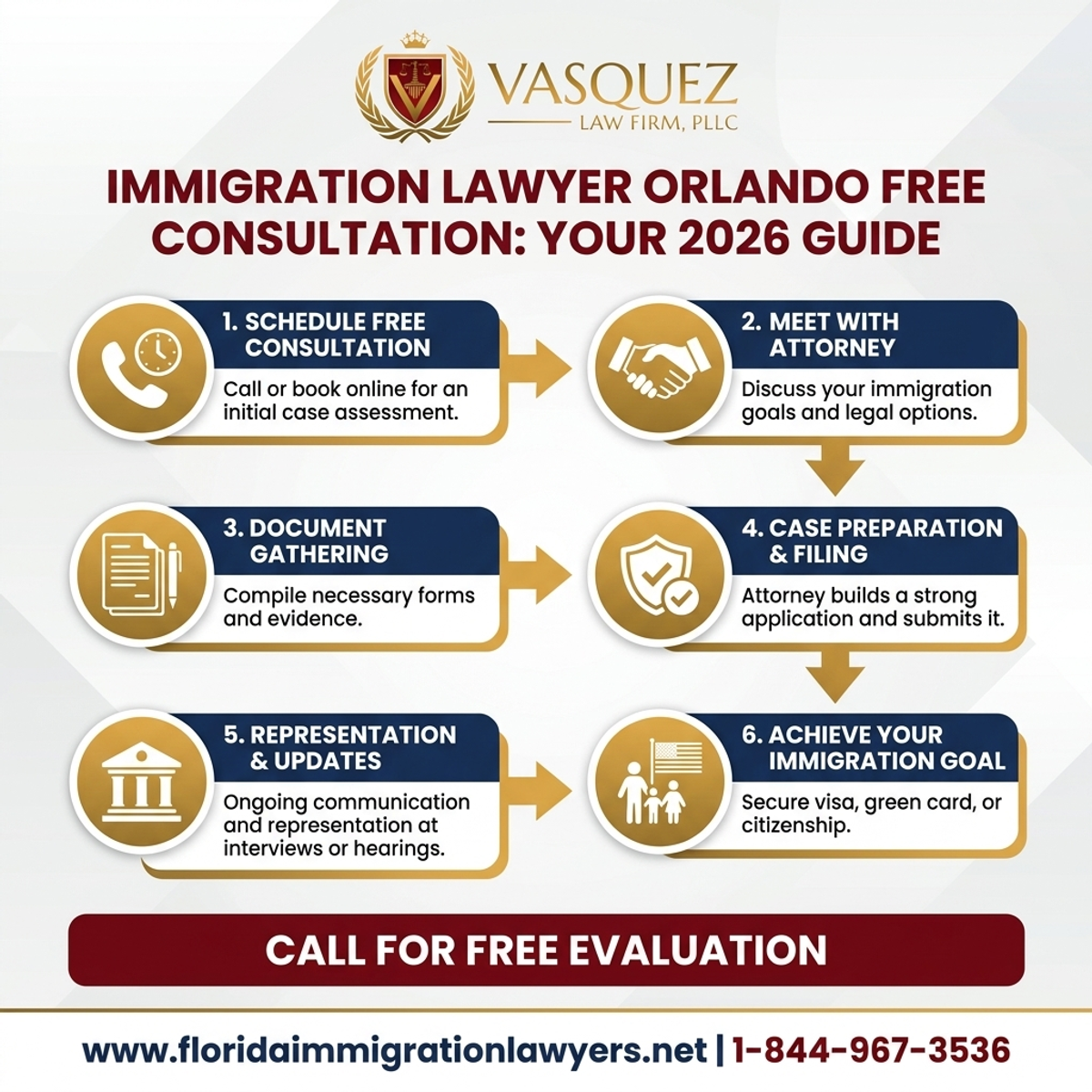
Step-by-Step Process — Immigration Lawyer Orlando Free Consultation: Your 2026 Guide
Your immigration lawyer will provide a tailored list of documents specific to your case during your immigration lawyer Orlando free consultation. Gathering these materials promptly is essential for building a strong defense and avoiding unnecessary delays in immigration court.
How Long Do Immigration Court Cases Take in Florida? (2026 Timelines)
As of 2026, the duration of immigration court cases in Florida can vary significantly, ranging from several months to many years. This variability is due to numerous factors, including the complexity of the case, the specific immigration court's backlog, the availability of the immigration judge, and the type of relief sought. Recent strict rules have not necessarily sped up the process, and in some instances, have added layers of review that can extend timelines. While there's no fixed answer, understanding typical timeframes for different stages can help manage expectations for individuals in Orlando and across Florida.
Here is a general overview of typical timeframes:
| Stage | Typical Timeframe | Notes |
|---|---|---|
| Receipt of NTA to Master Calendar Hearing | 6 months - 2 years | Depends heavily on court docket availability in Florida immigration courts (e.g., Orlando, Miami). |
| Master Calendar Hearings (Multiple) | 3 months - 1.5 years | Often several MCHs are scheduled to allow time for filings and preparation. |
| Master Calendar to Individual Hearing | 1 - 4 years | This gap is often the longest due to court backlogs and judge schedules. |
| Individual Hearing | 1 day - several days | Can be completed in one session or over multiple non-consecutive days, depending on complexity. |
| Judge's Decision | Immediately - 3 months | Often given orally at the end of the hearing, but sometimes reserved for a written decision. |
| Appeal to BIA | 1 - 3 years | If an appeal is filed, the Board of Immigration Appeals reviews the case. |
| Appeal to Circuit Court | 1 - 2 years | Further appeals to federal courts can add significant time. |
Factors that can influence these timelines include: the volume of cases handled by the specific Florida immigration court, the complexity of your legal arguments, the need for expert witnesses, and the responsiveness of various government agencies like USCIS or the Department of State (State Department) in providing necessary documents or information. Your attorney can provide a more personalized estimate after reviewing your case during an immigration lawyer Orlando free consultation, particularly for those in the Tallahassee area.
What Are the Costs for Immigration Court Representation? (Fees in 2026)
As of 2026, the costs associated with immigration court representation can vary widely, depending on the complexity of your case, the type of relief sought, and the experience level of your attorney. While government filing fees for certain applications are standardized by USCIS, attorney fees for deportation defense Florida services are determined by individual law firms. It is important to understand that a free consultation, like those offered by Florida Immigration Lawyers, is an opportunity to discuss potential costs without obligation, providing transparency and clarity from the outset.
Here is a breakdown of typical cost factors:
| Item | Typical Fee (Range) | Notes |
|---|---|---|
| Initial Consultation | Free - $300 | Florida Immigration Lawyers offers a free consultation for your convenience. |
| Attorney Fees (Removal Proceedings) | $5,000 - $15,000+ | Varies based on case complexity, court appearances, and type of relief. Can be flat fee or hourly. |
| Application Filing Fees (USCIS) | $0 - $1,225+ | Fees for forms like I-589 (asylum, no fee), I-485 (adjustment of status), I-601/I-601A (waivers). Subject to change. |
| Expert Witness Fees | $500 - $5,000+ | If psychological evaluations, country condition reports, or other expert testimonies are needed. |
| Translation Services | $50 - $500+ | For documents not in English. Often charged per page or per document. |
| Court Filing Fees (BIA Appeals) | $110 - $700+ | Fee for appealing to the Board of Immigration Appeals. |
| Travel/Miscellaneous Expenses | Varies | For attorney travel, postage, copying, etc. Typically outlined in retainer agreement. |
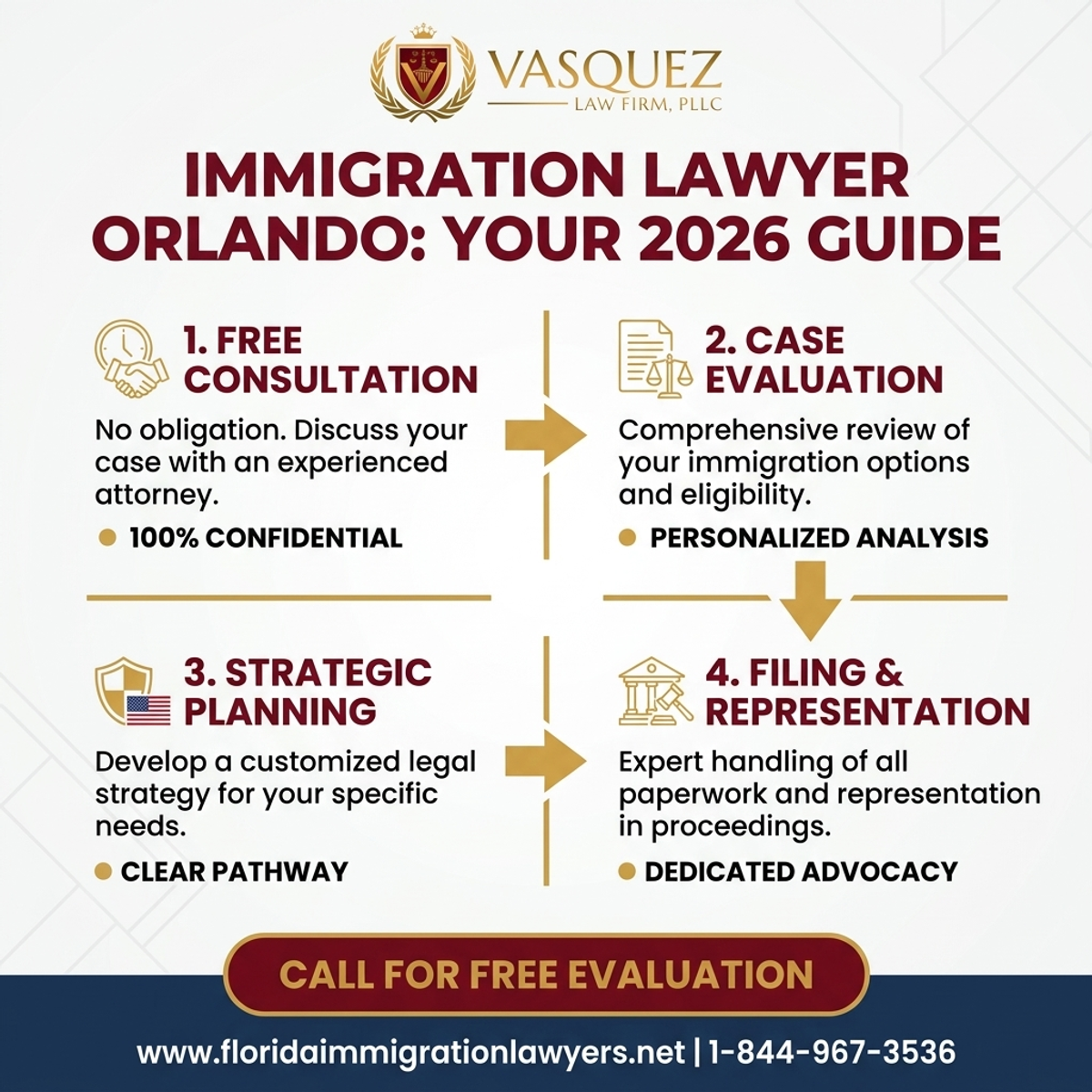
Key Statistics — Immigration Lawyer Orlando Free Consultation: Your 2026 Guide
These figures are estimates and can fluctuate. For instance, a complex case involving criminal grounds for removal or multiple applications for relief will naturally incur higher attorney fees than a straightforward asylum claim. During your immigration lawyer Orlando free consultation, our attorneys will discuss all potential costs, including those associated with an immigration judge hearing and any necessary filings. We believe in transparent pricing and will work with you to understand the financial aspects of your case, providing a clear path forward for individuals in Tallahassee and throughout Florida.
Can I Get an Immigration Lawyer Orlando Free Consultation for My Case?
Yes, absolutely. If you are facing immigration court, dealing with removal proceedings, or simply have questions about your immigration status in Florida, Florida Immigration Lawyers offers a free consultation. This initial meeting is a critical opportunity for you to discuss the specifics of your situation with an experienced attorney without any financial obligation. Our firm understands the urgency and anxiety that come with immigration challenges, especially for those in Orlando and the surrounding areas, and we are committed to making legal support accessible.
During your immigration lawyer Orlando free consultation, our attorneys will:
- Review Your Case Details: We will listen carefully to your story, examine any documents you have received (like an NTA), and understand the context of your immigration situation. This includes assessing the charges against you and the grounds for removal.
- Explain the Process: We will clearly outline the steps involved in immigration court or removal proceedings, helping you understand what to expect at each stage, from Master Calendar Hearings to Individual Hearings before an immigration judge.
- Identify Potential Relief Options: Based on your eligibility, we will discuss various forms of relief from removal, such as asylum, adjustment of status, waivers, or cancellation of removal. We will consider recent policy changes and strict rules to provide accurate advice.
- Assess Your Eligibility: We will evaluate your eligibility for different immigration benefits and forms of deportation defense Florida, considering factors like your length of stay, family ties, criminal history, and any humanitarian concerns.
- Answer Your Questions: This is your opportunity to ask any questions you have about the process, your rights, and how our firm can assist you. We aim to provide clear, understandable answers to alleviate your concerns.
A free consultation is not just an informational session; it's the first step in building a strong defense strategy. It allows you to gain clarity, understand your legal standing, and make informed decisions about your future. For those in Tallahassee, Orlando, or any part of Florida, our dedicated team is ready to provide the compassionate and effective legal guidance you deserve. Don't delay in seeking professional advice when your future is on the line.
Common Mistakes to Avoid in Immigration Court
Navigating immigration court is fraught with potential pitfalls, and even minor errors can have severe consequences, including an order of removal. Avoiding these common mistakes is crucial for anyone involved in removal proceedings, especially in Florida where courts are often busy. An experienced attorney can help you steer clear of these errors and protect your rights before an immigration judge.
-
Failing to Appear for Hearings: Missing a scheduled court hearing, whether a Master Calendar or Individual Hearing, can lead to an in absentia order of removal. This means the immigration judge can order your deportation without you being present, making it much harder to reopen your case. Always appear on time or ensure your attorney has filed a motion for continuance.
-
Not Updating Your Address with EOIR: If you move, you must notify the Executive Office for Immigration Review (EOIR) of your new address immediately. Failure to do so means you might not receive important court notices, leading to missed hearings and potential in absentia removal orders. This is a critical administrative step for effective deportation defense Florida.
-
Providing Incomplete or False Information: Any misrepresentation or omission of material facts on applications or during testimony can severely damage your credibility and lead to denials, or even criminal charges. Honesty and full disclosure, guided by your attorney, are paramount.
-
Missing Deadlines: Immigration law is strict about deadlines for filing applications, submitting evidence, and filing appeals. Missing even one deadline can result in the automatic denial of your case or the waiver of your right to appeal. Your attorney will help you track and meet all critical dates.
-
Representing Yourself Without Legal Knowledge: While you have the right to self-representation, immigration court is highly complex. Without a thorough understanding of immigration law (e.g., INA sections like 8 U.S.C. § 1229a), court procedures, and rules of evidence, you are at a significant disadvantage against trained government attorneys. An immigration lawyer Orlando free consultation can demonstrate the value of legal counsel.
-
Not Exploring All Forms of Relief: Many individuals are unaware of all the potential forms of relief from removal available to them. An attorney can identify all possible avenues, such as asylum, cancellation of removal, waivers, or adjustment of status, that you might be eligible for based on your unique circumstances.
-
Failing to Gather Sufficient Evidence: A strong case requires compelling evidence. This includes documents, witness testimonies, and expert reports. Insufficient or poorly presented evidence can weaken your claims and lead to an unfavorable decision by the immigration judge.
-
Communicating Directly with DHS/ICE Without Counsel: Any statements you make to immigration enforcement agencies can be used against you in court. It is always advisable to have your attorney present or to refer inquiries to your legal counsel. This is a vital aspect of protecting your rights in removal proceedings.
-
Ignoring a Criminal Record: Even old or seemingly minor criminal offenses can have serious immigration consequences. It is crucial to disclose all criminal history to your attorney, who can assess its impact on your eligibility for relief and formulate a comprehensive deportation defense Florida strategy.
When to Call a Lawyer for Immigration Court Proceedings
The decision of when to seek legal counsel for immigration court matters is critical and often determines the success of your case. Given the severe consequences of removal proceedings, it is always advisable to consult with an attorney as early as possible. For individuals in Orlando, Tallahassee, and across Florida, contacting Florida Immigration Lawyers for an immigration lawyer Orlando free consultation should be a priority if you encounter any of the following scenarios:
- You Receive a Notice to Appear (NTA): This is the official start of your removal proceedings. Do not wait until your first Master Calendar Hearing to seek legal advice. An attorney can help you understand the charges and prepare your defense from day one.
- You Are Detained by Immigration Authorities: If you or a loved one is detained by ICE, immediate legal intervention is necessary to explore bond eligibility and begin preparing a defense.
- You Believe You Are Eligible for Relief: If you think you qualify for asylum, cancellation of removal, adjustment of status, or any other form of relief, an attorney can assess your eligibility and guide you through the complex application process.
- You Have a Criminal Record: Even a minor criminal offense can have significant immigration consequences, potentially making you deportable or inadmissible. An attorney can assess the impact of your record on your immigration case under INA § 212 and § 237.
- Your Case Involves Complex Legal Issues: Cases involving fraud allegations, national security concerns, or multiple grounds of inadmissibility/deportability require specialized legal expertise.
- You Need to Appeal a Decision: If an immigration judge has issued an unfavorable decision, acting quickly to file an appeal with the Board of Immigration Appeals (BIA) is crucial. Appellate work is highly technical and requires experienced counsel.
- You Are Seeking an Asylum Claim: Asylum cases involve intricate legal and factual arguments, often requiring extensive documentation and testimony about persecution.
Proactive engagement with an attorney provides you with the best chance to navigate immigration court successfully. An attorney can help you understand the charges, identify defenses, prepare applications, and represent you effectively before an immigration judge, offering invaluable deportation defense Florida services. Early legal intervention can make all the difference in your future.
About Florida Immigration Lawyers
Florida Immigration Lawyers is a leading immigration law firm dedicated to serving individuals and families across the entire state of Florida. With a deep understanding of U.S. immigration law, our experienced attorneys provide compassionate yet aggressive representation for a wide range of immigration matters. We specialize in complex cases, including immigration court proceedings, removal proceedings, deportation defense, asylum claims, family-based immigration, and citizenship applications. Our commitment is to protect your rights and help you achieve your immigration goals.
We understand that facing immigration challenges can be overwhelming. That's why we offer personalized attention and strategic legal solutions tailored to your unique circumstances. Our firm is available 24/7, ensuring you have access to legal support when you need it most. We offer free consultations, providing an opportunity for you to discuss your case with an expert attorney without any upfront cost. Choose Florida Immigration Lawyers for dedicated advocacy and a steadfast commitment to your success. Visit our website at https://www.floridaimmigrationlawyers.net or call us at 1-844-967-3536 to speak with an attorney today.
Sources and References
- U.S. Citizenship and Immigration Services (USCIS)
- Executive Office for Immigration Review (EOIR)
- U.S. Department of State (Travel.State.Gov)
- 8 U.S.C. Chapter 12 - Immigration and Nationality Act (INA)
- 8 CFR Part 1003 - Executive Office for Immigration Review
- INA § 212 - General Classes of Aliens Ineligible for Visas, Admission, or Adjustment of Status
- INA § 237 - General Classes of Deportable Aliens
- INA § 240 - Removal Proceedings
Related services: immigration waivers, humanitarian protection programs, DACA renewal and applications, temporary protected status (TPS).
This article provides general legal information and is not intended as legal advice. Every case is unique, and outcomes depend on specific facts and circumstances. Contact an attorney for advice about your particular situation.
Don't let the complexities of immigration court overwhelm you. Secure your future by seeking professional legal guidance today. Florida Immigration Lawyers offers free, confidential consultations to help you understand your options and build a strong defense. Call us now at 1-844-967-3536 to speak with an attorney. Se Habla Espanol - Estamos aqui para ayudarle.
Do Not Navigate This Process Alone
Our experienced immigration attorneys are ready to fight for you. Get a free, confidential consultation today.
Se Habla Español
Or leave your details and we’ll call you:
Free Evaluation in 24 Hours
Or talk to us right now

AI voice assistant — available 24/7
FreeFrequently Asked Questions

William J. Vásquez
Founding Attorney · Vasquez Law Firm
U.S. Air Force veteran and immigration attorney with years of hands-on U.S. immigration experience. J.D., NCCU School of Law. AILA member. Admitted to the 4th, 5th, and 11th Circuit Courts.
Available 24/7 - Free Evaluations
Reviewed for legal accuracy by William J. Vásquez
Licensed in North Carolina; U.S. immigration is federal practice.
Related Legal Services
Our Florida immigration attorneys can help you with family immigration services, immigration practice areas and free immigration consultation. Call today at 1-844-967-3536 for a free consultation.
Related Links
Related Topics
Free Legal Consultation
Discuss your case with our experienced attorneys. We're available 24/7.
Se Habla Español - Estamos aquí para ayudarle.
Related Articles
"Narrative of Fear" Asylum I-589 in Florida 2026
Applying for asylum in the U.S. requires a compelling "narrative of fear" – a personal statement detailing why you cannot return to your home country due to persecution. This guide provides a comprehensive overview of the I-589 asylum application process in Florida for 2026, including essential steps, required documentation, typical timelines, and associated costs. Learn how to craft a strong narrative, what evidence is crucial, and common mistakes to avoid. With specific insights into Florida's immigration landscape, from West Palm Beach to Miami, this article highlights the importance of legal counsel in navigating the intricate federal regulations and local court procedures. Florida Immigration Lawyers offers expert guidance to protect your rights and help you secure safety.
Stem OPT Immigration Lawyer: Florida Graduates 2026 Guide
For Florida graduates with STEM degrees, the 24-month OPT STEM extension offers a critical pathway to extended work authorization. This detailed guide explores eligibility requirements, the step-by-step application process, necessary documentation, and typical processing timelines for 2026. We highlight the importance of an E-Verify employer and address common pitfalls that can lead to application delays or denials. Understanding these complexities is vital for international students aiming to build their careers in Florida's dynamic economy. Florida Immigration Lawyers provides expert assistance, helping you navigate USCIS regulations and ensure a successful application, offering peace of mind and protecting your professional future.
U Visa for Crime Victims in Florida 2026 Guide
For crime victims in Florida, the U visa offers a critical pathway to immigration relief and protection. This non-immigrant visa is designed for individuals who have suffered substantial physical or mental abuse from certain qualifying crimes and are willing to assist law enforcement. As of 2026, understanding the detailed eligibility requirements, the multi-step application process, and the necessary documentation is vital. This guide covers everything from obtaining law enforcement certification to navigating processing timelines and managing costs. With specific focus on Florida, it highlights common mistakes and emphasizes when legal counsel from Florida Immigration Lawyers can make a significant difference in securing your future and safety.
ICE Locator: Understanding Check-ins in Florida 2026
Understanding ICE check-ins and the ISAP program is vital for non-detained immigrants in Florida. These mandatory appointments with U.S. Immigration and Customs Enforcement (ICE) ensure compliance with release conditions, monitor an individual's status in the U.S., and track progress in their immigration case. From preparing necessary documents to understanding supervision timelines and avoiding common mistakes, the process can be complex. Florida Immigration Lawyers provides expert attorney representation to guide you through every step, protecting your rights and advocating for your best interests. Learn about the step-by-step process, key documents, and when to seek legal counsel to navigate your ICE supervision successfully in West Palm Beach and across Florida.