ICE Locator: Understanding Check-ins in Florida 2026
Understanding ICE check-ins and the ISAP program is vital for non-detained immigrants in Florida. These mandatory appointments with U.S. Immigration and Customs Enforcement (ICE) ensure compliance with release conditions, monitor an individual's status in the U.S., and track progress in their immigration case. From preparing necessary documents to understanding supervision timelines and avoiding common mistakes, the process can be complex. Florida Immigration Lawyers provides expert attorney representation to guide you through every step, protecting your rights and advocating for your best interests. Learn about the step-by-step process, key documents, and when to seek legal counsel to navigate your ICE supervision successfully in West Palm Beach and across Florida.

An ICE check-in is a mandatory appointment for non-detained immigrants under supervision, such as those released on bond or through the Intensive Supervision Appearance Program (ISAP). These appointments ensure compliance with release conditions, monitor an individual's presence in the U.S., and track progress in their immigration case, particularly for those in removal proceedings. Having an experienced attorney from Florida Immigration Lawyers can be crucial to navigate these complex requirements, ensure proper documentation, and protect your rights during these critical interactions with immigration authorities in Florida.
- ICE check-ins are mandatory for supervised non-detained immigrants.
- The ISAP program uses technology and regular meetings for monitoring.
- Attorney representation ensures compliance and protects rights.
- Missing check-ins or violations can lead to serious consequences, including re-detention.
- Preparation, accurate documentation, and legal advice are essential for successful check-ins.
Navigating the U.S. immigration system can feel like walking through a labyrinth, especially when you are under the supervision of U.S. Immigration and Customs Enforcement (ICE). For many individuals in Florida, the requirement to attend regular ICE check-in appointments is a source of significant anxiety and confusion. Whether you've been released on an immigration bond, are participating in the Intensive Supervision Appearance Program (ISAP), or are simply awaiting a decision on your case, understanding your obligations and rights is paramount. These check-ins are not merely administrative formalities; they are critical junctures that can impact the trajectory of your immigration journey.
This comprehensive guide from Florida Immigration Lawyers will demystify the ICE check-in process, explain the nuances of ISAP, highlight the importance of attorney representation, and provide Florida-specific insights to help you navigate these requirements successfully. We understand the stakes involved and are here to offer the compassionate, expert legal support you need. Do not face this complex process alone. Call Florida Immigration Lawyers at 1-844-967-3536 for a free consultation today and let our experienced team guide you through every step.
What is an ICE Check-in and Why is it Required in Florida?
An ICE check-in is a mandatory appointment for non-detained immigrants under supervision, ensuring compliance with release conditions and monitoring their presence in the U.S. As of 2026, these are a critical part of immigration enforcement in Florida, particularly for individuals in removal proceedings or those released on bond or under the ISAP program.
An ICE check-in is a scheduled meeting with an ICE officer at a local field office, such as those in Miami, Orlando, Tampa, or West Palm Beach. The primary purpose of these appointments is to monitor individuals who have been released from immigration detention but remain in removal proceedings or are subject to an order of supervision. These check-ins are mandated under various provisions of the Immigration and Nationality Act (INA), often following release on an immigration bond or under programs like ISAP. For instance, INA Section 236(a) allows for the release of certain non-citizens pending a decision on their removability, often with conditions including regular reporting.
In Florida, a state with a significant immigrant population, ICE check-ins serve several critical functions. They allow ICE to confirm an individual's current address, employment status, and overall compliance with the terms of their release. Officers may also inquire about any changes in an individual's immigration case status, such as new court dates, filings, or receipt of documents from USCIS. Failure to attend these appointments or adhere to the supervision conditions can have severe consequences, including the issuance of an arrest warrant, re-detention, or even expedited removal from the United States. Given the high volume of cases in Florida's immigration courts, consistency and accuracy in reporting are vital. An attorney can help ensure that all information provided is accurate and that your rights are protected during these interactions.
How Does the ISAP Program Work for Immigrants in Florida?
The Intensive Supervision Appearance Program (ISAP) is an alternative to detention, monitoring non-detained individuals through technology (GPS ankle monitors, phone check-ins) and in-person meetings. As of 2026, ISAP aims to ensure compliance with immigration court appearances and final orders while allowing individuals to remain in their communities, including across Florida.
ISAP is a program managed by ICE's Enforcement and Removal Operations (ERO) and implemented by contractors like BI Incorporated. It is designed to monitor non-detained non-citizens who are awaiting immigration court proceedings or who have received a final order of removal but cannot be immediately deported. The program utilizes a tiered approach to supervision, which can range from simple phone check-ins to more intensive methods like GPS ankle monitors, voice recognition systems, or in-person meetings. The specific level of supervision assigned depends on an individual's perceived flight risk, criminal history, and compliance record. For example, individuals in West Palm Beach with a low flight risk might only require phone reporting, while others with more complex cases could be subject to electronic monitoring.
Participants in ISAP must strictly adhere to their assigned reporting schedule and any conditions set by ICE. These conditions often include regular check-ins with a case specialist, attending scheduled immigration court hearings at Florida's courts (e.g., Miami Immigration Court or Orlando Immigration Court), and notifying ICE of any changes in address or employment. The goal of ISAP is to increase appearance rates in court and compliance with removal orders, while reducing the need for costly detention. However, the program can be intrusive and burdensome, especially for those with demanding work schedules or family responsibilities. An immigration attorney can help individuals understand their ISAP requirements, advocate for less restrictive conditions where appropriate, and ensure that all program rules are followed, minimizing the risk of violations. You can find more details about ICE operations and programs on the official ICE website.
What is the Step-by-Step Process for an ICE Check-in?
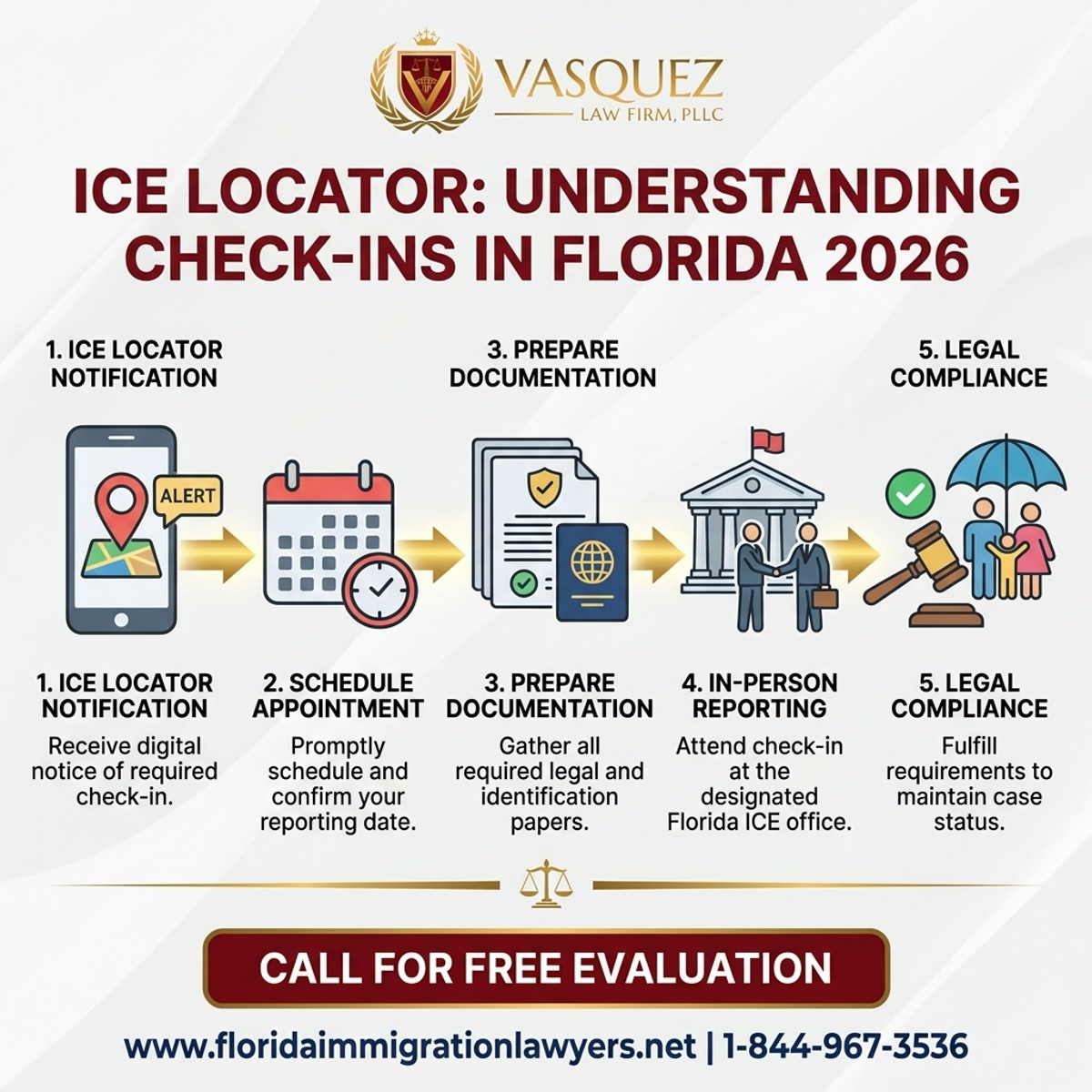
The process for an ICE check-in typically involves receiving a notice, preparing required documents, attending the appointment at an ICE field office, and reporting any changes to your situation. As of 2026, this structured approach ensures that individuals comply with their supervision obligations and remain in good standing with immigration authorities.
- Receive Notice and Confirm Appointment Details: Your first step is to receive an official notice from ICE, typically an I-220B, Order of Release on Recognizance, or an I-220A, Order of Release on Supervision, detailing your check-in date, time, and location. It is crucial to verify these details and mark them on your calendar. If you have any doubts or haven't received a notice but believe you should have, contact your attorney immediately. Missing an appointment can have severe consequences, including re-detention.
- Gather All Required Documentation: Before your appointment, compile all necessary documents. This typically includes your passport, I-94 arrival/departure record, Notice to Appear (NTA), any bond documents, court orders, proof of current address (utility bills, lease agreements), employment verification (pay stubs, employment letter), and any other immigration-related paperwork. Organize these documents neatly and make copies for your records.
- Prepare for the Interview: An ICE check-in is not an interrogation, but it is a formal interaction. Be prepared to answer questions about your current address, employment, family situation, and any developments in your immigration case. Always be truthful and provide only the information requested. If you have an attorney, they can advise you on how to respond to specific questions and, in many cases, attend the check-in with you.
- Attend the Appointment at the ICE Field Office: Arrive punctually at the designated ICE field office, such as the one in West Palm Beach. Dress professionally and maintain a respectful demeanor. Your attorney can accompany you, providing crucial support and ensuring that your rights are upheld throughout the process. The officer will review your documents, ask questions, and may issue new instructions or schedule your next check-in.
- Follow Up and Adhere to New Instructions: After the check-in, carefully review any new instructions or documents provided by ICE. If a new check-in date is scheduled, record it immediately. If your supervision conditions change, ensure you understand and comply with them. Your attorney can help clarify any new requirements and advise on the best course of action. This ongoing compliance is vital for your continued freedom and successful navigation of your immigration case, especially if you are facing deportation defense proceedings.
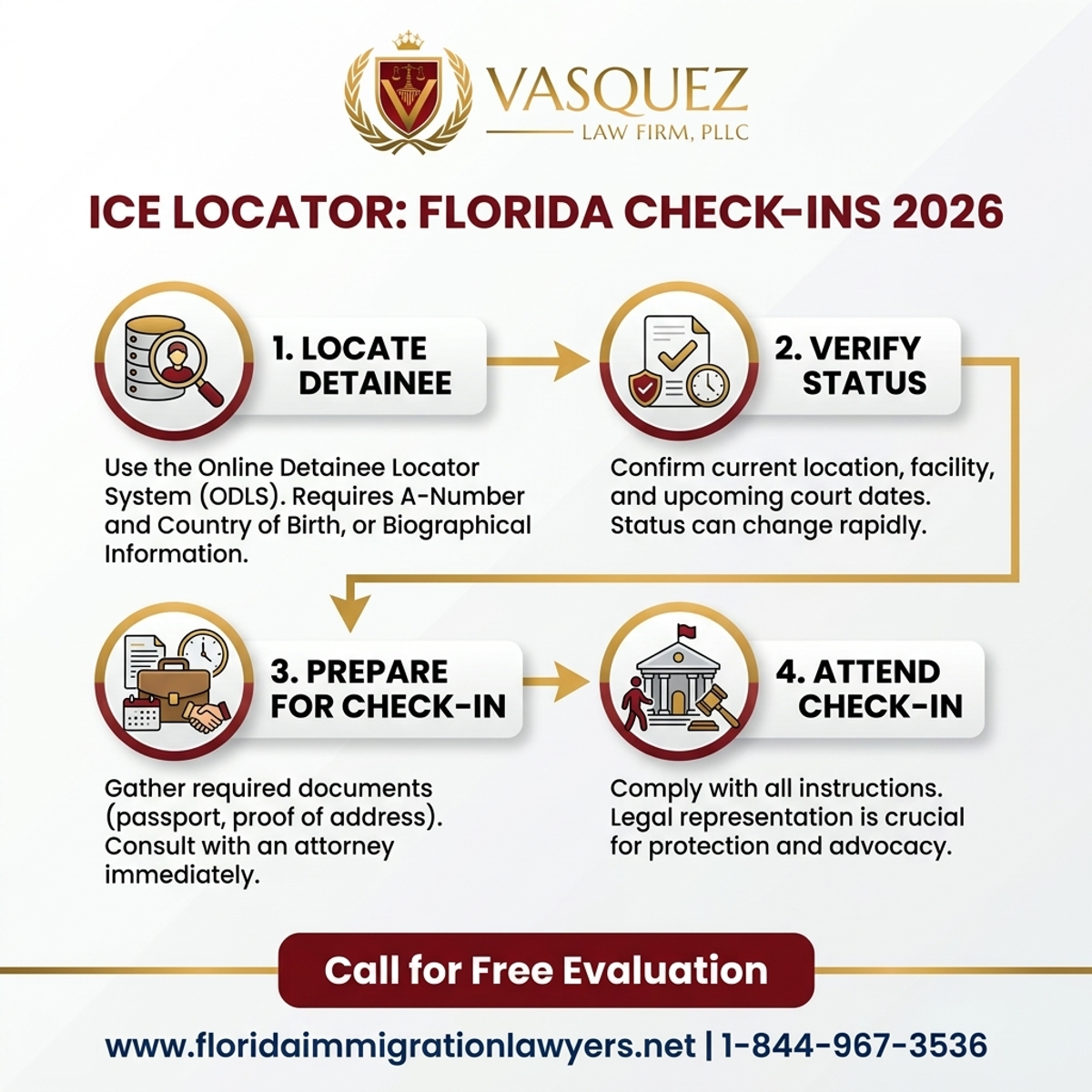
Step-by-Step Process — ICE Locator: Understanding Check-ins in Florida 2026
Key Documents for Your ICE Check-in and Supervision Compliance
Having the correct and complete documentation is paramount for a smooth ICE check-in and for demonstrating ongoing compliance with your supervision terms. Missing or incorrect documents can lead to delays, further scrutiny, or even adverse actions by ICE. Here is a comprehensive list of documents you should typically prepare and bring to your ICE check-in appointments:
- Valid Passport and Visa (if applicable): Your most recent passport and any relevant U.S. visas.
- Form I-94, Arrival/Departure Record: This document proves your legal entry into the United States.
- Notice to Appear (NTA), Form I-862: The official document initiating your removal proceedings.
- Bond Documents: If you were released on an immigration bond, bring all related paperwork, including the I-305, Receipt of Immigration Officer.
- Orders of Supervision/Release: Any official orders from ICE or the immigration court outlining your release conditions.
- Proof of Current Address: Recent utility bills, lease agreements, or official mail showing your name and current Florida address.
- Proof of Employment: Recent pay stubs, an employment verification letter from your employer, or business registration if self-employed.
- Marriage Certificate/Birth Certificates: If your marital status or family composition has changed, or if you are claiming family ties in the U.S.
- Immigration Court Documents: All notices from the Executive Office for Immigration Review (EOIR), hearing notices, and any decisions or orders from the Immigration Judge.
- Receipts for Filed Applications: If you have filed any applications with USCIS (e.g., I-589 for asylum, I-485 for adjustment of status), bring the receipt notices (I-797C).
- Medical Records: If you have a medical condition that affects your ability to travel or attend appointments, relevant medical documentation may be helpful.
- Attorney Correspondence: Any letters or documents from your immigration attorney related to your case.
Always bring original documents, but also have copies prepared for the officer if requested. An organized folder of these documents can streamline the check-in process and demonstrate your commitment to compliance.
Understanding Timelines and Processing Expectations for ICE Supervision in 2026
The duration and frequency of ICE supervision, including check-ins and ISAP monitoring, are highly variable and depend on the specifics of each individual's immigration case. As of 2026, there are no fixed timelines, but general expectations can be outlined. Factors such as the complexity of your case, the status of your removal proceedings, and the ICE field office's caseload in Florida (e.g., West Palm Beach, Miami, Orlando) all play a significant role. It is crucial to remember that supervision continues until your immigration case is resolved or ICE determines that supervision is no longer necessary. This could mean months or even years of regular reporting.
The goal is to move towards a resolution of your immigration status, whether that is through obtaining a green card, winning asylum, or receiving a final order of removal. During this period, consistent compliance is key. Any changes in your case, such as a grant of asylum or a successful adjustment of status, should be promptly reported to ICE. Your attorney can assist in communicating these updates and advocating for the termination of your supervision. Understanding these fluid timelines helps manage expectations and ensures you remain prepared for ongoing compliance.
Key Statistics — ICE Locator: Understanding Check-ins in Florida 2026
| Stage | Typical Timeframe | Notes |
|---|---|---|
| Initial Check-in | Within 30 days of release | First contact after bond/ISAP release. Sets initial supervision terms. |
| Regular Check-ins (ISAP/Bond) | Weekly, bi-weekly, or monthly | Frequency varies based on supervision level and case specifics. Can be in-person or remote. |
| ISAP Program Review | Every 3-6 months | ICE may review your compliance and adjust supervision intensity. |
| Immigration Court Hearings | Varies, often years apart | Supervision continues throughout removal proceedings. EOIR backlog can extend timelines significantly. |
| Case Resolution | Upon final order or status adjustment | Supervision typically ends once a final decision on your immigration status is reached or a removal order is executed. |
Cost Factors and Attorney Fees for ICE Check-in Representation
Engaging an attorney for ICE check-in representation is a prudent investment that can save you significant stress and potential legal complications. While there are no direct government fees for attending an ICE check-in itself, the costs associated with legal representation cover a range of services designed to protect your interests. These fees reflect the attorney's expertise, time, and the complexity of your individual case. Florida Immigration Lawyers offers transparent fee structures, and we encourage you to discuss all financial aspects during your free consultation.
The value of legal representation goes beyond simply having someone accompany you to an appointment. An attorney can prepare you for potential questions, review your documents for accuracy, advocate on your behalf, and address any issues that may arise during the check-in. This proactive approach can prevent misunderstandings or missteps that could jeopardize your immigration status. The specific fees will vary depending on the scope of services required, such as whether you need ongoing ISAP compliance assistance, representation at multiple check-ins, or legal support for a motion to modify or terminate supervision. Investing in legal guidance helps ensure that your rights are protected and that you navigate the supervision process as smoothly as possible.
| Item | Typical Fee | Notes |
|---|---|---|
| Initial Consultation | Free at our firm | Discussion of your case, supervision requirements, and legal options. |
| Representation at an ICE Check-in | Varies by complexity | Attorney attends the appointment with you, handles communication, and ensures compliance. |
| ISAP Compliance Assistance | Hourly or flat fee | Guidance on reporting, technology issues, and advocating for reduced supervision. |
| Motion to Terminate/Modify Supervision | Varies by legal work | Legal filing and advocacy to end or change your supervision conditions. |
| Ongoing Case Management | Hourly or retainer | Comprehensive support throughout your immigration proceedings, including check-ins. |
Do not navigate this process alone. Contact Florida Immigration Lawyers today to discuss your specific situation and learn how our experienced team can provide invaluable support and representation. Your future in Florida depends on making informed decisions.
Common Mistakes to Avoid During ICE Check-ins and Supervision
Navigating ICE supervision can be fraught with potential pitfalls. Avoiding these common mistakes is crucial for maintaining your compliance and protecting your immigration case:
- Missing an Appointment: This is perhaps the most serious mistake. Failing to appear for a scheduled ICE check-in can lead to the issuance of an arrest warrant, immediate re-detention, and may negatively impact your immigration case by suggesting you are a flight risk. Always confirm your dates and times.
- Providing False or Inconsistent Information: Lying to an immigration officer, even about seemingly minor details, can have severe consequences, including charges of misrepresentation, which can lead to denials of future benefits or even criminal charges. Always be truthful and consistent.
- Traveling Without Permission: If you are under supervision, especially with an ISAP ankle monitor, you may have geographical restrictions or require explicit permission from ICE to travel outside a designated area or state. Violating these restrictions can result in re-detention.
- Not Understanding Your ISAP Terms: The Intensive Supervision Appearance Program (ISAP) comes with specific requirements regarding reporting, technology use, and movement. Failing to understand or adhere to these terms can lead to violations and increased scrutiny.
- Ignoring Immigration Court Orders: Supervision is often tied to ongoing removal proceedings. Disregarding any orders from an Immigration Judge, such as deadlines for filing documents or appearing in court, can lead to an order of removal in absentia.
- Failing to Update Contact Information: Moving to a new address or changing your phone number without notifying ICE and the immigration court can lead to missed notices, warrants, and an inability to track your case progress.
- Assuming Conditions Are Permanent: Supervision conditions can be modified or even terminated. Not exploring options to adjust or end your supervision, especially if your circumstances change or your case progresses, is a missed opportunity.
- Panicking During a Check-in: While stressful, maintaining composure and communicating clearly (or allowing your attorney to communicate) is important. Panicking can lead to misstatements or a poor impression.
- Not Documenting Interactions: Always keep a record of your check-ins, including dates, times, officer names, and any new instructions. This documentation can be vital if discrepancies arise later.
- Attempting to Represent Yourself: The complexities of immigration law, combined with the high stakes of ICE supervision, make self-representation a risky endeavor. An experienced attorney can provide invaluable guidance and advocacy.
- Delaying Legal Consultation: Waiting until a problem arises before seeking legal advice can limit your options. Proactive engagement with an attorney can prevent many common mistakes.
- Not Knowing Your Rights: You have rights during an ICE interaction. An attorney can inform you of these rights and ensure they are respected, particularly your right to remain silent on certain matters without legal counsel present.
When to Call an Immigration Lawyer for ICE Check-ins in Florida
The decision to hire an immigration lawyer can significantly impact the outcome of your ICE supervision and overall immigration case. While some individuals may feel confident navigating the process alone, certain situations strongly warrant the expertise of a legal professional, especially in Florida. Florida Immigration Lawyers is here to provide the guidance you need in complex scenarios.
You should consider contacting an attorney if you:
- Receive a Notice to Appear (NTA): If you have been issued an NTA and are placed in removal proceedings, an attorney can help you understand the charges and prepare a defense. This is often the starting point for ICE supervision.
- Are Released on Bond or Under ISAP: An attorney can explain the terms of your release, help you understand your obligations, and prepare you for your initial and subsequent ICE check-ins.
- Face Potential Violations: If you believe you may have violated your supervision conditions, or if ICE accuses you of a violation, immediate legal counsel is critical to mitigate potential consequences like re-detention.
- Wish to Modify or Terminate Supervision: If your circumstances have changed (e.g., your case has progressed, you have a medical condition), an attorney can file motions to adjust or end your supervision.
- Experience Language Barriers or Confusion: If you do not fully understand the instructions or questions from ICE officers due to language or legal complexities, an attorney can ensure clear communication and protect your rights.
- Fear Persecution or Torture in Your Home Country: If you have a credible fear of returning to your home country and are seeking asylum, an attorney can help you prepare your case and manage your ICE supervision concurrently.
- Are Facing Complex Medical or Mental Health Issues: These conditions can impact your ability to comply with supervision. An attorney can advocate for accommodations or alternative arrangements.
- Have a Criminal History: Any past criminal convictions, even minor ones, can complicate your immigration case and ICE supervision. An attorney can assess the impact and advise on the best course of action.
- Are Experiencing Harassment or Unfair Treatment: If you feel that ICE officers are treating you unfairly or exceeding their authority, an attorney can intervene and protect your rights.
Our team at Florida Immigration Lawyers has extensive experience with ICE check-ins, ISAP, and removal proceedings. We serve clients across Florida, including West Palm Beach, Miami, and Orlando, providing dedicated legal representation. Do not hesitate to seek professional advice when your freedom and future are at stake. Our attorneys are ready to help.
About Florida Immigration Lawyers
Florida Immigration Lawyers is a leading immigration law firm dedicated to serving individuals and families across the entire state of Florida. With a deep understanding of U.S. immigration laws and the unique challenges faced by immigrants in Florida, our experienced attorneys provide compassionate, results-driven legal representation. We specialize in a wide range of immigration matters, including deportation defense, asylum, family-based immigration, business immigration, and naturalization. Our firm is committed to protecting your rights, advocating for your best interests, and guiding you through every step of the complex immigration process. We pride ourselves on clear communication, personalized strategies, and unwavering support for our clients. Available 24/7 for free consultations, we are here to offer the expert legal assistance you need. Visit us at www.floridaimmigrationlawyers.net or call 1-844-967-3536 today.
Sources and References
- U.S. Citizenship and Immigration Services (USCIS)
- Executive Office for Immigration Review (EOIR)
- U.S. Immigration and Customs Enforcement (ICE)
- 8 U.S. Code Chapter 12 - Immigration and Nationality Act (INA)
- INA Section 236(a) - Detention and Release of Aliens Pending Removal Proceedings
- 8 Code of Federal Regulations (CFR) Part 236 - Apprehension and Detention of Aliens Ordered Removed
Related services: immigration waivers, humanitarian protection programs, DACA renewal and applications, temporary protected status (TPS).
This article provides general legal information and is not intended as legal advice. Every case is unique, and outcomes depend on specific facts and circumstances. Contact an attorney for advice about your particular situation.
If you or a loved one requires assistance with ICE check-ins, ISAP, or any other immigration matter in Florida, do not hesitate to reach out to our dedicated team. Florida Immigration Lawyers offers free consultations and is available 24/7 to provide the expert legal guidance you deserve. Call us now at 1-844-967-3536. Se Habla Espanol - Estamos aqui para ayudarle.
Do Not Navigate This Process Alone
Our experienced immigration attorneys are ready to fight for you. Get a free, confidential consultation today.
Se Habla Español
Or leave your details and we’ll call you:
Free Evaluation in 24 Hours
Or talk to us right now

AI voice assistant — available 24/7
FreeFrequently Asked Questions

William J. Vásquez
Founding Attorney · Vasquez Law Firm
U.S. Air Force veteran and immigration attorney with years of hands-on U.S. immigration experience. J.D., NCCU School of Law. AILA member. Admitted to the 4th, 5th, and 11th Circuit Courts.
Available 24/7 - Free Evaluations
Reviewed for legal accuracy by William J. Vásquez
Licensed in North Carolina; U.S. immigration is federal practice.
Related Legal Services
Our Florida immigration attorneys can help you with family immigration services, immigration practice areas and free immigration consultation. Call today at 1-844-967-3536 for a free consultation.
Related Links
Related Topics
Free Legal Consultation
Discuss your case with our experienced attorneys. We're available 24/7.
Se Habla Español - Estamos aquí para ayudarle.
Related Articles
2026 I-539 H-4 Change of Status Processing Time
Navigating the I-539 H-4 change of status process in 2026 is crucial for Jacksonville families. Learn about processing times, application steps, and common pitfalls. Contact Florida Immigration Lawyers for expert guidance.
SIJS in Florida 2026: Special Immigrant Juvenile Status
Special Immigrant Juvenile Status (SIJS) offers a vital pathway to legal residency for immigrant children in Florida who have suffered abuse, neglect, or abandonment. This comprehensive guide, updated for 2026, delves into the eligibility requirements, the multi-stage application process involving both Florida state courts and federal immigration agencies, and the critical documents needed. We also cover the associated costs, the profound benefits SIJS provides, and common pitfalls to avoid. Understanding the nuances of SIJS is essential for securing a stable future for vulnerable minors. Florida Immigration Lawyers stands ready to assist families in Coral Springs and across Florida.
SIJS Process for Minors in Florida: What You Need to Know
Special Immigrant Juvenile Status (SIJS) offers a path to legal residency for minors in Florida who have been abused, abandoned, or neglected. This comprehensive guide covers eligibility requirements, application steps, and common mistakes to avoid. Our expert team at Florida Immigration Lawyers is here to assist you through this complex process. Learn more about how SIJS can help secure your future.
BIA Remand Order: Your 2026 Guide in Florida
A BIA remand order means the Board of Immigration Appeals has sent your immigration case back to an Immigration Judge for further review. This crucial development requires immediate and strategic action, as it indicates a need to address legal errors, consider new evidence, or develop the factual record. For individuals in Florida, navigating a BIA remand can be complex, involving new hearings, strict deadlines, and the potential need for updated documentation. Understanding the reasons for the remand, preparing comprehensive evidence, and securing experienced legal representation are vital steps to achieving a favorable outcome. This guide explains the process, potential outcomes, and common mistakes to avoid in 2026, emphasizing the importance of professional legal assistance from Florida Immigration Lawyers.