SIJS Process for Minors in Florida: What You Need to Know
Special Immigrant Juvenile Status (SIJS) offers a path to legal residency for minors in Florida who have been abused, abandoned, or neglected. This comprehensive guide covers eligibility requirements, application steps, and common mistakes to avoid. Our expert team at Florida Immigration Lawyers is here to assist you through this complex process. Learn more about how SIJS can help secure your future.
- SIJS is designed for minors under 21.
- Eligible minors must be declared dependent on a juvenile court.
- SIJS can lead to a green card.
- It requires coordination with state courts and USCIS.
Introduction
Imagine living as a child in Florida, vulnerable and without parental support, navigating a complex world without the protection and care every minor deserves. Special Immigrant Juvenile Status (SIJS) offers a critical lifeline and a beacon of hope for minors who have faced profound hardships such as abuse, abandonment, or neglect. This unique immigration pathway not only provides safety but also a chance for a stable, secure future in the United States, allowing these young individuals to heal and thrive away from past trauma.
This article delves deep into the SIJS process, outlining the precise eligibility criteria, the step-by-step application journey, and crucially, how the dedicated team at Florida Immigration Lawyers can provide invaluable assistance every step of the way. We understand the sensitivity and urgency of these cases and are committed to protecting the rights and futures of vulnerable children. If you or someone you know could benefit from this vital program, do not hesitate to reach out. Call us at 1-844-YO-PELEO for a free, confidential consultation and take the first step towards securing a brighter tomorrow.
What is Special Immigrant Juvenile Status?
Special Immigrant Juvenile Status (SIJS) is a federal immigration classification that provides certain undocumented minors with a pathway to lawful permanent residency. Minors under the age of 21 who have been declared dependent on a juvenile court due to abuse, abandonment, or neglect are eligible to apply. This status helps protect vulnerable minors and offers them a chance for a stable future in the U.S.
The core purpose of SIJS is humanitarian: to safeguard children who cannot safely return to their home country or be reunified with their parents due to severe mistreatment. It acknowledges that some parents are unwilling or unable to provide proper care, forcing the state to intervene. For instance, a child who has been abandoned by their parents and left in the care of a relative, or one who has suffered physical abuse, could potentially qualify. The juvenile court's role is paramount in making these findings, ensuring that the child's best interests are always at the forefront of any decision.
SIJS is significant because it recognizes the profound hardships faced by minors and offers a robust legal protection that transcends their immigration status. It's not merely about obtaining a green card; it's about providing a foundation for healing, education, and integration into society. This makes it a critical option for minors in communities across Florida, including Homestead, who are grappling with the dual challenges of past trauma and uncertain immigration status. Securing SIJS can mean the difference between a life of fear and instability, and one filled with opportunity and security.
How to Apply for SIJS in Florida
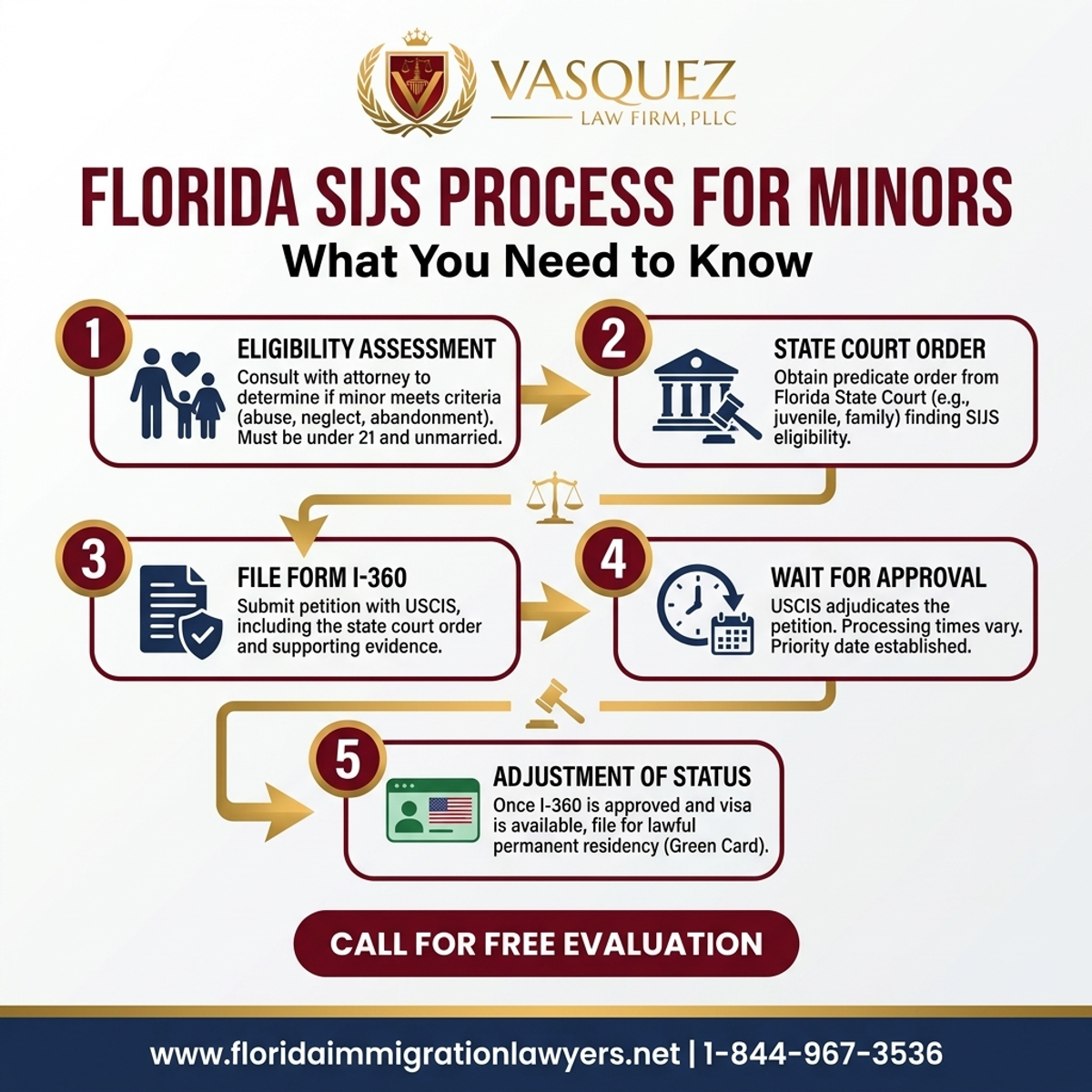
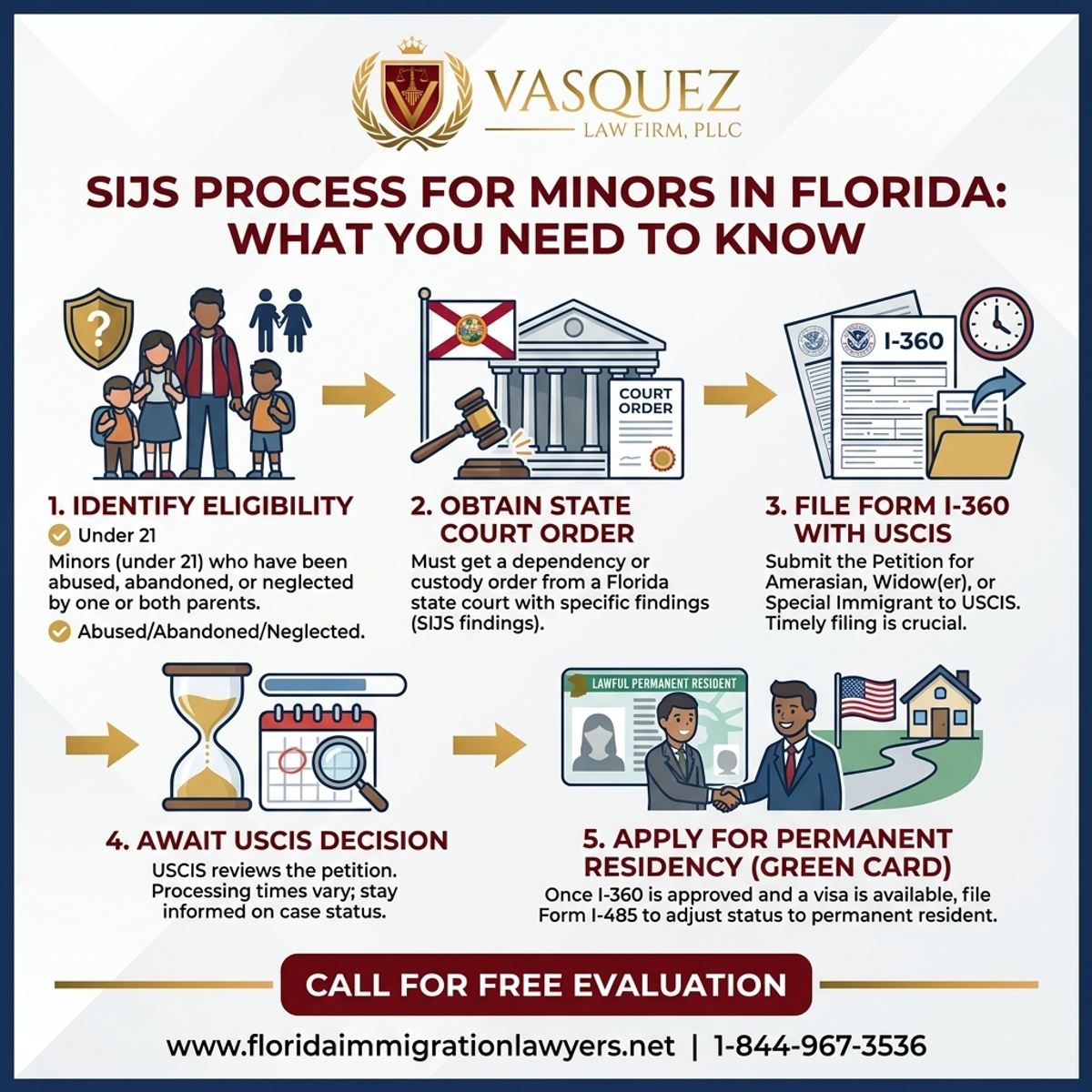
Applying for SIJS involves several critical steps that demand meticulous attention and careful coordination between state juvenile courts and federal immigration agencies. This multi-layered process can be daunting, but with the right guidance, it is entirely navigable. Here is a detailed step-by-step guide:
- Obtain a Juvenile Court Order: This is the foundational step. A state juvenile court in Florida must first assume jurisdiction over the minor and issue a dependency order. This order must contain specific findings: that the minor has been abused, abandoned, or neglected by one or both parents; that reunification with one or both parents is not viable; and crucially, that it is not in the minor's best interest to return to their home country or country of last habitual residence. For example, a Florida court might find that a child was left alone for years with distant relatives, constituting abandonment, and that returning to their birth country would expose them to further harm or lack of care.
- File Form I-360, Petition for Amerasian, Widow(er), or Special Immigrant: Once the necessary juvenile court order is secured, the next step is to submit Form I-360 to U.S. Citizenship and Immigration Services (USCIS). This petition formally requests SIJS classification. It must be accompanied by the certified juvenile court order and other supporting documentation that proves the minor meets the SIJS criteria. USCIS will review this petition to ensure all legal requirements are met, verifying the findings of the state court.
- Adjust Status (Form I-485): If the I-360 petition is approved, the minor can then apply for adjustment of status to become a lawful permanent resident, commonly known as getting a green card. This involves filing Form I-485, Application to Register Permanent Residence or Adjust Status, along with various supporting documents, including medical examinations and affidavits of support. In many cases, if an immigrant visa number is immediately available, Form I-485 can be filed concurrently with Form I-360, streamlining the process.
Step-by-Step Process — SIJS Process for Minors in Florida: What You Need to Know
Throughout this intricate process, it is not merely beneficial but often crucial to work with experienced immigration lawyers. Navigating the distinct requirements of both the Florida state court system and federal immigration law demands specialized knowledge. Florida Immigration Lawyers possess the experience to ensure each step is completed accurately and efficiently, significantly increasing the likelihood of a successful outcome for the vulnerable minor. We are here to guide you through every complexity, from securing the initial court order to the final adjustment of status.
SIJS Document Checklist
When applying for SIJS, having a comprehensive and accurate set of documents is not just essential; it is the backbone of a successful application. Missing or incorrect paperwork is a leading cause of delays and denials. Here’s an expanded checklist to ensure you are fully prepared:
- Certified Juvenile Court Order: This is non-negotiable. It must be a certified copy of the order from a Florida state juvenile court containing all the specific findings required for SIJS eligibility (abuse, abandonment, or neglect; non-viability of reunification; and not in the minor's best interest to return to their home country).
- Minor's Birth Certificate: A copy of the minor's birth certificate is required to establish identity and age. If the certificate is not in English, a certified translation must be provided.
- Form I-360, Petition for Amerasian, Widow(er), or Special Immigrant: The completed and signed petition form, along with the appropriate filing fee or fee waiver request.
- Form I-485, Application to Register Permanent Residence or Adjust Status: The completed and signed adjustment of status application, along with the required filing fee or fee waiver request, medical examination results (Form I-693), and photographs.
- Supporting Evidence of Abuse, Abandonment, or Neglect: This can include police reports, school records, medical records, affidavits from teachers, counselors, or social workers, and detailed personal statements from the minor (if age-appropriate) or their current caregiver. The more evidence you can provide to corroborate the court's findings, the stronger your case will be.
- Identity Documents: Copies of the minor’s passport, national identity card, or any other government-issued identification.
- Proof of Relationship (if applicable): If the minor is living with a relative, documentation proving that relationship (e.g., birth certificates, marriage certificates).
Ensure all documents are complete, accurate, and properly organized. It is highly recommended to make copies of everything submitted. Working with Florida Immigration Lawyers can help you meticulously prepare this checklist, preventing common pitfalls and ensuring your application is robust and complete from the outset.
SIJS Processing Timeline and Expectations
The SIJS process, while offering a vital pathway to protection, is not instantaneous. It involves multiple distinct stages, each with its own typical timeframe, and understanding these expectations is crucial for managing the journey. Here's a more detailed look at what to anticipate:
| Stage | Typical Timeframe | Notes |
|---|---|---|
| Juvenile Court Order | 3-6 months | This initial phase can vary significantly based on the specific Florida county's court docket, the complexity of the minor's case, and the availability of social workers and guardians ad litem. |
| USCIS Petition (I-360) | 6-12 months | Processing times for Form I-360 can fluctuate based on USCIS workload, policy changes, and the service center handling the petition. Premium processing is generally not available for SIJS petitions. |
| Adjustment of Status (I-485) | 8-14 months | After I-360 approval, the I-485 processing depends on visa availability (though SIJS usually has immediate availability), USCIS workload, and the need for interviews or Requests for Evidence (RFEs). |
Key Statistics — SIJS Process for Minors in Florida: What You Need to Know
It is important to remember that these are typical timeframes, and actual processing can be longer or shorter. Delays are not uncommon and can particularly occur if documentation is incomplete, inaccurate, or if USCIS issues a Request for Evidence (RFE). For instance, if the initial juvenile court order lacks a specific finding required by SIJS law, USCIS will likely issue an RFE, adding months to the process. An experienced immigration attorney from Florida Immigration Lawyers can help prepare a thorough application, respond promptly to any RFEs, and keep you informed about current processing trends, helping to mitigate potential delays and manage expectations throughout this critical journey.
Cost Factors for SIJS Application
Understanding the potential cost factors involved in an SIJS application is crucial for effective planning, although the long-term benefits of securing lawful status often far outweigh the initial investment. Here’s a more detailed breakdown of typical expenses:
| Item | Typical Fee | Notes |
|---|---|---|
| Court Fees | Varies | These fees, which can include filing fees for dependency petitions or other court-related services, depend heavily on the specific Florida county and court jurisdiction. Some courts may waive fees for indigent petitioners. |
| USCIS Filing Fees | Varies | While the Form I-360 for SIJS applicants does not typically have a filing fee, the subsequent Form I-485 (Adjustment of Status) and associated forms like the biometrics fee do. However, SIJS applicants are often eligible for fee waivers for these forms, which can significantly reduce costs. It's vital to check the latest USCIS fee schedule and fee waiver eligibility. |
| Medical Examination Fees | $200-$500 | A medical examination by a USCIS-approved civil surgeon is required for the adjustment of status application. These fees are paid directly to the civil surgeon and are not covered by USCIS fee waivers. |
| Attorney Fees | Varies | Legal fees for an experienced immigration attorney will constitute a significant portion of the total cost. These fees cover guidance, document preparation, representation in court and before USCIS, and ongoing case management. While an investment, professional legal assistance can prevent costly mistakes and increase the likelihood of success. |
Beyond these direct fees, consider potential costs for document translations, postage, and travel to appointments. It's essential to consult with Florida Immigration Lawyers for a detailed and transparent cost estimate specific to your unique case. Our team can discuss potential fee waivers and payment plans, ensuring that financial concerns do not become an insurmountable barrier to a child's safety and future.
Do not navigate this process alone. Contact Florida Immigration Lawyers today.
Common Mistakes to Avoid in SIJS Applications
The path to Special Immigrant Juvenile Status is fraught with potential pitfalls that can jeopardize a minor's future if not carefully navigated. Avoiding common mistakes is paramount to a successful application. Here are critical errors to steer clear of:
- Incomplete Documentation: Missing papers, such as a crucial birth certificate translation or an incomplete juvenile court order, can lead to immediate delays or even outright denial of your application. Every required document must be submitted.
- Incorrect Form Filling: Errors, omissions, or inconsistencies on USCIS forms (I-360, I-485, etc.) are a frequent cause of Requests for Evidence (RFEs) or rejections. Even minor mistakes can significantly prolong the process.
- Not Meeting Deadlines: Immigration processes are highly time-sensitive. Failing to respond to USCIS requests or submit documents by specified deadlines can result in the closure or denial of a case.
- Failing to Show Dependency: The absence of a valid, specific juvenile court order that includes all the necessary findings (abuse, abandonment, or neglect; non-viability of reunification; and not in the minor's best interest to return) is a critical and often fatal mistake.
- Improper Legal Representation: Attempting to navigate the complexities of SIJS without experienced legal counsel can lead to oversight of critical details, misinterpretation of laws, and ultimately, an unfavorable outcome.
- Ignoring USCIS Updates: Immigration policies and procedures are dynamic. Failing to stay informed about the latest USCIS guidelines, fee changes, or form versions can result in submitted applications being rejected as outdated.
- Overlooking State Laws: The initial juvenile court process is governed by Florida state law, which has specific requirements that must be met before federal SIJS eligibility can be established. A lack of understanding of these local nuances can derail the entire process.
- Failing to Prove Abuse, Neglect, or Abandonment: While the juvenile court makes initial findings, USCIS will scrutinize the evidence. A weak or unsubstantiated claim of abuse, neglect, or abandonment, even with a court order, can lead to challenges.
Proactively addressing these potential issues with the guidance of an experienced immigration attorney from Florida Immigration Lawyers can significantly improve the chances of a smooth and successful SIJS application, safeguarding the minor's future.
When to Call a Lawyer
Navigating the Special Immigrant Juvenile Status process can be incredibly complex, involving both state and federal legal systems. Knowing when to seek professional legal assistance is crucial for protecting a minor's future. If you find yourself unsure about any aspect of the SIJS application, facing unexpected legal hurdles, or simply need guidance on preparing intricate paperwork, it is unequivocally time to contact a lawyer.
Florida Immigration Lawyers are equipped to provide the necessary experience to navigate this multi-faceted process with precision and care. Beyond general uncertainty, specific warning signs should prompt immediate legal consultation. These include receiving a Request for Evidence (RFE) from USCIS, a Notice of Intent to Deny (NOID), or an outright denial of your petition. These signals indicate that there are deficiencies in your application or additional information is required, and a skilled attorney can effectively respond and advocate on your behalf. Moreover, if the minor's case involves particularly sensitive circumstances, such as severe trauma, language barriers, or complex family dynamics that might complicate court proceedings, professional legal representation becomes indispensable. Don't wait for a setback; proactive legal engagement can make all the difference.
About Florida Immigration Lawyers
Florida Immigration Lawyers is a beacon of hope and support, dedicated to assisting vulnerable clients across the entire state of Florida, from the bustling streets of Miami to the quieter communities like Homestead, with their diverse immigration needs. Our firm prides itself on a comprehensive suite of services that extends far beyond SIJS, encompassing critical areas such as asylum applications, robust deportation defense, family-based immigration petitions, and citizenship and naturalization processes. We understand that each case represents a unique human story and a profound desire for a better life.
What sets us apart is not just our experience in complex immigration law, but also our genuinely compassionate approach and unwavering commitment to every client's case. We believe in providing personalized attention, ensuring that you feel heard, understood, and confidently represented throughout your legal journey. Our team works tirelessly to protect the rights and secure the futures of minors and families alike, leveraging years of experience to navigate the intricate legal landscape. For a free, confidential consultation to discuss your specific situation and how we can help, we encourage you to call us at 1-844-YO-PELEO or visit our website. Our dedicated team is available 24/7, ready to provide the guidance and advocacy you deserve. Se Habla Español.
Sources and References
Do Not Navigate This Process Alone
Our experienced immigration attorneys are ready to fight for you. Get a free, confidential case review today.
Se Habla Español
Or leave your details and we’ll call you:
Free Evaluation in 24 Hours
Or talk to us right now
AI voice assistant — available 24/7
FreeFrequently Asked Questions

William J. Vásquez
Founding Attorney · Vasquez Law Firm
U.S. Air Force veteran and immigration attorney with years of hands-on U.S. immigration experience. J.D., NCCU School of Law. AILA member. Admitted to the 4th, 5th, and 11th Circuit Courts.
Available 24/7 - Free Evaluations
Reviewed for legal accuracy by William J. Vásquez
Licensed in North Carolina; U.S. immigration is federal practice.
Related Legal Services
Our Florida immigration attorneys can help you with experienced immigration attorneys, asylum protection and citizenship and naturalization. Call today at 1-844-YO-PELEO for a free case review.
Related Links
Related Topics
Free Legal Case Review
Discuss your case with our experienced attorneys. We're available 24/7.
Se Habla Español - Estamos aquí para ayudarle.
Related Articles
Immigration Lawyer Orlando Free Consultation in Florida
For individuals and families in Orlando, Florida, navigating the complexities of U.S. immigration law requires expert guidance. An immigration lawyer in Orlando offers crucial support for everything from visa applications and green card processes to naturalization and deportation defense. This comprehensive guide details what a free consultation covers, providing a step-by-step overview of immigration pathways, essential document checklists, and expected timelines in 2026. We also highlight common mistakes to avoid, discuss the critical role of legal counsel in deportation and asylum cases, and explain why choosing a local Orlando immigration attorney is beneficial. Florida Immigration Lawyers is dedicated to serving the diverse community of Orlando with compassionate, effective legal solutions, ensuring you receive personalized advice and robust representation for a successful immigration journey.
EAD Advance Parole Combo Card in Florida 2026
For individuals with a pending Form I-485, Application to Register Permanent Residence or Adjust Status, the EAD Advance Parole Combo Card is an essential document. This single card combines the authorization to work legally in the U.S. (Employment Authorization Document - EAD) with permission to travel internationally and re-enter without abandoning your green card application (Advance Parole). This guide from Florida Immigration Lawyers provides a comprehensive overview for applicants in Florida in 2026, covering eligibility, the step-by-step application process, required documents, expected processing times, and associated costs. We also highlight common mistakes to avoid and when to seek legal counsel to ensure a smooth and successful immigration journey. Understanding this vital card is key to maintaining stability while awaiting your permanent residency approval.
Immigration Lawyer Southwest Florida: What You Need to Know
Discover how an immigration lawyer in Southwest Florida can help you navigate complex immigration processes. Learn about costs, timelines, and common mistakes to avoid. Call Florida Immigration Lawyers for a free case review.
Change of Status from B-2 to F-1 in Florida: What You Need
Learn how to change your immigration status from a B-2 tourist visa to an F-1 student visa in Florida. This comprehensive guide covers the 2026 processing timelines, required documentation, and common mistakes to avoid. Call Florida Immigration Lawyers for personalized assistance.