Immigration Medical Exam: Find Florida Doctors | VLF Florida
Learn about the immigration medical exam in Florida, including how to find USCIS-designated doctors in Coral Springs. Call for a free consultation with Florida Immigration Lawyers.

The immigration medical exam is a vital step for those seeking adjustment of status in the U.S. Conducted by a USCIS-designated civil surgeon, it ensures applicants don't pose a public health risk. Key points include:
- Required for Form I-693 completion
- Conducted by USCIS-designated doctors
- Includes vaccination and medical history review
- Essential for adjustment of status process
Introduction
If you're planning to adjust your immigration status in the U.S., undergoing an immigration medical exam is a crucial requirement. This exam, conducted by a USCIS-designated civil surgeon, ensures you meet health standards to live in the U.S. permanently. In this guide, we’ll walk you through everything you need to know about finding the right doctor in Coral Springs, Florida, and what the exam entails. Call Florida Immigration Lawyers at 1-844-967-3536 for a free consultation.
The immigration medical exam is more than just a formality; it's a critical component that directly impacts your eligibility for a green card. It serves to protect public health within the United States while also ensuring that applicants are prepared for a healthy life in their new home. Understanding the nuances of this exam, from preparation to submission, can significantly streamline your immigration journey.
For many, like Maria from Coral Springs, navigating the complexities of immigration can be daunting. This comprehensive guide aims to demystify the medical examination process, offering clear instructions and practical advice. We'll cover everything from locating an authorized civil surgeon in Florida to understanding the costs and avoiding common pitfalls, ensuring you're well-prepared for this essential step.
Understanding the Immigration Medical Exam
The immigration medical exam is a mandatory part of the process for those applying for a green card in the United States. It ensures that applicants are free from any health conditions that could pose a public health risk. Conducted by a civil surgeon authorized by USCIS, the exam includes a physical examination, review of medical history, and necessary vaccinations. It’s essential for completing Form I-693, Report of Medical Examination and Vaccination Record.
The primary goal of this examination is to identify certain health-related grounds of inadmissibility. These typically include communicable diseases of public health significance (such as active tuberculosis), specific physical or mental disorders that may pose a threat to the safety or welfare of the applicant or others, and drug abuse or addiction. By screening for these conditions, USCIS aims to protect the health and well-being of the U.S. population.
In Florida, there are several USCIS-designated doctors located throughout the state, including in Coral Springs. This makes it convenient for applicants living in or near this area to find a qualified professional to conduct their examination. These civil surgeons are specially trained and authorized by USCIS to perform these specific exams, adhering to strict guidelines set by the Centers for Disease Control and Prevention (CDC). Choosing an unauthorized doctor will result in the rejection of your application, highlighting the importance of using the USCIS Find a Doctor tool.
The legal basis for this requirement stems from the Immigration and Nationality Act (INA), which outlines the health-related grounds for inadmissibility. Failure to complete the medical exam or to pass it due to a disqualifying condition can lead to a denial of adjustment of status. However, in some cases, waivers may be available for certain conditions, which is where the expertise of an immigration attorney from Florida Immigration Lawyers can be invaluable.
Step-by-Step Guide to Completing the Exam
Beginning your immigration medical exam process requires diligent preparation and adherence to specific steps. The first crucial decision is selecting the right civil surgeon, which sets the foundation for a smooth experience. It's advisable to research doctors in your area, considering factors like proximity, availability, and patient reviews, all while ensuring they are officially designated by USCIS.
- Schedule an Appointment: Find a certified civil surgeon in Coral Springs. Use the USCIS Find a Doctor tool to search for authorized doctors. When scheduling, inquire about the full cost, what tests are included, and what forms of payment are accepted. For instance, if you're like John, who needs to get his exam done quickly, ask about the earliest available appointments and if they can accommodate urgent requests.
- Prepare Your Documents: Bring identification, your medical history, and vaccination records to the appointment. Organize these documents neatly to ensure a swift check-in process. Having a comprehensive history helps the civil surgeon accurately assess your health status.
- Attend the Examination: The civil surgeon will conduct a physical exam, verify your vaccine status, and possibly take blood tests or chest X-rays. Be prepared to discuss your medical history openly and honestly. The exam is thorough but typically non-invasive.
- Form I-693 Completion: After the exam, the doctor will complete Form I-693 and seal it in an envelope for submission to USCIS. Do NOT open this envelope; it must remain sealed to be valid.
- Submit to USCIS: Submit the sealed I-693 form along with your adjustment of status application. Ensure the form is current, as it has a limited validity period.
Once you submit the sealed Form I-693, it becomes part of your overall adjustment of status application package. USCIS will review the medical findings as part of their adjudication process. It's crucial to keep a copy of everything you provide to the civil surgeon for your records, even though you won't open the sealed envelope. This foresight can be helpful if any questions arise later in the process. If you have concerns about the submission or validity, Florida Immigration Lawyers can offer expert advice at 1-844-967-3536.
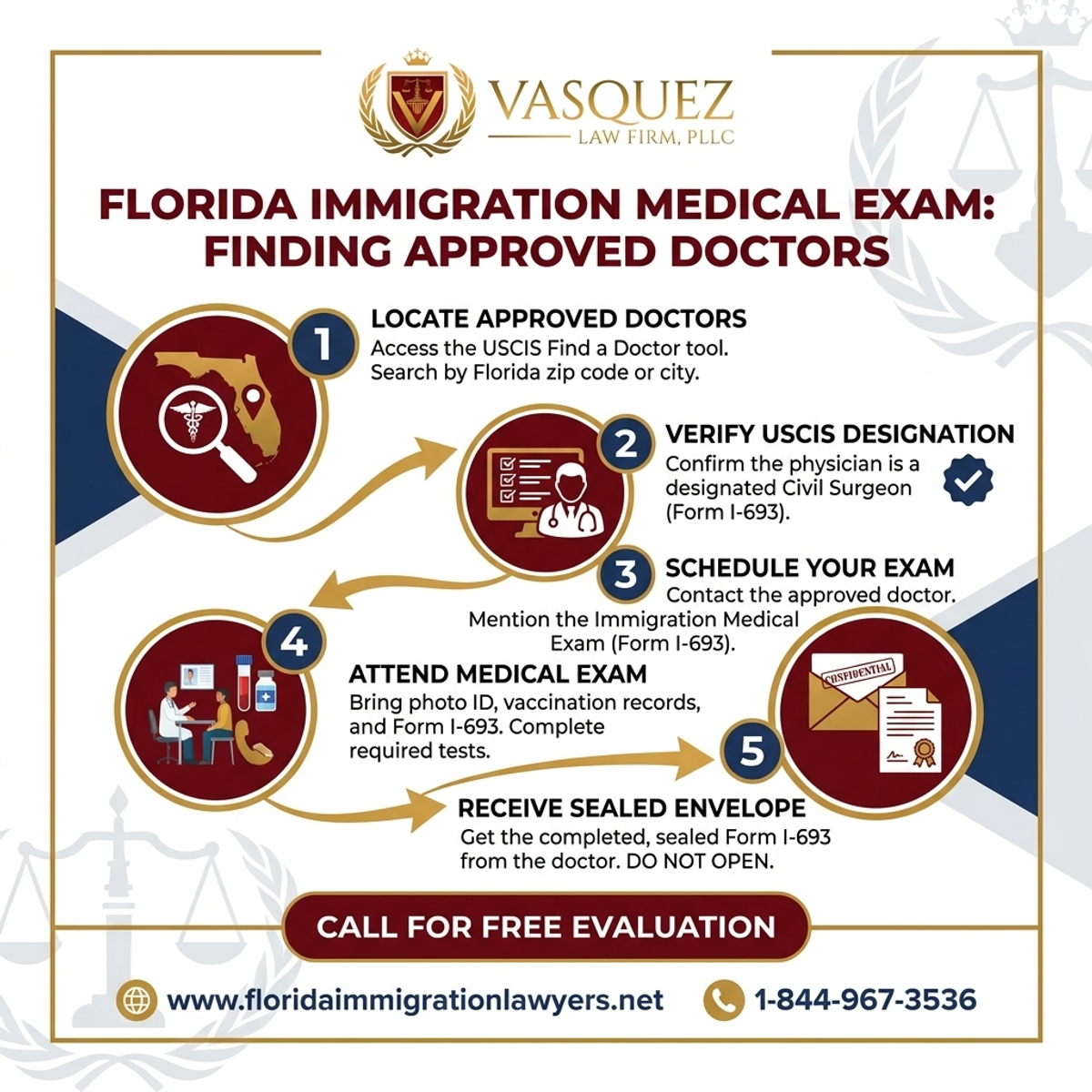
Step-by-Step Process — Immigration Medical Exam: Find Florida Doctors
Document Checklist for Your Medical Exam
Thorough preparation of your documents is paramount for a successful immigration medical exam. Gathering all necessary records beforehand can prevent delays, additional appointments, and unnecessary stress. It's not just about having the documents, but ensuring they are accurate, complete, and easily accessible for the civil surgeon.
- Government-issued ID (passport, driver's license)
- Medical and vaccination records
- Form I-693 (if provided by USCIS)
- Payment for the examination (check with the doctor for accepted forms)
Beyond the essentials, consider bringing any medical reports for past serious illnesses, surgeries, or ongoing conditions. For example, if you're like Sarah, who arrived without her childhood vaccination records, be prepared for the possibility of needing additional blood tests to determine immunity or receiving necessary vaccinations during the exam. Proactively addressing missing records can save time and potential complications.
Always make copies of all documents you provide to the civil surgeon for your personal records. While the sealed envelope is for USCIS, having your own file can be incredibly useful for future reference or if any discrepancies arise. A well-organized packet demonstrates preparedness and can contribute to a smoother examination process.
Timeline and Processing Expectations
Typically, the immigration medical exam can be scheduled and completed within one to two weeks, depending on the availability of the civil surgeon. After the exam, it may take a few days for the doctor to complete and seal Form I-693. Once submitted to USCIS as part of your application package, processing times can vary. Check the USCIS processing times page for current estimates.
Factors influencing the timeline can include the civil surgeon's caseload, whether additional tests (like a Quantiferon TB test or further blood work) are required, and how quickly those results are returned. If you have an unusual medical history or require extensive catch-up vaccinations, your process might take longer. It's wise to initiate the medical exam well in advance of your application submission deadline to avoid any last-minute rushes.
It's also crucial to understand the validity period of Form I-693. Generally, the form is valid for two years from the date the civil surgeon signs it, provided it is submitted to USCIS within 60 days of the civil surgeon's signature. If the validity period expires before your adjustment of status is approved, USCIS may request an updated Form I-693, which would necessitate another exam and associated costs. Keeping an eye on these timelines is vital for a seamless application process.
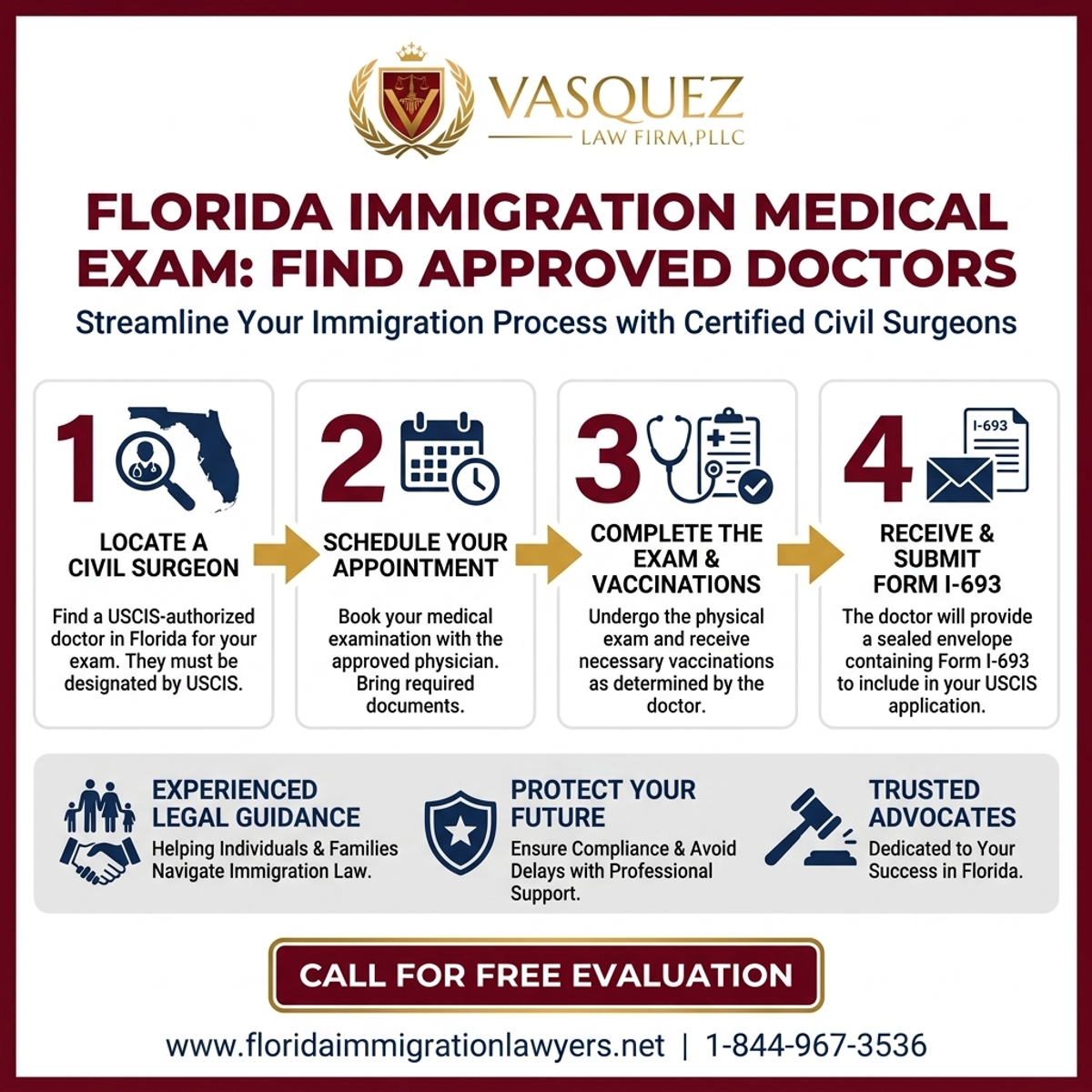
Key Statistics — Immigration Medical Exam: Find Florida Doctors
Cost Factors and Fee Breakdown
The cost of the immigration medical exam is not standardized and can vary based on the civil surgeon's fees and the specific tests required. Generally, fees can range from $200 to $500. It's important to confirm the cost when scheduling your appointment and to inquire about accepted payment methods. Note that health insurance may not cover this exam.
The base fee usually covers the physical examination, review of your medical history, and the completion of Form I-693. However, additional costs can quickly add up. These might include fees for specific blood tests (like syphilis or gonorrhea), a chest X-ray for tuberculosis screening, or required vaccinations that are not up-to-date. For instance, if you lack proof of measles or mumps vaccination, you'll need to receive these, incurring extra charges.
When you call to schedule your appointment, ask for a detailed breakdown of all potential costs. Some civil surgeons offer a flat fee that includes all necessary tests and vaccinations, while others charge à la carte. Understanding the full financial commitment upfront allows you to budget effectively and avoid surprises. Remember, most private health insurance plans do not cover immigration medical exams, as they are not considered medically necessary treatments, so be prepared for out-of-pocket expenses.
Do not navigate this process alone. Contact Florida Immigration Lawyers today.
Common Mistakes to Avoid
Navigating the immigration medical exam can be straightforward if you're well-informed, but even minor errors can lead to significant delays or even rejection of your adjustment of status application. Being aware of common pitfalls is your first line of defense against unnecessary complications.
- Not Using a USCIS-Designated Civil Surgeon: Only exams conducted by a designated civil surgeon are valid for immigration purposes. Always verify credentials using the official USCIS tool.
- Failing to Bring Required Documents: Lack of proper identification or medical records can delay your exam. Compile a complete folder well in advance.
- Ignoring Vaccination Requirements: Ensure all required vaccinations are up-to-date. If you lack records, discuss options with the civil surgeon, which may include blood tests or receiving new shots.
- Submitting an Unsealed I-693: USCIS requires the form to be sealed by the civil surgeon. Opening the envelope invalidates the exam results.
- Delaying the Exam: Schedule your exam early to avoid delays in your application process, especially considering the form's validity period.
- Not Checking Doctor’s Credentials: Verify the civil surgeon's authorization through USCIS to ensure they are qualified to perform the exam.
- Assuming Insurance Will Cover Costs: Most insurance plans do not cover this exam; be prepared for out-of-pocket expenses.
By proactively addressing these potential issues, you can significantly reduce the risk of setbacks in your immigration journey. If you find yourself unsure about any aspect of the exam or your documentation, consulting with Florida Immigration Lawyers can provide clarity and peace of mind, helping you avoid costly mistakes.
When to Call a Lawyer
While the medical exam is a straightforward process, complications can arise. If you have a complex medical history, or if your Form I-693 is rejected by USCIS, it may be beneficial to consult with an immigration attorney. Additionally, if you face any issues with finding a civil surgeon or have questions about how the medical exam affects your immigration status, Florida Immigration Lawyers is here to help.
Consider a scenario where an applicant, like David, had a past medical issue such as a history of substance abuse or a previously treated communicable disease like tuberculosis. While these conditions might not automatically lead to inadmissibility, they require careful documentation and often a detailed explanation. An attorney can help you prepare for these discussions with the civil surgeon and USCIS, ensuring your case is presented accurately and favorably, potentially even preparing a waiver application if necessary.
Furthermore, if you receive a Request for Evidence (RFE) from USCIS regarding your medical exam, or if there's a discrepancy in your records, an immigration lawyer can guide you on the best course of action. The team at Florida Immigration Lawyers is experienced in handling such complexities and can provide strategic advice to overcome challenges, ensuring your application remains on track. Don't hesitate to call us at 1-844-967-3536 for a free consultation if you encounter any difficulties.
About Florida Immigration Lawyers
Florida Immigration Lawyers is a leading law firm specializing in immigration law across Florida. Our experienced team offers comprehensive services, including assistance with family immigration, business immigration, deportation defense, and more. We provide 24/7 support and free consultations. Call us at 1-844-967-3536 or visit our website at https://www.floridaimmigrationlawyers.net. Se Habla Español.
Sources and References
- U.S. Citizenship and Immigration Services (USCIS)
- Executive Office for Immigration Review (EOIR)
- 8 U.S.C. Chapter 12 - Immigration and Nationality Act
Related services: immigration practice areas, family immigration services.
This article provides general legal information and is not intended as legal advice. Every case is unique, and outcomes depend on specific facts and circumstances. Contact an attorney for advice about your particular situation.
For personalized assistance, call Florida Immigration Lawyers at 1-844-967-3536 for a free consultation. Se Habla Español - Estamos aquí para ayudarle.
If you need legal assistance, learn more about speak with an immigration lawyer, or call us at 1-844-967-3536 for a free consultation.
Do Not Navigate This Process Alone
Our experienced immigration attorneys are ready to fight for you. Get a free, confidential consultation today.
Se Habla Español
Frequently Asked Questions
Florida Immigration Lawyers
Immigration Attorney | Founder, Vasquez Law Firm
U.S. Air Force veteran and immigration attorney with thousands of cases resolved. J.D., NCCU School of Law. AILA member. Admitted to the 4th, 5th, and 11th Circuit Courts.
Available 24/7 - Free Evaluations
Related Legal Services
Our Florida immigration attorneys can help you with free immigration consultation, experienced immigration attorneys and business immigration. Call today at 1-844-967-3536 for a free consultation.
Related Links
Related Topics
Free Legal Consultation
Discuss your case with our experienced attorneys. We're available 24/7.
Se Habla Español - Estamos aquí para ayudarle.
Related Articles
Immigration Medical Exam: Florida Civil Surgeons Guide
Navigating the U.S. immigration process requires careful attention to many details, especially the mandatory immigration medical exam. For those seeking a green card in Florida, understanding the Form I-693, locating a USCIS-approved civil surgeon, and preparing for the examination are critical steps. This comprehensive guide details the requirements, what to expect during your medical exam, essential documents to bring, and potential costs. We also highlight common mistakes to avoid and explain when seeking legal counsel from Florida Immigration Lawyers can be invaluable. Ensure a smooth application by being well-informed and professionally advised.
Understanding CSPA for Florida's Aging Out Children
Discover how the Child Status Protection Act (CSPA) helps protect aging out children in Florida. Ensure your child's immigration path is secure with our expert guidance. Call Florida Immigration Lawyers for a free consultation.
VAWA Immigration Relief Florida: Protecting Abuse Victims
For immigrants in Florida facing domestic violence or extreme cruelty, VAWA immigration relief offers a confidential pathway to a green card. This guide from Florida Immigration Lawyers details eligibility for abused spouses, children, and parents of U.S. citizens or LPRs. Learn about the Form I-360 self-petition process, essential documentation, and typical timelines. We emphasize the importance of strong evidence, confidentiality, and avoiding common mistakes. Discover how fee waivers can help manage costs and when to seek expert legal counsel. Florida Immigration Lawyers provides compassionate support across Florida, including Jacksonville, to help you secure safety and legal status.
L-1 Visa Intracompany Transfer in Florida | VLF Florida
Explore the L-1 visa process for intracompany transfers to Florida. Understand eligibility, application steps, and common mistakes to avoid. Contact Florida Immigration Lawyers for assistance.