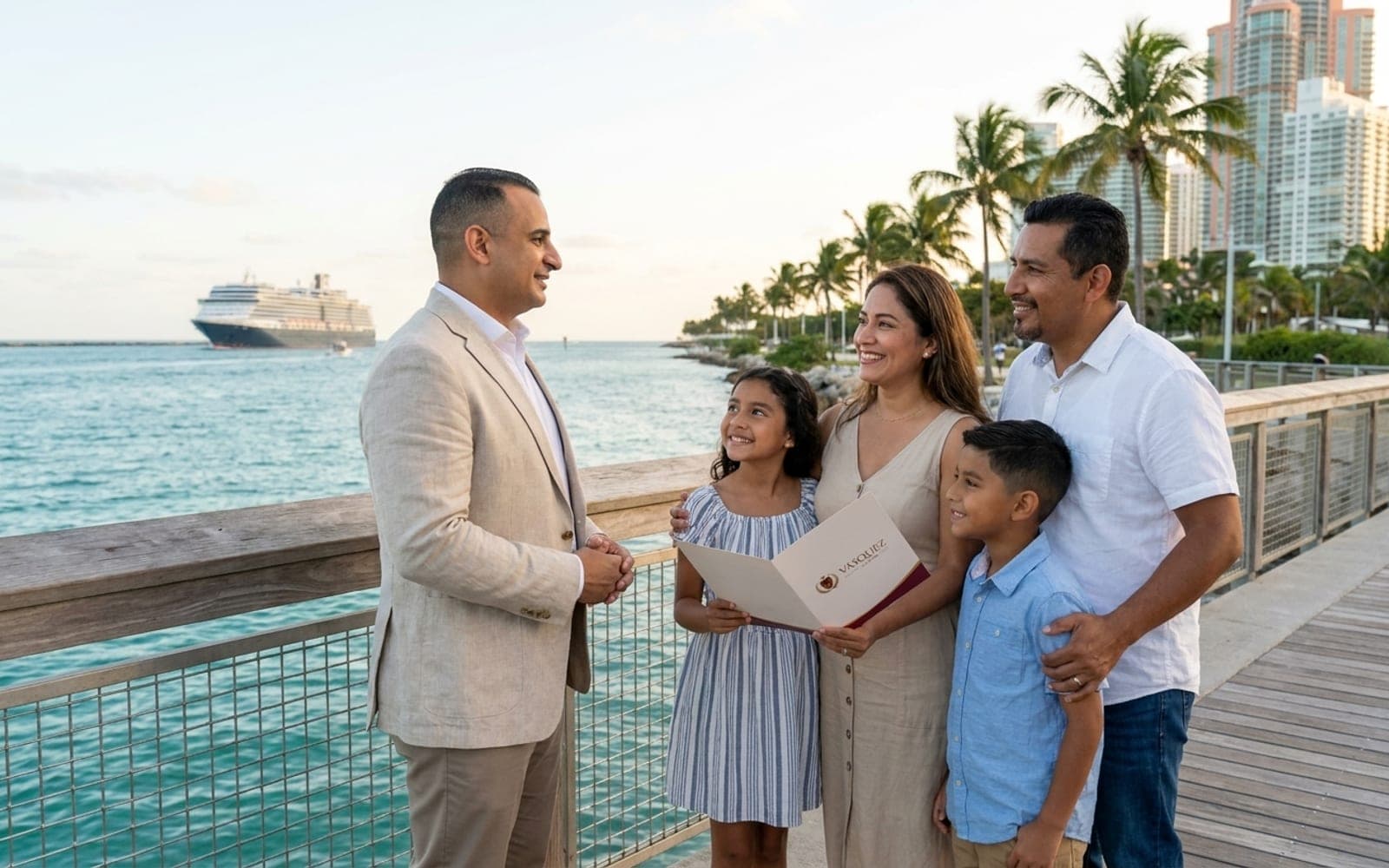
Miami Lakes and Miami-Dade residents bring varied questions, and the first step is a consultation that looks at your whole immigration history. Vasquez Law Firm practices immigration law only and serves the county by secure video and phone in English and Spanish, meeting in person at its one office in Orlando. The guide covers fiancé visas and how the K-1 process works, family petitions, asylum and work permits, and includes a document checklist and advice on interviews and choosing a lawyer.
- The first step is a consultation reviewing your full immigration history.
- Topics include K-1 fiancé visas, family petitions, asylum and work permits.
- The firm serves Miami-Dade by video and phone from Orlando.
- Consultations are available in both English and Spanish for clients across the region.
- The guide offers a document checklist and tips on interviews.
Introduction
Miami-Dade County is home to families from nearly every country in the Americas, and the immigration questions we hear from Miami Lakes to Homestead are as varied as the county itself. This guide is for residents of Miami Lakes, Hialeah, Kendall, Miami Beach, Miami Gardens, Homestead and nearby communities who need help with a fiancé visa, a family petition, asylum or a work permit. To speak with us, call 1-844-YO-PELEO or contact us.
Whether you need an immigration lawyer in Miami Lakes for a family petition or help with an asylum case in Hialeah, the first step is a consultation that looks at your whole immigration history. Vasquez Law Firm practices immigration law only. Our one office is at 1111 E Amelia Street in Orlando. We serve Miami-Dade clients by secure video and phone, in English and Spanish, and meet in person in Orlando when clients prefer.
This page is general information, not legal advice. Your own history decides which options apply, and the rules for several of these matters change, so every point should be confirmed against current instructions.
Immigration Help for Miami Lakes and Miami-Dade Residents
Most of the Miami-Dade cases we review fall into a few groups: bringing a fiancé or spouse to the United States, petitioning for parents, children or siblings, seeking asylum or other humanitarian protection, and getting or renewing work authorization. Many families also have a relative in removal proceedings. USCIS interviews and biometrics are handled at the USCIS field office and application support center assigned to your address, and court cases are generally heard by the immigration court in Miami. Your notices will name the exact location.
We do not have an office in Miami-Dade County. Our immigration practice overview describes the matters we handle, and the sections below explain the most common ones.
Fiancé Visas for Hialeah, Homestead and Miami Gardens Families
The K-1 visa allows a U.S. citizen to bring a foreign fiancé(e) to the United States to marry. The citizen files Form I-129F, and generally both partners must be legally able to marry and must have met in person within the two years before filing, unless a waiver applies. After the fiancé arrives, the couple must marry within 90 days, and the foreign spouse then applies for a green card through adjustment of status. Only U.S. citizens can file a K-1; permanent residents use a different path through marriage.
We often hear from a citizen in Hialeah whose partner lives in Cuba, Venezuela or Colombia. A lawyer will review proof of the relationship, any prior marriages and divorces, and the consular process in the partner's country. Couples in Homestead may face questions about the income needed for the affidavit of support. Couples in Miami Gardens may need to explain a past visa denial or immigration violation. In every case, the lawyer should confirm whether a K-1 or a marriage-based petition is the better option. Our fiancé visa page explains the steps.
How the K-1 Process Works in Florida
- Eligibility review. We confirm citizenship, the in-person meeting requirement, freedom to marry and any history that needs explaining.
- Petition. The citizen files Form I-129F with evidence of the relationship, and USCIS reviews it.
- Consular stage. After USCIS approves the petition, the case goes to the Department of State and a consulate in the fiancé's country schedules an interview and medical exam.
- Visa and entry. If the visa is issued, the fiancé enters the United States and the 90-day marriage period begins.
- Marriage. The couple marries within 90 days of entry.
- Green card application. The foreign spouse applies for adjustment of status, and the couple attends an interview where required.
The affidavit of support is a legal promise by the sponsor to support the immigrant at a minimum income level, and the sponsor must show income or assets that meet the current guidelines. If the petitioner's income is short, a joint sponsor may be able to help. The requirement surprises many couples, so we check it early, before the petition is filed and before travel plans are made. The foreign fiancé also needs a medical examination by an approved doctor, and the consulate will want police certificates and other civil records, so collecting those documents early saves time.
Some couples decide that marrying abroad first and filing a spouse petition is a better fit. A lawyer can compare the two for your facts.
Family Petitions in Miami Beach and Kendall
U.S. citizens can petition for spouses, unmarried children under 21, and parents as immediate relatives, and for other relatives such as married children and siblings in preference categories that may involve long waits. Permanent residents can petition for spouses and unmarried children. The process begins with Form I-130 and continues either through a green card application in the U.S. or consular processing abroad.
A family visa lawyer in Miami Beach is often asked about relatives who entered on tourist visas, overstayed, or have prior immigration problems; those facts can change whether a relative can adjust status here or needs to process abroad, and whether a waiver is needed. A client in Kendall may be petitioning for elderly parents and want to know what documents the consulate will ask for. Learn more on our family immigration page.
Spouses of U.S. citizens who entered with a visa and were inspected may be able to adjust status without leaving the country, while spouses who entered without inspection often cannot, and some people need a waiver before a green card can be approved. Whether a waiver is available depends on a qualifying relative and on the ground involved, and a denied waiver can leave a person worse off. This is why a careful lawyer reviews entry history before advising anyone to file.
Asylum in Hialeah, Miami Gardens and Homestead
Asylum protects people who fear persecution because of race, religion, nationality, political opinion or membership in a particular social group. It generally must be requested within one year of arrival, with limited exceptions. A lawyer in Hialeah will often work with people who fled political persecution, while a lawyer in Miami Gardens may be preparing a case based on gang threats or violence that the home government would not stop, claims that are legally difficult and depend on specific facts. In Homestead, a lawyer may be representing someone who applied defensively after receiving a Notice to Appear.
Work authorization for asylum applicants depends on how long the application has been pending and on current rules, so ask early. A person who has a hearing date should also gather evidence such as news reports, medical or psychological records, identity documents and statements from witnesses, and should be ready to explain any gaps. Consistency between the written declaration and live testimony is critical.
Whoever you choose, make sure the lawyer prepares your declaration and testimony carefully and explains withholding of removal and Convention Against Torture protection as alternatives.
Work Permits and Homestead Immigration Services for South Dade
Many Miami-Dade residents need an employment authorization document while an application is pending, such as an asylum, adjustment of status, or TPS application. Eligibility and filing timing depend on the underlying category, and rules for some categories have changed in recent years. A lawyer checks which category applies before you file Form I-765 and helps you plan renewals so you are not left without work authorization.
Homestead, Florida City and the Redland are home to many farmworker families and long-time residents with mixed-status households. People in South Dade often need help with more than one issue at a time: a work permit renewal, a family petition, and a relative's court date. A lawyer should look at how each case affects the others. If you are comparing lawyers, ask whether the firm can meet by video in Spanish so you do not need to miss work, and look for a careful review of your full history before anything is filed.
How We Work With Miami-Dade Clients
We serve Miami Lakes, Kendall, Hialeah, Miami Beach, Miami Gardens, Homestead and the rest of Miami-Dade remotely from our Orlando office, with consultations by video and phone in English and Spanish. Documents are exchanged securely, forms are prepared and reviewed with you, and we tell you what to expect from each agency. You travel only when an appointment requires it, and we tell you in advance.
Document Checklist for a Miami-Dade Consultation
- Passports, birth certificates, and marriage and divorce records.
- Any visas, I-94 records, green cards, work permits, or USCIS receipt notices.
- Notices to Appear or court notices, if any.
- Proof of the relationship for K-1 and marriage cases, such as photos, messages and travel records.
- Arrest and court records, even for old or dismissed cases.
- Proof of the petitioner's citizenship, income and address.
- Records of any prior applications, denials or visa refusals.
- A list of trips and addresses.
Bring what you can find. If something is missing, tell us, and we can explain how to request it. Documents in Spanish or another language usually need an English translation with a statement that the translator is competent, so ask us what the agency or the consulate will accept. Keep the originals safe and send clear copies for the first review, because a blurry scan can hide a date or a name that matters.
Timeline and Processing Expectations
Processing times depend on the type of case, the category and the office, and they change. USCIS publishes current processing information, the Department of State publishes consular information and the immigration courts publish theirs. We do not quote general estimates, and we do not promise any speed or result.
For fiancé cases, the process includes USCIS review and a consular stage; for family petitions in preference categories, a visa number may also be required. The table shows the broad stages of a typical fiancé or family case.
| Stage | What happens | Who acts |
|---|
| Consultation and review | History, eligibility and the right route are reviewed | Lawyer and client |
| Petition filing | Form I-129F or I-130 is prepared and filed | Petitioner and lawyer |
| USCIS review | USCIS reviews the petition and may ask for more evidence | USCIS |
| Consular or green card stage | The beneficiary interviews abroad or applies for a green card in the U.S. | Beneficiary, consulate or USCIS |
| Decision | Approval, denial or request for more evidence | Consulate or USCIS |
Interviews, Evidence and Choosing a Lawyer
For fiancé and marriage cases, the officer wants proof that the relationship is genuine. Photographs over time, travel records, messages, joint plans and statements from people who know the couple all help. The couple should be able to answer ordinary questions about their lives together. We review the file with you before any interview so nothing in it is a surprise. If the officer asks for more proof afterward, the response should be complete, organized and filed before the deadline stated in the notice.
When you choose a lawyer, ask who will handle your case, how you will be updated and whether the written agreement explains the scope of the work. Be cautious about anyone who promises an approval, and do not rely on a notario for legal advice.
Cost Factors and Fee Breakdown
The cost of a fiancé or family matter includes government charges and legal fees, and both depend on the case.
| Item | Amount | Notes |
|---|
| Fiancé petition (Form I-129F) | Check USCIS for the current fee | Read the current form instructions |
| Family petition (Form I-130) | Check USCIS for the current fee | Depends on the category |
| Green card application and work permit | Check USCIS for the current fee | Several forms may be needed |
| Visa application and medical exam | Varies by case | Paid to the consulate or the examining doctor |
| Legal fees | Varies by case | Set out in a written agreement |
Ask for a written explanation of what the legal fee covers and what is billed separately.
Check the agency fee pages before paying, because amounts change.
Common Mistakes to Avoid
- Filing a K-1 without confirming that the couple met in person during the required period.
- Not disclosing prior marriages, divorces or immigration violations.
- Missing the 90-day marriage deadline after a fiancé enters the United States.
- Filing a family petition without reviewing how the relative entered the country.
- Missing the one-year asylum deadline without checking for exceptions.
- Relying on a notario or non-lawyer for legal advice.
When to Call a Lawyer
Call before you file anything, and call right away if you have a Notice to Appear, a denial, a prior immigration violation or a relative in detention. Early advice often keeps more options open. To schedule a consultation, call 1-844-YO-PELEO or contact us.
About Vasquez Law Firm
Vasquez Law Firm practices immigration law only. Our only office is at 1111 E Amelia Street in Orlando, and we serve clients throughout Florida by phone and secure video, with in-person meetings at the Orlando office. William J. Vásquez is the founding attorney. Consultations are offered in English and Spanish. To talk about your situation, call 1-844-YO-PELEO or contact us.
Sources and References
Related services: fiancé visa lawyers in Florida, immigration lawyers in Florida
Other ways people search for this
People look for this help under different names. Related searches include family immigration attorney jacksonville; immigration lawyer kendall fl; k1 visa lawyer hialeah; k1 visa lawyer homestead; k1 visa lawyer miami gardens; miami beach family visa lawyer; asylum lawyer miami gardens; asylum lawyer miami-dade county; asylum lawyer hialeah; asylum lawyer homestead; homestead immigration lawyer; immigration lawyer homestead fl; immigration lawyer homestead.
This article is general information, not legal advice. Every case is different; speak with an immigration lawyer about your situation.