Immigration Lawyer Cost in Florida: What to Expect in 2026
Understanding the cost of an immigration lawyer in Florida for 2026 is crucial for anyone navigating the U.S. immigration system. Attorney fees vary based on case type, complexity, and the lawyer's experience, ranging from flat fees for common applications to hourly rates for complex litigation. This guide breaks down typical costs for services like family-based petitions, naturalization, and deportation defense, distinguishing them from mandatory government filing fees. We also cover key factors influencing pricing, offer a step-by-step guide to hiring legal counsel, and outline essential documents needed for your case. Learn about common mistakes to avoid and when it's critical to seek professional legal assistance to protect your rights and achieve your immigration goals. Florida Immigration Lawyers offers free case reviews and dedicated support across Florida.
How Do Immigration Attorneys Structure Their Fees in Florida?
Immigration attorneys in Florida typically structure their fees in one of three ways: flat fees, hourly rates, or retainers. Each method has its advantages and is usually applied based on the nature and predictability of the immigration case.
For many common immigration processes, such as family-based petitions or certain visa applications, attorneys often charge a **flat fee**. This means you pay a single, agreed-upon amount for the entire service, regardless of the hours spent. Flat fees provide cost certainty, which can be very reassuring for clients. For example, applying for a Green Card through a family member might have a set fee. More complex cases, especially those involving litigation, appeals, or unforeseen challenges, are typically billed at an **hourly rate**. This means you pay for the actual time the attorney and their staff spend working on your case. Hourly rates are common in deportation defense cases handled by the Executive Office for Immigration Review (EOIR). A **retainer** is an upfront payment held in a client trust account, from which the attorney draws funds as services are rendered. This is common for cases with uncertain durations or highly variable workloads, ensuring the attorney is compensated for ongoing work. As of 2026, the specific rates can vary significantly based on the attorney's experience and the firm's reputation.
Typical Fee Breakdown for Immigration Services (2026)
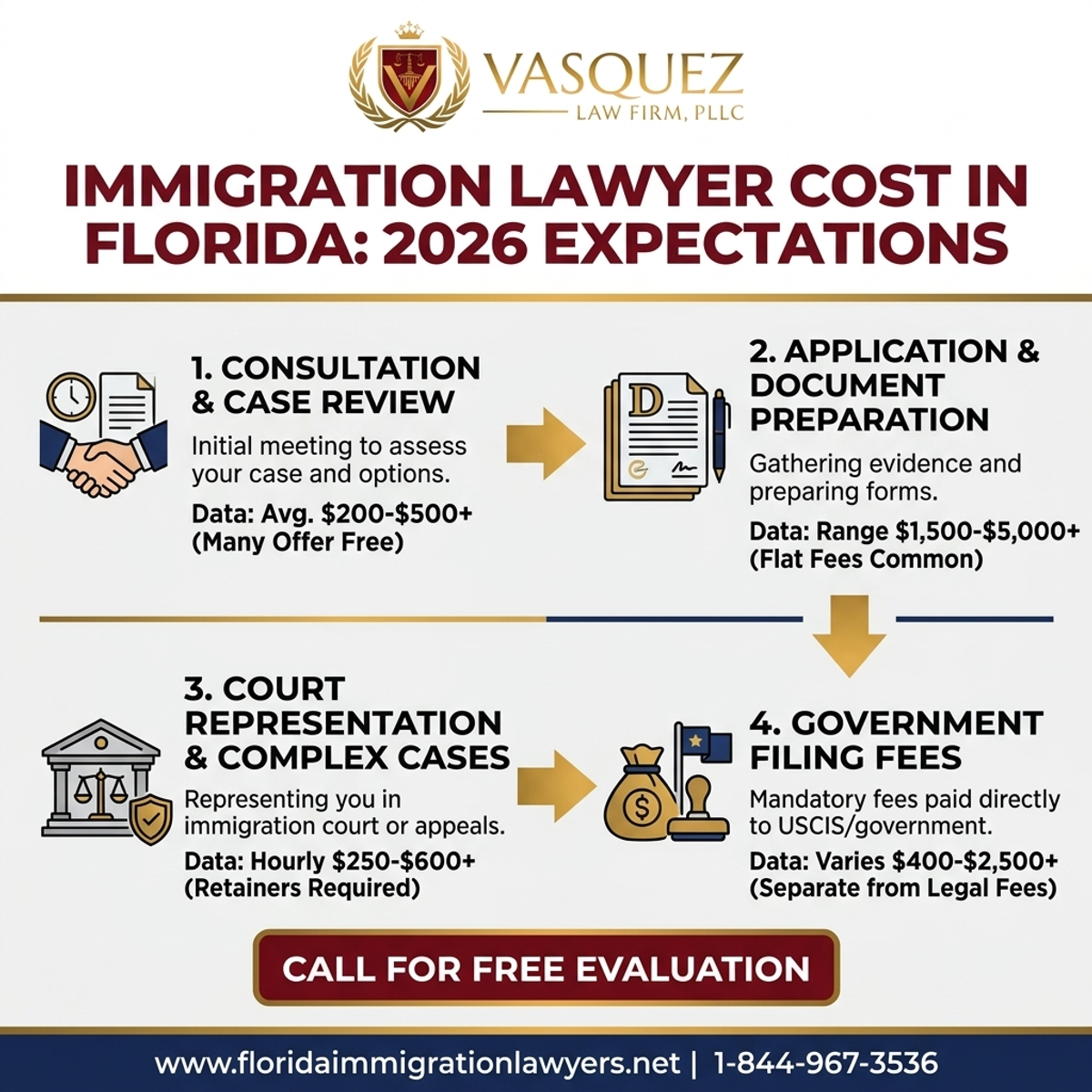
Below is a general overview of typical attorney fees for various immigration services in Florida as of 2026. Please note these are estimates and can vary.
| Item | Typical Attorney Fee | Notes |
|---|---|---|
| Initial Consultation | $100 - $300 (or Free) | Many firms offer free initial consultations to discuss your case. |
| Family-Based Petition (I-130) | $1,500 - $4,000 | Flat fee common, depends on complexity and number of beneficiaries. |
| Adjustment of Status (I-485) | $2,500 - $6,000 | Often combined with I-130; includes interview preparation. |
| Naturalization (N-400) | $1,000 - $3,000 | Flat fee common for straightforward cases; more for complex history. |
| Asylum Application (I-589) | $4,000 - $10,000+ | Hourly or flat fee; highly complex, involves extensive evidence and hearings. |
| Deportation/Removal Defense | $5,000 - $15,000+ | Typically hourly or retainer; varies greatly based on court proceedings and appeals. |
| Work Visas (H-1B, L-1, O-1) | $3,000 - $8,000+ | Flat fee common for employer-sponsored petitions. |
| Waivers of Inadmissibility | $3,000 - $7,000+ | Flat fee; requires detailed legal arguments and evidence. |
What Factors Influence Immigration Attorney Fees in Florida?
Several critical factors directly influence the attorney fees you can expect to pay for immigration services in Florida. Understanding these elements will help you anticipate costs and choose the right legal representation for your unique situation. As of 2026, these factors remain largely consistent in shaping the pricing structure across the state.
Firstly, the type of immigration case is paramount. A simple application, like renewing a Green Card (I-90), will naturally cost less than filing a complex asylum claim or defending against deportation. Family-based petitions, employment visas, and naturalization applications each have different levels of complexity and required legal work, thus affecting the fee. Secondly, the complexity of your case plays a significant role. If your case involves a criminal record, previous immigration violations, multiple denials, or requires extensive waivers of inadmissibility (INA Section 212(a)), the legal work involved will be substantially more intensive, leading to higher fees. For instance, successfully navigating an immigration case with a criminal history requires deep expertise in both immigration and criminal law, increasing the attorney's time and effort.
Step-by-Step Process — Immigration Lawyer Cost in Florida: What to Expect in 2026
Thirdly, the experience and reputation of the attorney or law firm also impact pricing. Highly experienced immigration lawyers, particularly those with a proven track record in complex litigation or specialized areas, may command higher fees. Their expertise, however, often translates to a higher likelihood of a favorable outcome, potentially saving you more in the long run. Fourthly, geographic location within Florida can influence costs. While Florida Immigration Lawyers serves clients statewide, firms in major metropolitan areas like Orlando or Miami may have slightly different overheads and market rates compared to those in smaller towns. Lastly, additional services, such as document translation, expert witness testimony, or extensive travel for court appearances, can add to the overall cost. Always discuss all potential expenses with your attorney during your initial consultation to avoid any surprises.
Navigating the Process: A Step-by-Step Guide to Hiring an Immigration Lawyer in Florida
Hiring an immigration lawyer in Florida can significantly streamline your immigration journey. The process typically involves several key steps, ensuring that your case is handled professionally and efficiently. As of 2026, understanding this roadmap can empower you to make informed decisions.
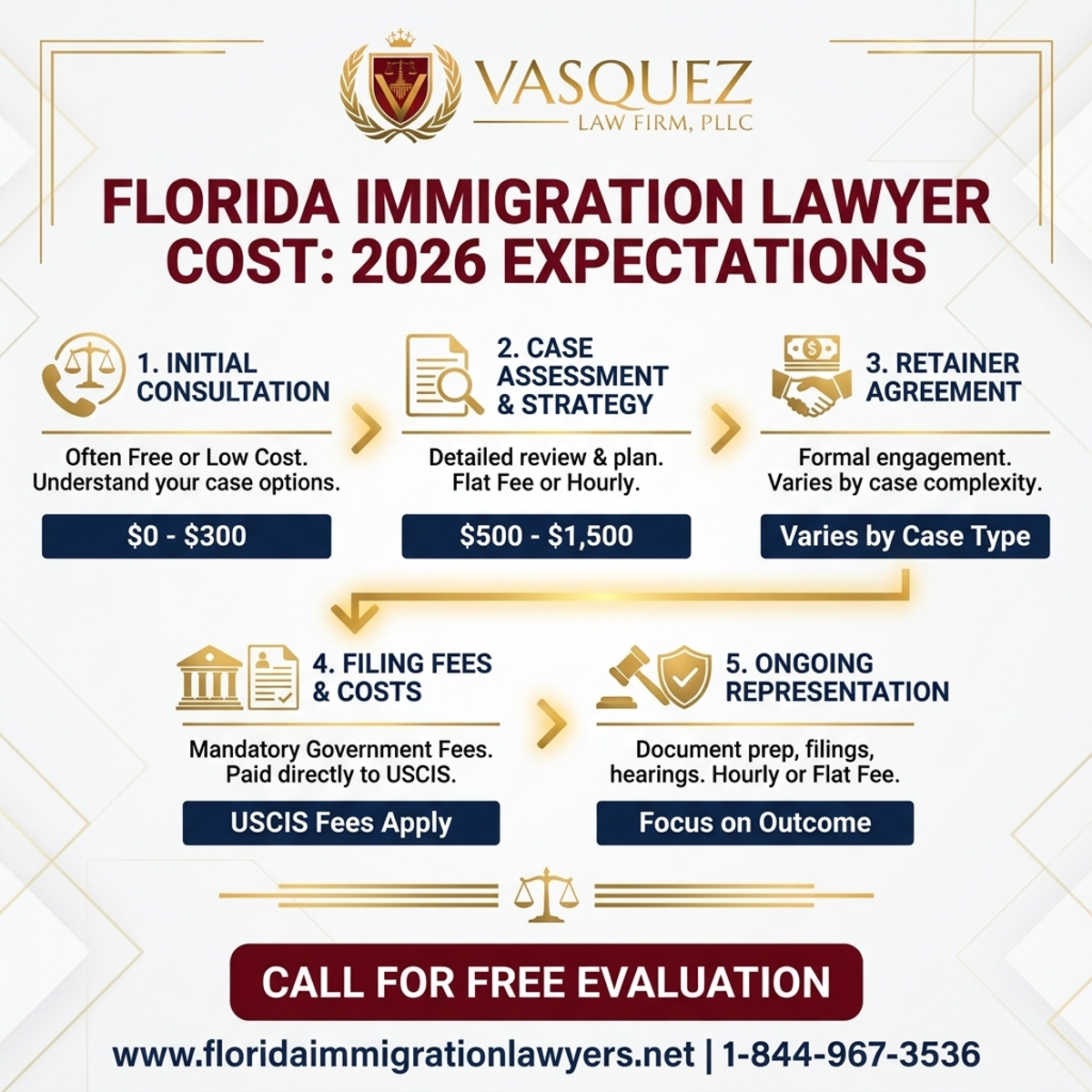
The first step is an Initial Consultation. This is your opportunity to discuss your immigration goals, outline your specific situation, and ask any questions you may have. During this meeting, a qualified attorney will assess the viability of your case, explain potential legal pathways, and clarify the services they can provide. Many firms, including Florida Immigration Lawyers, offer a free case review to help you get started without financial commitment. Following the consultation, the attorney will conduct a thorough Case Assessment and Strategy Development. This involves a detailed review of all your documents, immigration history, and personal circumstances to formulate the most effective legal strategy. Your attorney will identify any potential challenges, recommend the best course of action, and inform you about the relevant laws, such as those found in 8 U.S.C. § 1101 et seq.
Next, you will receive a clear and comprehensive Fee Agreement. This document outlines the scope of services, the total attorney fees, payment schedule, and any other costs you can expect. It is crucial to review this agreement carefully and ensure you understand all terms before signing. Once the agreement is in place, the attorney will begin the intensive process of Document Gathering and Preparation. This often involves working closely with you to collect all necessary supporting evidence, forms, and statements, ensuring everything is accurate and complete. Finally, your attorney will proceed with Filing and Representation. This includes submitting all required petitions and applications to the appropriate government agencies, such as USCIS or the Department of State, and representing you in interviews, hearings, or court proceedings. Throughout this process, consistent communication and proactive updates are paramount to keep you informed of your case's progress and any changes in policy or law.
Essential Documents for Your Immigration Case in Florida
Gathering the correct and complete set of documents is a cornerstone of any successful immigration application in Florida. Missing or incorrect documentation can lead to significant delays or even denial of your case. As of 2026, thorough preparation remains key.
Your immigration lawyer will provide a tailored list based on your specific case type, but generally, you should be prepared to furnish several categories of documents. These typically include **Proof of Identity and Nationality**, such as your passport, birth certificate, and national identity cards. For family-based petitions, **Relationship Documents** are crucial, including marriage certificates, divorce decrees, and birth certificates of family members to establish bona fide relationships. If you are applying for a Green Card through employment, **Employment-Related Documents** like job offer letters, educational degrees, and professional licenses will be necessary. Financial stability is often a factor, so **Financial Documents** such as bank statements, tax returns, and affidavits of support (Form I-864) are commonly required.
Key Statistics — Immigration Lawyer Cost in Florida: What to Expect in 2026
Furthermore, **Medical Examination Records** from a USCIS-approved civil surgeon are mandatory for many Green Card applications. If you have any past criminal history, **Certified Court and Police Records** will be essential, regardless of how minor the offense may seem. Your attorney will advise on how to properly disclose and address these. Lastly, any **Previous Immigration Applications or Correspondence** with USCIS or other immigration agencies should be provided to your attorney, as this helps them understand your complete immigration history. Organizing these documents meticulously and providing them promptly to your immigration law attorney will greatly facilitate the processing of your case and help avoid unnecessary complications. Always ensure all foreign-language documents are accompanied by certified English translations.
What Are the Typical Timelines for Immigration Cases in Florida?
The timelines for immigration cases in Florida, as across the entire U.S., are highly variable and depend on numerous factors, including the specific case type, the volume of applications, and the processing capacities of USCIS and other relevant agencies. As of 2026, applicants should anticipate that most processes will take several months to several years.
Factors influencing these timelines include the particular USCIS service center or field office handling your case (e.g., the USCIS Miami Field Office or Orlando Application Support Center), the complexity of your application, and whether additional evidence or interviews are required. For instance, a straightforward naturalization application (N-400) might take 10-18 months, while a complex asylum case could span several years due to multiple hearings before an immigration judge. Government processing times are subject to change and can be found on the USCIS website. Your immigration attorney will monitor these updates and inform you of any expected delays. Policy changes, such as those impacting visa availability or interview requirements by the U.S. Department of State, can also significantly alter processing times.
Typical Immigration Case Timelines (2026)
Below is a general overview of typical processing times for various stages of immigration cases as of 2026. These are estimates only.
| Stage | Typical Timeframe | Notes |
|---|---|---|
| Initial Consultation & Case Assessment | 1-2 Weeks | To gather information and develop a strategy. |
| Document Preparation & Filing | 1-3 Months | Depends on client responsiveness and case complexity. |
| USCIS Receipt & Biometrics Appointment | 3-6 Weeks after filing | USCIS sends receipt notices and schedules biometrics. |
| USCIS Processing (Varies by Form) | 6 Months - 3+ Years | Check specific form processing times on USCIS website. |
| Interview (if required) | Varies, often 1-2 years after filing | Scheduled at local USCIS field office (e.g., Orlando, Miami). |
| Decision & Green Card/Citizenship Ceremony | Weeks to Months after interview | Final decision issued, followed by card production or ceremony scheduling. |
| Deportation Defense | 2-5+ Years | Highly variable, depends on court docket, appeals, and case complexity. |
Do not navigate this process alone. Contact Florida Immigration Lawyers today to ensure your case is handled with the expertise and attention it deserves.
Common Mistakes to Avoid in Your Immigration Journey
Navigating immigration law is fraught with potential pitfalls that can jeopardize your case. Avoiding these common mistakes can save you significant time, money, and stress, particularly when dealing with the complexities of the U.S. immigration system in Florida.
-
Attempting to Self-File Complex Cases: While some straightforward applications might seem manageable, complex cases involving waivers, criminal history, or deportation defense are best handled by an experienced attorney. Errors in self-filed petitions are a leading cause of delays and denials.
-
Providing Incomplete or Inaccurate Information: Any discrepancy or omission, intentional or unintentional, on your forms or during interviews can lead to accusations of misrepresentation, potentially resulting in denial or even a permanent bar from the U.S. Always be truthful and thorough.
-
Missing Deadlines: Immigration processes are strict with deadlines. Failing to submit documents or respond to Requests for Evidence (RFEs) by the due date can lead to case denial or closure. Your attorney will help you track and meet all critical dates.
-
Failing to Disclose All Relevant Information to Your Attorney: Trust your lawyer with every detail, even if it seems minor or unfavorable. Withholding information prevents them from building the strongest possible case and preparing for potential challenges.
-
Not Preparing for Interviews: Immigration interviews, whether for Green Cards or naturalization, are critical. Failing to understand the questions, provide consistent answers, or bring required documents can lead to delays or denials. Your attorney will conduct mock interviews.
-
Falling Victim to Notarios or Unqualified Legal Advice: In Florida, and especially in Hispanic communities, "notarios públicos" are often mistaken for attorneys. They are not authorized to provide legal advice in the U.S. Seeking advice from unqualified individuals can lead to severe, irreversible immigration consequences.
-
Ignoring Changes in Immigration Law: Immigration policies are constantly evolving. What was true last year may not be true today. An experienced immigration lawyer stays updated on the latest changes, including new regulations from the Department of Homeland Security or court rulings, ensuring your strategy remains current.
-
Failing to Maintain Proper Immigration Status: Allowing your visa or legal status to expire while in the U.S. can trigger serious consequences, including unlawful presence and potential bars to future immigration benefits. Always be proactive in extending or adjusting your status.
-
Traveling Internationally Without Proper Advice: Leaving the U.S. while an application is pending or without proper advance parole can sometimes lead to abandonment of your application or inadmissibility upon return. Always consult your attorney before making international travel plans.
When to Call a Florida Immigration Lawyer
While some immigration forms might appear straightforward, the underlying legal framework is incredibly complex. Knowing when to seek professional legal help is crucial for ensuring the success of your immigration journey in Florida. You should consider contacting Florida Immigration Lawyers if your case involves any level of complexity or potential risk.
Specifically, if you have a criminal record, even a minor one, or a history of immigration violations, an attorney's expertise is indispensable. These factors can trigger inadmissibility grounds under the INA and require sophisticated legal arguments or waivers. Similarly, if you have previously been denied an immigration benefit or have received a Request for Evidence (RFE) from USCIS, professional guidance can help identify and rectify the issues. Individuals facing deportation or removal proceedings should immediately seek legal counsel, as these cases are highly time-sensitive and carry severe consequences. If you are applying for asylum or refugee status, the detailed legal requirements and evidentiary standards necessitate expert representation.
Furthermore, if you are navigating family-based petitions with complicated family structures, or if you are an employer sponsoring foreign workers, an attorney can ensure compliance with all legal requirements and expedite the process. Any situation where you feel overwhelmed, confused by legal jargon, or unsure about the best path forward is a strong indicator that it's time to consult with our experienced legal team. Florida Immigration Lawyers provides comprehensive services, offering clarity, strategy, and dedicated advocacy to protect your rights and achieve your immigration goals.
About Florida Immigration Lawyers
Florida Immigration Lawyers is a leading law firm dedicated to providing comprehensive and compassionate immigration legal services across the entire state of Florida. With a deep understanding of the unique challenges faced by immigrants in Central Florida and beyond, our firm is committed to delivering exceptional representation and personalized attention to every client.
Our experienced attorneys specialize in a wide range of immigration matters, including family-based visas, employment-based immigration, deportation defense, asylum, naturalization, and Green Card applications. We pride ourselves on our client-focused approach, ensuring that you are informed and supported at every stage of your legal journey. We understand that each case is unique, and we tailor our strategies to meet your specific needs and objectives. Our commitment to excellence, combined with our unwavering dedication to our clients' success, makes us a trusted partner in your immigration endeavors.
We believe that everyone deserves access to high-quality legal representation, which is why we offer free case reviews and are available 24/7 to address your concerns. With offices strategically located to serve Orlando and the wider Florida community, we are here to provide accessible and effective legal solutions. Let Florida Immigration Lawyers be your guide through the complexities of immigration law. Schedule a free consultation today.
Sources and References
- U.S. Citizenship and Immigration Services (USCIS)
- Executive Office for Immigration Review (EOIR)
- U.S. Department of State
- 8 U.S.C. Chapter 12 - Immigration and Nationality Act (INA)
- 8 CFR Part 103 - Adjudication of Applications and Petitions
- Immigration and Nationality Act (INA) Section 212(a) - General Classes of Aliens Ineligible to Receive Visas and Ineligible for Admission
Related services: immigration practice areas, citizenship and naturalization, business immigration.
This article provides general legal information and is not intended as legal advice. Every case is unique, and outcomes depend on specific facts and circumstances. Contact an attorney for advice about your particular situation.
Do not leave your immigration future to chance. Contact Florida Immigration Lawyers today at 1-844-YO-PELEO for a free, no-obligation case review. Se Habla Espanol - Estamos aqui para ayudarle.
Do Not Navigate This Process Alone
Our experienced immigration attorneys are ready to fight for you. Get a free, confidential case review today.
Se Habla Español
Or leave your details and we’ll call you:
We will call you back within 24 hours
Free evaluation · Private and confidential · Se habla español
Helping Florida immigrant families since 2011
Or talk to us right now

AI voice assistant — available 24/7
FreeFrequently Asked Questions

William J. Vásquez
Founding Attorney · Vasquez Law Firm
U.S. Air Force veteran and immigration attorney with years of hands-on U.S. immigration experience. J.D., NCCU School of Law. AILA member. Admitted to the 4th, 5th, and 11th Circuit Courts.
Available 24/7 - Free Evaluations
Reviewed for legal accuracy by William J. Vásquez
Licensed in North Carolina; U.S. immigration is federal practice.
Related Legal Services
Our Florida immigration attorneys can help you with citizenship and naturalization, immigration practice areas and free immigration consultation. Call today at 1-844-YO-PELEO for a free case review.
Related Links
Related Topics
Free Legal Case Review
Discuss your case with our experienced attorneys. We're available 24/7.
Se Habla Español - Estamos aquí para ayudarle.
Related Articles
EB-5 Investor Green Card in Florida: A 2026 Guide
Explore how to obtain an EB-5 investor green card in Florida. Learn about the investment requirements, processes, and benefits of participating in this program. Discover how Florida's economic landscape can be an ideal setting for your investment. Contact Florida Immigration Lawyers for a free case review.
Certificate of Eligibility for Expungement in Florida 2026
For non-U.S. citizens in Florida, understanding how a state expungement impacts immigration status is critical. A certificate of eligibility for expungement in Florida allows a criminal record to be sealed or expunged under state law. However, federal immigration agencies often disregard such state-level relief, still considering the original criminal offense as a conviction for immigration purposes. This can have severe implications for visa applications, green card eligibility, naturalization, and even lead to deportation. This guide clarifies the Florida expungement process, its limited effect on federal immigration law, and key steps to protect your status in 2026. Learn about common mistakes, required documents, timelines, and when to seek expert legal counsel from Florida Immigration Lawyers to navigate these complex issues effectively.
What to Expect at Your First Immigration Consultation in Orlando
What happens at a first immigration consultation in Orlando, which documents to bring, and how to prepare for questions about visas, green cards, citizenship and court cases.
U Visa for Crime Victims in Florida: A 2026 Guide
For non-citizen crime victims in Florida, the U visa offers a critical pathway to safety and legal status. This specialized immigration relief is available to individuals who have suffered substantial physical or mental abuse as a result of certain criminal activities and have been, or are willing to be, helpful to law enforcement in the investigation or prosecution of those crimes. Understanding the eligibility criteria, the intricate application process with USCIS, and the vital role of law enforcement certification is paramount for a successful application. This guide provides a detailed overview for 2026, including step-by-step instructions, expected timelines, and cost considerations, emphasizing the importance of legal assistance to navigate the complexities and avoid common pitfalls. Florida Immigration Lawyers stands ready to assist victims across the state, ensuring they receive the protection and justice they deserve.