Immigration Interview Preparation in Florida 2026
For those seeking to live, work, or become citizens in Florida, the immigration interview is a pivotal moment requiring thorough preparation. This comprehensive guide from Florida Immigration Lawyers demystifies the process in 2026, offering actionable insights for applicants. Learn what to expect at your USCIS appointment, common pitfalls to avoid, essential documents for your checklist, and critical timelines. We cover specific interview types, cost factors, and when professional legal assistance becomes invaluable. Our goal is to empower you with the knowledge and confidence needed to present your case effectively and navigate the complex U.S. immigration system. For personalized advice and robust legal representation, contact Florida Immigration Lawyers today for a free case review.
Preparing for an immigration interview in Florida involves meticulous document gathering, thorough review of your application, and practicing answers to potential questions. As of 2026, applicants must ensure all forms are accurate, bring original documents, and be ready to discuss their case details comprehensively with a USCIS officer. Understanding the specific type of interview you face-be it for a green card, naturalization, or asylum-is crucial for tailored preparation. Seeking guidance from an experienced immigration lawyer can significantly enhance your chances of a successful outcome.
- Gather all original documents and copies.
- Review your application forms for accuracy.
- Practice answering potential questions clearly and truthfully.
- Understand the purpose and scope of your specific interview.
- Consider bringing an attorney to the interview for support.
Navigating the complex landscape of U.S. immigration can be one of the most significant journeys of your life. For individuals seeking to live, work, or become citizens in the Sunshine State, the immigration interview is often a pivotal moment. Whether you're applying for a green card, naturalization, or asylum, adequate preparation is not just recommended; it's essential for success. In Florida, where diverse communities and a high volume of immigration cases converge, understanding the nuances of the interview process is paramount.
This comprehensive guide from Florida Immigration Lawyers is designed to demystify the immigration interview process in 2026, offering actionable insights and practical tips for applicants across the state. We'll cover everything from what to expect at your USCIS appointment to common pitfalls to avoid and when professional legal assistance becomes invaluable. Our goal is to empower you with the knowledge and confidence needed to present your case effectively to immigration officials.
Don't leave your future to chance. The stakes are high, and thorough preparation can make all the difference. For personalized advice and robust legal representation tailored to your unique situation, call Florida Immigration Lawyers at 1-844-YO-PELEO for a free case review today. Our dedicated team is here to support you every step of the way.
What to Expect During Your USCIS Immigration Interview in Florida?
During your USCIS immigration interview in Florida, you can expect a formal but generally professional interaction with an immigration officer who will verify the information in your application and supporting documents. The officer's primary goal is to determine your eligibility for the requested immigration benefit, ensuring you meet all legal requirements and that there are no grounds for inadmissibility or deportability. The interview typically lasts between 20 minutes to an hour, though complex cases may take longer, and it will be conducted in English unless an interpreter is required and approved.
The immigration interview process at a USCIS field office, such as the one in Orlando, begins with a check-in and security screening. Once called, you will be led to an interview room where the officer will administer an oath to tell the truth. They will then review your application forms, such as Form I-485 for adjustment of status or Form N-400 for naturalization, and ask questions based on your responses. This includes inquiries about your personal history, family background, employment, travel, and any criminal record. For marriage-based green card interviews, the officer will assess the bona fides of your marriage, asking detailed questions about your relationship and shared life. It's crucial to answer honestly, clearly, and consistently with your submitted documentation. If you are unsure about a question, it is better to state that you do not understand or do not know, rather than guessing. Remember, the officer is evaluating your credibility and the veracity of your claims under the Immigration and Nationality Act (INA).
Step-by-Step Guide to Immigration Interview Preparation
Effective preparation is the cornerstone of a successful immigration interview. This detailed guide outlines the critical steps you should take to ensure you are ready for your appointment, whether you're in Orlando, Miami, or anywhere else in Central Florida. Proactive engagement with each step will build your confidence and help you present a compelling case to the USCIS officer.
- Review Your Application Thoroughly: Before anything else, re-read every form you submitted. This includes your initial petition, supporting affidavits, and any supplementary documents. Familiarize yourself with every answer, date, and detail. The officer will be referring to these exact forms, and your verbal answers must align perfectly with what's written. Any discrepancies, even minor ones, can raise red flags and prolong the process or even lead to a denial. Understand the legal basis of your application (e.g., INA § 245 for adjustment of status) and how your circumstances fit within it.
- Gather and Organize All Documents: Create a well-organized folder containing all original documents and their respective copies. This includes passports, birth certificates, marriage certificates, divorce decrees, police clearances, medical exam results (Form I-693), financial records, tax returns, and any evidence supporting your case (e.g., joint bank accounts for marriage-based petitions, employment letters for work visas). Arrange them logically so you can quickly retrieve any document the officer requests. Bring extra copies of everything, just in case.
- Anticipate and Practice Interview Questions: Think about the questions an officer might ask, drawing from your application and personal history. Practice answering these questions out loud, focusing on clarity, conciseness, and honesty. For naturalization applicants, practice the civics and English tests. For family-based interviews, discuss your relationship with your spouse or petitioner. If an attorney is accompanying you, they can conduct mock interviews to help you feel more comfortable and identify areas needing improvement.
- Address Any Potential Issues Proactively: If there are any complexities in your case-such as past arrests, minor immigration violations, or gaps in employment-be prepared to explain them clearly and truthfully. Gather any relevant documentation that mitigates these issues. Discuss these with your attorney beforehand to formulate the best strategy for addressing them during the interview. Honesty and transparency are vital, as officers have access to extensive background information.
- Confirm Logistics and Plan Your Travel: Verify the date, time, and location of your interview. Plan to arrive at least 30-45 minutes early to account for security checks, parking, and unexpected delays, especially at busy field offices like the one in Kendall (Miami) or Tampa. Ensure you have proper identification and know how to get to the USCIS office. Being late can lead to rescheduling, which significantly delays your case.
- Dress Appropriately and Maintain Professionalism: While there's no strict dress code, dressing in business casual or professional attire demonstrates respect for the process and the officer. Maintain a polite and respectful demeanor throughout the interview. Answer all questions truthfully and directly, without volunteering unnecessary information. Listen carefully to each question before responding.
Essential Documents for Your Immigration Interview Checklist
A comprehensive document checklist is vital for your immigration interview. Missing documents can cause significant delays, requiring follow-up appointments or requests for evidence (RFEs). This list covers the most commonly required items, but always refer to your specific interview notice (Form I-797C, Notice of Action) and consult with your attorney to ensure you have everything relevant to your case type.
- Interview Notice (Form I-797C): The official notice from USCIS scheduling your interview.
- Government-Issued Photo Identification: Passport, state ID, or driver's license.
- All Passports: Current and expired passports, including any with previous visas or entry stamps.
- Birth Certificates: Original birth certificates for yourself and any family members included in the application.
- Marriage Certificate (if applicable): Original certificate if applying based on marriage.
- Divorce Decrees or Death Certificates (if applicable): For any previous marriages of yourself or your spouse.
- Medical Examination Report (Form I-693): Sealed envelope from the civil surgeon. Ensure it's valid as of 2026.
- Affidavit of Support (Form I-864) & Supporting Documents: Including tax returns, W-2s, and employment verification letters for the petitioner and any joint sponsors.
- Evidence of Bona Fide Marriage (for marriage-based cases): Joint bank statements, utility bills, leases, insurance policies, photos, affidavits from friends/family.
- Proof of Relationship to Petitioner: Birth certificates, marriage certificates, adoption decrees, etc.
- Police Clearances/Court Dispositions: For any arrests or convictions, even if expunged.
- Travel History: Records of all entries and exits from the U.S.
- Employment History: Employment verification letters, pay stubs, tax returns.
- Educational Documents: Diplomas, transcripts (if relevant to your application).
- Proof of Legal Entry: Form I-94 arrival/departure record.
- Copies of All Submitted Applications/Petitions: For reference during the interview.
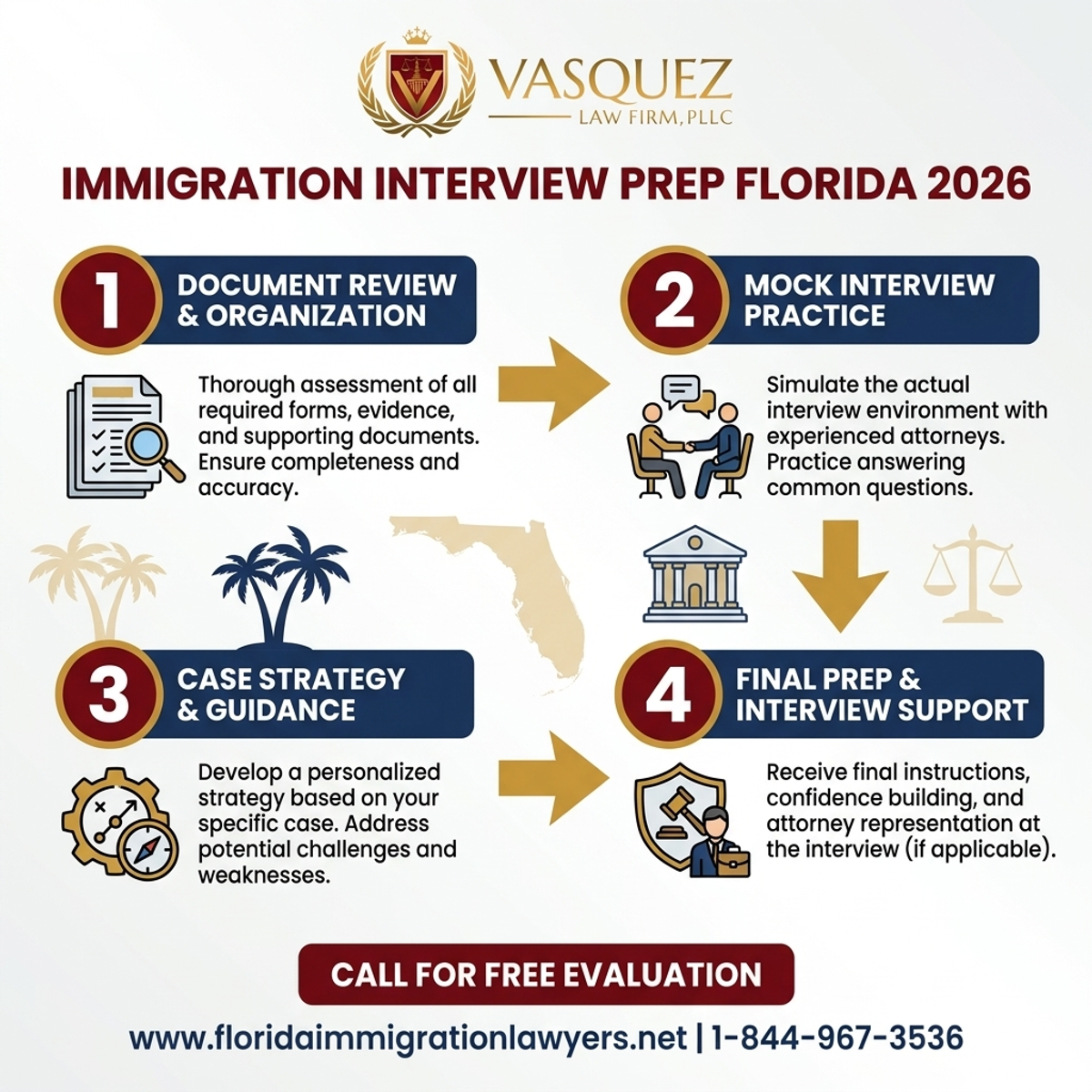
Step-by-Step Process — Immigration Interview Preparation in Florida 2026
Immigration Interview Timelines and Processing Expectations in 2026
Understanding the typical timelines for immigration interview scheduling and subsequent processing can help manage expectations. As of 2026, processing times can vary significantly based on the type of application, the specific USCIS field office (e.g., Orlando, Tampa, Miami), and the applicant's country of origin. USCIS regularly updates its processing time estimates online, which is a valuable resource. However, these are averages, and individual cases may differ.
Factors influencing timelines include the volume of applications, staffing levels at USCIS, the complexity of your case, and whether additional evidence is requested. For instance, family-based adjustment of status interviews might be scheduled faster than employment-based ones due to different priority queues. Naturalization interviews also have their own distinct processing paths. While some applicants may receive an interview notice within a few months of filing, others might wait over a year. The post-interview decision can range from immediate approval to several weeks or months if further review or a Request for Evidence (RFE) is issued. It's crucial to remain patient and responsive to any USCIS communications.
| Stage | Typical Timeframe (As of 2026) | Notes |
|---|---|---|
| Application Filing to Interview Notice | 6-18 months | Varies greatly by application type and field office (e.g., Orlando vs. Miami). |
| Interview to Decision | Immediately to 90 days | Often decided on the spot for straightforward cases. More complex cases require further review. |
| Request for Evidence (RFE) Response | 60-90 days | If additional documents are needed after the interview. |
| Oath Ceremony (Naturalization) | 2-6 weeks post-approval | For N-400 applicants after passing the interview. |
| Green Card Delivery | 2-4 weeks post-approval | For I-485 applicants after approval. |
Understanding Immigration Interview Cost Factors and Legal Fees
While the immigration interview itself does not incur a separate fee, the overall cost of the immigration process leading up to it involves various components. These include government filing fees for the underlying petitions and applications, medical examination fees, and potentially legal fees for attorney representation. As of 2026, USCIS fees are subject to change, and it's essential to check the most current fee schedule on the USCIS website or consult with an attorney. These costs can represent a significant financial commitment, and understanding each element is key to proper financial planning.
Legal fees for an immigration attorney can vary widely depending on the complexity of your case, the type of application, and the attorney's experience. While hiring an attorney is an additional cost, it's an investment that can provide invaluable peace of mind, ensure accuracy, and significantly improve your chances of success. An attorney can help prepare all documentation, advise on potential issues, conduct mock interviews, and even accompany you to the interview. This legal support is particularly beneficial for complex cases, those with previous denials, or individuals with a criminal history. Florida Immigration Lawyers offers transparent fee structures and free case reviews to help you understand the potential costs involved.
| Item | Typical Fee (As of 2026, estimates) | Notes |
|---|---|---|
| Application Filing Fees (e.g., I-485, N-400) | $1,225 - $1,610+ | Varies by form and age; check USCIS website for current fees. Does not include biometric services. |
| Biometrics Services Fee | Included in most filing fees | Previously separate, now often integrated. |
| Medical Examination (Form I-693) | $200 - $500 | Paid directly to a USCIS-approved civil surgeon. |
| Immigration Attorney Fees | $2,000 - $10,000+ | Highly variable based on case complexity, attorney experience, and services rendered (e.g., interview accompaniment). |
| Translation Services | $20 - $100 per document | If documents are not in English, certified translations are required. |
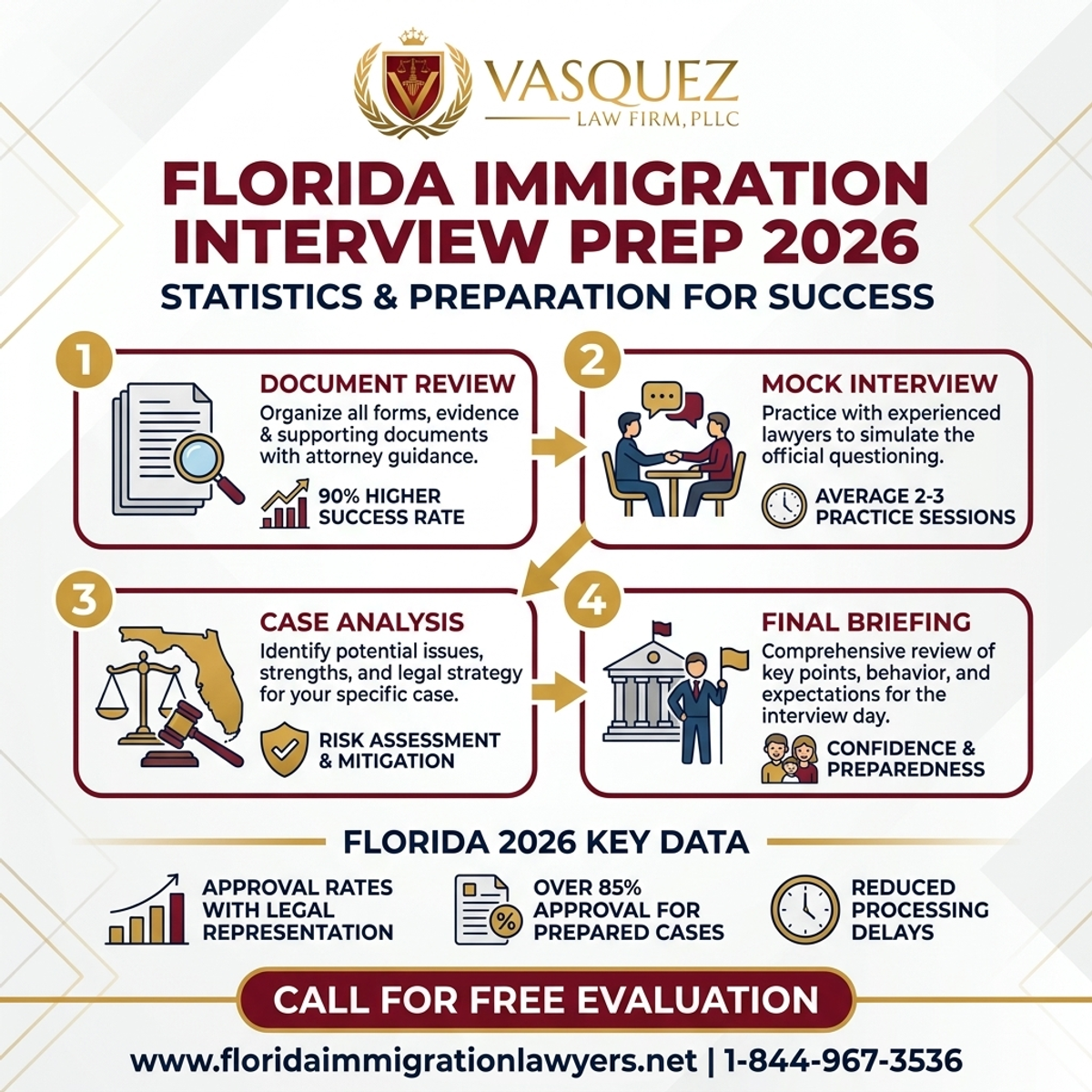
Key Statistics — Immigration Interview Preparation in Florida 2026
Navigating Specific Interview Types: Family, Employment, and Asylum
The nature of your immigration interview can vary significantly based on the type of benefit you are seeking. Understanding these distinctions is a critical part of effective preparation, allowing you to focus on the specific legal requirements and potential questions relevant to your case. Florida, with its diverse immigrant population, sees a wide range of interview types at its USCIS field offices.
Family-Based Immigration Interviews
For those seeking green cards through a family member, such as a spouse, parent, or child, the interview primarily focuses on establishing the bona fide nature of the relationship. For marriage-based applications, USCIS officers are vigilant in identifying fraudulent marriages. You and your spouse will likely be interviewed together, and in some cases, separately, to assess the consistency of your answers regarding your shared life, relationship history, and future plans. Evidence such as joint bank accounts, utility bills, leases, insurance policies, photographs, and affidavits from friends and family are crucial. The officer will be looking for proof that your marriage is genuine and not solely for immigration purposes, as outlined in INA § 204(c). Be prepared to discuss your daily routines, how you met, and significant life events together. If your spouse is a U.S. citizen or lawful permanent resident, they must accompany you to the interview.
Employment-Based Immigration Interviews
Applicants pursuing green cards through employment often have complex cases involving multiple forms and petitions (e.g., I-140, I-485). The interview will focus on verifying your qualifications for the position, the legitimacy of the sponsoring employer, and your intent to work in the specified role. Officers will review your educational background, work experience, and the employer's ability to pay the offered wage. You should bring original diplomas, transcripts, letters of experience from previous employers, and any professional licenses or certifications. The employer may also be required to provide updated documentation regarding their financial stability and continued need for your services. Understanding the specific visa category (e.g., EB-1, EB-2, EB-3) and its requirements is paramount.
Asylum Interviews
Asylum seekers face a particularly sensitive and often challenging interview process, typically conducted by an Asylum Officer at a USCIS Asylum Office, such as the one serving Central Florida. The interview aims to determine if you meet the legal definition of a refugee under INA § 101(a)(42)(A), meaning you have a well-founded fear of persecution based on race, religion, nationality, political opinion, or membership in a particular social group. This interview is often the most critical step in an asylum claim. You will be asked to recount your experiences of persecution in detail, providing specific dates, locations, and names. It is crucial to be truthful and consistent. While an attorney cannot answer for you, having legal representation can provide immense support, help organize your narrative, and ensure you present all relevant evidence. Officers are trained to ask open-ended questions and to assess credibility carefully. If your asylum claim is not granted by the Asylum Officer, your case may be referred to an Executive Office for Immigration Review (EOIR) immigration judge for removal proceedings, where you can re-state your claim.
Do not navigate this complex process alone. Contact Florida Immigration Lawyers today for expert guidance and support.
Common Mistakes to Avoid During Your Immigration Interview
Making a mistake during your immigration interview can have serious consequences, ranging from delays to outright denial of your application. Being aware of these common pitfalls can help you avoid them and ensure a smoother process.
- Providing Inconsistent Information: Discrepancies between your verbal answers and your written application or previous statements can severely damage your credibility. Review all submitted forms meticulously before the interview.
- Lying or Concealing Information: Any false statement or attempt to hide relevant facts can lead to a finding of misrepresentation, which carries severe penalties, including a permanent bar from the U.S. Always be truthful.
- Failing to Bring All Required Documents: Forgetting a crucial original document or a necessary copy will almost certainly lead to delays, RFEs, or a rescheduled interview, prolonging your immigration journey.
- Not Understanding the Questions: If you don't understand a question, ask the officer to rephrase it or speak slower. Guessing or answering incorrectly because of a misunderstanding can be detrimental.
- Volunteering Unnecessary Information: Answer questions directly and truthfully, but avoid rambling or offering information that was not specifically asked. Stick to the facts.
- Being Rude or Disrespectful: Maintain a polite and respectful demeanor throughout the interview, even if you feel stressed or frustrated. An officer's perception of your attitude can influence their assessment.
- Failing to Disclose Criminal History: Even minor arrests or expunged records must be disclosed. USCIS has access to extensive databases, and failure to disclose can be seen as an attempt to deceive.
- Attending Without an Interpreter (if needed): If you are not fluent in English, and an interpreter is necessary, ensure you have an approved, certified interpreter present. Relying on a family member or friend is often not permitted for official interviews.
- Not Practicing for Naturalization Tests: For N-400 applicants, failing the English or civics test will result in a re-interview and significant delays.
- Ignoring RFE Deadlines: If USCIS issues a Request for Evidence after the interview, failing to respond by the deadline can lead to denial.
- Arriving Late: Punctuality is crucial. Arriving late can lead to your interview being canceled and significantly delayed rescheduling.
- Bringing Unauthorized Individuals: Only authorized individuals (applicant, petitioner, attorney, interpreter) are allowed in the interview room. Bringing children or other family members without prior approval can cause issues.
When to Call a Lawyer for Your Immigration Interview
While some straightforward immigration interview cases may proceed without legal representation, there are many scenarios where calling an experienced immigration lawyer from Florida Immigration Lawyers is not just beneficial, but crucial. Our attorneys are well-versed in the intricacies of U.S. immigration law, including the Immigration and Nationality Act (INA) and 8 CFR regulations, and can provide the strategic guidance you need.
You should consider seeking legal counsel if your case involves:
- Any Criminal History: Even minor arrests or convictions can have serious immigration consequences and may require waivers or specific legal arguments.
- Previous Denials or Immigration Violations: If you have a history of visa denials, overstays, or other immigration issues, an attorney can help address these during the interview.
- Complex Family Relationships: Cases involving stepchildren, adoptions, or previous marriages can be more complicated.
- Asylum or Refugee Claims: These cases are highly sensitive and require expert legal assistance to present your narrative effectively and meet legal standards.
- Health-Related Inadmissibility: If your medical exam reveals conditions that could lead to inadmissibility, an attorney can advise on potential waivers.
- Concerns About Credibility: If you anticipate questions about past statements or facts that could be misconstrued, a lawyer can help you prepare.
- Difficulty Understanding English or Legal Concepts: Even with an interpreter, having an attorney ensures all legal nuances are properly addressed.
- Simply Wanting Peace of Mind: Having an attorney by your side can alleviate stress and ensure your rights are protected throughout the process.
Our team at Florida Immigration Lawyers can assist with family immigration, business immigration, deportation defense, and citizenship applications. We serve clients throughout Florida, including Orlando and Central Florida, providing comprehensive support from application filing to interview representation.
About Florida Immigration Lawyers
Florida Immigration Lawyers is a leading immigration law firm dedicated to serving individuals and families across the entire state of Florida. With a deep understanding of the complexities of U.S. immigration law and a commitment to our clients, we provide compassionate, effective, and results-driven legal representation. Our experienced attorneys specialize in a wide range of immigration matters, including family-based petitions, employment visas, naturalization, asylum, and deportation defense.
We pride ourselves on our client-focused approach, offering personalized strategies tailored to each unique case. Our team is available 24/7, providing free case reviews to help you understand your options and embark on your immigration journey with confidence. We understand the challenges and anxieties that come with immigration processes, and we are here to be your trusted advocate. From our office in Orlando, we are equipped to assist clients from all corners of Florida, ensuring everyone has access to high-quality legal services. Schedule a free consultation with us today – Se Habla Español.
Sources and References
- U.S. Citizenship and Immigration Services (USCIS)
- Executive Office for Immigration Review (EOIR)
- U.S. Department of State
- 8 U.S.C. Chapter 12 - Immigration and Nationality Act (INA)
- 8 CFR - Code of Federal Regulations, Title 8 (Aliens and Nationality)
- USCIS Policy Manual
Related services: immigration practice areas, asylum protection, experienced immigration attorneys, immigration lawyer cost in Florida.
This article provides general legal information and is not intended as legal advice. Every case is unique, and outcomes depend on specific facts and circumstances. Contact an attorney for advice about your particular situation.
Your immigration journey is important, and proper preparation for your interview is a critical step towards achieving your goals. Don't face this process alone. For dedicated legal assistance and to ensure you are fully prepared, contact Florida Immigration Lawyers at 1-844-YO-PELEO for a free case review. Se Habla Espanol - Estamos aqui para ayudarle.
Do Not Navigate This Process Alone
Our experienced immigration attorneys are ready to fight for you. Get a free, confidential case review today.
Se Habla Español
Or leave your details and we’ll call you:
Free Evaluation in 24 Hours
Or talk to us right now

AI voice assistant — available 24/7
FreeFrequently Asked Questions

William J. Vásquez
Founding Attorney · Vasquez Law Firm
U.S. Air Force veteran and immigration attorney with years of hands-on U.S. immigration experience. J.D., NCCU School of Law. AILA member. Admitted to the 4th, 5th, and 11th Circuit Courts.
Available 24/7 - Free Evaluations
Reviewed for legal accuracy by William J. Vásquez
Licensed in North Carolina; U.S. immigration is federal practice.
Related Legal Services
Our Florida immigration attorneys can help you with immigration lawyer cost in Florida, experienced immigration attorneys and asylum protection. Call today at 1-844-YO-PELEO for a free case review.
Related Links
Related Topics
Free Legal Case Review
Discuss your case with our experienced attorneys. We're available 24/7.
Se Habla Español - Estamos aquí para ayudarle.
Related Articles
Dual Citizenship Lawyer in Florida: What You Need to Know
For Florida residents, the concept of dual citizenship, or holding two passports, offers a compelling blend of opportunities and challenges. While the U.S. generally permits dual nationality, the path to achieving this status requires a meticulous understanding of both U.S. immigration laws and the citizenship policies of your country of origin. This guide explores the definition of dual citizenship, the detailed step-by-step process for U.S. naturalization, and the significant benefits and potential pitfalls involved. We cover essential documentation, typical timelines, and cost considerations for 2026, providing crucial insights for anyone in Orlando, Miami, or across Florida considering this important legal step. Learn about common mistakes to avoid and understand when to seek professional legal counsel to navigate this complex process successfully. Florida Immigration Lawyers is here to provide expert, bilingual support for your dual citizenship journey.
Immigration Lawyer Orlando Free Consultation in Florida
For individuals and families in Orlando, Florida, navigating the complexities of U.S. immigration law requires expert guidance. An immigration lawyer in Orlando offers crucial support for everything from visa applications and green card processes to naturalization and deportation defense. This comprehensive guide details what a free consultation covers, providing a step-by-step overview of immigration pathways, essential document checklists, and expected timelines in 2026. We also highlight common mistakes to avoid, discuss the critical role of legal counsel in deportation and asylum cases, and explain why choosing a local Orlando immigration attorney is beneficial. Florida Immigration Lawyers is dedicated to serving the diverse community of Orlando with compassionate, effective legal solutions, ensuring you receive personalized advice and robust representation for a successful immigration journey.
EAD Advance Parole Combo Card in Florida 2026
For individuals with a pending Form I-485, Application to Register Permanent Residence or Adjust Status, the EAD Advance Parole Combo Card is an essential document. This single card combines the authorization to work legally in the U.S. (Employment Authorization Document - EAD) with permission to travel internationally and re-enter without abandoning your green card application (Advance Parole). This guide from Florida Immigration Lawyers provides a comprehensive overview for applicants in Florida in 2026, covering eligibility, the step-by-step application process, required documents, expected processing times, and associated costs. We also highlight common mistakes to avoid and when to seek legal counsel to ensure a smooth and successful immigration journey. Understanding this vital card is key to maintaining stability while awaiting your permanent residency approval.
I-601A Provisional Waiver in Florida: Key Insights
Explore the I-601A provisional waiver process in Florida, designed to help immigrants secure a waiver for unlawful presence before leaving the U.S. Learn about eligibility, application steps, and common pitfalls. Discover how Florida Immigration Lawyers can assist you in navigating this complex process.