Immigration Interview Preparation Tips for Florida
Preparing for an immigration interview in Florida involves understanding USCIS procedures, gathering necessary documents, and practicing common interview questions. This guide provides essential tips for success. Contact Florida Immigration Lawyers for expert assistance and a free consultation.

- Understand USCIS interview procedures
- Prepare essential documents
- Practice interview questions
Introduction
Preparing for an immigration interview in Jacksonville, Florida, can be daunting. With recent Supreme Court rulings affecting immigration policies, understanding the process is crucial. This guide provides essential tips and steps for successful USCIS interview preparation in Florida. Call Florida Immigration Lawyers at 1-844-967-3536 for a free consultation.
The stakes in an immigration interview are incredibly high, as the outcome directly impacts your future and that of your family. The process, while seemingly straightforward, involves intricate legal requirements and an expectation of thoroughness that can overwhelm even the most organized individuals. From gathering extensive documentation to articulating your case clearly and confidently, every detail matters.
Navigating the complexities of federal immigration law, especially in a dynamic environment like Florida, demands meticulous attention and often expert guidance. This comprehensive guide aims to demystify the interview process, providing you with the knowledge and practical strategies needed to approach your USCIS interview with confidence and increase your chances of a favorable decision. We emphasize the importance of preparation, honesty, and knowing when to seek professional legal assistance from trusted experts like Florida Immigration Lawyers.
Understanding the Immigration Interview Process
Immigration interviews conducted by USCIS are pivotal in determining the outcome of your application. In Florida, these interviews typically take place at various USCIS field offices, including those in Jacksonville and Miami. Understanding the format and expectations of these interviews is the first step toward preparation.
During the interview, an immigration officer will verify the information in your application and ask questions to assess your eligibility for the immigration benefit you seek. It's crucial to review your application thoroughly and be prepared to answer questions about your personal history, employment, and other relevant topics.
Different types of immigration benefits necessitate different interview focuses. For instance, a marriage-based adjustment of status interview will heavily scrutinize the bona fides of your relationship, requiring detailed answers about your shared life, while a naturalization interview will assess your knowledge of U.S. history and government, alongside your moral character. Regardless of the type, the officer's role is to act as a fact-finder, ensuring that all legal requirements are met and that no grounds of inadmissibility exist.
The interview environment itself is formal. You will likely go through security checks similar to an airport, and the interview will take place in a private office. Maintaining a respectful demeanor, answering questions truthfully, and staying calm under pressure are paramount. Remember, the officer is looking for consistency between your application, your documents, and your verbal responses. Any discrepancies, even minor ones, could lead to further questioning or requests for additional evidence, prolonging your case.
Visit USCIS for more information.Step-by-Step Guide to Interview Preparation
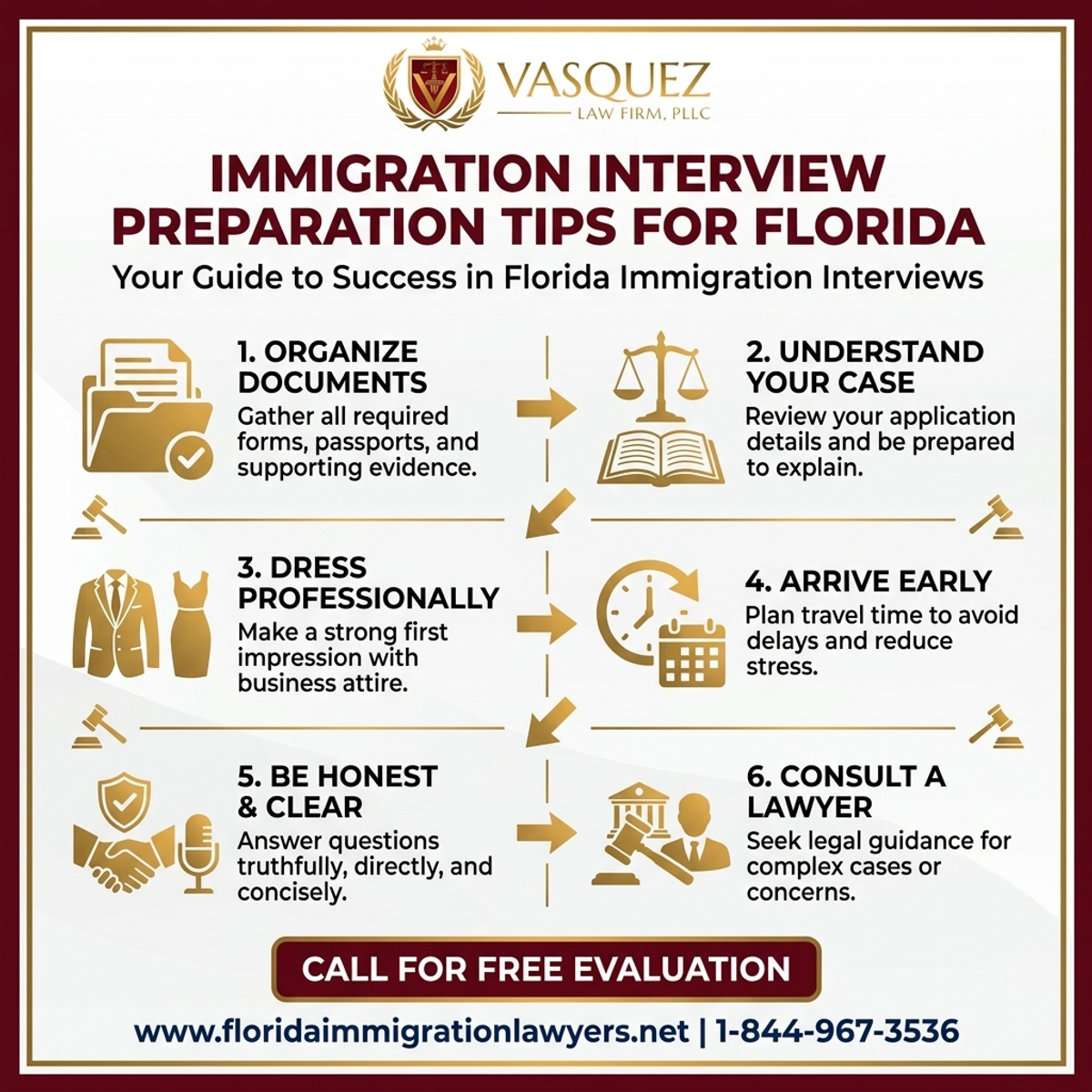
- Review Your Application: Understand the details in your application, as the officer will ask questions based on this information. It is absolutely critical to read through every single page of your submitted application package. Pay close attention to dates, addresses, employment history, and any answers you provided to eligibility questions. Identifying and understanding any potential discrepancies or areas that might require clarification beforehand will prevent confusion and inconsistencies during the actual interview.
- Gather Required Documents: Prepare originals and copies of all documents submitted with your application. Bring identification, marriage certificates, tax returns, and any other supporting documents. Beyond the documents you submitted, also bring any additional evidence that has become available since you filed, such as updated employment letters, new joint financial statements, or recent photographs. Organize everything meticulously in a binder with tabs for easy access, ensuring both original and a complete set of copies are readily available.
- Attend a Mock Interview: Conduct a practice interview with a friend or family member to simulate the actual experience. This exercise is invaluable for reducing anxiety and identifying areas where you might hesitate or provide unclear answers. Ask your mock interviewer to be thorough and even a bit challenging, mimicking the detailed questioning of a USCIS officer. Practice answering questions clearly, concisely, and truthfully, and pay attention to your body language and tone.
- Know the Location: Familiarize yourself with the Jacksonville USCIS office location and plan your travel route in advance. Don't underestimate the importance of logistics. Confirm parking availability or public transportation routes, and account for potential traffic delays, especially in busy Florida cities. Aim to arrive at least 30-60 minutes before your scheduled appointment to allow for security screening and to settle your nerves. Being late can lead to your interview being rescheduled or even canceled.
- Dress Appropriately: Wear professional attire as first impressions matter. While there's no strict dress code, presenting yourself in business casual or professional clothing demonstrates respect for the process and the interviewing officer. Avoid overly casual attire, such as shorts, t-shirts, or flip-flops. Your appearance should convey seriousness and professionalism, contributing positively to the overall impression you make during this crucial meeting.
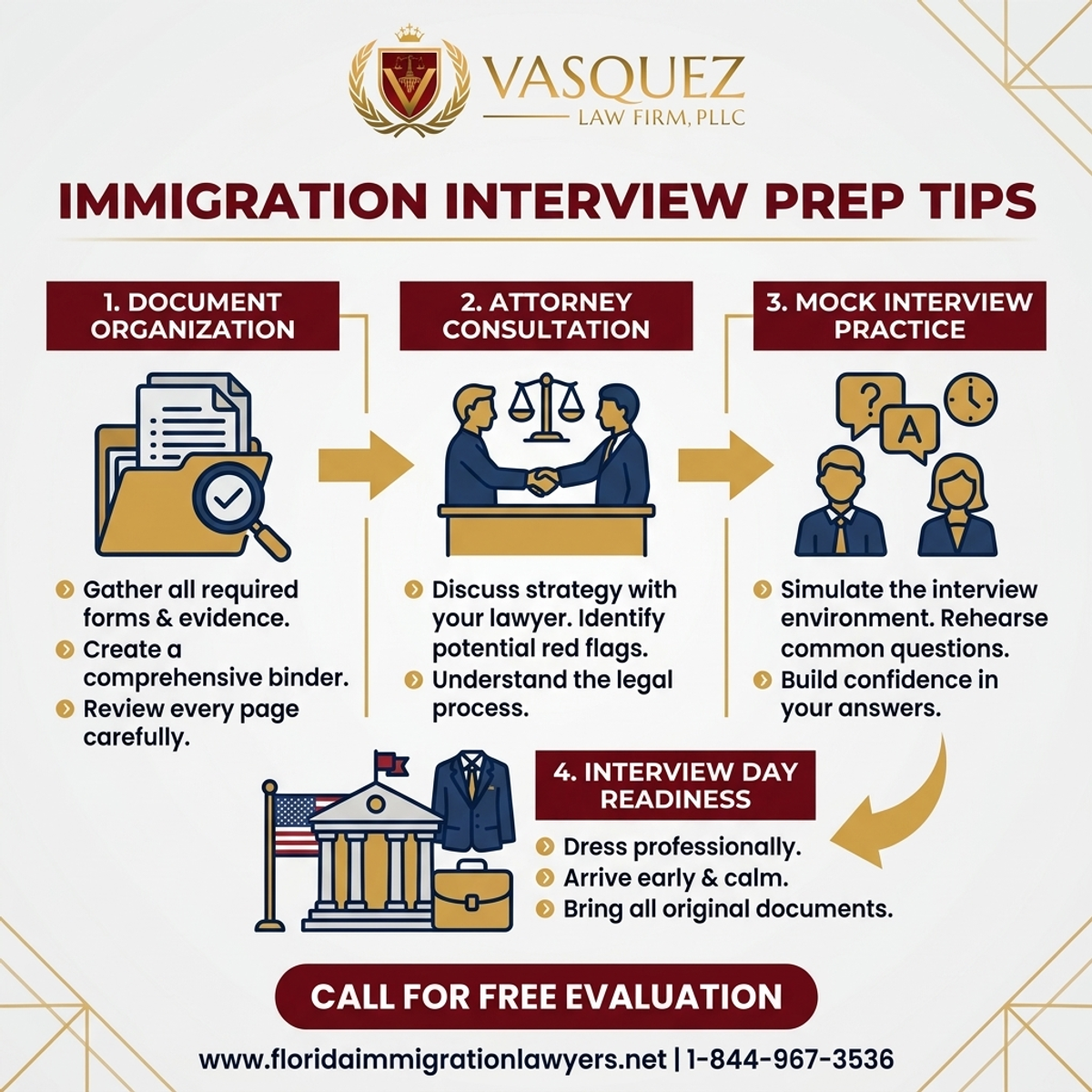
Step-by-Step Process — Immigration Interview Preparation Tips for Florida
Document Checklist for Your Interview
- Government-issued ID (passport, driver’s license): Ensure these are current and unexpired. You will need your official identification for entry into the USCIS facility and for the officer to verify your identity.
- Appointment notice from USCIS: This notice contains critical information about your interview date, time, and location, and is often required for entry into the USCIS building.
- Original and copies of all submitted documents: Always bring the original versions of every document you submitted with your application. The officer will need to see the originals and may keep the copies.
- Evidence of financial support (bank statements, tax returns): This could include recent pay stubs, employment verification letters, bank statements showing sufficient funds, or your most recent federal income tax returns. For family-based petitions, the sponsor's financial documents are crucial.
- Proof of relationship (if applicable, such as marriage certificate): For marriage-based cases, go beyond just the marriage certificate. Bring joint bank statements, joint leases or mortgage documents, utility bills in both names, birth certificates of shared children, and a collection of photos showing your relationship over time.
- Affidavits or letters of support: These should be from individuals who have personal knowledge of your relationship or circumstances, detailing their observations and experiences to support your case.
In addition to the items listed, consider bringing your birth certificate, any previous immigration documents (such as I-94 records, previous visa stamps), police clearance certificates from all countries you've lived in, and certified translations of any documents not in English. Organizing these documents in a labeled binder will not only make it easier for you but also demonstrate your preparedness to the immigration officer.
Timeline and Processing Expectations
The timeline for immigration interviews in Florida can vary based on the case type and USCIS office workload. Typically, you will receive an interview notice 4-6 weeks before the scheduled date. After the interview, processing can take several weeks to months, depending on the case complexity and any additional documentation required.
It's important to stay informed about your case status through the USCIS online portal or by contacting their customer service line. Being proactive can help alleviate anxiety during the waiting period.
Several factors can influence how long your case takes. These include the specific USCIS field office's caseload, the thoroughness of your initial application, the complexity of your personal history (e.g., extensive travel, previous immigration issues), and the need for additional background or security checks. Sometimes, an officer might issue a Request for Evidence (RFE) if more documents are needed, which can add significant time to the process.
While USCIS provides general processing timeframes on its website, it's crucial to understand that these are estimates and individual cases can deviate. Patience is a virtue in immigration matters, but proactive monitoring of your case status is also essential. If you notice unusual delays or receive an RFE, contacting Florida Immigration Lawyers can help you understand the situation and respond appropriately, potentially preventing further setbacks.
Key Statistics — Immigration Interview Preparation Tips for Florida
Cost Factors and Fee Breakdown
While preparing for your immigration interview, consider the associated costs. Application fees, travel expenses to the USCIS office, and potential legal fees should be anticipated. While specific amounts can change, it's wise to budget for these expenses early in the process.
Legal assistance, although an additional cost, can be invaluable in ensuring your application is complete and accurately represents your situation. Do not navigate this process alone. Contact Florida Immigration Lawyers today.
The primary costs typically include USCIS filing fees for your specific application (e.g., Form I-485 for adjustment of status, Form N-400 for naturalization), which can range from several hundred to over a thousand dollars. There are also biometric service fees for fingerprinting and background checks. It's important to check the most current fee schedule on the USCIS website, as these amounts can change periodically. Be aware of potential fee waivers for certain low-income applicants, which can significantly reduce the financial burden.
Beyond the direct USCIS fees, you should budget for indirect expenses. These include travel costs to the interview location, such as gas, parking, or public transportation fares. If you are traveling a significant distance, you might need to account for accommodation. Other potential costs include professional translation and certification of foreign documents, postage for mailing applications, and fees for obtaining supporting documents like birth certificates or police records. Carefully tracking these expenses can help you manage your budget effectively.
Common Mistakes to Avoid
- Inadequate Preparation: Failing to review your application can lead to inconsistencies during the interview, which may raise red flags. Even minor discrepancies between your verbal answers and your submitted documents can create suspicion, potentially leading to requests for more evidence or even a delay in your case. Thorough preparation ensures you can confidently and consistently present your information.
- Missing Documents: Not having all required documents can delay your application and even result in denial. If you arrive without a crucial original document, the officer might issue a Request for Evidence (RFE), which adds weeks or months to your processing time, or could even deny your application, forcing you to reapply and incur additional fees.
- Incorrect Information: Providing false or misleading information can lead to severe legal consequences. Misrepresenting facts, even accidentally, can be viewed as immigration fraud, resulting in denial, deportation, and a permanent bar from future immigration benefits. Always be truthful, even if the information is unfavorable.
- Poor Communication Skills: Inability to effectively communicate can hinder your ability to present your case clearly. Nervousness can make it difficult to articulate answers. Practice speaking clearly and concisely. If you don't understand a question, politely ask the officer to repeat or rephrase it rather than guessing.
- Ignoring Legal Advice: Overlooking professional guidance can lead to mistakes that a lawyer could help prevent. Immigration law is complex and constantly changing. Attempting to navigate it without the expertise of a qualified attorney, especially in complex cases, significantly increases your risk of errors, delays, or even denial.
- Arriving Late: Late arrival may result in a rescheduled interview, causing unnecessary delays. USCIS offices operate on a strict schedule. Arriving late, even by a few minutes, can lead to your appointment being canceled without immediate rescheduling, forcing you to wait for a new notice, which can take months.
- Dressing Inappropriately: Casual attire can give a negative impression, affecting the officer's perception. While not a legal requirement, dressing in business casual or professional attire shows respect for the process and the officer, contributing to a positive first impression and demonstrating the seriousness with which you approach your case.
- Failing to Ask Questions: Not clarifying doubts can leave you uninformed about important aspects of your case. If the officer's question is unclear, or if you need clarification on a step in the process, it's appropriate to ask. This ensures you provide accurate answers and understand any instructions given.
- Neglecting to Update Contact Information: Missing notifications due to outdated contact details can disrupt the process. If your address or phone number changes, promptly update USCIS through their online portal or by calling customer service. Missing an important RFE or interview notice can lead to denial of your application.
- Lack of Follow-Up: Not checking your application status can result in missed deadlines or additional requests from USCIS. Regularly check your case status online and respond promptly to any communication from USCIS. Being proactive ensures you don't miss crucial deadlines or requests for additional information.
When to Call a Lawyer
While preparing for an immigration interview, consider consulting with a lawyer if you face complex legal issues, have a criminal record, or have previously been denied. An experienced immigration attorney can provide valuable guidance and representation, increasing your chances of a favorable outcome.
If you feel overwhelmed or uncertain about any aspect of the process, don't hesitate to reach out to Florida Immigration Lawyers for expert assistance.
There are many specific situations where legal counsel becomes not just beneficial, but essential. These include having a prior deportation order, a history of visa overstays, any past arrests or criminal convictions (even minor ones), or if you are applying for a complex benefit like asylum or a waiver of inadmissibility. An attorney can analyze your unique circumstances and identify potential legal hurdles that you might not be aware of.
Furthermore, having an attorney present with you at the interview can provide immense peace of mind. While they cannot answer questions on your behalf, they can clarify ambiguous questions, object to inappropriate lines of questioning, ensure your rights are protected, and provide legal advice in real-time if an unexpected issue arises. This professional presence can significantly bolster your confidence and improve the overall flow of the interview.
Don't wait until you receive an RFE or a denial to seek help. Proactive engagement with an attorney from Florida Immigration Lawyers can help you prepare a robust application, anticipate potential challenges, and navigate the interview process with confidence, ultimately increasing your likelihood of success and avoiding costly mistakes and delays.
About Florida Immigration Lawyers
At Florida Immigration Lawyers, we understand the complexities of immigration law and provide comprehensive services to guide you through each step. With offices in Jacksonville and across Florida, our bilingual team is available 24/7 to offer free consultations and personalized legal strategies. Call us at 1-844-967-3536 or visit our website to learn more.
Sources and References
- U.S. Citizenship and Immigration Services (USCIS)
- Executive Office for Immigration Review (EOIR)
- 8 U.S.C. Chapter 12 - Immigration and Nationality Act
- Code of Federal Regulations (CFR) relevant sections
Related services: immigration practice areas, family immigration services, citizenship and naturalization, deportation defense.
This article provides general legal information and is not intended as legal advice. Every case is unique, and outcomes depend on specific facts and circumstances. Contact an attorney for advice about your particular situation.
Se Habla Espanol - Estamos aqui para ayudarle. Call Florida Immigration Lawyers at 1-844-967-3536 for a free consultation.
If you need legal assistance, learn more about speak with an immigration lawyer, or call us at 1-844-967-3536 for a free consultation.
Do Not Navigate This Process Alone
Our experienced immigration attorneys are ready to fight for you. Get a free, confidential consultation today.
Se Habla Español
Frequently Asked Questions
Florida Immigration Lawyers
Immigration Attorney | Founder, Vasquez Law Firm
U.S. Air Force veteran and immigration attorney with thousands of cases resolved. J.D., NCCU School of Law. AILA member. Admitted to the 4th, 5th, and 11th Circuit Courts.
Available 24/7 - Free Evaluations
Related Legal Services
Our Florida immigration attorneys can help you with citizenship and naturalization, family immigration services and immigration practice areas. Call today at 1-844-967-3536 for a free consultation.
Related Links
Related Topics
Free Legal Consultation
Discuss your case with our experienced attorneys. We're available 24/7.
Se Habla Español - Estamos aquí para ayudarle.
Related Articles
H-2A Visa Guide for Florida Agricultural Workers | VLF Florida
Discover how the H-2A visa program can assist Florida growers in hiring temporary agricultural workers. Learn about eligibility, application process, and legal support available. Contact Florida Immigration Lawyers for a free consultation.
Immigration Bond Hearing in Florida: What You Need to Know
Navigating an immigration bond hearing in Florida can be daunting. Learn the process, necessary documents, and how legal guidance can aid your case. Contact Florida Immigration Lawyers at 1-844-967-3536 for expert assistance.
Understanding VAWA Self-Petition for Abused Spouses in Florida
Explore the VAWA self-petition process for abused spouses in Florida. Learn about eligibility, steps to file Form I-360, and resources available in Fort Lauderdale. Call Florida Immigration Lawyers at 1-844-967-3536 for a free consultation.
Withholding of Removal Defense in Florida | VLF Florida
Learn how withholding of removal can protect you from deportation in Florida. Explore the process, common mistakes, and seek legal advice. Call us for a free consultation.
