Immigration Bond Hearing in Florida: What You Need to Know
Navigating an immigration bond hearing in Florida can be daunting. Learn the process, necessary documents, and how legal guidance can aid your case. Contact Florida Immigration Lawyers at 1-844-967-3536 for expert assistance.

- The bond amount varies based on individual circumstances.
- Legal assistance can greatly influence the outcome.
- Hearings are typically held at immigration courts in Florida.
Introduction
Imagine being detained by ICE and facing the uncertainty of remaining in custody indefinitely. This is a reality for many immigrants in Florida, especially in Fort Lauderdale. Understanding the immigration bond hearing process is essential to gaining freedom. This article will guide you through the steps, necessary documents, and what to expect from an immigration bond hearing in Florida. Call Florida Immigration Lawyers at 1-844-967-3536 for a free consultation.
The experience of detention can be terrifying and disorienting, not only for the individual but also for their family and loved ones. It can disrupt lives, jeopardize employment, and create immense emotional distress. Knowing your rights and the avenues available for release, such as an immigration bond hearing, is the first step toward regaining control during such a challenging time.
Navigating the complex landscape of immigration law requires expert guidance. A successful bond hearing can mean the difference between prolonged detention and the opportunity to fight your immigration case from outside custody, allowing you to reunite with family and prepare your defense more effectively. Florida Immigration Lawyers are here to provide that crucial support, ensuring you understand every aspect of the process and have the best possible chance for a favorable outcome.
Understanding Immigration Bond Hearings
Immigration bond hearings are conducted for detained individuals who wish to be released while their immigration case proceeds. The judge assesses if the detainee poses a flight risk or a danger to the community. The bond amount, if granted, depends on these factors. In Florida, bond hearings are often held in cities like Fort Lauderdale, which hosts significant immigrant populations.
According to recent statistics, Florida ranks high in immigrant detentions, emphasizing the need for awareness about bond hearings.
During these hearings, the immigration judge considers a multitude of factors to determine bond eligibility and amount. These factors typically include the immigrant's ties to the community (family, employment, property), their immigration history, any criminal record, and their likelihood of appearing for future court dates. The burden of proof often lies with the detainee to demonstrate they are not a flight risk or a danger, making comprehensive preparation vital.
For instance, an individual with deep roots in Florida – a spouse and children who are U.S. citizens, a long-standing job, and no criminal history – is more likely to be granted a lower bond, or even released on their own recognizance, compared to someone with no established ties and a history of failing to appear in court. Immigration courts in Florida, such as those in Miami, Orlando, and the Krome Service Processing Center near Miami, regularly conduct these hearings, each with its own specific procedures and caseloads.
The decision to grant bond is ultimately discretionary, meaning the judge has significant leeway. This is precisely why having an experienced immigration attorney from Florida Immigration Lawyers can make a profound difference. They understand the nuances of presenting a compelling case that highlights your positive attributes and mitigates any perceived risks, advocating fiercely on your behalf.
Step-by-Step Guide to the Bond Hearing Process
- Detention by ICE: The process begins when an immigrant is detained by Immigration and Customs Enforcement (ICE). This can happen during a targeted enforcement action, a routine traffic stop, or even after being released from local criminal custody. It's a critical moment where immediate legal counsel becomes paramount.
- Request a Bond Hearing: The detainee or their attorney must request a bond hearing. This request is typically made to an immigration judge if ICE does not set a bond or sets one that is deemed too high. A formal motion or request is filed with the Executive Office for Immigration Review (EOIR).
- Prepare for the Hearing: Gather necessary documents and evidence to present at the hearing. This involves collecting proof of community ties, financial stability, and good moral character. Your legal team at Florida Immigration Lawyers will guide you through compiling a robust evidence packet to strengthen your case.
- Attend the Hearing: The detainee appears before an immigration judge. Arguments are made regarding eligibility for bond. This is your opportunity to present your case, often through an attorney, explaining why you are not a flight risk or a danger to the community. The judge will listen to arguments from both your attorney and the ICE attorney.
- Judge’s Decision: The judge decides whether to grant bond and sets the amount. The judge will issue an oral decision at the end of the hearing, explaining the reasons for granting or denying bond, and specifying the bond amount if granted.
- Posting Bond: If granted, the bond must be paid for the detainee’s release. This payment can be made by the detainee, a family member, or a friend at an ICE facility. Once the bond is posted, the release process typically begins within 24-48 hours.
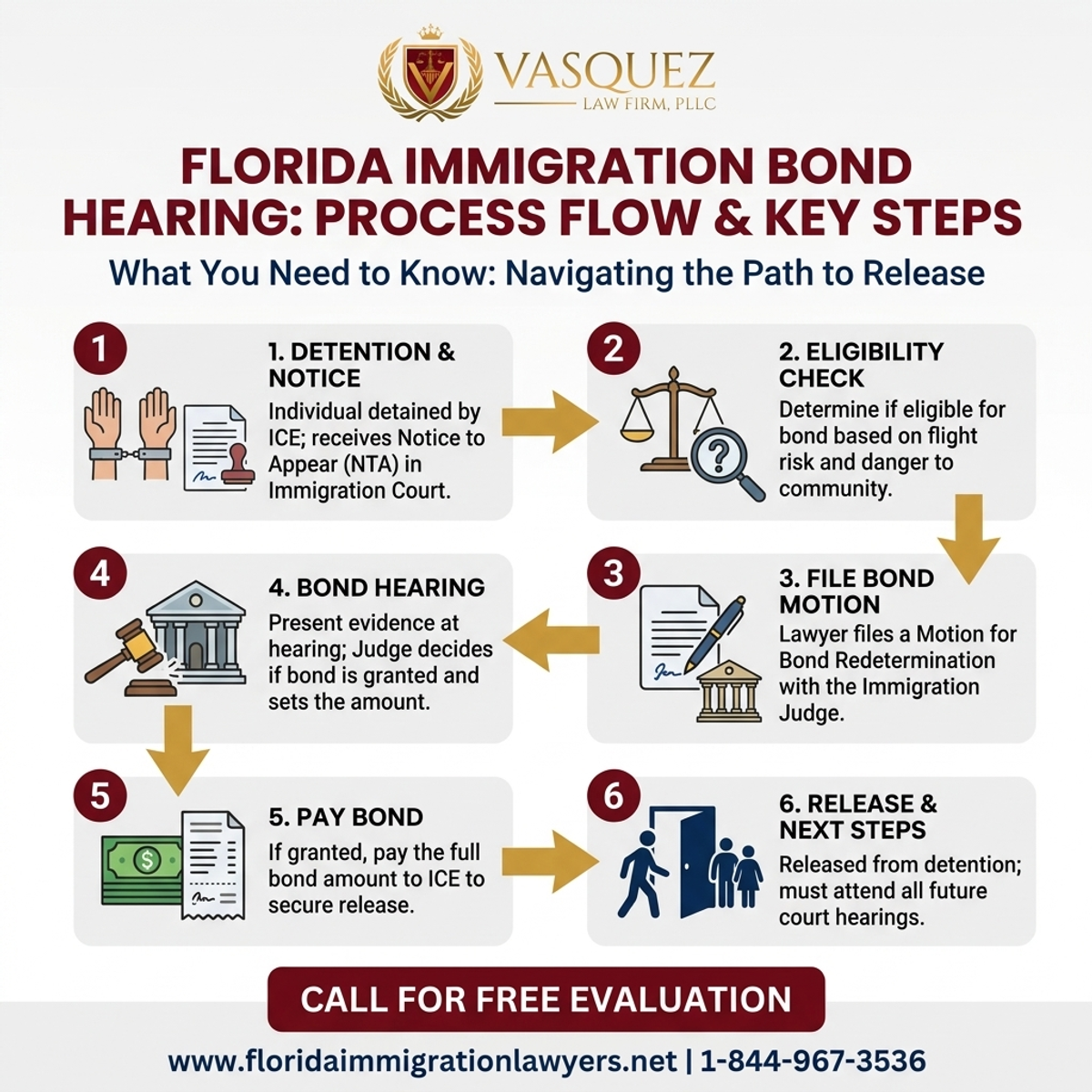
Step-by-Step Process — Immigration Bond Hearing in Florida: What You Need to Know
Each step in this process is critical and can significantly impact the outcome. Missing deadlines, failing to provide adequate documentation, or appearing unprepared can jeopardize your chances of release. That's why having a knowledgeable legal team, such as Florida Immigration Lawyers, is indispensable from the very beginning.
For example, in the "Prepare for the Hearing" stage, an attorney can advise on which specific documents hold the most weight with a particular judge or court. They can also help draft affidavits from family members or employers, which can be compelling evidence of community ties and good character.
Document Checklist for Bond Hearings
- Proof of identity (passport, ID card): Essential for establishing who you are and verifying your nationality. This includes national ID cards, birth certificates, and any immigration documents like a Notice to Appear (NTA) or I-94 arrival/departure record.
- Evidence of community ties (letters from family, employment records): Demonstrates your strong connections to the U.S. and Florida. This could include marriage certificates, birth certificates of U.S. citizen children, letters from employers confirming stable employment, property deeds, and utility bills in your name.
- Proof of residence: Shows you have a stable home address. Lease agreements, utility bills, or letters from landlords or homeowners confirming your residency are crucial. This helps to counter any perception of being a flight risk.
- Financial documents showing ability to pay bond: While not always required, having proof of funds can expedite the process once bond is granted. Bank statements, pay stubs, or affidavits from those willing to pay the bond on your behalf can be useful.
- Any criminal records or court documents: Full disclosure of any past legal issues, even minor ones, is vital. Your attorney can help explain the context of these records to the judge, demonstrating rehabilitation or mitigating circumstances.
Compiling a thorough and accurate documentation package is one of the most crucial aspects of preparing for an immigration bond hearing. Incomplete or disorganized documentation can create delays and even lead to a less favorable outcome. Florida Immigration Lawyers are adept at helping clients gather and present these documents effectively, ensuring no critical piece of evidence is overlooked.
A well-prepared document package not only strengthens your case but also demonstrates to the judge your commitment to complying with legal procedures and your intention to appear for future court dates. It's a tangible representation of your ties to the community and your reliability.
Timeline and Processing Expectations
The timeline for an immigration bond hearing can vary. Typically, a hearing is scheduled within weeks of detention, but it can be delayed due to court backlogs. In Fort Lauderdale, the wait times may differ due to the high volume of cases. Once a bond is granted and paid, release usually occurs within 24 to 48 hours.
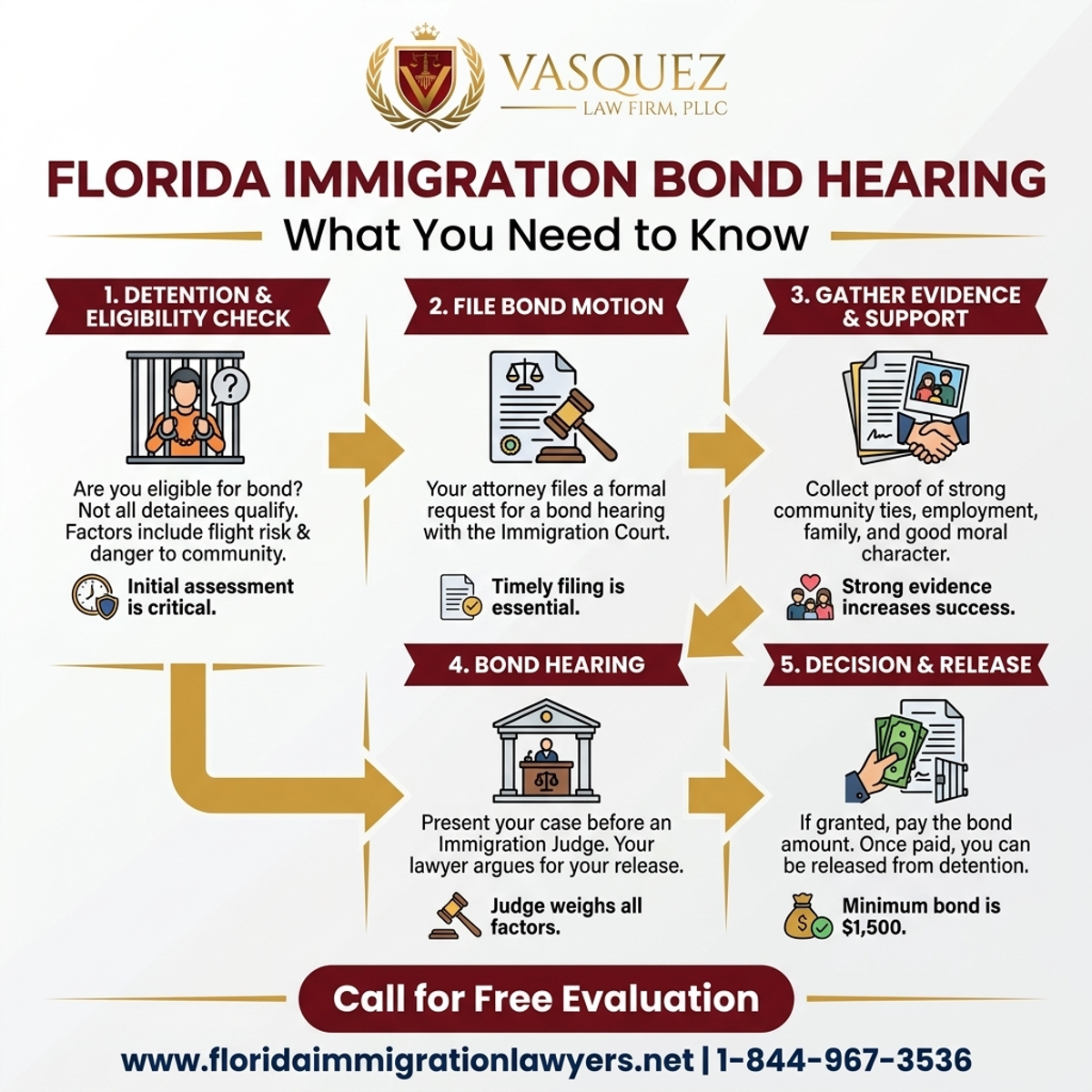
Key Statistics — Immigration Bond Hearing in Florida: What You Need to Know
Factors influencing the timeline can include the specific immigration court's caseload, the availability of judges, and whether the detainee is held in a remote facility. For instance, courts in major hubs like Miami often experience higher volumes, which can sometimes lead to longer wait times compared to smaller jurisdictions. It's important to set realistic expectations and understand that while attorneys can push for expedited hearings, some delays are beyond anyone's control.
Once a bond is set and posted, the administrative process for release typically involves ICE verifying the payment and processing the necessary paperwork. While 24-48 hours is a general guideline, weekends, holidays, or administrative issues can occasionally extend this period. Having a dedicated legal team like Florida Immigration Lawyers can help monitor the release process and address any unforeseen complications promptly.
Cost Factors and Fee Breakdown
The cost of an immigration bond varies significantly. Factors influencing cost include the detainee’s flight risk and community ties. It's important to note that legal fees for representation at bond hearings are separate from the bond amount itself. Consulting with an immigration attorney can provide clarity on potential costs.
Immigration bonds can range from a few thousand dollars to tens of thousands, depending on the individual's circumstances and the judge's discretion. For example, a bond for someone with minor immigration violations and strong community ties might be set at $1,500-$5,000, whereas an individual with a more complex history or perceived higher flight risk could face a bond of $10,000-$25,000 or more. Understanding these potential ranges is crucial for financial planning.
Beyond the bond amount, legal fees for an attorney's services are an essential consideration. These fees cover the attorney's time for preparing the case, gathering evidence, representing the client in court, and navigating the complexities of immigration law. Florida Immigration Lawyers offer transparent fee structures and can discuss payment options during your free consultation at 1-844-967-3536, ensuring you understand all financial aspects upfront.
Common Mistakes to Avoid
- Not requesting a bond hearing promptly: Delays can prolong detention. Every day in detention is a day away from family and work. Prompt action is crucial to minimize time in custody.
- Lack of proper documentation: Missing documents can harm your case. A disorganized or incomplete submission can weaken your argument for release and may lead the judge to perceive you as a higher flight risk.
- Failing to demonstrate community ties: Weak ties can increase perceived flight risk. Without concrete evidence of family, employment, and property in the U.S., the judge may be hesitant to grant bond.
- Not understanding bond conditions: Violating conditions can lead to re-detention. These conditions, such as regular check-ins with ICE or limitations on travel, must be strictly adhered to.
- Overlooking legal representation: An attorney can greatly improve your chances of success. Attempting to navigate the complex legal system alone significantly reduces your likelihood of a favorable outcome.
- Ignoring language barriers: Miscommunication can lead to unfavorable outcomes. If English is not your first language, ensure you have a qualified interpreter or an attorney who speaks your language to prevent misunderstandings.
- Assuming bond is guaranteed: Not all cases result in a bond being granted. Eligibility for bond is not automatic, and some individuals, particularly those with certain criminal convictions or security concerns, may not be eligible for bond at all.
Avoiding these common pitfalls is paramount to securing a successful outcome in an immigration bond hearing. Proactive preparation, meticulous attention to detail, and experienced legal guidance from Florida Immigration Lawyers can significantly mitigate these risks and strengthen your position before the immigration judge.
When to Call a Lawyer
Legal assistance is crucial in navigating immigration bond hearings. Call a lawyer if you or your loved one is detained by ICE, if there are complex legal issues involved, or if you need help preparing for a hearing. Florida Immigration Lawyers are available to assist with these matters, offering expert representation in Fort Lauderdale and beyond.
You should contact an attorney immediately upon detention, even if ICE states that a bond is not possible. An experienced immigration lawyer can assess eligibility, challenge ICE's initial decisions, and fight for your release. This is especially true if the detainee has any criminal history, prior deportation orders, or a complicated immigration record, as these factors can make the bond process much more challenging.
Furthermore, if there are any language barriers, cultural misunderstandings, or if the detainee feels they are being unjustly treated, legal counsel becomes indispensable. Florida Immigration Lawyers provide bilingual services and are equipped to advocate for your rights, ensuring that your voice is heard and your case is presented fairly and effectively. Don't hesitate to call 1-844-967-3536 for a free, confidential consultation.
About Florida Immigration Lawyers
Florida Immigration Lawyers is dedicated to providing exceptional legal services to immigrants across Florida. Our team is experienced in all aspects of immigration law, including bond hearings, asylum, and deportation defense. Call us at 1-844-967-3536 for a free consultation. We are available 24/7 and offer bilingual services to better serve our diverse community.
Our commitment extends beyond just legal representation; we strive to provide compassionate support and clear communication throughout what can be an incredibly stressful period. We understand the profound impact that detention has on individuals and families, and we work tirelessly to achieve the best possible outcome for every client. Our track record of successfully securing bonds for detained immigrants speaks to our expertise and dedication.
Whether you are facing an initial bond hearing, seeking a bond redetermination, or navigating complex appeals, our firm has the knowledge and resources to guide you. We pride ourselves on offering personalized strategies tailored to each unique case, always keeping your best interests at the forefront. Trust Florida Immigration Lawyers to be your steadfast advocates.
Sources and References
- U.S. Citizenship and Immigration Services (USCIS)
- Executive Office for Immigration Review (EOIR)
- 8 U.S.C. Chapter 12 - Immigration and Nationality Act
Related services: asylum and refugee protection, immigration waivers, humanitarian protection programs, DACA renewal and applications.
This article provides general legal information and is not intended as legal advice. Every case is unique, and outcomes depend on specific facts and circumstances. Contact an attorney for advice about your particular situation.
Do not navigate this process alone. Contact Florida Immigration Lawyers today.
Do Not Navigate This Process Alone
Our experienced immigration attorneys are ready to fight for you. Get a free, confidential consultation today.
Se Habla Español
Frequently Asked Questions
Florida Immigration Lawyers
Immigration Attorney | Founder, Vasquez Law Firm
U.S. Air Force veteran and immigration attorney with thousands of cases resolved. J.D., NCCU School of Law. AILA member. Admitted to the 4th, 5th, and 11th Circuit Courts.
Available 24/7 - Free Evaluations
Related Legal Services
Our Florida immigration attorneys can help you with citizenship and naturalization, family immigration services and immigration practice areas. Call today at 1-844-967-3536 for a free consultation.
Related Links
Related Topics
Free Legal Consultation
Discuss your case with our experienced attorneys. We're available 24/7.
Se Habla Español - Estamos aquí para ayudarle.
Related Articles
H-2A Visa Guide for Florida Agricultural Workers | VLF Florida
Discover how the H-2A visa program can assist Florida growers in hiring temporary agricultural workers. Learn about eligibility, application process, and legal support available. Contact Florida Immigration Lawyers for a free consultation.
Understanding VAWA Self-Petition for Abused Spouses in Florida
Explore the VAWA self-petition process for abused spouses in Florida. Learn about eligibility, steps to file Form I-360, and resources available in Fort Lauderdale. Call Florida Immigration Lawyers at 1-844-967-3536 for a free consultation.
Withholding of Removal Defense in Florida | VLF Florida
Learn how withholding of removal can protect you from deportation in Florida. Explore the process, common mistakes, and seek legal advice. Call us for a free consultation.
F-1 Reinstatement Process for Florida Students | VLF Florida
Learn about the F-1 reinstatement process for students in Coral Springs, Florida, including steps, timelines, and common mistakes to avoid. Contact Florida Immigration Lawyers for professional assistance.