Understanding Immigration Court Proceedings in Florida
Facing immigration court in Florida can be complex. Learn about the process, required documents, and when to seek legal help. Contact Florida Immigration Lawyers for support.

Dealing with immigration court proceedings in Florida can be overwhelming. Understanding the process, which often involves removal proceedings managed by the Executive Office for Immigration Review (EOIR), is crucial. Key points include:
- Immigration judges oversee cases.
- Proceedings may result in deportation orders.
- Legal representation is essential for success.
Introduction
Facing immigration court proceedings in Miami, Florida, can be daunting. The immigration court system is complex, involving hearings before immigration judges who decide on cases ranging from asylum to removal. This guide covers what you need to know about the process, timelines, and when to seek legal help. Call Florida Immigration Lawyers at 1-844-967-3536 for a free consultation and protect your future.
The journey through immigration court can be emotionally and financially taxing, with the stakes often involving an individual's right to remain in the United States and their future with family. Navigating this intricate legal landscape requires more than just understanding the basic steps; it demands a strategic approach, meticulous preparation, and often, a robust defense. Early intervention from experienced legal counsel can significantly alleviate stress and improve the chances of a favorable outcome, ensuring your rights are protected every step of the way. Florida Immigration Lawyers are committed to providing that crucial support.
What Happens During Immigration Court Proceedings?
Immigration court proceedings are conducted by immigration judges under the EOIR. These proceedings determine whether an individual can stay in the U.S. or will be deported. As of 2026, the process involves hearings where evidence is presented, and arguments are made for or against deportation. Having legal counsel can significantly impact the outcome.
Typically, these proceedings start with a Notice to Appear, followed by a master calendar hearing. The judge then schedules an individual hearing to review evidence and testimonies. Decisions can be appealed if necessary.
The Notice to Appear (NTA) is the foundational document that initiates removal proceedings. It outlines the specific allegations against you and the legal grounds for why the Department of Homeland Security (DHS) believes you are removable from the U.S. Receiving an NTA is a critical moment that demands immediate attention. It’s imperative to review the NTA carefully with an attorney, as it sets the stage for your entire court case. For example, if the NTA incorrectly states your date of entry or charges you under the wrong statute, your attorney can challenge these inaccuracies. Florida Immigration Lawyers can help you understand the charges and prepare your initial response, ensuring no detail is overlooked.
Following the NTA, the first court appearance is typically a Master Calendar Hearing. This is a preliminary hearing where the immigration judge addresses administrative matters, confirms your identity, ensures you have received the NTA, and asks how you plead to the allegations and charges. During this hearing, your attorney can request additional time to prepare, identify forms of relief you may be eligible for (such as asylum, cancellation of removal, or adjustment of status), and schedule your next, more substantive hearing. This stage is crucial for establishing your defense strategy and communicating your intentions to the court, setting the tone for the entire process.
The Individual Hearing, also known as a merits hearing, is akin to a trial. This is where you and your attorney present evidence, call witnesses, and provide testimony to support your case for remaining in the U.S. The DHS attorney will also present their case, and both sides may cross-examine witnesses. The immigration judge will then make a final decision based on the evidence and arguments presented. The complexity of these hearings, which can involve intricate legal arguments and the presentation of extensive documentation, underscores why professional legal representation from firms like Florida Immigration Lawyers is not just beneficial, but often indispensable for a successful outcome. A strong defense at this stage can be the difference between remaining in the U.S. and deportation.
How Long Do Immigration Court Proceedings Take in 2026?
In 2026, the duration of immigration court proceedings in Florida varies. On average, cases can take several months to years, depending on complexity and backlog. Initial hearings may be scheduled within a few weeks, but final resolutions take longer.
| Stage | Typical Timeframe | Notes |
|---|---|---|
| Notice to Appear | 1-3 months | Initial step, requires response |
| Master Calendar Hearing | 2-6 months | Initial court appearance |
| Individual Hearing | 6-18 months | Final decision-making hearing |
| Appeal | 6-12 months | If applicable, extends process |
Several factors contribute to the varying timelines in immigration court. The sheer volume of cases across the country, coupled with limited judicial resources and an insufficient number of immigration judges, often leads to significant backlogs. Additionally, the complexity of an individual's case, such as requiring extensive documentation, expert testimony, or involving multiple forms of relief, can naturally extend the duration. Changes in immigration policy, presidential administrations, or judicial priorities can also impact processing times, making the journey through court unpredictable and requiring constant vigilance from your legal team.
For individuals and families, these prolonged timelines can mean years of uncertainty and anxiety. Living with the possibility of deportation, combined with the financial strain of ongoing legal fees and the emotional toll on family members, highlights the importance of having a dedicated legal team. Florida Immigration Lawyers understand these challenges and work diligently to expedite processes where possible, while also preparing clients for the potential for lengthy proceedings. They will keep you informed and help manage expectations throughout this often-stressful period.
While the table provides typical timeframes, it's crucial to understand that these are averages and not guarantees. A case involving complex asylum claims, for example, might take significantly longer than a straightforward adjustment of status, especially if country conditions reports or psychological evaluations are needed. Similarly, if a decision is appealed to the Board of Immigration Appeals (BIA) or even to a federal circuit court, the process can extend for several more years, adding layers of legal review. Your attorney at Florida Immigration Lawyers will provide a realistic assessment of your case's potential timeline and keep you informed of any developments that might affect it, allowing you to plan accordingly.
What Documents Are Needed for Immigration Court?
Gathering the right documents is crucial for immigration court proceedings. Required documents include:
- Notice to Appear
- Any prior immigration applications
- Identity documents (passport, ID)
- Proof of residence in the U.S.
- Supporting evidence for your case (e.g., employment records, medical records)
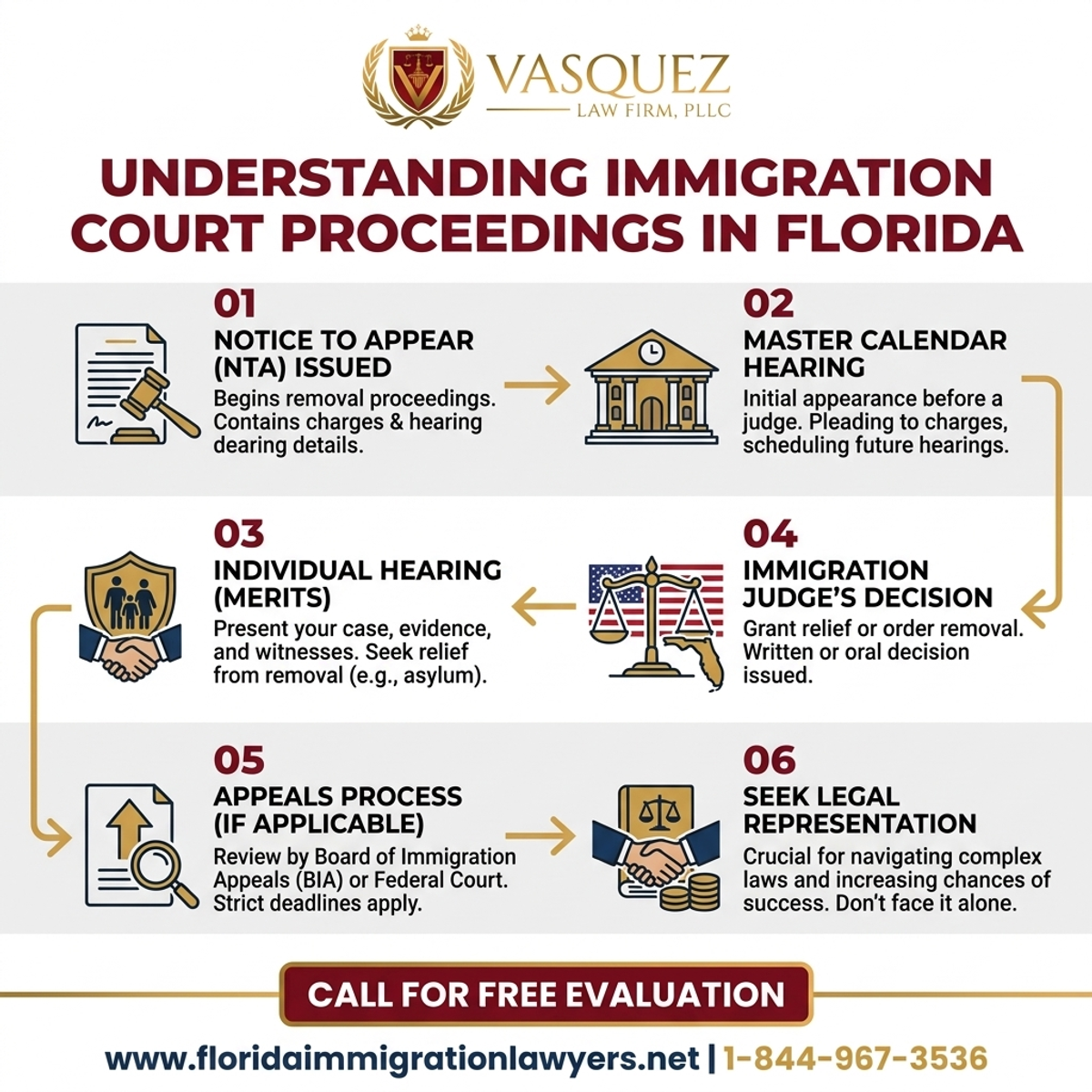
Step-by-Step Process — Understanding Immigration Court Proceedings in Florida
Beyond the basic identity and court-issued documents, the specific supporting evidence you need will heavily depend on the type of relief you are seeking. For instance, if you are applying for asylum, you will need documents proving persecution, such as police reports, medical records of injuries, affidavits from witnesses who can corroborate your story, country condition reports from human rights organizations, and a detailed personal statement outlining your fear. If you are seeking cancellation of removal, you'll need extensive proof of continuous physical presence in the U.S., evidence of good moral character (e.g., tax records, community involvement letters), and compelling documentation demonstrating extreme and unusual hardship to a qualifying U.S. citizen or lawful permanent resident relative if you were to be deported.
It is vital that all foreign-language documents are accompanied by certified English translations. These translations must be complete and accurate, and the translator must certify that they are competent to translate and that the translation is true and accurate. Failing to provide proper translations can lead to delays, requests for evidence, or even rejection of your evidence, significantly hindering your case. Florida Immigration Lawyers can guide you on securing certified translations from reputable sources and ensuring all your documents meet strict court requirements, preventing common procedural pitfalls.
Organizing your documents meticulously is as important as gathering them. Create a comprehensive checklist, make multiple copies of everything, and keep them in a well-organized binder or digital folder, clearly labeled and indexed. This systematic preparation not only streamlines the court process but also demonstrates to the judge your diligence and respect for the proceedings, which can positively impact your credibility. Your legal team at Florida Immigration Lawyers will assist you in compiling and presenting a robust evidentiary package, ensuring every piece of documentation strengthens your defense and supports your claim for relief.
Costs Associated with Immigration Court Proceedings
Costs in immigration court proceedings can vary. Typically, expenses include filing fees, attorney fees, and costs for obtaining necessary documents. It's essential to budget for these expenses to avoid unexpected financial burdens.
| Item | Typical Fee | Notes |
|---|---|---|
| Attorney Fees | Varies | Depends on case complexity |
| Filing Fees | Varies | Set by USCIS, subject to change |
| Document Preparation | Varies | Copying, translations |
Attorney fees are often the most significant expense, and they can vary widely based on the complexity of your case, the attorney's experience level, and the estimated time commitment required. Some attorneys charge an hourly rate, while others offer flat fees for specific services, such as asylum applications or deportation defense. It's crucial to have a clear understanding of the fee structure upfront, including what services are covered and any potential additional costs. Florida Immigration Lawyers are transparent about their fees and can discuss flexible payment options, such as installment plans, to help ease the financial burden, ensuring access to quality legal representation.
Filing fees are mandated by government agencies like USCIS (U.S. Citizenship and Immigration Services) and EOIR for various applications and motions filed during your proceedings. For example, an Application for Asylum and for Withholding of Removal (Form I-589) currently has no filing fee, but an Application for Cancellation of Removal and Adjustment of Status (Form EOIR-42B) does require a fee. These fees are subject to change, so always verify the latest amounts with your attorney or on official government websites. Additionally, you may incur costs for obtaining official records, such as birth certificates, marriage licenses, police reports, or medical evaluations, which are often critical pieces of evidence and may require certified copies or official transcripts.
Beyond the primary costs, other potential expenses can arise that are important to budget for. These might include fees for expert witnesses, such as psychologists who can provide crucial testimony on trauma in asylum cases, or country conditions experts who can speak to the dangers in your home country. There could also be travel costs for court appearances, bond fees if you are detained, and postage for mailing documents. Understanding and budgeting for these potential ancillary costs is part of a comprehensive preparation strategy that Florida Immigration Lawyers can help you develop, ensuring you are financially prepared for every stage of your immigration court journey.
How Can You Prepare for an Immigration Court Hearing?
Preparation is key to success in immigration court. You should:
- Consult an Attorney: Seek legal advice to understand your case.
- Organize Documents: Ensure all required documents are collected and organized.
- Understand the Charges: Know what you are being charged with and prepare your defense.
- Practice Your Testimony: Be ready to present your case clearly and confidently.
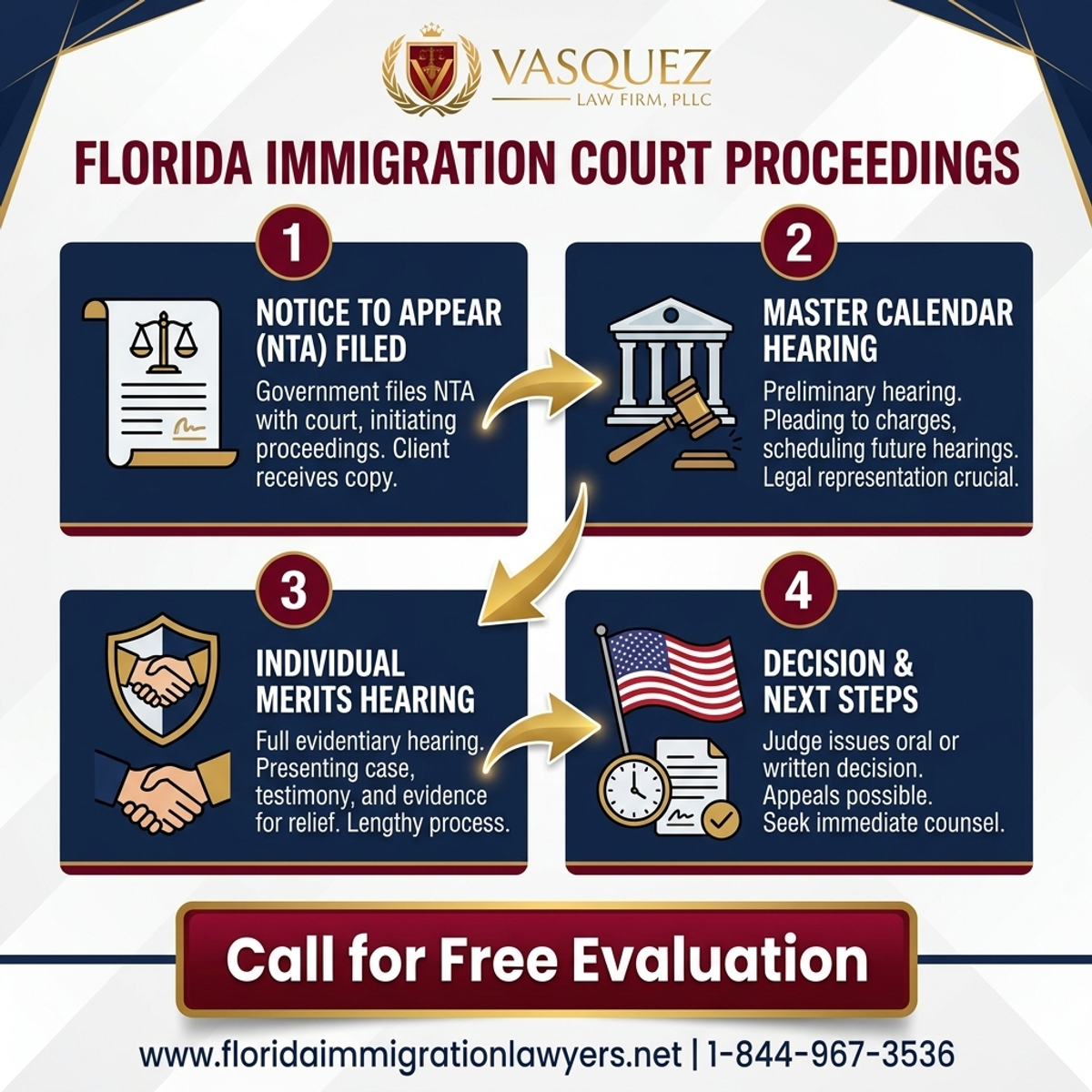
Key Statistics — Understanding Immigration Court Proceedings in Florida
Engaging with an experienced immigration attorney from the outset is the single most important step. Your lawyer will not only help you understand the complex legal framework but also identify all potential avenues for relief, build a strong defense strategy, and represent you effectively in court. A skilled attorney from Florida Immigration Lawyers can analyze the specifics of your case, advise on the best course of action (e.g., applying for asylum, cancellation of removal, or adjustment of status), and meticulously prepare all necessary legal filings and arguments. Their expertise is invaluable in navigating the procedural intricacies and substantive legal challenges.
Beyond legal strategy, practical preparation is equally vital. This includes meticulously organizing all your supporting documents, creating exhibits, and ensuring that everything is properly translated and formatted according to court rules. Your attorney will guide you through this process, helping you compile a compelling package of evidence that clearly supports your claims. For example, if you are claiming hardship, you'll need financial records, medical reports, and school records for your family members. This attention to detail can make a significant difference in how your case is perceived by the immigration judge and can prevent delays or rejections due to incomplete paperwork.
Preparing for your testimony involves more than just knowing your story; it means being ready to present it truthfully, clearly, and confidently under oath. Your attorney will conduct mock questioning sessions to familiarize you with the types of questions you might face from both the judge and the DHS attorney. This practice helps reduce anxiety, ensures consistency in your narrative, and prepares you to handle difficult questions with composure. Remember, your credibility is paramount in immigration court, and a well-prepared, honest testimony is a cornerstone of a strong case. Additionally, ensure you dress professionally for court, arrive early, and maintain composure and respect for the proceedings at all times.
Do not navigate this process alone. Contact Florida Immigration Lawyers today.
Common Mistakes to Avoid in Immigration Court
Navigating immigration court is fraught with potential pitfalls that can severely jeopardize your case. Understanding and actively avoiding these common mistakes is crucial for anyone facing removal proceedings. Even seemingly minor missteps can lead to significant delays, unfavorable rulings, or even automatic deportation. With the stakes so high, meticulous attention to detail and adherence to legal procedures are paramount, and the guidance of an experienced attorney is invaluable in sidestepping these traps.
- Ignoring Notices: Failing to respond to court notices can lead to automatic deportation. *Always open and review official mail immediately, and share it with your attorney. Missing a single deadline or failing to appear for a scheduled hearing can have severe, irreversible consequences, as the court may proceed without you and issue an 'in absentia' removal order, making it incredibly difficult to reopen your case.*
- Missing Hearings: Not appearing for hearings can result in a removal order. *Always confirm your hearing dates and times with your attorney and ensure you have reliable transportation. If an emergency truly prevents your attendance, your lawyer can file a motion to reschedule, but this must be done promptly, with valid justification, and is not guaranteed to be granted. Proactive communication is key.*
- Lack of Preparation: Poorly prepared cases are more likely to fail. *Work closely with Florida Immigration Lawyers to gather all necessary evidence, organize documents into a clear exhibit package, and practice your testimony thoroughly. A strong, well-documented case with a consistent narrative is your best defense against the government's allegations.*
- Submitting Incomplete Documents: Incomplete paperwork can delay proceedings. *Ensure every form is filled out accurately and completely, and all required supporting documents (with certified translations if necessary) are attached. Incomplete submissions often lead to rejections, requests for evidence, or outright denials, prolonging your case and potentially jeopardizing your eligibility for relief.*
- Misrepresenting Facts: Providing false information can damage your credibility. *Always be truthful and consistent in your statements and documentation, both verbally and in writing. Any perceived dishonesty or fabrication can severely undermine your case, lead to accusations of fraud, and result in permanent bars to future immigration benefits, with serious legal repercussions.*
- Not Hiring an Attorney: Navigating the process alone can harm your case. *Immigration law is incredibly complex and constantly evolving. An experienced lawyer can identify available relief options you might not know about, manage critical deadlines, present legal arguments effectively, and represent your best interests against trained government attorneys. The investment in legal counsel from Florida Immigration Lawyers is often invaluable and significantly increases your chances of success.*
- Failing to Appeal: Not appealing a decision promptly can lead to deportation. *If an unfavorable decision is rendered by the immigration judge, discuss appeal options immediately with your attorney. There are strict, short deadlines for filing appeals to the Board of Immigration Appeals (BIA), and missing them means forfeiting your right to challenge the judge's ruling, potentially leading directly to deportation.*
- Missing Deadlines: Late submissions can result in case dismissal. *All court deadlines, whether for filing documents, motions, or applications for relief, are firm and strictly enforced by the immigration court. Your attorney will manage these critical dates, but you also have a responsibility to provide information and documents to your legal team in a timely manner to avoid costly delays or dismissals.*
By being proactive and working diligently with your legal team, you can significantly reduce the risk of falling victim to these common pitfalls. Florida Immigration Lawyers are here to guide you through every step, helping you avoid mistakes that could jeopardize your future in the U.S. Call 1-844-967-3536 for expert assistance.
When to Call a Lawyer for Immigration Court Proceedings
It's crucial to call a lawyer if you receive a Notice to Appear, face deportation, or have complicated legal issues. An attorney can help navigate the complexities of immigration law and improve your chances of a favorable outcome. Florida Immigration Lawyers offer expert guidance and representation for all immigration matters.
The moment you receive a Notice to Appear (NTA) is the definitive sign that you need an attorney. An NTA indicates that the government intends to deport you, and the clock starts ticking on your legal defense. Waiting to consult a lawyer can lead to missed deadlines, incorrect filings, or even an automatic removal order if you fail to appear for a hearing. Immediate legal counsel can help you understand the specific charges, identify potential forms of relief available to you, and begin building a strong defense strategy tailored to your unique circumstances.
Beyond receiving an NTA, there are many other scenarios where legal intervention is critical. If you are detained by immigration authorities, have a past criminal record (even minor offenses), have previously been denied immigration benefits, or are seeking complex forms of relief like asylum, cancellation of removal, or waivers, an attorney's expertise is indispensable. Even if your case seems straightforward, the nuances of immigration law are vast, and a misstep can have irreversible consequences, potentially leading to a permanent bar from the U.S.
Florida Immigration Lawyers provide free, confidential consultations to assess your situation and explain your options. Don't assume your case is too simple or too complicated to warrant legal help; every case benefits from professional guidance. By calling 1-844-967-3536, you can gain clarity on your legal standing and get the professional guidance needed to protect your right to stay in the U.S. Their team is equipped to handle a wide range of immigration challenges, ensuring you have a strong, knowledgeable advocate by your side throughout the entire court process.
About Florida Immigration Lawyers
Florida Immigration Lawyers is a dedicated firm serving all of Florida, including Miami. We offer comprehensive immigration services, including asylum, deportation defense, and family immigration. Our team is available 24/7 to provide free consultations and bilingual support. Call us at 1-844-967-3536 or visit our website for more information.
Our commitment extends beyond just legal representation; we strive to be a compassionate and unwavering advocate for every client. We understand that each immigration case represents a unique human story, often fraught with fear, hope, and significant personal stakes. Our attorneys bring not only deep legal expertise but also a profound empathy to their work, ensuring that clients feel heard, understood, and supported throughout their entire legal journey. We believe in providing personalized attention, recognizing that a one-size-fits-all approach does not work in complex immigration matters.
With a presence across Florida, including major hubs like Miami, Orlando, and Tampa, Florida Immigration Lawyers are strategically positioned to assist individuals no matter where they are in the state. Our comprehensive services also include assistance with green card applications, naturalization, DACA renewals, immigration waivers, and humanitarian protection programs like Temporary Protected Status (TPS) or U visas. We pride ourselves on offering accessible legal help, which is why our 24/7 availability and bilingual staff are crucial for serving the diverse communities of Florida effectively and responsively.
When you choose Florida Immigration Lawyers, you are partnering with a team dedicated to achieving the best possible outcome for your immigration matter. Our track record of success in complex deportation defense cases and our commitment to staying abreast of ever-changing immigration laws underscore our expertise and reliability. We are not just lawyers; we are your advocates, fighting tirelessly to protect your rights and secure your future in the United States. Don't face the immigration system alone; let our experienced professionals provide the robust defense and clear guidance you deserve. Call 1-844-967-3536 today for your free consultation and take the first step towards securing your future.
Sources and References
- U.S. Citizenship and Immigration Services (USCIS)
- Executive Office for Immigration Review (EOIR)
- 8 U.S.C. Chapter 12 - Immigration and Nationality Act
- U.S. Department of State
Related services:
Do Not Navigate This Process Alone
Our experienced immigration attorneys are ready to fight for you. Get a free, confidential consultation today.
Se Habla Español
Frequently Asked Questions
Harold Estrada-Rodriguez
Florida Immigration Attorney · FL Bar No. 1041171
Florida Bar attorney handling Florida-jurisdiction immigration matters. Bilingual representation, free consultations.
Available 24/7 - Free Evaluations
Related Legal Services
Our Florida immigration attorneys can help you with business immigration, asylum protection and deportation defense. Call today at 1-844-967-3536 for a free consultation.
Related Links
Related Topics
Free Legal Consultation
Discuss your case with our experienced attorneys. We're available 24/7.
Se Habla Español - Estamos aquí para ayudarle.
Related Articles
Immigration Services in Jacksonville, Florida | VLF Florida
Explore immigration services in Jacksonville, Florida, and understand the processes involved in visa applications, asylum support, and more. Our experienced immigration lawyers are here to help you navigate complex legal requirements for a successful outcome.
Deportation Defense Lawyer: Orlando & Florida Removal Help
Facing deportation in Orlando, St. Petersburg, or anywhere in Florida is a daunting prospect that requires immediate and expert legal intervention. Our comprehensive guide to deportation defense outlines the intricate process of removal proceedings, from receiving a Notice to Appear (NTA) to navigating immigration court hearings and potential appeals. We detail essential documents, typical timelines as of 2026, and cost factors involved in building a robust defense. Understanding common mistakes and knowing when to call an experienced immigration lawyer are crucial for protecting your rights and securing your future in the U.S. Florida Immigration Lawyers offers compassionate, strategic representation for complex deportation cases across the state, ensuring you have the best possible chance to remain with your family.
Child Status Protection Act (CSPA) & Aging Out Florida
The Child Status Protection Act (CSPA) is a vital immigration law preventing children from "aging out" of eligibility for green cards due to processing delays. For Florida families in Kissimmee, Orlando, and beyond, understanding CSPA means securing your child's future. This guide explains CSPA eligibility, the complex age calculation, required documents, and critical deadlines. Learn how to navigate the process, avoid common mistakes like missing the one-year "sought to acquire" rule, and understand the associated costs. Florida Immigration Lawyers offers expert guidance to ensure your child receives the CSPA protection they deserve. Contact us for a free consultation to protect your family's path to permanent residency.
Free Immigration Consultation: Florida Legal Help | VLF Florida
Unlock clarity on your immigration journey with a free consultation in Florida. This comprehensive guide from Florida Immigration Lawyers details what to expect, how to prepare, and the profound benefits of expert legal advice. Learn about specific challenges in areas like Hialeah, navigate complex processing timelines, and understand costs beyond your initial consultation. Discover how a dedicated Florida immigration lawyer can support your visa, green card, naturalization, or deportation defense case. Avoid common pitfalls and gain peace of mind by connecting with trusted legal professionals. Your path to a secure future starts with a no-cost, expert assessment.
