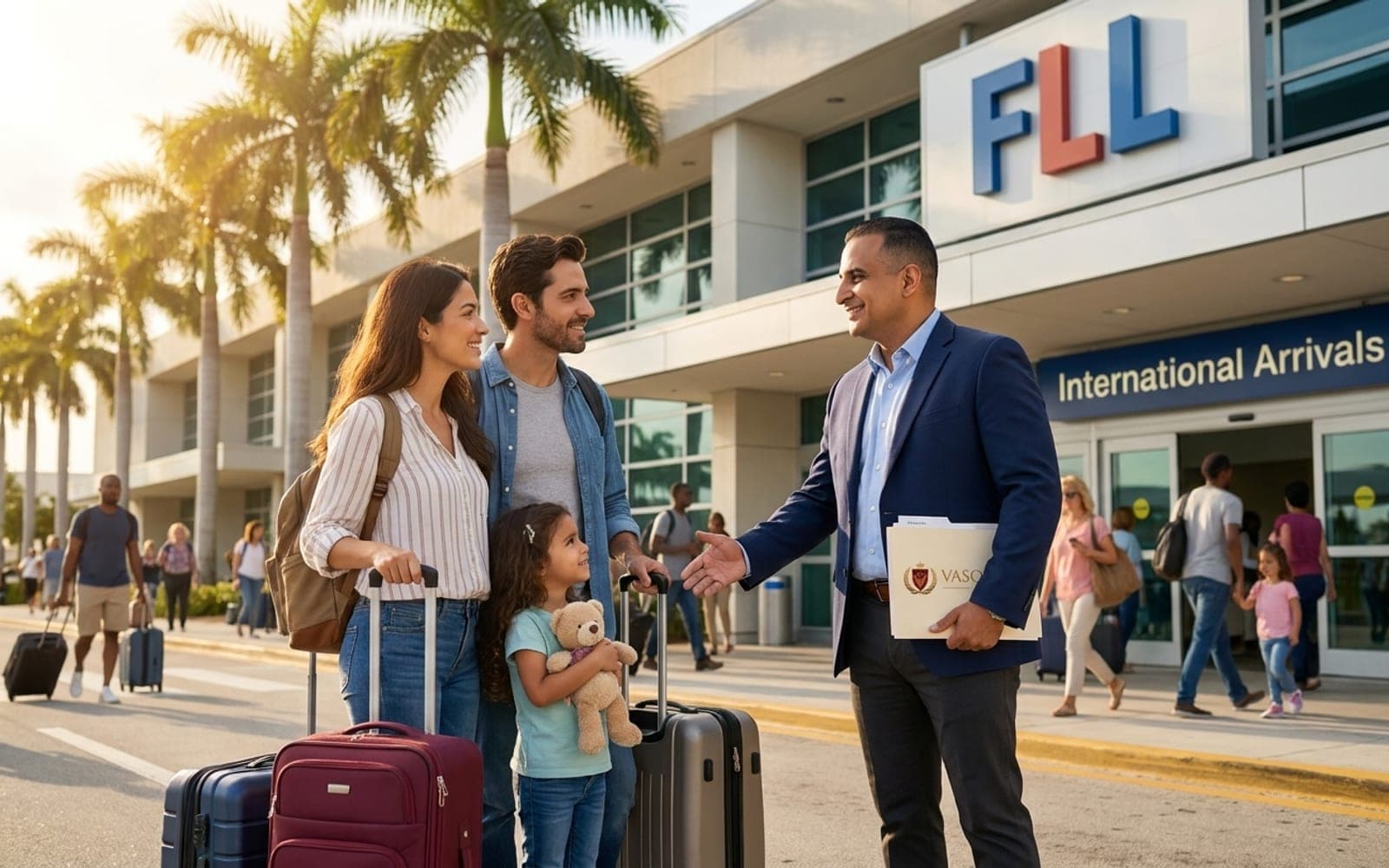
Fort Lauderdale residents can work with an Orlando-based firm on family, work visa and removal matters without driving north for every step. Because most of the work is done on paper and by video, many clients find that proximity matters less than a lawyer who prepares filings carefully and answers calls. Common matters include green cards through a spouse, parent or adult child, work visas, visas for people with extraordinary ability, naturalization, and removal defense and bond requests. We serve Broward clients by phone and secure video, in English and Spanish.
- Most immigration work is done on paper and by video, so distance matters less.
- Common matters include family green cards, work visas, naturalization and removal defense.
- Visas for extraordinary ability in the arts, sciences, business or athletics are also discussed.
- Consultations are available in English and Spanish, by phone and secure video.
Introduction
Fort Lauderdale residents can work with Vasquez Law Firm on family, work visa and removal matters without making the drive north for every step. Our only office is in Orlando, and we serve Broward County clients by phone and secure video, with in-person meetings in Orlando whenever a client prefers; call 1-844-YO-PELEO or contact us to start. Consultations are in English and Spanish.
Because the region stretches from Miami-Dade through Broward into Palm Beach County, many clients first look for an immigration attorney between Miami and Fort Lauderdale who is easy to reach, and then realize that most of the work is done on paper and by video. This page explains the matters we see most often and how a case moves forward.
It is general information, not legal advice. Rules, forms and waiting periods change, so confirm current requirements with the agencies and a lawyer before you file.
Immigration Help for Fort Lauderdale and Broward County Residents
Fort Lauderdale is home to people from the Caribbean, South and Central America, Europe and beyond, so the immigration questions we hear are varied. The most common include:
- Green cards through a U.S. citizen or permanent resident spouse, parent, or adult child.
- Work visas for people employed by South Florida companies, hospitals, universities, and marine and hospitality businesses.
- Visas for people with extraordinary ability in the arts, sciences, business, or athletics.
- Naturalization for long-time permanent residents.
- Defense in removal proceedings and bond requests for detained family members.
What matters most is a lawyer who prepares the filing carefully and answers your calls. Our immigration services overview describes each area.
How USCIS and the Courts Work for Fort Lauderdale Residents
USCIS assigns interviews and biometrics by home address. Broward County residents are generally served by the USCIS field office in Oakland Park, and biometrics take place at an Application Support Center in the area, but always follow the location printed on your notice. People in removal proceedings appear before the immigration court listed on their Notice to Appear or hearing notice, which for many South Florida residents is a Miami-area court. We prepare clients for those interviews and hearings and attend with them.
Because assignments can change, we work from the notice in your hand rather than from a general website, and we tell clients to keep every envelope and to report any move to USCIS and, if there is a court case, to the court.
Family Petitions, Including Jamaican Families
A large Jamaican community lives in Broward County, and a common reason people search for a Jamaican immigration lawyer in Fort Lauderdale is to bring a parent, spouse or child from Jamaica. A U.S. citizen or permanent resident files Form I-130 to establish the relationship. If the relative is abroad, the case usually moves through the National Visa Center and an immigrant visa interview at the U.S. Embassy in Kingston. If the relative is already in the United States after a lawful admission, adjustment of status with Form I-485 may be possible.
Wait times depend on the category and country, so a lawyer reviews which category applies before giving any estimate. More detail is on our family green card page. The process generally runs in these stages:
- The petitioner files Form I-130 with proof of the relationship and of the petitioner's status.
- USCIS reviews and, if approved, the case continues either at the National Visa Center or through adjustment of status.
- The family pays fees, completes civil documents and the financial support forms.
- A medical exam is completed with an approved physician.
- The applicant attends the interview at the consulate or, for adjustment, at a USCIS office.
- A decision is issued, and approved applicants receive an immigrant visa or a card.
Work Visas and Employment-Based Cases
An employment-based immigration lawyer handles both temporary visas and permanent residence. Temporary options include H-1B for specialty occupations, L-1 for intracompany transferees, TN for certain Canadian and Mexican professionals, and E-2 for nationals of treaty countries who invest in a U.S. business. Permanent options include employer-sponsored green cards, which often require labor certification, and self-petitions in some categories.
The O-1 requires a U.S. employer or agent to file Form I-129 with evidence that you meet the regulatory criteria for extraordinary ability or achievement. That usually means major prizes or recognition, published material about you, high salary, critical roles, memberships, or similar evidence, plus an advisory opinion from a peer group or union in many cases. A strong O-1 petition is built around documents, so start gathering early.
Visitors, students and exchange visitors have questions too. A visa lawyer can explain whether a change of status is possible inside the country or whether consular processing abroad is required, and can review whether any past overstay could cause a problem at the consulate.
Document Checklist for Family and Work Visa Cases
- Passports for everyone in the case and any current visas or I-94 records.
- Proof of the petitioner's status: U.S. passport, naturalization certificate or green card.
- Birth, marriage and divorce certificates for every relationship involved.
- Evidence of the relationship, such as photographs, joint records and messages.
- For work cases: job offer or employer letters, résumé, degrees and credential evaluations.
- For O-1 cases: published material, letters, membership records and evidence of salary or critical roles.
- Records of any arrest, court case or earlier immigration filing.
Bring originals to the consultation if you can, and send clear copies through our secure upload afterward. If something is missing, tell us rather than guessing; there are often ways to obtain replacements or substitute evidence, and we can talk through which options fit your situation.
Timeline and Processing Expectations
Timing depends on the category, the relative's country of birth for preference cases, the office handling the case and whether the government asks for more evidence. USCIS and the State Department publish current processing and waiting-period information, and we recommend checking those sources before making plans around any date.
A lawyer can explain the sequence and tell you which steps you control. Documents prepared early, complete responses to requests and a current address on file help avoid avoidable delay and surprises later in the case, such as a request for a document that is hard to obtain from abroad.
| Stage | What happens | Who acts |
|---|
| Consultation | Eligibility, category and risks are reviewed | You and the lawyer |
| Petition | Form I-130 or an employer petition is filed | Petitioner with lawyer; employer for work cases |
| Waiting or review | USCIS review and, for preference categories, a wait for a visa number | USCIS and State Department |
| Adjustment or consular processing | Application, biometrics or consular interview | Applicant attends |
| Request for Evidence, if any | More proof is requested within a deadline | You and the lawyer respond |
| Decision | Approval, denial or further action | USCIS or consulate |
How to Choose Among Immigration Attorneys in Fort Lauderdale
There are many immigration attorneys in Fort Lauderdale and across South Florida. People often search for ranked or highly rated lawyers, but online rankings do not show whether a lawyer fits your case. Practical questions work better:
- Does the lawyer practice only immigration law, or is it one of many areas?
- Who will prepare your filing and who will attend your interview or hearing?
- Will you get a clear explanation of the risks in your case, including weaknesses?
- Can you communicate in your preferred language?
- Will the lawyer meet you by video so you do not have to miss work?
Avoid anyone who guarantees an outcome or tells you to leave facts out of a form. Any immigration lawyer you hire should be licensed, and you can confirm a Florida lawyer's status with The Florida Bar.
Serving Fort Lauderdale From Orlando
If you want an immigration law firm you can work with remotely, know that our single office is at 1111 E Amelia Street in Orlando. We serve clients throughout Broward, Miami-Dade and Palm Beach counties by video and phone, and some clients choose to drive up for an in-person meeting. A lawyer who meets you by video can review documents on screen, sign engagement papers electronically, and prepare you for each step.
When people search for an immigration attorney who serves the Miami and Fort Lauderdale area, including Miami Gardens, they usually want someone who will pick up the phone. We aim to be that: responsive, honest about your options, and careful with every filing. Explore our services or contact us to schedule a consultation.
Naturalization and Removal Defense for Broward Families
Long-time permanent residents in Broward often ask whether they can apply for citizenship now. Eligibility depends on how long a person has held permanent residence, time spent outside the country, good moral character and the English and civics requirements, with some exceptions. An old arrest, unpaid taxes or a trip abroad that lasted many months can complicate an application, so a review before filing is wise.
Removal defense is a different kind of work. When someone receives a Notice to Appear or is detained, the early questions are where the person is held, which court has the case, and whether bond is available. Later the lawyer looks for defenses and relief that fit the facts, such as asylum, cancellation of removal or adjustment of status through a family member. Detained family members' cases move faster than non-detained ones, so a call in the first days matters. Our deportation defense page describes the process in more detail.
If a conviction or arrest is involved, the details of the charge and the record matter a great deal. Bring court records rather than relying on memory, and tell us about any case that was dismissed or sealed, because it may still need to be disclosed on a government form.
Responding to Requests, Interviews and Consular Questions
Whatever the category, expect the government to ask questions. A Request for Evidence lists what is missing and sets a deadline, and a complete answer usually pairs new documents with a short explanation. At an interview, officers may ask about the relationship, employment, travel history and any past arrests. Consular interviews abroad follow similar logic but are governed by State Department practices and may involve a separate review of any past immigration violation. Preparing early and telling your lawyer everything, including facts you think are unhelpful, is the surest way to avoid surprises.
Cost Factors and Fee Breakdown
The table below lists the kinds of costs that usually come up, without quoting figures that change over time.
| Item | Amount | Notes |
|---|
| Petition filing fees | Check USCIS for the current fee | Family and employer petitions have different fees |
| Adjustment of status or immigrant visa fees | Check USCIS for the current fee | Consular fees are set by the State Department; check travel.state.gov |
| Labor certification or employer costs | Varies by case | Depend on the category and who is responsible |
| Attorney fees | Varies by case | Should be written in an engagement agreement |
| Medical exam, translations, document evaluations | Varies by case | Depend on the documents and the case |
Government filing fees are set by the agency and change from time to time, so check the current fee schedule on the agency's website before you file. Legal fees are separate and vary with the complexity of the case, the number of people included and the amount of work involved. Ask for the scope of work and the fee arrangement in writing before you sign anything.
Other costs may include medical exams, translations, travel to appointments and the cost of obtaining records from other countries or from courts. A lawyer can help you plan for these in advance so there are fewer surprises. Be cautious about any lawyer who guarantees an outcome, and about anyone who quotes a price without first reviewing your documents.
Common Mistakes to Avoid
- Assuming a relative abroad can come quickly without checking the category and waiting period.
- Filing an O-1 or other work petition without gathering evidence early.
- Leaving out a past overstay or arrest when preparing for a consular interview.
- Choosing a lawyer from a ranking or a promise of results.
- Relying on someone who is not a licensed lawyer to file forms.
- Traveling while an adjustment case is pending without asking first.
When to Call a Lawyer
Call a lawyer before you file a petition, before accepting or changing a job that depends on a visa, and as soon as you receive a Request for Evidence, an interview notice or a Notice to Appear. If a relative is detained, call right away. You can reach us at 1-844-YO-PELEO or through the contact page.
About Vasquez Law Firm
Vasquez Law Firm practices immigration law only. Our one and only office is at 1111 E Amelia Street in Orlando, and we serve clients throughout Florida by phone and secure video, with in-person meetings at the Orlando office whenever a client prefers. We do not have an office in Fort Lauderdale or anywhere else in South Florida; we serve the area by phone and secure video, with in-person meetings in Orlando. William J. Vásquez is the founding attorney of the firm. Consultations are held in English and Spanish. To talk about your situation, call 1-844-YO-PELEO or contact us.
Sources and References
Related services: family green card services, immigration lawyers in Florida
Other ways people search for this
People look for this help under different names. Related searches include best immigration lawyer in fort lauderdale; immigration lawyer in fort lauderdale florida; fort lauderdale best immigration lawyer; immigration attorney miami fort lauderdale; immigration attorney miami fort lauderdale fl; immigration attorney miami fort lauderdale miami; immigration law firm fort lauderdale; immigration lawyers in fort lauderdale florida; us immigration lawyer fort lauderdale; top rated immigration lawyer fort lauderdale; best immigration attorney fort lauderdale; immigration lawyer fort lauderdale florida; o1 visa attorney fort lauderdale; employment based immigration lawyer fort lauderdale florida; visa lawyer fort lauderdale; visa lawyer fort lauderdale fl.
This article is general information, not legal advice. Every case is different; speak with an immigration lawyer about your situation.