I-601 Waiver Guide for Florida Residents | VLF Florida
Facing inadmissibility issues in Florida? Our comprehensive guide on the I-601 waiver process offers insights into eligibility, documentation, and more. Call us for expert assistance.

The I-601 waiver is essential for individuals deemed inadmissible to the U.S., allowing them to apply for entry based on extreme hardship to a U.S. citizen or lawful permanent resident relative. Key takeaways include:
- Understanding inadmissibility grounds
- Demonstrating extreme hardship
- Application process and timeline
Introduction
Imagine living in Tallahassee, Florida, where your family thrives, but you're facing the threat of being deemed inadmissible to the United States due to past immigration issues. This situation can be daunting and stressful. The I-601 waiver offers a lifeline, allowing you to address grounds of inadmissibility by demonstrating that denial of your admission would cause extreme hardship to your U.S. citizen or lawful permanent resident relatives. This guide will walk you through the I-601 waiver process, providing crucial insights for residents in Florida. For personalized assistance, call Florida Immigration Lawyers at 1-844-967-3536 for a free consultation.
Understanding the I-601 Waiver and Inadmissibility
The I-601 waiver is designed for individuals who are otherwise inadmissible to the U.S. due to reasons such as unlawful presence, fraud or misrepresentation, or certain criminal convictions, among others. The waiver application allows these individuals to request forgiveness for their inadmissibility by proving that their inability to enter the U.S. would cause extreme hardship to a qualifying relative, such as a spouse, parent, or child who is a U.S. citizen or lawful permanent resident.
Common grounds of inadmissibility include health-related issues, criminal activity, security violations, and immigration violations. Understanding the specific reason for inadmissibility is crucial, as it dictates the evidence and documentation needed to support the waiver application. According to the USCIS, each case is unique, and the waiver process can be complex and time-consuming.
Step-by-Step Guide to Applying for an I-601 Waiver
- Determine Eligibility: Identify the grounds of inadmissibility and ensure a qualifying relative is available to demonstrate extreme hardship.
- Gather Necessary Documentation: Assemble evidence of the qualifying relative's U.S. citizenship or lawful status, as well as documentation proving the hardship they would face. This may include medical records, financial statements, and letters of support.
- Complete Form I-601: Fill out the Application for Waiver of Grounds of Inadmissibility, ensuring all information is accurate and complete.
- Submit the Application: Mail the completed form and supporting documents to the appropriate USCIS lockbox facility, following the instructions on the USCIS website.
- Attend the Interview: If required, attend an interview at a local USCIS office, such as the Miami Field Office, where further evidence may be presented.
- Receive a Decision: Await the decision, which can take several months. USCIS will notify you of approval or denial.
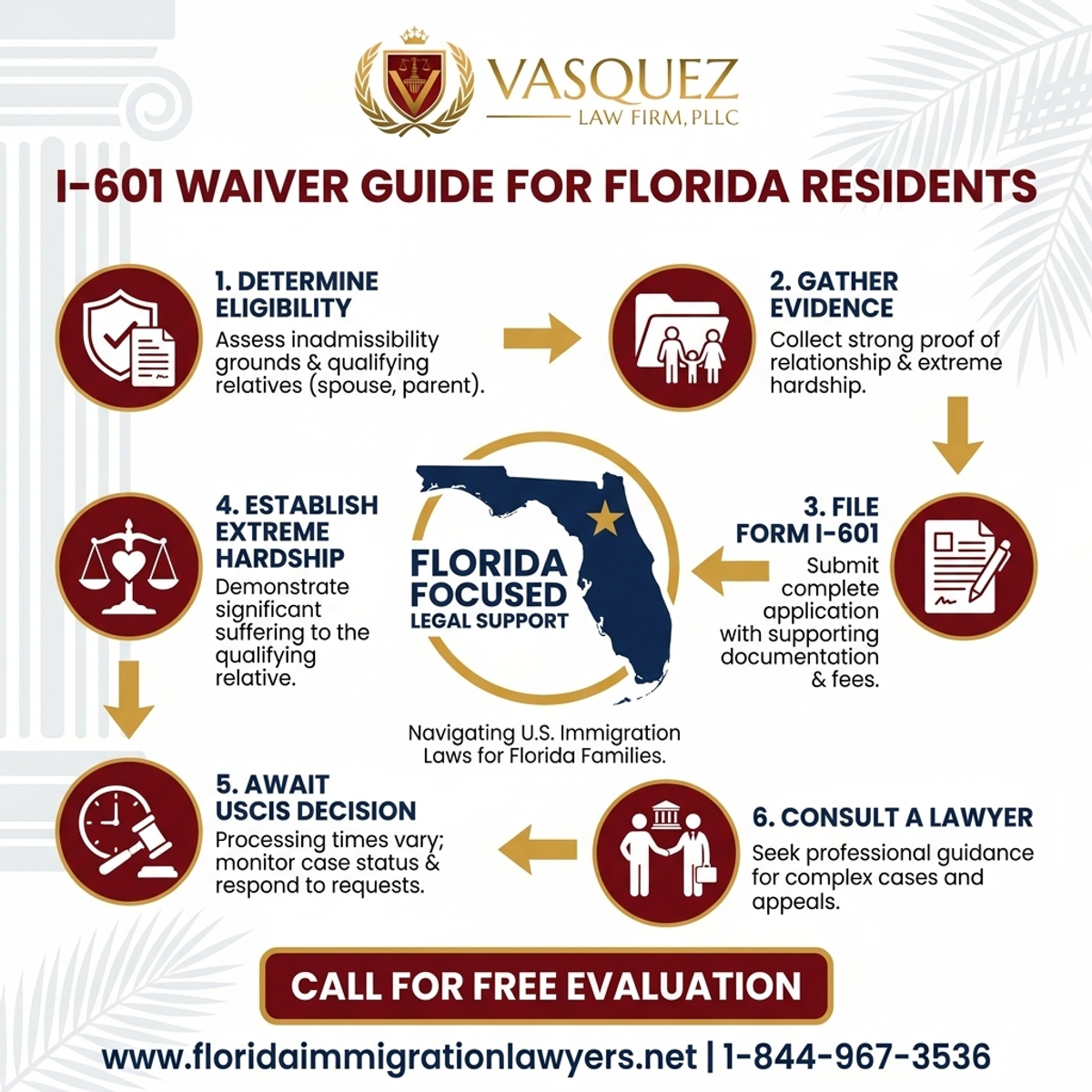
Step-by-Step Process — I-601 Waiver Guide for Florida Residents
Document Checklist for I-601 Waiver
- Proof of relationship to U.S. citizen or lawful permanent resident
- Evidence of extreme hardship (medical records, financial documents)
- Completed Form I-601
- Supporting affidavits and letters
- Any additional evidence specific to the grounds of inadmissibility
Processing Timeline and Expectations
The processing time for an I-601 waiver can vary, typically ranging from several months to over a year. Factors influencing the timeline include the complexity of your case, the evidence provided, and current USCIS processing times. Applicants in Florida should be prepared for potential delays, especially if additional evidence is requested or if an interview is required at the Miami Field Office. Staying informed about your application status through the USCIS online portal is advisable.
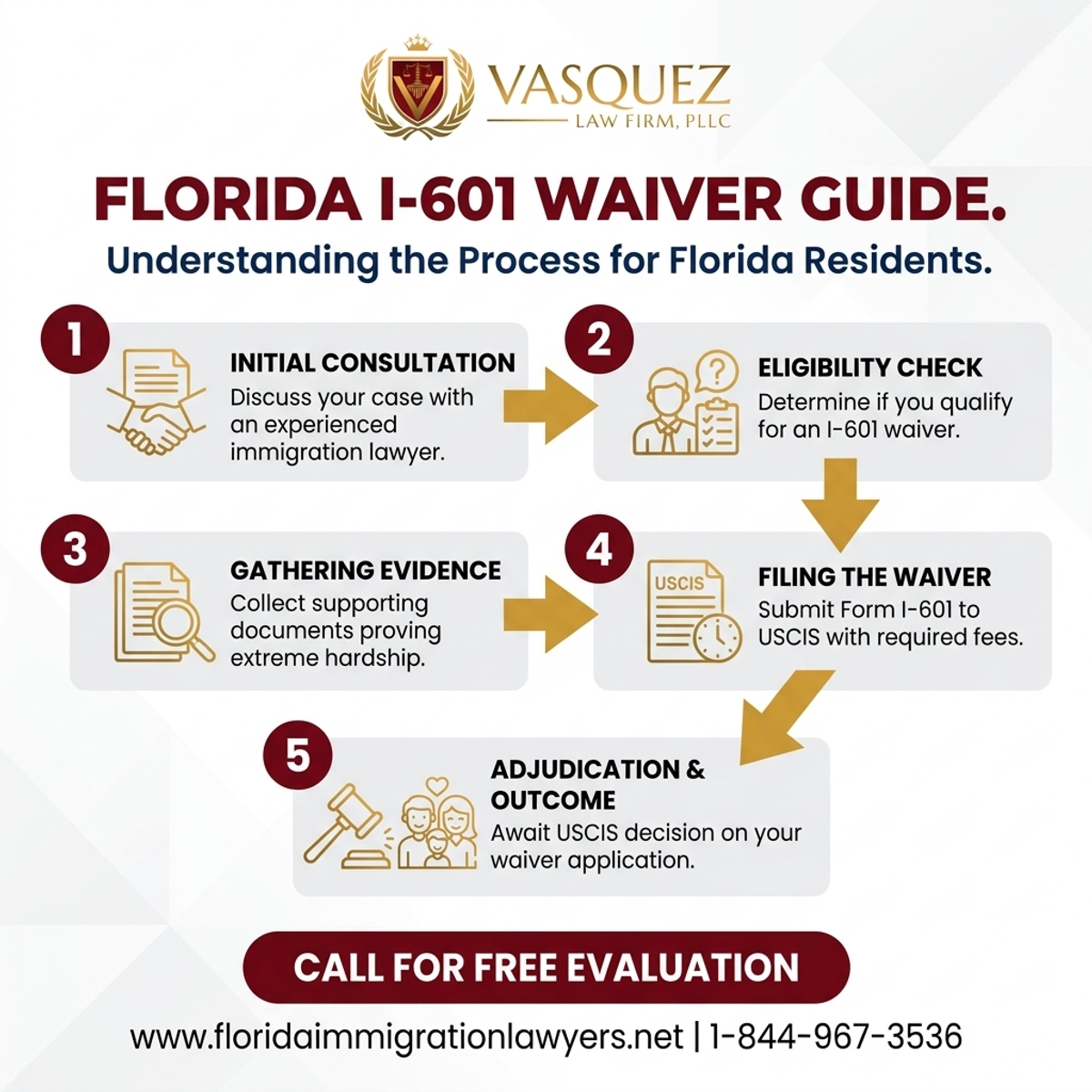
Key Statistics — I-601 Waiver Guide for Florida Residents
Cost Factors and Fee Breakdown
While specific fees for the I-601 waiver application can change, applicants should expect costs related to filing fees, document preparation, and potentially legal assistance. The investment in professional guidance can be invaluable in navigating the complexities of the waiver process. Be aware that fee waivers are not available for I-601 applications, making it essential to plan financially for these expenses.
Do not navigate this process alone. Contact Florida Immigration Lawyers today.
Common Mistakes to Avoid
- Submitting incomplete applications, resulting in delays or denials.
- Failing to provide sufficient evidence of extreme hardship.
- Not clearly articulating the impact on the qualifying relative.
- Ignoring deadlines for additional evidence requests.
- Overlooking the need for legal guidance.
- Submitting outdated forms or incorrect fees.
- Failing to update USCIS on changes in circumstances.
- Assuming automatic approval without strong documentation.
- Misunderstanding the grounds of inadmissibility.
- Neglecting to seek professional advice when needed.
When to Call a Lawyer
If you're facing inadmissibility issues, particularly in complex cases involving criminal history or multiple grounds, consulting with an immigration lawyer is crucial. Legal professionals can provide tailored advice, help gather necessary documentation, and represent you in interactions with USCIS. Florida Immigration Lawyers offer comprehensive services to assist residents in Tallahassee and throughout Florida. Contact us for expert guidance and a free consultation to discuss your specific situation.
About Florida Immigration Lawyers
Florida Immigration Lawyers is dedicated to serving the diverse communities across Florida, including Tallahassee. Our experienced team provides a wide range of immigration services, from family immigration to deportation defense. With a deep understanding of Florida's demographics and a commitment to personalized service, we are here to support you 24/7. Contact us at 1-844-967-3536 or visit our website for a free consultation. Se habla español.
Sources and References
- U.S. Citizenship and Immigration Services (USCIS)
- Executive Office for Immigration Review (EOIR)
- 8 U.S.C. Chapter 12 - Immigration and Nationality Act
- U.S. Department of State
Related services: immigration practice areas, family immigration services, citizenship and naturalization.
This article provides general legal information and is not intended as legal advice. Every case is unique, and outcomes depend on specific facts and circumstances. Contact an attorney for advice about your particular situation.
For compassionate and personalized immigration assistance, contact Florida Immigration Lawyers at 1-844-967-3536 for a free consultation. Se Habla Español - Estamos aquí para ayudarle.
If you need legal assistance, learn more about learn about our immigration practice, or call us at 1-844-967-3536 for a free consultation.
Do Not Navigate This Process Alone
Our experienced immigration attorneys are ready to fight for you. Get a free, confidential consultation today.
Se Habla Español
Frequently Asked Questions
Florida Immigration Lawyers
Immigration Attorney | Founder, Vasquez Law Firm
U.S. Air Force veteran and immigration attorney with thousands of cases resolved. J.D., NCCU School of Law. AILA member. Admitted to the 4th, 5th, and 11th Circuit Courts.
Available 24/7 - Free Evaluations
Related Legal Services
Our Florida immigration attorneys can help you with deportation defense, citizenship and naturalization and family immigration services. Call today at 1-844-967-3536 for a free consultation.
Related Links
Related Topics
Free Legal Consultation
Discuss your case with our experienced attorneys. We're available 24/7.
Se Habla Español - Estamos aquí para ayudarle.
Related Articles
Dual Citizenship in Florida: A Comprehensive Guide
Dual citizenship in Florida offers the ability to hold two passports and enjoy the benefits of both nations. Learn about eligibility, the naturalization process, and more. Contact Florida Immigration Lawyers for expert guidance.
Immigration Lawyer in Tampa Bay Area | VLF Florida
Navigating immigration law in Tampa Bay can be complex. Discover how an immigration lawyer can assist you with visa applications, deportation defense, and more. Call Florida Immigration Lawyers at 1-844-967-3536 for a free consultation.
Citizenship Test Preparation Florida: Your 2026 Guide
Achieving U.S. citizenship through naturalization is a significant milestone, and mastering the citizenship test is a crucial step. This comprehensive guide from Florida Immigration Lawyers provides essential insights for those preparing in Florida for 2026. Learn about eligibility requirements, the step-by-step application process, and detailed strategies for acing the civics and English tests. We cover everything from N-400 preparation and document checklists to understanding processing timelines and cost factors. Discover common mistakes to avoid and when to seek professional legal assistance to ensure a smooth journey to becoming a U.S. citizen. Our firm offers free consultations and serves clients throughout Florida, including Hollywood, Miami, and Orlando.
Immigration Services Jacksonville Florida: Expert Legal Help
Discover comprehensive immigration services in Jacksonville, Florida. This guide covers everything from visa applications and green card processes to naturalization and deportation defense. Learn about common pitfalls to avoid, understand timelines, and explore cost factors. Florida Immigration Lawyers offers expert legal assistance to navigate the complex U.S. immigration system, providing personalized support for individuals and families across Florida. Contact us for a free consultation and let our dedicated team help you achieve your immigration goals with confidence.