Dual Citizenship in Florida: A Comprehensive Guide
Dual citizenship in Florida offers the ability to hold two passports and enjoy the benefits of both nations. Learn about eligibility, the naturalization process, and more. Contact Florida Immigration Lawyers for expert guidance.

Dual Citizenship in Florida: A Comprehensive Guide
Florida, a vibrant melting pot of cultures and a gateway to the Americas, attracts individuals from all corners of the globe. For many, the dream of calling Florida home while maintaining ties to their country of origin leads to an interest in dual citizenship. This comprehensive guide will demystify the process, benefits, and challenges of holding dual nationality in the Sunshine State, helping you navigate this complex legal landscape.
What is Dual Citizenship?
Dual citizenship, also known as dual nationality, is a legal status in which an individual is a citizen of two countries simultaneously. This means you hold the rights, responsibilities, and protections of both nations. While some countries strictly prohibit dual nationality, the United States generally permits it. This flexibility allows many foreign nationals living in Florida to pursue U.S. citizenship without necessarily renouncing their original nationality.
Understanding the nuances of dual citizenship is crucial. It's not merely about having two passports; it involves a deeper legal recognition by both nations. This status can arise in several ways: by birth (e.g., born in the U.S. to foreign parents, or born abroad to U.S. parents), by marriage, or through the naturalization process. For those seeking to become U.S. citizens while residing in Florida, naturalization is the most common path. It’s important to research the laws of your home country, as some nations may automatically revoke your original citizenship upon acquiring another, while others are more permissive. The concept allows for greater global mobility and deeper connections to heritage, but it also entails understanding the legal frameworks of both nations to ensure compliance and maximize benefits.
Benefits of Dual Citizenship
The advantages of dual citizenship are numerous and can significantly enhance an individual's personal and professional life. These benefits extend beyond simple convenience, offering a robust framework of opportunities and security.
- Increased Travel Flexibility: Holding two passports can simplify international travel, often eliminating the need for visas to enter either country and potentially streamlining customs processes. This is particularly beneficial for those with family or business interests in both nations, allowing for seamless movement across borders without the bureaucratic hurdles often faced by single-nationality travelers.
- Expanded Economic Opportunities: Dual citizens often have the right to live, work, and own property in both countries without the need for work permits or special visas. This opens doors to broader job markets, investment opportunities, and business ventures, especially in a globalized economy. For entrepreneurs and professionals, this can mean access to new markets and talent pools.
- Enhanced Political and Social Rights: As a citizen of two nations, you gain the right to vote, hold public office (subject to specific country laws), and access social services (like healthcare and education) in both countries. This deepens your connection and participation in the civic life of both societies, allowing you to contribute and benefit more fully.
- Family Reunification: Dual nationality can make it easier to sponsor family members for immigration to either country, facilitating family reunification and maintaining strong familial ties across borders. It provides a legal bridge for families separated by geography.
- Cultural Connection: For many, dual citizenship is a way to formally acknowledge and maintain a deep connection to their heritage and culture, ensuring that future generations can also benefit from this dual identity. It allows individuals to embrace both aspects of their background without having to choose one over the other.
- Greater Security: In times of political instability or natural disaster, having citizenship in two countries can offer an invaluable safety net, providing options for relocation and protection. It offers a sense of security knowing you have a fallback option should circumstances in one country become unfavorable.
These benefits underscore why so many individuals in Florida and across the U.S. pursue dual nationality, seeking to maximize their global mobility and opportunities. The strategic advantages it offers in a rapidly interconnected world are increasingly recognized and valued.
Eligibility Requirements for Dual Citizenship in the U.S.
While the U.S. permits dual citizenship, the path to achieving it primarily involves meeting the stringent requirements for U.S. naturalization. Understanding these criteria is the first step for any foreign national in Florida hoping to secure a second passport.
General Naturalization Requirements:
- Age: You must be at least 18 years old at the time of filing Form N-400, Application for Naturalization.
- Continuous Residency: You must have been a lawful permanent resident (Green Card holder) for at least five years, or three years if you are married to a U.S. citizen. During this period, you must have maintained continuous residence in the U.S. Brief trips abroad are generally permissible, but extended absences can break the continuity of residence.
- Physical Presence: You must have been physically present in the U.S. for at least half of your continuous residency period (e.g., 30 months out of 5 years). This ensures a substantial connection to the country.
- Residency in State/USCIS District: You must have lived in the state or USCIS district where you file your application for at least three months. For Florida residents, this means demonstrating your domicile within the state, often through utility bills, leases, or state IDs.
- Good Moral Character: This is a broad requirement that assesses your adherence to U.S. laws. Factors like criminal history, tax compliance, and honesty are considered. Any arrests, convictions, or even certain minor offenses can impact this assessment, requiring careful legal review.
- English Language Proficiency: You must demonstrate the ability to read, write, and speak basic English. Exceptions apply for certain age and residency combinations (e.g., those over 50 with 20 years of permanent residency, or over 55 with 15 years).
- Knowledge of U.S. History and Government (Civics): You must pass a civics test demonstrating your understanding of U.S. history and government principles. USCIS provides study materials to help applicants prepare for this test.
- Allegiance to the U.S. Constitution: You must be willing to take an Oath of Allegiance to the United States, affirming your commitment to the country and its laws.
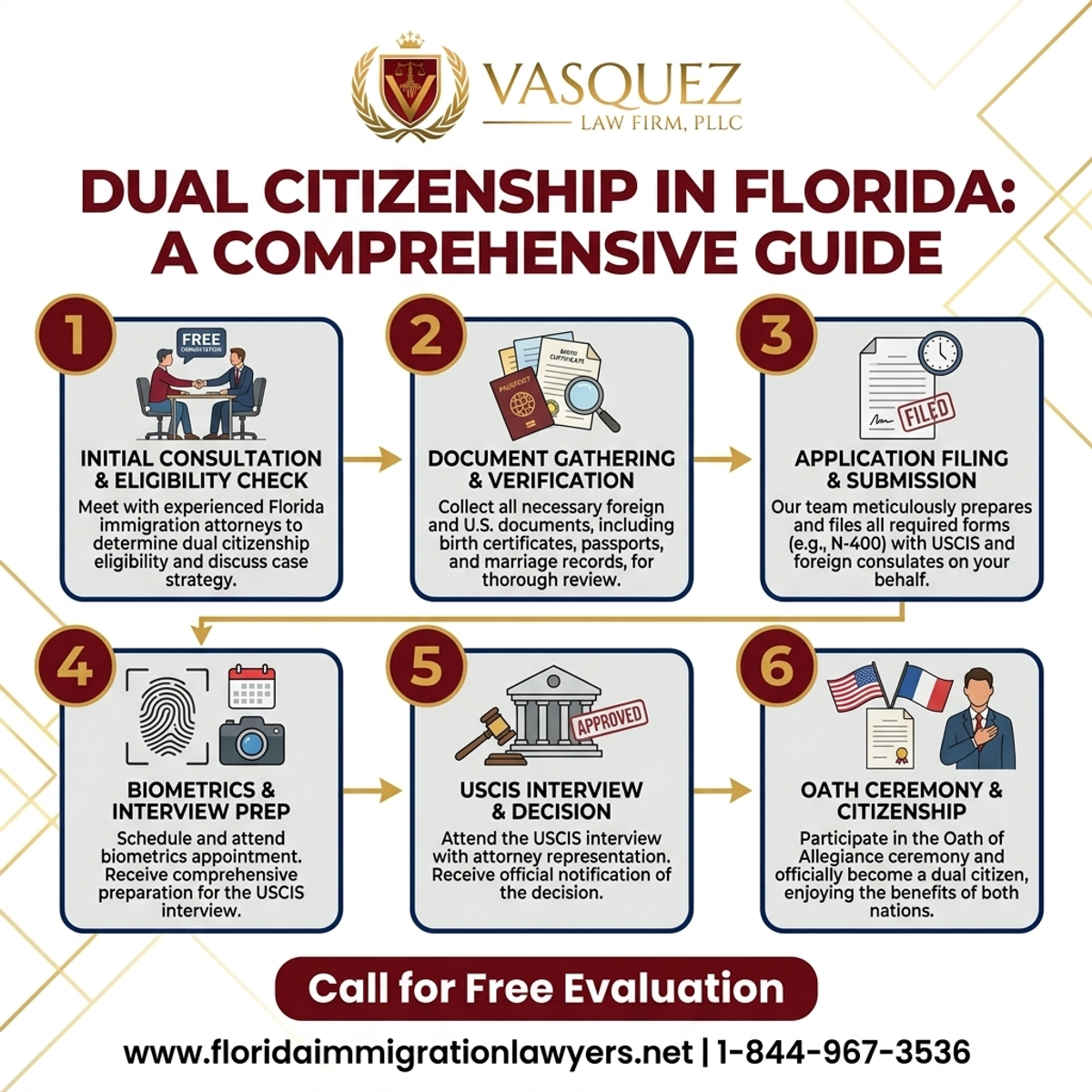
Step-by-Step Process — Dual Citizenship in Florida: A Comprehensive Guide
It's crucial to remember that while the U.S. allows dual citizenship, your country of origin may not. Before embarking on the naturalization process, thoroughly research your home country's laws regarding dual nationality. Some countries automatically revoke citizenship upon naturalization in another country, while others require a formal renunciation. Consulting with an immigration attorney can help clarify these complex international legal interactions. For more detailed information on various immigration pathways and requirements, consider visiting our dedicated page on immigration law.
The Application Process for U.S. Naturalization
The journey to U.S. citizenship, and potentially dual citizenship, involves a structured application process with the U.S. Citizenship and Immigration Services (USCIS). Navigating this process effectively requires careful attention to detail and adherence to all requirements.
- Determine Eligibility: Review all naturalization requirements to ensure you qualify. This initial assessment can save significant time and resources if you identify any potential roadblocks early on.
- Prepare Form N-400: Complete the Application for Naturalization accurately and thoroughly. Gather all necessary supporting documents, including your Green Card, marriage certificates (if applicable), tax records, and travel history. Any missing or incorrect information can lead to delays or denials.
- Submit Application and Fees: File your Form N-400 with USCIS along with the required filing fee and biometric services fee. These fees are non-refundable, so ensuring your application is complete before submission is paramount.
- Biometrics Appointment: You will receive an appointment notice to provide your fingerprints, photograph, and signature at a local Application Support Center (ASC). This data is used for background checks and identity verification.
- Interview: A USCIS officer will interview you to verify the information on your N-400, test your English proficiency, and assess your knowledge of U.S. civics. They will also evaluate your good moral character. This is a critical stage where your eligibility and honesty are directly assessed.
- Decision and Oath Ceremony: If your application is approved, you will be invited to an Oath of Allegiance ceremony, where you will formally become a U.S. citizen. It is at this point that your dual citizenship status is solidified, assuming your home country permits it. You will receive your Certificate of Naturalization, which is proof of your U.S. citizenship.
Throughout this process, maintaining meticulous records and responding promptly to USCIS requests is vital. Any discrepancies or delays can prolong the process or even lead to denial. Seeking professional guidance from an experienced immigration lawyer can significantly streamline this journey and mitigate potential issues, ensuring all steps are followed correctly and efficiently.
Navigating Complexities: Specific Scenarios and Legal Support
While the general path to dual citizenship through U.S. naturalization is clear, various specific scenarios can introduce layers of complexity. Understanding these nuances is crucial for a smooth process and to avoid unforeseen legal challenges. For instance, individuals who have faced past legal issues, even minor ones, may find their "good moral character" questioned, necessitating robust legal arguments. Furthermore, certain countries have specific treaties or agreements with the U.S. that can affect dual nationality, while others may have strict rules against it, potentially requiring a formal renunciation of one's original citizenship—a decision with profound implications.
One common area of complexity arises for individuals who may have entered the U.S. under unique circumstances or have had their status challenged. For example, those who initially sought asylum or protection in the U.S. may have a more intricate path to naturalization, as their original nationality status might be intertwined with their protected status. Similarly, individuals who have faced deportation defense proceedings in the past will require expert legal counsel to ensure their naturalization application addresses any previous immigration enforcement issues transparently and effectively. These situations demand a nuanced understanding of both U.S. immigration law and international legal principles, as well as a strategic approach to presenting one's case to USCIS.
Another critical consideration involves the potential for conflicting obligations. Dual citizens may face situations where the laws of their two countries diverge, particularly concerning military service, taxation, or political allegiances. While the U.S. generally prioritizes its own laws for its citizens, understanding potential conflicts with your other nationality is essential. For example, some countries impose military service obligations on their citizens regardless of where they reside. Similarly, tax obligations can become complex, requiring careful planning to avoid double taxation or non-compliance. Consulting with legal professionals specializing in international law and taxation is highly recommended to proactively manage these potential conflicts and ensure full compliance with both jurisdictions.
The importance of legal support cannot be overstated in these complex scenarios. An experienced immigration attorney can provide invaluable assistance by:
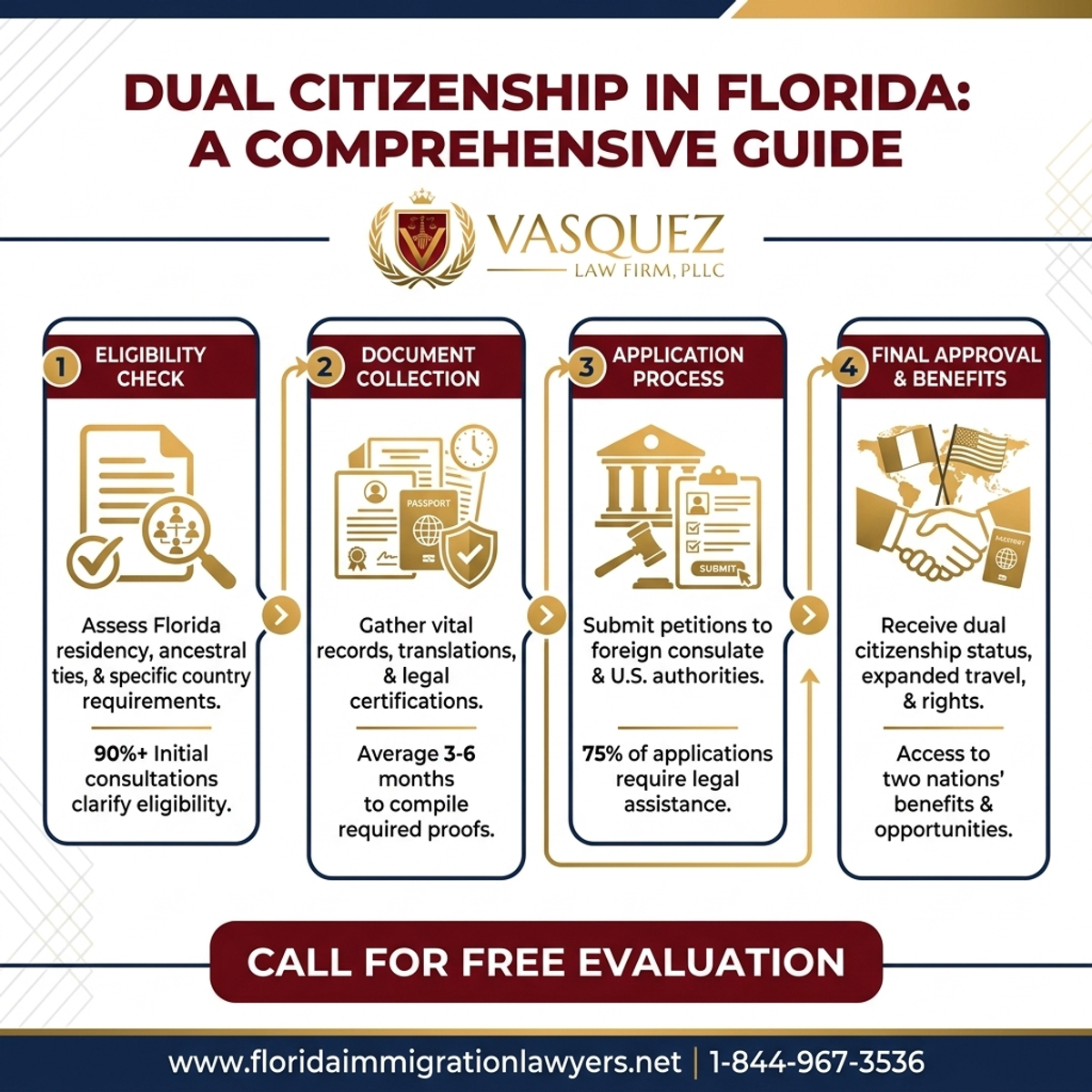
Key Statistics — Dual Citizenship in Florida: A Comprehensive Guide
- Assessing Eligibility: Thoroughly reviewing your unique circumstances, including immigration history, criminal record, and ties to your home country, to identify potential hurdles and devise strategies to overcome them.
- Preparing Documentation: Ensuring all forms are correctly filled out and all supporting documents are meticulously organized and submitted, minimizing the risk of RFEs (Requests for Evidence) or denials.
- Representing You: Advocating on your behalf during interviews and responding to Requests for Evidence (RFEs) from USCIS, ensuring your case is presented clearly and compellingly.
- Advising on International Law: Helping you understand the implications of dual citizenship with your home country and navigate any potential conflicts, providing a holistic view of your legal standing.
Engaging with a qualified legal team is not just about filling out forms; it's about strategizing your path to dual citizenship, mitigating risks, and ensuring long-term compliance with the laws of both nations. Our team of experienced attorneys is well-versed in these intricate matters and can guide you through every step.
Common Challenges and Misconceptions
Despite its many benefits, dual citizenship comes with its own set of challenges and is often surrounded by misconceptions. Being aware of these can help prospective dual citizens in Florida prepare adequately.
- Tax Obligations: U.S. citizens, regardless of where they live, are subject to U.S. income tax on their worldwide income. This means dual citizens must comply with tax laws in both countries, potentially requiring careful planning to avoid double taxation. The Foreign Account Tax Compliance Act (FATCA) further complicates matters for U.S. citizens with foreign financial accounts, necessitating careful financial planning.
- Military Service: Some countries require military service from their citizens, even if they hold another nationality. Dual citizens may face obligations from their country of origin that could conflict with their U.S. citizenship, requiring a clear understanding of both nations' laws.
- Political Allegiance: While the U.S. permits dual citizenship, it expects its citizens to prioritize U.S. allegiance. In times of conflict or political tension between the two nations, dual citizens may face scrutiny or difficult choices regarding their loyalties.
- Renunciation vs. Retention: A common misconception is that acquiring U.S. citizenship automatically requires renouncing your previous citizenship. While the Oath of Allegiance includes a phrase about renouncing foreign allegiances, the U.S. generally does not enforce this unless there is clear intent to abandon U.S. citizenship. However, your country of origin's laws are paramount here, and some countries do mandate renunciation.
- Passport Usage: U.S. law generally requires U.S. citizens to enter and exit the United States using a U.S. passport. Using your other passport for U.S. travel can lead to issues at the border, so it's essential to understand and follow this rule.
- Evolving Laws: Immigration and nationality laws are subject to change, both in the U.S. and abroad. Staying informed about these changes is crucial for maintaining dual citizenship status and ensuring ongoing compliance.
Addressing these
Sources and References
- U.S. Citizenship and Immigration Services (USCIS)
- Executive Office for Immigration Review (EOIR)
- U.S. Department of State - Bureau of Consular Affairs
- Immigration and Nationality Act (INA), 8 U.S.C. Chapter 12
Do Not Navigate This Process Alone
Our experienced immigration attorneys are ready to fight for you. Get a free, confidential consultation today.
Se Habla Español
Frequently Asked Questions
Florida Immigration Lawyers
Immigration Attorney | Founder, Vasquez Law Firm
U.S. Air Force veteran and immigration attorney with thousands of cases resolved. J.D., NCCU School of Law. AILA member. Admitted to the 4th, 5th, and 11th Circuit Courts.
Available 24/7 - Free Evaluations
Related Legal Services
Our Florida immigration attorneys can help you with business immigration, asylum protection and deportation defense. Call today at 1-844-967-3536 for a free consultation.
Related Links
Related Topics
Free Legal Consultation
Discuss your case with our experienced attorneys. We're available 24/7.
Se Habla Español - Estamos aquí para ayudarle.
Related Articles
Immigration Lawyer in Tampa Bay Area | VLF Florida
Navigating immigration law in Tampa Bay can be complex. Discover how an immigration lawyer can assist you with visa applications, deportation defense, and more. Call Florida Immigration Lawyers at 1-844-967-3536 for a free consultation.
Citizenship Test Preparation Florida: Your 2026 Guide
Achieving U.S. citizenship through naturalization is a significant milestone, and mastering the citizenship test is a crucial step. This comprehensive guide from Florida Immigration Lawyers provides essential insights for those preparing in Florida for 2026. Learn about eligibility requirements, the step-by-step application process, and detailed strategies for acing the civics and English tests. We cover everything from N-400 preparation and document checklists to understanding processing timelines and cost factors. Discover common mistakes to avoid and when to seek professional legal assistance to ensure a smooth journey to becoming a U.S. citizen. Our firm offers free consultations and serves clients throughout Florida, including Hollywood, Miami, and Orlando.
Immigration Services Jacksonville Florida: Expert Legal Help
Discover comprehensive immigration services in Jacksonville, Florida. This guide covers everything from visa applications and green card processes to naturalization and deportation defense. Learn about common pitfalls to avoid, understand timelines, and explore cost factors. Florida Immigration Lawyers offers expert legal assistance to navigate the complex U.S. immigration system, providing personalized support for individuals and families across Florida. Contact us for a free consultation and let our dedicated team help you achieve your immigration goals with confidence.
I-360 Widow Self-Petition in Florida: Your Path to a Green Card
For non-citizen widows and widowers of U.S. citizens in Florida, the I-360 self-petition offers a crucial path to permanent residency. This guide from Florida Immigration Lawyers details eligibility requirements, the step-by-step application process, essential documentation, and processing timelines. We cover common pitfalls to avoid, the costs involved, and when professional legal assistance is indispensable. Understanding this complex immigration avenue is key to securing your future in the U.S. after such a profound loss. Our firm provides compassionate, expert guidance to ensure your petition is strong and compliant with all USCIS regulations. Learn how to navigate your I-360 widow self-petition effectively.
