Find USCIS Office Locations in Florida | VLF Florida
Discover USCIS field office locations in Tampa, Florida, and learn how to schedule appointments. Contact Florida Immigration Lawyers for expert assistance and ensure a smooth immigration process.

USCIS field offices in Florida are pivotal for immigrants needing services like interviews, biometric appointments, and citizenship ceremonies. Key locations include Tampa, Miami, and Orlando. Before visiting, ensure you have a scheduled appointment. Florida Immigration Lawyers can guide you through the process.
- Key USCIS offices: Tampa, Miami, Orlando
- Services: interviews, biometrics, ceremonies
- Appointments required
- Contact Florida Immigration Lawyers for assistance
Introduction
Imagine preparing for a significant step in your immigration journey, such as a green card interview or a citizenship ceremony. Knowing where to go and what to expect at a USCIS field office can ease the process.
This article covers the key USCIS field office locations in Florida, focusing on Tampa, and provides guidance on services offered at these offices, how to schedule appointments, and what documents you'll need.
Call Florida Immigration Lawyers at 1-844-967-3536 for a free consultation to ensure your experience is seamless and stress-free.
Florida, with its vibrant multicultural communities and status as a major gateway to the U.S., sees a high volume of immigration applications. Consequently, its USCIS field offices play a crucial role in the lives of countless individuals and families seeking to establish roots or gain citizenship. Understanding the intricate workings of these offices is not just about logistics; it's about navigating a path that can profoundly impact your future.
From the initial filing of an application to the joyous culmination of a naturalization ceremony, each interaction with USCIS requires careful preparation and adherence to specific protocols. This comprehensive guide aims to demystify the process, offering insights into each stage and highlighting how expert legal assistance from Florida Immigration Lawyers can be invaluable.
Overview of USCIS Field Offices in Florida
USCIS field offices in Florida handle various immigration services, including interviews for green cards and naturalization. Florida's diverse population makes these offices vital for processing numerous applications daily.
In Tampa, the local field office is a hub for immigrants from surrounding areas. The office provides essential services such as biometric appointments, naturalization ceremonies, and interviews.
Understanding the role of USCIS offices helps you better prepare for your visit and ensures you bring all necessary documentation to your appointment.
Florida is home to several critical USCIS field offices, strategically located to serve the state's large and diverse immigrant population. The primary offices are found in Tampa, Miami, and Orlando, each serving a distinct geographical region and processing a wide array of immigration petitions. These offices are not merely administrative centers; they are places where life-changing decisions are made and where immigrants take monumental steps toward their American dream.
The Miami Field Office, for instance, is one of the busiest in the nation, reflecting South Florida's status as a major immigrant destination. It handles a vast volume of family-based petitions, asylum claims, and naturalization applications, serving communities from Miami-Dade, Broward, and Palm Beach counties. Similarly, the Orlando Field Office caters to the central Florida region, a rapidly growing area with a significant number of new arrivals and long-term residents seeking immigration benefits. Each office operates under national USCIS guidelines but also adapts to local needs and demands.
Beyond interviews and ceremonies, these offices also facilitate InfoPass appointments for urgent inquiries (though largely replaced by online tools and phone services), provide information on case statuses, and sometimes host community outreach events. It's crucial to remember that while the services are consistent nationwide, the specific procedures and wait times can vary slightly from one field office to another. Always verify the specific requirements and operational hours of the office you intend to visit. Consulting with Florida Immigration Lawyers can provide you with up-to-date, localized information for your specific case.
Step-by-Step Guide to Scheduling an Appointment
Scheduling an appointment at a USCIS field office is a crucial step in the immigration process. Follow these steps to secure your appointment:
- Check Eligibility: Determine the specific service you require, such as an interview or biometric appointment.
- Visit the USCIS Website: Use the USCIS official website to find the service center nearest you.
- Submit a Request: Use the online tools or contact USCIS to schedule your appointment.
- Receive Confirmation: Confirm your appointment details via email or mail.
- Prepare Documents: Gather all necessary documents, such as identification and appointment notices.
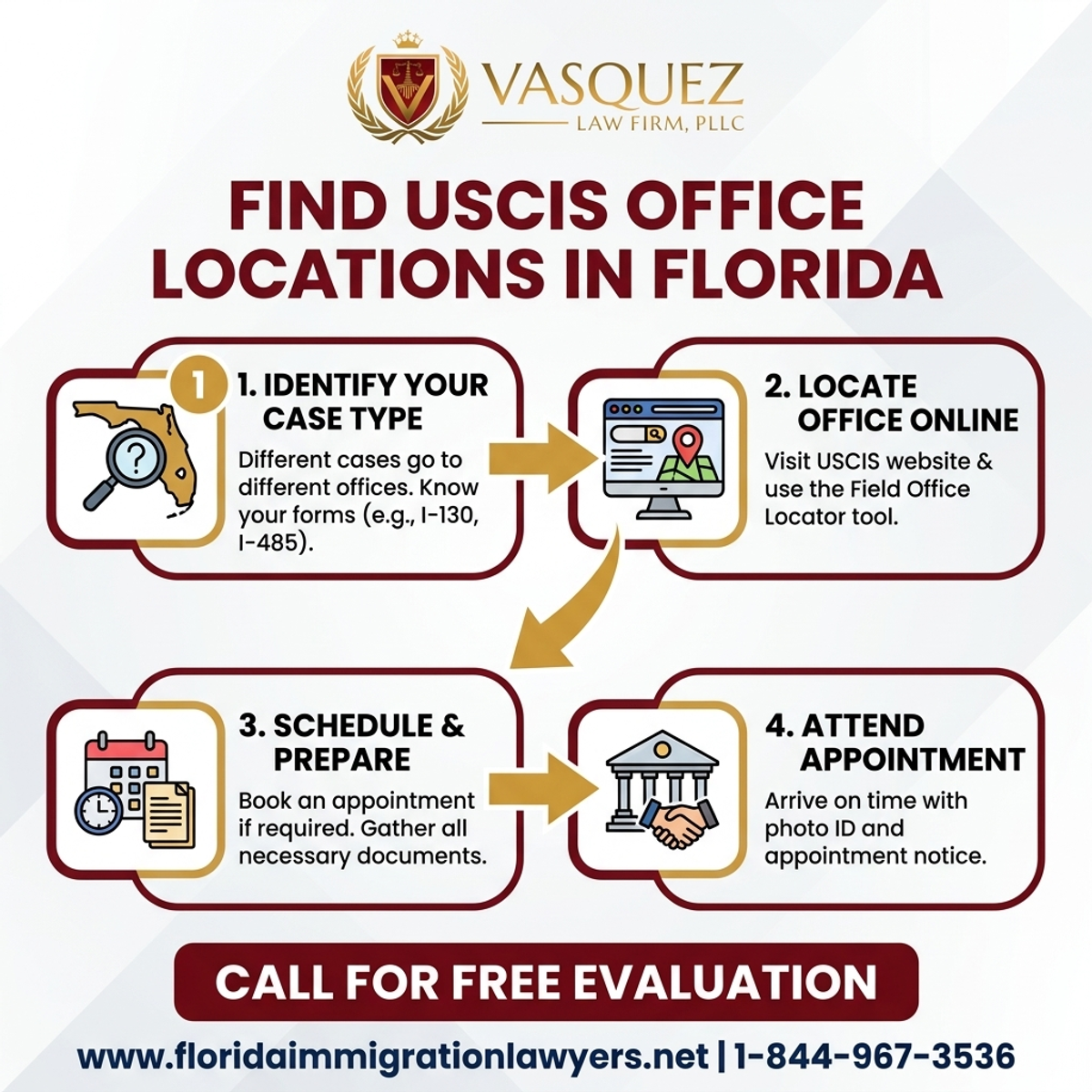
Step-by-Step Process — Find USCIS Office Locations in Florida
The process of scheduling an appointment often begins after you have submitted an application or petition to USCIS. For instance, after filing Form I-485 (Application to Register Permanent Residence or Adjust Status) or Form N-400 (Application for Naturalization), you will typically receive a notice for a biometrics appointment. This appointment is mandatory for identity verification and background checks. For interviews, USCIS will send a separate interview notice, detailing the date, time, and location, along with a list of required documents.
While most appointments are scheduled directly by USCIS and mailed to you, there are instances where you might need to proactively request assistance or an InfoPass appointment for urgent matters. Although the traditional InfoPass system has been largely phased out, you can still contact the USCIS Contact Center at 1-800-375-5283 for case-specific inquiries or to request an emergency appointment if you have an urgent, unanticipated need, such as travel authorization for a medical emergency. Always have your Alien Registration Number (A-Number) and receipt number ready when contacting USCIS.
When you receive your appointment notice, review it immediately and thoroughly. It will contain critical information, including the date, time, and specific address of the field office. Pay close attention to any instructions regarding what to bring or what to expect. Missing an appointment or arriving unprepared can lead to significant delays in your case. If you have any doubts or need assistance understanding your notice, don't hesitate to reach out to Florida Immigration Lawyers at 1-844-967-3536 for clarification and guidance.
Document Checklist for Your Appointment
Having the right documents is crucial for a successful visit to a USCIS field office. Here's a checklist to help you prepare:
- Appointment confirmation notice
- Government-issued identification (e.g., passport, driver's license)
- Immigration documents (e.g., green card, visa)
- Proof of address
- Any additional documents requested by USCIS
Thorough preparation of your documents is paramount. Beyond the basic identification, you should always bring the originals of all documents you submitted as copies with your initial application. This includes birth certificates, marriage certificates, divorce decrees, police clearance certificates, and any evidence supporting your petition, such as financial records, employment letters, or photographs for family-based cases. USCIS officers often need to verify original documents against the copies provided.
For interviews, it's wise to organize your documents in a clear, accessible manner, perhaps in a binder with tabs for different categories. This not only makes a good impression but also allows you to quickly retrieve specific documents when requested by the officer. If any of your documents are not in English, you must provide certified English translations along with copies of the original documents. A certified translation includes a statement from the translator affirming their competence and the accuracy of the translation.
Consider making copies of everything you bring, including your appointment notice, and keeping them in a separate folder. This backup can be invaluable if anything is misplaced. For example, a family-based green card applicant might need to bring their marriage certificate, spouse's birth certificate, joint financial statements, and photos to demonstrate a bona fide marriage. A naturalization applicant would need their green card, tax transcripts, and evidence of continuous residence. When in doubt about specific documents, a consultation with Florida Immigration Lawyers can help you create a tailored checklist, ensuring you don't miss anything vital.
Timeline and Processing Expectations
Understanding the timeline for processing at USCIS offices can help manage expectations. Appointment wait times may vary based on location and service type.
Typically, biometric appointments are quicker, often scheduled within weeks. Interviews and naturalization ceremonies may take longer, potentially months, depending on case complexity and office capacity.
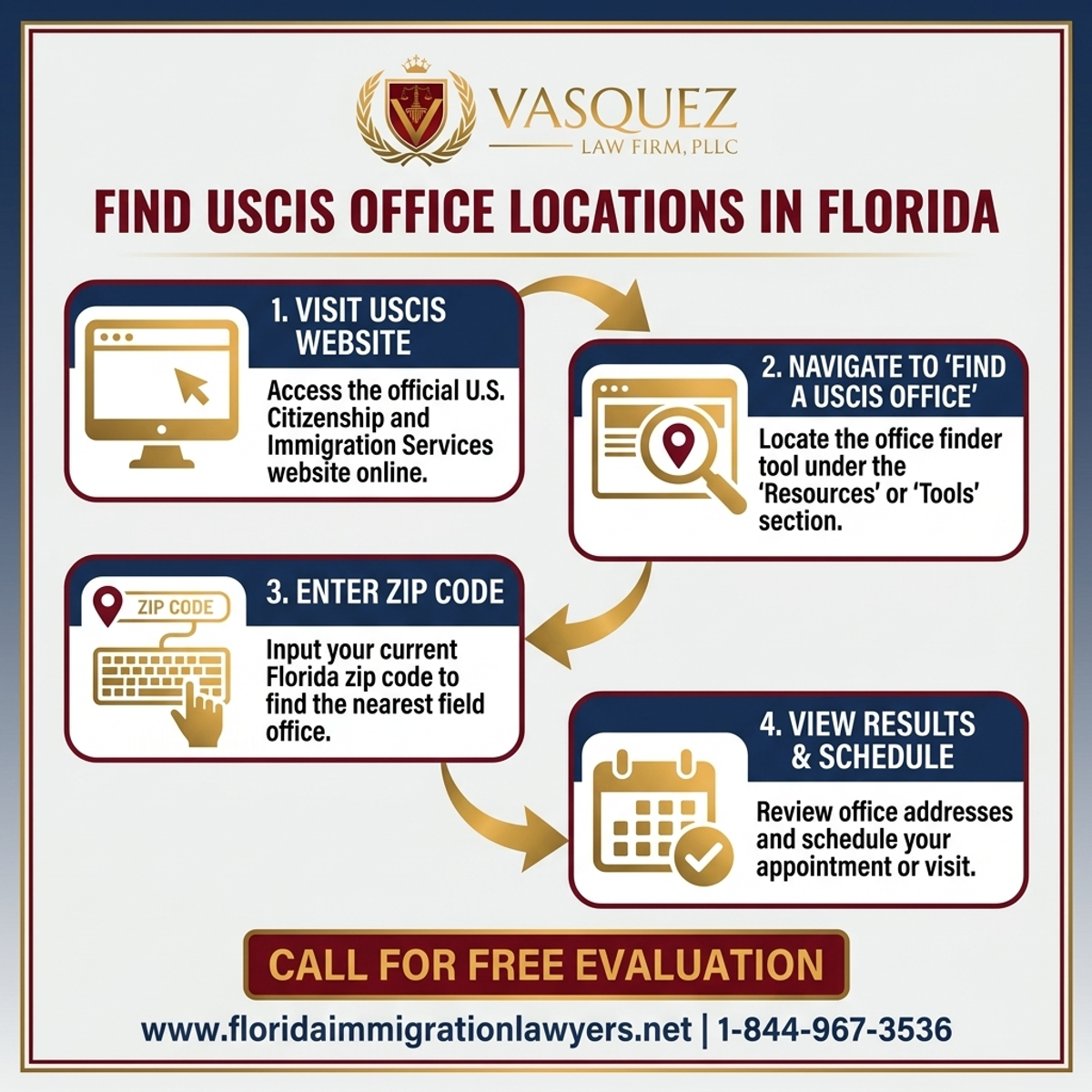
Key Statistics — Find USCIS Office Locations in Florida
For the latest processing times, consult the USCIS processing time tool.
Processing times can be a source of anxiety for many applicants, and it's important to understand that these times are estimates and can fluctuate significantly. Factors influencing these timelines include the specific type of application (e.g., family-based petitions generally take longer than employment-based ones), the volume of applications received by USCIS, staffing levels at service centers and field offices, and even changes in immigration policy. National processing times are often different from the specific times for your local field office, so it's crucial to check the tool for your particular jurisdiction.
After an interview, the wait for a decision can also vary. Some applicants receive a decision on the spot, while others may wait weeks or even months for a notice in the mail. If your case is taking significantly longer than the posted processing times, you may be able to submit an "outside normal processing time" service request through the USCIS website. However, before doing so, it's often beneficial to consult with an experienced immigration attorney. Florida Immigration Lawyers can assess your situation, determine if your case falls outside normal parameters, and advise on the most effective course of action, including making inquiries on your behalf.
For example, if you applied for naturalization (N-400) and the average processing time for the Orlando field office is 10-14 months, but your case has been pending for 18 months without an interview, that would be a clear indication to investigate further. Conversely, if your biometrics appointment for a green card application was scheduled within three weeks of filing, that's generally considered a swift and normal progression. Managing these expectations and knowing when to act is key to a less stressful immigration journey.
Cost Factors and Fee Breakdown
The costs associated with USCIS services depend on the type of application or service requested. While some services have set fees, others may vary based on individual circumstances.
Typical fees may include application processing, biometrics, and other administrative costs. Check the USCIS fee schedule to understand the costs involved in your specific case.
For personalized assistance, contact Florida Immigration Lawyers for a detailed breakdown and guidance on managing these expenses.
Immigration fees are a significant consideration for many applicants. For example, filing Form I-485 (Application to Register Permanent Residence or Adjust Status) can cost over $1,200, which often includes the biometrics fee. The Form N-400 (Application for Naturalization) also carries a substantial fee. These fees are subject to change, so always refer to the most current USCIS fee schedule on their official website before filing any application. It's important to budget for these costs, as application fees are generally non-refundable, even if your application is denied.
In certain situations, applicants may be eligible for a fee waiver. USCIS offers fee waivers for individuals who can demonstrate an inability to pay the filing fees. Eligibility for a fee waiver (Form I-912) is typically based on receiving a means-tested benefit, having an income at or below 150% of the Federal Poverty Guidelines, or experiencing financial hardship. Providing robust documentation to support your fee waiver request is critical, as denials can delay your application. Examples of supporting documents might include proof of unemployment benefits, Medicaid enrollment, or recent tax returns.
Navigating the fee structure and understanding fee waiver eligibility can be complex. Florida Immigration Lawyers can provide invaluable assistance in determining which fees apply to your case, calculating the total cost, and helping you prepare a strong fee waiver application if you qualify. Our team at 1-844-967-3536 is dedicated to ensuring you understand all financial aspects of your immigration process, preventing unexpected costs and ensuring your application is submitted correctly the first time.
Common Mistakes to Avoid
- Not Scheduling an Appointment: Walk-ins are generally not accepted. Always schedule an appointment.
- Bringing Incorrect Documents: Ensure you have all required documents to avoid rescheduling.
- Ignoring Appointment Notices: Carefully read and follow all instructions in your appointment notice.
- Missing Your Appointment: Missing an appointment can delay your process significantly.
- Not Checking Office Hours: Verify office hours as they may change due to holidays or special events.
- Overlooking Local Procedures: Each office may have specific procedures; ensure you're informed.
- Not Preparing for Interviews: Review potential questions and bring all supporting documents.
- Ignoring Health Protocols: Stay updated on any health guidelines, such as mask requirements.
Avoiding common pitfalls can save you significant time, stress, and potential setbacks in your immigration journey. For instance, regarding "Not Scheduling an Appointment," while InfoPass used to allow some flexibility, current USCIS policy is strict about pre-scheduled appointments. Arriving without one will almost certainly result in being turned away, wasting your time and potentially delaying urgent matters. Always use the online tools or contact the USCIS Contact Center to confirm if an appointment is necessary for your specific need.
The mistake of "Bringing Incorrect Documents" extends beyond just missing items. It also includes bringing un-translated documents, copies when originals are required, or expired identification. Imagine arriving for your naturalization interview only to realize your green card expired last week – this could lead to an immediate rescheduling or even a denial. Double-checking every item on your personalized checklist, ideally reviewed by an attorney, is a simple yet effective preventative measure. Florida Immigration Lawyers can help you compile a precise list of required documents for your specific appointment.
Furthermore, "Not Preparing for Interviews" can be particularly detrimental. An interview is your opportunity to clarify information, demonstrate your eligibility, and answer questions under oath. Failing to review your application, understand the nuances of immigration law related to your case, or practice answering common questions can lead to misunderstandings or misrepresentations. For example, not knowing the exact dates of your previous entries and exits from the U.S. can raise red flags. Seeking guidance from Florida Immigration Lawyers at 1-844-967-3536 for interview preparation can significantly boost your confidence and chances of success.
When to Call a Lawyer
Navigating the immigration process can be challenging. Here are scenarios when you should consider seeking legal assistance:
- Receiving a complex Request for Evidence (RFE)
- Facing potential deportation or removal proceedings
- Having a criminal history affecting your immigration status
- Experiencing delays beyond normal processing times
Florida Immigration Lawyers offer expertise in handling these issues, providing you with peace of mind and professional guidance.
The value of legal counsel in immigration matters cannot be overstated, especially when facing complex or adverse situations. Beyond the listed scenarios, you should also consider contacting a lawyer if you have previously been denied an immigration benefit, if your case involves intricate family relationships (e.g., step-children, adopted children, or
Sources and References
- U.S. Citizenship and Immigration Services (USCIS)
- Executive Office for Immigration Review (EOIR)
- U.S. Department of State - Bureau of Consular Affairs
- Immigration and Nationality Act (INA), 8 U.S.C. Chapter 12
Do Not Navigate This Process Alone
Our experienced immigration attorneys are ready to fight for you. Get a free, confidential consultation today.
Se Habla Español
Frequently Asked Questions
Florida Immigration Lawyers
Immigration Attorney | Founder, Vasquez Law Firm
U.S. Air Force veteran and immigration attorney with thousands of cases resolved. J.D., NCCU School of Law. AILA member. Admitted to the 4th, 5th, and 11th Circuit Courts.
Available 24/7 - Free Evaluations
Related Legal Services
Our Florida immigration attorneys can help you with family immigration services, immigration practice areas and free immigration consultation. Call today at 1-844-967-3536 for a free consultation.
Related Links
Related Topics
Free Legal Consultation
Discuss your case with our experienced attorneys. We're available 24/7.
Se Habla Español - Estamos aquí para ayudarle.
Related Articles
Military Naturalization: Expedited Path for Florida Service
For non-citizen service members in Florida, military naturalization offers an expedited path to U.S. citizenship, recognizing their dedication and sacrifice. This special process, governed by INA sections 328 and 329, waives many standard residency and fee requirements, allowing service members to apply while serving, even if deployed. Whether you are stationed at MacDill AFB, Naval Air Station Jacksonville, or living in Pembroke Pines, understanding these unique provisions is crucial. Our guide details eligibility, the N-400 military application process, required documents, and what to expect regarding timelines. Florida Immigration Lawyers provides expert legal assistance to ensure a smooth and successful journey to citizenship. Contact us today for a free consultation.
Child Status Protection Act (CSPA) & Aging Out Florida
The Child Status Protection Act (CSPA) is a vital U.S. immigration law designed to prevent children from "aging out" of green card eligibility due to long processing times. For families in Florida, understanding CSPA's complex age calculations and strict one-year deadlines is crucial to preserving a child's pathway to permanent residency. This guide from Florida Immigration Lawyers explains who qualifies, how CSPA age is calculated, the step-by-step application process, and common mistakes to avoid. We provide essential information for derivative beneficiaries in Naples, Fort Myers, and across Florida, ensuring families can navigate this critical immigration provision effectively. Don't risk your child's future; learn how CSPA can protect their eligibility and secure their place in the U.S.
I-601 Waiver Guide for Florida Immigrants | VLF Florida
The I-601 waiver is essential for overcoming inadmissibility in the U.S. Learn about the process, requirements, and how Florida Immigration Lawyers can help you. Call 1-844-967-3536 for a free consultation.
212(c) Waiver Legacy Relief Florida: Your Deportation Defense
The 212(c) waiver offers crucial legacy relief for certain lawful permanent residents in Florida facing deportation due to criminal convictions that occurred before April 1, 1996. This complex area of immigration law requires a deep understanding of historical statutes and court precedents, such as the landmark <em>INS v. St. Cyr</em> decision. Eligibility hinges on strict criteria, including the conviction date, lawful permanent residency status, and years of domicile in the U.S. Successfully navigating the application process and presenting a compelling case before an Immigration Judge demands expert legal counsel. Florida Immigration Lawyers specializes in these intricate deportation defense strategies, guiding clients through document collection, discretionary factors, and court appearances. If you're in Kissimmee or anywhere in Florida, contact us for a free consultation to assess your eligibility for this vital defense.