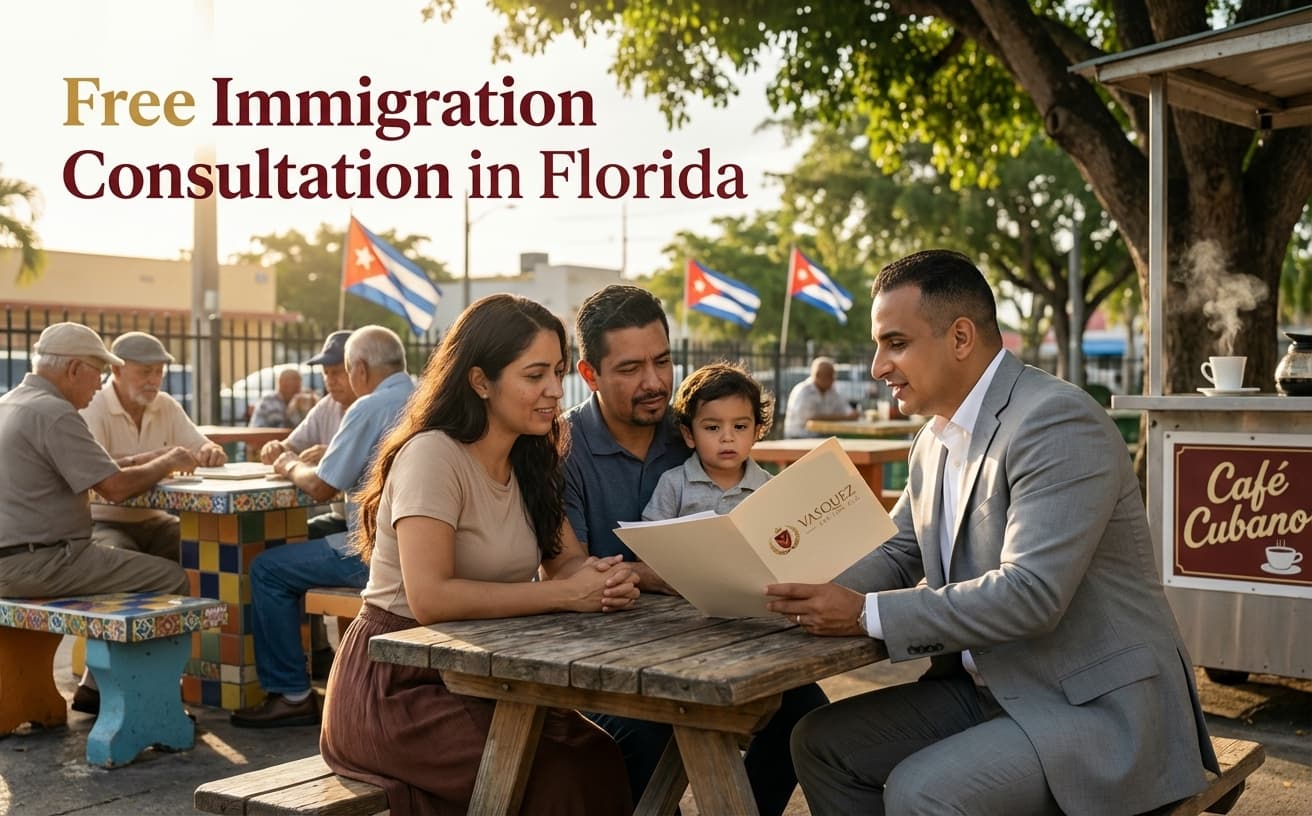
The right time to consult an immigration lawyer is before you file, sign or travel, not after a denial. In a consultation, the lawyer asks how and when you entered, every status you have held, prior applications or denials, family relationships, work history and any arrests, then explains which paths may fit and what could go wrong. You should leave with a next step, and sometimes with honest advice that waiting is safer than filing. Our immigration-only firm in Orlando meets clients by secure video, phone and in person, in English and Spanish.
- Consult a lawyer before you file, sign or travel rather than after a denial.
- A consultation covers entry history, statuses, prior applications, family, work and arrests.
- You should leave with a clear next step, such as documents to collect or a deadline to watch.
- Check that an online consultation is private and that the lawyer reviewed your documents.
Introduction
The right time to consult an immigration lawyer is before you file, sign or travel, not after a denial. A first meeting lets a lawyer review your history, explain which options exist and point out risks you may not see. This guide explains how to find an immigration attorney in Florida, what a consultation involves and how to compare your choices. To schedule a consultation, call 1-844-YO-PELEO or contact us.
Vasquez Law Firm practices immigration law only, with one office in Orlando, and meets clients by secure video, by phone and in person, in English and Spanish. The advice below applies whichever lawyer you choose, because the goal is to help you make an informed decision.
This page is general information, not legal advice. Every case is different, and rules and procedures change, so speak with a licensed immigration lawyer about your own situation.
What an Immigration Consultation Covers
An immigration attorney consultation is a structured conversation. The lawyer asks how and when you entered the United States, every status you have held, any prior applications or denials, your family relationships, your work history and any arrests. From there the lawyer explains which paths may fit, what each requires and what could go wrong. You should leave with a next step, such as a filing to prepare, documents to collect or a deadline to watch, and sometimes with the honest advice that waiting is safer than filing.
Much of Florida is a long drive from Orlando, so many clients choose an online consultation. A video consultation works like an office visit: you schedule a time, receive a secure link, upload documents in advance and speak confidentially with the lawyer. Whatever it is called, check that the meeting is private, that the lawyer has reviewed your documents beforehand and that you will get a clear picture of the next step. The same meeting can also be held by phone, and you are welcome at 1111 E Amelia Street in Orlando, our only office.
When It Makes Sense to Hire a Lawyer
Some people file simple applications on their own. Others learn too late that one detail, such as an old overstay, a missed hearing or a dismissed charge, changed the whole case. Talking to a lawyer is especially important if you have ever been arrested, been denied a visa, stayed past your authorized period, received a Notice to Appear or been asked for more evidence. Our immigration services page shows the kinds of matters we handle.
People who are not sure whether to take that step often ask whether they need a lawyer because they lack status or have another specific problem. The label matters less than the facts. A lawyer reviews whether any option exists, what the risks of each are and what to avoid. For people without status, that review should come before filing anything, answering a government notice or leaving the country.
Common Situations and What a Lawyer Can Do
A lawyer for lawful paths helps with family petitions, green cards, work visas, naturalization and waivers. In employer-sponsored cases, the employer and the worker each have roles, and the lawyer has to keep both sides' obligations in view. See our work visa page for the categories. A lawyer who handles humanitarian cases deals with asylum, protection under the Convention Against Torture, and other protection-based claims, where the story and the evidence matter as much as the forms.
Some situations are narrower. Consular refusals under Section 221(g) of the Immigration and Nationality Act are a good example. A lawyer can read the refusal notice, work out what the consulate needs, such as extra documents or administrative processing, and help you respond. A lawyer cannot make a consulate decide faster. A lawyer can also review a case that appears stalled, check whether it is outside normal processing times and explain what steps may be available, from a status inquiry to, in some situations, asking a federal court to require a decision. Whether any of those steps makes sense depends on the case.
Clients facing removal may look for help near a particular city, such as St. Petersburg, because the court that serves their area matters. Immigration court proceedings are federal and the defenses are the same wherever you live; what changes is which court and which judge hear the case. We represent clients in removal proceedings and explain the process on our deportation defense page. We serve people in Pinellas County and across Florida remotely, and we meet at our Orlando office.
Language, Community and International Cases
Many people want someone who understands their background. A search for a Haitian immigration lawyer, or for a lawyer from a particular faith community, usually reflects that wish: comfort, trust and the chance to explain a history without having to translate it. Immigration law is the same for every nationality and faith, apart from specific rules in a few categories, so what you are choosing is a lawyer who listens and communicates well. If you need a language we do not offer, tell us when you request an appointment. We hold consultations in English and Spanish, and a person who needs an immigration lawyer in Spanish can speak with us directly.
International cases may involve several countries, such as a consular interview abroad, documents from foreign agencies or a relative who is still outside the United States. Because immigration is federal, a Florida lawyer can handle those matters, but they take planning around translations, civil documents and the practices of the consulate involved. People searching for a lawyer who works with clients from a particular country are usually asking about the same issue: finding someone who will explain the process clearly in a way that works for them.
How the Hiring Process Works
Hiring a lawyer follows a simple sequence, and knowing it helps you ask the right questions:
- Request a consultation. Use the contact page or phone number, and say if you have a deadline, hearing date or notice.
- Send documents. Upload or bring passports, notices, prior applications and anything else that explains your history.
- Meet with the lawyer. Explain your goals, answer questions honestly and ask about the risks and alternatives.
- Receive a written agreement. A good agreement states the scope of the work, who will do it and how it will be billed.
- Work on the case. The lawyer prepares filings, tracks deadlines and keeps you informed.
- Follow up after the decision. Next steps may include extensions, conditions removal, citizenship or, if needed, appeals.
How to Find and Compare Your Options
There is no single official list. Some people begin with a referral from a friend, a community organization or a bar association program. Others use a directory or a review site. A referral is a starting point, not an endorsement, so check any name on the Florida Bar website to confirm that the person is licensed and in good standing. A referral from someone with a similar case is especially useful, but your facts may differ.
When you search online, you will see claims of superlatives in lawyers' marketing and on ranking sites. These are marketing phrases and ranking-site labels, not verified findings. The Florida Bar sets strict advertising rules, which is why you will not see a superlative about this firm. Compare on things you can check:
- License and discipline record on the Florida Bar website.
- Matter fit. Ask how often the lawyer handles your kind of case.
- Who does the work. Ask who prepares filings and who answers your calls.
- Communication. Ask how and how often you will be updated.
- A written agreement that states the scope of the work and how it will be billed.
The terms people use for the profession overlap heavily. A lawyer, an attorney and an immigration legal firm are all words for licensed legal help. Whatever words you use in a search, the core question remains whether the person is licensed and suited to your case, and whether they can explain in plain language what will happen.
Document Checklist for Your First Consultation
- Passport, visas and I-94 record.
- Every notice you have received from USCIS, a consulate, ICE or an immigration court.
- Prior applications and petitions, including those that were denied or withdrawn.
- Birth, marriage and divorce records for you and any family involved.
- Court records for any arrest, even if the case was dismissed.
- Employment records and tax returns, where relevant to your case.
- A written timeline of your entries, departures, addresses and employers.
If you do not have a document, say so. A lawyer can often explain how to replace it or what else can show the same fact.
Timeline and Processing Expectations for choosing an attorney
The time from consultation to filing depends on how quickly documents can be collected and how complicated the history is. After filing, the agency or court sets the pace, and processing times change. USCIS, the immigration courts and the State Department publish current information on their websites, and we do not quote times because they change. A lawyer can explain what the published information means for your office or consulate.
Deadlines are different from processing times. A deadline in a notice is fixed, and missing it can have serious consequences. If you have a deadline, say so when you call.
| Stage | What happens | Who acts |
|---|
| Consultation | Review the history and explain options | Client and lawyer |
| Engagement | Sign a written agreement describing the work | Client and firm |
| Preparation and filing | Collect evidence, prepare forms, file with the agency or court | Lawyer and client |
| Agency or court review | Biometrics, requests for evidence, interviews or hearings | Agency or court, with client |
| Decision and follow-up | Receive the result; plan next steps or appeals | Agency, lawyer and client |
After you hire a lawyer, your role continues. Respond to requests for documents promptly, tell the lawyer about any change of address, job or family situation, and forward every notice you receive as soon as it arrives. A lawyer can only protect deadlines that the lawyer knows about, and many problems begin when a notice sits unopened for weeks.
Avoiding Scams
Immigration is a field where fraud is common. In the United States a notary public is not a lawyer and cannot give legal advice, even if the title sounds similar to a notario in other countries. Only licensed attorneys, or accredited representatives of recognized organizations, may advise on immigration cases. Be careful with anyone who guarantees an outcome, asks for payment to skip the line, tells you to sign blank forms or keeps your original documents. Report such behavior to the Florida Bar if the person claims to be a lawyer.
Before you pay, ask for a written agreement and a receipt. Never sign a form that is blank or that you do not understand, and keep copies of everything you submit.
Cost Factors and Fee Breakdown for choosing an attorney
The cost of hiring a lawyer includes the lawyer's fee and the government and third-party costs of your case.
| Item | Amount | Notes |
|---|
| Consultation fee | Varies by case | Ask what the consultation includes before you book |
| USCIS filing fees | Check USCIS for the current fee | Depends on the form; paid to the government |
| Immigration court fees | Check the court or agency for current fees | Applies to certain applications and appeals |
| Medical exams, translations and records | Varies by case | Paid to doctors, translators and record offices |
| Legal fees for the case | Varies by case | Depends on the type of case, its complexity and the work included |
Fee schedules change, so confirm the current government fees on the agency website. Do not rely on a number you heard from a friend, since fees may have changed.
Ask every lawyer how the fee is structured, what it covers, such as responses to requests for evidence or interview preparation, and what would be billed separately. A clear written agreement protects both sides.
Common Mistakes to Avoid for choosing an attorney
- Waiting until after a denial or a deadline to see a lawyer.
- Paying a notario or unlicensed preparer who promises a quick result.
- Choosing a lawyer from an advertisement or ranking without checking the Florida Bar record.
- Signing a blank form or an agreement you do not understand.
- Holding back a past arrest, overstay or prior application from your lawyer.
- Traveling or answering a government notice before getting advice.
- Letting a lawyer keep your original documents without a good reason.
When to Call a Lawyer for choosing an attorney
Call a lawyer before you file, sign or travel, and call right away if you receive a Notice to Appear, a denial, a request for evidence or any notice with a deadline. If a relative is detained, contact a lawyer immediately, since deadlines in immigration court can be short. If you are not sure whether you need one, a consultation is a way to find out. Call 1-844-YO-PELEO or use the contact page.
Related guides for a different focus: immigration lawyer near me guide.
About Vasquez Law Firm
Vasquez Law Firm practices immigration law only. Our only office is at 1111 E Amelia Street in Orlando. We serve clients from Miami to Pensacola, and in St. Petersburg, Tampa, Jacksonville and elsewhere, by phone and secure video, with in-person meetings in Orlando. William J. Vásquez is the founding attorney, and consultations are available in English and Spanish. After the first conversation, you receive a clear explanation of the options and a written engagement agreement before the work begins. Call 1-844-YO-PELEO or contact us.
Sources and References
Related services: immigration lawyers in Florida, deportation defense
Other ways people search for this
People look for this help under different names. Related searches include immigration lawyer consult; consult immigration lawyer; find immigration attorney; haitian immigration attorney; humanitarian immigration attorney; immigration attorney online consultation; immigration delay attorney; immigration lawyer consultation online; immigration lawyer for undocumented immigrants; international immigration lawyer; jewish immigration attorney; attorneys for immigration; work immigration attorney; immigration lawyer referral; best immigration law firms; immigration lawyers united states; lawyer us immigration; legal immigration lawyer; united states immigration attorney; united states immigration lawyers; attorney lawyer for immigration; best lawyer/attorney for immigration; online immigration consultation; online immigration lawyer consultation; st. petersburg immigration defense attorney; st. petersburg immigration defense lawyer; top immigration law firm; 221g lawyer; attorney for immigration services; best immigration law firms in the us; best immigration law firms in us; best immigration lawyer for chinese clients in the united states; best immigration lawyer in the united states; best immigration lawyer in us.
This article is general information, not legal advice. Every case is different; speak with an immigration lawyer about your situation.