Fraud Waiver Immigration Florida: Navigating I-601 Hardship
Navigating immigration challenges due to past fraud or misrepresentation in Florida can feel daunting, but the I-601 fraud waiver offers a vital pathway to overcome inadmissibility. This comprehensive guide from Florida Immigration Lawyers explains what a fraud waiver is, outlines the eligibility requirements focusing on extreme hardship to a qualifying U.S. citizen or LPR relative, and details the step-by-step application process. Learn about essential documents, expected processing times, and associated costs. We also highlight common mistakes to avoid and when to seek professional legal assistance to strengthen your case and protect your future in Florida. Call us for a free consultation.

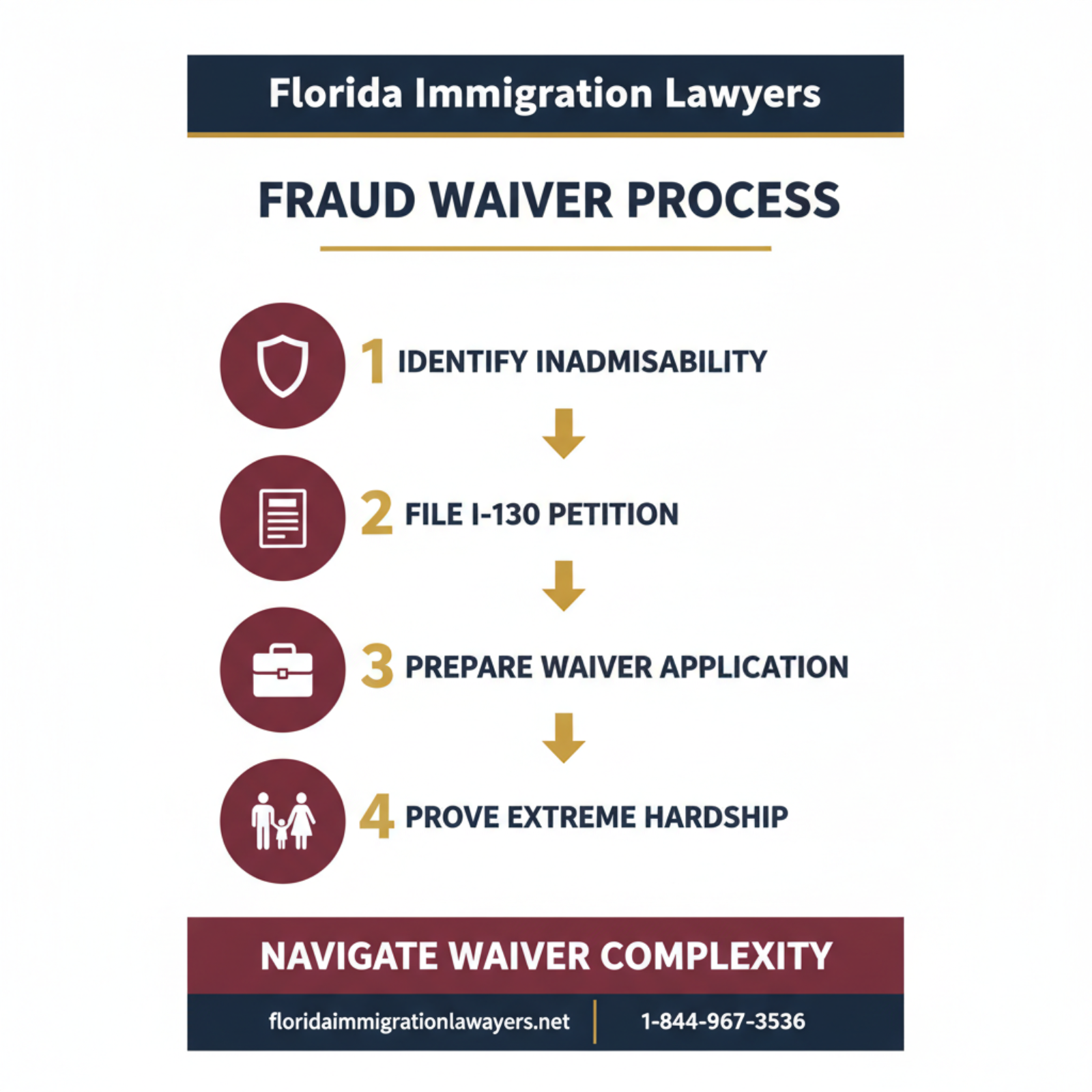
A fraud waiver, specifically the Form I-601 Application for Waiver of Grounds of Inadmissibility, allows certain individuals in Florida to overcome inadmissibility due to past immigration fraud or willful misrepresentation. Eligibility often hinges on demonstrating extreme hardship to a qualifying U.S. citizen or lawful permanent resident relative. This complex process requires meticulous documentation and legal strategy.
- The I-601 waiver addresses inadmissibility from fraud or misrepresentation.
- Extreme hardship to a qualifying relative is a key eligibility factor.
- Careful preparation of evidence is crucial for a successful application.
- Consulting an experienced immigration attorney is highly recommended.
Are you or a loved one in Florida facing an immigration hurdle because of a past mistake, perhaps a misunderstanding, or even an unintentional misrepresentation to immigration authorities? The news that you are inadmissible to the United States can be devastating, halting your dreams of a green card, visa, or even citizenship. Many individuals in Coral Springs and across Florida find themselves in this challenging situation, feeling lost and unsure of their next steps.
The U.S. immigration system is complex, and certain actions, like providing false information or misrepresenting facts, can lead to serious consequences, including inadmissibility. However, hope is often available through an immigration fraud waiver, specifically the I-601 Application for Waiver of Grounds of Inadmissibility. This article will guide you through understanding what a fraud waiver is, who qualifies, the application process, and how it can offer a path forward for you and your family in Florida.
Do not let fear or uncertainty paralyze your immigration journey. If you believe you may need a fraud waiver or have questions about your eligibility, we are here to help. Call Florida Immigration Lawyers at 1-844-967-3536 for a free consultation to discuss your specific situation and explore your options.
Understanding the Fraud Waiver: I-601 for Misrepresentation in Florida
In immigration law, certain actions can render an individual "inadmissible" to the United States. One of the most common and serious grounds for inadmissibility is a finding of fraud or willful misrepresentation of a material fact to obtain an immigration benefit. This is codified under Section 212(a)(6)(C)(i) of the Immigration and Nationality Act (INA), 8 U.S.C. § 1182(a)(6)(C)(i). Such a finding can prevent you from receiving a visa, adjusting status, or even re-entering the country after travel.
Fortunately, the law provides a mechanism to overcome this inadmissibility: the I-601 fraud waiver. This waiver allows eligible individuals to seek forgiveness for past immigration violations, including fraud or misrepresentation. It is a crucial pathway for many families in Florida who wish to remain united or for individuals seeking to regularize their immigration status despite a past error. Understanding the nuances of this waiver is vital for a successful outcome.
What Constitutes Fraud or Misrepresentation?
Fraud or misrepresentation typically involves providing false information or concealing material facts to a U.S. government official to gain an immigration benefit. This could range from misstating your marital status on a visa application to presenting fabricated documents. The key elements usually involve a material misrepresentation, willfulness (you knew it was false), and an intent to deceive. Even seemingly minor inaccuracies can sometimes be interpreted as misrepresentation, highlighting the importance of accuracy in all immigration filings.
Eligibility for an I-601 Waiver
To qualify for an I-601 fraud waiver, you generally must demonstrate extreme hardship to a "qualifying relative." A qualifying relative is typically a U.S. citizen (USC) or Lawful Permanent Resident (LPR) spouse or parent. The hardship must be more than the normal difficulties associated with separation or relocation, impacting their physical, emotional, or financial well-being.
The U.S. Citizenship and Immigration Services (USCIS) evaluates various factors when determining extreme hardship. These factors can include the qualifying relative's health issues, financial burdens, educational disruption, psychological impact, and ties to the U.S. Each case is unique, and the cumulative effect of these hardships is considered. For Florida residents, this might involve demonstrating the specific impact on your family rooted in the state, whether it's access to specialized medical care in Miami or community ties in Coral Springs.
The fraud waiver process is not automatic. It requires a compelling case supported by extensive evidence. Our firm, Florida Immigration Lawyers, understands the specific challenges faced by families throughout Florida when dealing with these complex issues. We assist clients in preparing robust applications and navigating the bureaucratic hurdles of USCIS and immigration courts in Florida. You can learn more about our general immigration services at our immigration practice area page.
The I-601 Fraud Waiver Application Process: A Step-by-Step Guide
Navigating the I-601 fraud waiver application process can feel overwhelming, but breaking it down into manageable steps can help. This guide provides a general overview; remember that your specific circumstances may require tailored advice.
- Determine Eligibility: Confirm you are inadmissible due to fraud or misrepresentation and have a qualifying relative who would suffer extreme hardship. This initial assessment is critical and often requires legal expertise.
- Gather Comprehensive Evidence: Collect a wide array of documents and information to prove extreme hardship to your qualifying relative. This includes medical records, financial statements, psychological evaluations, educational records, and affidavits from family and community members.
- Prepare a Detailed Affidavit/Statement: The applicant and the qualifying relative must submit personal statements explaining the circumstances of the inadmissibility (if applicable) and detailing the extreme hardship that would result from a waiver denial. These statements should be sincere, comprehensive, and supported by the evidence gathered.
- Complete Form I-601, Application for Waiver of Grounds of Inadmissibility: Fill out the form accurately and completely. Ensure all questions are answered truthfully and that no sections are left blank without proper explanation.
- Assemble the Application Package: Organize all forms, supporting documents, and the required filing fee. USCIS provides specific instructions on how to assemble your package, including where to mail it based on your location and the type of underlying immigration application.
- File the Application: Send your complete I-601 application package to the appropriate USCIS lockbox facility. The filing location often depends on whether you are applying from within the U.S. or abroad.
- Attend Biometrics Appointment (if required): After filing, USCIS will typically send you an appointment notice for biometrics collection (fingerprints, photograph, and signature) at an Application Support Center (ASC) in Florida, such as those in Orlando, Tampa, or Miami.
- Respond to Requests for Evidence (RFE) or Notices of Intent to Deny (NOID): USCIS may send an RFE if they need more information or a NOID if they intend to deny your application. Responding thoroughly and promptly to these requests is critical for your case.
- Attend Interview (if required): While not always required for I-601 waivers, an interview may be scheduled at a USCIS field office or a U.S. consulate abroad. This is an opportunity to clarify information and answer questions about your application.
- Receive Decision: USCIS will issue a written decision approving or denying your I-601 waiver application. An approval means you have overcome the specific ground of inadmissibility.
Remember, the USCIS Policy Manual offers guidance on adjudicating waiver applications, emphasizing the need for a holistic review of all evidence. A well-prepared application significantly increases your chances of success.
Essential Documents for Your I-601 Hardship Waiver Application
A successful hardship waiver immigration application hinges on robust documentation. The more evidence you can provide to substantiate your claims of extreme hardship, the stronger your case will be. Here is a general checklist of documents commonly required:
- Proof of Qualifying Relationship: Marriage certificates, birth certificates, adoption decrees to establish your relationship with your U.S. citizen or LPR spouse or parent.
- Evidence of U.S. Citizenship or LPR Status: Copies of passports, birth certificates, naturalization certificates, or green cards for your qualifying relative.
- Detailed Affidavits and Personal Statements: Sworn statements from the applicant and the qualifying relative describing the hardship. These should be personal, specific, and compelling.
- Medical Records: Documentation from doctors, specialists, and therapists detailing any physical or mental health conditions of the qualifying relative that would be exacerbated by separation or relocation.
- Financial Records: Proof of financial obligations, debts, income, assets, and the financial impact of separation or relocation. This includes tax returns, bank statements, and mortgage statements.
- Educational Records: School enrollment, transcripts, and letters from teachers or administrators if the qualifying relative is a student whose education would be severely disrupted.
- Psychological Evaluations: Professional assessments from licensed psychologists or psychiatrists detailing the emotional and psychological impact of separation or relocation on the qualifying relative.
- Evidence of Ties to the U.S.: Property deeds, employment records, community involvement, and other documents demonstrating the qualifying relative's deep roots in the United States, especially in Florida.
- Country Conditions Reports: Information about the economic, social, medical, or political conditions in the applicant's home country, if relevant.
Ensure all documents not in English are accompanied by certified English translations. Organizing your evidence clearly and concisely will aid the USCIS adjudicator in reviewing your case.
I-601 Fraud Waiver Processing Times and Expectations for Florida Applicants
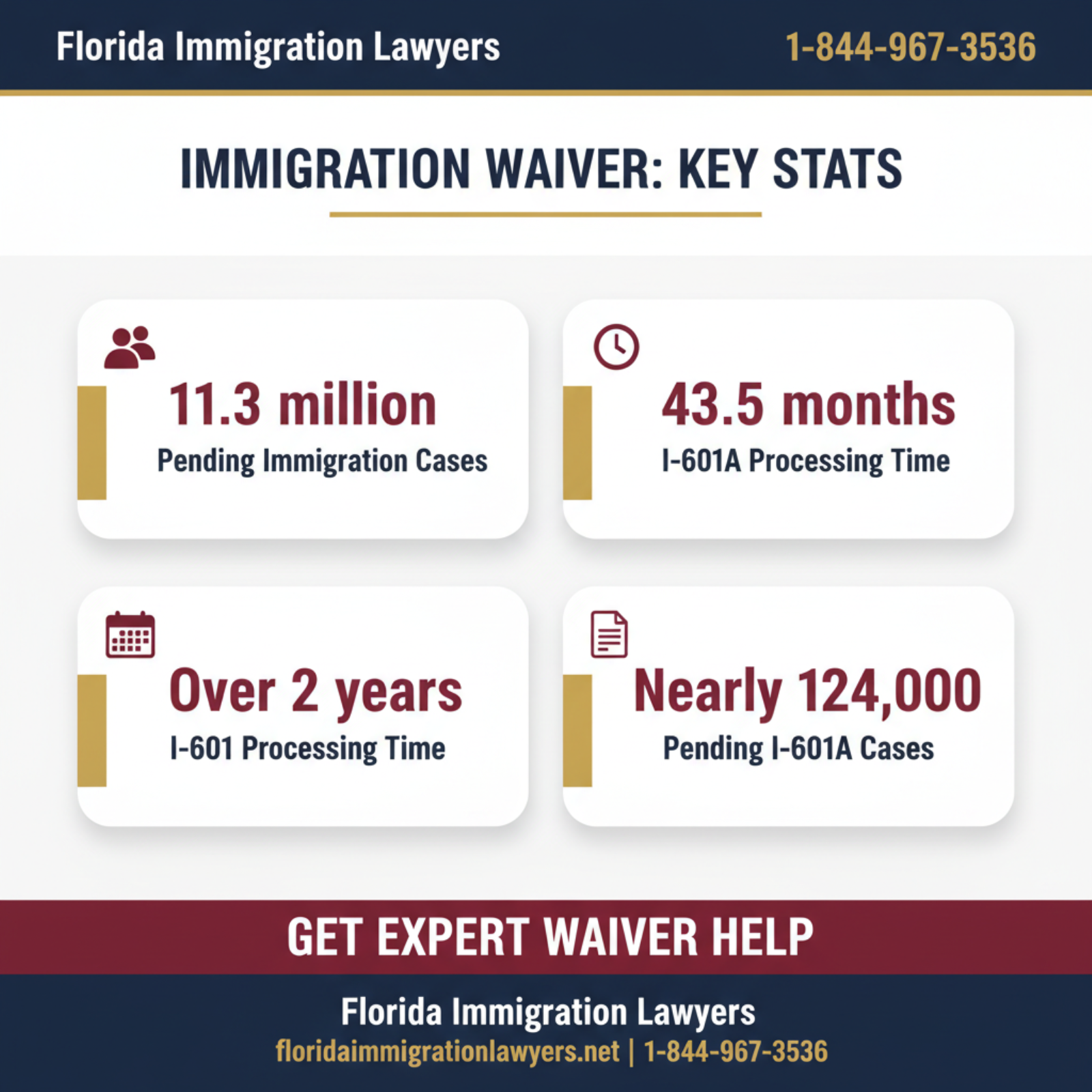
One of the most common questions individuals have about the I-601 waiver is how long it will take. The processing times for an I-601 fraud waiver can vary significantly, often ranging from several months to over a year, or even longer in some complex cases. It is important to manage your expectations and understand the factors that influence these timelines.
Factors Affecting Processing Times:
- Workload at USCIS Service Centers: The volume of applications received by the specific USCIS service center processing your waiver can impact delays.
- Completeness of Your Application: A well-organized and complete application with all required documentation can expedite processing. RFEs (Requests for Evidence) can significantly prolong the process.
- Complexity of Your Case: Cases involving multiple grounds of inadmissibility, extensive criminal history, or intricate hardship claims may take longer to adjudicate.
- Changes in Immigration Policy: Policy shifts or new directives from USCIS can affect processing priorities and times.
While specific I-601 waiver processing times 2026 data is always subject to change, USCIS generally updates its estimated processing times on its website. We advise checking the official USCIS website for the most current information. For applicants in Florida, the processing center might vary depending on where the underlying immigration application is being processed, or if the waiver is being adjudicated concurrently.
It is crucial to remain patient during this period. Avoid making travel plans or other significant life decisions until you have received a final decision on your waiver. Should you need assistance navigating these waiting periods or if you receive an RFE, our team at Florida Immigration Lawyers is ready to provide guidance and support.
Cost Factors and Fee Breakdown for an I-601 Waiver
Understanding the potential costs associated with an I-601 waiver application is an important part of your planning. While we cannot provide specific fee amounts as they are subject to change by USCIS, we can outline the general categories of expenses you should anticipate. It is always recommended to check the official USCIS website for the most current filing fees before submitting your application.
Primary Cost Components:
- USCIS Filing Fee: This is the mandatory fee paid directly to USCIS for processing your Form I-601. This fee must be submitted with your application and is non-refundable, regardless of the outcome.
- Attorney Fees: Legal representation is highly recommended for fraud waiver cases due to their complexity. Attorney fees will vary based on the lawyer's experience, the complexity of your case, and the services provided. Florida Immigration Lawyers offers transparent fee structures and free consultations.
- Translation Costs: If any of your supporting documents are not in English, they must be translated by a certified translator. These costs can add up depending on the volume of documents requiring translation.
- Document Gathering Costs: This might include fees for obtaining medical records, psychological evaluations, birth certificates, or other official documents.
- Travel Costs: If you need to travel for biometrics appointments, interviews, or to gather documents, these expenses should be factored in. For Florida residents, this might involve travel within the state to USCIS offices in Tampa, Orlando, or Miami.
Investing in a well-prepared fraud waiver application can save you significant time and money in the long run by avoiding potential denials and appeals. While the costs may seem substantial, the potential benefits of achieving legal status in the U.S. often outweigh the initial investment. Our firm can help you understand all potential costs involved during your initial consultation.
The journey through immigration waivers can be arduous and fraught with potential pitfalls. Do not navigate this process alone. Contact Florida Immigration Lawyers today for dedicated, experienced legal assistance tailored to your unique situation. We are committed to helping families in Coral Springs and across Florida achieve their immigration goals.
Common Mistakes to Avoid in Your I-601 Fraud Waiver Application
Applying for an I-601 fraud waiver is a delicate process where even minor errors can lead to significant delays or outright denial. Being aware of common pitfalls can help you strengthen your application and increase your chances of success. Here are some mistakes frequently made:
- Failing to Establish "Extreme Hardship": Many applicants underestimate the stringent requirement for extreme hardship. Simply stating that separation would be difficult is not enough. You must provide compelling, well-documented evidence that the hardship to your qualifying relative would be extreme, beyond what is normally expected from family separation.
- Insufficient or Poorly Organized Documentation: A weak application often lacks sufficient evidence or presents it in a confusing manner. USCIS adjudicators review many cases; making their job easier by providing clearly organized, relevant, and comprehensive documentation is key. Missing documents or submitting irrelevant information can lead to RFEs or denials.
- Inaccurate or Inconsistent Information: Any discrepancies between your current application and previous immigration filings can raise red flags. Ensure all information provided is truthful, accurate, and consistent with your entire immigration history. Even minor inconsistencies can be interpreted as further misrepresentation.
- Not Addressing the Ground of Inadmissibility Directly: While focusing on hardship is important, you also need to acknowledge and, if possible, explain the circumstances of the fraud or misrepresentation itself. Attempting to hide or ignore the underlying issue can be detrimental to your case.
- Filing for the Wrong Waiver: The U.S. immigration system has several types of waivers. Filing an I-601 when another waiver (like an I-212 for prior removal or I-601A for unlawful presence) is more appropriate, or even required, will lead to a denial. Correctly identifying the ground of inadmissibility and the corresponding waiver is paramount.
- Failing to Respond to RFEs or NOIDs Promptly and Thoroughly: When USCIS sends a Request for Evidence (RFE) or a Notice of Intent to Deny (NOID), it is a critical opportunity to save your case. Ignoring these notices or providing an incomplete response almost guarantees a denial.
- Not Seeking Legal Counsel: Perhaps the most significant mistake is attempting to navigate the complex fraud waiver process without the guidance of an experienced immigration attorney. An attorney can help identify the correct waiver, strategize your case, gather evidence, draft compelling statements, and represent you before USCIS.
Avoiding these common errors requires diligence, a thorough understanding of immigration law, and often, professional legal assistance. Our firm specializes in helping clients in Florida avoid these pitfalls and build the strongest possible case.
When to Call a Lawyer
The complexity of immigration law, especially concerning fraud waivers, makes legal representation invaluable. You should consider contacting an immigration lawyer immediately if any of the following scenarios apply to you:
- You have been found inadmissible due to fraud or misrepresentation.
- You are unsure if you qualify for an I-601 waiver or another type of asylum or citizenship waiver.
- Your case involves multiple grounds of inadmissibility.
- You have received a Request for Evidence (RFE) or Notice of Intent to Deny (NOID) from USCIS.
- You are facing deportation or removal proceedings in an immigration court in Florida. For assistance with this, please visit our deportation defense practice area page.
- You are applying for a family-based visa and discover a ground of inadmissibility. Our family immigration services can help.
Our experienced attorneys at Florida Immigration Lawyers can assess your situation, explain your options, and develop a tailored strategy to pursue your fraud waiver. We understand the emotional toll these cases take and offer compassionate, dedicated advocacy. We invite you to learn more about our team on our attorneys page or contact us directly to schedule a consultation.
About Florida Immigration Lawyers
Florida Immigration Lawyers is a leading law firm dedicated to providing comprehensive and compassionate immigration legal services across the entire state of Florida. From our base near Coral Springs, we serve clients in Miami, Orlando, Tampa, Jacksonville, and all surrounding areas, helping individuals and families navigate the intricate landscape of U.S. immigration law. Our mission is to provide exceptional legal representation, ensuring every client receives personalized attention and strategic advice.
Why Choose Florida Immigration Lawyers?
Our team of skilled attorneys brings years of experience and a deep understanding of federal immigration statutes and regulations. We pride ourselves on our client-focused approach, transparent communication, and unwavering commitment to achieving the best possible outcomes for our clients. We understand that your immigration journey is deeply personal and impacts your future and your family's well-being.
Contact Us Today: Do not face the complexities of immigration law alone. We are available 24/7 to answer your urgent questions and provide support. Call us now for a free consultation: 1-844-967-3536 Visit our website: https://www.floridaimmigrationlawyers.net Serving all of Florida, we are your trusted partners in immigration.
Sources and References
- U.S. Citizenship and Immigration Services (USCIS) - Official source for immigration forms, fees, and policy.
- Executive Office for Immigration Review (EOIR) - Provides information on immigration courts and appellate decisions.
- U.S. Department of State (Travel.State.Gov) - Information on visas and consular processing.
- Immigration and Nationality Act (INA) Section 212(a)(6)(C)(i) - 8 U.S.C. § 1182(a)(6)(C)(i) - Grounds of inadmissibility for fraud or willful misrepresentation.
- 8 CFR § 212.7 - Regulations pertaining to waivers of grounds of inadmissibility.
- USCIS Policy Manual, Volume 9, Part B, Chapter 2 - Waivers for Inadmissibility Based on Fraud or Willful Misrepresentation.
This article provides general legal information and is not intended as legal advice. Every case is unique, and outcomes depend on specific facts and circumstances. Immigration laws are subject to frequent change. Contact an attorney for advice about your particular situation and to confirm current laws and procedures.
Your immigration future is too important to leave to chance. If you are grappling with inadmissibility due to fraud or misrepresentation in Florida, let Florida Immigration Lawyers be your guide. Our dedicated team is ready to provide the expert legal support you need to pursue a fraud waiver and achieve your American dream.
Call us today for a free, confidential consultation at 1-844-967-3536.
Se Habla Español - Estamos aquí para ayudarle.
Do Not Navigate This Process Alone
Our experienced immigration attorneys are ready to fight for you. Get a free, confidential consultation today.
Se Habla Español
Frequently Asked Questions
Florida Immigration Lawyers
Immigration Attorney | Founder, Vasquez Law Firm
U.S. Air Force veteran and immigration attorney with thousands of cases resolved. J.D., NCCU School of Law. AILA member. Admitted to the 4th, 5th, and 11th Circuit Courts.
Available 24/7 - Free Evaluations
Related Legal Services
Our Florida immigration attorneys can help you with citizenship and naturalization, family immigration services and immigration practice areas. Call today at 1-844-967-3536 for a free consultation.
Related Links
Related Topics
Free Legal Consultation
Discuss your case with our experienced attorneys. We're available 24/7.
Se Habla Español - Estamos aquí para ayudarle.
Related Articles
Stokes Interview: Navigating Marriage Fraud in Florida
A Stokes interview is a specialized, separate interview conducted by USCIS when there are suspicions of marriage fraud in a green card application. This rigorous process involves individual questioning of spouses, focusing on inconsistencies in their testimonies to determine the authenticity of their marital bond. For couples in Florida, navigating this high-stakes interview requires meticulous preparation, extensive documentation, and often the strategic guidance of an experienced immigration lawyer. Understanding the process, preparing for detailed questions, and presenting a strong case are crucial for overcoming marriage fraud allegations and securing your immigration future. Florida Immigration Lawyers stands ready to assist you.
Immigration Attorney Gainesville: North Florida Legal Help
For those in Gainesville, Alachua County, and throughout North Florida, navigating U.S. immigration law requires expert guidance. An experienced immigration attorney can simplify complex processes, from family-based petitions and employment visas to critical asylum claims and deportation defense. This comprehensive guide outlines the essential services provided by an immigration attorney, details necessary documentation, clarifies processing timelines, and discusses associated costs. We also highlight common mistakes to avoid and crucial scenarios where legal counsel is indispensable. Florida Immigration Lawyers serves all of Florida, including Gainesville and St. Petersburg, providing dedicated legal support to help you achieve your immigration goals. Contact us for a free consultation to discuss your specific needs.
Military Naturalization Expedited at Florida Bases
Explore expedited military naturalization processes for service members at Florida bases like MacDill. Learn about eligibility, steps, and common mistakes. Contact Florida Immigration Lawyers for a free consultation.
Protect Yourself from Immigration Scams in Florida
Learn how to protect against immigration scams in Florida, focusing on St. Petersburg. This guide covers identifying scams, verifying credentials, and getting legal help. Call Florida Immigration Lawyers at 1-844-967-3536 for assistance.