Understanding Florida's 50% Bar Rule in Comparative Negligen
Learn about Florida's 50% bar rule in comparative negligence and how it affects your ability to recover damages in personal injury cases. This guide covers the essentials of understanding your rights and responsibilities under Florida law.

- Comparative negligence determines fault distribution.
- 50% bar rule denies recovery if over 50% at fault.
- Orlando residents must be aware of this law's impact on claims.
The concept of comparative negligence can significantly impact your personal injury claim in Florida. If you're involved in an accident in Orlando or elsewhere in Florida, understanding how the 50% bar rule works is crucial. This rule, governed by §768.81 and modified by HB 837, affects your ability to recover damages if you're partially at fault. If you're found more than 50% responsible for the accident, you may be unable to recover any compensation. This article will provide an in-depth look at this rule, how it applies in Florida, and practical steps to navigate your personal injury claim effectively.
What is Comparative Negligence?
Comparative negligence is a legal doctrine used to allocate fault among parties involved in an accident. In Florida, this rule means that your compensation may be reduced by your percentage of fault. For example, if you're found 30% at fault, your compensation will be reduced by 30%. The key aspect of Florida's rule is the 50% bar, meaning if you're more than 50% at fault, you may not be entitled to any compensation.
How the 50% Bar Rule Affects Your Claim
The 50% bar rule was established to prevent plaintiffs who are primarily at fault from recovering damages. This rule is particularly important in Florida, where accidents are common due to high traffic areas like Orlando. If you're involved in a car accident and the court finds you 51% responsible, the rule prevents you from receiving any damages. This highlights the importance of having skilled legal representation to argue your case and minimize your assigned fault percentage.
Step-by-Step Guide to Filing a Claim Under Comparative Negligence
- Document the Scene: Immediately after an accident, take photos, gather witness information, and make notes of the incident.
- Seek Medical Attention: Prompt medical evaluation is crucial, not only for your health but also to document injuries for your claim.
- Consult an Attorney: Contact Florida Immigration Lawyers to assess your case and guide you through the legal process.
- File a Claim: Your attorney will help file a claim with the appropriate insurance company or court.
- Negotiate or Litigate: Your attorney will negotiate a settlement or proceed to court if necessary.
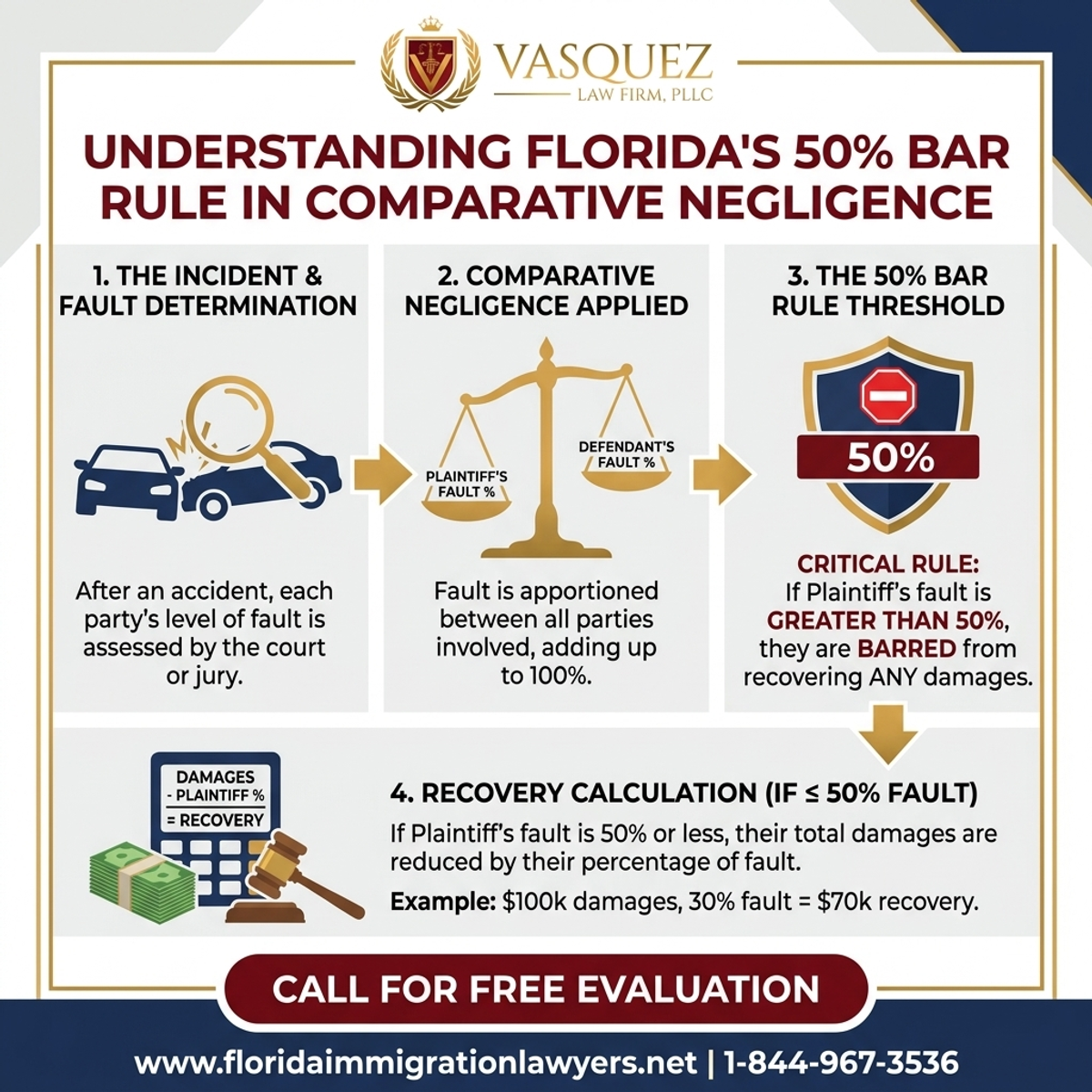
Step-by-Step Process — Understanding Florida's 50% Bar Rule in Comparative Negligence
Document Checklist for Your Claim
- Police reports
- Medical records
- Photographic evidence of the accident scene
- Witness statements
- Correspondence with insurance companies
Timeline and Processing Expectations
Personal injury claims in Florida can vary in length depending on the complexity of the case and the willingness of parties to negotiate. Generally, the process can take several months to over a year. Initial steps like gathering evidence and filing claims may take a few weeks, but negotiation and litigation can extend the timeline significantly.
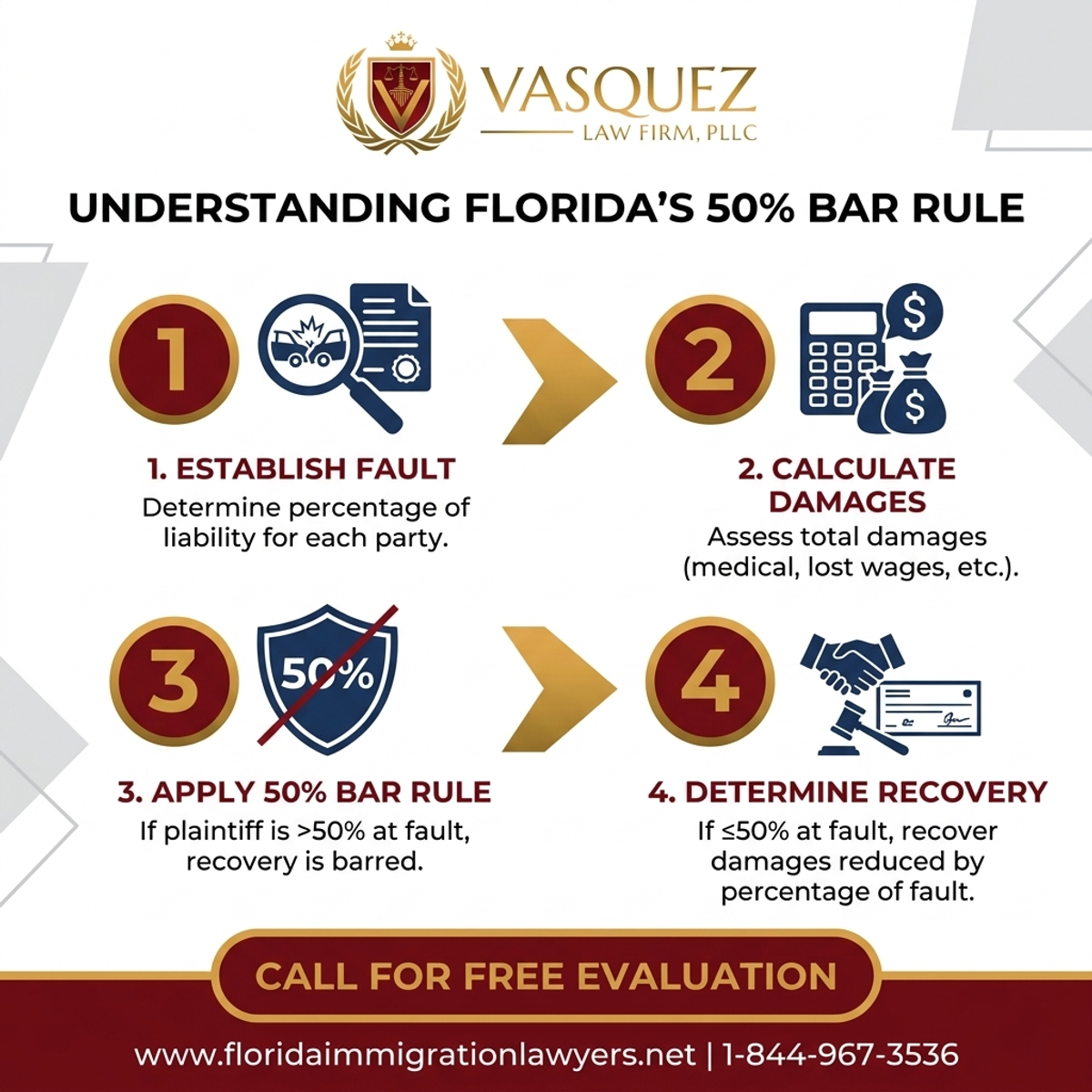
Key Statistics — Understanding Florida's 50% Bar Rule in Comparative Negligence
Cost Factors and Fee Breakdown
In Florida, personal injury lawyers often work on a contingency fee basis, meaning you only pay if you win your case. This fee is typically a percentage of the settlement or award. It's crucial to discuss fee structures with your attorney upfront to understand potential costs.
Do not navigate this process alone. Contact Florida Immigration Lawyers today for expert guidance.
Common Mistakes to Avoid
- Not Seeking Immediate Medical Attention: Failing to get medical care can harm your health and your claim.
- Admitting Fault at the Scene: Statements made at the scene can be used against you.
- Not Gathering Evidence: Lack of evidence can weaken your case.
- Delaying Legal Consultation: Waiting too long can affect your ability to file a claim due to statutes of limitations.
- Ignoring Legal Advice: Following legal guidance is crucial to the success of your claim.
- Signing Insurance Documents Without Review: Always have your attorney review any documents before signing.
- Settling Too Early: Early settlements may not cover future medical expenses.
- Misunderstanding the 50% Bar Rule: Know how this rule affects your ability to recover damages.
When to Call a Lawyer
If you're involved in an accident in Florida, especially if fault is contested, it's essential to consult with an attorney. Look for signs such as unclear fault, severe injuries, or pushback from insurance companies. Florida Immigration Lawyers can help you navigate these challenges effectively.
About Florida Immigration Lawyers
Florida Immigration Lawyers provides comprehensive legal services in personal injury and immigration law. Our team, led by Harold Estrada-Rodriguez, is dedicated to helping clients in Orlando and Kissimmee. We offer free consultations and are available 24/7 to discuss your case. Call 1-844-967-3536 or visit our website for more information.
Sources and References
- U.S. Citizenship and Immigration Services (USCIS)
- Executive Office for Immigration Review (EOIR)
- 8 U.S.C. Chapter 12 - Immigration and Nationality Act
- Florida Statutes §768.81
- Florida Statutes §95.11(4)(a)
Related services: Florida car accident claims, slip-and-fall premises liability, Florida wrongful death claims.
This article provides general legal information and is not intended as legal advice. Every case is unique, and outcomes depend on specific facts and circumstances. Contact an attorney for advice about your particular situation.
Reviewed By
This article was reviewed for Florida legal accuracy by Harold Estrada-Rodriguez, Florida Bar No. 1041171, the attorney responsible for personal injury matters at Florida Immigration Lawyers. Personal injury representation in Florida only. No recovery, no fee.
For expert legal guidance in your personal injury case, call Florida Immigration Lawyers at 1-844-967-3536 for a free consultation. Se Habla Español - Estamos aquí para ayudarle.
If you need legal assistance, learn more about speak with a Florida personal injury attorney, or call us at 1-844-967-3536 for a free consultation.
Do Not Navigate This Process Alone
Our experienced immigration attorneys are ready to fight for you. Get a free, confidential consultation today.
Se Habla Español
Frequently Asked Questions
Florida Immigration Lawyers
Immigration Attorney | Founder, Vasquez Law Firm
U.S. Air Force veteran and immigration attorney with thousands of cases resolved. J.D., NCCU School of Law. AILA member. Admitted to the 4th, 5th, and 11th Circuit Courts.
Available 24/7 - Free Evaluations
Related Legal Services
Our Florida immigration attorneys can help you with Florida personal injury attorney Harold Estrada-Rodriguez, free personal injury consultation and Florida personal injury representation. Call today at 1-844-967-3536 for a free consultation.
Related Links
Related Topics
Free Legal Consultation
Discuss your case with our experienced attorneys. We're available 24/7.
Se Habla Español - Estamos aquí para ayudarle.
Related Articles
Understanding Florida's 2-Year Statute of Limitations in PI
Learn about Florida's 2-year statute of limitations for personal injury claims and how recent changes impact your rights. Contact Florida Immigration Lawyers for a free consultation.
Florida Rear-End Collision Whiplash Claims | VLF Florida
Rear-end collisions in Florida often lead to serious injuries such as whiplash and herniated discs. Learn how to navigate the claims process effectively.
Florida 2-Year Statute of Limitations: What You Need to Know
Learn about Florida's 2-year statute of limitations for personal injury claims under 95.11. Discover key steps to take and common mistakes to avoid. Contact Florida Immigration Lawyers for a free consultation.
Florida 18-Wheeler Truck Accident on I-4: Key Insights
In St. Petersburg, Florida, accidents involving 18-wheelers on I-4 are complex and require navigating FMCSA regulations and multi-party liability. Learn how to handle these cases effectively with the help of Florida Immigration Lawyers.