Fraud Prevention and Detection Fee: What to Know in Florida
Explore the fraud prevention and detection fee essential for immigration processes in Florida. Discover how it impacts applications like the I-601 waiver and learn key steps to navigate this requirement effectively.
- Applies to specific visa categories.
- Essential for processing waivers like I-601.
- Helps maintain the integrity of the immigration system.
- Mandatory for certain nonimmigrant visas.
Understanding the Fraud Prevention and Detection Fee for Immigration in Florida
Introduction
In the heart of Orlando, Florida, many immigrants are navigating the complexities of U.S. immigration law. One key aspect is understanding the fraud prevention and detection fee applicable to various immigration processes. This fee plays a crucial role in maintaining the integrity of the immigration system. In this article, we will explore what this fee entails, who it affects, and how it interplays with applications like the I-601 waiver. Call Florida Immigration Lawyers at 1-844-YO-PELEO for a free case review.
Navigating the U.S. immigration system can be daunting, especially when dealing with specific fees and waivers that can significantly impact your application. The fraud prevention and detection fee, while seemingly just another cost, is a vital component designed to safeguard the entire immigration framework. For individuals in Florida, understanding every nuance of this fee and its interaction with critical applications like the I-601 waiver is essential for a successful outcome.
Our goal is to demystify this process, providing clear, actionable information for immigrants and their families across Florida. From the initial application stages to the final decision, knowing what to expect regarding fees and waivers can make a substantial difference. Florida Immigration Lawyers are here to provide the expert guidance you need every step of the way, ensuring your application is handled with precision and care.
What is the Fraud Prevention and Detection Fee?
The fraud prevention and detection fee is a specific charge imposed on certain visa applications to fund the detection and prevention of immigration fraud. As of 2026, this fee is applied to various nonimmigrant visa categories, including applications that require the I-601 waiver due to fraud or misrepresentation. This fee ensures that resources are available to scrutinize applications thoroughly, thereby protecting the immigration process from abuse.
This fee is mandatory and must be paid alongside the primary application fees. It specifically targets those applying for visas that have a higher risk of fraud or misrepresentation, ensuring additional screening processes are funded.
The fee was established to create a dedicated funding stream for USCIS to invest in advanced technologies, specialized training for immigration officers, and enhanced investigative capabilities. This allows the agency to more effectively identify and deter fraudulent activities, which can range from document forgery to misrepresentation of facts on applications. By doing so, it helps maintain fairness for legitimate applicants and upholds national security interests.
It's crucial for applicants to understand that this fee is separate from the standard application processing fees and is typically non-refundable, even if the application is denied. Failing to include this fee where required can lead to immediate rejection or significant delays in processing, underscoring the importance of meticulous preparation. Always consult the latest USCIS fee schedule or speak with Florida Immigration Lawyers to confirm the exact amount and applicability to your specific case.
How Does the I-601 Waiver Work in Florida?
The I-601 waiver is a critical tool for individuals who have been found inadmissible to the United States due to fraud or misrepresentation. This waiver allows applicants to request forgiveness for these grounds of inadmissibility and proceed with their immigration applications. In Florida, particularly in Orlando, many applicants seek this waiver as part of their journey to lawful U.S. residency.
Applicants must demonstrate that denying the waiver would result in extreme hardship to a U.S. citizen or lawful permanent resident spouse or parent. The process involves submitting detailed evidence and, in some cases, attending interviews at local USCIS offices, such as those in Miami or Tampa.
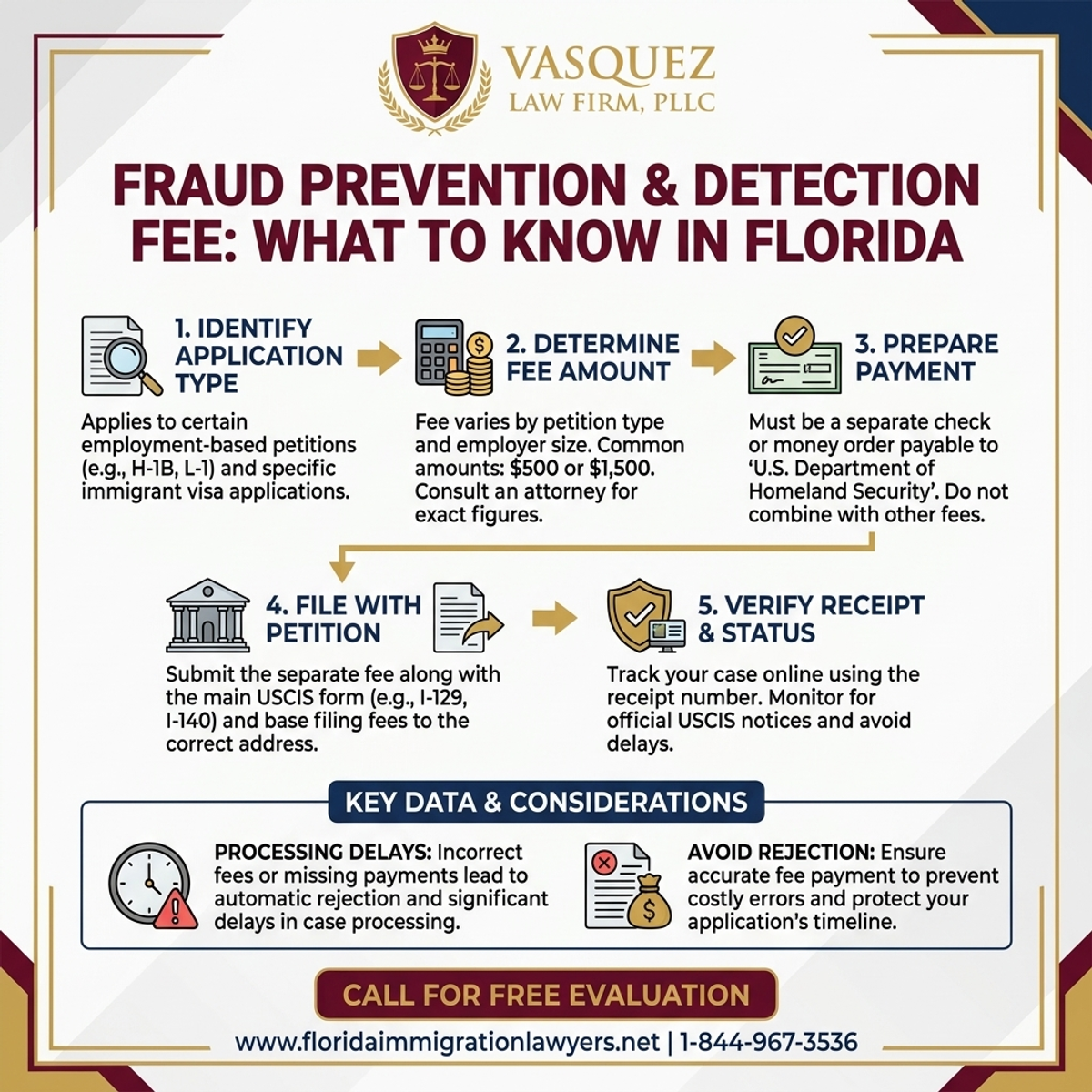
Step-by-Step Process — Fraud Prevention and Detection Fee: What to Know in Florida
The concept of "extreme hardship" is subjective and requires compelling evidence to convince USCIS. This can include detailed medical records demonstrating a dependent's severe health issues requiring the applicant's care, extensive financial records showing how the U.S. citizen or LPR relative would face destitution without the applicant's support, or psychological evaluations illustrating profound emotional distress if separation were to occur. A strong case often involves a combination of these factors, painting a comprehensive picture of the devastating impact a denial would have.
For example, consider a scenario where an applicant's U.S. citizen child has a severe disability requiring constant care and specialized medical attention that is unavailable or unaffordable in the applicant's home country. The U.S. citizen parent, already struggling financially and emotionally, would face extreme hardship if the applicant were denied residency and forced to leave. Demonstrating this level of interdependence and the unique challenges faced is key to a successful I-601 waiver application.
The I-601 waiver process is not only complex but also emotionally taxing. It requires applicants to revisit past mistakes and present a detailed, honest account of their circumstances, along with robust evidence of their current good moral character and the severe impact a denial would have on their qualifying relatives. Engaging with Florida Immigration Lawyers can provide invaluable support, helping you gather the necessary documentation and articulate your case effectively to USCIS.
Steps to Apply for an I-601 Waiver
The application process for an I-601 waiver is intricate and demands meticulous attention to detail. Each step is crucial, and any misstep can lead to significant delays or even outright denial. It's not just about filling out forms; it's about building a compelling narrative supported by irrefutable evidence that demonstrates your eligibility and the extreme hardship your qualifying relative would endure.
- Determine Eligibility: Confirm that your situation qualifies for an I-601 waiver. This involves understanding the specific grounds of inadmissibility you face and whether an I-601 is the appropriate remedy.
- Gather Documentation: Collect all necessary documentation, including evidence of hardship. This is arguably the most critical step, requiring comprehensive proof of your relationship, the qualifying relative's status, and the profound impact of a potential denial.
- Complete the Application: Fill out Form I-601 with accurate and complete information. Any inconsistencies or errors can raise red flags and complicate your case.
- Submit the Application: File your application at the designated USCIS location. Ensure all required fees, including the fraud prevention and detection fee, are paid correctly and on time.
- Attend Interviews: Be prepared to attend any required interviews or respond to requests for additional evidence. Interviews are an opportunity to clarify details and present your case in person.
- Receive Decision: Wait for the decision from USCIS, which will be communicated to you directly. This waiting period can be lengthy, but regular follow-ups with legal counsel can help manage expectations.
Throughout these steps, the guidance of an experienced immigration attorney from Florida Immigration Lawyers can prove indispensable. They can help you accurately assess eligibility, identify and gather the most persuasive evidence, prepare you for interviews, and ensure all forms are submitted correctly, significantly increasing your chances of a favorable outcome.
Document Checklist for I-601 Waiver Applications
The success of an I-601 waiver application hinges significantly on the thoroughness and relevance of the submitted documentation. Each document serves as a piece of evidence, collectively building a compelling case for why your waiver should be granted. It's not merely a checklist but a strategic compilation of proof designed to address every requirement set forth by USCIS.
- Completed Form I-601
- Proof of Relationship to a U.S. Citizen or Resident (e.g., marriage certificates, birth certificates)
- Evidence of Hardship (medical records, financial statements, psychological evaluations, school records, letters from employers, expert opinions)
- Proof of Payment for the Fraud Prevention and Detection Fee
- Any Relevant Legal Documents (court records, prior visa applications, police reports, affidavits from witnesses)
Beyond the basic documents, consider including affidavits from friends, family, or community leaders attesting to your good character and the essential role you play in your qualifying relative's life. Medical records should be detailed, translated if necessary, and clearly explain the severity of any conditions. Financial documents should illustrate any debts, loss of income, or inability to secure employment that would result from your absence. The more comprehensive and well-organized your documentation, the stronger your case will be. Florida Immigration Lawyers can help you meticulously prepare this critical package.
| Stage | Typical Timeframe | Notes |
|---|---|---|
| Initial Application Review | 2-4 months | Includes review of all submitted documents |
| Interview Scheduling | 1-2 months | Only if required |
| Final Decision | 3-6 months | Depends on case complexity |
Cost Factors and Fee Breakdown for the I-601 Waiver
Understanding the financial aspects of an I-601 waiver application is crucial for planning and avoiding unexpected hurdles. The costs involved extend beyond just the filing fees and can vary significantly based on the complexity of your case and whether you seek legal representation. Being prepared for these expenses is an integral part of the application process.
| Item | Typical Fee | Notes |
|---|---|---|
| Fraud Prevention and Detection Fee | Varies | Mandatory for certain applications |
| I-601 Application Fee | Varies | Subject to change |
| Legal Assistance | Varies | Depends on attorney and case complexity |
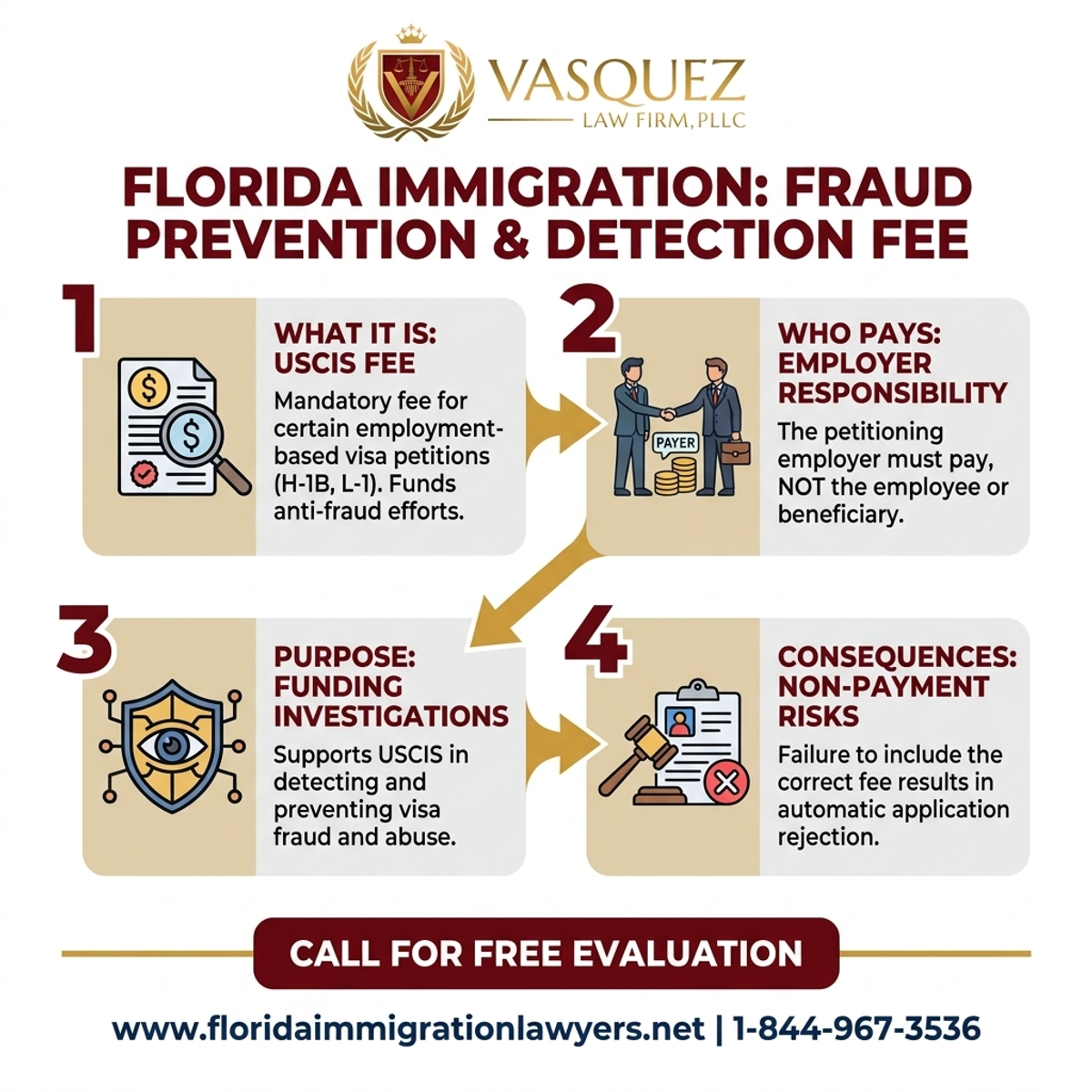
Key Statistics — Fraud Prevention and Detection Fee: What to Know in Florida
It's important to note that USCIS fees, including the I-601 application fee and the fraud prevention and detection fee, are subject to change without extensive prior notice. Applicants should always verify the most current fees directly on the USCIS website or consult with their attorney before submitting any payments. These fees are generally non-refundable, regardless of the outcome of your application, making accurate payment critical from the outset.
While legal assistance represents an additional cost, it is often a wise investment, especially for complex cases involving fraud or misrepresentation. An experienced immigration lawyer, such as those at Florida Immigration Lawyers, can help you avoid costly mistakes, prepare a robust application, and significantly improve your chances of approval, potentially saving you more in the long run by preventing delays or denials that could lead to further expenses or even deportation proceedings.
Florida-Specific Considerations for Immigration Applicants
Florida has a diverse immigrant population, with many residing in cities like Orlando. The state is home to several USCIS offices, including those in Miami and Tampa, which handle a large volume of applications. Understanding the local immigration landscape is crucial for navigating the process effectively.
Applicants should be aware of the need to prepare for potential interviews at these locations and the importance of submitting comprehensive documentation to support their cases.
The unique demographic makeup of Florida, with significant communities from Latin America and the Caribbean, often means that USCIS offices in the state process a wide variety of complex immigration cases. This can lead to specific regional nuances in how applications are reviewed or how interviews are conducted. Being prepared for these local variations, and understanding the potential impact of state-specific policies or legal precedents, can be a distinct advantage for applicants.
Furthermore, Florida's proximity to international borders means that immigration enforcement can be particularly active. This underscores the critical importance of ensuring your application is flawless and that you are fully compliant with all immigration laws. Local legal expertise from firms like Florida Immigration Lawyers is invaluable, as they possess an intimate understanding of the specific challenges and opportunities within the Florida immigration system, providing tailored advice and representation.
Do not navigate this process alone. Contact Florida Immigration Lawyers today.
Common Mistakes to Avoid When Applying for an I-601 Waiver
- Failing to Pay the Fraud Prevention and Detection Fee: This can lead to application delays or denials.
- Incomplete Documentation: Missing documents can result in requests for additional evidence, slowing down the process.
- Not Demonstrating Extreme Hardship: Failing to provide clear evidence of hardship can lead to denial.
- Incorrectly Filled Forms: Simple errors can result in application rejection.
- Ignoring Interview Requests: Missing scheduled interviews can impact the outcome.
- Not Consulting an Attorney: Professional guidance can prevent costly mistakes.
- Submitting Outdated Forms: Ensure all forms are current as per USCIS requirements.
- Underestimating Processing Times: Allow adequate time for each stage of the process.
- Failing to Check Application Status: Regular follow-ups can prevent unexpected delays.
- Assuming Approval is Guaranteed: Each case is unique and requires careful preparation.
These common pitfalls can easily derail an otherwise strong application, leading to wasted time, money, and emotional distress. The cumulative effect of multiple small errors can be just as damaging as a major oversight. Proactive preparation, meticulous attention to detail, and a thorough understanding of USCIS requirements are paramount. Engaging with Florida Immigration Lawyers can provide a crucial safeguard against these mistakes, offering peace of mind and significantly improving your application's prospects.
When to Call a Lawyer
Engaging with an immigration lawyer can be pivotal when dealing with complex cases like fraud or misrepresentation. If you face potential inadmissibility, it is crucial to seek legal advice. Warning signs such as receiving a notice of intent to deny or encountering unfamiliar legal jargon in your application process are indicators that you should contact a lawyer.
Florida Immigration Lawyers offer comprehensive services to guide you through each step of your application process. Our team can help ensure that your application is complete and accurate, reducing the risk of denial due to errors or omissions.
Beyond these warning signs, consider legal counsel if your case involves a criminal record, previous immigration violations, or if you have difficulty understanding English and navigating complex legal documents. A lawyer can act as your advocate, translating legal complexities, representing you in interviews, and challenging adverse decisions effectively. This is particularly vital in Florida, where the immigration landscape is dynamic and often requires nuanced legal strategies.
Moreover, if you are unsure about whether the fraud prevention and detection fee applies to your specific visa category, or if you need assistance in articulating the "extreme hardship" component of an I-601 waiver, a lawyer's expertise is indispensable. Don't wait until you receive a denial; early intervention by Florida Immigration Lawyers at 1-844-YO-PELEO can often prevent problems before they arise, saving you time, stress, and potential future legal battles.
About Florida Immigration Lawyers
Florida Immigration Lawyers is dedicated to assisting immigrants throughout Florida, including Orlando. We specialize in a wide range of immigration services, from family immigration to deportation defense. Our experienced team is available 24/7 to provide you with a free case review and expert guidance. Call us at 1-844-YO-PELEO or explore our immigration practice areas for more information.
Sources and References
- U.S. Citizenship and Immigration Services (USCIS)
- Executive Office for Immigration Review (EOIR)
- U.S. Department of State
- 8 U.S.C. Chapter 12 - Immigration and Nationality Act
Related services: family immigration services, citizenship and naturalization, asylum protection.
This article provides general legal information and is not intended as legal advice. Every case is unique, and outcomes depend on specific facts and circumstances. Contact an attorney for advice about your particular situation.
Se Habla Espanol - Estamos aqui para ayudarle. Call us at 1-844-YO-PELEO for a consultation.
If you need legal assistance, learn more about speak with an immigration lawyer, or call us at 1-844-967-3536 for a free case review.
Do Not Navigate This Process Alone
Our experienced immigration attorneys are ready to fight for you. Get a free, confidential case review today.
Se Habla Español
Or leave your details and we’ll call you:
Free Evaluation in 24 Hours
Or talk to us right now

AI voice assistant — available 24/7
FreeFrequently Asked Questions

William J. Vásquez
Founding Attorney · Vasquez Law Firm
U.S. Air Force veteran and immigration attorney with years of hands-on U.S. immigration experience. J.D., NCCU School of Law. AILA member. Admitted to the 4th, 5th, and 11th Circuit Courts.
Available 24/7 - Free Evaluations
Reviewed for legal accuracy by William J. Vásquez
Licensed in North Carolina; U.S. immigration is federal practice.
Related Legal Services
Our Florida immigration attorneys can help you with free immigration consultation, business immigration and deportation defense. Call today at 1-844-YO-PELEO for a free case review.
Related Links
Related Topics
Free Legal Case Review
Discuss your case with our experienced attorneys. We're available 24/7.
Se Habla Español - Estamos aquí para ayudarle.
Related Articles
DUI Immigration Consequences in Florida 2026
A DUI conviction in Florida can have severe immigration consequences, potentially leading to inadmissibility, deportation, or denial of immigration benefits. For non-citizens, a DUI is not just a traffic offense but a serious criminal matter that federal immigration law scrutinizes closely. Factors like multiple offenses, injury, or property damage can escalate a simple DUI to a Crime Involving Moral Turpitude (CIMT) or even an aggravated felony, triggering mandatory detention and removal proceedings. Understanding the specific nature of your Florida conviction and its interpretation under the Immigration and Nationality Act (INA) is crucial. This article outlines how DUIs impact immigration status, the grounds for inadmissibility and deportation, a step-by-step guide to navigating the process, essential documentation, and expected timelines for 2026. We also highlight common mistakes to avoid and when to seek legal counsel from an experienced immigration attorney. Florida Immigration Lawyers offers comprehensive support for individuals facing these challenging situations, providing expert guidance through complex legal landscapes.
PERM Labor Certification in Florida: A 2026 Guide
Learn all about the PERM labor certification process in Florida, essential for employers sponsoring green card applicants. Understand the steps, document requirements, and common mistakes to avoid in this 2026 guide.
Dual Citizenship Lawyer in Florida: What You Need to Know
For Florida residents, the concept of dual citizenship, or holding two passports, offers a compelling blend of opportunities and challenges. While the U.S. generally permits dual nationality, the path to achieving this status requires a meticulous understanding of both U.S. immigration laws and the citizenship policies of your country of origin. This guide explores the definition of dual citizenship, the detailed step-by-step process for U.S. naturalization, and the significant benefits and potential pitfalls involved. We cover essential documentation, typical timelines, and cost considerations for 2026, providing crucial insights for anyone in Orlando, Miami, or across Florida considering this important legal step. Learn about common mistakes to avoid and understand when to seek professional legal counsel to navigate this complex process successfully. Florida Immigration Lawyers is here to provide expert, bilingual support for your dual citizenship journey.
Immigration Lawyer Orlando Free Consultation in Florida
For individuals and families in Orlando, Florida, navigating the complexities of U.S. immigration law requires expert guidance. An immigration lawyer in Orlando offers crucial support for everything from visa applications and green card processes to naturalization and deportation defense. This comprehensive guide details what a free consultation covers, providing a step-by-step overview of immigration pathways, essential document checklists, and expected timelines in 2026. We also highlight common mistakes to avoid, discuss the critical role of legal counsel in deportation and asylum cases, and explain why choosing a local Orlando immigration attorney is beneficial. Florida Immigration Lawyers is dedicated to serving the diverse community of Orlando with compassionate, effective legal solutions, ensuring you receive personalized advice and robust representation for a successful immigration journey.