Immigration Policy News Florida: Your Guide for 2026 Updates
Stay ahead of Florida's evolving immigration policy news for 2026. This comprehensive guide from Florida Immigration Lawyers provides crucial insights for residents in Pembroke Pines and across the state. Learn about legislative changes, how to navigate new regulations, and essential documents needed. We cover processing expectations, cost factors, and common mistakes to avoid. Discover when professional legal assistance is indispensable to protect your rights and secure your future in Florida's dynamic immigration landscape. We offer free consultations.

Florida's immigration policy landscape is dynamic, with state-level legislative actions and federal policy shifts continually impacting residents and their families. Staying informed about these changes, especially for 2026, is crucial for anyone living in or considering moving to Florida.
- Florida's state laws often add layers to federal immigration regulations.
- Policy changes can affect employment, healthcare, and daily life for immigrants.
- Accurate information from official sources is vital to avoid misinformation.
- Consulting an experienced immigration lawyer is key to understanding personal impact and options.
Immigration Policy News Florida: Your Guide for 2026 Updates
Navigating the complexities of immigration law can be challenging, especially with the constant flux of immigration policy news in Florida. For residents in Pembroke Pines and across the Sunshine State, understanding these shifts is not just about legal compliance, it's about securing your future and protecting your family.
At Florida Immigration Lawyers, we understand the uncertainty these changes can create. This comprehensive guide will help you understand the likely landscape of Florida immigration policy in 2026, its potential impacts, and how our firm can provide the support you need.
Do not face these challenges alone. Call Florida Immigration Lawyers at 1-844-967-3536 for a free consultation today. Our team is ready to provide clarity and expert guidance for your unique situation.
Understanding Florida's Evolving Immigration Policy Landscape in 2026
Florida has been at the forefront of state-level immigration legislation, often enacting laws that interact with or even challenge federal frameworks. These policies can have far-reaching implications for individuals, families, and businesses throughout the state, including in communities like Pembroke Pines, Miami, and Orlando.
It is important to recognize the distinction between state and federal authority in immigration matters. While the federal government largely controls who can enter and remain in the U.S., states can pass laws affecting immigrants' lives within their borders, impacting areas such as employment, healthcare access, and transportation.
Recent Legislative Changes and Their Impact
In recent years, Florida has passed significant legislation concerning immigration. These laws often aim to deter unauthorized immigration and can impose penalties on individuals and entities assisting undocumented immigrants.
Such policies may include stricter employer verification requirements, enhanced penalties for certain immigration-related offenses, and limitations on social services. We anticipate continued legislative activity in 2026, making it critical for residents to stay informed.
Federal vs. State Authority in Florida Immigration
The interplay between federal and state immigration laws is a complex legal area. Federal law, primarily the Immigration and Nationality Act (INA), governs who is admitted to the U.S., naturalization, and deportation proceedings.
However, Florida's state laws can regulate aspects like driver's licenses for non-citizens, public benefits, and local law enforcement's involvement in immigration enforcement. These areas are often subject to legal challenges and can change rapidly, affecting many Floridians.
Navigating Policy Changes: A Step-by-Step Guide for Florida Residents
Staying proactive and informed is your best defense against the uncertainties of changing immigration policy news. This guide outlines key steps you can take to protect yourself and your family in Florida.
-
Stay Informed Through Official Channels: Regularly check official government websites like USCIS.gov and the Florida state government portal for updates. Avoid relying solely on social media or unofficial news sources, which can often spread misinformation.
Understanding the source of your information is crucial. Official websites provide accurate, timely details directly from the agencies responsible for implementing these policies.
-
Assess Your Current Immigration Status: Understand your specific legal standing in the U.S. and in Florida. Knowing if you are a citizen, lawful permanent resident, visa holder, or have another status will help you determine how policy changes might specifically affect you.
Your status dictates your rights and obligations under both federal and state laws. A clear understanding is the first step in preparing for any changes.
-
Gather and Organize Essential Documents: Keep all your immigration documents, identification, and proof of residency in Florida organized and easily accessible. This includes passports, visas, green cards, employment authorization documents, and birth certificates.
Having these documents ready can expedite any necessary legal consultations or application processes. Ensure copies are stored securely in multiple locations.
-
Seek Timely Legal Counsel: Do not wait for a crisis to consult with an experienced immigration lawyer. Proactive legal advice can help you understand potential risks and explore options for maintaining or adjusting your status.
An attorney can provide personalized guidance based on your unique circumstances and the latest immigration policy news. They can help you prepare for future changes.
-
Understand Your Rights: Familiarize yourself with your rights under both federal and state law, regardless of your immigration status. This knowledge is empowering and can protect you during interactions with law enforcement or other authorities.
Organizations often provide resources detailing immigrant rights. Your lawyer can also offer specific advice tailored to your situation.
-
Plan for the Future: Work with an attorney to develop a strategy that considers potential policy changes. This might involve exploring eligibility for new benefits, preparing for renewals, or understanding pathways to permanent residency or citizenship.
Long-term planning is essential for stability and peace of mind in an uncertain legal environment. Your legal team can help you identify and pursue the best course of action.
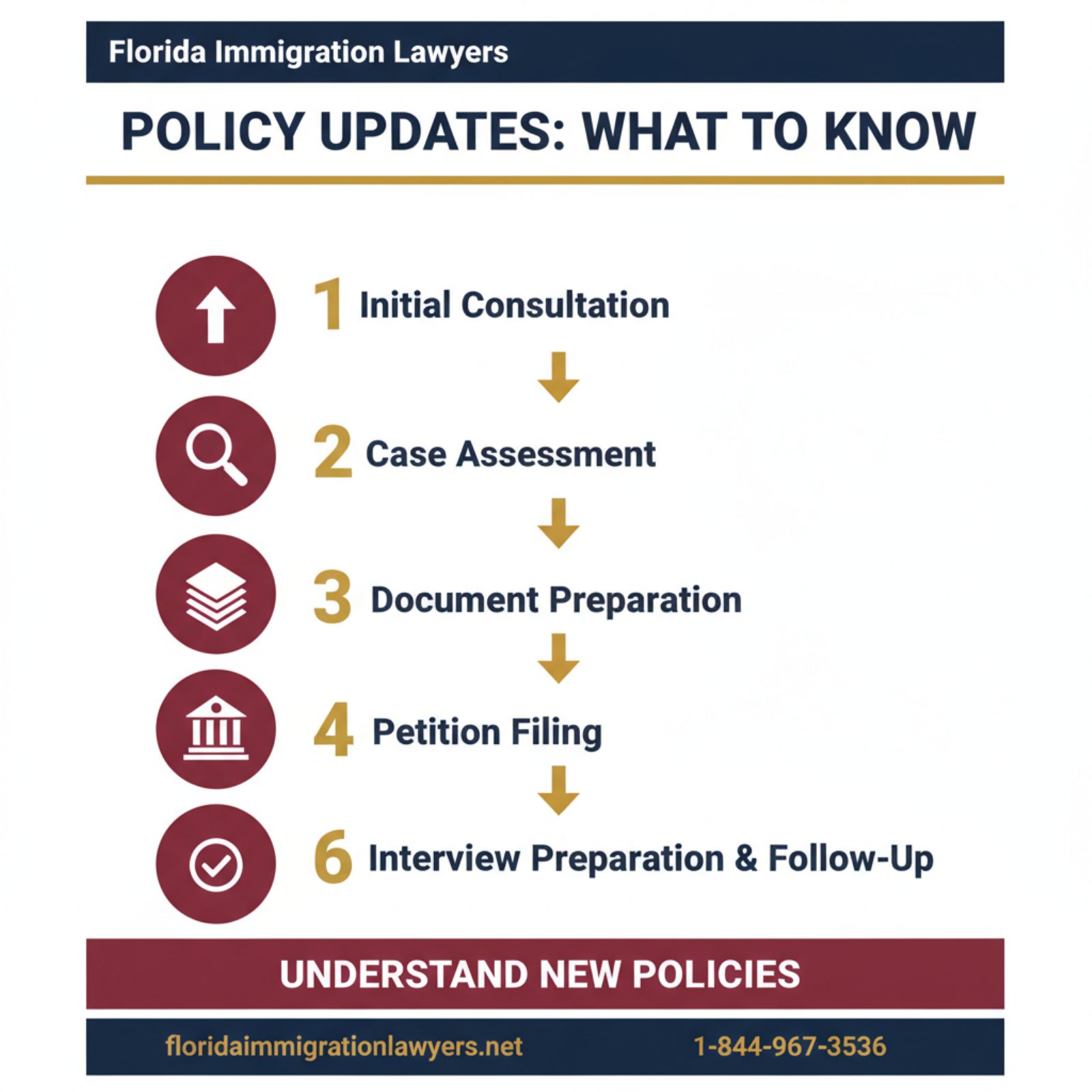
Essential Documents & Information Affected by Florida Immigration Policy
Maintaining a well-organized set of documents is paramount for anyone navigating immigration processes in Florida. New policies can sometimes alter requirements or increase scrutiny on the validity and completeness of your records.
It is wise to keep both original documents and secure copies. This preparedness can significantly ease the process if you need to apply for benefits, renew your status, or defend against an action.
- Proof of Identity: Passports, birth certificates, national identity cards from your country of origin.
- Proof of Immigration Status: Visas, I-94 arrival/departure records, Green Cards (Form I-551), Employment Authorization Documents (EADs, Form I-766), Notices of Action (I-797).
- Financial Records: Tax returns (e.g., Form W-2, 1099), pay stubs, bank statements, affidavits of support (Form I-864) for family-based petitions.
- Proof of Residency in Florida: Utility bills, lease agreements or mortgage statements, Florida driver's license or state ID, school records for children.
- Employment History: Letters from employers, W-2s, pay stubs, I-9 forms, and business licenses if self-employed.
- Records of Past Immigration Filings: Copies of all previous applications, petitions, and correspondence with USCIS or immigration courts.
- Marriage and Birth Certificates: For family-based immigration cases, including those for U.S. citizen relatives.
Timelines and Processing Expectations Amidst Policy Shifts
Immigration processing times are notoriously variable, and policy changes can further impact these timelines. New regulations might introduce additional steps, increase backlogs, or even prioritize certain types of cases.
For individuals in Florida, including those dealing with the Miami or Orlando USCIS Field Offices or the Miami Immigration Court, these shifts can mean longer waits or unexpected requests for evidence. It is important to set realistic expectations and plan accordingly.
USCIS provides estimated processing times on its website, which can be a helpful general guide. However, remember these are averages and your specific case may take more or less time depending on its complexity and the prevailing policy environment.
For example, changes in the interpretation of public charge rules or new requirements for specific visa categories could lead to increased scrutiny and extended processing. Staying updated and having an attorney review your application before submission can mitigate potential delays.
Cost Factors and Fee Breakdown in Florida Immigration Cases
The cost of an immigration case involves various components, and these can also be influenced by evolving immigration policy news. Understanding these potential expenses is crucial for financial planning.
USCIS filing fees are a significant part of the overall cost. These fees are set by the federal government and can change periodically. While we cannot provide specific amounts, it's important to check the official USCIS website for the most current fee schedule for each form you plan to file.
Beyond government fees, legal representation constitutes another major cost. An experienced immigration lawyer from Florida Immigration Lawyers provides invaluable guidance, prepares thorough applications, and represents your interests in complex situations. Our fees are transparent and discussed upfront during your free consultation.
Additional costs might include translation services for foreign documents, certified copies of records, medical examination fees, and travel expenses for interviews or court appearances. Policy changes could introduce new requirements, such as additional biometric screenings or specialized reports, which may incur extra costs.
Do not navigate this process alone. Contact Florida Immigration Lawyers today to discuss your case and understand the costs involved. We are here to help you every step of the way.
Common Mistakes to Avoid with Evolving Immigration Policies
Navigating Florida's complex immigration landscape requires careful attention to detail and a proactive approach. Even minor errors can lead to significant delays, denials, or even more severe consequences.
Being aware of common pitfalls can help you avoid unnecessary stress and ensure a smoother process. Here are some critical mistakes to avoid, especially when dealing with new immigration policy news.
-
Ignoring Policy Updates: Failing to stay informed about new state and federal immigration laws can leave you unprepared. Policies can change rapidly, and what was true last year may not be true today, impacting your eligibility or requirements.
Consequence: Missing critical deadlines, submitting outdated forms, or unknowingly violating new regulations.
-
Relying on Unofficial Sources: Getting your information from rumors, social media, or unreliable websites can lead to serious misinformation. Only trust official government sources or advice from a qualified immigration attorney.
Consequence: Making decisions based on false information, leading to incorrect filings or legal jeopardy.
-
Delaying Legal Consultation: Waiting until a problem arises to seek legal help often limits your options. Proactive consultation with an attorney can identify potential issues early and help you plan effectively.
Consequence: Foregoing preventative measures, facing more complex and costly legal battles, or even deportation.
-
Providing Incomplete or Inaccurate Information: Any discrepancy or missing detail in your application can trigger Requests for Evidence (RFEs), delays, or outright denials. Deliberate misrepresentation can lead to fraud allegations.
Consequence: Prolonged processing times, denial of benefits, or even criminal charges for fraud.
-
Traveling Without Proper Documentation: Crossing state lines or international borders without appropriate and updated documentation can lead to detainment or removal proceedings, especially with enhanced state enforcement.
Consequence: Detainment, deportation, or being barred from re-entry to the U.S.
-
Overlooking Deadlines: Immigration processes have strict deadlines for filing applications, responding to RFEs, or appearing in court. Missing a deadline can have severe and often irreversible consequences.
Consequence: Automatic denial of applications, loss of legal status, or an order of removal.
-
Assuming Past Rules Still Apply: Immigration law is not static. Rules and interpretations can change, making previous advice or experiences potentially irrelevant. Always verify current requirements.
Consequence: Submitting incorrect forms or documentation, leading to delays or denials.
-
Not Understanding Your Rights During Encounters: Knowing your rights when interacting with law enforcement or immigration officials is crucial. Uninformed responses can inadvertently harm your case.
Consequence: Inadvertently waiving rights, self-incrimination, or agreeing to actions detrimental to your immigration status.
-
Failing to Keep Copies of All Submitted Documents: Always retain copies of every application, petition, supporting document, and correspondence you send to or receive from immigration authorities.
Consequence: Difficulty proving submission, inability to respond to RFEs effectively, or lacking evidence in future legal proceedings.
-
Engaging in Unauthorized Employment: Working in the U.S. without proper authorization can have severe immigration consequences, including bars to future immigration benefits.
Consequence: Ineligibility for certain immigration benefits, fines, or even deportation.
-
Not Updating USCIS with Address Changes: Federal law requires non-citizens to inform USCIS of any change of address within 10 days of moving. Failure to do so can lead to missed notices and serious issues.
Consequence: Missed court dates, forgotten interview notices, or a denial of benefits due to unreceived correspondence.
-
Attempting to Navigate Complex Cases Alone: While some simple forms can be filed independently, complex cases or those affected by new policies almost always benefit from professional legal assistance.
Consequence: Increased risk of errors, missed opportunities, and ultimately, a less favorable outcome.
When to Call a Florida Immigration Lawyer
While staying informed is important, the intricacies of immigration policy news often necessitate the expertise of a qualified legal professional. Florida Immigration Lawyers are dedicated to guiding individuals and families through these complex challenges.
You should consider contacting an attorney immediately if you face any of the following scenarios:
- You are confused by new Florida state immigration laws: Understanding how state-level policies interact with federal law is complex. An attorney can clarify your rights and obligations.
- You are facing deportation or removal proceedings: This is a critical situation requiring immediate and expert legal defense. Our firm specializes in deportation defense.
- Your application for a visa, green card, or citizenship has been denied: A denial does not always mean the end of your case. An attorney can help you understand the reasons and explore options for appeal or reapplication.
- You are seeking asylum or refugee status: Asylum cases are highly sensitive and require strong legal advocacy to present your claim effectively. We assist with asylum applications.
- You have a family member you wish to petition for: Family immigration can be complicated by new rules regarding eligibility or financial sponsorship.
- You are a business owner navigating employment verification: New state laws or federal mandates can impact your hiring practices and compliance. Business immigration requires careful legal guidance.
- You are eligible for citizenship but are unsure about the process or potential obstacles.
- You have been questioned by ICE or other immigration authorities.
Do not wait for a crisis to seek help. Proactive legal advice from Florida Immigration Lawyers can make a significant difference in your immigration journey.
About Florida Immigration Lawyers
Florida Immigration Lawyers is a leading immigration law firm dedicated to serving individuals, families, and businesses across the entire state of Florida. With years of experience and a deep understanding of both federal and state immigration laws, our team is committed to providing compassionate, effective, and personalized legal representation.
We pride ourselves on our client-focused approach, ensuring that you receive clear communication and dedicated advocacy throughout your case. Our attorneys are not just legal professionals; they are trusted advisors who genuinely care about your future.
Our Services Include:
- Family-Based Immigration
- Employment and Business Immigration
- Deportation Defense
- Asylum and Refugee Claims
- Citizenship and Naturalization
- Visa Applications and Waivers
- U.S. Citizenship and Immigration Services (USCIS) Representation
- Guidance on evolving immigration policy news
Why Choose Florida Immigration Lawyers?
- Expertise: Our attorneys possess extensive knowledge of immigration law and stay abreast of all legislative changes.
- Compassion: We understand the human element behind every case and approach your situation with empathy and respect.
- Accessibility: We are available 24/7 to address your urgent concerns and offer convenient free consultations.
- Bilingual Services: Our team is fluent in English and Spanish, ensuring effective communication.
- Statewide Reach: Serving all of Florida, from Pembroke Pines to Pensacola, Miami to Jacksonville.
Your immigration journey is important. Let Florida Immigration Lawyers be your trusted partner. Visit our website at https://www.floridaimmigrationlawyers.net or call us at 1-844-967-3536 to schedule your free consultation.
Sources and References
- U.S. Citizenship and Immigration Services (USCIS)
- Executive Office for Immigration Review (EOIR)
- U.S. Department of State
- 8 U.S.C. Chapter 12 - Immigration and Nationality Act (INA)
- 8 CFR Part 214 - Nonimmigrant Classes
- USCIS Policy Manual, Volume 1 - General Policies and Procedures
This article provides general legal information and is not intended as legal advice. Every case is unique, and outcomes depend on specific facts and circumstances. Contact an attorney for advice about your particular situation. Immigration laws are subject to change by federal and state legislative actions.
Do not let uncertainty about immigration policy news in Florida deter you from pursuing your goals. Get reliable legal guidance tailored to your situation. Call Florida Immigration Lawyers today at 1-844-967-3536 for a free, confidential consultation. Se Habla Español - Estamos aquí para ayudarle.
Do Not Navigate This Process Alone
Our experienced immigration attorneys are ready to fight for you. Get a free, confidential consultation today.
Se Habla Español
Frequently Asked Questions
Florida Immigration Lawyers
Immigration Attorney | Founder, Vasquez Law Firm
U.S. Air Force veteran and immigration attorney with thousands of cases resolved. J.D., NCCU School of Law. AILA member. Admitted to the 4th, 5th, and 11th Circuit Courts.
Available 24/7 - Free Evaluations
Related Legal Services
Our Florida immigration attorneys can help you with citizenship and naturalization, family immigration services and immigration practice areas. Call today at 1-844-967-3536 for a free consultation.
Related Links
Related Topics
Free Legal Consultation
Discuss your case with our experienced attorneys. We're available 24/7.
Se Habla Español - Estamos aquí para ayudarle.
Related Articles
Adjustment of Status Guide for Florida | VLF Florida
Explore how to adjust your immigration status in Florida with our detailed guide, focusing on Jacksonville and recent policy changes. Call us for expert assistance!
Derived Citizenship Through Parents in Florida | VLF Florida
Explore how derived citizenship through parents can help you claim U.S. citizenship if born abroad. Learn the steps, requirements, and common mistakes to avoid. For personalized guidance, contact Florida Immigration Lawyers at 1-844-967-3536.
Understanding the Child Status Protection Act in Florida
The Child Status Protection Act (CSPA) is essential for families in Florida, preventing children from aging out of immigration benefits. Learn how CSPA works, common mistakes to avoid, and when to seek legal help. Contact Florida Immigration Lawyers for expert guidance.
Adjustment of Status Florida Guide: Your I-485 Green Card Path
For many immigrants in Florida, adjustment of status (Form I-485) offers a direct pathway to a green card without leaving the U.S. This comprehensive guide from Florida Immigration Lawyers details the eligibility requirements, the step-by-step application process, essential documents, expected timelines, and associated costs. We also highlight common mistakes to avoid and crucial scenarios where legal counsel is indispensable. Serving all of Florida, including Coral Springs, our firm provides expert guidance to help you navigate the complexities of immigration law and secure your permanent residency.
