Derived Citizenship Through Parents in Florida | VLF Florida
Explore how derived citizenship through parents can help you claim U.S. citizenship if born abroad. Learn the steps, requirements, and common mistakes to avoid. For personalized guidance, contact Florida Immigration Lawyers at 1-844-967-3536.

- Eligibility depends on the parents' citizenship status and residency.
- Documentation is crucial to establish the claim.
- Legal assistance can simplify the process.
Introduction
If you were born abroad to U.S. citizen parents, you might already have a claim to U.S. citizenship, known as derived citizenship. This type of citizenship is particularly important for families living in areas like Homestead, Florida, where diverse immigrant communities reside. In this article, we will explore how derived citizenship through parents works, who qualifies, and the steps involved in securing your citizenship status. For personalized assistance, call Florida Immigration Lawyers at 1-844-967-3536 for a free consultation.
Understanding Derived Citizenship
Derived citizenship allows individuals born outside the United States to obtain U.S. citizenship through their parents. This legal process is governed by specific requirements outlined in the Immigration and Nationality Act (INA) and further detailed by the U.S. Citizenship and Immigration Services (USCIS). Understanding these requirements is crucial for those residing in Florida, especially in immigrant-rich communities like Homestead.
Eligibility Criteria
To qualify for derived citizenship, at least one parent must be a U.S. citizen at the time of your birth. Additionally, the U.S. citizen parent must meet specific residency requirements in the United States before the child's birth. These requirements can vary depending on when you were born.
Step-by-Step Guide to Citizenship Through Parents
- Determine Eligibility: Confirm that your parent was a U.S. citizen at your birth and check the residency requirements based on your birth date.
- Gather Documentation: Collect vital records like birth certificates, proof of parental citizenship, and evidence of residency in the U.S.
- File Form N-600: Submit the Application for Certificate of Citizenship to USCIS with all required documents.
- Attend Biometrics Appointment: USCIS may require you to attend a biometrics appointment to verify your identity.
- Receive Decision: USCIS will review your application and issue a decision. If approved, you will receive a Certificate of Citizenship.
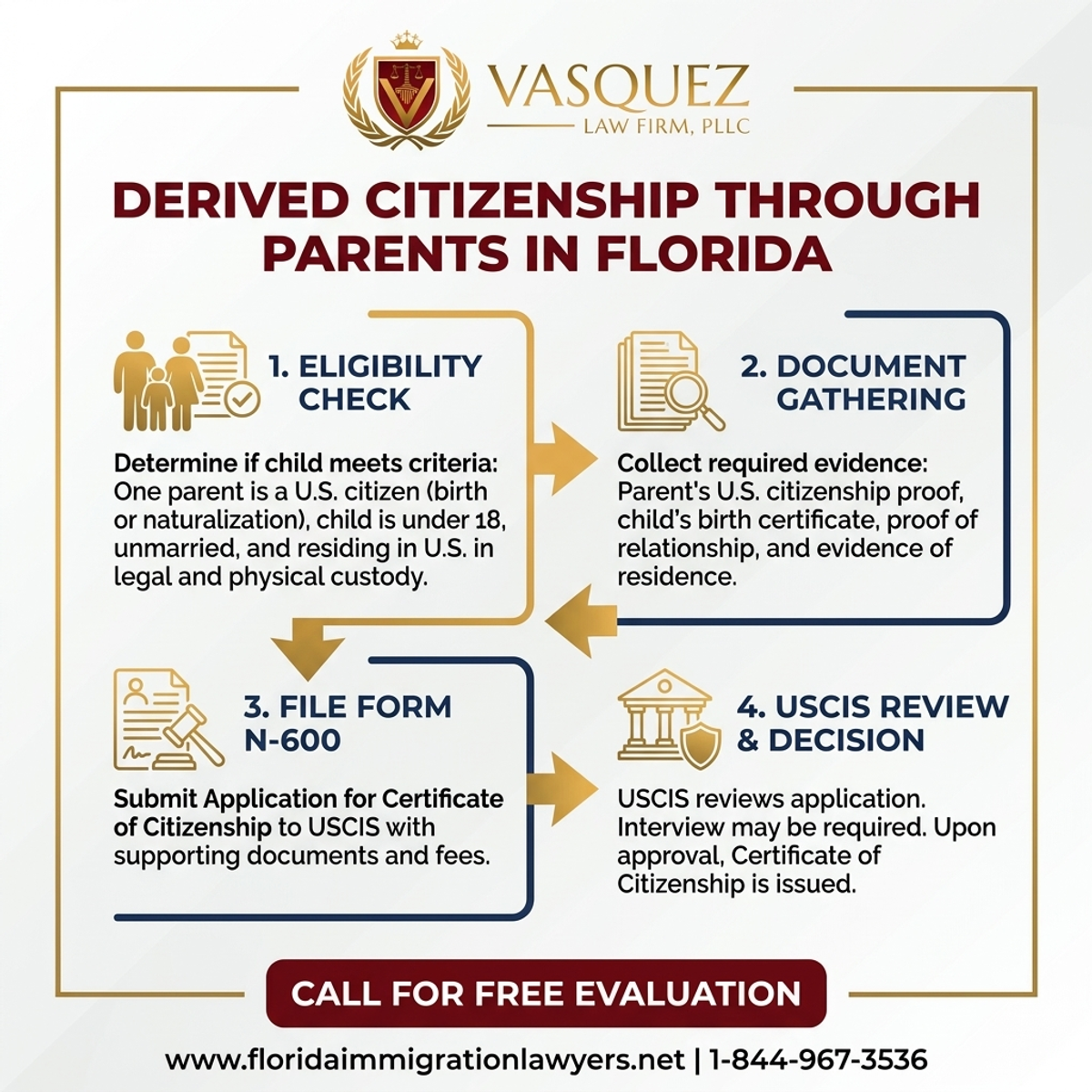
Step-by-Step Process — Derived Citizenship Through Parents in Florida
Document Checklist
- Birth certificate
- Parents' citizenship documents
- Proof of parents' U.S. residency
- Completed Form N-600
- Supporting affidavits, if necessary
Timeline and Processing Expectations
The process for obtaining derived citizenship can vary in length. Typically, it may take several months for USCIS to process an N-600 application. Factors such as the completeness of your documentation and current processing times at the Miami Field Office can affect this timeline. It's important to check the USCIS processing times regularly and be prepared for potential delays.
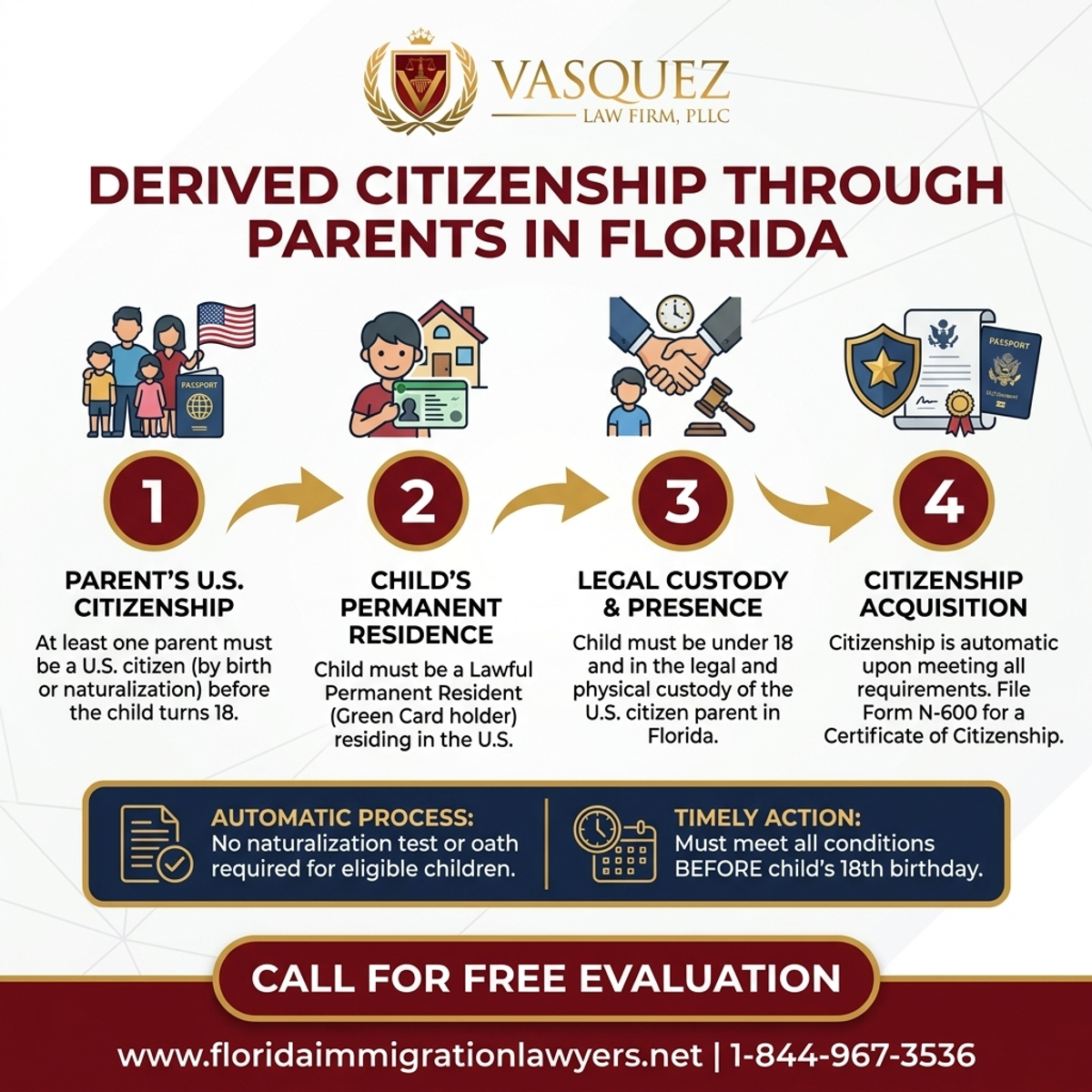
Key Statistics — Derived Citizenship Through Parents in Florida
Cost Factors and Fee Breakdown
Applying for derived citizenship involves several costs, including filing fees for Form N-600. While USCIS fees are subject to change, additional costs may include legal fees if you choose to hire an attorney, which we highly recommend to ensure accuracy and compliance with U.S. immigration law.
Do not navigate this process alone. Contact Florida Immigration Lawyers today.
Common Mistakes to Avoid
- Incomplete Documentation: Missing documents can delay or derail your application.
- Incorrect Filing: Filing the wrong forms or at the wrong time can result in rejections.
- Not Meeting Residency Requirements: Failing to prove your parent's residency can lead to denial.
- Ignoring Deadlines: Missing USCIS deadlines can significantly delay your application.
- Wrong Birth Evidence: Submitting incorrect or falsified birth certificates can result in legal consequences.
- Misunderstanding Eligibility: Incorrect assumptions about eligibility criteria can lead to wasted efforts.
- Skipping Legal Advice: Not consulting with a legal expert can result in costly mistakes.
- Overlooking Language Barriers: Misinterpreting legal documents due to language barriers is a common issue.
When to Call a Lawyer
If you are unsure about your eligibility for derived citizenship or if you encounter any legal hurdles during the application process, it is crucial to seek professional legal advice. Scenarios such as complex family histories or unclear residency documentation often require expert intervention. Florida Immigration Lawyers offer comprehensive services to guide you through every step of your citizenship journey.
About Florida Immigration Lawyers
Florida Immigration Lawyers is a trusted firm dedicated to helping individuals and families navigate the complexities of U.S. immigration law. Our experienced attorneys offer personalized legal solutions, ensuring that you receive the best possible guidance. We provide services across all areas of immigration law, including citizenship, family immigration, and deportation defense. Contact us at 1-844-967-3536 or visit floridaimmigrationlawyers.net. Available 24/7 for free consultations.
Sources and References
- U.S. Citizenship and Immigration Services (USCIS)
- Executive Office for Immigration Review (EOIR)
- 8 U.S.C. Chapter 12 - Immigration and Nationality Act
Related services: naturalization process, citizenship test preparation, dual citizenship guidance, family-based immigration.
This article provides general legal information and is not intended as legal advice. Every case is unique, and outcomes depend on specific facts and circumstances. Contact an attorney for advice about your particular situation.
For more information on how to secure your citizenship status, call Florida Immigration Lawyers at 1-844-967-3536 for a free consultation. Se Habla Espanol - Estamos aqui para ayudarle.
If you need legal assistance, learn more about speak with a citizenship lawyer, or call us at 1-844-967-3536 for a free consultation.
Do Not Navigate This Process Alone
Our experienced immigration attorneys are ready to fight for you. Get a free, confidential consultation today.
Se Habla Español
Frequently Asked Questions
Florida Immigration Lawyers
Immigration Attorney | Founder, Vasquez Law Firm
U.S. Air Force veteran and immigration attorney with thousands of cases resolved. J.D., NCCU School of Law. AILA member. Admitted to the 4th, 5th, and 11th Circuit Courts.
Available 24/7 - Free Evaluations
Related Legal Services
Our Florida immigration attorneys can help you with asylum protection, deportation defense and citizenship and naturalization. Call today at 1-844-967-3536 for a free consultation.
Related Links
Related Topics
Free Legal Consultation
Discuss your case with our experienced attorneys. We're available 24/7.
Se Habla Español - Estamos aquí para ayudarle.
Related Articles
Understanding the Child Status Protection Act in Florida
The Child Status Protection Act (CSPA) is essential for families in Florida, preventing children from aging out of immigration benefits. Learn how CSPA works, common mistakes to avoid, and when to seek legal help. Contact Florida Immigration Lawyers for expert guidance.
Adjustment of Status Florida Guide: Your I-485 Green Card Path
For many immigrants in Florida, adjustment of status (Form I-485) offers a direct pathway to a green card without leaving the U.S. This comprehensive guide from Florida Immigration Lawyers details the eligibility requirements, the step-by-step application process, essential documents, expected timelines, and associated costs. We also highlight common mistakes to avoid and crucial scenarios where legal counsel is indispensable. Serving all of Florida, including Coral Springs, our firm provides expert guidance to help you navigate the complexities of immigration law and secure your permanent residency.
Navigating the Diversity Visa Green Card Lottery | VLF Florida
Explore the Diversity Visa Lottery and how it offers a path to U.S. residency for residents of St. Petersburg, Florida. Understand eligibility, application steps, and common mistakes. Contact Florida Immigration Lawyers for expert guidance.
Citizenship Application Delay in Florida | VLF Florida
Facing a citizenship delay in Florida can be frustrating. Learn about common causes and how to navigate the N-400 process effectively. Call us for a free consultation.