What to Do After a Florida Car Accident: 14-Day PIP Rule
Learn what to do after a Florida car accident, focusing on the 14-day PIP rule essential for securing medical coverage. Call us at 1-844-967-3536.

What to Do After a Florida Car Accident: Navigating the 14-Day PIP Rule and Beyond
Experiencing a car accident in Florida can be a jarring and confusing event. Beyond the immediate shock and potential injuries, there's a critical legal landscape to navigate, especially concerning Florida's unique Personal Injury Protection (PIP) laws. Understanding the steps to take immediately after an accident and the crucial 14-day PIP rule is paramount to protecting your rights and ensuring you receive the medical care and compensation you deserve. This comprehensive guide will walk you through everything you need to know, from securing the scene to dealing with insurance companies and understanding the full scope of your legal options.
Immediate Steps After a Florida Car Accident
The moments following a car accident are often chaotic, but how you react can significantly impact your safety, health, and potential legal claim. Prioritizing these steps is crucial:
1. Ensure Safety and Move to a Secure Location
Your immediate priority is the safety of yourself and others. If possible and safe to do so, move your vehicle to the side of the road or a nearby safe area to prevent further accidents. Turn on your hazard lights. If anyone is injured or if the vehicles cannot be moved, remain in place and wait for emergency services.
2. Call 911 (Police and Emergency Medical Services)
Always call 911, even if the accident seems minor. A police report provides an official record of the incident, which is invaluable for insurance claims and potential legal proceedings. Request paramedics if anyone involved reports pain or visible injuries. Do not downplay any symptoms, as adrenaline can mask pain.
3. Exchange Information with Other Drivers
Gather essential information from all parties involved, including:
- Full names and contact information
- Driver's license numbers
- Insurance company names and policy numbers
- Vehicle make, model, year, and license plate numbers
Avoid discussing fault or apologizing, as these statements can be used against you later.
4. Document the Scene Extensively
Technology is your friend here. Use your smartphone to take numerous photos and videos of:
- Damage to all vehicles involved from multiple angles
- The accident scene, including road conditions, traffic signs, and any skid marks
- Visible injuries on yourself or passengers
- The positions of the vehicles
- Any contributing factors like debris on the road or weather conditions
Also, note the names and contact information of any witnesses.
5. Seek Medical Attention Immediately, Even if You Feel Fine
This is perhaps the most critical step, especially in Florida. Many serious injuries, such as whiplash, concussions, or internal bleeding, may not manifest symptoms until hours or even days after the accident. A prompt medical evaluation creates an official record of your injuries, directly linking them to the accident. This documentation is vital for your health and any future insurance claims or legal actions.
Understanding Florida's Critical 14-Day PIP Rule
Florida operates under a No-Fault insurance system, which means your own insurance company, through your Personal Injury Protection (PIP) coverage, pays for a portion of your medical expenses and lost wages, regardless of who was at fault for the accident. However, there's a strict deadline that can severely impact your ability to recover these benefits.
What is PIP and Why is it Important?
PIP coverage is mandatory for all registered vehicle owners in Florida. It typically covers 80% of your medical bills and 60% of lost wages, up to a maximum of $10,000. This coverage is designed to provide immediate financial relief for accident victims, ensuring they can access necessary medical care without waiting for fault to be determined.
The Critical 14-Day Window for Medical Treatment
Florida Statute 627.736 mandates that you must seek initial medical treatment for your injuries within 14 days of the car accident. If you fail to do so, your PIP benefits will be denied. This means you could be personally responsible for all your medical bills, even if you have a valid PIP policy. This 14-day rule is non-negotiable and strictly enforced by insurance companies.
What Qualifies as "Initial Medical Treatment"?
Initial medical treatment can include a visit to an emergency room, a walk-in clinic, an urgent care center, or a primary care physician. The key is that a licensed medical professional must evaluate your injuries and document the visit within the 14-day timeframe. Follow-up treatments with specialists like chiropractors, physical therapists, or orthopedists can then proceed, but the initial visit is the gateway to your PIP benefits.
Emergency Medical Condition (EMC) vs. Non-EMC
Florida law also distinguishes between an "Emergency Medical Condition" (EMC) and a non-EMC. If a physician determines you have an EMC, you are eligible for the full $10,000 in PIP benefits. If no EMC is diagnosed, your PIP benefits are capped at $2,500. This distinction highlights the importance of thorough medical evaluation and documentation by your healthcare provider.
Common Car Accident Injuries and Their Long-Term Impact
Car accidents, even seemingly minor ones, can result in a wide range of injuries, some of which may have long-lasting or even permanent consequences. Understanding these potential injuries is crucial for seeking appropriate medical care and accurately assessing the full scope of your damages. The forces involved in a collision can exert tremendous stress on the human body, leading to injuries that might not be immediately apparent but can significantly impact your quality of life.
Whiplash and Soft Tissue Injuries
Whiplash is one of the most common car accident injuries, particularly in rear-end collisions. It occurs when the head is suddenly jerked forward and backward, straining the muscles, ligaments, and tendons in the neck and upper back. Symptoms can include neck pain and stiffness, headaches, dizziness, blurred vision, and difficulty concentrating. While often considered a minor injury, severe whiplash can lead to chronic pain, reduced range of motion, and long-term disability if not properly treated. Other soft tissue injuries can affect the shoulders, back, and knees, causing pain, swelling, and limited mobility.
Head Injuries and Traumatic Brain Injuries (TBIs)
Any impact to the head, or even a violent jolt, can result in a head injury. These range from concussions, which are mild traumatic brain injuries, to severe TBIs. Symptoms of a concussion can include headaches, confusion, memory problems, nausea, and sensitivity to light and sound. More severe TBIs can lead to altered consciousness, seizures, cognitive impairments, and permanent neurological damage. Even a seemingly minor bump to the head should be evaluated by a medical professional, as the long-term effects of a TBI can be devastating, impacting memory, personality, and motor skills.
Spinal Cord Injuries
The spine is particularly vulnerable in car accidents. Injuries can range from herniated or bulging discs, which can cause radiating pain, numbness, and weakness, to more severe spinal cord damage. A complete spinal cord injury can result in paralysis (paraplegia or quadriplegia), while incomplete injuries can lead to varying degrees of loss of function below the injury site. These injuries often require extensive medical treatment, including surgery, rehabilitation, and lifelong care, profoundly altering an individual's life.
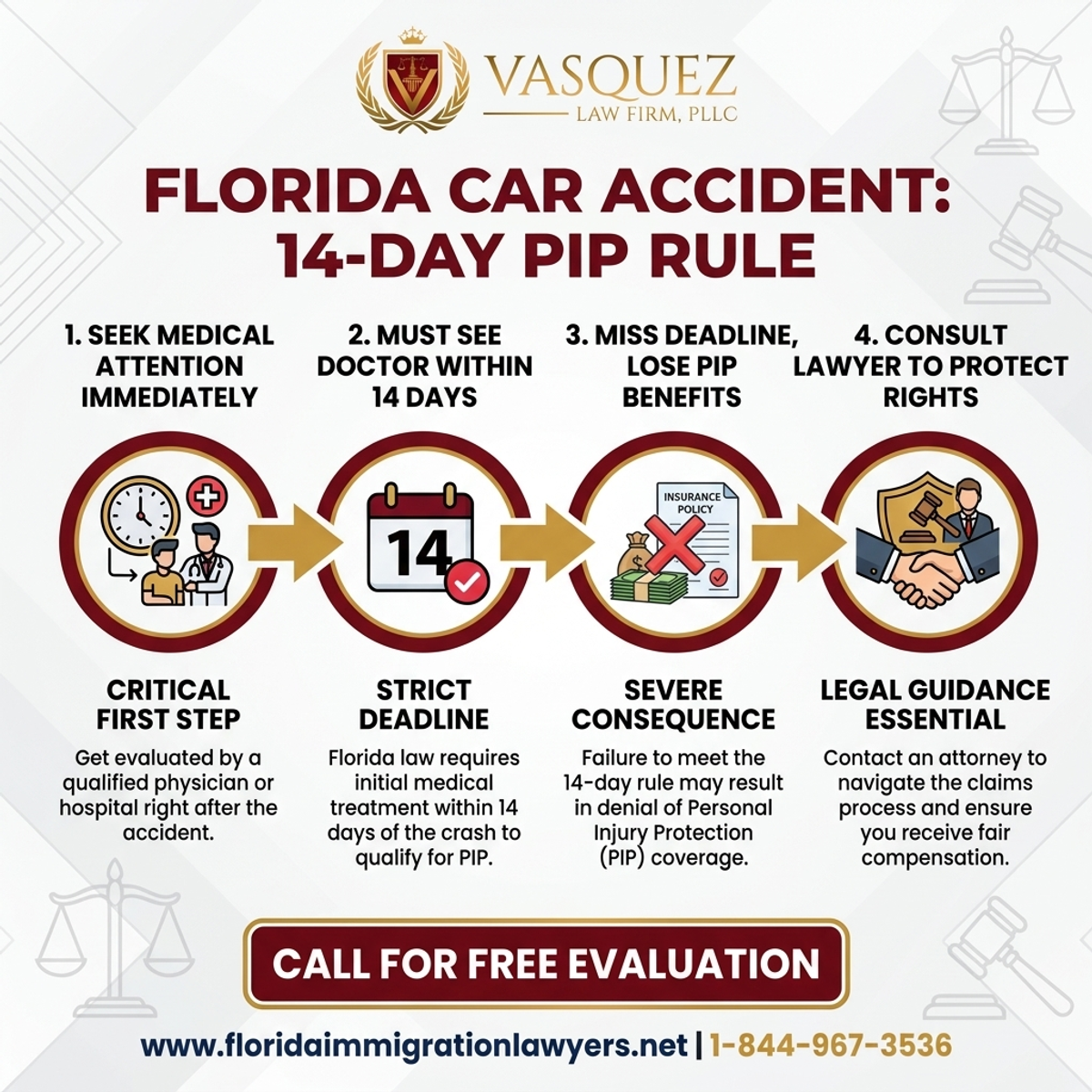
Step-by-Step Process — What to Do After a Florida Car Accident: 14-Day PIP Rule
Fractures and Broken Bones
The impact of a collision can easily lead to broken bones in various parts of the body, including arms, legs, ribs, and facial bones. Fractures can range from simple breaks to complex, comminuted fractures requiring surgical intervention, pins, and plates. Recovery can be lengthy, involving immobilization, physical therapy, and potential complications such as infection or non-union. The severity of the fracture will dictate the recovery time and potential for long-term pain or disability.
Psychological Trauma and Emotional Distress
Beyond physical injuries, car accidents can leave lasting psychological scars. Many victims experience post-traumatic stress disorder (PTSD), anxiety, depression, and phobias related to driving or riding in a car. These emotional injuries are just as real and debilitating as physical ones and often require professional counseling or therapy. The emotional toll can significantly impact daily life, work, and relationships, and should be taken seriously when assessing the full impact of an accident.
Dealing with Insurance Companies After a Car Accident
Navigating the aftermath of an accident often means dealing with insurance adjusters. Remember, their primary goal is to minimize payouts, not necessarily to ensure you receive maximum compensation.
Reporting the Accident to Your Insurer
You must report the accident to your own insurance company promptly, typically within a few days. Even if you believe the other driver was at fault, your PIP coverage comes from your policy. Be factual and brief when reporting; stick to the observable facts and avoid speculation about fault or the extent of your injuries.
Beware of Early Settlement Offers
It's common for insurance adjusters to contact you quickly and offer a fast settlement. These offers are almost always low-ball tactics, made before the full extent of your injuries and damages is known. Never accept a settlement offer without first consulting with an attorney and completing your medical treatment.
What to Say (and Not to Say) to Adjusters
- Do not admit fault: Even a casual apology can be misconstrued as an admission of guilt.
- Do not give a recorded statement: You are not legally obligated to give a recorded statement to the other driver's insurance company. Politely decline and refer them to your attorney.
- Do not sign anything: Never sign any documents from an insurance company without having your attorney review them first.
- Be honest about your injuries: Accurately describe your pain and symptoms to medical professionals, but avoid exaggerating or downplaying them.
The Role of a Florida Car Accident Attorney
While you can attempt to handle a car accident claim on your own, the complexities of Florida law, the aggressive tactics of insurance companies, and the need to accurately value your damages make legal representation invaluable. A skilled Florida car accident attorney can be your strongest advocate.
Investigation and Evidence Gathering
An attorney will conduct a thorough investigation, gathering all necessary evidence, including police reports, medical records, witness statements, traffic camera footage, and expert testimony (e.g., accident reconstructionists). They understand what evidence is crucial to proving fault and the extent of your damages.
Negotiation with Insurance Companies
Attorneys are experienced negotiators. They will handle all communications with insurance adjusters, protecting you from tactics designed to undermine your claim. They will fight for a fair settlement that covers all your current and future medical expenses, lost wages, pain and suffering, and other damages.
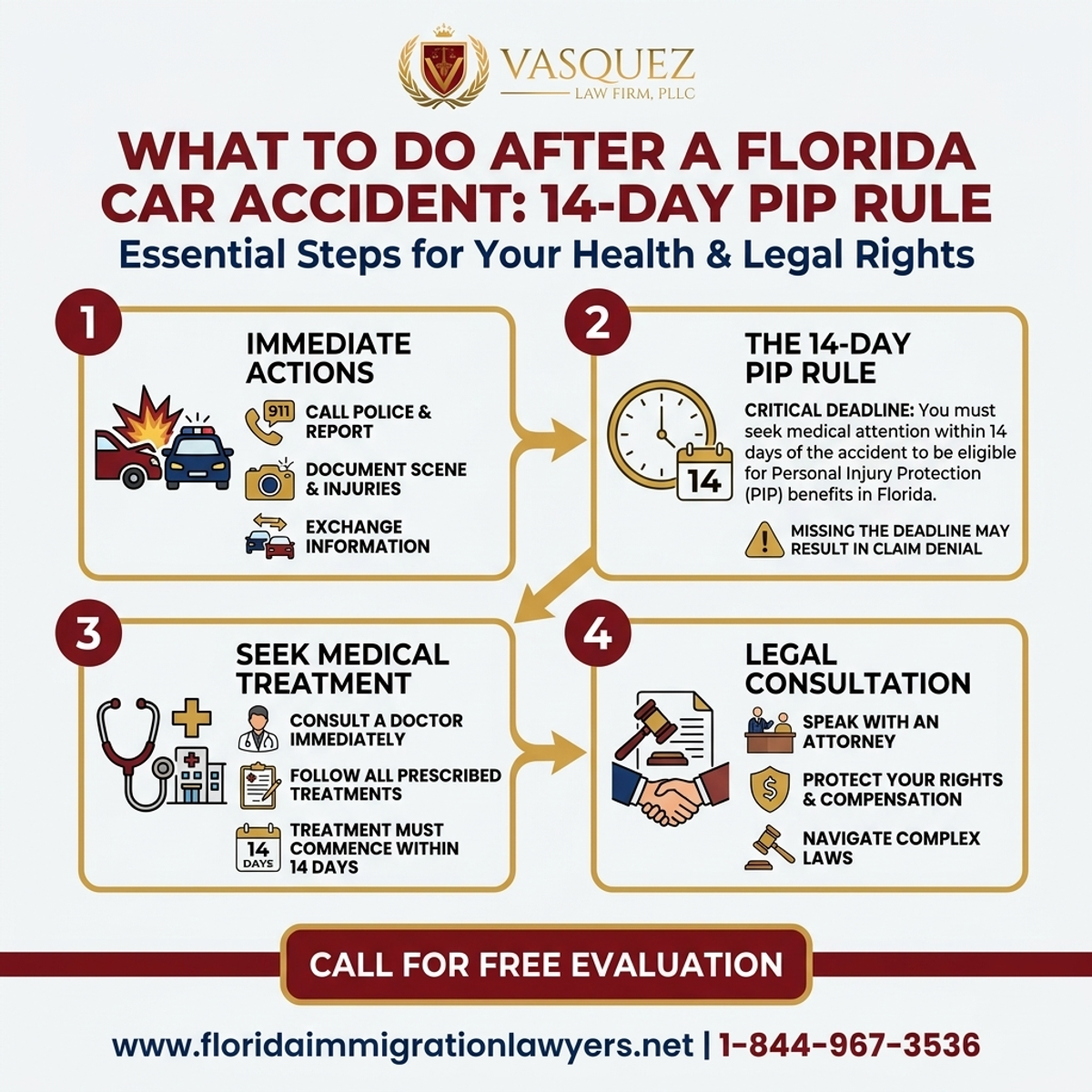
Key Statistics — What to Do After a Florida Car Accident: 14-Day PIP Rule
Litigation if Necessary
If a fair settlement cannot be reached through negotiation, your attorney will be prepared to take your case to court. They will file a lawsuit, represent you in all court proceedings, and present a compelling case to a judge or jury. Having an experienced litigator on your side significantly increases your chances of a successful outcome.
Protecting Your Rights and Maximizing Compensation
A car accident attorney ensures that your rights are protected at every stage of the process. They will help you understand your legal options, navigate the intricacies of Florida's PIP laws, and work tirelessly to maximize the compensation you receive for your injuries and losses. Our dedicated attorneys are committed to providing comprehensive legal support.
Types of Damages You Can Recover After a Car Accident
In Florida, if your injuries meet the threshold for a permanent injury (as defined by law), you may be able to step outside the no-fault system and pursue a claim against the at-fault driver for additional damages. These typically fall into two categories:
Economic Damages
These are quantifiable financial losses, including:
- Medical Expenses: Past and future medical bills, including hospital stays, doctor visits, surgeries, medications, rehabilitation, and therapy.
- Lost Wages: Income lost due to time off work for recovery, as well as future lost earning capacity if your injuries prevent you from returning to your previous job or working at the same capacity.
- Property Damage: Costs to repair or replace your vehicle and any other damaged property.
- Out-of-Pocket Expenses: Costs for transportation to medical appointments, home modifications, or other accident-related expenses.
Non-Economic Damages
These are non-monetary losses that are more subjective but can significantly impact your quality of life:
- Pain and Suffering: Physical pain, discomfort, and emotional distress caused by the accident and your injuries.
- Mental Anguish: Psychological trauma, anxiety, depression, PTSD, and emotional distress.
- Loss of Enjoyment of Life: Inability to participate in hobbies, recreational activities, or daily routines you enjoyed before the accident.
- Loss of Consortium: Damages claimed by a spouse for the loss of companionship, affection, and support due to the injured spouse's condition.
Florida's Statute of Limitations for Car Accidents
It's crucial to be aware of the statute of limitations, which is the legal deadline for filing a lawsuit. In Florida, for most personal injury claims arising from a car accident, you generally have two years from the date of the accident to file a lawsuit. While two years may seem like a long time, building a strong case takes time, and delaying can jeopardize your ability to recover compensation. There are exceptions to this rule, so consulting an attorney promptly is always recommended.
What if the Other Driver is Uninsured or Underinsured?
Unfortunately, many drivers on Florida roads carry minimal or no insurance. If the at-fault driver is uninsured (UM) or underinsured (UIM), your own UM/UIM coverage (if you purchased it) becomes vital. This optional coverage protects you in such scenarios, paying for your medical expenses, lost wages, and pain and suffering up to your policy limits. An attorney can help you navigate a UM/UIM claim, which can be just as complex as a claim against another driver's insurance.
Comprehensive Legal Support Beyond Car Accidents
While our primary focus here is on personal injury claims stemming from car accidents, our firm offers a wide range of legal services to meet diverse client needs. We believe in providing holistic legal solutions, ensuring our clients receive expert guidance no matter their legal challenge. For instance, we also provide dedicated legal assistance in complex areas such as immigration law, including specialized support for asylum claims and robust deportation defense. Our commitment is to offer comprehensive legal solutions, ensuring our clients receive expert guidance and zealous advocacy across various practice areas, reflecting our deep understanding of the law and our dedication to client success.
Conclusion: Act Quickly to Protect Your Rights
A car accident can turn your life upside down, but understanding your rights and acting swiftly can make a significant difference in your recovery and legal outcome. From seeking immediate medical attention within the critical 14-day PIP window to meticulously documenting the scene and consulting with an experienced attorney, every step you take is crucial. Don't let the complexities of Florida law or the tactics of insurance companies overwhelm you. If you or a loved one has been involved in a car accident in Florida, protect your future by seeking professional legal guidance without delay. Contact us today for a free consultation and let our experienced team help you navigate this challenging time.
Sources and References
- U.S. Citizenship and Immigration Services (USCIS)
- Executive Office for Immigration Review (EOIR)
- U.S. Department of State - Bureau of Consular Affairs
- Immigration and Nationality Act (INA), 8 U.S.C. Chapter 12
Do Not Navigate This Process Alone
Our experienced immigration attorneys are ready to fight for you. Get a free, confidential consultation today.
Se Habla Español
Frequently Asked Questions
Florida Immigration Lawyers
Immigration Attorney | Founder, Vasquez Law Firm
U.S. Air Force veteran and immigration attorney with thousands of cases resolved. J.D., NCCU School of Law. AILA member. Admitted to the 4th, 5th, and 11th Circuit Courts.
Available 24/7 - Free Evaluations
Related Legal Services
Our Florida immigration attorneys can help you with slip-and-fall premises liability, Florida wrongful death claims and Florida personal injury attorney Harold Estrada-Rodriguez. Call today at 1-844-967-3536 for a free consultation.
Related Links
Related Topics
Free Legal Consultation
Discuss your case with our experienced attorneys. We're available 24/7.
Se Habla Español - Estamos aquí para ayudarle.
Related Articles
Florida's 50% Bar Rule in Comparative Negligence | VLF Florida
Learn how Florida's 50% bar rule in comparative negligence affects personal injury claims. Contact Florida Immigration Lawyers for assistance.
Florida Comparative Negligence: 50% Bar Rule Explained
Florida's 50% bar rule, established by HB 837 in 2023, is a critical component of the state's modified comparative negligence system. If you are found to be 50% or more at fault for an accident, you are barred from recovering any damages. For those less than 50% at fault, compensation is reduced proportionally. This significant change impacts all personal injury claims across Florida, including in Orlando, Kissimmee, and Hollywood. Navigating these complex laws requires expert legal guidance to protect your rights and maximize your potential recovery. Learn how this rule affects your injury claim and the steps you should take after an accident.
Understanding Florida PIP No-Fault Medical Benefits
Discover how Florida's PIP no-fault insurance provides medical benefits to car accident victims. Learn about coverage, common mistakes, and when to seek legal help. Call Florida Immigration Lawyers for expert guidance.
Florida Truck Accident: 18-Wheeler Crashes on I-4 | VLF Florida
Truck accidents on I-4 in Florida involving 18-wheelers are complex and often involve multiple parties. Understanding FMCSA regulations and seeking timely legal advice is crucial. Contact Florida Immigration Lawyers for guidance.